Support

Cloncurry Airport

About the Airport

Cloncurry Airport (CNJ) is not merely a runway in the middle of the Australian outback, but a true aerial gateway to the very heart of Queensland. It is from here that journeys begin to the famous cattle stations and rich mineral deposits that define the character of this region. This airport has played a significant role in the history of aviation in Australia, serving as one of the first hubs for the legendary airline Qantas and the Royal Flying Doctor Service.
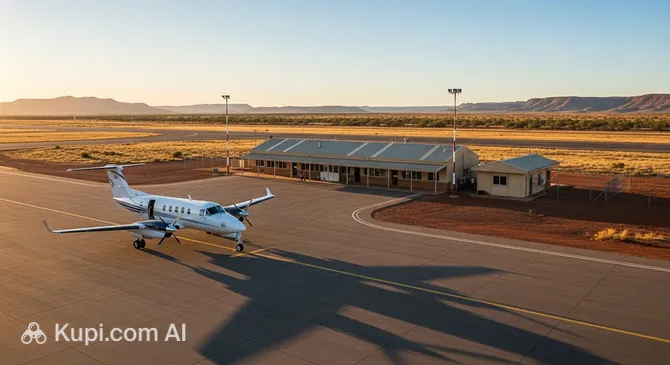
Cloncurry Airport. Source: Kupi.com Binoculars
IATA Code CNJ
ICAO Code YCCY
City Cloncurry
Distance to Centre ~2 km
Status Domestic
Annual Passengers About 60,000
Popular Airlines QantasLink, Virgin Australia, Rex Airlines

Despite its modest size, Cloncurry Airport is a vital transport hub. Its main advantage is compactness and efficiency. Here, you will not encounter long queues or complicated navigation: flight check-in, security screening, and boarding proceed quickly and without fuss, which is particularly valuable in the warm climate conditions.

The airport primarily serves domestic flights, connecting Cloncurry with major cities such as Brisbane, Townsville, and Mount Isa. It is a key point for mining industry workers travelling on a fly-in-fly-out basis. For tourists, the airport offers basic amenities, including car rental desks, which are a necessity for exploring the boundless expanses of the outback. Its historical significance and role in the region's development make it more than just a dot on the map — it is a symbol of resilience and the pioneer spirit.

Contact Information

You can contact representatives of Cloncurry Airport (CNJ) in several ways. Below are the main contact details to help you obtain the necessary information.

  • Official Website: You will find the most complete and up-to-date information on the airport's operations on the official portal of the Cloncurry Shire Council, which manages the airport: www.cloncurry.qld.gov.au/airport.
  • Helpline Phone: For general enquiries, you can call the Cloncurry Shire Council at +61 7 4742 4100.
  • Airport Address: Sir Hudson Fysh Drive, Cloncurry QLD 4824, Australia.
  • Email: For written enquiries, you can use the Council's email address: council@cloncurry.qld.gov.au.
  • Lost Luggage: For all issues related to lost, delayed, or damaged luggage, you must contact the airline directly on whose flight you travelled. Airport staff do not handle luggage tracing.
  • Passenger Support: For assistance with booking, ticket changes, check-in, and special services, please contact your airline's support service.

How to Get to the Airport

Cloncurry Airport (CNJ) is located just a few kilometres from the city centre, so getting there is effortless. A car journey usually takes no more than 5-10 minutes, making it one of the most accessible regional airports in Australia. The main ways to reach the terminal are by taxi, rental car, or private vehicle.

The simplest and most popular way to get to the airport is by taxi. Several local taxi companies operate in the city of Cloncurry. Given the short distance, the trip will be quick and relatively inexpensive. It is recommended to book a car in advance, especially if you have an early morning or late evening flight. Private transfer services are also available and can be booked online for greater comfort.

For travellers who value independence and plan to explore the picturesque surroundings, car rental is the ideal choice. Many major and local rental companies have offices both in the city itself and directly at the airport. This allows you to comfortably drive to the terminal and return the car right before departure or, conversely, collect the keys immediately upon arrival.

If you are travelling by private or rented car, you can use the airport parking facilities. Zones for both short-term and long-term parking are provided on the premises. This is a convenient option, allowing you to leave your vehicle securely for the duration of your absence.

It should be noted that the public transport system in Cloncurry, as in most small towns in the Australian outback, is limited. There are no direct bus or train routes to the airport. However, some hotels and motels offer transfer (shuttle) services for their guests. Be sure to check the availability of such a service when booking your accommodation.

Terminals and Map

Cloncurry Airport (CNJ) is a small regional airport with one passenger terminal. This compact and functional building serves all domestic flights, both departures and arrivals, making navigation extremely simple for all travellers arriving in this corner of Australia.

The terminal structure is very logical. Upon entering, you find yourself in the general area where airline check-in counters and car rental offices are located. Departure and arrival zones are in the same building but functionally separated. The departure zone includes a small waiting lounge after passing security control, while the arrival zone features a baggage claim belt located in immediate proximity to the exit.

Thanks to the airport's small size and moderate passenger flow, all pre-flight formalities here take minimal time. The check-in and screening process usually proceeds very quickly, without the long queues characteristic of major airports. Nevertheless, it is recommended to arrive at the airport approximately 60-90 minutes before departure to check in luggage and pass through control without rushing.

There is no need to worry about navigating Cloncurry airport — getting lost here is practically impossible. All key zones are within walking distance of each other, and signs are clear and highly visible. Since the airport consists of a single building, transfers between terminals are not required. Passengers have access to basic amenities, including restrooms and a small waiting area, which fully meets the needs of a regional transport hub.

Airport History

The history of Cloncurry Airport (CNJ) is not just a chronicle of the development of an air harbour, but one of the most important chapters in the annals of Australian aviation. Its significance goes far beyond that of an ordinary regional airport, as it was here that two legendary organisations were born that changed life on the continent.

The airport began its history in the early 1920s, becoming a key point at the dawn of commercial air travel in Australia. On 2 November 1922, the first scheduled Qantas flight in history landed in Cloncurry, arriving from Charleville. This event marked the launch of the country's first airmail and passenger service, and the original Qantas hangar, preserved to this day, stands as a living monument to that era.

However, the most iconic event in the airport's history occurred in 1928. It was here that the Reverend John Flynn founded the world's first aerial medical service, known today as the Royal Flying Doctor Service (RFDS). The first "Flying Doctor" aircraft took off from the Cloncurry airfield to provide aid to residents of remote areas. This pioneering project forever changed the healthcare system in sparsely populated parts of Australia and became the city's calling card.

During the Second World War, the airport was used as a significant military base for the RAAF and Allied forces, leading to a substantial expansion of its infrastructure. In subsequent decades, it continued to develop, supporting the region's growing mining industry. Today, Cloncurry Airport is a modern transport hub that, despite modernisation, proudly preserves its unique historical heritage, attracting not only passengers but also aviation history enthusiasts from around the world.

Services and Facilities

Cloncurry Airport (CNJ) is an important regional hub providing passengers with basic services for a comfortable wait for their flight. Given its size, the range of amenities is focused on the essentials to ensure your journey begins and ends without hassle.

In the terminal, you will find a small café or kiosk where you can have a snack, drink coffee, or purchase refreshments before departure. The assortment usually includes light snacks, sandwiches, and pastries. Shopping opportunities are limited, so it is better to plan major purchases in advance.

For those who need to stay connected, wireless internet (Wi-Fi) is generally available at the airport. Charging stations for electronic devices are also provided so you can recharge your phone or laptop while waiting for boarding.

Specialised services such as VIP lounges, business centres, or currency exchange points are usually absent in regional airports. For financial transactions, it is recommended to use ATMs, which may be located in the terminal. It is best to resolve all currency exchange matters beforehand in major cities.

The airport is equipped to serve passengers with special needs. For travellers with children, there are parents' rooms with changing tables. Passengers with reduced mobility are provided with assistance in moving around the terminal, boarding, and disembarking. It is recommended to notify your airline in advance regarding the need for assistance. In case of an emergency, airport staff are ready to provide first aid.

Although there are no hotels within the airport grounds, the city of Cloncurry is just a few minutes' drive away, offering numerous accommodation options — from motels to hotels, where you can rest comfortably before or after your flight.

Where to Eat

When planning a snack or lunch at Cloncurry Airport (CNJ), it is important to remember that this is a small regional airport, and the choice of establishments corresponds to its size. Unlike major international hubs, you will not find a wide variety of restaurants here, but you will be able to satisfy basic needs before departure.

A small café-kiosk operates in the terminal building, serving as the main and typically the only place for food. It is located in the general area, accessible to both departing and arriving passengers. Here you can order hot and cold drinks, including coffee and tea, as well as light snacks: sandwiches, pastries, crisps, and chocolate. Sometimes the menu includes heartier Australian specialities, such as meat pies.

The café's operating hours are directly linked to the flight schedule — it opens shortly before the first departure and closes after the last aircraft leaves. Prices here are standard for small airports, meaning they may be slightly higher than in the city. Options for passengers with strict dietary restrictions (vegan, gluten-free, Halal) are extremely limited or unavailable. If you have specific dietary requirements, it is recommended to bring food with you.

Thus, the café at Cloncurry Airport is excellent for a quick snack or a cup of coffee before boarding. If you are counting on a full lunch or dinner, the best solution would be to eat at one of the establishments in the city of Cloncurry itself before travelling to the airport.

Travel Tips

Planning a trip through Cloncurry Airport? To ensure your journey goes as smoothly as possible, take advantage of these useful tips. Cloncurry Airport is a regional hub, so many procedures here are faster than in the major international hubs of Australia.

Arrival Time and Check-in. For domestic flights, it is recommended to arrive at the airport 1.5–2 hours before departure. This time will be sufficient to check in, drop off luggage, and pass security control without rushing. Since this is a small airport, queues here are generally minimal. Nevertheless, always check your airline's recommendations. Online check-in will help save time.

Seat Selection. If you have the option to choose a seat, a window seat will grant you unforgettable views of the Australian outback — boundless red plains and unique landscapes. An aisle seat will provide more legroom and allow you to disembark faster upon arrival.

Hand Luggage and Security. Standard rules for carrying liquids, aerosols, and gels (LAGs) apply on domestic flights. Ensure that all containers up to 100 ml are packed in a single transparent bag. Pay special attention to biosecurity rules: Australia has strict restrictions on moving fresh produce, plants, and animal-derived materials between states. It is best not to pack fruits or homemade sandwiches containing meat in your hand luggage to avoid fines.

Transfers and Customs. Since the airport serves mainly domestic flights, there is no standard passport or customs control here. However, biosecurity officers may conduct random luggage checks. If you have a connecting flight, check with the airline whether you will need to collect and re-check your luggage.

Saving Time and Money. To save money, book tickets in advance and use online check-in. Bring an empty reusable water bottle with you, which can be filled after passing security screening. In small airports, the choice of food and drinks may be limited and more expensive, so a light snack brought with you would not go amiss.

Flight Delays. In the event of a flight delay or cancellation, first contact your airline representative for information on further actions. A regional airport may not have many amenities, so in case of a long wait, it is useful to have a book, a charged power bank, or other entertainment with you.

Reached the end of the page?

That means the route is fully explored