Support

Normanton Airport

About the Airport

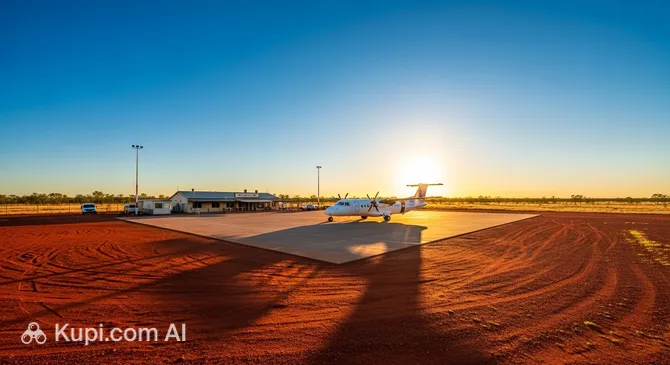
Normanton Airport is not merely a runway in the Australian outback, but a true aerial gateway to the distinctive Carpentaria region. Located in the state of Queensland, it serves as a vital link for local residents and a starting point for travellers seeking adventure. Expeditions to wild rivers, encounters with the unique fauna of Australia, and journeys into the heart of one of the continent's most sparsely populated corners begin here.

Normanton Airport. Source: Kupi.com Binoculars
IATA Code NTN
ICAO Code YNTN
City Normanton
Distance to Centre approx. 1.5 km
Status Domestic
Annual Passengers approx. 25,000
Popular Airlines Regional Express (Rex), QantasLink, West Wing Aviation

The main feature of Normanton Airport is its key role in the region's transport system. For many remote settlements, it is the only year-round connection to major cities. The airport handles scheduled flights connecting Normanton with Cairns and Mount Isa, as well as charter and medical flights. For tourists, it is a convenient way to reach the famous Gulflander railway line, affectionately known as the "Tin Hare," and to explore the national parks and fishing spots of the Gulf of Carpentaria. Despite its modest size, the airport ensures reliable and safe connections, making it indispensable for the life and development of North Queensland.

Contact Information

As Normanton Airport (NTN) is a small regional facility, most management and communications are handled through the local council. Below are the primary contact details:

  • Official Website: The airport is managed by the Carpentaria Shire Council. Information is available on their official website in the aerodromes section.
  • Enquiry Phone Number: For general questions regarding airport operations, you may contact the Carpentaria Shire Council at: +61 7 4745 2200.
  • Airport Address: Airport Rd, Normanton, QLD 4890, Australia.
  • Email: The official email of the council overseeing the airport: council@carpentaria.qld.gov.au.
  • Social Media: The airport does not have its own pages. It is recommended to follow news on the official Carpentaria Shire Council social media pages.
  • Lost Luggage Information: For all matters regarding lost or damaged luggage, please contact your airline representatives directly.
  • Passenger Support Contacts: For on-site assistance, please approach the staff of the airline operating your flight.

How to Get to the Airport

Getting to Normanton Airport (NTN) from the town of the same name in Australia is quite simple, as it is located very close to the centre. Given the size of Normanton and its remote location, transport options are limited, so the journey should be planned in advance. The main methods to reach the terminal are by taxi or rental car.

Public transport, such as regular city buses or trains, is not available in Normanton. Therefore, do not rely on it for travel to the airport. The most reliable option is to call a local taxi or arrange a private transfer. The drive from the town centre to the airport takes just 5-10 minutes. It is recommended to book a car well in advance, especially if your flight is early in the morning or late in the evening, as the number of vehicles is limited and they often serve passengers by prior arrangement according to the flight schedule.

Car rental is an excellent choice for those planning to explore the Gulf Country region independently. Several rental companies may offer services at the airport or in the town itself. By booking a vehicle in advance, you can collect it immediately upon arrival or arrange for the car to be delivered to the town. Driving your own or a rented car is the fastest and most convenient way to reach the airport.

For those arriving at the airport in their own vehicle, parking is available. Typically, at such small regional airports in Australia, parking is located directly in front of the terminal building and is complimentary for both short-term and long-term stays. This makes travelling by private transport even more convenient. Regardless of the chosen method, due to the short distance, you will easily reach the airport on time.

Terminals and Map

Normanton Airport (NTN) is a small regional air hub characterised by extreme simplicity and convenience for passengers. Its infrastructure is designed to handle a small flow of travellers, primarily on domestic flights connecting the town with other settlements in Queensland, Australia.

The airport consists of one compact passenger terminal that serves both departing and arriving passengers. The check-in areas, departure lounge, baggage claim, and exit to the city are all located within one small building, making it impossible to get lost. The terminal layout is intuitive: upon entering, you will immediately see the check-in counters and the security screening area.

One of the main advantages of Normanton Airport is the minimal time required for formalities. Thanks to the low number of flights and passengers, flight check-in and security screening are completed very quickly. Generally, all procedures take no more than 15–20 minutes. Nevertheless, it is recommended to arrive at the airport approximately one hour before departure to check in luggage and pass through controls without haste.

Since there is only one terminal, moving between zones takes mere seconds. The departure and arrival areas are effectively parts of a single common hall. Navigation is simplified to the maximum: there are no long corridors, numerous boarding gates, or complex signs. Everything necessary is within walking distance, making travel through this airport easy and comfortable.

Airport History

The history of Normanton Airport (NTN) is closely intertwined with the development of the Gulf Country region in northern Australia. Although the exact date of the first airfield's establishment may be lost in archives, its emergence is believed to date back to the first half of the 20th century, when a network of airstrips was being created across the country to improve transport accessibility to remote areas. Initially, it was likely a simple dirt strip serving mail planes and the needs of local cattle stations.

A key stage in the airport's history was the Second World War. Like many other airfields in northern Australia, Normanton acquired strategic importance and was used by the Royal Australian Air Force (RAAF) as one of the bases for the defence of the northern coast. During this period, the infrastructure was significantly improved to accommodate military aircraft, laying the foundation for its post-war development.

After the war, the airport transitioned entirely to civil service, becoming a vital transport hub for the town and surrounding areas. It facilitated not only passenger and cargo transport but also served as a base for the Royal Flying Doctor Service, providing emergency medical assistance to remote settlements. Over the decades, the airport has undergone various stages of modernisation, including the sealing of the runway and the construction of a small but functional terminal to meet modern aviation standards.

One of the most interesting facts about Normanton Airport is its critical role in community life during the wet season. When torrential rains wash away roads and cut the town off from the rest of the world, air transport becomes the only lifeline connecting residents to the outside world, ensuring the delivery of food, medicine, and mail. Today, the airport continues to fulfil this crucial function while also serving a growing stream of tourists coming to experience the unique nature and the famous Gulflander railway.

Services and Facilities

Normanton Airport (NTN) is a small regional airport serving the town of Normanton and its surroundings in Australia. Given its size, the range of services and amenities is basic and focused on meeting essential passenger needs. The terminal building features a main waiting hall where you can await your flight, as well as restrooms. There are no specialised VIP halls or business lounges provided here.

Shopping and dining options at the airport are very limited. There are no restaurants, cafes, or large shops, so it is recommended to eat before arriving at the airport or bring snacks with you. Access to Wi-Fi and electronic device charging stations may be unavailable, so it is advisable to ensure your gadgets are charged in advance. Services such as banks, currency exchange points, conference rooms, or business centres are absent from the terminal. All necessary financial transactions are best completed in the town itself.

The airport is equipped to serve passengers with reduced mobility, providing basic accessibility and staff assistance during boarding. Passengers travelling with children should note that there are no dedicated play areas or parent-and-child rooms here. Additionally, there are no medical centres at the airport. If you require accommodation, hotels and motels are located not at the airport itself, but in the nearby town of Normanton, where suitable lodging options can be found.

Where to Eat

When planning a snack or lunch at Normanton Airport (NTN), travellers should note that this is a small regional air terminal in Australia. Consequently, the choice of dining establishments here is quite limited and differs from what can be found in major international hubs.

There are no full-service restaurants or dining venues on the airport premises. Typically, all passenger amenities are concentrated in the main and only terminal. Here, you may find vending machines offering soft drinks, bottled water, and light snacks such as crisps or chocolate bars. Occasionally, a small kiosk may be in operation, selling coffee, tea, and possibly packaged sandwiches or pastries. Its opening hours usually coincide with flight arrival and departure times.

Visitors with specific dietary requirements (vegetarian, vegan, gluten-free, or halal) are strongly advised to bring food with them, as specialised options are absent at the airport. To sample local cuisine, it is best to visit one of the cafes in the town of Normanton before travelling to the airport.

Thus, Normanton Airport is suitable for quickly purchasing a drink or a simple snack before a flight. For a more substantial and complete meal, it is worth eating beforehand in town.

Traveller Tips

When planning a journey through a small regional airport like Normanton Airport, there are several points to consider to make your trip as comfortable as possible. Although the airport in Normanton is small, it is an important transport hub for the region. To avoid rushing, arrive at the airport approximately 1–1.5 hours before your domestic flight departure. This time will be sufficient to calmly complete check-in and security controls. If possible, check in for your flight online—this will save you time.

Check-in and screening procedures at regional airports in Australia usually proceed faster than in major hubs, but security rules remain strict. Ensure you are not carrying prohibited items. In carry-on luggage, all liquids, gels, and aerosols must be in containers of no more than 100 ml and packed in a single transparent resealable bag. Prohibited items include sharp objects, weapons, and flammable substances. Remember the strict Australian bio-security laws—do not transport fresh fruit, vegetables, or plants between states without special permission.

When selecting a seat on a plane flying over the Australian outback, opt for a window seat. You will be treated to stunning views of the vast landscapes, which will be a great start or end to your adventure. Since most flights from Normanton are operated by small turboprop aircraft, seat selection may be limited, and seating might be free.

Normanton Airport primarily serves domestic flights, so you will not have to go through full customs and immigration control. However, be prepared for possible checks by the quarantine service, especially if you are flying to another state. If you have a connecting flight, clarify at check-in whether your luggage will be automatically transferred to your final destination. Usually, transfers in small airports are intuitive and do not take much time.

To save money, book tickets in advance, especially if travelling during the peak season. It is also worth bringing light snacks and a water bottle (which can be filled after passing security), as the selection of cafes and shops in small airports may be limited, and prices may be higher.

In the event of a flight delay or cancellation, first contact your airline representative. They will provide current information and explain your rights regarding compensation, provision of meals, or accommodation. In a small airport, the waiting area may be modest, so download films or books to your devices in advance to pass the time.
Reached the end of the page?

That means the route is fully explored