Support

Kowanyama

About the Airport

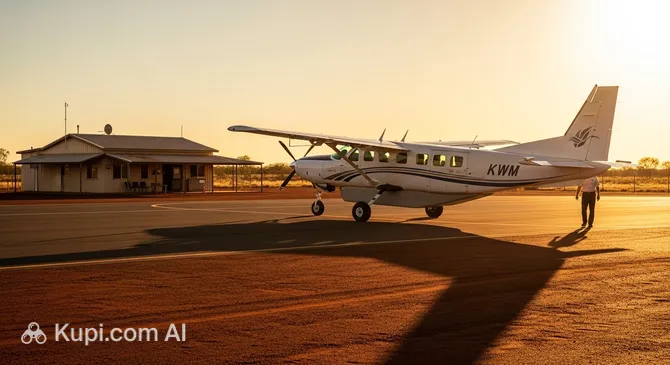
Kowanyama. Illustration.
Source: Kupi.com AI
Kowanyama Airport is not just a transport hub, but a true "lifeline" for one of the most colourful communities on the Cape York Peninsula. Located in a land whose name translates from the local tribal language as the "place of many waters," this small regional airport connects remote corners of the Australian wilderness with the wider world. Small aircraft land here, granting travellers access to the unique landscapes of the river delta and mangroves, where time seems to slow down. For residents and guests, it is the main air gateway to the region, especially during the wet season when land routes often become impassable.
PropertyValue
IATA CodeKWM
ICAO CodeYKOW
CityKowanyama
CountryAustralia
TimezoneAustralia/Brisbane
Top AirlinesFLEX FLIGHT APS
ScheduleOnline Timetable

Airport Features and Benefits:

Despite its modest size, Kowanyama Airport plays a critically important role in the life of the region. Following a major terminal modernisation, passengers are welcomed by updated infrastructure, including a comfortable covered waiting area that protects against the tropical sun and rain. The building features modern amenities, including a kiosk and specially equipped zones for people with reduced mobility and parents with children.

One of the main advantages of the air harbour is its location: the airport is situated just a couple of kilometres from the settlement centre, allowing you to reach your destination in mere minutes. The atmosphere here is devoid of the hustle and bustle of major international hubs—all procedures are conducted quickly and at a calm pace typical of the Australian outback. In addition to regular passenger flights, the airport is actively used by the Royal Flying Doctor Service, making it an indispensable safety element for locals and tourists alike.

Contact Information

  • Official Airport Website (Council Page): www.kowanyama.qld.gov.au
  • General Enquiry Phone: +61 7 4083 7100 (Council Administration) or +61 7 4083 7110 (Airport Office)
  • Airport Address: Chapman Road, Kowanyama QLD 4871, Australia
  • Email: manager.airport@kowanyama.qld.gov.au
  • Social Media: Kowanyama Aboriginal Shire Council on Facebook (current regional news)
  • Lost Baggage Information: First, contact your airline (Skytrans or Hinterland Aviation); in case of loss within the terminal, contact the Airport Manager at +61 457 719 203.
  • Passenger Support Contacts: For urgent matters, it is recommended to call the 24-hour Aerodrome Reporting Officer (ARO) number: +61 457 719 203.

How to Get to the Airport

Transport accessibility to Kowanyama Airport has its own specificities due to the remoteness of the region and its special status. Since the terminal is located in immediate proximity to the settlement itself (only about 1.5 km from the centre), logistics here are significantly simpler than in large metropolises, although the choice of transport is limited.

Public Transport
Due to the small size of the community and its location in the Australian outback, classic public transport such as metro, trains, or scheduled city buses is absent here. The route network is not developed, so one should not rely on a standard timetable.

Transfers and Taxi
The most reliable way to reach your destination is to arrange a meeting in advance.

  • Accommodation Transfer: Most guesthouses (for example, Kowanyama River House) and staff quarters provide a transfer service for their guests. It is recommended to clarify this when booking your accommodation.
  • Local Transport: There may be no official taxi services with traditional markings here. Transport is often provided by locals or administration representatives by prior arrangement.
  • Travel Time and Cost: The trip from the settlement centre to the terminal takes no more than 5 minutes. The transfer cost is often included in the accommodation or amounts to a symbolic fee by agreement.

Car Rental and Personal Transport
Car rental directly at the Kowanyama Airport building is usually unavailable. Travellers arriving here by car typically rent SUVs in major cities, such as Cairns, and undertake a long road trip across Cape York.

Important Recommendation for Drivers: Roads in this region are predominantly unsealed (dirt). During the wet season (December to April), they often become impassable, and the airport remains the only link to the outside world. For trips, it is strongly recommended to use a four-wheel-drive vehicle (4WD).

Parking
An open parking area is equipped in front of the small terminal building.

  • Cost: Parking is generally free.
  • Security: The zone is not guarded, so it is not recommended to leave valuables inside the vehicle.

Nearest Alternative Airports
If a direct flight is impossible for some reason or you are planning a complex route through Queensland, you can use neighbouring air hubs. Keep in mind that distances in Australia can be deceptive, and a "neighbouring" airport may require a multi-hour drive in an SUV.

  • Edward River (EDR) — located in the town of Edward River. This is the closest airport to Kowanyama, situated approximately 67 km away.
  • Weipa Airport (WEI) — located in the town of Weipa, at a distance of roughly 311 km. This is a larger hub receiving significantly more tourists (over 87,000 per year).
  • Lockhart River (IRG) — serves the town of Lockhart River, located 342 km away.
  • Cooktown Airport (CTN) — located in the historic town of Cooktown, the distance is about 368 km.

Terminals and Map

Kowanyama Airport (KWM) is a classic example of a small regional air hub in Australia, where functionality is combined with simplicity and comfort. You will not find confusing labyrinths of corridors or multi-level crossings here. All infrastructure is concentrated in a single passenger terminal, which serves both departing and arriving flights.

Layout and Navigation
The terminal is a compact single-storey building designed with Queensland's tropical climate in mind. Navigation here is intuitive even for those visiting Kowanyama for the first time:

  • Terminal Entrance: Located on the side of the parking lot and passenger drop-off zone.
  • Check-in Counters: Situated immediately at the entrance. Due to the small number of flights, there are rarely long queues here.
  • Waiting Hall: A spacious area with seating, located in immediate proximity to the boarding gate.
It is impossible to get lost here—the entire path from the front door to the aircraft steps is a straight line a few dozen metres long.

Departure and Arrival Zones
There is no separation into different sectors or floors for arrivals and departures at Kowanyama Airport.

  • Departure: After checking in, passengers wait for boarding in the general hall. Access to the aircraft is on foot across the apron (tarmac). There are no aerobridges, so be prepared for a short walk in the fresh air to the aircraft stairs.
  • Arrival: Arriving passengers also walk from the aircraft to the terminal building. The baggage claim area is organised as simply as possible: suitcases and cargo are unloaded manually by staff and delivered to a designated spot in the terminal or under a shelter next to it.

Terminal Features
Despite its modest size, the renovated terminal building offers a basic set of amenities for comfortable waiting:

  • Climate Control: The building is equipped with air conditioning and fans, which provides relief from the heat and high humidity characteristic of the region.
  • Accessibility: The terminal is equipped with ramps and wide aisles for the convenience of passengers with disabilities, which is critically important for medical evacuation flights.
  • Restrooms: Clean and modern toilets are located inside the building.
Please note that there are generally no Duty Free shops, ATMs, or large cafes in the terminal. It is recommended to arrange cash and snacks in advance.

Check-in and Security Procedures
The main advantage of the airport is the absence of hustle and stress.

  • Arrival Time: It is recommended to arrive at the airport 45–60 minutes before departure. This time is more than sufficient to calmly check in luggage and receive a boarding pass.
  • Check-in: Airline check-in counters (Skytrans, Hinterland Aviation) open approximately one hour before the flight. The procedure is quick and conducted in a friendly atmosphere.
  • Security Screening: Security procedures here may be simplified compared to major international hubs, but regulations regarding the carriage of liquids and prohibited items remain standard for Australian aviation.

Recommendations for Passengers
Since there are no transfers between terminals as such, you do not need to worry about complex transit. If you are travelling with a connection, you will likely need to collect your luggage and check it in again, as through-check-in on small aviation flights does not always work. Clarify this point with the airline representative when departing from your initial point.

Airport History

The history of Kowanyama Airport is inextricably linked with the development of the settlement itself and the need to overcome the geographical isolation of this remote Queensland region. For a long time, the only means of connection with the outside world for locals were difficult land routes, which became absolutely impassable during the wet season. Aviation arrived here as a vital necessity, transforming from a luxury into a basic condition for the survival and development of the community.

Origins and Early Years
The first airstrips in this area appeared in the mid-20th century, when the settlement still bore the historic name "Mitchell River Mission". Initially, the infrastructure was a simple dirt field cleared of scrub. In those years, the airport could only accept light mail planes and medical evacuation aircraft, and landing required high skill from pilots, especially during tropical downpours. Full-scale development began only after 1987, when management passed to the local Council, and the community received the status of Kowanyama ("Place of Many Waters").

Modernisation and Development Stages
A key moment in the airport's history was the transition from dirt surfacing to modern standards. This allowed flights to be received year-round, regardless of weather whims.

  • Paving: Asphalting the runway became a turning point, opening the region to regular commercial flights and heavier cargo aircraft.
  • Lighting Equipment: The installation of a Pilot Activated Lighting (PAL) system allowed for night take-offs and landings, which is critically important for the emergency 24-hour work of the Royal Flying Doctor Service (RFDS).
  • Perimeter Protection: In the early 2000s, large-scale work was carried out to install special fencing. Since the region is rich in wildlife, protecting the runway from kangaroos, wallabies, and stray cattle became an important stage in ensuring aviation safety.

Recent History: New Terminal
One of the most significant events of recent years was the major reconstruction of the passenger terminal. The old building ceased to meet comfort standards. The renovated terminal was designed taking into account the harsh tropical climate: spacious covered waiting areas appeared, protected from monsoon rains and the scorching sun, as well as modern sanitary facilities. The Kowanyama Aboriginal Shire Council invested significant funds in this project to make the air gateway a worthy face of the community.

Interesting Historical Facts

  • Rescue in Isolation: There have been many episodes in the airport's history when, during severe floods that cut off roads for several months, the runway remained the only "dry island". Food, medicine, and mail for the entire town population were delivered through it, making the airport the region's main lifeline.
  • Visits by Important Guests: Although the airport is small, it has repeatedly hosted high-ranking state officials and Queensland government representatives arriving for meetings with elders and the Council administration. These visits underscore the strategic importance of the facility.
  • Record Load: Despite its small size, during seasonal work periods or major cultural festivals, traffic intensity here can rival much larger regional centres.

Today, KWM Airport continues to develop. Future plans include further improvement of navigation equipment and expansion of the apron area to support the region's growing needs for cargo transport and eco-tourism.

Services and Facilities

Kowanyama Airport (KWM) is a small regional air hub focused primarily on the basic needs of passengers and ensuring transport accessibility for the remote community. Travellers should note that the infrastructure familiar to major international hubs, such as duty-free shops or business lounges, is absent here. The range of services is limited but quite sufficient for a comfortable short wait for a flight.

Dining and Shops
There are no full-service restaurants or cafes within the terminal. A small kiosk may operate in the waiting area with a basic set of goods: soft drinks, water, crisps, and chocolate bars.
Tip for tourists: If your flight is during lunch hours or you are travelling with children, it is strongly recommended to purchase food and snacks in advance at Kowanyama settlement shops before leaving for the airport.

Waiting Halls and VIP Services
The airport has a single general waiting hall. It is equipped with an air conditioning system, which is the main comfort in Queensland's tropical climate conditions.

  • VIP Lounges: Separate lounge zones for business class passengers or premium cardholders are not provided here.
  • Comfort: The hall is equipped with standard seating. Due to the low load of the airport, there are generally always free seats, and the atmosphere remains calm and quiet.

Connectivity and Wi-Fi
Technical capabilities in the terminal are limited.

  • Wi-Fi: Public Wi-Fi networks may be unstable or non-existent. It is recommended to rely on mobile data.
  • Mobile Coverage: Reliable signal in this region is typically provided by the operator Telstra. SIM cards from other providers may work intermittently.
  • Device Charging: There are no specialised stands with USB ports, but standard wall sockets can be found in the waiting hall. It is recommended to carry a power bank.

Financial Services
There are no ATMs or currency exchange points in the airport building.
Important: Ensure you have cash in advance. The nearest ATMs and post office where funds can be withdrawn are located in the centre of Kowanyama settlement (about 1.5 km from the airport).

Medical Services
There is no dedicated medical centre or pharmacy in the terminal. However, airport staff are trained in first aid and have standard medical kits. In emergencies, the airport serves as a base for the Royal Flying Doctor Service (RFDS), guaranteeing the possibility of rapid evacuation for serious health issues.

Services for Passengers with Children
Infrastructure for families with children is basic. The terminal has access to restrooms where you can freshen up a child. There are no playrooms, so parents should bring colouring books, reading materials, or gadgets to occupy children while waiting for boarding.

Accessibility
Kowanyama Airport is attentive to passengers with reduced mobility (PRM).

  • Terminal: The building is single-storey, entrances are equipped with ramps, and there are no thresholds or stairs, facilitating wheelchair movement.
  • Restrooms: A specially equipped toilet for citizens with limited mobility is available.
  • Boarding: Since there are no aerobridges, airline staff assist with boarding using special lifting devices or ramps, if provided for by the type of aircraft.

Hotels and Accommodation
There are no hotels on the airport territory itself. Since the terminal is very close to the town, transit passengers or guests of the region stay in Kowanyama itself. The main accommodation option is the Kowanyama River House guesthouse, which often provides transfers for its guests. Travel time from the hotel to the check-in counter takes no more than 5 minutes.

Business Services
Conference rooms and business centres are absent at the airport. If you need to hold a business meeting or use office equipment (printer, scanner), it is best to contact the Kowanyama Aboriginal Shire Council administration in the settlement centre.
Where to Eat

Travellers departing from Kowanyama Airport (KWM) must take into account the specifics of this small regional air hub. Unlike major international airports with food courts and restaurants, dining infrastructure here is extremely limited. To ensure waiting for a flight is comfortable, passengers are strongly advised to plan meals in advance.

Restaurants and Cafes in the Terminal
Currently, there are no operating full-service restaurants, cafes, or bars in the single passenger terminal building. This is a typical situation for small airports in remote Australian communities.

  • Kiosk and Vending: Occasionally, a small kiosk or vending machine may operate in the waiting area with a limited assortment: bottled water, fizzy drinks, crisps, chocolate, and biscuits. However, one should not rely on their operation or stock availability—the schedule may be irregular.
  • Zone: Sales points (if open) are located in the general waiting area. There is no separation into "clean" and "public" zones regarding dining here.

Where to Eat: Recommendations and Alternatives
Since opportunities to refresh oneself at the airport itself are minimal, the best strategy is to arrange food before leaving the settlement. The journey from the centre of Kowanyama to the terminal takes only 5 minutes, so you can have a snack immediately before the transfer.

  • Supermarket and Deli (Kowanyama Store): This is the main place in town to purchase groceries. Ready-made hot takeaway meals (hot boxes) are often sold here: fried chicken, chips, meat pies, and sandwiches.
  • Guesthouses: If you stayed at Kowanyama River House or another accommodation, check the possibility of ordering a packed lunch or a hearty breakfast before departure.

Local Cuisine Features and Dietary Requirements
Given the remoteness of the region, food choices are dictated not so much by culinary delights as by product availability.

  • Local Flavour: You will not find haute cuisine signature dishes at the airport. The diet is based on simple and filling food. If you manage to find fresh seafood (Barramundi fish or mud crabs) in the village, that is the region's best gastronomic experience, but it is not customary to deliver them to the airport.
  • Dietary Requests (Vegan, Halal, Gluten-Free): Finding specialised food (vegan, gluten-free, or Halal) immediately before departure is practically impossible. The assortment at the local store is limited to basic goods.
    Tip: If you follow a strict diet, be sure to bring necessary products with you from Cairns or another major city upon arrival.

Average Price Range
The cost of groceries and snacks in Kowanyama is higher than in metropolises due to complex logistics of cargo delivery.

  • Snack: A bottle of water and a chocolate bar may cost around 8–10 AUD.
  • Hot Lunch in the Village: A standard set of a hot dish and a drink will cost 15–25 AUD.

Alcohol and Restrictions
It is important to remember that Kowanyama is a territory subject to specific Alcohol Management Plans.

  • At the Airport: The sale of alcohol in the terminal is completely absent. There are no bars or pubs.
  • Carriage Rules: There are strict restrictions on bringing alcohol into the community. Consuming alcoholic beverages on the terminal premises and adjacent parking lot is prohibited.

Hydration
Considering the hot tropical climate, having water is critically important. The terminal usually has a drinking fountain or water cooler. It is recommended to carry an empty reusable bottle, which can be filled after passing security (if strictly conducted) or simply before boarding the plane.

Travel Tips

Travelling to remote corners of Australia, such as the Cape York Peninsula, is always an adventure requiring special preparation. Kowanyama Airport, being a vital link for the local community, operates differently from major capital hubs. To ensure your flight goes smoothly and without unnecessary stress, we have compiled the most important practical tips considering local specifics.

Optimal Arrival Time
Unlike busy international airports, there is no need to arrive three hours early here. The airport is compact, and all procedures are quick.

  • Recommended Time: Arrive 45–60 minutes before departure. This is quite sufficient to check in luggage and complete registration without rushing.
  • Risks of Lateness: Check-in counters close strictly according to schedule (usually 30 minutes before departure). Since flights are operated by small aircraft, pilots need time to calculate balance and weight, so late passengers may simply not be accepted on board.

Check-in and Seat Selection
Flying over Queensland is an opportunity to see stunning landscapes, so seat selection matters.

  • Window Views: Try to request a window seat. On approach to Kowanyama, breathtaking views of winding rivers, the delta, and mangroves open up, especially impressive during the wet season.
  • Aircraft Balancing: Be prepared that on small aviation flights (e.g., Dash-8 or Cessna), seating may be assigned. The crew may ask you to move to distribute weight correctly on board. This is a safety matter that should be treated with understanding.

Hand Luggage and Strict Prohibitions
Besides standard aviation safety rules (ban on sharp objects, explosives, etc.), special regional laws apply in Kowanyama.

  • Alcohol Restrictions: This is the most important point. Kowanyama is under "Alcohol Management Plans". Bringing alcohol into the community is strictly limited or completely prohibited (Carriage Limit). Be sure to check current rules on the Queensland Government website before flying. Attempting to carry alcohol in hand luggage or checked baggage can lead to serious fines and confiscation.
  • Weight Limit: On small planes, hand luggage weight requirements may be stricter than the standard 7 kg. Check limits with your carrier (Skytrans or Hinterland Aviation).

Recommendations for Transit Passengers
Most flights from Kowanyama head to Cairns—the region's main hub.

  • Connections: If you have a transfer planned in Cairns to an international flight or a flight to another major Australian city, allow at least 2–3 hours for the connection. Flights from remote regions may be delayed due to weather conditions.
  • Baggage: Most often, baggage is not checked through to the final destination if you are changing airlines. You will have to collect suitcases in Cairns and check them in again.

Saving Time and Money
Airport infrastructure is minimal, so self-sufficiency is your best friend.

  • Food and Water: Bring an empty water bottle (it can be filled in the terminal) and a snack. There is often nowhere to buy food at the airport, and prices in the settlement can be high.
  • Transfer: Arrange a meeting in advance. Taxis do not wait at the terminal. If you are not met, you will have to call your accommodation and wait for a car, losing time.

What to Do in Case of Flight Delay
Delays in the wet season (December to April) are a frequent occurrence due to tropical downpours and thunderstorms.

  • Entertainment: There is no stable Wi-Fi at the airport. Download films, books, or music to your devices in advance. Do not forget to bring a power bank (portable charger), as there may not be enough sockets for everyone.
  • Communication: If a flight is cancelled, contact the airline representative immediately. In small airports, staff often help passengers organize overnight stays or transfers back to the settlement, as there are no hotels in the terminal itself.

Reached the end of the page?

That means the route is fully explored