Support

Karumba Airport

About the Airport

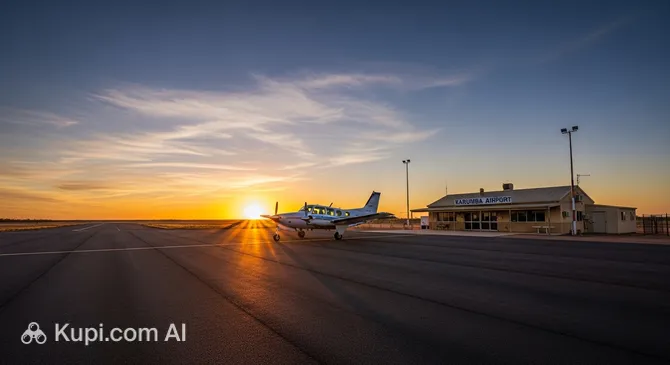
Karumba Airport. Source: Kupi.com Binoculars

Karumba Airport (KRB) is more than just a transport hub; it is a long-awaited gateway to a world of wildlife and legendary fishing in the Gulf of Carpentaria. People fly here not for business meetings, but in pursuit of trophy Barramundi and for incredible sunsets where the red earth of the Outback meets turquoise waters. The small and homely terminal immerses guests in the relaxed atmosphere of Australia's tropical north from the very first minutes, relieving them of city bustle and metropolitan stress.

IATA Code KRB
ICAO Code YKMB
City Karumba
Distance to Centre 4 km
Status Domestic
Annual Passengers Less than 10,000 (estimated)
Schedule -

Airport Features and Benefits

Despite its modest size, Karumba Airport boasts a number of advantages that make arriving here particularly pleasant for tourists:

  • Instant Holiday Start: The airport is located just a few minutes' drive from the city centre and the coast. You can step off the plane and be casting a fishing line or enjoying fresh seafood at a local dining venue within half an hour.
  • No Queues: Forget about long waits at passport control or baggage claim. Here, all procedures take mere minutes, allowing you to use your holiday time most effectively.
  • Scenic Approach: The flight into Karumba offers a unique opportunity to see the winding channel of the Norman River and the endless expanse of salt flats from a bird's-eye view, creating an unforgettable first impression of the region.

Contact Information

  • Official Website: Karumba Airport is managed by the local council (Carpentaria Shire Council). Up-to-date information is usually available on their official website in the section dedicated to aerodromes: www.carpentaria.qld.gov.au.
  • Help Desk Phone: To contact the airport administration, you can use the main number of the Carpentaria Shire Council: +61 7 4745 2200.
  • Airport Address: Yappar St, Karumba QLD 4891, Australia.
  • Email: For general enquiries, you can contact the shire council via email: council@carpentaria.qld.gov.au.
  • Social Media: Such a small regional airport typically does not have separate social media pages. It is recommended to follow news on the official resources of the Carpentaria Shire Council.
  • Lost Luggage Information: If your query concerns checked baggage (loss or damage), you must contact your airline directly. Regarding items left in the terminal building, you should contact the airport administration at the phone number listed above.
  • Passenger Support Contacts: Assistance to passengers at the airport is provided by airline staff. For general questions related to terminal operations, one should contact the Shire Council administration.

How to Get to the Airport

Karumba Airport (KRB) is located in close proximity to the town of Karumba, making the journey to the terminal quick and simple. Since this is a small regional airport in a remote part of Australia, transport options are limited, and it is worth planning your route in advance.

Taxi and Transfer

The most convenient and common way to get to the airport is to use a local taxi service or book a private transfer. The trip from the city centre will take just 5-10 minutes. Given the short distance, the cost of the trip will be low. It is recommended to book a car in advance, especially if your flight is early in the morning, late at night, or during the peak tourist season.

Car Rental

For travellers who wish to explore the Gulf of Carpentaria region on their own, car rental is an excellent choice. Many rental companies allow you to pick up or drop off the car directly at the airport by prior arrangement. This gives maximum flexibility and independence in movement. The road to the airport from any point in the town is intuitive and will not cause difficulties.

Public Transport

It is important to note that there is no regular public transport system in Karumba, such as city buses, trains, or metro, that connects the town to the airport. Travellers should not rely on this option when planning their trip to the airport.

Airport Parking

There is a parking area next to the Karumba Airport terminal. It is suitable for both short-term parking to pick up or drop off passengers, and for long-term storage of a vehicle during your absence. typically, parking is free at such small airports, but it is worth checking current rules and conditions before your trip.

Terminals and Map

Karumba Airport (KRB) is a small regional airport, typical of many small towns in Australia. Its structure is extremely simple and clear, making travel through it as comfortable and fast as possible. The airport complex consists of one compact terminal that handles all flights — both arrivals and departures.

The terminal layout is intuitive. Essentially, it is one small building where all necessary services are concentrated. Here you will find check-in counters, a small waiting area for departing passengers, and a baggage claim area for arrivals. The arrival and departure zones are in close proximity to each other, so navigation will not cause any difficulties. There are no transfers between terminals, as there is only one.

Thanks to the modest size of the airport, all pre-flight formalities are completed very quickly. Flight check-in and security screening usually take minimum time. Nevertheless, it is recommended to arrive at the airport approximately 45-60 minutes before departure to check in luggage and take your seat in the waiting lounge without rushing. It is practically impossible to get lost here — everything is in one room or a couple of steps away.

The main feature of Karumba Airport is its intimacy and functionality. There are no long corridors, complex maps, or crowds of passengers here. This is an ideal option for those who value their time and prefer a calm start and end to their journey. Simplicity and speed of service are the key advantages of this small but regionally significant transport hub.

Airport History

The history of Karumba Airport (KRB) is inextricably linked with the events of World War II. It was built not as a civil facility, but as a strategic military airbase for the Royal Australian Air Force (RAAF). Construction began in 1942 in response to the increased threat in the Pacific region. Its location in the Gulf of Carpentaria made it an ideal place for basing seaplanes.

The main task of the airfield during the war was servicing Consolidated PBY Catalina flying boats. These aircraft played a key role in patrolling Australia's northern coast, performing long-range reconnaissance flights, anti-submarine missions, and mining enemy sea routes. The base in Karumba was an important link in the Allied defensive chain and made a significant contribution to the security of the region.

After the end of World War II, the military significance of the airfield diminished, and it was gradually transferred to civil administration. From this moment began its new history — as a vital transport hub for the remote town of Karumba. The airport began to provide a link with other parts of the country, delivering mail, goods, and, of course, passengers. This was particularly important for the development of local industries such as fishing and tourism.

Today, Karumba Airport is a small but functional regional airport. Although it cannot boast large-scale renovations or records, its main achievement is decades of uninterrupted service for the benefit of an isolated community. It remains a reminder of the region's military past and continues to play a key role in the modern life of Karumba, connecting this picturesque corner with the rest of the world.

Services and Amenities

Karumba Airport (KRB) is a small regional air terminal that serves as the gateway to the town of the same name and the picturesque Gulf of Carpentaria region in Australia. Given its compact size, the infrastructure here provides for the basic needs of travellers, but one should not expect the range of services typical of major international airports. Everything necessary for comfortable departure and arrival is available here, however, most amenities are located in the town itself.

Inside the terminal, you will find check-in counters and a main waiting lounge. Options for dining and shopping at the airport are extremely limited and are likely reduced to vending machines with drinks and snacks. There are no restaurants, cafes, or Duty Free shops here. We recommend planning purchases and meals in the town of Karumba before arriving for your flight.

Specialised services such as VIP lounges, business centres, or conference rooms are absent at Karumba Airport. Free access to Wi-Fi and public charging stations for electronic devices are generally not provided, so it is better to have a portable power bank with you and download necessary content to your devices in advance.

Currency exchange points, banks, or ATMs do not operate within the airport territory. All financial matters should be settled in town beforehand. There is also no dedicated medical point, but in emergencies, airport staff will provide first aid and call the necessary services. Passengers with children and travellers with reduced mobility are recommended to notify their airline in advance regarding the need for special assistance. There are no hotels directly on the airport grounds, but plenty of accommodation options can be found in Karumba itself, located a few minutes' drive away.

Dining Options

When planning a departure from Karumba Airport (KRB), it is important to consider that this is a small regional aviation hub, and the choice of dining establishments here is quite limited. Unlike large international airports, you will not find a variety of restaurants and coffee shops here. The infrastructure is designed to provide for the basic needs of passengers waiting for their flight.

Usually, there is one small kiosk or cafe operating in the terminal building. Here, travellers can purchase light snacks such as sandwiches, pastries, crisps, and chocolate. Available beverages include coffee, tea, bottled water, and soft drinks. This is sufficient for a quick snack before a flight, but one should not count on a full hot lunch or dinner. The opening hours of such an establishment are generally tied to the flight schedule: it opens shortly before departure and closes after the aircraft leaves.

Regarding special dietary requirements, finding vegetarian, vegan, gluten-free, or Halal dishes at Karumba Airport will be extremely difficult. The assortment is very basic, so passengers with strict dietary restrictions are advised to bring food with them. Prices for snacks and drinks may be slightly higher than in town, which is standard practice for airports.

If you have time and wish to have a proper meal, the best solution would be to do so at one of the establishments in the town of Karumba before travelling to the airport. This will allow you to enjoy a wider selection of local Australian cuisine, including the fresh seafood for which this region is famous, in a more relaxed setting.

Traveler Tips

Travelling through Karumba Airport (KRB) is generally a simple and straightforward process, typical of small regional aviation hubs in Australia. To ensure your trip goes as smoothly as possible, follow these tips. It is recommended to arrive at the airport approximately 1 hour before the departure of a domestic flight. This time will be sufficient to complete all formalities without rushing, given the compact size of the terminal.

Flight check-in and security control at Karumba Airport usually proceed faster than in large international hubs. Nevertheless, always have photo identification and your boarding pass (printed or digital) with you. To save time, use the online check-in service offered by most airlines. This will allow you to proceed straight to baggage drop or security screening if you are travelling light.

When choosing a seat on the plane, consider your preferences. Window seats will give you the opportunity to enjoy views of the Gulf of Carpentaria coastline during takeoff and landing. Aisle seats provide more legroom and convenient access to the exit. Note that smaller aircraft are often used on regional flights, so seat selection may be limited, and the difference between them — insignificant.

Regarding hand luggage, standard security rules apply in Australia. It is prohibited to bring sharp objects, weapons, and flammable substances into the aircraft cabin. Liquids, aerosols, and gels must be in containers of no more than 100 ml each and packed in a single transparent resealable bag. Important: always check the exact hand luggage and baggage allowances on your airline's website, as they may vary.

Karumba Airport mainly handles direct flights, so long layovers here are rare. If you have a connecting flight planned, ensure there is enough time between arrival and departure. Since the terminal is small, navigation will not cause difficulties. Usually, for domestic transfers in Australia, baggage must be collected and checked in again for the next flight.

Since Karumba Airport serves exclusively domestic flights, there is no international customs or passport control here. You will only have to pass standard security screening, just like at any other airport in the country. This significantly simplifies and speeds up pre-flight procedures.

To save time and money, book flight tickets in advance, especially during the peak tourist season. Travel with minimal luggage to avoid excess weight charges. In small airports, the choice of food and drinks may be limited and cost more, so you can bring a small snack that is permitted for carriage.

In case of a flight delay or cancellation, first contact your airline representative at the airport or by phone. They will provide up-to-date information on the flight status and explain your rights, including possible provision of meals or accommodation. Bear in mind that in a small terminal, options for long waits may be limited, so it is useful to have a book, a charged power bank, and headphones with you.
Reached the end of the page?

That means the route is fully explored