Support

Coombabah Lakelands Conservation Area

About

Imagine a green oasis of peace and quiet right in the heart of the vibrant city of Gold Coast. Coombabah Lakelands Conservation Area is a vast protected territory covering over 1,200 hectares, where Australia's nature is preserved in its pristine form. Here, eucalyptus forests seamlessly transition into mangrove swamps and salt marshes, creating the perfect habitat for hundreds of animal species.
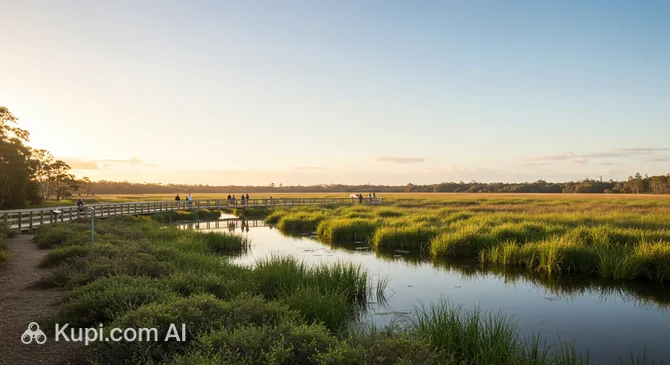
Coombabah Lakelands Conservation Area
Coombabah Lakelands Conservation Area. Иллюстрация. Источник: Kupi.com AI

This site is officially recognized as a wetland of international significance. The reserve is home to 274 species of animals, including charming koalas and majestic kangaroos, which often graze right by the paths. Travelers are drawn here for the chance to see unique fauna in their natural habitat without entering zoo enclosures.

Coombabah Lakelands is of particular value to birdwatchers: between May and October, you can encounter migratory birds traveling immense distances from northern latitudes. A walk through the area is more than just leisure; it's a true immersion into the ecosystem of the Southern Moreton Bay Marine Park, where every corner breathes the tranquility of an ancient land.

Contacts

For up-to-date information on trail conditions or to organize group visits, you can contact the managing council. Despite its status as a wilderness area, the site is maintained in excellent condition by city services.

How to contactContact
AddressAustralia, Queensland, Coombabah, Unnamed Road
Websitewww.goldcoast.qld.gov.au

What to Do

The main draw for visitors to Coombabah Lakelands is the chance to see wild koalas and eastern grey kangaroos in their natural environment. While strolling along the flat dirt trails, be sure to look up at the eucalyptus treetops: these fluffy sleepers often rest in the forks of the branches. In the open meadows, you can observe entire families of kangaroos, which are quite used to people and allow for impressive photos from a safe distance.

Be sure to follow the Mangrove Boardwalk route. These wooden paths will lead you through mysterious mangrove thickets directly to the lake. At the end of the path is a special Birdhide designed for discreet birdwatching. Here, in the silence, you can see herons, pelicans, and rare migratory birds without disturbing them.

For outdoor enthusiasts, the reserve offers about 10 kilometers of flat trails, perfect for light jogging or leisurely bike rides. If you want to learn more about local plants and ecology, you can join daytime or even nocturnal guided tours occasionally organized by local rangers.

Getting There

This natural retreat is about a 20–30 minute drive from the center of Gold Coast. The main entry point is the parking lot at Rain Tree Glen, where you can park for free and immediately access the main walking trails.

If you prefer public transport, take buses going to the Helensvale or Runaway Bay areas. From the stops, it's most convenient to take a taxi or use a rideshare service, as buses rarely go directly to the boundaries of the conservation area. A walk from nearby residential neighborhoods over flat terrain is also comfortable for those who enjoy long walks.

Ближайший город: Gold Coast

History & Facts

The history of these places is rooted in the deep past: scientists believe the Coombabah lake system formed as a freshwater body during the last Glacial Maximum about 20,000 years ago. Only about 7,500 years ago, as sea levels rose, did it transform into a brackish lagoon, creating unique conditions for mangrove forests to thrive.

For the Kombumerri and Yugambeh indigenous peoples, this territory held immense cultural and dietary significance. The name "Coombabah" translates from their language as "place of turtles" or "place of wood worms." Aboriginal people carefully managed the lakes' resources, using them as a rich source of food for many centuries.

In the 19th century, the landscape began to change under the influence of European settlers: there were attempts to develop pastures and even oyster farms. Fortunately, in the 1980s, local authorities recognized the region's ecological value and began purchasing land for protection. In 1994, the area officially received the status of a protected conservation area, forever preserving a piece of pristine nature amidst the growing metropolis.

Time Needed

For a quick introduction to the park and a walk along the mangrove boardwalks, you will need about 1.5–2 hours. This is plenty of time to take beautiful photos and see kangaroos in the open clearings.

If you are into birdwatching or plan to walk all 10 kilometers of trails, it's better to set aside half a day (about 4-5 hours) for your visit. Early morning hours are especially good for those who want to catch koalas at their most active before the midday heat sets in.

Working Hours

The reserve welcomes guests daily, following nature's daylight cycle. The gates are open from 6:00 AM to 6:00 PM throughout the week, from Monday to Sunday.

Plan your visit to leave the area before sunset, as navigating forest trails can be difficult in the twilight, and wildlife becomes more active.

6:00 – 18:00

Nearby

The reserve is located in the northern part of the city, which is famous not only for its nature but also for its thrilling entertainment complexes. Exploring the surroundings allows you to combine peaceful wildlife viewing with an adrenaline rush at the country's best theme parks in a single day.

NameDistance
Sea World6.3 km
Gold Coast Holiday Park Water Park6.4 km
E Star Karaoke6.5 km
GC Aqua Park6.9 km
Sundale Bridge7.7 km
Nerang National Park8.4 km
Dreamworld8.7 km

Reached the end of the page?

That means the route is fully explored