Support

Lightning Ridge

About

Lightning Ridge is more than just a spot on the map; it is a true legend of the Australian Outback, steeped in a spirit of adventure and romance. Proudly bearing the title of the "Black Opal Capital of the World," this unique town invites travelers to immerse themselves in the world of opal mining, where every stone beneath your feet could be a hidden treasure.

The town is located in the northern part of New South Wales, near the Queensland border. Geographically, it is a land of arid plains and endless skies, for which Australia is so famous. The climate here is hot and semi-desert, which has largely determined the unique way of life for locals: many build their homes underground to escape the summer heat. The population of about 4,500 is a surprisingly diverse community of miners, artists, and adventurers from all over the world.
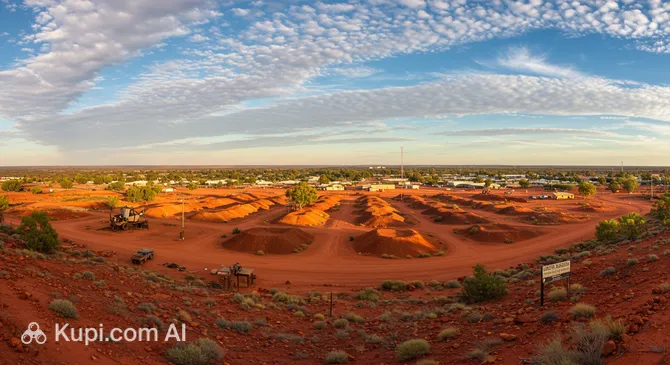
Lightning Ridge. Illustration.
Source: Kupi.com AI

The foundation and main driving force of the settlement have always been gemstone mining. The fascinating history of Lightning Ridge began in the late 19th century, and since then, the town has retained its unique, somewhat wild, and free-spirited character. There are no strict urban planning rules here, but there is genuine sincerity and hospitality.

Tourists are drawn here not only by the famous black opals but also by unusual attractions. You can relax in healing open-air artesian bore baths, descend into working mines, or visit underground galleries featuring incredible sculptures carved into the sandstone. The town's special charm is enhanced by the famous "Car Door Tours"—self-drive routes where painted car doors are used instead of traditional road signs.

A visit to Lightning Ridge is a chance to see authentic outback life, far from the glossy postcards of the coast. If you are looking for vibrant experiences and want to touch the geological mysteries of the continent, this town will be one of the most memorable stops on your journey.
Weather Overview

The climate in Lightning Ridge is typical of the Australian outback—hot, semi-arid, and sunny. The weather here dictates the rules of life: in summer, locals and tourists seek cool refuge in underground structures, while in winter, they enjoy the mild warmth outdoors. Before planning your trip, we recommend checking the current weather in Lightning Ridge to choose the most comfortable time for your visit.

Summer (December to February) is truly sweltering here. January is the hottest month, with average maximum temperatures reaching 36.1°C, while nights remain warm at around 24.7°C. Rain does occur during this period, but not often: an average of about 5 wet days per month is recorded. This is the best time to visit underground mines and museums, where the temperature remains consistently comfortable.

Autumn and spring bring long-awaited relief. In March and November, average temperatures hover around 25–26°C, creating ideal conditions for active tourism. By May, the air cools to an average of 15.9°C, preparing the town for the winter season.

Winter (June–August) in Lightning Ridge is mild and dry. Daytime temperatures warm up to 13–18°C, which is very comfortable for walking, though nights can be quite cold. In July, the coldest month, minimum temperatures drop to 7.1°C. The number of rainy days at this time is minimal—just 2–3 days per month.

Expect hot summers with occasional light showers and cool, dry winters with clear, sunny days.

Average monthly temperature

Average monthly precipitation

Interesting Facts

Beyond its main attractions, Lightning Ridge holds many fascinating secrets that reveal its character far more vividly than any guidebook. This town is full of mysteries, from its name to what is hidden deep underground.
  • The Legend of the Name: The name "Lightning Ridge" existed long before opals were discovered. According to local lore, in the 1870s, a powerful lightning strike hit a flock of sheep sheltering under trees on a ridge, killing a farmer, his dog, and hundreds of animals. This dramatic event gave the area the name it bears to this day.

  • The "Ghost" Population: Official statistics can differ greatly from reality. Locals joke that no one knows exactly how many people live in Lightning Ridge. Many prospectors prefer the solitude of their camps in the bush and intentionally avoid censuses, so the real population may be significantly higher than official figures.

  • Water from the Dinosaur Era: The water filling the Lightning Ridge Artesian Bore Baths takes an incredible journey. It comes from the Great Artesian Basin from a depth of nearly a kilometer, and its age is estimated at roughly two million years. Effectively, you are bathing in rainwater that fell during the prehistoric era.

  • Opalized Dinosaurs: Lightning Ridge is the only place in the world where dinosaur and marine reptile fossils are found turned into precious opal. A unique predatory dinosaur, the "Lightning Claw," was discovered here, with bones that shimmered with opal blue, making this region a paleontological treasure of global importance.

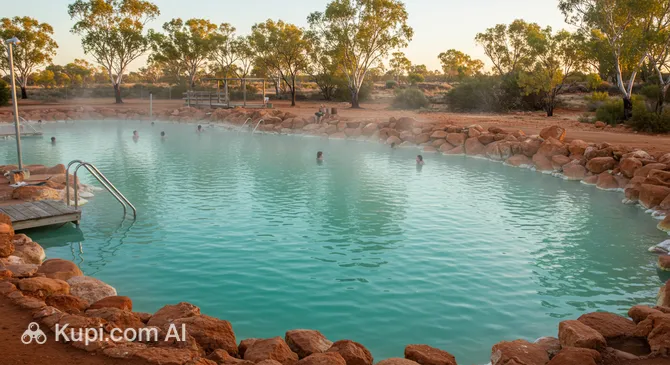
Artesian Bore Baths. Illustration.
Source: Kupi.com AI

Traveler photos:

How to Get There

A journey to Lightning Ridge is a true immersion into the heart of the Australian continent. The town is located in a remote part of New South Wales, and the road here is an adventure in itself, offering views of endless plains and unique outback nature. To choose the best route and calculate travel time, we recommend checking all the ways to reach the town.

The fastest way to reach the region is by air. Although Lightning Ridge itself has a small airport that handles private planes and occasional regional flights, most tourists prefer to fly to larger transport hubs. The most convenient option is to fly from Sydney to the airport in Dubbo or Moree. These cities receive regular flights from major Australian carriers. Upon arriving in Dubbo, you'll have an exciting drive in a rental car that takes about 4 hours, while the journey from Moree is shorter—roughly 2–2.5 hours.

For those who prefer ground transport, there is a reliable NSW TrainLink service. A classic route for travelers from Sydney is to take the train (XPT) to the station in Dubbo, where a convenient transfer to a comfortable coach bound for Lightning Ridge is organized. The entire journey takes nearly a full day but allows you to comfortably watch the landscapes change outside your window. Motorists can reach the town via the Castlereagh Highway; the drive from Sydney takes about 9–10 hours.

Main Attractions

The main value of Lightning Ridge lies in its unique atmosphere, where opal mining history intertwines with creativity and incredible natural phenomena. The town offers entertainment that cannot be found anywhere else in the world. From bathing in water millions of years old to descending into underground galleries, every corner here is infused with a spirit of adventure.

One of the most popular and beloved attractions is the Lightning Ridge Artesian Bore Baths. This open-air pool complex is filled with water from the Great Artesian Basin, which is naturally heated to a pleasant 41.5°C. Rich in minerals, the water is considered therapeutic and is excellent for relieving fatigue. The baths are open 24/7 and are completely free to visit, making them the hub of the town's social life: people come here to watch the sunrise or enjoy the starry sky after sunset.

The cultural face of the town is unimaginable without the work of a local artist who has become a celebrity throughout Australia. The John Murray Art Gallery is an explosion of color and humor amidst the desert landscape. Murray’s paintings, in a style of "Outback Surrealism," ironically and lovingly depict the daily lives of miners, local fauna, and the harsh realities of outback life. The gallery has long since evolved from a simple exhibition hall into an iconic landmark where you can buy exclusive souvenirs and prints.

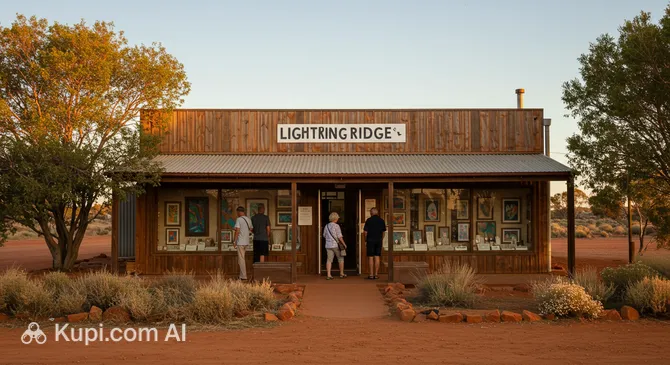
John Murray Art Gallery. Illustration.
Source: Kupi.com AI

Traveler photos:

Equally impressive is the Chambers of the Black Hand. This unique underground gallery is located more than 10 meters deep in an old opal mine. The walls of the labyrinth are adorned with hundreds of hand-carved sandstone sculptures and bas-reliefs, ranging from Egyptian hieroglyphs and biblical scenes to dinosaur figures and famous characters. It is often called one of the most unusual art spaces in the country.

For those who want to better understand why this region is known as the world capital of black opal, a visit to the Australian Opal Centre is a must. It houses a stunning collection of gemstones, as well as rare opalized fossils of dinosaurs and ancient reptiles that lived here millions of years ago. This is not just a museum, but a scientific center preserving the continent's geological chronicle.

It is also worth stopping by the Lightning Ridge Outback Resort & Caravan Park, which is not just an accommodation option but also an entertainment complex. Events are frequently held on its grounds, and the atmosphere of the local bar perfectly conveys the friendliness and hospitality of the residents of this extraordinary mining town.

Local Cuisine

The gastronomic scene in Lightning Ridge is an honest and hearty reflection of life in the Australian outback. Don't come here looking for refined fine-dining restaurants with white tablecloths; local culinary culture relies on fresh ingredients, large portions, and a warm atmosphere. Thanks to the multinational community of miners who came here from all over the world, local menus feature traditional Australian dishes alongside home-style European recipes.

The staple of the local diet is classic "pub grub." A major hit that every tourist must try is Chicken Parmigiana (often called a "Parma")—a chicken schnitzel topped with tomato sauce and melted cheese, which is prepared excellently here. The region is also famous for high-quality meat: juicy beef or lamb steaks cooked on the grill are served almost everywhere. For those seeking something exotic, many establishments offer kangaroo meat steaks or burgers—this lean, protein-rich meat with a distinct flavor is considered a local delicacy.

Snack culture here also has its unique traits. During the day, locals and travelers often stop at bakeries for famous Australian meat pies with rich gravy. If you want a taste of history, try damper—a traditional Australian bush bread baked in the coals of a campfire. It is often served with Golden Syrup and tea, creating an atmosphere of true bush life.

As for drinks, in the hot climate of Lightning Ridge, ice-cold lager remains the king of the table, perfectly quenching thirst after tours of the mines. Wine lovers should look for products from New South Wales wineries—you can find decent Shiraz and Chardonnay varieties. Coffee culture has also reached the outback: local cafes will serve you an excellent flat white, which Australians consider their national invention.

The hubs of gastronomic life in town are social clubs (such as the Bowling Club) and hotel restaurants. These are places where people gather not just to eat, but to socialize. A great example is the restaurant located within the Lightning Ridge Outback Resort & Caravan Park. Here, you can enjoy dinner in a relaxed setting after a busy day, appreciating the hospitality and culinary traditions of this unique mining region.

Travel Tips

Welcome to Lightning Ridge! To ensure your journey to this unique corner of the Australian outback goes smoothly and leaves only pleasant memories, we have prepared a list of important practical recommendations to help you feel confident in the "Black Opal Capital of the World."

  1. Clothing and Essentials. Given the semi-desert climate, choose light, breathable clothing made of natural fabrics to protect you from the intense sun. A wide-brimmed hat, sunglasses, and high-SPF sunscreen are essential. A very useful accessory is a fly net (a mesh for your face)—in the warmer months, flies in the outback can be very persistent. Footwear should be closed-toe, comfortable, and sturdy, as you will be walking on dusty and rocky ground.
  2. Transport. Public transport in the traditional sense (buses, trains) is absent here. The best way to get around is a rental car. For driving on unpaved roads to remote mines, it's better to choose an SUV or crossover, although a sedan can manage in dry weather. In the evening, use the "Courtesy Buses" from local clubs and hotels, as taxis may not operate 24/7.
  3. Finances. The official currency is the Australian Dollar (AUD). Cards are accepted in supermarkets, gas stations, and most cafes, but cash is necessary. It will come in handy at Sunday markets, when buying souvenirs from private artisans, and for small transactions. ATMs are located on the main Morilla Street. Tipping is not mandatory, but rounding up the bill or 10% for good service is always appreciated.
  4. Health and Safety. The pharmacy is in the town center and operates during standard hours (usually until 5:00 PM, closed on Sundays), so bring specific medications with you. The main danger in Lightning Ridge is open mine shafts. Never walk through mining areas in the dark and do not stray far from marked paths—old shafts can be hidden in the grass.
  5. Communication. The primary language is English, but with a strong local accent and slang. For mobile service, it is best to buy a SIM card from Telstra, as it has the best coverage in rural areas (other providers' signals may drop out immediately outside town limits). Wi-Fi is available in most hotels and at the library, but speeds may be slower than in the city.
  6. Local Etiquette. The townspeople are very friendly and open. It is customary to greet people (the phrase "G'day" is perfect) including shopkeepers and even passers-by on quiet streets. The dress code is extremely casual everywhere—casual style is appropriate even in restaurants. Be prepared for a slow service pace—no one is in a hurry here.
  7. What to Avoid. It is strictly forbidden to enter private mining claims without the owner's permission. This is considered trespassing and an attempt at stealing opals (known as "ratting"), which can lead to serious conflicts and trouble with the police. If you see a "Keep Out" or "Private Property" sign—take it literally.
  8. Local Tip. For a self-guided introduction to the town, use the famous "Car Door Tours." These are four color-coded routes (Green, Blue, Yellow, Red) marked by old car doors. Buy a map at the information center for a nominal fee and follow the doors—it's the best way to ensure you don't miss any hidden gems.

Lightning Ridge is a place where the spirit of freedom is valued above all, and people are always ready to help a traveler. By following these simple safety rules and respecting local mining traditions, you can fully immerse yourself in the amazing atmosphere of this region and perhaps even find your own precious stone!

Entertainment & Nightlife

Nightlife in Lightning Ridge is fundamentally different from what metropolises offer. You won't find neon signs for trendy discos or pretentious bouncers here. Evening entertainment in the "Black Opal Capital" is primarily about heartiness, strong friendships, and the genuine flavor of the Australian outback. The centers of attraction after sunset are classic outback pubs, sports clubs, and open areas under the starry sky.

Most activity is concentrated around the main street—Morilla Street—and its surrounding areas. This is where the key establishments are located, where locals and tourists gather to discuss the day's news, listen to live music, or play a game of billiards. The atmosphere in these venues is incredibly democratic and relaxed. The dress code is informal: comfortable casual wear is appropriate everywhere. The crowd is very diverse—from rugged miners to traveling families—creating the feeling of a large, friendly party.

One of the popular spots for evening leisure is the Lightning Ridge Outback Resort & Caravan Park. It is more than just a place to sleep; it is a vital social hub. The local bar often hosts entertainment programs, live music, and guests can enjoy ice-cold beer and a hearty meal in true Australian style. It’s a great place to meet colorful local characters and hear first-hand stories about opal mining.

If you are looking for a completely unique nighttime experience, head to the Lightning Ridge Artesian Bore Baths. The complex is open 24 hours a day, and it truly transforms at night. Soaking in hot mineral water (around 41.5°C) under the canopy of the incredibly bright Southern Hemisphere stars is perhaps the most romantic and relaxing form of "nightlife" imaginable. Entry is free, and the location is perfectly safe.

Practical Tips and Safety:

  • Transport: A "Courtesy Bus" system is popular in town, offered by major clubs (such as the Bowling Club). They can pick you up from your hotel and take you back after dinner. This is the safest and most convenient way to get around in the evening.
  • Safety: Lightning Ridge is a peaceful town, and walking through the center is safe. However, avoid unlit outskirts and never enter mine sites in the dark—the risk of falling into an open shaft is real.
  • Prices: The cost of food and drinks here is lower than in Sydney. A pint of beer or a glass of wine is reasonably priced, and food portions are usually very generous.

By day, the town offers a more tranquil cultural experience. While the sun is high, visit local museums or drop by the colorful John Murray Art Gallery to soak up the positive vibes of his ironic paintings before your evening promenade. The combination of daytime mine tours and evening pub gatherings creates the perfect balance for getting to know this amazing region.

Parks & Museums

Although Lightning Ridge is located in the heart of the arid outback and cannot boast classic lush gardens, its public spaces and cultural institutions possess a unique charm and character. Here, nature is closely intertwined with mining history, and museums house treasures that are millions of years old.

Parks and Natural Areas

Instead of traditional urban parks, Lightning Ridge offers unique open-air relaxation zones. The primary oasis for unwinding is the Lightning Ridge Artesian Bore Baths. Surrounded by natural bushland, these pools allow you to enjoy bathing in natural mineral water amidst a wild landscape, serving as the local equivalent of a beach holiday.

For a classic picnic or family outing, Lions Park is ideal. It is one of the few organized green zones within the town limits, equipped with BBQ areas, tables, and a playground. Here, you can find shelter in the shade of eucalyptus trees and rest from the midday heat. Another interesting spot is the Wallangulla Scripture Garden, a meditative garden where stones inscribed with inspirational texts are set among drought-resistant plants.

Museums and Galleries

The cultural scene of the town is surprisingly rich for such a small settlement. The most prominent art attraction is the John Murray Art Gallery. This place is saturated with the spirit of the outback: the artist's works are famous for their photorealism and irony, accurately capturing the life and characters of the hinterland. The gallery is interesting to tourists not only for its paintings but also for its bright, cheerful atmosphere.

The scientific and historical hub is the Australian Opal Centre. This is a world-class museum housing the largest public collection of opalized fossils. Visitors can see unique exhibits: dinosaur bones and ancient marine reptiles that have transformed into precious opals over millions of years.

Historical and Architectural Landmarks

Town history comes alive at the Heritage Cottage Hospital—a hospital building from 1915 that now functions as a museum. The exhibition, including vintage medical equipment, tells of the heroic work of doctors and nurses in isolated conditions. Architecture enthusiasts should check out Cooper's Cottage—an authentic miner's hut built in 1916 from scavenged materials, which vividly demonstrates the ascetic lifestyle of the first settlers.

Insider Tip

Don't miss Amigo's Castle—an eccentric structure built by hand by an Italian immigrant using iron drums and sandstone. While access to the interior may be limited, this "castle" is a magnificent example of local ingenuity and a great backdrop for photos.

Getting Around

The public transport system in Lightning Ridge differs significantly from standard urban infrastructure. Since this is a small outback town with a population of about 4,500, there are absolutely no subways, trams, trolleys, or even regular city bus routes. Distances between attractions and residential areas can be significant, so tourists should not rely on classic public transport for getting around town.

The primary and most convenient way to travel is by car. If you didn't arrive in your own vehicle, it is highly recommended to rent one. This will give you the freedom to explore the scattered mines and unique sites like Amigo's Castle or the remote opal fields. A local taxi service operates in town, which helps those who don't drive. You can pay for your trip in cash or by card, but it's best to confirm the possibility of cashless payment with the dispatcher when ordering.

A unique feature of the transport system in Lightning Ridge, as in many Australian towns, is the Courtesy Bus. These are provided by large entertainment venues, such as the local bowling club or sports centers. These buses run in the evenings, picking up guests from hotels and taking them back after dinner or a show. This is not only convenient but also safe, especially if you plan to sample local drinks. The service is usually free for patrons of the establishment; no tickets or passes are required.

To see the sights, many tourists choose organized bus tours. This is a great alternative to driving yourself, as experienced guides not only take you between locations but also tell the history of the region. Such tours can be booked at the visitor information center. As for walking, it is comfortable only within the main Morilla Street area, where shops and cafes are concentrated; for longer routes, walking can be exhausting due to the heat and distances.

There are no transport cards, mobile payment apps, or validators in Lightning Ridge. All logistics are built on personal transport, taxis on call, or transfers from hotels and clubs. When planning your day, keep in mind that waiting for a taxi can take time, so for important trips, such as to the airport, it is better to book a car in advance.

Accommodation

Accommodation in Lightning Ridge is an extension of your introduction to the unique spirit of the Australian outback. Here, you won't find faceless corporate skyscrapers or ultra-luxurious five-star hotels from global brands. Instead, the town offers travelers cozy motels, guesthouses, and colorful tourist parks that perfectly fit the surrounding desert landscape and mining atmosphere.

The typical range of housing varies from budget camping sites to comfortable mid-range apartments. The bulk of the accommodation consists of classic motels equipped with everything needed for a rest after a hot day, including air conditioning (which is critical in the local climate) and often swimming pools. Caravan parks are immensely popular; in Australia, these are not just parking lots but full-scale holiday resorts with developed infrastructure.

Since the town is quite compact, there is no distinct separation between tourist and residential areas. Most accommodation options are concentrated along the main streets (Onyx Street and Morilla Street) or in their immediate vicinity. This provides easy walking access to shops, galleries, and cafes. However, some complexes are located a bit further from the center, offering guests peace, space, and magnificent views of the starry sky, undisturbed by city lights.

A prime example of local hospitality is the Lightning Ridge Outback Resort & Caravan Park. This complex perfectly illustrates the versatile approach to accommodation in the region: you can find everything from tent and motorhome sites to cozy cabins with all amenities. By choosing such places, you get more than just a roof over your head—you get access to entertainment and the chance to socialize with other travelers right on site.

Booking Tips and Prices:

Pricing in Lightning Ridge remains democratic and falls within the "budget" and "mid-range" categories. However, seasonality should be considered. The peak of tourist activity occurs during the cooler months (April to October) and the Easter holidays. During this period, and during the famous Opal Festival, demand for housing rises sharply.

We strongly recommend booking your accommodation in advance, especially if you plan to visit during high season. You can do this through popular international online platforms or directly via hotel websites—many local owners appreciate personal contact and may offer better terms for a direct call.

Nearby Cities

For those who want to explore the surroundings, Lightning Ridge serves as an excellent starting point for fascinating trips around the region. There are several interesting locations nearby, each with its own unique character.

Moree is the nearest major town, located about two hours' drive to the east. It is known as the spa capital of Australia due to its mineral-rich artesian springs. Beyond the baths, Moree attracts tourists with its Art Deco architecture and the opportunity to see the region's rich agricultural lands where cotton and pecans are grown.

St George is a picturesque town located to the north, across the border in Queensland. Situated on the banks of the Balonne River, it is considered a paradise for fishing enthusiasts and those seeking a quiet getaway by the water. It’s a great destination for a change of pace to experience the culture of a neighboring state while enjoying a picnic in the riverside parks.

Dubbo is a large regional center that often serves as the gateway to the outback. Although it is quite a distance away, many tourists combine a visit to Lightning Ridge with a trip to Dubbo for the famous Taronga Western Plains Zoo, where animals are kept in large open-range enclosures. The historic Old Dubbo Gaol, now a museum, is also of interest here.

CityPopulationDistance
Collarenebri1 10059 km
Walgett2 30067 km
Dirranbandi63997 km
Brewarrina1 600123 km
Bollon100162 km

These nearby destinations allow for a more complete understanding of the diverse culture and landscapes of this part of the continent.

Shopping & Souvenirs

General Overview: Shopping in Lightning Ridge is a unique adventure that is hard to compare with shopping in a typical metropolis. People come here not for designer clothes or electronics, but for treasures from the earth. The town, titled the Black Opal Capital of the World, offers tourists an exceptional opportunity to purchase precious stones and jewelry directly from the source, often bypassing middlemen. The trading scene here is steeped in the spirit of prospecting and creativity, and many shops are combined with workshops.

Main Shopping Areas and Streets: The heart of the town's commercial life is Morilla Street. This is where most of the infrastructure is concentrated: from grocery supermarkets and pharmacies to specialized jewelry showrooms and souvenir shops. A stroll down this street will allow you to visit several key opal stores, stop by cozy cafes, and find everything you need for your journey. It is a compact and convenient area that is easy to explore on foot.

Shopping Centers: There are no large shopping centers or malls in the conventional sense in Lightning Ridge. Trade here is conducted in the format of small private shops, boutiques, and galleries. The absence of retail giants adds a special charm to shopping: business owners often stand behind the counter themselves and can tell the story of every stone or souvenir.

Markets: Market trading is an important part of the local flavor. The Sunday Markets are very popular, often held near the visitor information center or in parks. Here you can buy items from local artisans, home-baked goods, honey, second-hand books, and, of course, rough stones or small opal souvenirs at reasonable prices. It's an excellent place to chat with the locals.

Souvenirs: The main souvenir to take away from Lightning Ridge is, undoubtedly, a black opal. The choice is vast: from affordable "doublets" and "triplets" to solid investment-quality stones. In addition to jewelry, look out for the work of local artists. Be sure to visit the John Murray Art Gallery, where you can buy not only original paintings but also high-quality prints, postcards, and souvenirs featuring his signature ironic style that reflects the spirit of the outback.

Opening Hours and Payment: Shops in town typically operate from Monday to Friday from 9:00 AM to 5:00 PM, and on Saturdays until midday (around 12:00 or 1:00 PM). Many shops may be closed on Sundays, except for major tourist spots and supermarkets. Bank cards (Visa, Mastercard) are accepted almost everywhere, but it is recommended to have Australian dollars in cash for purchases at markets or small deals with private miners.

Tax Free: Since Australia supports the Tourist Refund Scheme (TRS), purchasing expensive opals or jewelry can be even more advantageous. If you buy goods totaling 300 AUD or more in one store (and have one tax invoice), you can claim a GST refund when leaving the country. Be sure to ask the seller for a tax invoice to present at customs.

Reached the end of the page?

That means the route is fully explored