Support

McArthur River Airport

About the Airport

McArthur River Airport (MCV) is not merely a runway, but a gateway to one of the largest industrial centres in the Northern Territory of Australia. Located in a remote area, it plays a key role in the logistics of the mine of the same name, one of the world's leading producers of zinc and lead. This airfield is a vital artery connecting the industrial giant with major cities and ensuring the smooth operation of the shift-work method. For thousands of employees, it has become a familiar point of arrival and departure, symbolising the unique rhythm of life in the Australian outback.
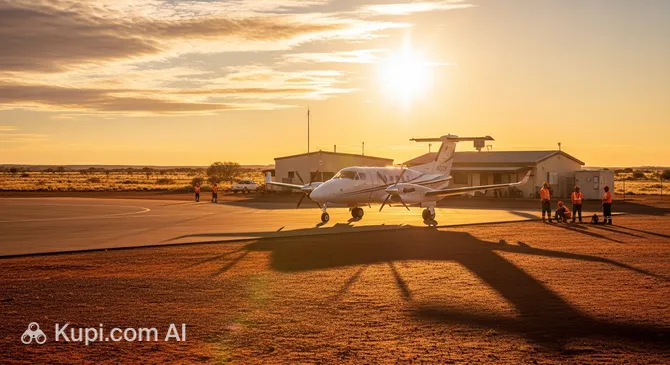
McArthur River Airport. Source: Kupi.com Binoculars
IATA Code MCV
ICAO Code YMHU
City McArthur River
Distance to Centre Located directly on the mine territory
Status Private / Domestic
Passengers per Year Exact data unavailable (private airfield servicing mine personnel)
Popular Airlines Alliance Airlines, Airnorth

Features and Purpose

The main feature of McArthur River Airport lies in its status — it is a private airfield owned by the McArthur River Mining company. Its primary and sole task is servicing personnel working on a "Fly-in-fly-out" (FIFO) system. This means the airport is not intended for commercial tourist flights, and access to it is strictly limited to employees and contractors of the mine.

The airport's infrastructure is designed with a focus on functionality and safety. There are no Duty-Free shops or numerous cafes familiar to travellers here. The terminal is a simple and efficient building designed for the rapid check-in and boarding of workers onto charter flights that connect the mine with cities such as Darwin and Cairns. The airfield is capable of receiving turboprop and small jet aircraft, making it a critically important element for the uninterrupted operation of one of the region's most significant industrial facilities.

Contact Information

McArthur River Airport (MCV) is a private airfield primarily serving the needs of the mine of the same name. Consequently, standard public contacts typical for commercial airports are limited here. Most issues related to flights are resolved through the airlines operating charter flights or through the mine's operating company.

  • Official Website: As a private facility, the airport does not have its own public website. Information about the mine's activities, of which the airfield is a part, may be available on the operating company's corporate site.
  • Inquiry Service Phone: There is no direct telephone line for passengers. All communications are conducted through airline representatives or the administration of McArthur River Mining.
  • Airport Address: The airport is located on the territory of the McArthur River Mine, Northern Territory, Australia, approximately 65 km from the nearest settlement of Borroloola.
  • Email: There is no public email address for general inquiries.
  • Social Media: The airport does not hold official accounts on social media platforms.
  • Lost Luggage Information: For all inquiries related to lost or damaged luggage, please contact the airline that operated your flight directly.
  • Passenger Support Contacts: Passenger support, including information on flights and special services, is provided by the air carrier.

How to Get to the Airport

McArthur River Airport (MCV) is a private airfield located in a remote region of the Northern Territory of Australia. It primarily serves the zinc mine of the same name, and its infrastructure is oriented towards the needs of the enterprise rather than regular passenger transport. It is important to understand that this is not a standard passenger airport, and access to it requires careful planning.

Due to the specific nature and remoteness of the airport, familiar ways to reach it are absent. There are no regular bus routes, trains, or metro services here. The main transport flow consists of charter flights organised by the mining company for its employees. If your trip is not related to work at the mine, the only reliable way to get from the airfield to your destination is a pre-booked private transfer. Taxi services in the traditional sense are not available in this area.

Renting a car directly at McArthur River Airport is impossible. Travellers planning to move around independently need to rent a car in major regional centres, such as Darwin or Katherine, and prepare for a long journey. For trips in this region, a four-wheel drive (4WD) vehicle is strongly recommended, as many roads are unsealed and their condition depends heavily on weather conditions. Before travelling, strictly check road conditions and stock up on fuel, water, and provisions.

Parking near the airfield is informal and primarily intended for service vehicles. The concept of a "city centre" is not applicable to McArthur River, as it is essentially a workers' settlement attached to the mine. The nearest settlement, Borroloola, is approximately 90 km away, and the drive can take over an hour on difficult roads. The cost of any type of transport — be it a private transfer or a long-term SUV rental — will be significantly higher than in densely populated areas of the country due to logistical complexities and remoteness.

The main recommendation for travellers is to plan logistics in advance and down to the smallest detail. Spontaneous trips to this region are practically impossible. All transport matters must be coordinated either with the inviting party (the company) or through specialised operators working in the Northern Territory. For tourism purposes in the wider region, travellers sometimes consider other remote airports, such as Alyangula Airport (GTE) or Tennant Creek (TCA), however, they are hundreds of kilometres away and also require a special approach to travel planning.

Terminals and Map

McArthur River Airport (MCV) is a private airfield serving the mining complex of the same name in Australia. It is crucial to understand that this is not a public commercial airport, but a facility intended primarily for charter flights delivering employees for their shifts. Consequently, its structure is maximally simplified and functional.

The airport consists of one small terminal, which combines all necessary zones. There is no complex layout or confusing passageways here, unlike in major international hubs. The departure and arrival zones are essentially located in one compact building, making navigation intuitively clear. The entire space is organised for the rapid and efficient processing of the passenger flow, which consists mainly of mine workers.

The distinctive feature of the terminal lies in its utilitarian nature. Instead of Duty-Free shops and numerous restaurants, basic amenities are located here: a waiting lounge, check-in counters for charter flights, and a luggage processing point. Since the airport services primarily planned flights for personnel, all processes are streamlined and standardised.

Check-in and security screening procedures at McArthur River airport take place significantly faster than in large airports. Passengers generally do not need to arrive several hours before departure. The exact arrival time should be confirmed with the airline or the employer organising the flight. Thanks to its small size and specific operations, orienting oneself here is very easy — it is practically impossible to get lost.

Airport History

The history of McArthur River Airport (MCV) is inextricably linked with the mine of the same name, one of the world's largest for zinc, lead, and silver extraction. This is not a public airport in the traditional sense, but a private airfield built and used specifically for the needs of the mining enterprise. Its main task is ensuring the rotation of workers under the fly-in fly-out (FIFO) system, where employees fly in for a shift from other cities in Australia and fly home upon its completion.

It is difficult to name the exact founding date of the airport, as it developed alongside the mine. Likely, a simple airstrip existed here during the geological exploration stage. Significant expansion and modernisation of the airfield infrastructure occurred in the mid-2000s. This was connected to the mine's transition from underground to open-pit mining, which led to a sharp increase in personnel numbers and, consequently, the need to accommodate larger charter aircraft for transporting workers.

The entire "history" of the airport is its daily operation as a vital transport artery for the mine in McArthur River. There are no records for passenger traffic in a tourist sense, but its main achievement is the uninterrupted provision of functioning for a huge industrial facility in a remote area. All renovations and improvements are aimed at increasing flight safety and the efficiency of servicing aircraft delivering shift workers. An interesting fact: the flight schedule is entirely subordinate to work shifts at the mine, not tourist seasons, making it a unique example of industrial aviation infrastructure.

Services and Facilities

McArthur River Airport (MCV) is a small regional airfield in Australia, which primarily serves the mine of the same name. Due to this, its infrastructure is focused on functionality rather than providing a wide range of services for commercial passengers. Amenities here are basic and limited, so travellers should prepare for their trip in advance.

The airport terminal has a main waiting lounge for passengers. However, restaurants, cafes, and shops are absent here. It is recommended to bring water and snacks with you. Services such as public Wi-Fi, charging stations for electronic devices, ATMs, or currency exchange points are not provided at the airport.

Specialised amenities, such as VIP lounges, business centres, mother and child rooms, or medical points, are absent at McArthur River Airport. Passengers with reduced mobility or those travelling with small children should contact the airline in advance to clarify possibilities for assistance. There are no hotels on the airport territory or in its immediate vicinity, as it is located in a remote area.

Where to Eat

When planning a trip through McArthur River Airport (MCV), it is important to understand its specific nature. It is a private airfield serving primarily the mining complex of the same name, not a major commercial hub. Consequently, infrastructure for passengers, including dining outlets, has its own peculiarities and differs significantly from standard airports.

At McArthur River Airport, traditional restaurants and cafes are absent. There is no division into terminals, departure and arrival zones with food courts. The entire infrastructure is created for the functional servicing of mine personnel. Catering for passengers is generally not provided in the format of commercial establishments. Sometimes vending machines with drinks and light snacks (sweets, chocolate bars) may be available, but one should not rely on this.

It is impossible to have a full lunch or dinner in the airport building. Also, there are no establishments offering local cuisine or special menus (such as Halal, vegetarian, gluten-free, etc.). Any food that might be available is part of the staff catering organisation and is not calculated for ordinary travellers.

Travellers departing from or arriving at McArthur River Airport are strongly recommended to carry a sufficient supply of food and water. If you need a quick snack or a full meal, it is necessary to arrange this well in advance before arriving at the airport. This is the best way to avoid inconveniences related to the lack of public catering points.

Tips for Travellers

Travelling through McArthur River Airport is a unique experience, as it is located in a remote part of Australia's Northern Territory. To ensure your trip is as comfortable and stress-free as possible, we have prepared several useful recommendations considering the specifics of regional flights in this part of the world.

Arrival at the Airport. Since this is a small regional airport, there are no queues like in major hubs such as Sydney or Melbourne. Nevertheless, it is recommended to arrive 1–1.5 hours before departure. This time will be sufficient to go through check-in and screening without haste, considering the potential leisurely pace of work in remote regions.

Check-in and Security. Keep your documents and printed tickets at hand. In small airports, electronic systems can sometimes malfunction, so having a paper copy or a saved file on your phone (accessible without internet) is useful. The screening procedure is standard for Australia: be prepared to remove outer clothing and take out your laptop. Please remember that Australian security services take any comments regarding safety, even joking ones, very seriously — please refrain from them.

Choosing a Seat on the Plane. If you have the opportunity to choose a seat in advance, be sure to book a window seat. Flights over the Northern Territory reveal stunning views of the Australian outback: endless red lands, winding rivers, and a unique landscape that is impossible to see from the ground in all its grandeur.

Hand Luggage. Strictly observe the rules for carrying liquids and prohibited items. Australia has strict rules regarding lithium batteries and power banks — they must be carried only in hand luggage; checking them into the hold is prohibited. Also, ensure there are no sharp objects in your bag, including manicure scissors, which are best packed in your suitcase.

For Transit Passengers. If you are flying in transit through larger cities (for example, Darwin), clarify at check-in whether your luggage will be checked through to the final destination. In regional airports, it is sometimes required to collect luggage and check it in again for the next flight. Allow at least 2 hours for the transfer to avoid risks in case of a delay to the first flight.

Customs and Bio-control. Although there is no customs in the traditional sense on domestic flights, strict biosecurity laws exist in Australia between states and territories. Do not attempt to carry fresh fruit, vegetables, seeds, or honey in your hand luggage if you are unsure of the specific region's rules. Significant fines may be issued for violations.

Economy and Comfort. In small airports, the choice of food and drinks may be limited, and prices may be high. Bring an empty water bottle (it can be filled after screening) and light snacks. This will not only save money but also guarantee that you do not go hungry.

In Case of Flight Delay. The weather in the tropical part of Australia is changeable, and flight delays are not uncommon. Since there may not be high-speed Wi-Fi in the terminal, download films, books, or music to your devices in advance. Keep chargers and a warm sweater with you, as air conditioning in waiting lounges often operates at full power.

Airports in nearby cities

Reached the end of the page?

That means the route is fully explored