Support

Milingimbi

About the Airport

Milingimbi Airport is more than just a runway; it is a true aerial gateway into the heart of Arnhem Land, one of the most authentic and culturally rich regions of Australia. Located on the island of the same name within the Crocodile Islands group, it serves as a vital artery connecting the local Yolngu Aboriginal community with the rest of the world. For the traveller, arriving here marks the beginning of a unique adventure and an opportunity to immerse oneself in a world of ancient traditions and pristine northern nature.
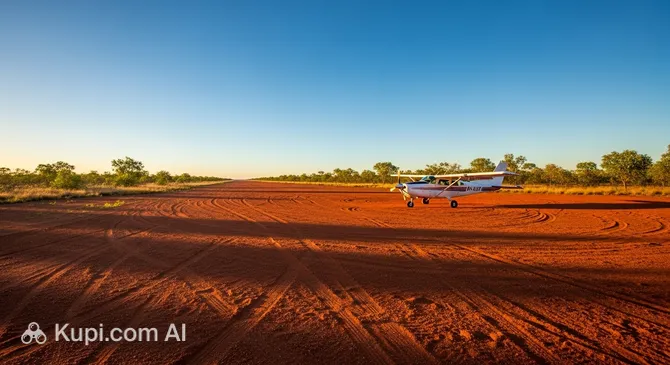
Milingimbi. Illustration.
Source: Kupi.com AI
PropertyValue
IATA CodeMGT
ICAO CodeYMGB
CityMilingimbi
CountryAustralia
TimezoneAustralia/Darwin
ScheduleOnline Timetable

The main feature of Milingimbi Airport is its functionality and key role in the life of this remote community. Do not expect the usual infrastructure with shops and restaurants here; it is primarily a landing strip with a small shelter terminal, providing for the basic needs of passengers.

Key advantages of the airport:

A Vital Link: The airport is the only reliable way to quickly reach or leave the island, especially during the wet season. It is used for the delivery of mail, fresh produce, and medicines, as well as for emergency medical evacuation, playing a critical role in maintaining the community's livelihood.

Authentic Experience: Arriving at MGT is an impressive event in itself. Immediately upon landing, you find yourself surrounded by the unique nature of the Northern Territory and feel the special atmosphere of one of the most important centres of Aboriginal culture.

Charter Base: In addition to scheduled flights, the airport is actively used by charter airlines that organise tourist flights and transport workers and specialists serving the region, making it a starting point for exploring Arnhem Land.

Contact Information

Milingimbi Airport (MGT) is a small regional airfield serving the island of the same name. Most administrative functions and passenger service issues are handled through the managing company or directly by the air carriers. Below is the main contact information.

  • Official Website: The airport does not have its own website. It is managed by the East Arnhem Regional Council, on whose website you can find up-to-date information about airfields in the region.
  • Information Service Phone: For information, it is recommended to contact the East Arnhem Regional Council. The airport itself does not have a direct telephone line.
  • Airport Address: Milingimbi Airport, Milingimbi Island, Northern Territory 0822, Australia.
  • Email: To contact the administration, please use the contact email of the East Arnhem Regional Council.
  • Social Media: The airport does not maintain official pages on social networks.
  • Lost Luggage Information: For all issues related to lost or damaged luggage, you must contact the airline directly whose services you used.
  • Passenger Support Contacts: Passenger support (questions regarding tickets, schedules, check-in) is provided by your air carrier.

How to Get to the Airport

Milingimbi Airport (MGT) is a small air harbour serving the community of the same name on an island in Arnhem Land, in the north of Australia. Given its remote location and the specifics of the region, transport options here differ significantly from those found in major cities. The distance from the main part of the settlement of Milingimbi to the runway is minimal, and the trip takes only 5-10 minutes.

Public transport in the usual sense (buses, trains) is absent in Milingimbi. Movement around the island is carried out in private four-wheel-drive vehicles. The main way for visitors to get from the airport to their accommodation is a pre-arranged transfer. As a rule, this is provided by arrangement with your place of accommodation (for example, a local lodge) or the hosting organisation. There are no official taxi services here, so all meeting arrangements must be made well before arrival.

Car rental on Milingimbi Island is not available for tourists. There are no representatives of international or national rental companies here. Movement around the island and access to it are regulated by special permits, and transport is usually part of an organised visit. Therefore, one should not count on renting a car independently.

Near the airport, there is a small unguarded parking area where local residents leave their vehicles. For tourists arriving without their own transport, this is not relevant. Regarding cost, the price of a transfer is usually negotiable and depends on the hosting party; sometimes it may be included in the cost of accommodation. The main advice for any traveller heading to Milingimbi is to discuss and confirm all transfer details from the airport with your host or tour operator before purchasing flight tickets. The ability to move around independently here is extremely limited. The nearest airports with air connections are in Maningrida and on Elcho Island.

Terminals and Map

Milingimbi Airport (MGT) is a small regional airport serving the community of the same name on an island in Australia. Its structure is extremely simple and adapted for the needs of local air traffic, so tourists accustomed to large international hubs will find it easy to orient themselves here.

The airport operates with just one terminal, which is a small building serving both departing and arriving flights. Due to its compact size, there is no complex layout or need for long walks. All key areas—the check-in desk, waiting area, and boarding gate—are located in one room or within walking distance of each other. Separate zones for arrival and departure are nominal and located side by side.

Check-in and security screening procedures (if applicable for a specific flight) are very quick. Usually, all formalities take no more than 10-15 minutes. Airlines typically recommend arriving 45-60 minutes before departure to check in luggage without haste and wait for boarding. It is practically impossible to get lost at Milingimbi airport—its layout is intuitively clear, and staff are always ready to help and direct passengers.

Airport History

The history of Milingimbi Airport (MGT) is inextricably linked with the events of the Second World War. It was built not as a civil facility, but as a strategically important military airfield for the Royal Australian Air Force (RAAF). Construction began in 1943 and was carried out by a squadron specialising in airfield creation. The main task was to create a forward base to protect the northern coast of Australia from air attacks.

During the war, the airfield played a key role in the defence of the region. Various squadrons were based here, including units equipped with Boomerang fighters and Lockheed Ventura bombers. From this runway, aircraft were sent on patrols and to intercept the enemy, making a significant contribution to ensuring the safety of the country's northern territories. Thus, the humble airport of today was once an important outpost in the Pacific theatre of operations.

After the end of World War II, the military base was disbanded, and the airfield was transferred for civilian use. This moment became a turning point in its history: from a military facility, it turned into a vital transport artery for the isolated Aboriginal community on the island of Milingimbi. For decades, the airport has ensured the delivery of mail, food, and medicines and serves as the residents' main connection to the mainland.

In modern history, the airport has not undergone massive renovations comparable to major urban hubs. Its development has focused on maintaining the runway in working condition to ensure uninterrupted communication. The main achievement of Milingimbi Airport is its long-standing and impeccable service as an indispensable bridge connecting a remote island community with the rest of the world. This fact makes its history truly unique and significant.

Services and Amenities

Milingimbi Airport (MGT) is a small regional airfield serving the island of the same name off the coast of Arnhem Land in Australia. Given its remote location and primary purpose—providing transport links for the local community—the airport's infrastructure is extremely minimal. Travellers arriving in Milingimbi should prepare in advance for the absence of most familiar conveniences.

There are no restaurants, cafes, or shops at the airport. Passengers are advised to carry their own supplies of water and food. There are also no high-comfort waiting lounges or VIP areas available. The waiting area consists of a basic shelter.

There is no public Wi-Fi or special charging stations for electronic devices on the airport premises. It is recommended to bring a portable battery (power bank) to keep your gadgets charged. Financial services, such as banks, ATMs, or currency exchange points, are also unavailable.

Specialised services for passengers with children, such as mother and child rooms, are absent. Passengers with reduced mobility or families with small children should contact their airline in advance to discuss possible assistance upon arrival. There are no hotels, conference rooms, or business centres at the airport or in its immediate vicinity.

Dining

When planning a trip through Milingimbi Airport (MGT), it is important to consider its specific features. This is a small regional airfield serving a remote community, so its infrastructure differs from that of major city airports.

There are no restaurants or cafes within the Milingimbi Airport territory. The terminal building is very compact and does not include public catering zones, as found in large air terminals. There is no division into airside and landside zones with dining establishments, nor are there specialised offerings such as vegetarian or gluten-free menus.

Travellers departing from Milingimbi or arriving here are strongly advised to bring food and beverages with them. Ensure you have a sufficient supply of water and a light snack for the time you spend waiting for your flight. Some opportunities to purchase food may be available in the Milingimbi settlement itself, but not directly at the airport. Muslim travellers should ensure they bring their own Halal refreshments if required.

Travel Tips

Travelling through Milingimbi Airport is an experience that differs greatly from flying out of major metropolises. It is a small regional airfield serving mainly local flights, so the advice for travellers here will be specific. Here are a few recommendations to help make your trip more comfortable.

Arrival at the Airport, Check-in, and Security

Unlike large airports, there is no need to arrive three hours before departure here. As a rule, it is sufficient to arrive 60-90 minutes before your flight's departure. This time is enough to check in and drop off luggage without haste. However, always check your airline's recommendations, as rules may change. Check-in and security control procedures here are simplified as much as possible. You can expect a small terminal and, most likely, a lack of queues.

Hand Luggage and Seat Selection

Pay special attention to hand luggage allowances. Flights to and from Milingimbi are often operated on small aircraft where weight and size requirements for luggage are much stricter than on trunk routes. Standard Australian rules regarding the carriage of liquids (in containers up to 100 ml) and the ban on sharp objects also apply. Regarding seat selection, on such short flights on small vessels, seats may be allocated upon boarding for proper aircraft balancing. If you have the opportunity to choose, take a window seat—the views of the Arnhem Land coast from above are simply mesmerising.

Transfers and Customs Control

Milingimbi Airport serves only domestic flights, so there is no international customs control here. If you are flying with a transfer at a larger hub, for example, in Darwin, you will go through all standard procedures there. Be prepared for possible quarantine or biosecurity checks upon arrival in Milingimbi or when departing from it—this is standard practice to protect the region's unique ecosystem.

Economy and Unforeseen Situations

The main way to save on flights to remote regions is to book tickets well in advance. There are few flight options, and the closer the date, the higher the price. In the event of a flight delay or cancellation, which is possible due to weather conditions (especially during the wet season), remain calm. Contact your airline representative immediately. Given the remoteness of the airport, waiting options are limited, so it is useful to have a book, a charged power bank, and a little patience with you. Infrastructure here is minimal, so do not count on lounge zones or a large selection of cafes.

Reached the end of the page?

That means the route is fully explored