Support

Port Macquarie Airport

About the Airport

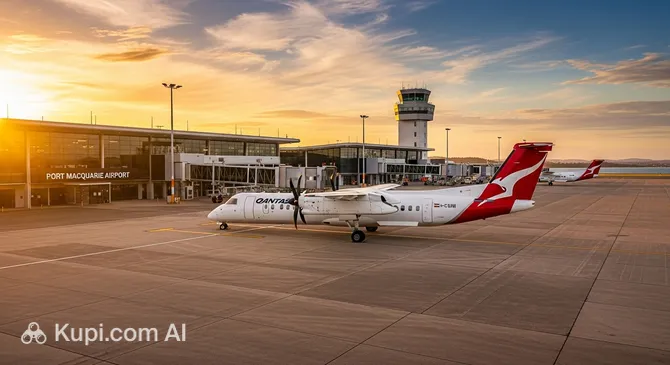
Port Macquarie Airport. Source: Kupi.com Binoculars

Port Macquarie Airport is a welcoming gateway opening the path to the golden beaches and natural wonders of the Mid North Coast of Australia. Located in close proximity to the city, this regional hub is renowned for its relaxed atmosphere, allowing you to feel the holiday spirit immediately upon landing. Instead of the hustle and bustle of massive terminals, travellers are greeted here by compactness, thoughtful logistics, and friendly service. It is the ideal starting point for exploring a region where the ocean meets eucalyptus forests.

IATA Code PQQ
ICAO Code YPMQ
City Port Macquarie
Distance to Centre 5 km
Status Regional (Domestic)
Annual Passengers Over 200,000
Schedule On official website

Features and Advantages of the Airport

A key advantage of the airport is its exceptional accessibility: the journey from the baggage claim area to the city centre streets or the beach takes no more than 10 minutes. Thanks to a recent large-scale modernisation of the runway and terminal, the airport is now capable of receiving modern jet liners, ensuring reliable connectivity with the continent's major metropolises. Passengers appreciate this aviation hub for the lack of queues and intuitive navigation, making the journey as stress-free as possible.

The terminal infrastructure, while compact, is thought out to the smallest detail. There is a comfortable waiting area with panoramic windows, a café offering fresh pastries, and stable Wi-Fi for those who wish to stay connected. For those travelling by car, convenient car rental services are available right in the arrivals hall, allowing you to embark on a journey along the picturesque coast immediately after leaving the aircraft.

Contact Information

  • Official Website: portmacquarieairport.com.au
  • Information Service Phone: +61 2 6581 8111 (Port Macquarie-Hastings Council management phone)
  • Address: 99 Boundary St, Port Macquarie NSW 2444, Australia
  • Email: council@pmhc.nsw.gov.au (general enquiries to the management council)
  • Social Media: The airport does not maintain separate social media pages. Current news and updates are published on the official resources of the Port Macquarie-Hastings Council.
  • Lost Luggage Information: For issues related to lost or damaged luggage, please contact your airline directly. If you have lost personal items within the terminal building, contact the airport administration via the main phone number.
  • Passenger Support Contacts: For general information about airport services, the main phone number can be used. For questions regarding tickets, flight schedules, and check-in, please contact your airline's support service.

How to Get to the Airport

Port Macquarie Airport (PQQ) is located just 5 km west of the city centre, making the journey there quick and convenient. You can get from Port Macquarie to the airport in several ways, each suitable for different budgets and preferences. Whether you value speed, economy, or independence in movement, you will easily find a suitable option for your trip around Australia.

Taxis and Transfers are the most popular and simple way to reach the terminal. A taxi ride from the city centre will take just 10–15 minutes depending on traffic conditions. The cost is usually around 20–30 Australian dollars. Additionally, private transfer companies (shuttle services) operate in the city and can be booked in advance. This can be a cost-effective solution, especially if you are travelling in a group or with a large amount of luggage. It is recommended to book your transfer online a few days before departure.

For those who prefer to manage their own time, car rental is an excellent choice. Port Macquarie Airport hosts representatives of major rental companies. You can pick up and return the car directly at the terminal. The route from the city centre is simple and does not take much time. If you are arriving in your own vehicle, the airport grounds feature convenient parking offering rates for both short-term and long-term stays. This is an ideal option for travellers planning to explore the picturesque surroundings of the region.

Public Transport in the form of buses is also an option, though less direct. The local Busways network serves the city, and some routes pass near the airport. However, there is no direct express route to the terminal, so a short walk from the nearest stop may be required. This method is the most budget-friendly but less convenient if you have heavy luggage or are in a hurry. Be sure to check the current schedule and routes on the transport company's official website before your trip.

Terminals and Map

Port Macquarie Airport (PQQ) is a small regional airport, making its structure extremely simple and convenient for passengers. There is one passenger terminal operating here, which serves all domestic flights — both arrivals and departures. Thanks to its compact size, getting lost is practically impossible, and navigation is intuitively clear.

The terminal layout is very straightforward. All infrastructure is located on a single level. Upon entering, you will immediately see the airline check-in counters. After checking in and dropping off luggage, passengers proceed to the security screening area, followed by a small waiting lounge with boarding gates. The arrivals area is located in another part of the same building and includes a baggage claim belt and car rental counters. Since there is only one terminal, there are no transfers between terminals.

The airport's distinctive feature is its functionality and lack of excess. Here you will find everything necessary for a comfortable wait for your flight: a small café, washrooms, and the main waiting hall. Check-in and security procedures generally proceed very quickly due to the low passenger traffic. Nevertheless, it is recommended to arrive at the airport approximately 60-90 minutes before departure to complete all formalities without haste.

To navigate the airport, simply follow the signs that clearly separate the departure and arrival zones. Information screens will help orient you regarding check-in and boarding times. If you have questions, airport staff are always ready to assist. Overall, Port Macquarie Airport is a prime example of how a small regional hub can be maximally efficient and understandable for travellers beginning their acquaintance with this beautiful region of Australia.

Airport History

The history of Port Macquarie Airport (PQQ) is closely linked to the development of the entire Mid North Coast region of Australia. Although the first flights in this area began as early as the 1930s using a simple airstrip, the official opening of the airport at its current location took place in 1956. This step was key to improving the city's transport accessibility and stimulating its economic growth.

The first scheduled passenger services were commenced by Butler Air Transport in 1953, even before the official opening of the modern terminal. In the following decades, the airport continuously developed: the runway was paved, and infrastructure was gradually improved to serve the growing number of passengers. A significant milestone was the terminal modernisation in 1995, which improved service quality and prepared the airport for future challenges.

Perhaps the most large-scale reconstruction in the airport's history occurred in 2014-2015. As part of a major project, the terminal and runway were significantly expanded and upgraded. The main goal was to ensure the capability to accept larger aircraft, such as the Boeing 737, which paved the way for direct flights from major Australian cities and led to a significant increase in passenger traffic. This event was a true breakthrough, strengthening Port Macquarie's status as an important tourism and business centre.

Today, Port Macquarie Airport is a modern and dynamically developing regional transport hub. Its history is a vivid example of how investment in infrastructure contributes to the prosperity of an entire region, turning a small coastal city into a popular destination for thousands of travellers annually. The airport continues to improve, responding to the growing needs of the local population and city guests.

Services and Amenities

Port Macquarie Airport (PQQ) is a modern and compact regional aviation hub offering passengers all necessary services for a comfortable wait before their flight. While the airport may not boast the scale of major international hubs, it has everything for the convenience of travellers.

Before departure or after arrival, you can grab a bite at the local café. They serve fresh coffee, light snacks, sandwiches, and beverages. It is an excellent place to relax while waiting for boarding. There are few specialised shops in the terminal, but essential items and souvenirs can be purchased.

For those needing to stay connected, free Wi-Fi is available throughout the terminal. Zones with power outlets for charging electronic devices are also equipped. The airport features a general waiting hall for all passengers; separate VIP lounges or business lounges are not available.

Financial services are represented by ATMs where cash can be withdrawn. However, currency exchange points may be absent at the airport, so it is recommended to arrange currency exchange in the city beforehand. In case of necessity, airport staff can provide first aid.

The airport is equipped for the comfortable stay of passengers with reduced mobility: there are ramps, accessible restrooms, and dedicated parking. Passengers requiring additional assistance during boarding or disembarking should contact their airline in advance. For travellers with small children, baby changing tables are provided in the restrooms.

Although there are no hotels directly within the airport building, many accommodation options—from motels to comfortable hotels—are located in close proximity, a short taxi ride away. Specialised conference rooms or business centres are absent in the terminal; for business meetings, it is better to utilise the facilities of hotels in Port Macquarie.

Where to Eat

Port Macquarie Airport (PQQ) is a compact regional hub, so all services, including dining, are concentrated in one main terminal. There is not a wide variety of restaurants here as found in large international airports, but you will easily find a place to have a snack before departure.

The main and typically the only catering establishment in the airport is the café located in the general departure hall, before the security checkpoint (landside). This means it is accessible to both departing passengers and those seeing them off. Most often, the café opens approximately an hour before the first flight and closes after the departure of the last one, adjusting to the flight schedule.

The menu here usually offers a standard selection for a quick bite or a more substantial lunch in a café format. You can expect:

  • Hot beverages: coffee, tea, hot chocolate.
  • Cold beverages: juices, water, soft drinks.
  • Pastries: croissants, muffins, cakes.
  • Sandwiches, wraps, and hot pies, which are excellent for a quick snack.
  • Salads and more substantial dishes if you have time for a full lunch.

Sometimes in such cafés, you can find products from local suppliers, for example, pastries or locally roasted coffee, allowing you to experience the flavours of the region. Regarding dietary preferences, vegetarian and gluten-free options are usually available, such as sandwiches or salads. The assortment of vegan or Halal dishes is likely to be limited, so it is best to check the availability of suitable options with the café staff. Prices correspond to the average level for airports in Australia — slightly higher than in city establishments.

Tips for Travellers

To ensure your journey through Port Macquarie Airport goes as smoothly as possible, take advantage of our tips. This is a small regional airport, so many procedures here are faster than in the major hubs of Australia, but preparation is never amiss.

Arrival Time and Check-in: For domestic flights, it is recommended to arrive at the airport 1.5–2 hours before departure. This time is sufficient to drop off luggage, pass security control, and reach the boarding gate without rushing. To save time, complete online check-in on your airline's website and save the boarding pass on your phone.

Security Screening: Screening procedures are standard. Have your passport and boarding pass ready in advance. Electronics (laptops, tablets) and liquids must be removed from hand luggage. Remember the restriction on carrying liquids: the volume of each container must not exceed 100 ml, and all must be packed in one transparent bag.

Seat Selection: If you wish to enjoy views of the coast during take-off or landing, choose a window seat. If comfort and the ability to stretch your legs or exit quickly after landing are more important to you, your choice is an aisle seat.

Hand Luggage: Ensure there are no prohibited items in your hand luggage: sharp objects (scissors, knives), flammable substances. Food products, especially fresh fruits, vegetables, and meat, are subject to strict restrictions when entering different states, so it is better to clarify the rules in advance.

Connecting Passengers and Customs: Port Macquarie Airport serves primarily domestic flights. If you are flying with an international connection, for example, via Sydney or Brisbane, you will have to pass customs and passport control at the first airport of arrival in Australia. Be mindful of the country's strict biosecurity rules — declare all food products, plants, and goods of animal origin.

Saving Time and Money: Book flight tickets and airport parking online in advance — it will be cheaper. Travel light to avoid excess baggage fees. Bring an empty reusable water bottle, which can be filled after passing security control.

Flight Delays: In the event of a flight delay, contact your airline's counter for current information and instructions. Since the airport is small, options for a long wait are limited. We recommend having a book, headphones, or a pre-downloaded film with you to pass the time.

Reached the end of the page?

That means the route is fully explored