Support

Yorke Island

About the Airport

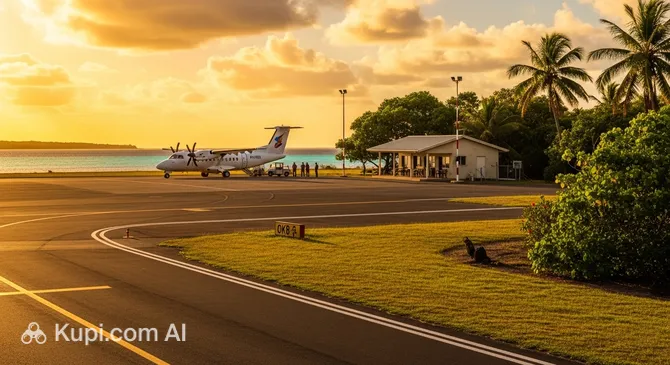
Yorke Island. Illustration.
Source: Kupi.com AI

Yorke Island Airport (OKR) is not just a standard transport hub, but a true "lifeline" for the secluded community of Masig Island in the picturesque Torres Strait. The runway here seems to rise directly out of the turquoise waters of the Coral Sea, turning every takeoff and landing into a breathtaking panoramic flight over the reefs. This place is devoid of the hustle and bustle of giant hubs: here, travellers are greeted by a warm tropical breeze and an atmosphere of absolute tranquility, characteristic of the remote corners of Australia.

PropertyValue
IATA CodeOKR
ICAO CodeYYKI
CityYorke Island
CountryAustralia
TimezoneAustralia/Brisbane
ScheduleOnline Timetable

Features and advantages of the airport:

The main feature of Yorke Island Airport is its unique location. Flying here on a small light aircraft guarantees some of the most beautiful views in Australia: passengers can observe the intricate patterns of coral reefs and the azure surface of the ocean from a low altitude. The airport plays a critically important role for local residents, ensuring a fast connection to Horn Island and the mainland, which is especially valuable given the long journey by sea.

The airport terminal is very compact and functional, which eliminates long queues and complex security procedures common in metropolises. Everything here is arranged simply and in a homely manner, and the staff usually know many passengers by face. For tourists, this is an excellent starting point for getting to know the culture and nature of the Torres Strait without unnecessary stress.

Contact Information

  • Official airport website: The airport does not have its own website. Up-to-date information is published on the portal of the managing organisation (Torres Strait Island Regional Council): tsirc.qld.gov.au
  • Help desk phone: +61 7 4034 5700 (TSIRC Head Office contacts for infrastructure inquiries).
  • Airport address: York Island Airport, Masig Island, Queensland 4875, Australia.
  • Email: info@tsirc.qld.gov.au (General inquiries to the administration).
  • Airport social media: Official pages are absent; regional news can be tracked via the Torres Strait Island Regional Council's social networks.
  • Lost luggage information: There is no stationary Lost & Found desk in the terminal. In case of luggage issues, you should contact the representatives of the airline operating the flight directly (main carriers are Skytrans and Hinterland Aviation).
  • Passenger support contacts: Since staff are not present at the airport around the clock, operational assistance is provided by airline call centres (for example, the Skytrans hotline: +61 7 4046 2424).

How to Get to the Airport

Transport logistics on Masig Island (Yorke Island) has its own unique specifics, dictated by the geography and seclusion of this place. Since the island is very compact (its length is only about 2.7 km), the concept of a "trip to the airport" in the usual sense does not exist here. The airport is integrated into the life of the community and is located in close proximity to residential houses and guest lodges.

How to get to the terminal: main methods

For most travellers, the path to the runway will not be difficult and will take a minimum of time. Here are the main options for moving around the island:

  • Walking: The most common and pleasant way. From most locations in the settlement, you can walk to the terminal in 5–15 minutes. Given the flat terrain and the absence of heavy traffic, this is a comfortable option if you have light luggage.
  • Transfer from accommodation: If you are staying at a guest house (for example, at Masig Lodge), the administration usually organises meeting and seeing off guests by car. This is free or included in the price of the stay. It is recommended to coordinate this when booking accommodation.
  • Help from locals: An atmosphere of mutual assistance reigns on the island. Often, local residents can give a tourist a lift to the strip on personal transport simply out of hospitality.

Public transport and taxis

It is important to understand that on Yorke Island, familiar types of urban transport are completely absent:

  • There are no buses, shuttles, trains, or metro here.
  • Taxi services (including aggregators like Uber) do not operate here.
  • Car rental is unavailable on the island itself. There are no international rental agencies here, and bringing a car from the mainland for a short-term trip is logistically difficult and impractical.

Parking

There is no specialised paid parking with barriers at the airport. There is a small open area next to the terminal where locals leave their cars or quad bikes while meeting flights. Parking is free and unguarded, but the level of safety on the island is very high.

Regional connections and neighbouring airports

Yorke Island is part of the network of small airports in the Torres Strait. Direct flights to the mainland or other countries from here are rare, so routes are often built through larger regional hubs or neighbouring islands ("island hopping").

The nearest major hub for transfers is Horn Island Airport (distance about 153 km), from where regular flights to Cairns are operated. Other small airfields are also located in the region, for example, Warraber Island (Sue Island), located 81 km away, and Northern Peninsula Airport in Bamaga (168 km). For those travelling deeper into the region, a flight to Lockhart River may be relevant. Interestingly, geographically Daru Airport in Papua New Guinea is even closer (about 77 km) than many Australian cities, however, international connections with it are limited.

Recommendations before departure:

Despite the proximity of the airport, it is recommended to arrive at the terminal no less than 30–40 minutes before departure. Registration for light aviation flights closes quickly, and planes often take off strictly on schedule or even slightly earlier if all passengers are assembled.

Terminals and Map

The structure of Yorke Island Airport (OKR) is the embodiment of minimalism and functionality. Here you will not find confusing labyrinths of corridors, travelators, or multi-level car parks. The entire airport complex is designed to simplify the travel process as much as possible and meet the needs of light aviation.

Number of terminals and their purpose

The airport has only one passenger terminal. This is a small single-storey building that serves both departing and arriving flights. There is no division into international and domestic sectors, as the airport receives exclusively regional flights (mainly from Horn Island or neighbouring islands).

Layout and navigation: couldn't be simpler

Orienting yourself at Yorke Island Airport is intuitively simple, and it is impossible to get lost here even if you try. Schematically, the space can be divided into three key zones:

  • Runway and apron: The aircraft parking spot is literally a few steps from the terminal building.
  • Waiting Area: An open or semi-covered space under a canopy where passengers wait for boarding, enjoying the fresh air.
  • Check-in zone: A counter inside the room where document and luggage processing takes place.

Since the terminal is the only one, transfers between terminals are not required. The entire path from the entrance of the building to the aircraft steps takes less than a minute on foot.

Arrival and departure zones

The peculiarity of small island airports is that passenger flows often intersect, creating a friendly atmosphere.

  • Arrival: Passengers leave the plane and walk towards the exit from the airfield. There are no familiar luggage claim belts here. Luggage is unloaded by airline staff manually and handed to passengers either directly at the aircraft or at a special area next to the terminal.
  • Departure: Entrance to the departure zone is through the common hall. After quick registration, passengers wait for the boarding call. Boarding gates are not numbered; the pilot or ground service staff simply invites everyone to proceed to the plane.

Terminal features and amenities

The terminal is equipped with a basic set of amenities necessary for short-term waiting:

  • Waiting hall: Equipped with seats. The premises are often naturally ventilated thanks to the sea breeze, but there may be air-conditioned zones.
  • Restrooms: Toilet facilities are available in the building.
  • Absence of commerce: There are no Duty Free shops, cafes, or ATMs in the terminal. It is recommended to take care of cash, water, and snacks in advance, before arriving at the airport.

Registration and security procedures

The atmosphere at the airport is relaxed, but aviation safety rules are observed.

Time for procedures:

  • Check-in: Usually opens 45–60 minutes prior and closes 30 minutes before departure. Since the planes accommodate a small number of passengers (often up to 10–12 people), the queue moves very quickly.
  • Security check: The screening procedure is simplified compared to international hubs, but be prepared to present luggage for visual inspection or weighing. Strict restrictions on carrying dangerous items apply here as well.

Navigation recommendations

The main advice for navigation at Yorke Island Airport is to follow the staff's instructions. Pilots often act as escorts themselves, helping passengers get to the correct plane. Listen carefully to announcements (they are made by voice, without a PA system) and do not go out onto the airfield without permission, as this is a high-risk zone despite its modest size.

Airport History

The history of Yorke Island Airport (OKR) is inextricably linked with the history of civil aviation development in the Torres Strait. Unlike major capital hubs that emerged at the dawn of the aviation era, infrastructure on remote islands such as Masig began to form much later — in the second half of the 20th century. Before the appearance of the runway, the only connection islanders had with the outside world remained sea routes, dependent on tides and changeable weather.

Foundation and early years

The airfield was created as a vital infrastructure object, intended to provide emergency medical assistance and cargo delivery. Initially, it was a simple dirt strip cleared on a flat section of the coral island. In the first decades of operation, landing here required high skill from pilots, especially in the rainy season when the dirt surface became viscous. The opening of regular air services became a real celebration for the local community, reducing travel time to administrative centres from several hours (or even days) by sea to tens of minutes by air.

Modernisation stages

A key stage in the airport's history was a major reconstruction carried out under the auspices of regional authorities. The dirt surface was replaced with a hard all-weather pavement (asphalt concrete), which allowed planes to be received all year round, regardless of tropical downpours. An important step was equipping the airfield with a lighting system. This innovation opened the possibility for night flights, which is critically important for the work of the Royal Flying Doctor Service — a service that saves lives in the Australian outback.

Interesting facts from history and modernity:

  • Struggle with nature: Since the airport is located on a low-lying coral reef, engineers had to solve complex tasks to protect the strip from erosion and high tides characteristic of the Torres Strait.
  • Role of the community: Historically, local residents took an active part in maintaining the airport, especially in the early years, helping to clear the area of vegetation by hand.
  • "Gateway" for culture: With the development of tourism, the airport transformed from a purely utilitarian object into an entry point for travellers wishing to get acquainted with the unique culture of the Torres Strait Islanders.

Today, Yorke Island Airport continues to develop. Recent modernisation programmes focus on improving perimeter security (installing fences against animals) and updating navigation equipment, while maintaining the status of one of the most picturesque air harbours in the region.

Services and Amenities

The infrastructure of Yorke Island Airport (OKR) is dictated by its status as a small regional airfield serving a small island community. It is important for passengers to adjust their expectations in advance: here you will not find the variety of services familiar to international hubs. The airport is primarily a functional transit point, where the emphasis is on quick boarding and disembarking, rather than on spending a long time.

Dining and Shopping

Cafes, restaurants, vending machines, or shops are completely absent in the terminal building. You cannot buy coffee, a bottle of water, or souvenirs here before departure.

  • Advice to tourists: It is strongly recommended to take care of a supply of drinking water and light snacks in advance, before arriving at the airport.
  • Shops on the island: The nearest general store (IBIS store) is located in the settlement, within walking distance (about 10–15 minutes), but its operating hours may not coincide with your departure time.

Waiting Halls and VIP Service

The airport has a single general waiting hall. There are no dedicated business lounges or VIP lounges here. Waiting conditions are spartan but atmospheric: a canopy from the sun, benches, and a view of the runway and the ocean. "Luxury" here lies in the silence and fresh sea air, rather than in plush armchairs and complimentary refreshments.

Communication and Electronics

  • Wi-Fi: There is no public Wi-Fi network in the terminal.
  • Mobile connection: Mobile operator coverage (predominantly Telstra) works on the island, supporting 4G. This is the main way to stay connected.
  • Charging stations: There are no specialised stands for charging gadgets. Power sockets in the waiting area may not be available or their number is extremely limited, so it is recommended to have a charged power bank with you.

Financial Services

There are no ATMs or currency exchange points in the terminal. Masig Island is a place where cash still plays an important role, although cards are accepted in the local store. Tourists are strongly advised to withdraw the necessary amount of cash in Cairns or on Horn Island before arriving at Yorke Island.

Medical Assistance

There is no medical post in the airport building itself. However, safety on the island is organised at a high level. In case of illness, passengers can contact the Masig Primary Health Care Centre, which is located in the village not far from the airfield. For emergency cases, the airport serves as an evacuation point for air ambulance services.

Passengers with Children

Specialised mother and child rooms or play areas are not provided in the terminal. Due to the open nature of the terrain and the proximity of the airfield, parents need to closely monitor children so that they do not go out onto the apron without permission. An advantage is the absence of crowds and queues, which makes travelling with a family less stressful.

Accessible Environment

Yorke Island Airport is quite convenient for passengers with reduced mobility thanks to its single-level layout:

  • There are no stairs, escalators, or lifts — entrance to the terminal and exit for boarding are carried out from the ground.
  • Boarding small aircraft usually takes place via small built-in steps. Pilots and ground staff are always ready to provide physical assistance during boarding and disembarking.
  • Specialised toilets for disabled people may not be available in older buildings; it is better to clarify this point in advance through the airline.

Accommodation (Hotels)

There are no hotels directly on the airport territory, but given the size of the island, any housing here can be considered "near the airport". The main accommodation option for tourists is Masig Lodge (or Lowatta Lodge). This is a small guest house offering basic comfort. Accommodation must be booked in advance, as the number of places is limited.

Business Services

Conference rooms or business centres are absent at the airport. This place is designed for leaving business on the mainland and immersing yourself in the measured life of the island community.
Where to Eat

When planning a trip through Yorke Island Airport (OKR), it is important to consider the specifics of this remote regional air hub. There are completely no food service points on the territory of the airport itself. There are no cafes, restaurants, bars, coffee shops, or even machines with snacks or drinks here. The terminal is intended exclusively for check-in and short-term waiting for a flight, so passengers need to take care of food in advance.

Nevertheless, you will not go hungry if you plan your time correctly and visit places in the immediate vicinity of the airfield.

Where to buy food (alternatives to restaurants):

Since the airport is integrated into the settlement of Masig Island, the main dining options are within walking distance (10–15 minutes walk). The choice is limited but allows you to find necessary products.

  • IBIS Store: This is the only general store on the island, acting as a supermarket and the main retail point. You cannot order a hot lunch here, but you can buy bottled water, juices, pastries, packaged sandwiches, canned food, fruits, and chips.
    Opening hours: Usually Monday to Friday from 9:00 to 17:00, on Saturday — a shortened day (often until 12:00 or 13:00), Sunday — closed. Consider this when planning a departure on weekends.
  • Masig Lodge: If you are staying at the local guest house, full meals (breakfasts, lunches, and dinners) are organised there. For transit passengers not staying at the lodge, the possibility of having lunch depends on an arrangement with the administration and the availability of products, so you should not count on this as a guaranteed restaurant.

Local Cuisine and Delicacies

Although there are no gastronomic establishments at the airport, Masig Island itself is famous for its gifts of the sea. If you have the opportunity to have lunch at the guest house before departure, you might try:

  • Fresh Seafood: The Torres Strait is known for its Tropical Rock Lobsters and Spanish mackerel. This is the basis of the local cuisine, distinguished by exceptional freshness.
  • Island Flavour: Dishes are often simple but hearty, using rice, root vegetables, and coconut. However, it is impossible to find ready-made "Street food" here.

Specialised Nutrition (Vegetarian, Halal, Gluten-Free)

Finding a specialised menu on the island is extremely difficult due to limited supplies.

  • Assortment: At the IBIS store, the choice for vegans or people with gluten intolerance is minimal (fruits, nuts, rice). Halal certification can be found on some packaged products of Australian production, but there are no specialised points of sale.
  • Advice: If you follow a strict diet or have medical indications, it is strongly recommended to bring food with you from Horn Island or Cairns. Counting on buying dietary food on the spot is risky.

Recommendations for Passengers

For a quick snack: The only reliable option is to buy crackers, fruits, or biscuits at the IBIS store in the village before going to check-in. Be sure to have a bottle of water with you, as there are no drinking fountains in the terminal, and the heat can be intense.

For a full lunch: It is best to have a hearty meal before leaving for the airport at your place of accommodation. In the terminal itself (both in the departure zone and in the common area), there are no tables or conditions for a comfortable meal.

Price Range: Food prices on remote islands are higher than on the mainland due to complex delivery logistics (barges and aviation). Be prepared for a markup of 20–40% compared to supermarkets in large Australian cities.

Travel Tips

Travelling through the small island airport of Yorke Island (OKR) is a unique experience that differs greatly from flying through major international hubs. An atmosphere of trust and calm reigns here, but for the flight to go smoothly, it is worth knowing a few local rules and tricks. Here are useful tips to help you prepare for departure from Masig Island.

Optimal Arrival Time

Unlike big cities, there is no point in arriving 2–3 hours before departure here. The terminal is small, and procedures are fast. However, you must not be late either.

  • Golden Rule: Be at the airport 45–60 minutes before the departure time indicated on the ticket. This will give you enough time to calmly go through check-in and luggage weighing without rushing.
  • Why this is important: Light aircraft often take off ahead of schedule if all registered passengers are already there. Conversely, if you are late for the counter closing (usually 30 minutes prior), the plane will not wait, as the flight schedule across the islands is very tight.

Check-in and Safety: Prepare to be Weighed

The check-in procedure here has its own peculiarities, dictated by the type of aircraft used (usually light turboprop machines).

  • Weighing everything: Be prepared for airline staff to ask to weigh not only your luggage but also your hand luggage, and even you yourself (sometimes with the bag in hand). This is not a whim, but a strict safety requirement for the correct balancing of a small plane.
  • Documents: Keep your ID handy. Although everyone here may know each other, formalities are strictly observed.
  • Security Check: There are no huge scanners and frames here; screening is often carried out visually or using handheld metal detectors. Treat this with understanding and follow the staff's instructions.

Seat Selection: Best Views and Balance

Specific seats are usually not indicated on tickets for flights from Yorke Island.

  • How to take a seat: Seating is often free ("first come, first served"), but the final word always belongs to the pilot. They may ask you to move to a specific seat for even weight distribution on board.
  • Tip for photographers: Try to take a window seat. The flight over the Torres Strait is one of the most picturesque excursions in the world. Views of turquoise reefs and sandbanks from a low altitude are simply mesmerising.
  • Interesting fact: If you are lucky enough to sit in the first row (right behind the pilots), you can watch the crew's work and the instrument panel, as there is often no door to the cockpit in such planes.

Luggage and Hand Luggage: Softness and Minimalism

Light aviation imposes strict restrictions on luggage.

  • Type of bags: It is strongly recommended to use soft sports bags or backpacks, rather than rigid plastic suitcases. They are easier to fit into the limited luggage compartment of a small plane.
  • Weight: Limits here are stricter than on the mainland. Usually, 15–20 kg of total luggage (including hand luggage) is allowed. Excess weight can be very expensive or, worse, your extra luggage may be sent on the next flight if it does not fit the weight limits.
  • Hand luggage: Shelves in the cabin are either very small or absent. You will have to keep all hand luggage on your lap or under the seat. Take only the essentials into the cabin (camera, documents, water).

Customs and Biosecurity

Although flights are domestic, the Torres Strait region is a special biosecurity zone protecting mainland Australia from pests and diseases from the north.

  • What cannot be taken out: There are strict restrictions on taking plants, fresh fruits (especially mangoes), vegetables, seeds, and certain souvenirs made of natural materials to the mainland.
  • Checks: Upon arrival at Horn Island or Cairns, your luggage may be checked by biosecurity inspectors. It is better to leave fruits on the island to avoid fines and confiscation.

Tips for Transit Passengers

If Yorke Island is just the beginning of your journey, and you are flying further to Brisbane, Sydney, or abroad:

  • Allow buffer time: Light aviation flights depend heavily on the weather. Leave a minimum of 3–4 hours for transfer in Cairns or on Horn Island.
  • Luggage: Most often, luggage is not checked through to the final destination (for example, if you are flying with different airlines). You will have to collect it at the transfer point and check it in again.

Saving Time and Money

  • Food and Water: As mentioned earlier, there are no shops at the airport. Buying water and a snack at the local village store (IBIS) before leaving will save you not only money but also nerves, as food is usually not provided on board.
  • Booking: Tickets for local flights are expensive and sell out quickly, especially during school holidays or local festivals. Book your flight several months in advance.

What to Do if the Flight is Delayed

Delays due to tropical downpours or technical reasons are not uncommon in this region.

  • Be autonomous: There are few power sockets at the airport, so a fully charged power bank is mandatory. Download movies or books to your phone in advance, as there is no Wi-Fi.
  • Communication: Airline staff on the island are usually very friendly. If the flight is delayed, do not hesitate to politely ask about forecasts. Pilots often come out to passengers themselves to explain the situation.
  • Patience: Remember that safety in light aviation is paramount. It is better to wait an hour on the ground while a storm front passes than to take risks in the air. Use this time to enjoy the last minutes of silence and the sea breeze.

Reached the end of the page?

That means the route is fully explored