Support

Vienna Central Station

About the Station

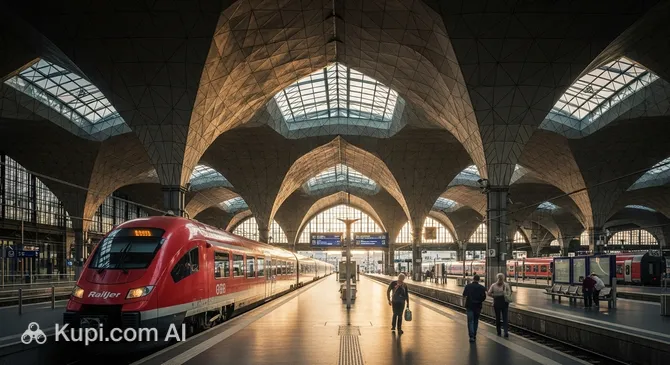
Vienna Central Station. Source: Kupi.com Binoculars

Vienna Central Station (Wien Hauptbahnhof) is not merely a transport hub, but a true architectural symbol of the modern Austrian capital. Fully opened in 2015, this state-of-the-art complex replaced older terminal stations, integrating routes from the north, south, east, and west into a unified system. Hundreds of trains pass through here daily, including the high-speed Railjet and the overnight Nightjet, connecting Vienna with major European cities. Thanks to its bright, spacious design featuring a recognizable diamond-shaped roof and a vast shopping area inside, the station is a comfortable place for both transit and shopping.

CityVienna
CountryAustria
TypeRailway Station

It is important for passengers to know that the station is designed as a "through" station, which significantly speeds up transfers. The main hall with ticket counters and information desks is located on the ground level (Level 0), while the platforms (Gleis 1–12) are situated on the upper level, accessible via escalators and lifts. Beneath the station lies the extensive BahnhofCity shopping centre and access to the U1 metro line (Südtiroler Platz). The main entrance faces Südtiroler Platz, where surface transport stops are also located.

Contact Information

  • Official Website: oebb.at (Austrian Federal Railways)
  • Information Phone: +43 5 1717 (ÖBB Hotline, operates 24/7)
  • Address: Am Hauptbahnhof 1, 1100 Wien, Austria
  • Opening Hours: The station building is open 24/7. Ticket counters (Reisezentrum) typically operate from 05:30 to 22:30.
  • Luggage Storage: Automated lockers are available 24/7 and accept coins and cards.
  • Accessibility Information: The station is completely barrier-free. There are tactile guidance systems for the visually impaired, lifts to all platforms, and the ÖBB Mobility Service (booking in advance is recommended).

Getting There

Getting to Vienna Central Station is very easy, as it is perfectly integrated into the city's transport network.

  • Metro (U-Bahn): The fastest way from the city centre. Line U1 (station Südtiroler Platz – Hauptbahnhof) will take you to St. Stephen's Cathedral (Stephansplatz) in just 5 minutes.
  • Suburban Train (S-Bahn): Lines S1, S2, S3, S4, S60, and S80 stop here, connecting the station with the suburbs and other districts of Vienna.
  • Trams and Buses: Trams D, O, and 18, as well as buses 13A and 69A, stop directly at the entrances or on the underground level. Tram D goes directly to the Ringstraße boulevard.
  • From the Airport: Direct Railjet trains run between Vienna International Airport (VIE) and the main station every 30 minutes; the journey time is only 15–18 minutes.

Walking from the historic centre (for example, from the Opera) takes about 25–30 minutes, with a route passing by the Belvedere palace complex. A taxi ride from the centre will take 10–15 minutes.

Services and Amenities

Wien Hauptbahnhof offers passengers world-class service, making the wait for trains as comfortable as possible.

  • Waiting Areas: The premises feature general seating zones (partially heated in winter) and a premium ÖBB Lounge for 1st class passengers.
  • Tickets and Information: There is a large traveler service centre (ÖBB Reisezentrum) and numerous red self-service machines with menus in multiple languages.
  • Connectivity and Charging: Free Wi-Fi (network OEBB-free) is available throughout the station. Power outlets for charging gadgets can be found in waiting areas and most cafes.
  • Luggage: 24-hour automated luggage lockers of various sizes are located on the lower level.
  • Facilities: Paid toilets (clean and modern, with contactless payment), shower cabins, and baby changing rooms are available.
  • Shopping: The complex houses a shopping centre with supermarkets, a pharmacy, electronics stores, and clothing boutiques.

Dining Options

At Vienna Central Station and the adjacent BahnhofCity shopping centre, there is a vast selection of dining establishments.

For a quick snack, traditional Austrian bakeries (such as Anker, Ströck, or DerMann) are ideal, where you can grab a fresh sandwich and coffee for 5–8 Euros. They open very early, often from 5:00 or 6:00 AM.

In the food court, you can find popular fast-food chains (McDonald's, Burger King) and outlets serving Asian noodles or kebabs. If you have time for a relaxed lunch, visit chain restaurants offering Italian cuisine (such as L'Osteria or Vapiano) with an average bill of 15–20 Euros.

Important Tip: Supermarkets at the station (Interspar Pronto and others) are open late and even on Sundays when regular shops in the city are closed. You can purchase ready-made meals, salads, and beverages there at standard retail prices.

Station History

The history of Vienna Central Station is an example of massive urban transformation. For a long time, Vienna, like many old European capitals, was served by several terminal stations (South and East), which required changing locomotives and complicated transit.

The decision to build a single through-station ("Durchgangsbahnhof") was made in the 2000s. The old South Station (Südbahnhof) was demolished in 2009, freeing up a huge territory. Construction of the new giant proceeded in stages: a partial opening took place in 2012, and full operation began in December 2015.

Today, this station is a key hub on the trans-European main line connecting Paris, Vienna, Bratislava, and Budapest. A completely new urban district, Sonnwendviertel, with residential buildings, offices, and parks, has grown around the station.

Passenger Tips

Arrival Time: Arrive at the station at least 15–20 minutes before departure. Although navigation is intuitive, distances can be significant, especially if you need to buy food or find your carriage.

Tickets and Boarding: Austria operates an "open" system: there are no turnstiles at the platform entrances. You walk freely to the train, and tickets are checked by conductors during the journey. However, you must have your ticket (in paper or electronic form) before boarding. Fines for traveling without a ticket are high.

Safety: The station is safe and well-patrolled, but always keep an eye on your pockets and luggage in crowds. Do not leave your belongings unattended.

Transfers: Platforms are divided into sectors (A, B, C, D, E). The electronic display indicates in which sector your carriage will stop—please note this in advance so you do not have to run along a long train.

Reached the end of the page?

That means the route is fully explored