Support

Vienna

About

Welcome to Vienna, a city where imperial elegance meets modern vibrancy. As the capital of Austria, this metropolis is renowned worldwide for its artistic and intellectual legacy, having been shaped by legendary residents including Mozart, Beethoven, and Sigmund Freud. It is a place where every street corner seems to whisper stories of a glorious past while embracing a dynamic future.

Vienna. Source: Kupi.Binoculars

Located in the northeastern part of the country along the banks of the majestic Danube River, Vienna is home to nearly 2 million people. The city is famous for its high quality of life and lush green spaces, which make up almost half of the metropolitan area. The history of Vienna is deeply rooted in its role as the former center of the Habsburg Empire, leaving behind a wealth of architectural treasures.

Visitors are often captivated by the stunning Schönbrunn Palace, the summer residence of the emperors, and the iconic St. Stephen's Cathedral in the city center. Beyond the grand buildings, the city's unique coffee house culture offers a cozy retreat to enjoy a slice of Sachertorte. Whether you are drawn by the sound of classical music or the charm of historic streets, Vienna promises an unforgettable journey.

Weather Overview

Vienna experiences a moderate continental climate with four distinct seasons, each bringing its own atmosphere to the city. To make the most of your visit, it is wise to consult the weather in Vienna forecast, as conditions range from pleasant warmth to crisp chills. In general, you can expect warm summers with occasional rain and cold winters where the days are short but atmospheric.

The summer months of June through August are the warmest, with average temperatures settling between 20°C and 22°C. July and August often see maximum temperatures climbing to nearly 27°C, making it an ideal time for wandering the city's parks. However, rain is not uncommon, with around 11 to 12 wet days per month, so packing a light umbrella is recommended.

Winters, spanning from December to February, are much colder. January is typically the chilliest month, with average temperatures around 1.8°C and lows occasionally dropping below freezing to -0.8°C. Although the total precipitation volume is low, the frequency of wet or snowy days is significant, particularly in January with about 13 wet days. Spring and autumn offer mild alternatives, with May and September providing comfortable averages of 14°C to 17°C.

Interesting Facts

Beyond the imperial palaces and classical music, Vienna holds many fascinating secrets and records that often escape the casual observer. Digging a bit deeper reveals a city full of unexpected inventions and unique urban features that make it even more intriguing.

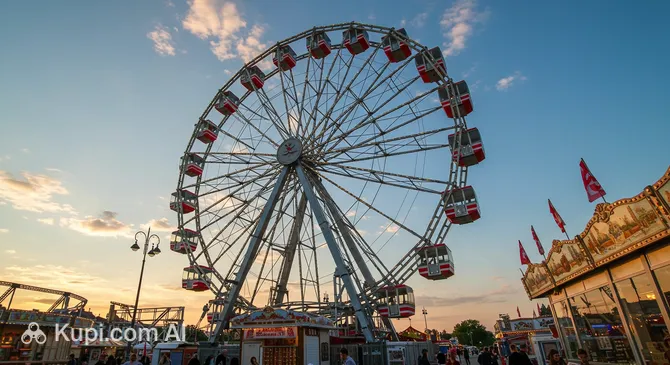
Viennese Giant Ferris Wheel. Source: Kupi.Binoculars
  • Vienna is unique among world capitals for being a major wine-growing city within its own municipal limits. Approximately 700 hectares of vineyards are cultivated here, allowing locals and visitors to enjoy fresh "Gemischter Satz" wine at traditional taverns overlooking the city.

  • The Schönbrunn Zoo, founded by Emperor Francis I in 1752, holds the Guinness World Record as the oldest continuously operating zoo in the world. It was originally created as an imperial menagerie and still preserves its baroque architecture today.

  • Located in the famous Prater amusement park, the Viennese Giant Ferris Wheel is the oldest surviving Ferris wheel of its kind. Constructed in 1897 to celebrate the Golden Jubilee of Emperor Franz Joseph I, it has become an enduring symbol of the city.

  • The snow globe was accidentally invented in Vienna in 1900. A surgical instrument mechanic named Erwin Perzy was trying to improve the brightness of electric lightbulbs for operating rooms when he created the first glass globe with falling "snow" made of semolina, launching a famous Viennese handicraft.

How to Get There

Reaching the Austrian capital is convenient thanks to its central location in Europe and excellent transport infrastructure. Whether you prefer flying or taking the train, there are numerous connections available. You can read more details about all ways to reach the city in our dedicated guide.

The primary gateway for air travelers is Vienna International Airport (IATA: VIE). As the country's largest aviation hub, it handles a significant volume of international traffic and is located approximately 16.8 km from the city center. A taxi or bus ride typically takes around 45 minutes, making it a quick and accessible entry point. For those looking for alternative routes, you can fly into Bratislava Airport (IATA: BTS) in the city of Bratislava. Although it is not in Vienna itself, it is situated about 62.7 km away, and the journey by road generally takes around 2 hours.

For clarity, here is a summary of the main airports:

Airport Name City Passenger Traffic Km from City
Vienna International Airport Vienna Very Large 16.8
Bratislava Airport Bratislava Medium 62.7
Graz Airport Graz Small 152.4
Turany Airport Brno Small 107.6
Linz Airport Linz Small 162.3

Traveling by train is another popular and scenic way to arrive. The city boasts a robust railway network, centered around Vienna Central Station (IATA: XWC). Located just 2.6 km from the heart of the city, it serves millions of passengers annually and connects to major European capitals. Another key hub is the Wien Mitte CAT Station (IATA: XWT), which is exceptionally close to the center at only 1.1 km away, offering rapid connections particularly suited for airport transfers.

Below is a list of the most relevant railway stations:

Station City Passenger Traffic Km to Center
Wien Mitte CAT Station Vienna Very Large 1.1
Vienna Central Station Vienna Large 2.6
Vienna Westbahnhof Vienna Large 2.8
Linz Hauptbahnhof Linz Medium 154.7
St. Pölten Hauptbahnhof St. Pölten Medium 55.6

Main Attractions

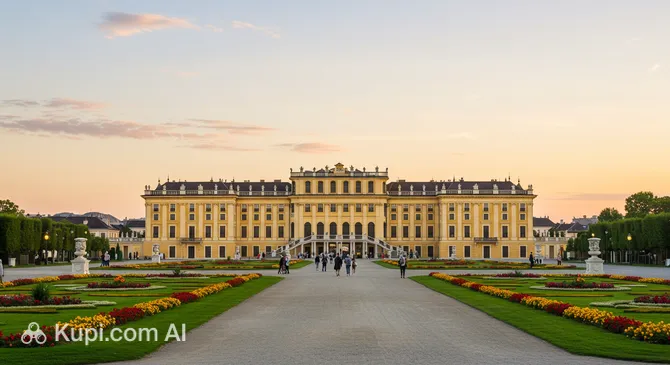
One of the most magnificent sights in the city is Schönbrunn Palace. This UNESCO World Heritage site served as the summer residence of the Habsburg emperors and is a masterpiece of Baroque architecture. Visitors can tour the opulent state rooms to get a glimpse of imperial life or wander through the vast gardens, which feature the Gloriette and beautiful fountains. It is a must-visit for anyone interested in history and grand architecture.

Schönbrunn Palace. Source: Kupi.Binoculars

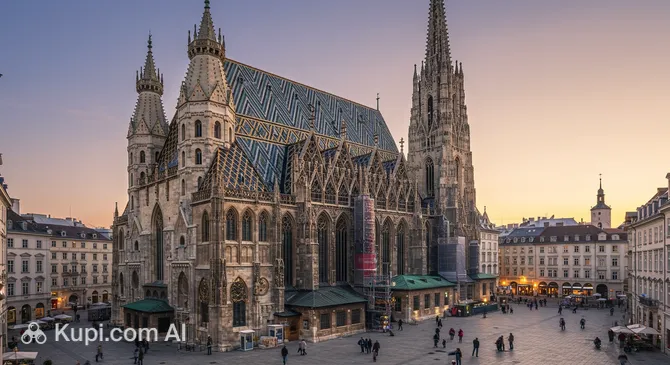
Standing tall in the city center is St. Stephen's Cathedral, the iconic symbol of Vienna. Known for its Gothic style and distinctive colorful tiled roof, this cathedral has watched over the city for centuries. Tourists can climb the 343 steps of the South Tower for a breathtaking panoramic view or explore the mysterious catacombs beneath the church. Its central location makes it a perfect starting point for exploring the old town.

St. Stephen's Cathedral. Source: Kupi.Binoculars

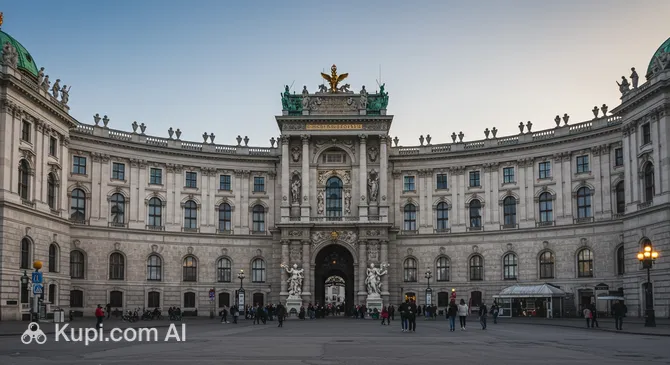
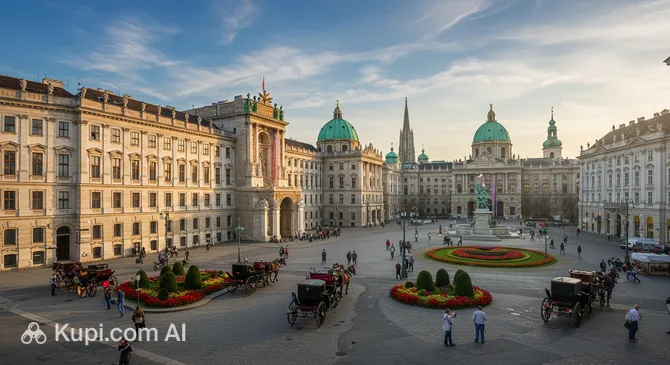
For centuries, the Hofburg Palace was the center of the Habsburg Empire. Today, this sprawling complex houses the Sisi Museum, the Imperial Apartments, and the Spanish Riding School. It offers a fascinating journey into the past, allowing visitors to walk in the footsteps of emperors and empresses. The sheer size of the complex and the variety of museums within its walls ensure there is something to captivate every traveler.

Hofburg Palace. Source: Kupi.Binoculars

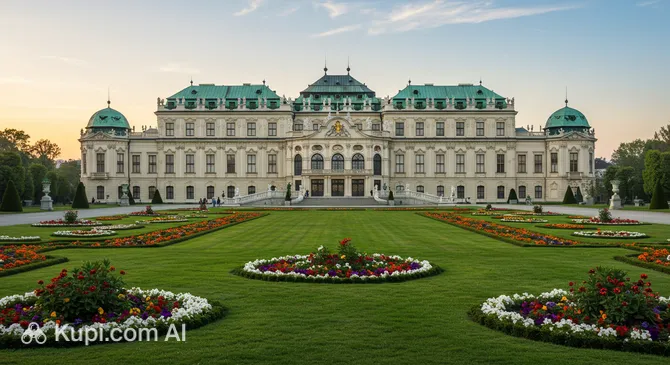
Art lovers should not miss the Belvedere Palace, consisting of two splendid Baroque buildings, the Upper and Lower Belvedere. Set within a beautiful park, the palace is home to one of Austria's most valuable art collections, including the world's largest collection of Gustav Klimt paintings. Seeing Klimt's famous "The Kiss" in person is a highlight for many, making this attraction a blend of architectural beauty and artistic mastery.

Belvedere Palace. Source: Kupi.Binoculars

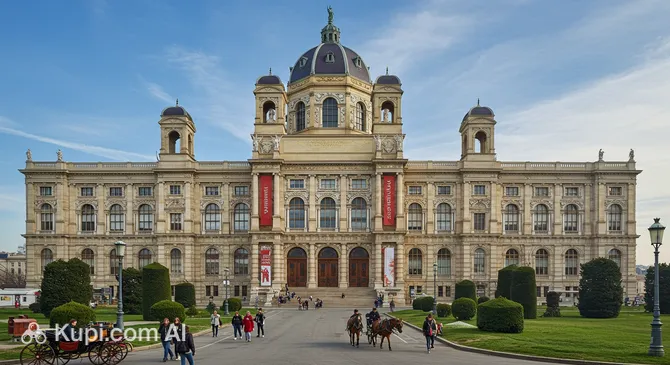
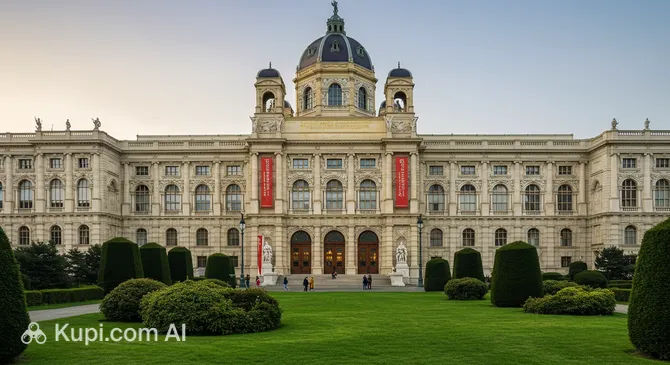
Located on the Ringstraße, the Kunsthistorisches Museum Vienna is an architectural jewel in its own right. Commissioned by Emperor Franz Joseph to house the imperial art collections, it features works by masters such as Raphael, Vermeer, and Bruegel. The lavish interior, with its grand staircase and cupola, is just as impressive as the art it displays, offering a truly royal museum experience.

Kunsthistorisches Museum Vienna. Source: Kupi.Binoculars

Local Cuisine

Vienna is unique among the world's capitals for having a cuisine explicitly named after the city itself. Viennese cuisine is a delicious reflection of the city's imperial history, blending influences from across the former Habsburg Empire into a distinct culinary tradition. It is widely celebrated for its hearty meat dishes, rich pastries, and a culture that treats dining as a leisurely art form.

No visit to Vienna is complete without tasting the world-famous Wiener Schnitzel. Traditionally made from veal, this thin, breaded, and pan-fried cutlet is golden, crispy, and usually served with a side of potato salad or parsley potatoes. Another imperial favorite is Tafelspitz, a dish of boiled beef simmered with root vegetables and spices, often accompanied by apple horseradish and chive sauce. It was reportedly the favorite meal of Emperor Franz Joseph I.

For those with a sweet tooth, the city is a paradise. The legendary Sachertorte, a dense chocolate cake with a thin layer of apricot jam, is an icon of the city. Equally popular is the Apfelstrudel, a delicate pastry filled with spiced apples, raisins, and breadcrumbs, best enjoyed warm with a dollop of whipped cream or vanilla sauce.

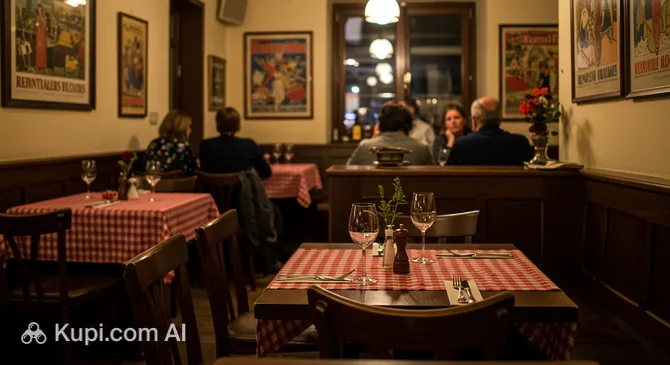
The city's food culture is anchored by its historic institutions, from the elegant coffee houses to the down-to-earth bistros known as "Beisls." A Beisl is a traditional Viennese pub-style eatery serving classic home-style cooking in a wood-paneled setting. A perfect example of this authentic atmosphere is Reinthaler's Beisl, where visitors can enjoy generous portions of local staples right in the heart of the city.

Reinthaler's Beisl. Source: Kupi.Binoculars

Vienna is also famous for its distinct coffee house culture, recognized by UNESCO as an intangible cultural heritage. Locals spend hours in these establishments, reading newspapers and sipping a Wiener Melange, an espresso topped with steamed milk and foam. If you are looking for a more modern take on cafe culture or a vibrant spot for brunch, Ulrich offers a contemporary menu that contrasts beautifully with the traditional surroundings.

When it comes to drinks, Vienna is one of the few capitals with significant wine production within its city limits. A visit to a "Heuriger" (wine tavern) to try the local Gemischter Satz white wine is a quintessential experience. For a non-alcoholic option, try Almdudler, a sweet, carbonated herbal soft drink that is practically the national beverage of Austria.

Travel Tips

To ensure your visit to the imperial capital is as smooth as a waltz, we have compiled a set of essential guidelines for your journey. These practical tips will help you navigate local customs and logistics, allowing you to focus entirely on the beauty and culture of Vienna.

  1. Clothing and Gear: Vienna is a city best explored on foot, so bring sturdy, comfortable walking shoes to navigate the cobblestone streets and vast museum halls. The weather can be changeable; pack layers that can be easily added or removed. In winter, a warm coat, scarf, and gloves are essential, while summers require lighter fabrics. If you plan to attend the opera or a classical concert, pack at least one smart-casual or semi-formal outfit, as the locals tend to dress up for these occasions.

  2. Transportation: A rental car is unnecessary and often a burden due to limited parking. Instead, rely on the world-class public transport system (Wiener Linien), which includes the U-Bahn (metro), trams, and buses. It is affordable, safe, and punctual. Consider purchasing a 24, 48, or 72-hour ticket, or the Vienna City Card for unlimited travel. Ride-hailing apps like Uber and Bolt are available, but traditional taxis can also be hailed at designated stands or by phone.

  3. Finances: The local currency is the Euro (€). While credit and debit cards are widely accepted in hotels, restaurants, and major shops, Vienna still has a strong cash culture. You will need cash for small purchases at traditional coffee houses, sausage stands (Würstelstand), and Christmas markets. ATMs are plentiful. For tipping, it is customary to round up the bill or leave about 5-10% for good service; simply tell the waiter the total amount you wish to pay including the tip when handing over cash or card.

  4. Health and Safety: Vienna is consistently ranked as one of the safest cities in the world, but standard precautions against pickpocketing should be taken in crowded tourist areas like St. Stephen's Square. Pharmacies, known as Apotheke, are marked by a red "A" and are well-stocked. If you need medicine at night or on Sundays, look for a pharmacy with a sign indicating "Nachtdienst" (night service), which rotates among local shops.

  5. Communication: The official language is German. However, English is very widely spoken, especially in the tourism and service sectors. Learning a few local phrases goes a long way in showing respect: say "Grüß Gott" (a formal Hello) when entering a shop and "Danke" (Thank you). Free Wi-Fi is available in many public spaces, including the Museumsquartier and major train stations. Local SIM cards are easy to buy at supermarkets or mobile phone shops.

  6. Local Etiquette: Austrians value politeness and formality. Always greet shopkeepers when entering and leaving a store. Punctuality is taken very seriously, so arrive on time for tours or reservations. On escalators, the rule is strict: stand on the right, walk on the left. In coffee houses, it is perfectly acceptable to sit for hours with a single cup of coffee; do not feel rushed to leave.

  7. What to Avoid: Do not jaywalk. Locals strictly observe traffic lights, and crossing on red can result in a fine and disapproving looks, even if no cars are coming. Also, avoid walking on the designated bicycle paths, as cyclists can be quite fast and will expect the lane to be clear.

  8. Sunday Closures: Be aware that Sunday is a day of rest in Austria. Almost all supermarkets and retail shops are closed on Sundays and public holidays. Only souvenir shops, bakeries, and stores at train stations or the airport remain open. Plan your shopping accordingly.

With these practical tips in hand, you are ready to embrace the charm and rhythm of this magnificent city without worry. Enjoy your time exploring the historic streets, savoring the coffee culture, and soaking in the unique atmosphere that makes Vienna so special.

Entertainment & Nightlife

Entertainment and Nightlife:

Vienna transforms as the sun sets, shedding its imperial formality to reveal a vibrant and diverse nightlife scene. The city offers a sophisticated mix of entertainment, ranging from world-class opera performances and cozy jazz caverns to pulsing electronic music clubs. Whether you are looking for a relaxed evening with a glass of local wine or a night of dancing until dawn, the Austrian capital has a district and a venue to match your mood.

One of the most famous nightlife hubs is the so-called "Bermuda Triangle" (Bermudadreieck) located near Schwedenplatz. This web of narrow streets is packed with bars and pubs, making it a popular starting point for students and tourists alike. For a more alternative and gritty vibe, head to the Gürtel ring road. Here, in the brick arches beneath the elevated U-Bahn tracks, you will find a string of music venues and bars that host indie bands and DJs. In the summer, the Danube Canal (Donaukanal) becomes the place to be, lined with beach bars and open-air lounges where locals enjoy drinks by the water.

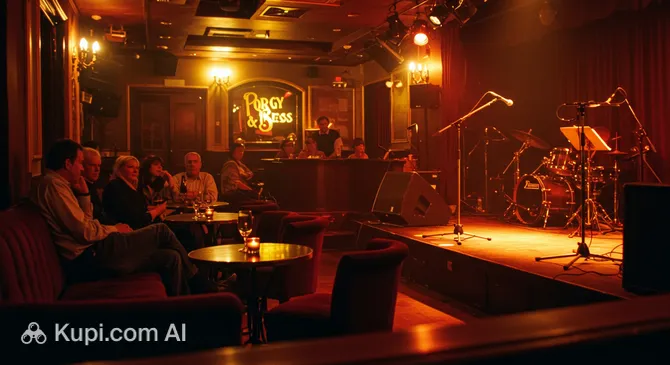
Music lovers should not miss the chance to visit Porgy & Bess. Renowned across Europe, this jazz club offers an intimate atmosphere and a stellar lineup of international and local artists. It is the perfect spot to enjoy high-quality live music in a setting that feels both historic and contemporary. The dress code here is generally smart-casual, and booking tickets in advance is highly recommended for popular acts.

Porgy & Bess. Source: Kupi.Binoculars

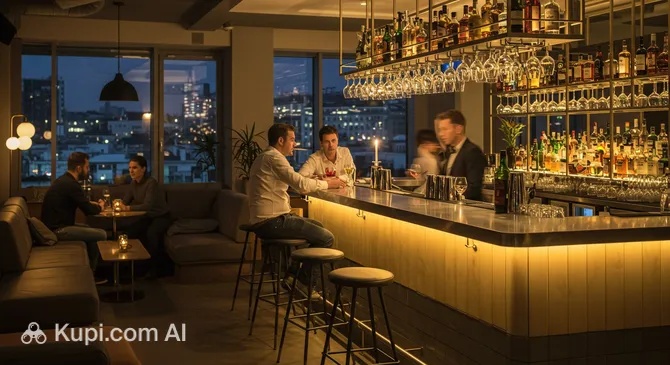
For those seeking a view with their cocktails, Zoku Vienna offers a fantastic rooftop experience. Located near the Prater, this venue combines a social living room atmosphere with a terrace that provides sweeping views of the city skyline. It is an ideal location for a sunset drink or a relaxed evening with friends. If you prefer a more bohemian setting, phil is a unique hybrid of a bookstore, furniture shop, and bar. It is a beloved spot for a laid-back evening of conversation surrounded by retro design and good literature.

Zoku Vienna. Source: Kupi.Binoculars

If you are interested in comedy and cabaret, which are deeply rooted in Viennese culture, check out the program at Stadtsaal. This venue hosts a variety of performances, often with a satirical edge, providing a glimpse into the local humor and performing arts scene. While many shows are in German, the atmosphere alone is worth experiencing, and music acts frequently perform here as well.

Vienna is a very safe city for nightlife. You can feel comfortable walking between venues in the main districts even late at night. Public transport is excellent for getting around; the subway (U-Bahn) runs 24 hours a day on Fridays and Saturdays. On weekdays, an extensive network of "Nightline" buses ensures you can get home safely after the trains stop running around midnight. Taxis are reliable and can be hailed on the street or booked via apps like Uber and Bolt.

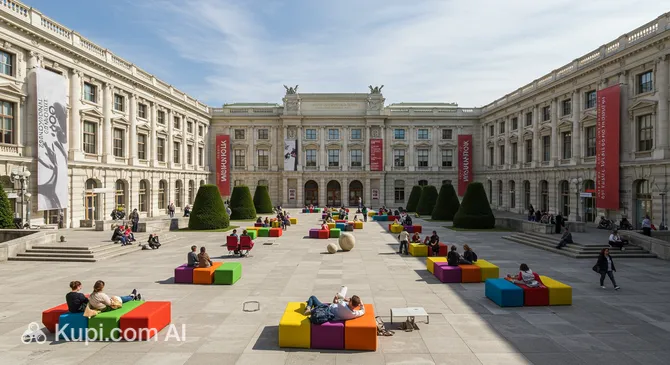
While the nights are lively, daytime entertainment in Vienna is equally compelling. The city is dotted with cultural heavyweights like the Musikverein, famous for its Golden Hall and New Year's Concerts. For a change of pace from museums, the Prater amusement park offers fun rides and green spaces, while the MuseumsQuartier Vienna serves as a cultural living room where you can visit galleries during the day and relax on the famous Enzi furniture in the courtyards as the evening begins.

MuseumsQuartier Vienna. Source: Kupi.Binoculars

Parks & Museums

Vienna is frequently cited as one of the greenest cities in the world, seamlessly blending its imperial architecture with vast natural landscapes. From manicured baroque gardens to wild river floodplains, the city offers diverse opportunities for relaxation. Simultaneously, its museum landscape is dense and varied, extending far beyond the well-known imperial collections to include world-class galleries and unique exhibitions.

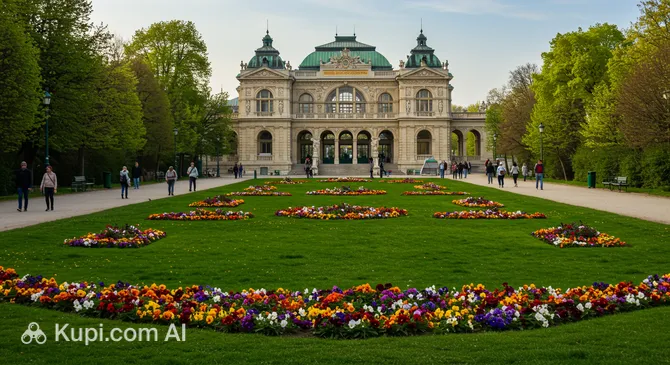
Among the city's most beloved green spaces is the Stadtpark. Located conveniently along the Ringstraße, this park is the city's first public park and serves as a tranquil oasis in the city center. It is famous for its gilded statue of Johann Strauss II, one of the most photographed monuments in the city. Visitors enjoy strolling past the ponds and flowerbeds or relaxing on the lawns, making it a perfect spot to take a break from sightseeing.

Stadtpark. Source: Kupi.Binoculars

For a completely different nature experience, the Danube-Auen National Park – Vienna Lobau Entrance offers a gateway to one of the last major wetlands in Central Europe. Known as the "jungle" of Vienna, the Lobau area is part of a national park that stretches along the Danube. It provides a habitat for diverse wildlife, including beavers and kingfishers, and is a fantastic destination for hiking, cycling, and swimming in natural waters, all within the city limits.

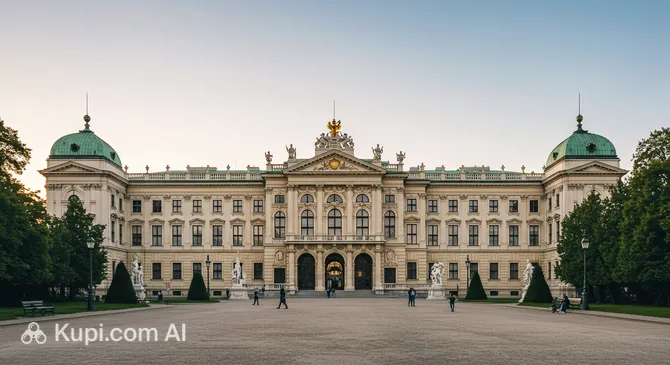
Just across the square from the art museum mentioned earlier stands the magnificent Natural History Museum Vienna. Housed in a palatial building that mirrors its twin across the Maria-Theresien-Platz, this museum is a fascinating journey through the history of the earth. Its collection includes the 29,500-year-old Venus of Willendorf, vast meteorite collections, and dinosaur skeletons. It is particularly engaging for families and anyone curious about the natural world.

Natural History Museum Vienna. Source: Kupi.Binoculars

Art enthusiasts should head to the Albertina, located on one of the last remaining sections of the city's old fortifications. This museum combines imperial flair with modern art, housing one of the most important graphic art collections in the world. In addition to masterpieces by Dürer, Monet, and Picasso, visitors can tour the meticulously restored Habsburg State Rooms, offering a glimpse into the lifestyle of the archdukes who once resided here.

Albertina. Source: Kupi.Binoculars

For a unique perspective on the city's wildlife, the House of the Sea is an exceptional venue. Located inside a massive World War II flak tower, this aqua-terra zoo spans several floors featuring tropical freshwater and saltwater fish, reptiles, and free-flying birds in a tropical house. The rooftop terrace offers a stunning 360-degree view of the city, which is a highlight in itself.

Finally, no tour of Vienna's architectural landmarks is complete without seeing the Hundertwasser House. Designed by the artist Friedensreich Hundertwasser, this residential building rejects straight lines in favor of colorful facades, uneven floors, and trees growing from the windows. Although you cannot enter the private apartments, the exterior is a masterpiece of expressionist architecture that challenges traditional concepts of urban living.

Getting Around

Navigating Vienna is a pleasure thanks to its highly efficient, safe, and comprehensive public transport network operated by Wiener Linien. The system is fully integrated, meaning that a single ticket allows you to switch between the metro, trams, buses, and suburban trains within the city limits. Because the city center is compact and pedestrian-friendly, combining walking with short public transport rides is often the best way to explore.

The backbone of the system is the U-Bahn (metro), consisting of five lines (U1, U2, U3, U4, and U6) that are color-coded for easy navigation. Trains run frequently, typically every 2 to 5 minutes during peak hours. Complementing the metro is one of the world's largest tram (Straßenbahn) networks. The red and white trams are not only a practical way to get around but also offer a scenic tour of the city, particularly lines 1, 2, 71, and D, which travel along the famous Ringstraße boulevard. For areas not reached by rails, a dense network of buses ensures that every corner of the city is accessible.

For slightly longer distances across the city or to reach the outer districts, the S-Bahn (suburban train) is a fast alternative. Operated by the Austrian Federal Railways (ÖBB), these trains are also covered by standard municipal tickets as long as you travel within the core zone. The S-Bahn is particularly useful for connecting to the main train stations or quickly traversing the city from north to south via the "Stammstrecke" main line.

The pricing system is straightforward and designed for the "Core Zone Vienna" (Zone 100). Tourists can choose from a variety of options, including single tickets, 24, 48, or 72-hour passes, and weekly passes. For those who want to combine travel with sightseeing discounts, the Vienna City Card is a popular choice. The most convenient way to purchase tickets and plan routes is through the official WienMobil app, which allows you to buy digital tickets instantly. Alternatively, multilingual ticket machines are available at all metro stations, and tickets can also be bought at "Trafik" (tobacco shops).

A crucial detail for visitors using paper tickets is validation. Before boarding the metro or suburban trains, you must stamp your ticket at the blue machines located at the station entrances. On trams and buses, the validators are inside the vehicle. Failure to validate your ticket can result in a hefty fine during random inspections, which are frequent. If you purchase a digital ticket through the app, it is usually valid immediately or from a selected start time without needing physical stamping.

Public transport generally operates from approximately 5:00 AM until shortly after midnight. However, Vienna offers excellent service for night owls. On Friday and Saturday nights, as well as on the eves of public holidays, the U-Bahn runs 24 hours a day with intervals of about 15 minutes. On other nights, an extensive "Nightline" bus network ensures you can return to your hotel safely at any hour.

For those who prefer active travel, the city is extremely bike-friendly, with extensive cycle paths and a bike-sharing system known as WienMobil Rad. You can easily rent a bike via an app and return it to numerous stations across the city. While taxis are readily available at designated stands, ride-hailing apps like Uber and Bolt operate widely and offer a convenient alternative if you are carrying heavy luggage or traveling late on a weekday.

Transport enthusiasts should keep an eye out for the architectural heritage embedded in the system. Several stations on the U4 and U6 lines were designed by the famous Art Nouveau architect Otto Wagner around 1900. These stations, with their distinctive green ironwork and white facades, are protected landmarks that turn a simple commute into a journey through architectural history.
Accommodation

Vienna offers a hospitality landscape that is as grand and varied as its history. From the chandelier-lit lobbies of historic palaces to the minimalist chic of modern design hotels, the city caters to every taste and budget. Accommodation here is generally of a very high standard, with a strong emphasis on cleanliness, service, and the famous Viennese charm.

For first-time visitors, the Innere Stadt (1st District) is the most prestigious address. Staying here puts you within walking distance of the main sights, such as St. Stephen's Cathedral and the Hofburg, though it typically comes with a higher price tag. If you prefer a trendier, more local vibe, the Neubau (7th District) and Mariahilf (6th District) are excellent alternatives. These neighborhoods are packed with independent boutiques, cafes, and restaurants, offering a lively atmosphere just a short walk or tram ride from the center.

A wonderful example of the city's boutique accommodation is Hotel Beethoven Vienna. Situated in a prime location near the Naschmarkt and the Opera, this hotel captures the essence of Vienna's cultural life. It sits in a quiet street yet remains close to the bustling cultural heart of the city, making it an ideal retreat for art and music lovers.

For budget-conscious travelers, the area around the Hauptbahnhof (Central Station) in the 10th District has seen a surge in modern, affordable hotels and hostels. This location offers superb connectivity to the airport and the rest of the city. Regardless of where you choose to stay, booking well in advance is highly recommended, especially during the Christmas market season in December and the peak summer months of July and August.

Nearby Cities

For those looking to explore the surroundings, Vienna serves as an excellent base for day trips to several interesting nearby locations:

Just a short distance south of the capital lies Baden, a charming spa town often referred to as "Biedermeier Baden." Famous for its sulfur thermal springs, it was once a favorite summer retreat for the imperial family and cultural elite. Today, visitors can stroll through the beautiful Kurpark, visit Austria's largest casino, or admire the elegant 19th-century architecture that gives the town its romantic atmosphere.

To the north, Klosterneuburg offers a rich blend of history and wine culture. The town is dominated by the majestic Klosterneuburg Monastery, a 900-year-old Augustinian abbey that houses the famous Verdun Altar and offers fascinating tours of its baroque imperial apartments and medieval wine cellars. It is a perfect destination for those interested in religious history and viticulture.

Another delightful option is Mödling, situated at the edge of the Vienna Woods (Wienerwald). This historic town features a picturesque medieval center and pedestrian zone lined with cafes and boutiques. It is also known for its connection to Ludwig van Beethoven, who composed his "Missa Solemnis" here. The town serves as a gateway for hiking trails and is close to the Liechtenstein Castle and the Seegrotte Hinterbrühl underground lake.

City Population Distance (km)
Klosterneuburg 27,058 12
Baden 26,286 25
Modling 20,555 15
Traiskirchen 18,858 22
Schwechat 18,026 11

These nearby destinations offer a glimpse into the diverse culture and landscapes of the region.

Shopping & Souvenirs

Shopping in Vienna is an experience that perfectly mirrors the city's character, blending imperial tradition with modern trends. Visitors can find everything from high-end international luxury brands and historic family-run businesses to quirky boutiques and expansive shopping centers. Whether you are looking for haute couture, antiques, or unique local handicrafts, the Austrian capital offers a diverse retail landscape that caters to every taste and budget.

For a classic shopping experience, head to the pedestrian zones in the First District (Innere Stadt). The "Golden U," formed by Kärntner Straße, Graben, and Kohlmarkt, is the city's most exclusive address. Here, you will find luxury flagship stores, jewelers, and traditional shops that once supplied the imperial court. For a more mainstream experience, Mariahilfer Straße connects the Westbahnhof to the Museumsquartier and serves as the city's longest shopping mile, lined with major department stores, international fashion chains, and shoe shops.

If you prefer having everything under one roof, Vienna boasts several impressive shopping malls. Located on the southern outskirts of the city, Shopping City Süd is one of the largest shopping centers in Europe. It features hundreds of stores, cinema complexes, and restaurants, making it a destination in itself. Another modern option is Huma Eleven in the Simmering district, which offers a relaxed atmosphere with a wide variety of fashion and lifestyle brands.

Markets are an essential part of Viennese life, offering a sensory delight of scents and colors. The most famous is the Naschmarkt, a vast open-air market existing since the 16th century. It is the perfect place to buy exotic spices, fresh produce, cheese, and vinegar. On Saturdays, a lively flea market takes place adjacent to the food stalls, attracting treasure hunters looking for antiques, vinyl records, and vintage curiosities.

When searching for authentic souvenirs, look beyond the standard fridge magnets. Vienna is renowned for its culinary treats, such as Manner wafers (hazelnut cream-filled wafers in iconic pink packaging) and the famous Mozartkugeln (chocolate marzipan balls). For something more lasting, consider Augarten porcelain, handcrafted in the city's own manufactory, or a traditional snow globe, which was invented in Vienna. White wine from local vineyards or pumpkin seed oil are also excellent gifts to bring home.

Standard opening hours for shops are generally from 09:00 or 10:00 AM to 6:00 or 7:00 PM on weekdays, and until 5:00 or 6:00 PM on Saturdays. It is important to remember that most shops, including supermarkets and malls, are closed on Sundays and public holidays. Exceptions include souvenir shops and stores located within major train stations and the airport. Major credit cards (Visa, Mastercard) are widely accepted, though smaller boutiques and market stalls may prefer cash.

For visitors residing outside the European Union, Vienna offers a tax-free shopping scheme. If you spend more than €75 in a single store on the same day, you can request a tax refund form. Look for the "Global Blue" or "Tax Free" signage in shop windows. By presenting your passport and the completed form at customs upon leaving the EU, you can claim a refund on the Value Added Tax (VAT), making your luxury purchases even more attractive.

Reached the end of the page?

That means the route is fully explored