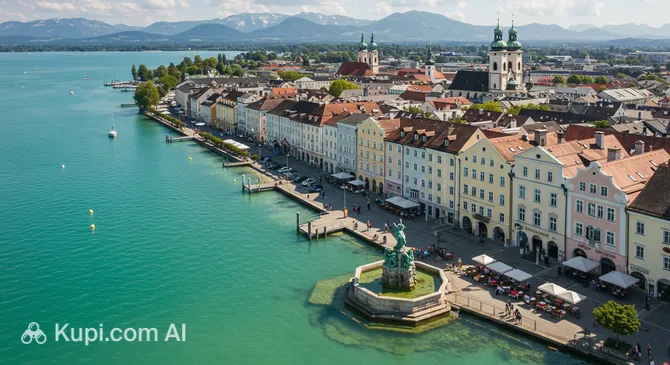
Welcome to Klagenfurt, the picturesque capital of the federal state of Carinthia in southern Austria. Famous for its vibrant Renaissance architecture and its idyllic location on the eastern shore of Lake Wörthersee, this city offers a perfect blend of cultural heritage and natural beauty. With a population of over 100,000 inhabitants, it maintains a lively yet relaxed atmosphere, often described as having a touch of Mediterranean flair due to its sunny climate and proximity to the borders of Italy and Slovenia.
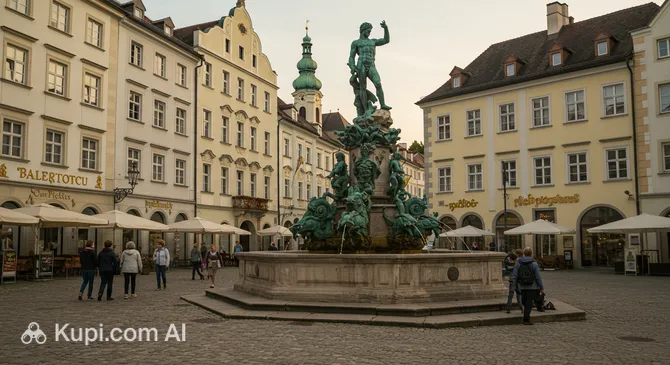
The heart of the city is defined by its well-preserved Old Town, where visitors can stroll through charming alleyways and admire magnificent courtyards. Exploring the history of Klagenfurt reveals a fascinating past, symbolized most notably by the Lindwurm (Dragon Fountain) in the central square, which commemorates the legendary founding of the city. This mythical beast is the city's heraldic animal and a must-see landmark for every traveler.
Klagenfurt. Illustration.
Source: Kupi.com AI
Beyond its historical center, Klagenfurt is renowned for unique attractions such as Minimundus, a miniature park displaying over 150 models of famous structures from around the world. Nature lovers will find paradise at the nearby Lake Wörthersee, one of the warmest Alpine lakes in Europe, perfect for swimming, boating, and sunbathing during the summer months. Whether you are looking for cultural insights or outdoor adventures, Klagenfurt serves as an ideal gateway to the scenic wonders of the region.
Weather Overview
The climate in this region is generally continental, characterized by four distinct seasons that offer a variety of experiences for travelers. In general, you can expect warm summers with occasional rain and cold winters where temperatures consistently drop below freezing. To help you pack appropriately for your trip, it is recommended to check the detailed report on the weather in Klagenfurt.
Summer is a popular time to visit, particularly in July and August, when average highs reach approximately 23.8°C. While the temperatures are pleasant for outdoor activities, these months are also quite humid, with about 16 to 17 wet days recorded on average. Conversely, winter brings a sharp chill to the city; January is typically the coldest month, with average temperatures around -1.4°C and lows dipping to -5.2°C. Travelers planning a spring visit should note that May tends to be the dampest month, experiencing up to 21 wet days.
Average monthly temperature
Average monthly precipitation
Interesting Facts
Beyond its scenic lake and Renaissance facades, Klagenfurt holds a treasure trove of curious stories and unique distinctions. Digging a little deeper reveals fascinating details and local legends that many visitors might overlook.
The Dragon Was a Rhino: While the city's emblem is the legendary dragon, the head of the iconic Lindworm Fountain was actually modeled after the skull of a woolly rhinoceros found in the area. In the 16th century, locals mistook the prehistoric fossil for the remains of the mythical beast.
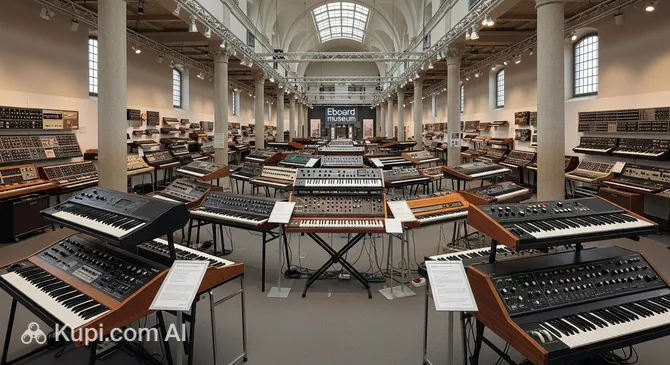
Keyboard Capital: The city is home to the Eboard Museum, which is considered the world's largest collection of electronic keyboards, synthesizers, and electric organs. It serves as a unique sanctuary for the instruments that shaped the history of pop and rock music.
Pioneers of Walking: Klagenfurt was a visionary in urban planning, establishing the very first pedestrian zone in Austria in 1961. This move transformed the city center and the area around Neuer Platz into a car-free haven decades before it became a standard European trend.
The Lake's Origin Story: According to local folklore, the beautiful Lake Wörthersee was created as a punishment. Legend says a "Little Man" (Wörthersee-Mandl) opened a barrel that flowed endlessly, flooding a wealthy but impious city that refused to end its partying on Christmas Eve.
Lindworm Fountain. Illustration.
Source: Kupi.com AI
Traveler photos:
How to Get There
Reaching the capital of Carinthia is straightforward thanks to its central location in southern Austria and excellent connections to neighboring countries. Whether you prefer flying or taking the train, there are several convenient options to suit your travel plans. You can find more about how to get to Klagenfurt in our detailed guide, but the overview below highlights the most popular arrival points.
For air travelers, the most convenient entry point is Klagenfurt Airport (IATA: KLU), located just 2.4 km from the city center. As a small international airport, it offers quick processing times, and a taxi ride to the heart of the city takes approximately 25 minutes. Alternatively, many visitors choose to fly into Ljubljana Jože Pučnik Airport (IATA: LJU) in the city of Ljubljana, Slovenia. This larger hub is situated about 46 km from Klagenfurt, with a transfer time of around 1 hour and 30 minutes by road. Another viable option within Austria is Graz Airport (IATA: GRZ) in Graz, roughly 95 km away, which connects to various European destinations.
For clarity, here is a summary of the main airports:
Traveling by train is another excellent way to arrive, offering scenic views of the Austrian landscape. The city is served by Klagenfurt Hauptbahnhof, the main railway station located directly in Klagenfurt, just 1.1 km from the center. It connects the city to major Austrian hubs and international destinations. If you are coming from the west, you might also pass through or transfer at Villach Central Station in the nearby city of Villach. Located about 35.6 km away, Villach is a significant railway junction, and a connecting trip to Klagenfurt takes approximately 30-45 minutes by car or a short train ride.
Below is a list of the nearest and most significant railway stations:
Explorers visiting the capital of Carinthia will find a delightful mix of historical landmarks, green spaces, and unique cultural institutions. The city center is compact and walkable, allowing you to easily discover its most famous sights on foot. Below are some of the key places that define the character of this charming Austrian city.
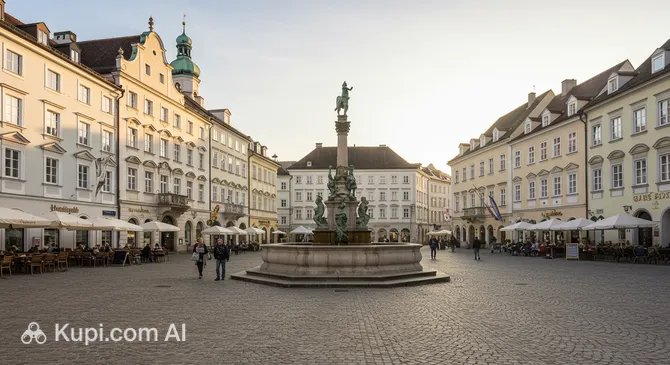
The beating heart of the city is Neuer Platz, the central square that serves as the focal point for local life and tourism. Dominated by the majestic Town Hall (Rathaus), this spacious plaza is the perfect starting point for any tour. It is famously home to the city's heraldic symbol, the Dragon Fountain, making it an essential stop for photos. Visitors enjoy the lively atmosphere here, especially during markets and events, surrounded by beautiful historical facades that tell the story of the city's past.
Neuer Platz. Illustration.
Source: Kupi.com AI
Traveler photos:
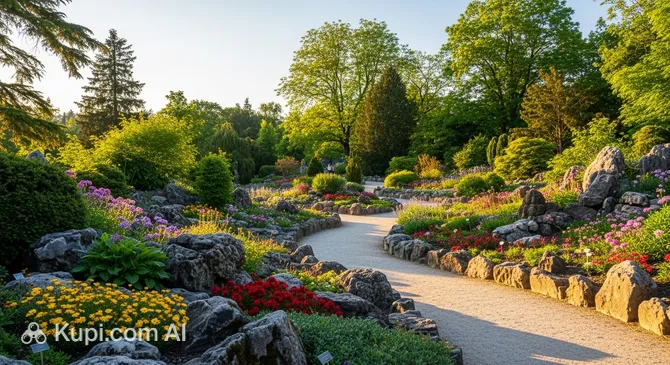
For a peaceful escape into nature without leaving the city limits, the Klagenfurt Botanical Garden is a true gem. Located at the foot of the Kreuzbergl mountain, this verdant oasis features a fascinating collection of alpine plants, exotic flora, and a soothing waterfall. It is a wonderful spot for a relaxing stroll, offering a quiet retreat where you can admire rare plant species and enjoy the meticulously landscaped grounds.
Klagenfurt Botanical Garden. Illustration.
Source: Kupi.com AI
Traveler photos:
Music enthusiasts and fans of vintage technology should not miss the Eboard Museum. This unique institution is widely recognized as Europe's largest museum dedicated to electronic keyboards, synthesizers, and electric organs. It offers an interactive journey through the history of pop and rock music, showcasing the actual instruments that shaped the sounds of legendary bands. It is a quirky and fascinating attraction that offers a distinct alternative to traditional history museums.
Eboard Museum. Illustration.
Source: Kupi.com AI
Traveler photos:
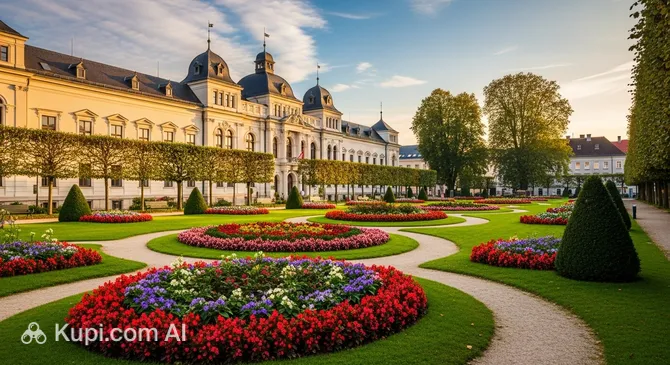
Another lovely green space worth visiting is the Landhaus Park. Situated near the magnificent Landhaus, the seat of the Carinthian state parliament, this park provides a scenic backdrop for a leisurely break. The combination of the park's manicured lawns and the imposing Renaissance architecture of the adjacent government building creates a picturesque setting that highlights the elegance of the city.
Landhaus Park. Illustration.
Source: Kupi.com AI
Traveler photos:
Local Cuisine
The culinary landscape of Klagenfurt is a delightful reflection of its location at the crossroads of three cultures: Austrian, Italian, and Slovenian. This unique "Alps-Adriatic" influence shapes the local food scene, offering a mix of hearty Alpine traditions and lighter Mediterranean flavors. Visitors will find that the city takes great pride in using fresh, regional ingredients, with many restaurants sourcing their produce directly from the surrounding Carinthian countryside and the nearby farmers' markets.
No visit to Klagenfurt is complete without tasting the region's most famous signature dish, Kärntner Kasnudeln. These are pasta pockets traditionally filled with a mixture of curd cheese, potatoes, and herbs—most notably brown mint (Nudelminze) and chervil—sealed with a distinctive crimped edge known as "krendeln." They are typically served with melted brown butter or crispy pork cracklings. For those with a sweet tooth, the Kärntner Reindling is a must-try. It is a yeast cake filled with sugar, cinnamon, raisins, and walnuts, often baked in a special mold. Interestingly, it is eaten not only as a dessert but also alongside savory Easter ham, showcasing the local love for combining contrasting flavors.
Gasthaus im Landhaushof. Illustration.
Source: Kupi.com AI
Traveler photos:
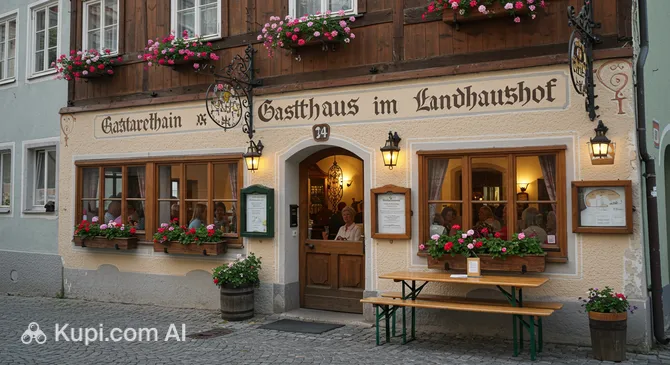
For an authentic dining experience, locals often flock to traditional inns known as Gasthäuser, where the atmosphere is cozy and the portions are generous. A prime example of such an establishment is the Gasthaus im Landhaushof, located in a historic building that offers a perfect setting to enjoy classic Austrian schnitzel or seasonal specialties. Another hub of gastronomic activity is the Benediktinermarkt, a vibrant market where you can sample local cheeses, cured meats, and fresh bread while mingling with the residents.
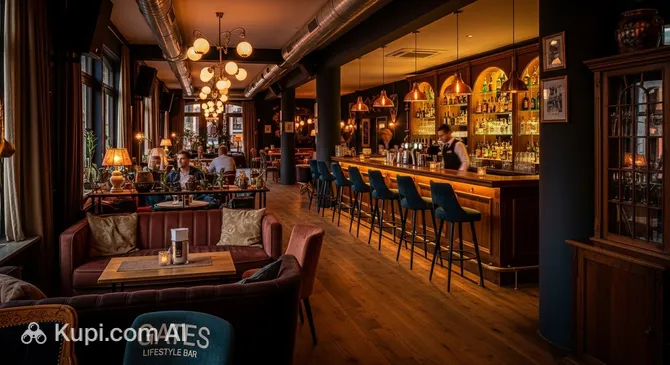
When it comes to drinks, the region has plenty to offer. Beer lovers should look for local Carinthian brews, such as those from the traditional Schleppe Brewery. For something stronger, a glass of Zirbenschnaps (stone pine liqueur) is a popular digestive, known for its distinct reddish color and pine aroma. If you prefer a more modern setting to enjoy a cocktail or a glass of Austrian wine, the GATES Lifestyle Bar provides a chic atmosphere to unwind after a day of sightseeing. Coffee culture is also deeply rooted here, with many cafes inviting you to linger over a cup of "Melange" and a slice of cake.
Travel Tips
To ensure your visit to Klagenfurt is as smooth and enjoyable as possible, we have compiled a list of essential practical advice. These tips will help you navigate local customs, manage your budget, and pack the right gear for your Carinthian adventure.
Clothing and Gear: The weather can be changeable, so packing layers is always a smart strategy. In summer, bring lightweight clothing and, most importantly, swimwear for a dip in Lake Wörthersee. Winters are cold and often snowy, requiring a warm coat, gloves, and sturdy boots. Since the Old Town features cobblestone streets, comfortable walking shoes are a must regardless of the season. If you plan to visit churches, modest attire covering shoulders and knees is respectful.
Transportation: Klagenfurt is a compact city, and the historic center is best explored on foot. For longer distances, the local bus network (STW) is reliable and efficient; tickets can be bought at kiosks or from the driver. Cycling is also very popular here, with many bike paths connecting the city to the lake, so consider renting a bike for a day. Unless you plan to explore the remote valleys of Carinthia, a rental car is generally not necessary within the city limits.
Finances: The official currency is the Euro (€). While credit and debit cards are widely accepted in hotels, restaurants, and larger shops, it is essential to carry some cash. Smaller cafés, bakeries, and stalls at the Benediktinermarkt often only accept cash. ATMs are plentiful throughout the city. Tipping is customary; rounding up the bill or leaving about 5-10% is standard for good service.
Health and Safety: Klagenfurt is a very safe city with high hygiene standards. The tap water is of excellent quality—among the best in Europe—and is safe to drink. Pharmacies, marked by a red "A" (Apotheke), are easy to find; for after-hours service, check the schedule posted on any pharmacy door. In case of an emergency, dial 112 for general assistance.
Communication: The official language is German. While English is widely spoken in hotels, restaurants, and tourist spots, locals appreciate it if you start a conversation with a friendly German greeting. A simple "Grüß Gott" (Hello) or "Danke" (Thank you) goes a long way. Free Wi-Fi is available in many public areas, including Neuer Platz, and SIM cards can be easily purchased at supermarkets or electronics stores.
Local Etiquette: Politeness is highly valued in Austrian culture. Always greet shop assistants when entering a store and say goodbye when leaving. Punctuality is important if you have booked a tour or a table. On Sundays and public holidays, shops are generally closed, and the city is quieter, so plan your shopping for other days.
What to Avoid: Do not jaywalk or cross the street when the pedestrian light is red, even if there is no traffic; locals follow traffic rules strictly, and you may face a fine or disapproval. Also, avoid being overly loud in public transport or restaurants, as a discreet and moderate volume is the norm.
Market Tip: If you are in town on a Thursday or Saturday morning, do not miss the Benediktinermarkt. It is the best place to buy local produce and interact with residents. Arrive early (around 8:00 AM) to see the market at its liveliest and to grab the freshest Carinthian snacks before they sell out.
With these practical tips in mind, you are well-prepared to experience the best of Klagenfurt with confidence and ease. We hope you have a wonderful time exploring the charm, culture, and natural beauty of this delightful Austrian city!
Entertainment & Nightlife
Klagenfurt offers a nightlife scene that perfectly balances its laid-back Alpine atmosphere with the vibrant energy of a university city. While it may not have the frenetic pace of a metropolis, the capital of Carinthia provides plenty of options for a memorable evening, ranging from cozy wine taverns to stylish cocktail bars. The city center is compact and walkable, making it easy to hop from one venue to another without needing transport.
The main hub for evening entertainment is the area surrounding Neuer Platz and the pedestrian zones of the Old Town. Here, historic buildings house modern bars and pubs that spill out onto the cobblestones during the warmer months. In the summer, the action often extends towards the eastern bay of Lake Wörthersee, where beach bars and open-air lounges offer sunset views and holiday vibes. The crowd is generally a mix of students, locals, and tourists, creating a welcoming and safe environment.
Neuer Platz. Illustration.
Source: Kupi.com AI
Traveler photos:
For those looking to start the night with a drink in a trendy setting, GATES Lifestyle Bar is a popular choice. It exemplifies the modern side of the city's nightlife, offering a wide selection of beverages in a chic atmosphere. If you prefer a more traditional start to your evening with hearty local cuisine before hitting the bars, the historic Gasthaus im Landhaushof provides an authentic Austrian dining experience right in the city center.
GATES Lifestyle Bar. Illustration.
Source: Kupi.com AI
Traveler photos:
Most bars and pubs in Austria are open until late, often closing around 2:00 AM or 4:00 AM on weekends. The dress code is typically casual to smart-casual; you will rarely need formal attire unless attending a specific gala or opera event. Prices are reasonable compared to larger European capitals. Safety is generally not a concern in Klagenfurt, even at night. The city center is well-lit and secure for walking, but if you need to travel further, taxis are readily available at designated stands or can be ordered via phone.
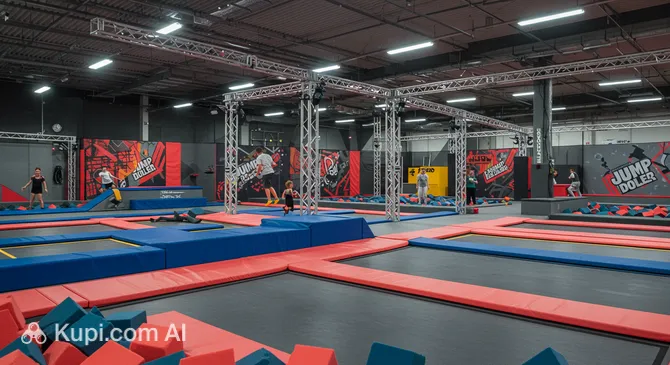
Beyond the nightlife, the city offers diverse entertainment during the day. Families and active travelers will enjoy JUMP DOME Klagenfurt, a modern amusement park centered around trampolines and fun zones. Culture enthusiasts should not miss the unique museums scattered around the city, such as the Eboard Museum, which is dedicated to electronic keyboard instruments and pop music history.
JUMP DOME Klagenfurt. Illustration.
Source: Kupi.com AI
Traveler photos:
Parks & Museums
While the historic alleys and Renaissance courtyards define the city center, Klagenfurt is also a city of lush greenery and diverse cultural institutions. Visitors looking to step away from the bustling squares will find a variety of parks, unique collections, and recreational facilities that offer everything from relaxation to family entertainment.
A highlight for many travelers is Minimundus, the famous miniature park located near Lake Wörthersee. This captivating attraction displays around 156 faithful models of iconic buildings from over 40 countries, all constructed at a scale of 1:25. It allows guests to tour the world in a single afternoon, admiring detailed replicas like the Eiffel Tower and the Taj Mahal set within beautiful gardens. It is a must-see for architecture lovers and a delight for children.
Directly adjacent to the miniature world lies the Europapark, the largest park in the city and a beloved green lung for the locals. Spanning approximately 22 hectares, this protected landscape connects the city to the lakefront, offering vast meadows, a large pond, and shaded paths perfect for walking or cycling. With its skate park and adventure playground, it serves as a vibrant recreational hub where visitors can unwind in nature.
For those seeking an active indoor experience, JUMP DOME Klagenfurt provides an exciting alternative to traditional sightseeing. As the largest trampoline park in Carinthia, it features a wide range of attractions, including freestyle trampolines and a ninja warrior course. It is an ideal spot for families and thrill-seekers looking to burn off some energy in a fun, safe environment.
JUMP DOME Klagenfurt. Illustration.
Source: Kupi.com AI
Traveler photos:
The city's museum scene goes beyond the quirky Eboard Museum mentioned earlier. Art enthusiasts should visit the Museum of Modern Art Carinthia (MMKK), located in the historic "Burg," which hosts impressive exhibitions of contemporary works. Meanwhile, the Robert Musil Literature Museum pays homage to the renowned Austrian writer born in Klagenfurt, offering a deep dive into the region's intellectual heritage.
Getting Around
Navigating Klagenfurt is straightforward and convenient, thanks to an efficient public transport network that primarily relies on buses. The system is operated by the municipal service provider, STW, and covers the city center, the suburbs, and the popular lakeside district. The central hub for almost all bus lines is Heiligengeistplatz, located in the heart of the city. From this main square, you can transfer to virtually any destination, including the main railway station and the university. While the city does not have a metro or tram system, the buses are modern, punctual, and frequent, offering a reliable way to get around.
For tickets and payment, travelers have several flexible options. You can purchase single tickets, 24-hour passes, or weekly cards, which are ideal for longer stays. The most convenient way to buy tickets is through the KlagenfurtMobil app, which allows for cashless payment and easy route planning. Alternatively, tickets can be purchased from ticket machines at major stops like the Central Station and Heiligengeistplatz, or directly from the bus driver using cash. If you are staying at a local hotel, inquire about the Wörthersee Plus Card, a guest card that often includes free or discounted travel on local lines.
In addition to the bus network, the regional S-Bahn trains provide a quick connection between the city's main railway station (Hauptbahnhof), the western station (Westbahnhof), and neighboring towns along the lake. For a more scenic journey during the summer months, consider the Wörthersee Shipping boats. These ferries and historic steamships connect the Klagenfurt bay (Friedelstrand) with other picturesque communities around the lake, serving as both a mode of transport and a delightful sightseeing experience.
For those who prefer active mobility, the city is exceptionally bike-friendly, featuring flat terrain and an extensive network of cycle paths. Visitors can easily rent bicycles through the nextbike sharing system, which has numerous stations throughout the city; simply register via the app to unlock a bike. Taxis are also readily available at designated stands or can be ordered by phone, and car-sharing services offer another alternative for independent travel.
A few practical tips will help you use the system like a local. Regular bus services typically operate from early morning until late evening, but frequencies may drop on Sundays and public holidays. On Friday and Saturday nights, special night buses run to ensure safe travel after hours. Always remember to validate your paper ticket immediately upon boarding if it was bought in advance and not already date-stamped to avoid fines.
Accommodation
Where to Stay:
Finding the perfect place to stay in Klagenfurt is relatively easy, as the city offers a diverse range of accommodation options to suit various tastes and budgets. Whether you are looking for a luxury suite with a view, a modern business hotel, or a cozy, family-run guesthouse, the capital of Carinthia has you covered. The hospitality landscape here ranges from historic buildings in the heart of the Old Town to scenic resorts located along the shores of the stunning Lake Wörthersee.
For most travelers, the best area to stay depends on the season and the purpose of the visit. The Inner City (Old Town) is the most convenient location for those who want to be close to the main cultural attractions, museums, and the vibrant dining scene. Staying here means you are within walking distance of the central Neuer Platz and the pedestrian zones. Alternatively, during the warm summer months, the Lake Wörthersee district (near the university and Europapark) is highly popular. This area offers a resort-like atmosphere, easy access to the beach, and a relaxed vibe, though it is a short bus or bike ride away from the historic center.
While the city center hosts several established hotels and charming boutique accommodations, visitors on a tighter budget can find affordable hostels and well-maintained camping grounds near the lake. For those seeking a more authentic local experience, traditional Gasthöfe (inns) on the outskirts provide comfortable rooms and hearty breakfasts at reasonable prices. Apartment rentals are also widely available and are a great choice for families or those planning a longer stay.
Booking Tip: Klagenfurt is a major summer destination, and accommodation can fill up quickly, especially in July and August. Major events, such as the Ironman Austria or the Beach Volleyball Grand Slam, draw thousands of visitors, causing prices to spike and availability to drop. It is highly recommended to book your room several months in advance if you plan to visit during these peak times.
In terms of pricing, the city is generally moderate compared to other major Austrian tourist hubs like Salzburg or Vienna. Budget travelers can find options starting at reasonable rates, while mid-range hotels offer excellent value for money. Luxury properties, particularly those with lake access, command higher prices. Reservations can be easily made through major online booking platforms, though contacting smaller, family-run establishments directly can sometimes yield better rates or special offers.
Nearby Cities
For those looking to explore the surroundings, Klagenfurt serves as an excellent base for day trips to several interesting nearby locations:
City
Population
Distance
Sankt Veit an der Glan
12 547
16 km
Feldkirchen
14 198
21 km
Velden am Wörthersee
8 952
21 km
Volkermarkt
10 946
25 km
Upper Jezersko
558
29 km
One of the most accessible and rewarding destinations is Villach, located just a short drive or train ride to the west. As the second-largest city in Carinthia, it is renowned for its vibrant atmosphere, thermal baths, and proximity to the stunning Faaker See and Ossiacher See. Visitors can enjoy a stroll through its colorful main square or relax in the warm mineral waters of the KärntenTherme, making it a perfect spot for both sightseeing and wellness.
For those willing to travel a bit further, Graz offers a rich cultural experience as the capital of the neighboring province of Styria. Known for its UNESCO-listed historic center and the iconic Clock Tower on the Schlossberg, Graz blends Renaissance architecture with modern design. It is Austria's second-largest city and provides a lively urban contrast to the lakeside tranquility of Klagenfurt, with plenty of museums, galleries, and culinary delights to explore.
Another charming option is Wolfsberg, situated in the scenic Lavanttal valley. This historic town is dominated by the impressive Wolfsberg Castle (Schloss Wolfsberg), a Tudor-style palace that overlooks the area. It serves as a gateway to the Koralpe mountain range, making it an ideal destination for travelers who want to combine history with hiking and nature appreciation.
These nearby destinations offer a glimpse into the diverse culture and landscapes of the region.
Shopping & Souvenirs
Shopping in Klagenfurt is a delightful experience that combines the charm of a historic old town with the convenience of modern retail centers. The city prides itself on having one of the oldest pedestrian zones in Austria, allowing visitors to browse through shops in a relaxed, car-free environment. From high-end fashion boutiques and international chains to traditional family-run businesses, the capital of Carinthia offers a diverse range of goods, making it a perfect destination for those who enjoy retail therapy amidst Renaissance architecture.
The heart of the city's shopping scene lies in the pedestrian streets radiating from Alter Platz and Neuer Platz. The Kramergasse and Wiener Gasse serve as the main shopping arteries, lined with flagship stores, jewelry shops, and cozy cafes. Wandering through these cobblestone lanes, you will find a mix of well-known European brands and independent boutiques selling unique fashion, books, and home décor. The atmosphere here is lively yet unhurried, inviting you to window shop while admiring the beautifully preserved facades of the townhouses.
For those who prefer having everything under one roof, the city boasts excellent shopping malls. The most prominent is the City Arkaden Klagenfurt, located directly in the city center. This modern complex features over 115 shops, cafes, and restaurants, offering a vast selection of fashion, electronics, and cosmetics. It is a convenient stop for tourists, as it sits just a few steps away from the main sightseeing spots.
City Arkaden Klagenfurt. Illustration.
Source: Kupi.com AI
Traveler photos:
Another significant destination for shoppers is the Südpark Shopping Center Klagenfurt. Situated a bit further from the historic core, this mall provides a relaxed shopping environment with a wide variety of stores, ranging from grocery hypermarkets to sports retailers and fashion outlets. It is a popular choice for locals and offers ample parking, making it a practical option if you are exploring the outer districts of the city.
If you are looking for authentic local flavor, the Benediktinermarkt is an absolute must-visit. Located at Benediktinerplatz, this vibrant market is the culinary soul of the city. While it is open daily (except Sundays), the main market days are Thursday and Saturday, when farmers from Carinthia, as well as neighboring Italy and Slovenia, bring their fresh produce. Here, you can find regional specialties such as smoked meats (Speck), artisan cheeses, fresh bread, and seasonal fruits. It is also a fantastic place to hunt for small flea market treasures and antiques on specific days.
When searching for the perfect souvenir to take home, focus on traditional Carinthian products. A bottle of pumpkin seed oil or locally produced schnapps (fruit brandy), particularly pine schnapps (Zirbenschnaps), makes for a great gift. Sweet treats like Carinthian honey or the famous Bachmann chocolates are also popular choices. For non-edible souvenirs, look for handicrafts featuring the city's emblem, the Lindwurm dragon, or high-quality ceramics and textiles found in the smaller artisan shops around the Old Town.
Store opening hours in Klagenfurt typically run from 9:00 AM to 6:00 PM on weekdays (Monday to Friday) and until 5:00 PM or 6:00 PM on Saturdays. It is important to note that, like in the rest of Austria, almost all shops—including supermarkets and malls—are closed on Sundays and public holidays. Payment is generally hassle-free, with major credit and debit cards widely accepted in most stores and restaurants. However, if you plan to shop at the Benediktinermarkt or smaller stalls, carrying some cash in Euros is highly recommended.
Visitors from outside the European Union may be eligible for a tax-free refund on purchases exceeding a certain amount (typically €75.01) in a single store. Look for the "Tax-Free Shopping" signage in shop windows. If you qualify, ask the staff for a tax refund form at the checkout, which you can later validate at customs when leaving the EU to claim a portion of the Value Added Tax (VAT) back.