Support

Trieste Airport

About the Airport

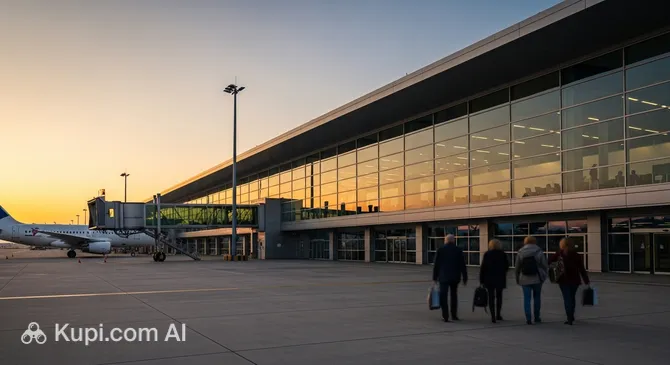
Trieste Airport. Source: Kupi.com Binoculars

Trieste Airport (Friuli Venezia Giulia) is not merely a transit hub, but a true strategic gateway to one of Europe's most multicultural regions. Located at the junction of Italy, Slovenia, and Croatia, it offers travellers a unique opportunity to begin their exploration of the Adriatic without the hustle and bustle typical of overloaded hubs like Venice. It is a compact and comfortable airport, where the journey from the aircraft steps to the city exit takes just a few minutes, and views of the Alps open up from the terminal windows in clear weather.

IATA Code TRS
ICAO Code LIPQ
City Trieste (Ronchi dei Legionari)
Distance to centre ~33 km
Status International
Annual Passengers Over 1.3 million (2024)

Features and advantages of the airport:

Trieste Airport stands out for its intermodality: it is one of the few airports in Italy with its own railway station (Trieste Airport), connected to the terminal by a 425-metre covered pedestrian walkway. Travellers can reach the centre of Trieste by train in just 30 minutes, as well as travel directly to Venice or Udine without transfers.

Thanks to the terminal's compact size, security checks and passport control procedures are significantly faster here than in major airports. This makes it an excellent choice for those who value their time and wish to avoid long queues. Furthermore, the airport serves as a convenient starting point for trips to neighbouring Slovenia (about an hour's drive to Ljubljana) and the resorts of Croatian Istria.

Contact Information

  • Official Website: triesteairport.it
  • Information Desk Phone: +39 0481 773224
  • Address: Via Aquileia, 46, 34077 Ronchi dei Legionari (GO), Italy
  • Email for General Inquiries: info@triesteairport.it
  • Social Media: You can find current links to the airport's official social media pages on their website.
  • Lost & Found: Phone: +39 0481 773264, E-mail: trs.lostandfound@aviapartner.aero
  • Customer Service: For assistance and general inquiries, it is recommended to use the main information desk phone number.

How to Get to the Airport

Trieste Airport (Aeroporto di Trieste – Friuli Venezia Giulia), despite its name, is not located in the city itself, but approximately 33 km northwest of it, in Ronchi dei Legionari. Thanks to well-developed transport infrastructure, getting to the centre of Trieste or, conversely, to the airport from the city is possible via several methods suitable for any budget and schedule.

Public Transport is the most economical option. Regular buses on Route G51 (formerly No. 51) operated by APT Gorizia connect the airport with the central bus station in Trieste, which is located next to the main Trieste Centrale railway station. The journey takes approximately 50-60 minutes, and the ticket cost is just a few euros. This is an ideal choice for travellers looking to save money.

Another fast and convenient method is the train. The Trieste Airport railway station is located directly at the passenger terminal. From here, Trenitalia trains depart for Trieste Centrale station. The journey time is only about 30 minutes. This line also allows for easy access to other cities in the region, including Venice, making the airport a convenient transfer point for flights from Venice Marco Polo Airport.

Taxi and Transfer is the most comfortable, but also the most expensive option. A taxi ride to the centre of Trieste will take about 30-40 minutes, depending on traffic. The cost can vary from 60 to 80 euros. To avoid price surprises, you can book a private transfer online in advance — in this case, the driver will meet you with a sign, and the trip cost will be fixed.

If you plan to explore not only Trieste but also the picturesque Friuli Venezia Giulia region or even make a trip to neighbouring Slovenia, for example to Portorož or Ljubljana, the best solution would be car rental. Desks of major international rental companies are located in the arrivals hall. It is recommended to book a car in advance, especially during the peak tourist season, to secure a better price.

For travellers with their own vehicles, convenient parking is provided at the airport. There are several zones for short-term and long-term parking (P1, P2, P3, P4, P7), located within walking distance of the terminal. You can check rates and book a spot on the official Trieste Airport website.

Terminals and Map

Trieste Airport (TRS), officially known as Friuli Venezia Giulia Airport, is distinguished by its compactness and thoughtful organisation, making it very convenient for travellers. It consists of one passenger terminal that serves all domestic and international flights, both Schengen and non-Schengen.

The terminal structure is simple and intuitive. The building has two main floors:

  • Ground Floor (Piano Terra) — this is the arrivals area. Here you will find baggage claim belts, customs control, car rental desks, the tourist information centre, and exits to bus stops, the taxi rank, and the railway station.
  • First Floor (Primo Piano) — the departures area. You can reach this level via escalator or lift. Here you will find check-in counters, the security checkpoint, and the main departure lounge with boarding gates.

Since there is only one terminal, transfers between zones are not required — everything is located in one building within walking distance. Navigation is simplified to the maximum thanks to clear signage in Italian and English. After passing security control, passengers enter the airside zone featuring several shops, cafes, and comfortable seating areas for waiting for their flight.

Completing all pre-flight formalities at Trieste Airport usually takes little time. On average, check-in and security take from 20 to 40 minutes. However, during peak tourist seasons or when several flights depart simultaneously, small queues are possible. It is recommended to arrive at the airport 1.5–2 hours before departure to complete all procedures without rushing.

Airport History

The history of Trieste-Friuli Venezia Giulia Airport (TRS), also known as Ronchi dei Legionari Airport, began with its official opening for civil flights on 2 December 1961. It was created to meet the growing air transport needs of the city of Trieste and the entire region, replacing an old military airfield. The early years of operation were modest, with a primary focus on domestic routes, primarily to Rome.

The 1970s became a key stage in the airport's development. In 1978, a major reconstruction was completed — the runway was extended to 3000 metres. This allowed for the accommodation of larger jet aircraft, such as the DC-9 and Boeing 727, and opened doors for international charter and scheduled flights. From this moment, the airport began actively integrating into the European transport network, attracting more airlines and passengers.

At the turn of the 20th and 21st centuries, the airport underwent several waves of modernisation aimed at increasing comfort and capacity. A new, more modern passenger terminal was built, and existing infrastructure was continuously improved. These changes helped the airport cope with growing traffic and meet international service standards.

One of the most significant achievements in the airport's recent history was the opening of the intermodal transport hub (Polo Intermodale) in March 2018. This ambitious project connected the airport to the railway station on the Venice-Trieste line via a covered overhead walkway. Thanks to this innovation, Trieste Airport became one of the few in Italy offering direct connections between air and rail transport, significantly simplifying travel throughout the region and beyond.

Interesting fact: although the airport is often referred to by the name of the nearest town, Ronchi dei Legionari, its official name is Friuli Venezia Giulia Airport. This emphasises its strategic importance not only for Trieste but for the entire autonomous region, as well as for neighbouring areas of Slovenia and Croatia, for which it serves as an important aerial gateway.

Services and Amenities

Trieste Airport, also known as Friuli Venezia Giulia Airport, offers passengers all necessary amenities for a comfortable wait. Despite its compact size, the terminal is well-organised and equipped. Here you will find several cafes and bars where you can enjoy a cup of aromatic Italian coffee or have a snack before your flight. For those preferring a more substantial meal, a restaurant is available. In the departure zone, there is a Duty Free shop with an assortment of perfumes, alcoholic beverages, tobacco products, and local delicacies, as well as other shops where you can purchase souvenirs and travel essentials.

For passengers who need to stay connected or work, free Wi-Fi is available throughout the terminal. Charging stations for electronic devices are also provided. For business travellers, business services are available, including the option to rent a conference room for meetings and negotiations. This makes the airport convenient not only for tourists but also for those arriving in Trieste for work.

For a more comfortable wait, the FVG Lounge VIP hall operates at the airport. Lounge guests can enjoy a quiet atmosphere, complimentary snacks and beverages, fresh newspapers, and high-speed internet. It is an ideal place to relax or focus on work away from the bustle of the main waiting hall. Access to the lounge is available for a fee or for holders of certain loyalty programme cards.

Trieste Airport cares for all categories of passengers. For travellers with children, special nursery rooms with changing tables are provided. Passengers with reduced mobility are offered a full range of services, including special assistance with boarding, disembarking, and moving through the terminal. It is recommended to book this service in advance through your airline.

In the terminal, you will find ATMs and currency exchange points for financial matters. In case medical assistance is needed, a First Aid point operates at the airport. Although there are no hotels directly on the airport grounds, several hotels of various price categories are located in the immediate vicinity, which can be quickly reached by taxi or bus.

Where to Eat

At Trieste Airport (TRS), travellers will find several cosy establishments where they can have a snack before departure or a full lunch. Although the selection is not as vast as in major metropolitan hubs, you can enjoy authentic Italian coffee and try regional dishes here.

In the public area (Landside), before security control, the main dining points are located. On the ground floor, you will find the airport's main restaurant, often offering a panoramic view of the runway. This is an ideal place for those who have time for a leisurely lunch or dinner. The menu features classics of Italy's cuisine — pasta, risotto, as well as local specialities of the Friuli region. The main bar-cafe is usually located here as well, where you can quickly drink an espresso, eat a fresh pastry (cornetto), or order a sandwich (panino). Prices here are moderate for an airport, and opening hours usually cover the entire flight schedule.

In the departure area (Airside), after passing security, the choice is more limited. Typically, one cafe-bar operates here, offering beverages, coffee, light snacks, sandwiches, and sweets. This is an excellent option to pass the time while waiting for boarding and grab something to take on board, such as a bottle of water or a packet of nuts. The atmosphere here is more dynamic, catering to passengers preparing for their flight.

Regarding special dietary needs, vegetarian dishes are usually not a problem — pasta with vegetable sauce or a simple Pizza Margherita (if available) are always good options. Finding certified gluten-free or Halal dishes may be more challenging. It is recommended to check ingredients with staff or choose safe options such as pre-packaged salads, fruits, or nuts. For a quick snack, the cafes in both zones are ideal, while for a full meal, it is best to choose the restaurant in the public part of the airport.

Travel Tips

To ensure your journey through Trieste Airport (Aeroporto Friuli Venezia Giulia) goes smoothly and without unnecessary hassle, follow our tips. It is a small and convenient airport, but knowing certain nuances will help save time and reduce stress. We recommend arriving 2-2.5 hours before international flights and 1.5-2 hours before flights within Italy and the Schengen area.

Here are some useful recommendations for travellers:

  • Check-in and Security: To avoid queues, complete online check-in for your flight in advance and save your boarding pass on your phone. If you are travelling with hand luggage only, you can head straight to security. The security control procedure here is standard and usually proceeds quickly.
  • Seat Selection: Want to enjoy picturesque views of the Adriatic coast during takeoff or landing? Choose a window seat. If comfort and the ability to leave the cabin quickly after landing are more important to you, an aisle seat is more suitable.
  • Hand Luggage: Remember standard restrictions: liquids can be carried in containers no larger than 100 ml, packed in a transparent bag. Sharp objects are prohibited. Ensure your power banks and other batteries are in your hand luggage, not in checked baggage, and check your airline's rules regarding their capacity.
  • Connecting Passengers: Trieste Airport is not a major transfer hub, so navigation here is simple. If you have a connecting flight, check at registration whether your luggage will be transferred automatically. The compact dimensions of the terminal allow for transfers without unnecessary rushing.
  • Customs Control: For passengers arriving from non-EU countries, a "green" and "red" channel system operates. If you have nothing to declare, proceed confidently through the "green" channel. For flights within the Schengen area, there is effectively no customs control.
  • Saving Time and Money: Use public transport (Bus Route G51) to get to the city — it is significantly cheaper than a taxi. Bring an empty reusable water bottle and fill it at drinking fountains after passing security.
  • In Case of Flight Delay: If your flight is delayed, remember your rights under EU Regulation 261/2004, which may provide for compensation, meals, and accommodation. Keep all receipts for unforeseen expenses. The airport has cafes and free Wi-Fi to wait for your flight in comfort.

Reached the end of the page?

That means the route is fully explored