Support

Treviso Airport

Airports in the city

About the Airport

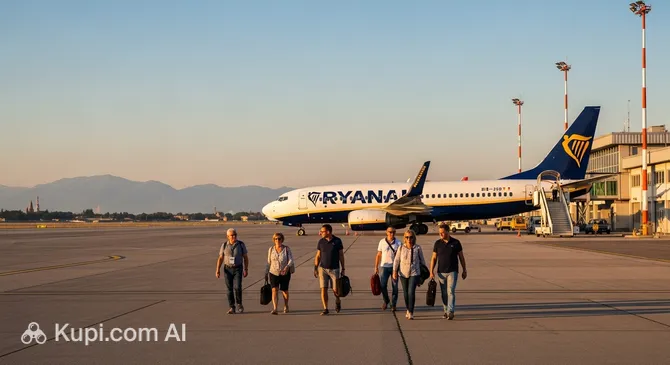
Treviso Airport. Source: Kupi.com Binoculars

Treviso Airport, named after Antonio Canova, is not merely a backup for the main Venetian aviation hub, but a cozy and strategically convenient gateway to the Veneto region. Often, it is here that an exciting journey to the canals of Venice or the vineyards where the famous Prosecco is produced begins, thanks to the large number of flights by budget airlines. The compact terminal allows travelers to save time on formalities and immerse themselves in the Italian "dolce vita" faster.

IATA Code TSF
ICAO Code LIPH
City Treviso (serves Venice)
Distance to center 3 km to Treviso, 31 km to Venice
Status International
Passengers per year ~3 million (2023)
Schedule Online flight board

Treviso Airport possesses a number of features that make it attractive for tourists:

Specialization in low-cost carriers. This is the main base for budget carriers in the region. Many flights from European discount airlines arrive here, allowing for significant savings on tickets compared to flying into the main Marco Polo Airport.

Convenient logistics. Despite its distance from the island part of Venice, transport connections are excellently organized. Express buses run regularly, delivering passengers directly to Piazzale Roma in Venice or to the Mestre railway station in approximately 40–60 minutes.

Compactness and speed. The airport consists of a single small two-story terminal. This guarantees simple navigation: it is difficult to get lost here, and the path from the aircraft stairs to the city exit takes minimal time. The ground floor houses the arrival and check-in zones, while the first floor features the departure zone with shops and cafes.

Proximity to the city of Treviso. Many tourists overlook Treviso itself, which is quite unfortunate. The airport is located just a few minutes' drive from the historic center of this city, often called "Venice in miniature" due to its picturesque canals and tranquil atmosphere.

Contact Information

Below you will find contact information for Treviso Airport (TSF), which serves Venice and the surrounding regions.

  • Official Website: www.trevisoairport.it
  • Information Desk Phone: +39 0422 315111
  • Address: Via Noalese, 63/E, 31100 Treviso TV, Italy
  • Email: For most inquiries, it is recommended to use the contact forms available on the airport's official website.
  • Social Media: Treviso Airport is part of the Venice airport system (SAVE Group) and is represented on major social platforms under the Venice Airport brand.
  • Lost & Found: If you have lost items in the terminal, contact the service by phone at +39 0422 315141 or by email at oggettismarriti.tsf@aertre.it. For lost luggage issues, please contact your airline's representative.
  • Passenger Support: For general questions, you can call the main phone number. Passengers with reduced mobility (PRM) must request assistance through their airline no later than 48 hours before departure.

How to Get to the Airport

Treviso Airport Antonio Canova (TSF) is a popular choice for travelers using low-cost carriers to visit Venice and the Veneto region. It is located approximately 40 km from the historic center of Venice. You can reach the city or, conversely, get to the airport for departure in several ways, each with its own timing and cost characteristics.

Public Transport: Buses

The most popular and economical method is shuttle buses. Several companies operate direct routes between Treviso Airport and Venice (Piazzale Roma) and the mainland part of the city — Mestre.

  • ATVO: These comfortable buses run non-stop to Piazzale Roma. The journey takes about 70 minutes. Tickets can be purchased online, at the airport, or from the driver. The cost of a one-way ticket is around 12 Euros.
  • Barzi Service: This shuttle offers a faster route to Tronchetto Island in Venice, taking about 40 minutes as it partially travels via the highway. From Tronchetto, you can reach the center by vaporetto (water bus) or the "People Mover" to Piazzale Roma.
There are also shuttles connecting Treviso Airport with the city's main airport, Venice Marco Polo, which is convenient for transfers.

Train + Bus

There is no direct rail connection to the airport, but you can use a combined route. First, take the urban bus No. 6 operated by ACTT, which will take you to Treviso Central Station (Treviso Centrale) in 15-20 minutes. From there, regional trains (treni regionali) depart regularly for Venice Santa Lucia Station (Venezia Santa Lucia). The train journey takes 30-40 minutes. This option may be convenient if you are traveling with a rail pass or your hotel is located near Santa Lucia Station.

Taxi and Transfer

A taxi is the fastest and most comfortable way to reach your destination, especially if you have a lot of luggage. The taxi stand is located right outside the arrivals terminal exit. A trip to Piazzale Roma in Venice will take about 40-50 minutes, but will cost significantly more — approximately 80-100 Euros. To avoid price surprises, it is recommended to book a private transfer in advance. The driver will meet you with a sign in the arrival hall.

Car Rental and Parking

If you plan to explore not only Venice but also other cities in the Veneto region, renting a car is an excellent option. Offices of major international and local rental companies are present at Treviso Airport. Bear in mind that car traffic is prohibited in the historic part of Venice, so you will have to leave the car at one of the large parking lots at the city entrance (for example, on Tronchetto Island or at Piazzale Roma). The airport itself offers several parking options: from short-term for pick-up/drop-off to long-term for those leaving their car for the duration of their vacation.

Terminals and Map

Treviso Airport (TSF), also known as Antonio Canova Airport, is distinguished by its compactness and simple structure, making navigation intuitively clear for travelers. This is particularly convenient for those flying with budget airlines who value speed in completing all formalities.

A key feature of the airport is the presence of only one passenger terminal, which serves both departing and arriving flights, including destinations within the Schengen area and beyond. Thanks to this, you do not have to worry about transferring between different buildings — all necessary zones are under one roof.

The terminal structure is two-level:

  • Ground Floor — This is the arrival zone. Passengers enter here after disembarking from the plane. Located here are the baggage claim belts, customs control, car rental desks, as well as the exit to bus stops and the taxi stand.
  • First Floor — The departure zone. Going upstairs, you will find check-in counters and baggage drop-off points. After check-in, passengers pass through security control, beyond which lies the waiting hall with boarding gates, several Duty-Free shops, cafes, and bars.

Since there is only one terminal, navigation is extremely simple. There are clear signs in Italian and English everywhere. Distances are short, and all procedures can be completed without covering long distances. However, it is worth noting that the airport serves many low-cost flights, which can cause queues at check-in counters and security checks during peak hours.

To go through all procedures calmly, it is recommended to arrive at the airport at least 2 hours before departure for flights within the Schengen zone and 2.5-3 hours for international flights outside Schengen, especially if you need to check in luggage. Overall, Treviso Airport is an example of an efficient and functional small aviation hub where getting lost is practically impossible.

Airport History

The history of Treviso Airport, officially known as Treviso Airport Antonio Canova (TSF), begins in the 1930s. Initially, it was created as a small airfield for a local aero club and for military purposes. Located near the city of Treviso, it remained in the shadow of its larger neighbor, Venice Marco Polo Airport, for a long time.

For a significant part of its history, the airport served as an important military base for the Italian Air Force. During the Cold War, fighter jets were based here, highlighting its strategic importance. The transition to active civil use began only in the 1960s, but the real breakthrough occurred much later.

A revolutionary moment for the airport was the late 1990s when budget airlines chose it as their base. The arrival of Ryanair in 1998 radically changed its destiny. Treviso Airport quickly turned into a key hub for low-cost transportation in the Veneto region, offering an affordable alternative for travelers heading to Venice and its surroundings. This move triggered rapid growth in passenger traffic.

To cope with the growing number of passengers, a new modern passenger terminal was opened in 2007, named "Canova" in honor of the famous sculptor Antonio Canova, a native of these parts. This modernization significantly improved service quality and increased capacity. Today, Treviso Airport is part of the unified airport system of Venice, managed by SAVE S.p.A., and successfully complements Marco Polo Airport, specializing mainly in flights by budget and charter airlines.

Services and Amenities

Treviso Airport (TSF), serving primarily budget airlines, offers passengers a set of essential services for a comfortable wait before departure. Despite its relatively small size, the terminal is well-organized and intuitive.

Restaurants, Cafes, and Shops: At the airport, you will find several cafes and bars where you can enjoy a cup of aromatic Italian coffee, eat pizza, panini, or fresh pastries. For shopping enthusiasts, there is a Duty Free store with a traditional assortment of perfumes, beverages, tobacco products, and souvenirs, as well as several other outlets offering local products and travel essentials.

Lounges and Wi-Fi: For a more comfortable rest, Treviso Airport has a VIP lounge (Treviso Airport Lounge). Guests of the lounge are offered snacks, beverages, fresh press, and a quieter atmosphere. Free Wi-Fi is available throughout the terminal, and special stands and sockets are provided for charging electronic devices.

Financial and Other Services: The terminal houses ATMs and currency exchange points where necessary financial transactions can be made. A first aid point is also available for passengers.

Services for Families and Passengers with Special Needs: For travelers with small children, mother and child rooms equipped with changing tables are available. The airport is fully adapted to serve passengers with reduced mobility. Special assistance is provided during check-in, security control, and boarding, but this service must be booked in advance through the airline.

Hotels and Business Services: There are no hotels directly within the airport building, but there are several hotels in the immediate vicinity that can be quickly reached by taxi or shuttle. There are no separate conference rooms or business centers in the airport, but the VIP lounge can serve as a convenient place for quiet work.

Where to Eat

Despite its compact size, Treviso Airport (TSF) offers several convenient options for a snack or a full meal. Catering establishments are located both in the public area and in the departure zone after security control, allowing you to refresh yourself at any stage of your journey.

In the public area (landside), before security screening, you will find several cafe-bars. This is an excellent place to have a cup of authentic Italian espresso or cappuccino with fresh pastries while you see off loved ones or wait for check-in to open. Panini sandwiches and soft drinks can also be purchased here.

The main part of the establishments is located in the departure zone (airside), after passport control. Here lies a larger food court with a self-service area where you can have a full lunch. The menu usually features classic Italian dishes: several types of pasta, pizza, salads, and hot main courses. For those in a hurry, bars offering quick snacks, sandwiches, and beverages are available.

Once in the Veneto region, you might want to explore local specialties. Airport bars offer the region's famous sparkling beverage, Prosecco, or the refreshing Aperol Spritz cocktail, which is a signature of the region. This is a pleasant way to experience the atmosphere of Italy before departure.

Regarding special dietary needs, vegetarians will easily find suitable dishes, such as pasta with tomato sauce, vegetable salads, or Caprese. These meat-free options are often suitable for those seeking Halal-friendly choices, though full certification should be verified individually. Options for vegans may be more limited, but pasta without cheese or a salad can usually be ordered. Gluten-free options are most often presented in the form of packaged snacks. Prices at Treviso Airport correspond to the average European level for airports: a snack will cost 8-15 Euros, and a full lunch — 15-25 Euros. Most establishments operate from early morning until the last flight departs.

Traveler Tips

To ensure your journey through Treviso Airport goes as smoothly as possible, make use of our tips. This airport, serving mainly budget airlines, has its own specifics, and preparation will help avoid unnecessary stress.

Arrival Time at the Airport. We recommend arriving at the airport at least 2.5–3 hours before international flights and 2 hours before domestic ones. During peak seasons and departure times of popular low-cost carriers, queues for check-in and security can be significant, so extra time will be beneficial.

Check-in and Security. The best way to save time is to complete online check-in for your flight and print or save your boarding pass on your phone in advance. If you are traveling with hand luggage only, this will allow you to go straight to security control. Be prepared to remove all electronic devices and your bag of liquids from your hand luggage in advance.

Choosing a Seat on the Plane. If the airline offers seat selection, consider your priorities. Window seats offer beautiful views during takeoff and landing, especially if you are flying over the Alps or the coast. Aisle seats are convenient if you need more legroom or plan to get up during the flight.

Hand Luggage. Carefully check your airline's hand luggage allowance. Budget carriers often have strict restrictions on weight and size. Standard EU security rules prohibit carrying liquids in containers larger than 100 ml. All liquids must be packed in a single transparent bag with a volume of no more than 1 liter.

Passengers with Connections. Treviso Airport is primarily an airport for direct flights, not a major transit hub. If you are planning a transfer yourself, ensure you have enough time (at least 3-4 hours) between flights, especially if you need to collect and re-check baggage.

Customs Control. When arriving in Italy from a country outside the Schengen area, you will have to pass through passport control. If you have arrived from outside the EU, there will also be customs inspection. If you have no goods to declare, use the "Green Channel". Otherwise, head to the "Red Channel".

Saving Time and Money. Book your bus ticket to Venice or Mestre in advance — it is cheaper than buying it on the spot or taking a taxi. Bring an empty reusable water bottle, which can be filled after passing security, to avoid spending money on drinks at the airport.

In Case of Flight Delay. First of all, contact your airline representative for up-to-date information. Keep all receipts for food and drinks purchased during the wait. Remember that the EU261/2004 regulation applies in the EU, protecting passenger rights and providing for compensation and assistance in case of long delays or flight cancellations.

Reached the end of the page?

That means the route is fully explored