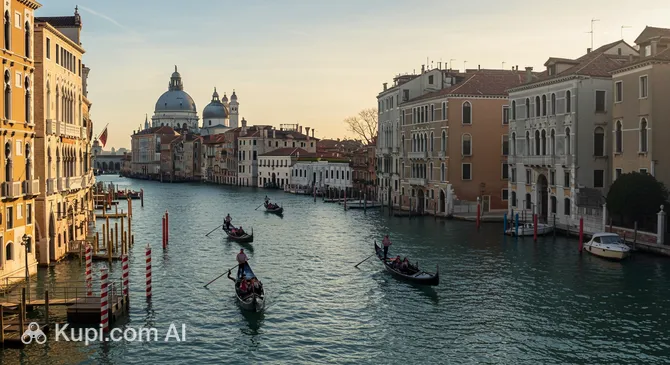
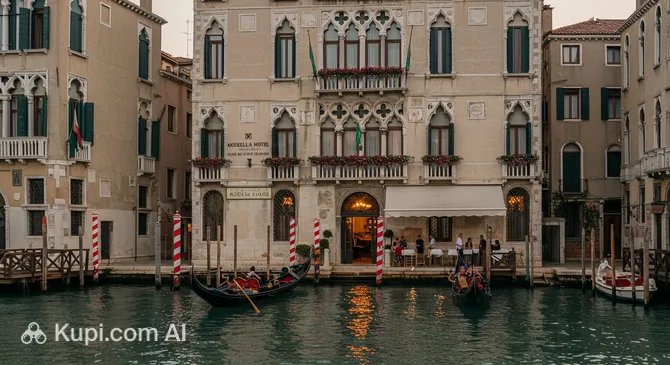
Venice, often celebrated as the "Queen of the Adriatic," is a destination that truly defies imagination. Renowned for its intricate network of canals, stunning architecture, and romantic atmosphere, this floating city offers a travel experience like no other. It is a place where art and life blend seamlessly, creating a unique urban landscape that has captivated travelers for centuries.
Situated in the northeastern part of Italy, Venice serves as the capital of the Veneto region. Unlike most modern metropolises, the city is built across a group of 118 small islands that are separated by canals and linked by over 400 bridges. With a population of approximately 261,000 residents, it balances a vibrant local life with its status as a world-famous tourist hub. The climate here is generally humid subtropical, with cool winters and warm, humid summers.
Venice. Illustration.
Source: Kupi.com AI
The history of Venice is etched into every stone and waterway, reflecting its past glory as a major maritime power and a center of commerce and art. Visitors are often captivated by the complete absence of cars in the historic center; instead, vaporettos (water buses) and the iconic gondolas serve as the primary mode of transport. The Grand Canal winds gracefully through the city, lined with magnificent Renaissance and Gothic palaces, leading towards the breathtaking St. Mark's Square (Piazza San Marco).
Whether you are exploring its labyrinthine alleyways, admiring the golden mosaics of St. Mark's Basilica, or simply enjoying a coffee by the lagoon, Venice promises an unforgettable journey. It is a city where time seems to stand still, inviting every traveler to get lost in its enchanting beauty.
Weather Overview
The climate in Venice is generally defined by four distinct seasons, offering a mix of hot summers and chilly winters. To ensure you are fully prepared for your visit, it is recommended to review the detailed guide to the weather in Venice before packing. The city is known for its humidity and atmospheric changes, making it important to dress appropriately for the time of year.
During the peak summer months, such as August, the weather is warm with average temperatures around 25.0°C and highs reaching nearly 28.6°C. In contrast, the winter season brings a significant drop in temperature; January is typically the coldest month, with averages hovering around 5.2°C and minimums dipping to 2.3°C. Rainfall is a factor to consider year-round, peaking in May with approximately 14 wet days, while winter months like January usually see about 7 wet days. Expect warm summers with occasional rain and cold winters where layers are essential.
Average monthly temperature
Average monthly precipitation
Interesting Facts
Beyond the famous canals and bustling piazzas, Venice holds many fascinating secrets that often escape the casual observer. Delve deeper into the city's lore with these intriguing insights that reveal the true character of La Serenissima.
The city is a marvel of engineering, resting not on floating islands but on millions of petrified wooden piles driven deep into the clay. These ancient alder trunks, submerged underwater where no oxygen exists to rot them, have petrified over centuries to become stone-hard foundations supporting the heavy stone palaces above.
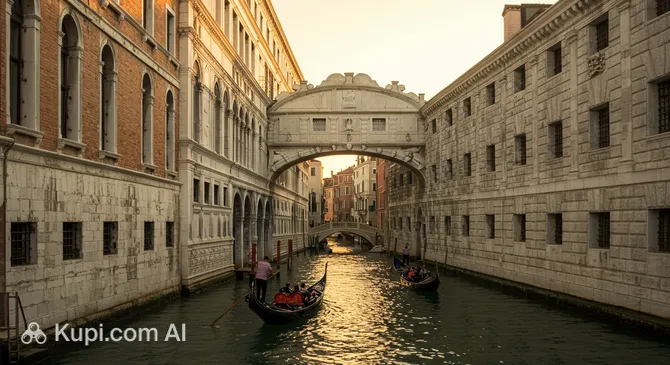
The romanticized Bridge of Sighs has a rather grim origin story, as it was originally designed to connect the Doge's Palace interrogation rooms to the New Prison. The name, popularized by Lord Byron, refers to the sighs of prisoners catching their final glimpse of the beautiful lagoon before being locked away in darkness.
Long before the Industrial Revolution, the Venetian Arsenal operated as the first factory in the world with a moving assembly line. At its peak in the 16th century, this shipyard was so efficient that it could build and outfit a fully operational galley in just a single day.
While gondolas are now icons of romance, their uniform black color is actually the result of a 17th-century sumptuary law. To curb the ostentatious competition among wealthy nobles who decorated their boats with gold and bright colors, the city decreed that all gondolas must be painted black to enforce equality and modesty.
Bridge of Sighs. Illustration.
Source: Kupi.com AI
Traveler photos:
How to Get There
Reaching the iconic floating city is an exciting start to your journey, with several convenient options available depending on your starting point. Whether you are arriving by air or land, the transport network is well-integrated to bring you to the edge of the lagoon or directly into the historic center. For a comprehensive guide on all travel methods, you can read more about how to get to Venice.
If you are flying, the most convenient entry point is Venice Marco Polo Airport(VCE). Situated just 7.4 km from the city center, it is the main international gateway handling a large volume of passengers. The travel time to the city is approximately 30 minutes by taxi or bus, though water transfers are also a popular choice. Another significant option, particularly for low-cost carriers, is Treviso Airport(TSF). Located about 25 km away, the journey by road typically takes around 60 minutes. For those arriving from further afield, you might land at Guglielmo Marconi Airport(BLQ) in the city of Bologna, which is about 129 km from Venice and connects via train or a longer road transfer.
For clarity, here is a summary of the main airports:
Traveling by train is one of the most scenic and efficient ways to arrive. The city is served by two main stations. Venezia Santa Lucia Station(XVQ) is the terminal station located directly on the Grand Canal in the historic center, just 0.4 km from the main attractions, making it incredibly convenient for tourists. Alternatively, Venezia Mestre Railway Station(XVY) is situated on the mainland, approximately 7.9 km from the lagoon. Mestre acts as a major transport hub with high passenger traffic, and a short train or bus ride connects it to Santa Lucia in just a few minutes.
Below is an overview of the key railway stations serving the area:
Venice is often described as an open-air museum, where every corner reveals a piece of history and every canal reflects centuries of artistic heritage. The city's concentration of masterpieces is unparalleled, making it a dream destination for culture lovers. From grand piazzas to ancient bridges, the main sights are conveniently located and offer a glimpse into the glorious past of the Venetian Republic.
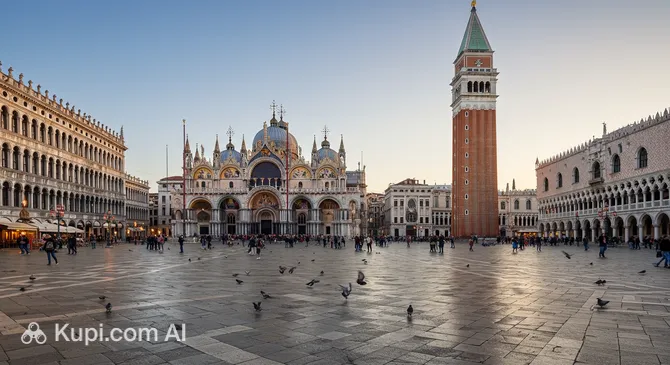
The beating heart of the city is undoubtedly St. Mark's Square (Piazza San Marco). Often referred to as "the drawing room of Europe," this vast public square is the social and religious center of Venice. It is surrounded by majestic arcades and historic cafés where visitors can soak in the lively atmosphere. Tourists flock here not only to admire the architecture but also to experience the unique phenomenon of acqua alta (high water) or simply to feed the pigeons in one of the world's most recognizable settings.
St. Mark's Square. Illustration.
Source: Kupi.com AI
Traveler photos:
Dominating the eastern end of the square is the breathtaking Saint Mark's Basilica. This architectural marvel is a testament to Venice's links with the East, showcasing a stunning blend of Italo-Byzantine styles. It is famous for its opulent design, featuring five great domes and over 8,000 square meters of shimmering golden mosaics that cover the interior walls and ceilings. A visit here offers a dazzling look at the wealth and spiritual devotion that shaped the city's history.
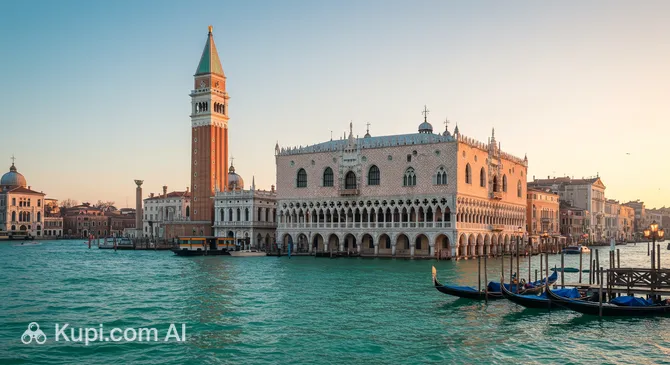
Right next door stands the magnificent Doge's Palace (Palazzo Ducale), a masterpiece of Venetian Gothic architecture. For centuries, this was the seat of the Doge and the center of political power. Visitors are intrigued by its delicate pink and white marble facade and the lavishly decorated chambers inside, which house works by masters like Tintoretto and Veronese. The palace also provides access to the famous prisons via the Bridge of Sighs, offering a stark contrast between the opulent halls of power and the grim cells below.
Doge's Palace. Illustration.
Source: Kupi.com AI
Traveler photos:
No trip to Venice is complete without seeing the iconic Rialto Bridge. As the oldest of the four bridges spanning the Grand Canal, it is a symbol of the city's engineering prowess and commercial history. The stone arch is lined with shops selling jewelry and souvenirs, bustling with activity from dawn until dusk. Walking across it provides one of the most picturesque views of the canal, making it a perfect spot for memorable photographs and watching the gondolas glide by below.
Local Cuisine
Venetian cuisine is a distinct and flavorful chapter in the Italian culinary story, deeply rooted in the city's maritime history and its unique lagoon environment. Unlike the pasta-heavy dishes of the south, the food here relies heavily on fresh seafood, garden vegetables from the nearby islands, and spices that recall Venice's ancient trade routes with the East. Dining in this city is as much about the atmosphere as it is about the flavors, offering a mix of elegant waterfront dining and lively, informal snacking.
Among the dishes you simply must try is Sarde in saor, a sweet and sour antipasto made of fried sardines marinated with onions, pine nuts, raisins, and vinegar. It is a perfect representation of the city's ability to preserve food for long sea voyages. Another staple is Baccalà mantecato, a creamy, whipped mousse made from dried cod and olive oil, typically served on slices of grilled polenta. For a heartier meal, look for Bigoli in salsa, a thick, whole-wheat spaghetti served with a savory sauce of onions and anchovies, or the famous Risi e bisi, a dish that sits somewhere between a soup and a risotto, celebrating the fresh peas of spring.
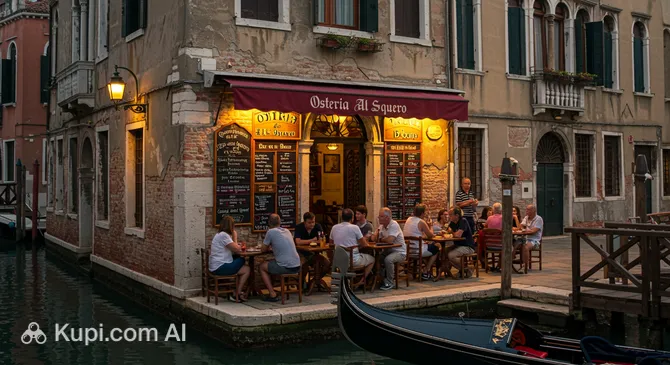
One of the most authentic ways to experience the local food culture is by visiting a bacaro, a traditional Venetian wine bar. Here, locals gather to enjoy cicchetti, which are small, tapas-like snacks ranging from deep-fried meatballs to crostini topped with various delicacies. A fantastic place to dive into this tradition is Osteria Al Squero. Located opposite a historic gondola boatyard, it allows you to savor affordable and delicious bites while watching artisans at work across the canal.
Osteria Al Squero. Illustration.
Source: Kupi.com AI
Traveler photos:
No culinary tour of Venice is complete without mentioning the beverages. The city is the spiritual home of the Spritz, a refreshing cocktail made with Prosecco, sparkling water, and a bitter liqueur like Aperol, Campari, or Select. It is the quintessential pre-dinner drink, often enjoyed with an olive or a slice of orange. If you prefer wine, ask for an ombra—a small glass of local house wine—at a spot like Bacareto da Lele. This tiny, bustling establishment is a favorite among students and locals for its tiny sandwiches and lively vibe.
For those with a sweet tooth, the local bakeries offer treats like baicoli (thin, crisp biscuits) or the rich fritole, sweet fried dough balls that are especially popular during the Carnival season. Whether you are seated in a grand restaurant or standing by a canal with a paper plate of fried seafood, the tastes of Venice promise to be as memorable as its sights.
Travel Tips
Visiting Venice is a magical experience, but the city's unique geography and layout require a bit of extra preparation compared to a typical urban destination. To help you navigate the canals and cobblestones like a pro, here are some essential practical tips for your journey.
Clothing and Gear: The most critical item to pack is a pair of sturdy, comfortable walking shoes. You will be walking extensively on uneven cobblestones and crossing countless bridges with steps, so heels or flimsy sandals are ill-advised. If you plan to visit religious sites like St. Mark's Basilica, remember that a strict dress code applies; shoulders and knees must be covered. In autumn and winter, it is wise to bring waterproof boots in case of acqua alta (high water).
Transportation: Venice is a pedestrian-only city past Piazzale Roma. The primary public transport is the Vaporetto (water bus), which is efficient but can be pricey for single trips; consider buying a multi-day travel pass to save money. Water taxis are available but are significantly more expensive. Do not rent a car for your stay in the historic center, as you will have to pay for expensive parking garages at the city's edge and won't use it at all.
Finances: The local currency is the Euro (€). While credit cards are widely accepted in restaurants and shops, it is highly recommended to carry some cash for small purchases, especially if you plan to enjoy cicchetti (snacks) in smaller local bars. ATMs are plentiful. Tipping is not mandatory, as a service charge or coperto (cover charge) is usually added to the bill, but rounding up the total is a polite gesture.
Health and Safety: Venice is generally a very safe city for tourists, but like any major destination, you should be wary of pickpockets in crowded areas like the Rialto Bridge and St. Mark's Square. Pharmacies are marked by a green cross sign and are easy to find. For general emergencies, dial 112. Tap water in Venice is safe to drink, and you can refill your bottle at the many public fountains scattered throughout the city.
Communication: The official language is Italian, though the local Venetian dialect is also spoken. English is widely understood in hotels, restaurants, and tourist shops. However, learning a few basic phrases like "Buongiorno" (Good morning) and "Grazie" (Thank you) will go a long way with the locals. Free Wi-Fi is available in some public squares, but purchasing a local SIM card or an eSIM is reliable for navigation.
Local Etiquette: Venetian streets, known as calli, can be extremely narrow. Always walk on the right side to allow people to pass, and avoid stopping in the middle of bridges or narrow alleyways to take photos, as this blocks the flow of traffic for residents. A polite greeting when entering a shop is customary and appreciated.
What to Avoid: Strictly avoid sitting on the steps of bridges, churches, or monuments to eat or rest, especially in St. Mark's Square, as this can result in hefty fines. It is also strictly forbidden to swim in the canals or feed the pigeons, both of which are enforced to preserve the city's hygiene and heritage.
Ticket Validation: If you use the bus or Vaporetto, you must validate your ticket before boarding by tapping it against the electronic readers found at the stops. Failure to do so is a common mistake among tourists and can lead to a significant fine if inspectors check your ticket on board.
By keeping these tips in mind, you can focus less on logistics and more on the breathtaking beauty surrounding you. Venice is a city best enjoyed at a leisurely pace, so respect the local rules, wander off the beaten path, and let the charm of the lagoon capture your heart.
Entertainment & Nightlife
Venice transforms as the sun sets, shedding its bustling daytime persona to reveal a more intimate and atmospheric side. The city is not known for a wild, thumping club scene like Ibiza or Berlin; instead, its nightlife is rooted in socializing, conviviality, and unique settings. The evening typically begins with the beloved aperitivo ritual. Locals and visitors alike gather along the canal banks to enjoy a Spritz or a glass of Prosecco, accompanied by small plates known as cicchetti. The atmosphere is relaxed and friendly, with conversations spilling out of small bars onto the cobblestones.
The most vibrant districts for evening entertainment are Dorsoduro and Cannaregio. In Dorsoduro, the expansive Campo Santa Margherita is the heartbeat of the city's student life and younger crowd. It is lined with casual bars and cafes that stay open late, offering a lively buzz. In Cannaregio, the Fondamenta della Misericordia offers a picturesque stretch of waterside venues where you can hop from one wine bar to another, enjoying the reflection of lights on the water.
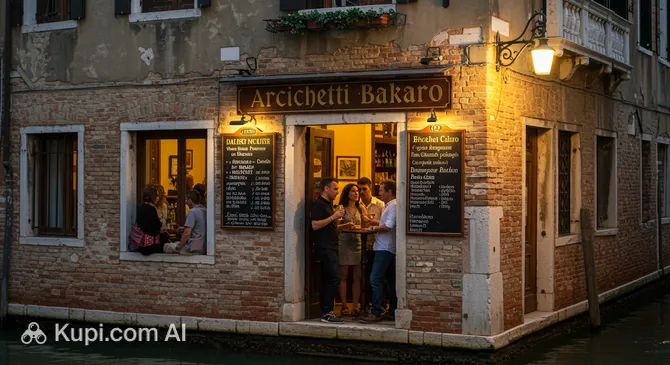
For a quintessential Venetian experience, you should visit Arcicchetti Bakaro near Piazzale Roma. This tiny, standing-room-only spot is famous for its incredibly affordable drinks and bite-sized snacks, attracting a diverse mix of locals and tourists who enjoy the authentic, no-frills vibe. It is the perfect place to start your night before exploring further.
Arcicchetti Bakaro. Illustration.
Source: Kupi.com AI
Traveler photos:
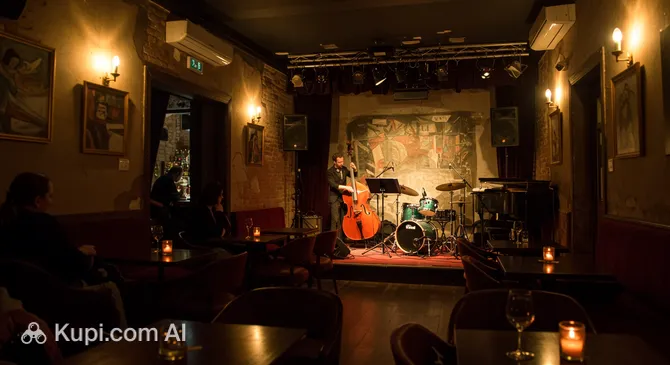
If you are looking for live music, the city has some hidden gems. The Venice Jazz Club in the Dorsoduro district is a must-visit for music lovers. This intimate venue offers a cozy, dimly lit atmosphere where you can enjoy high-quality jazz performances away from the tourist crowds. It is a sophisticated yet welcoming spot to unwind with a cocktail and excellent tunes.
Venice Jazz Club. Illustration.
Source: Kupi.com AI
Traveler photos:
For a night of high culture and elegance, attending a performance at La Fenice Theatre is an unforgettable experience. As one of the world's most renowned opera houses, it hosts top-tier opera, ballet, and classical concerts in a stunningly restored interior of gold and velvet. Even if opera isn't your passion, the sheer beauty of the theater makes for a magical evening.
While the nights are enchanting, the city also offers diverse daytime entertainment. Art enthusiasts can lose themselves in the Peggy Guggenheim Collection, which houses a premier collection of modern art in a palazzo on the Grand Canal. For families or those seeking outdoor fun, the nearby mainland and coastal areas offer attractions such as Aquamarina Park, a water park perfect for cooling off during the hot summer months.
Practical Tips for Nightlife:
Timing: Venues in Venice tend to close earlier than in other Italian cities. Many bars shut their doors around midnight or 1:00 AM, though spots in student areas may stay open a bit longer.
Getting Around: The city is best explored on foot, even at night. The Vaporetto (water bus) runs a night service (Line N) along the Grand Canal and to the islands, which is reliable and safe. Water taxis are available but can be very expensive after dark.
Safety: Venice is extremely safe for night walks. However, the canals are unfenced and often dimly lit, so it is important to watch your step near the water's edge.
Dress Code: The style is generally smart-casual. While there is no strict dress code for bars, locals tend to dress well, so avoiding beachwear in the evening is recommended.
Parks & Museums
Parks & Museums:
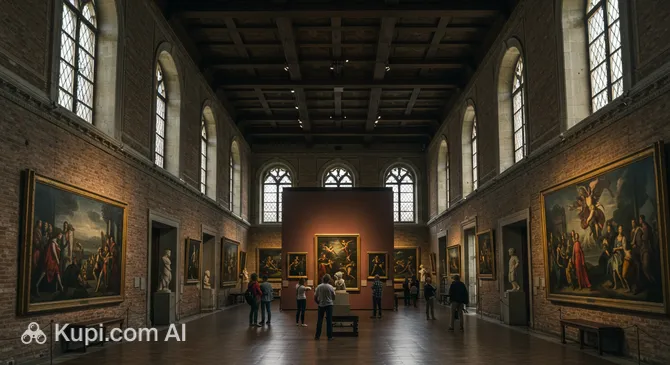
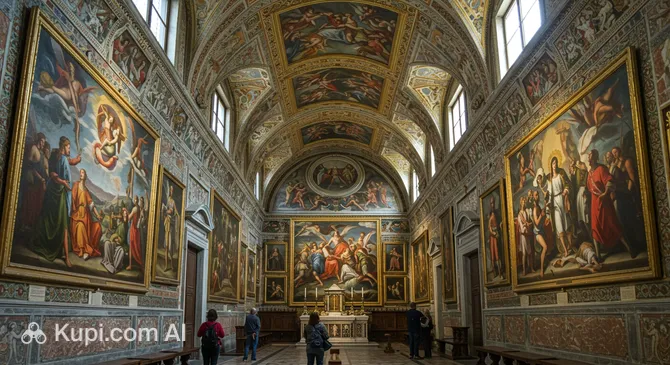
While the canals and architecture often steal the spotlight, the city's interiors house some of the most significant art collections in Europe. For a comprehensive journey through Venetian art history, a visit to the Gallerie dell'Accademia is essential. Located on the Grand Canal, this museum hosts a vast collection of pre-19th-century works, featuring masterpieces by Bellini, Titian, and Veronese that trace the evolution of the Venetian school from the Byzantine era to the Renaissance.
Gallerie dell'Accademia. Illustration.
Source: Kupi.com AI
Traveler photos:
Another artistic treasure is the Scuola Grande di San Rocco. Often compared to the Sistine Chapel for its impact, this historic confraternity building is adorned with a massive cycle of paintings by Tintoretto. The artist spent over two decades decorating the walls and ceilings, creating a breathtaking visual narrative that remains in its original setting, offering a singular look into the intensity of his work.
Scuola Grande di San Rocco. Illustration.
Source: Kupi.com AI
Traveler photos:
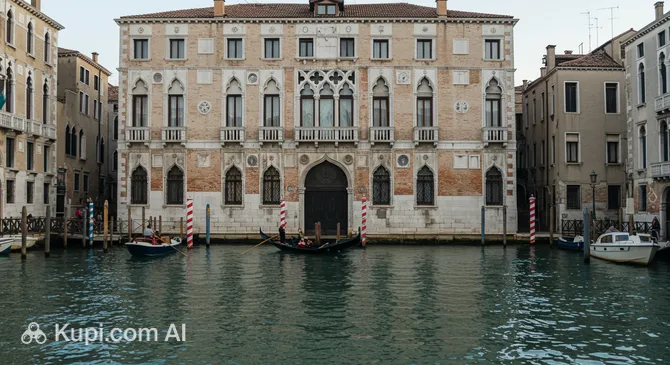
Venice is not only about the past; it also embraces the contemporary. The Ca' Pesaro International Gallery of Modern Art is situated in a magnificent Baroque marble palace facing the Grand Canal. It houses important 19th and 20th-century paintings and sculptures, including works by Klimt and Chagall, offering a striking contrast between the historic architecture and the modern masterpieces within. Nearby, the Punta della Dogana serves as a center for contemporary art, located in the city's old customs building at the tip of the Dorsoduro district.
Ca' Pesaro International Gallery of Modern Art. Illustration.
Source: Kupi.com AI
Traveler photos:
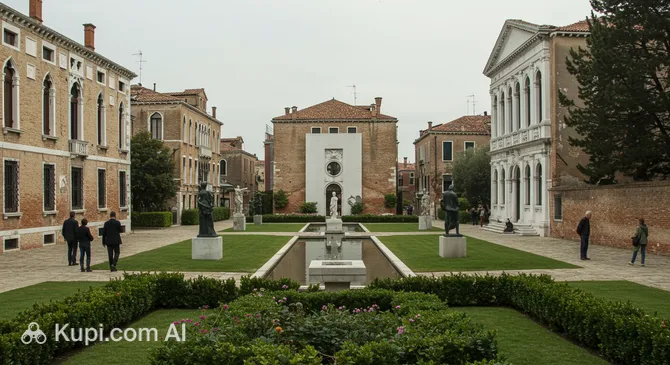
Finding extensive green space in the "Floating City" can be a challenge, but the Giardini della Biennale offers a welcome respite. Located in the Castello district, this large park was created by Napoleon and serves as the traditional venue for the Venice Art Biennale festivals. Even when the exhibitions are not running, it is a peaceful area for a stroll, filled with permanent national pavilions and shaded avenues that provide a break from the stone and water of the center.
Giardini della Biennale. Illustration.
Source: Kupi.com AI
Traveler photos:
Getting Around
Navigating Venice is a unique experience unlike any other city in the world, primarily because the historic center is completely car-free. The public transport system is almost entirely water-based, with the iconic vaporetto (water bus) serving as the city's equivalent of a metro or bus network. Managed by ACTV, these wide, flat-bottomed boats ply the Grand Canal and the surrounding lagoon, connecting the main islands. Line 1 is the most scenic route, stopping at every station along the Grand Canal, while Line 2 offers a faster service. For late-night travel, the "N" lines operate from around midnight until roughly 5:00 AM.
For those staying on the mainland in Mestre or visiting the Lido, the transport network includes standard land buses and trams, which are also integrated into the ACTV system. Additionally, the People Mover is a short, automated elevated tram system that efficiently connects the Tronchetto parking island and the Cruise Terminal with Piazzale Roma, the main gateway for bus and car arrivals. This is particularly useful for travelers arriving with heavy luggage.
Travel costs in Venice can add up quickly if you purchase single tickets, which are relatively expensive (currently around €9.50 for 75 minutes). A much more economical option for tourists is to purchase a time-based travel card valid for 24, 48, 72 hours, or 7 days. These passes allow unlimited travel on both ACTV water buses and land buses (excluding airport transfers). You can buy tickets at official ticket offices (Hellovenezia), automated machines at major stops, tobacconists, or digitally via the AVM Venezia official app.
A distinctive and historic feature of the local transport is the traghetto. These are large, stripped-down gondolas used to ferry passengers across the Grand Canal at points distant from the four main bridges. It is a quick, practical service used mostly by locals, costing only a few euros. The ride is short, and it is customary to stand up during the crossing, offering a fun and authentic alternative to the expensive private gondola tours.
While water taxis are available, they function more like private limousines than standard city taxis. They are fast and convenient, able to drop you directly at your hotel's private dock, but they are significantly more expensive and generally not necessary for getting around the city center. Traditional car-sharing, taxi apps like Uber, and bike rentals are strictly prohibited within the historic lagoon city; bicycles must be walked if you are crossing Piazzale Roma and are only permitted for riding on the Lido or the mainland.
Practical advice for using the system includes strictly adhering to the validation rules. You must validate your ticket or pass by tapping it against the electronic readers before boarding every water bus or land bus. Failure to do so can result in steep fines, even if you have a valid pass in your pocket. Also, keep in mind that water buses can get extremely crowded during peak hours; removing your backpack and moving to the center of the cabin is considered polite and helps everyone fit on board.
Accommodation
Finding the perfect place to stay in Venice is as much about choosing an atmosphere as it is about selecting a room. The city offers a wide spectrum of accommodation, ranging from opulent luxury hotels housed in centuries-old palazzos to charming family-run bed and breakfasts hidden down quiet alleyways. For budget-conscious travelers, there are well-equipped hostels and guesthouses, while those seeking more space often opt for apartment rentals. Because of the city's unique geography, your choice of location will significantly shape your experience, determining whether you wake up to the bustle of the Grand Canal or the quiet lapping of water in a secluded lagoon corner.
The most coveted area to stay is undoubtedly the historic center, particularly the districts (sestieri) of San Marco and Castello. Staying here places you within walking distance of the main sights, though prices can be steep. For a slightly more authentic and quieter vibe, the Dorsoduro and Cannaregio districts are excellent alternatives, offering a local feel with plenty of artisan shops and wine bars. Travelers on a stricter budget often choose to stay on the mainland in Mestre, where accommodation is significantly cheaper. Mestre is connected to the historic center by frequent trains and buses that take just 10 to 15 minutes, making it a practical base for exploring.
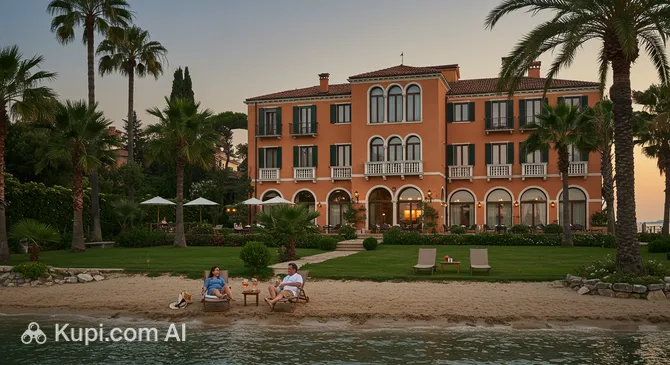
For visitors looking to combine a cultural trip with a relaxing seaside vacation, the wider lagoon area offers fantastic resort-style options. These are particularly great for families or those who prefer modern amenities and open spaces over the cramped charm of the historic center. One such example is the Resort Cavallino, located on the Cavallino-Treporti peninsula. It offers a blend of comfort and nature, providing easy access to the beach while still being within reach of Venice by boat.
Resort Cavallino. Illustration.
Source: Kupi.com AI
Traveler photos:
Another excellent choice for those seeking a mix of wellness and diverse scenery is the Mosella Suite Hotel. situated in Sottomarina. This location allows guests to enjoy the maritime atmosphere of the southern lagoon, offering a distinct perspective of the Venetian lifestyle away from the densest tourist crowds.
Mosella Suite Hotel. Illustration.
Source: Kupi.com AI
Traveler photos:
Booking Tips: Venice is a year-round destination, but demand peaks significantly during the Carnival (February), the Biennale art exhibitions, and the summer months. It is highly advisable to book your accommodation several months in advance if you plan to visit during these times. Additionally, keep in mind that staying in the historic center often involves crossing bridges with your luggage, so checking the proximity of your hotel to a Vaporetto stop can save you a lot of effort.
In terms of pricing, Venice is generally considered a premium destination. Luxury hotels and canal-view rooms command high prices, while mid-range options offer a balance of comfort and location. Budget options are available but sell out quickly. Most bookings can be made easily via major online platforms, but booking directly with the hotel can sometimes yield better perks or specific room requests. Be aware that a city tourist tax is usually charged per person per night and is payable directly at the hotel upon arrival.
Nearby Cities
For those looking to explore the surroundings, Venice serves as an excellent base for day trips to several interesting nearby locations:
Just a short distance from the lagoon lies Mira, a town situated along the famous Brenta Riviera. This area is renowned for its majestic Venetian Villas, which were built by wealthy nobles as summer residences between the 16th and 18th centuries. Visitors can explore these architectural masterpieces and enjoy a scenic journey along the canal, often compared to an extension of the Grand Canal on the mainland.
Mestre, while often viewed merely as a transit hub, offers a distinct urban experience. Its historic heart revolves around Piazza Ferretto, a pedestrian-friendly square lined with shops, cafes, and the medieval Torre Civica. It provides a lively, authentic Italian atmosphere and excellent shopping opportunities, serving as a modern contrast to the historic center of Venice.
City
Population
Distance
Mestre
89 376
8 km
Spinea
27 909
13 km
Marcon
17 447
13 km
Mogliano Veneto
27 852
14 km
Mira
38 573
15 km
These nearby destinations offer a glimpse into the diverse culture and landscapes of the region.
Shopping & Souvenirs
Shopping in Venice is a delightful adventure that takes you from high-end fashion boutiques to centuries-old artisan workshops hidden in narrow alleyways. The city is not just a destination for sightseeing but also a treasure trove for unique craftsmanship. Whether you are looking for luxury brands, authentic local art, or traditional gastronomic products, the "Floating City" offers a retail experience that blends consumerism with culture and history.
The most famous shopping district is undoubtedly the area known as the Mercerie, a network of streets connecting St. Mark's Square to the Rialto Bridge. This bustling thoroughfare is lined with shops selling everything from jewelry to clothing. For those seeking haute couture and luxury labels like Gucci, Prada, and Versace, the Calle Larga XXII Marzo and its surrounding streets near St. Mark's are the place to be. This elegant area is the city's fashion hub, offering the latest collections in a sophisticated setting.
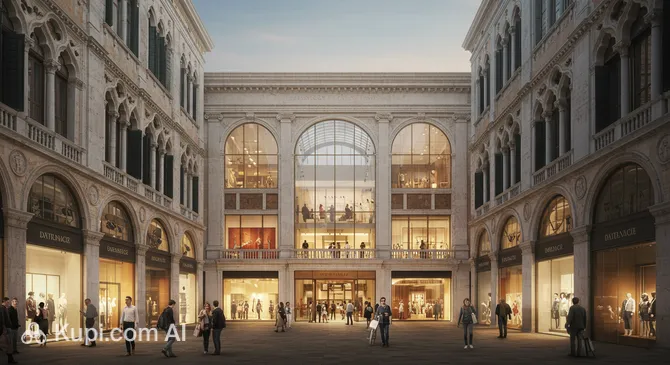
While Venice is historically a city of small merchants, it boasts one of the most stunning department stores in the world: the Fondaco dei Tedeschi. Located near the Rialto Bridge in a historic building that once served as the headquarters for German merchants, this luxury lifestyle department store offers fashion, accessories, and beauty products. Even if you aren't planning to buy, the building itself is a marvel, and the rooftop terrace offers one of the best panoramic views of the Grand Canal.
Fondaco dei Tedeschi. Illustration.
Source: Kupi.com AI
Traveler photos:
For travelers interested in significant discounts on designer brands, a trip to the mainland is worthwhile to visit the Noventa di Piave Designer Outlet. Although it requires a bus or train ride from the city center, it is a popular destination for fashion lovers looking for bargains on international labels in a village-style setting.
To experience the authentic daily life of Venetians, you must visit the historic Rialto Market. Located near the famous bridge, this market has been the city's food hub for nearly a thousand years. The Pescheria (fish market) and the Erberia (vegetable market) are vibrant, colorful, and noisy places where locals buy fresh seasonal produce. While it is primarily a food market, the surrounding streets are filled with stalls selling souvenirs and small goods.
When it comes to souvenirs, Venice is famous for its exquisite craftsmanship. Murano glass is the city's most iconic product; look for the "Vetro Artistico Murano" trademark to ensure authenticity and avoid cheap imports. Burano lace is another prized tradition, known for its delicate and intricate designs. Handcrafted Carnival masks made from papier-mâché are also a classic keepsake, perfect for bringing a piece of Venetian mystery home. Additionally, the city is known for its beautiful marbled paper and high-quality leather goods.
Store opening hours in Venice generally run from 10:00 AM to 7:30 PM. However, many smaller shops, especially those outside the main tourist areas, may close for a lunch break between 1:00 PM and 3:30 PM. Most shops accept major credit cards and debit cards, but it is always useful to carry some cash for small purchases at markets or kiosks. If you are a visitor from outside the European Union, you may be eligible for a tax refund (VAT) on purchases over a certain amount; look for the "Tax Free" sign in store windows and ask for the necessary forms at the checkout.