Support

Perugia

About

Persevering through centuries as a cultural and artistic beacon, Perugia is the vibrant capital of the Umbria region in central Italy. Perched atop a high irregular hill, the city offers breathtaking views over the Tiber River valley and the surrounding green landscapes. It is a place where the past and present coexist harmoniously, blending the energy of a bustling university town with the solemn grandeur of its medieval architecture.
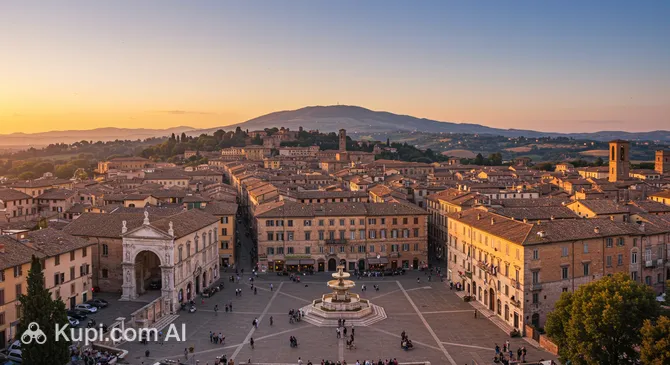
Perugia. Source: Kupi.Binoculars

With a population of approximately 165,000 inhabitants, the city feels lively yet intimate. The steep streets and stone staircases lead visitors through layers of time, revealing the deep history of Perugia that stretches back to the Etruscan civilization. The city's climate is generally mild, making it a pleasant destination for exploration throughout most of the year, though the hilltop location can bring refreshing breezes even in summer.

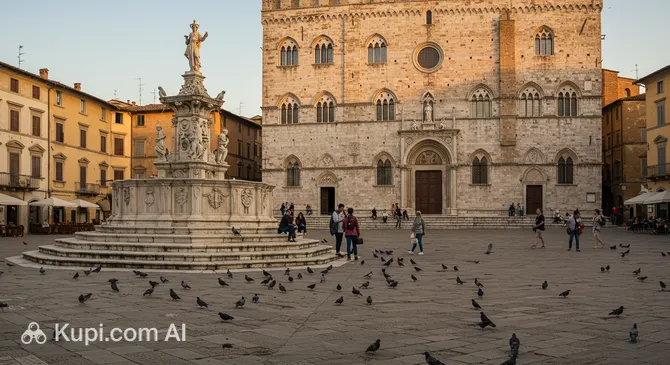
Among the city's most celebrated treasures is the Piazza IV Novembre, often cited as one of the most beautiful squares in the country. Here, you will find the magnificent Fontana Maggiore, a medieval masterpiece adorned with intricate sculptures. Nearby stands the imposing Palazzo dei Priori, a stunning example of Gothic civic architecture that houses important art collections. Additionally, the city is famous worldwide for its chocolate tradition, hosting the renowned Eurochocolate festival which attracts sweet-toothed travelers from across the globe.

Whether you are wandering through its ancient archways, enjoying the local cuisine in a traditional trattoria, or exploring its underground passageways, this Umbrian gem promises an unforgettable experience. It is a destination that truly captures the essence of the Italian heartland, inviting you to discover its secrets at your own pace.
Weather Overview

The city experiences a temperate climate characterized by distinct seasons, making it a year-round destination with varying atmospheres. To help plan your packing and itinerary, it is helpful to check the detailed weather in Perugia before your trip. Generally, visitors can expect warm, sunny summers and cool, damp winters.

During the peak summer months of July and August, average temperatures hover around 25°C, with daytime highs often reaching 30.7°C. These are the driest months, with only about 5 to 7 wet days, ideal for exploring the open-air piazzas. In contrast, winters are chilly; January is typically the coldest month with an average temperature of 5.2°C and lows dropping to roughly 1.5°C.

Rainfall is distributed throughout the year but becomes more frequent during the transitional seasons. May is particularly notable for its precipitation frequency, recording up to 15 wet days, followed closely by November. Travelers visiting in the spring or late autumn should pack layers and a raincoat to stay comfortable while touring the historic hilltop streets.

Interesting Facts

Beyond its stunning hilltop views and lively piazzas, Perugia holds many fascinating secrets hidden within its ancient stone walls. This city is a treasure trove of stories where history, art, and even confectionery traditions intertwine in unexpected ways.
Rocca Paolina. Source: Kupi.Binoculars
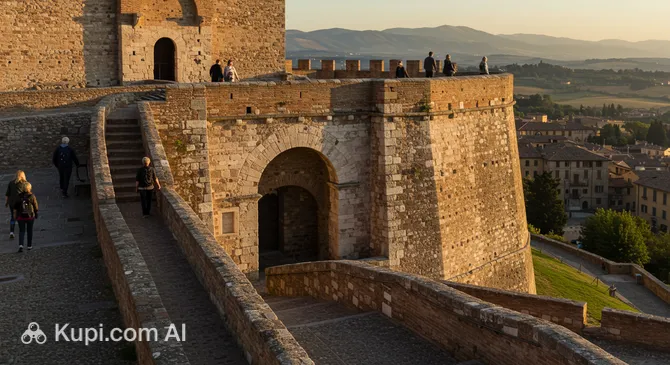
  • A complete medieval neighborhood lies buried beneath the modern city streets within the Rocca Paolina. In the 16th century, Pope Paul III built this massive fortress directly on top of the homes of the Baglioni family to punish them, effectively freezing a section of the city in time; today, visitors can walk through these underground streets and see the remains of houses and shops that were covered for centuries.

  • The city is the birthplace of the world-famous "Baci" chocolates, but they were almost named something entirely different. The chocolates were originally created in 1922 and called "Cazzotto" (punch) because their shape resembled a fist, but they were wisely renamed "Baci" (kisses) to make them more romantic and appealing to customers.

  • Perugia houses the only fresco by the master Raphael left in the city, located in the San Severo Chapel. Interestingly, this artwork represents a unique collaboration across time; Raphael painted the upper portion depicting the Holy Trinity, and after his death, his elderly teacher Perugino completed the lower row of saints.

  • The main facade of the Cathedral of San Lorenzo remains famously unfinished to this day. While the side of the church facing the main square is decorated, the front wall displays raw, exposed stone, serving as a permanent reminder of the historical turbulence and shifting funds that halted its completion.

  • The ancient Etruscan Well is an engineering masterpiece from the 3rd century BC that plunges 37 meters into the ground. It is so massive that the structure includes a truss bridge at the bottom, originally designed to allow maintenance workers to stand while cleaning the reservoir without touching the water.

How to Get There

Reaching this captivating hilltop city in the heart of Umbria is relatively straightforward, with options to suit various travel preferences. Whether you prefer flying directly into the region or taking a scenic train ride from a major Italian hub, you can easily plan your journey. For a detailed breakdown of all transport modes, you can read more about how to get to Perugia to ensure a smooth arrival.

The most convenient entry point for air travelers is the local Sant Egidio Airport (IATA: PEG), which is also known as Perugia San Francesco d'Assisi – Umbria International Airport. It is located just 10.1 km from the city center. A taxi or bus ride from here typically takes around 35 minutes, making it the quickest way to start your visit. Although it is a smaller airport, it serves as a vital link for the region. Alternatively, many visitors choose to fly into Firenze-Peretola Airport (IATA: FLR) in the city of Florence. This larger international hub is situated approximately 123.5 km away. The journey from Florence to Perugia by road can take about 3.5 hours, depending on traffic and the mode of transport chosen.

For clarity, here is a summary of the main airports:

Airport Name City Passenger Traffic Km from City
Firenze-Peretola Airport Florence Large 123.5
Ancona Falconara Airport Ancona Medium 96.7
Sant Egidio Airport Perugia Small 10.1
Miramare Airport Rimini Small 102.6
Luigi Ridolfi Forli Small 123.1

Traveling by train is another popular option, allowing you to enjoy the Italian countryside. While Perugia has its own station, long-distance travelers often arrive at major railway hubs in neighboring cities before transferring. You can arrive at the Roma Termini Station in the city of Rome, which is about 134.8 km from Perugia. From this massive hub, you can catch a connecting train or arrange a transfer, with the total travel time varying significantly based on connections. Another excellent option is the Firenze Santa Maria Novella Station in Florence, located roughly 118.5 km away. Both stations handle a very high volume of passengers and offer frequent connections to the Umbria region.

Below is a list of major railway stations often used as transit points for reaching Perugia:

Station City Passenger Traffic Km to Center
Roma Termini Station Rome Very Large 134.8
Firenze Santa Maria Novella Station Florence Large 118.5
Tiburtina Railway Station Rome Large 133.8
Ostiense Railway Station Rome Medium 137.7
Firenze Campo di Marte Railway Station Florence Medium 116.6

Main Attractions

Attractions:

Perugia offers a fascinating journey through time, where ancient Etruscan walls meet medieval grandeur and Renaissance art. The city's hilltop location not only provides stunning panoramas but also hosts a dense concentration of historical landmarks that are easily explorable on foot.

At the very heart of the city lies the Piazza IV Novembre, a bustling square that serves as the social and cultural center of Perugia. It is dominated by the spectacular Fontana Maggiore, a medieval fountain built in the 13th century. Designed by the Pisano brothers, this masterpiece is composed of two concentric pink and white stone basins decorated with intricate bas-reliefs depicting months of the year, zodiac signs, and biblical scenes. It is a perfect spot for tourists to sit on the steps, admire the craftsmanship, and soak in the lively atmosphere.

Piazza IV Novembre. Source: Kupi.Binoculars

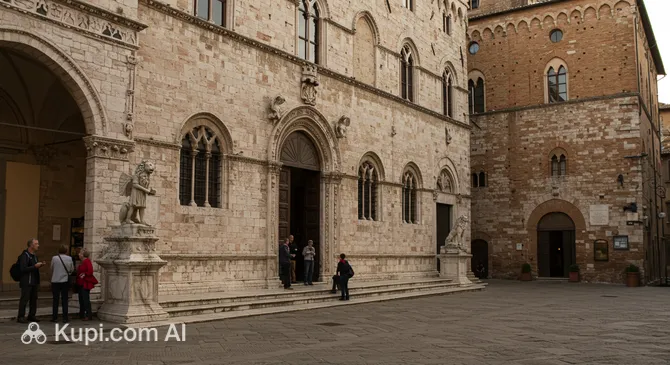
Overlooking the main square is the majestic Palazzo dei Priori, one of Italy's greatest examples of Gothic civic architecture. With its crenellated roof and imposing facade, the building asserts the city's historical independence and power. Inside, it houses the National Gallery of Umbria, which features an extensive collection of Umbrian art ranging from the 13th to the 19th century, including works by Perugino and Pinturicchio. Visitors are drawn here not just for the architecture but for the incredible artistic heritage preserved within its walls.

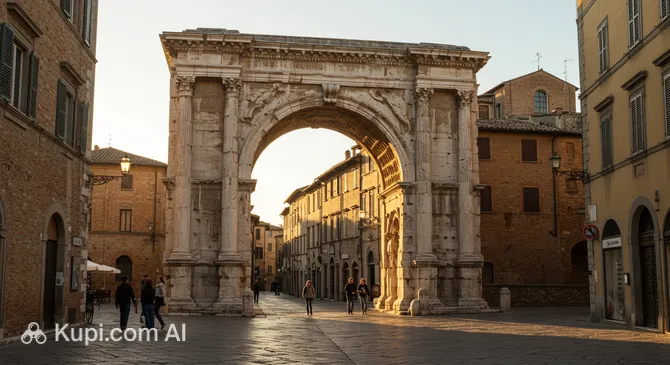
A short walk away stands the monumental Etruscan Arch, also known as the Arch of Augustus. Built in the 3rd century BC, this is one of the seven gates of the ancient Etruscan walls and remains one of the best-preserved structures of its kind. The sheer size of the travertine blocks used in its construction is awe-inspiring, and the Roman inscription "Augusta Perusia" added later serves as a testament to the layers of history that define the city.

Etruscan Arch. Source: Kupi.Binoculars

For a unique perspective on the city, a walk along the Medieval Aqueduct of Perugia is highly recommended. Originally constructed in the 13th century to bring water to the Fontana Maggiore, it fell into disuse and was later converted into a pedestrian pathway. Today, walking along the top of this ancient structure offers a charming and unusual route through the city, winding past colorful houses and offering picturesque views of the streets below.

Local Cuisine

The local cuisine of Perugia is a true reflection of the Umbrian region's character: rustic, hearty, and deeply rooted in the land. Known as the "green heart of Italy," the surrounding countryside provides high-quality ingredients that define the city's gastronomic scene. The food here relies on bold, earthy flavors rather than elaborate sauces, with a heavy emphasis on grains, pork, and the prized local treasure—black truffles.

One of the most iconic specialties you must try is Torta al Testo. This ancient unleavened flatbread, historically cooked on a hot stone or cast-iron disc called a "testo," is a staple of Perugian street food. It is typically sliced open and filled with savory ingredients like prosciutto, sausage and cooked greens, or soft cheeses. Another signature dish is Umbricelli (or strangozzi), a type of thick, handmade spaghetti often served with a rich sauce of black truffles or a spicy tomato and garlic sauce.

Meat lovers will appreciate the region's mastery of pork dishes. Porchetta, a savory, fatty, and moist boneless pork roast seasoned with wild fennel and garlic, is a favorite, often enjoyed as a sandwich filling. For dessert, the city offers the traditional Torcolo di San Costanzo, a ring-shaped cake filled with raisins, pine nuts, and candied fruit, historically prepared for the feast of the city's patron saint. Of course, no visit is complete without tasting the local chocolate, a legacy celebrated throughout the city.

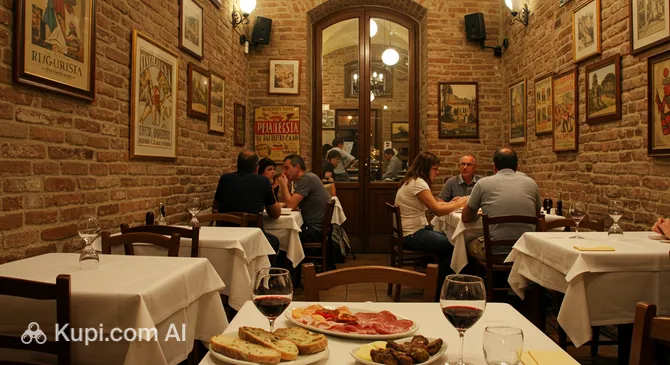
Ristorante Il Giurista. Source: Kupi.Binoculars

Dining in Perugia ranges from casual street food stalls to elegant establishments set within historic buildings. The atmosphere is generally laid-back and welcoming. For a taste of authentic local recipes in a refined setting, you might visit Ristorante Il Giurista, which is known for serving traditional Umbrian fare. If you are looking for a more informal experience, Trattoria Oberdan Perugia offers a cozy environment to enjoy classic dishes.

To accompany your meal, the local wine list is exceptional. The region produces robust red wines like Sagrantino di Montefalco and crisp whites like Grechetto. For a relaxing break during your sightseeing, the coffee culture is vibrant. You can stop by Caffè dal Perugino for an expertly brewed espresso or an evening aperitivo, soaking in the daily rhythm of this historic hilltop city.

Travel Tips

Welcome to the winding streets and historic charm of Perugia! To help you navigate this medieval hilltop gem and its unique vertical layout, we have compiled a set of practical tips for a smooth and enjoyable journey.

  1. Prioritize Comfortable Footwear: Perugia is famous for its steep inclines, staircases, and uneven cobblestone alleys. High heels or flimsy sandals are impractical here; opt for sturdy, comfortable walking shoes to explore the city without discomfort. Additionally, if you plan to visit religious sites like the Cathedral of San Lorenzo, ensure you have clothing that covers your shoulders and knees.

  2. Utilize the Minimetrò: The most convenient way to reach the historic center (acropolis) from the lower town or parking areas is the futuristic Minimetrò. It is a small automated train that offers scenic views and saves you from a strenuous uphill hike. Avoid driving into the city center, as it is largely a Limited Traffic Zone (ZTL) with strict fines for unauthorized vehicles.

  3. Cash and Payments: The local currency is the Euro (€). While major credit cards are widely accepted in restaurants and shops, it is advisable to carry some cash for small purchases, such as an espresso or a souvenir from a street vendor. Tipping is not mandatory in Italy, as a "coperto" (cover charge) is usually included, but rounding up the bill is a kind gesture.

  4. Health and Safety: Pharmacies are identified by a green cross sign; look for a "Farmacia di turno" roster posted on doors to find one open late or on Sundays. Perugia is generally a very safe city for tourists, but standard precautions apply—keep an eye on your belongings in crowded spots like Piazza IV Novembre, especially during the busy Eurochocolate festival.

  5. Language and Connectivity: As a university city, you will find that English is spoken by many younger people and in hospitality sectors. However, in smaller trattorias, knowing a few Italian phrases like "Buongiorno" (Good morning) and "Grazie" (Thank you) is greatly appreciated. Free Wi-Fi is often available in public squares, but buying a local SIM card is recommended for reliable navigation.

  6. Dining Etiquette: Italians take their food culture seriously. Remember that dinner typically starts later than in many other countries, usually around 8:00 PM. Also, avoid ordering a cappuccino after a meal; it is strictly considered a breakfast drink. An espresso (caffè) is the standard way to finish lunch or dinner.

  7. Avoid the ZTL Zones: One of the biggest mistakes tourists make is driving past signs that say "Varco Attivo" (Active Gate). This indicates the Limited Traffic Zone is in effect. Cameras automatically record license plates, and hefty fines will be mailed to you months later. Park at the bottom of the hill (e.g., at Pian di Massiano) and take public transport up.

  8. Use the Rocca Paolina Escalators: A fantastic local "hack" is to use the series of escalators (scale mobili) that run through the underground Rocca Paolina fortress. It is a free, atmospheric, and effortless way to travel from the bus terminal at Piazza Partigiani up to the city center, effectively walking through history.

Armed with these practical insights, you are fully prepared to embrace the "Green Heart of Italy" with confidence. Enjoy the breathtaking panoramas, the rich history, and the relaxed pace of life in this magnificent Umbrian capital.

Entertainment & Nightlife

As a vibrant university town home to both the University of Perugia and the famous University for Foreigners, Perugia boasts a nightlife scene that is energetic, youthful, and pleasantly diverse. Unlike the chaotic rush of larger metropolises, the evening atmosphere here is characterized by a relaxed, bohemian vibe where history and modern social life blend seamlessly. The city comes alive as the sun sets, with students and locals filling the streets to enjoy the cool evening air.

The heart of the action is undoubtedly Corso Vannucci and the central Piazza IV Novembre. Here, the "steps" of the Cathedral of San Lorenzo serve as an impromptu meeting place where hundreds of people gather to chat, play guitars, and plan their night. For those seeking a high concentration of pubs and wine bars, the districts around Via dei Priori and Corso Cavour offer a trendy, alternative atmosphere with plenty of spots to enjoy craft beers and local wines.

The evening typically begins with the sacred Italian ritual of aperitivo between 7:00 PM and 9:00 PM. A great place to immerse yourself in this tradition is La Nuit d’Or Bar Pasticceria, a venue known for its welcoming ambiance and excellent selection of drinks. It is a perfect spot to mingle with locals and enjoy some appetizers before heading out for dinner or further drinks. The dress code in most places is casual to smart-casual; comfort is key given the cobblestone streets.

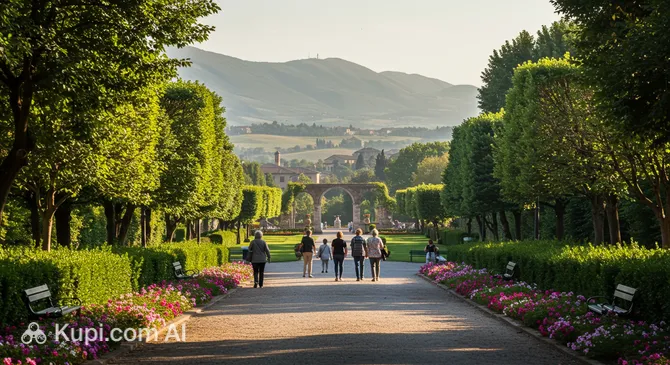
Frontone Gardens. Source: Kupi.Binoculars

During the summer months, the nightlife expands outdoors with festivals and open-air events. The Frontone Gardens often host outdoor cinema screenings and concerts, becoming a cultural hub under the stars. This is particularly true during the world-famous Umbria Jazz festival in July, when the entire city transforms into a massive concert venue. For a different kind of evening steeped in history, you might explore the events occasionally held near landmarks like the Monterone Castle, which offers a fairy-tale backdrop just outside the city walls.

From a practical standpoint, Thursday, Friday, and Saturday are the busiest nights. While the city is generally very safe for night walks, the steep terrain can be tiring, so stick to the main well-lit thoroughfares. If you are staying outside the historic center, be aware that the Minimetrò usually closes around 9:00 PM (later on Saturdays and in summer), so you may need to rely on the night bus service or taxis. You can find taxi ranks at Piazza Italia, or call one in advance.

While the nights are for socializing, daytime entertainment in Perugia offers its own charms beyond the main historical sites. Culture lovers can catch a show at the historic Teatro Morlacchi, while sports enthusiasts might enjoy a visit to the AC Perugia Calcio Museum to learn about the local football heritage. Whether day or night, the city offers a captivating mix of activities to suit every traveler.

Parks & Museums

While Perugia is renowned for its medieval stone architecture, the city also offers serene green spaces and world-class museums that preserve its rich Etruscan and artistic heritage. Visitors can easily alternate between admiring ancient artifacts and relaxing in scenic gardens that offer sweeping views of the Umbrian countryside.

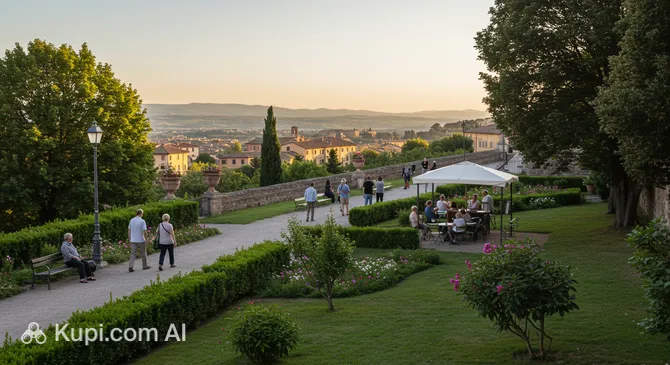
For a peaceful escape within the historic center, the Carducci Gardens are an unmissable stop. Located just a short walk from the main Corso Vannucci, this small but charming park is perched on the edge of the city's ramparts. It is famous for its panoramic terrace, which provides one of the most breathtaking views in the region, stretching across the rooftops to the distant Apennine mountains. It is a favorite spot for locals to read, stroll, or simply watch the sunset over the valley.

Carducci Gardens. Source: Kupi.Binoculars

Another significant green space is the Frontone Gardens, the city's first public garden. Steeped in history, this leafy enclave features an amphitheater, statues, and centuries-old holm oaks. Historically a meeting place for the city's elite poets and artists, it remains a cultural hub today, often hosting open-air cinema nights and concerts during the summer months. Its structured layout and relaxing atmosphere make it perfect for a leisurely afternoon break.

Delving into the city's cultural depths, the National Archaeological Museum of Umbria is a treasure trove for history enthusiasts. Housed within the complex of the San Domenico Convent, the museum displays an extensive collection of Etruscan and Roman artifacts. The highlight is the "Cippus of Perugia," a stone bearing one of the longest known inscriptions in the Etruscan language, offering a rare glimpse into this mysterious civilization.

Just outside the city center lies the remarkable Hypogeum of the Volumnus Family and Palazzone Necropolis. This underground tomb, dating back to the 2nd century BC, is considered one of the most significant examples of late Etruscan funerary architecture. Visitors can descend into the cool, ancient chamber to see the well-preserved urns and the layout of a traditional Etruscan house reproduced in stone, providing a fascinating connection to the people who inhabited this land over two millennia ago.

For a unique blend of art and nature, consider visiting the Abbey of San Pietro. Beyond its stunning basilica filled with art, the complex houses a "Medieval Garden" located in the old distinct cloisters. This hidden gem is often quieter than the main tourist spots and interprets the symbolic and medicinal use of plants in the Middle Ages, offering a truly authentic and reflective experience.

Getting Around

Navigating the public transport system in Perugia is a unique experience, largely shaped by the city's distinctive topography. Because the historic center sits atop a steep hill while the modern suburbs and railway station lie in the valley below, the transport network is designed to seamlessly connect these two levels. The system is integrated, efficient, and offers some unconventional modes of travel that are attractions in themselves.

The crown jewel of the city's mobility is the Minimetrò, a futuristic automated light rail system. Small, driverless cabins—often silver or red—move continuously along a monorail track, connecting the large parking lots and stadium at Pian di Massiano to the hilltop acropolis at Pincetto. The journey takes about 10 to 15 minutes and offers spectacular views of the surrounding green hills. It is not just a commuter tool but a scenic ride that visitors should experience at least once. The Minimetrò typically operates from 7:00 AM to around 9:00 PM, with extended hours until roughly 1:00 AM on Saturdays and during major events, though Sunday hours may be shorter.

Complementing the rail is an extensive urban bus network managed by Busitalia. Buses cover the entire city, linking the main train station (Perugia Fontivegge) with the historic center (Piazza Italia) and outlying districts. The most useful lines for tourists are usually those connecting the station to the center, often labeled with letters (like Line G or Line TS) or numbers. While buses are reliable, they can be subject to traffic, so allow extra time during peak hours.

A distinctive feature of Perugia's public transport is its system of vertical mobility. To help pedestrians conquer the steep slopes without exhaustion, the city utilizes a series of public escalators (scale mobili) and elevators. The most famous route runs through the historic Rocca Paolina fortress, taking you from Piazza Partigiani up to Piazza Italia underground. These escalators are free to use and generally operate from early morning until late at night, acting as essential arteries for moving between the lower and upper parts of the town.

The payment system is integrated under the UP (Unico Perugia) ticket scheme. A single ticket is valid for a set period (typically 70 minutes) after validation and can be used interchangeably on buses, the Minimetrò, and local trains within the city limits. You can purchase tickets at "Tabacchi" shops (look for the large 'T' sign), newsstands, and automated machines located at Minimetrò stations and major bus hubs. For added convenience, digital tickets can be bought via apps like Salgo or DropTicket, which allow you to pay with your smartphone.

Tourists should remember to validate their physical tickets immediately upon boarding a bus or entering the Minimetrò turnstiles using the yellow or green machines. Failure to do so can result in hefty fines if inspectors check. Regarding alternatives, taxis are available but cannot be hailed on the street; you must find a designated rank (such as at the train station or Piazza Italia) or call to book one. While car-sharing services exist, driving in the center is discouraged due to strict Limited Traffic Zones (ZTL) and narrow medieval streets, making the combination of walking and public transport the best way to explore.

Accommodation

Finding the perfect place to stay in Perugia is part of the charm of visiting this Umbrian capital. The city offers a broad spectrum of accommodation options, ranging from luxury hotels housed in centuries-old palazzos to charming bed and breakfasts and budget-friendly hostels. For those seeking a more rustic experience, the surrounding countryside is dotted with "agriturismos" (farm stays), offering a peaceful retreat just a short drive from the city walls.

When choosing a location, visitors typically decide between two main areas: the historic center (the "Upper Town") and the modern districts in the valley (the "Lower Town"). Staying in the historic center places you within walking distance of major attractions like the main piazza and the cathedral. The atmosphere here is magical, especially in the evenings, though it can be more expensive and challenging to reach if you have a lot of luggage or a car due to traffic restrictions. Conversely, the lower town, particularly near the railway station, offers modern conveniences, larger hotels, and easier parking, with the historic center easily accessible via the Minimetrò or bus.

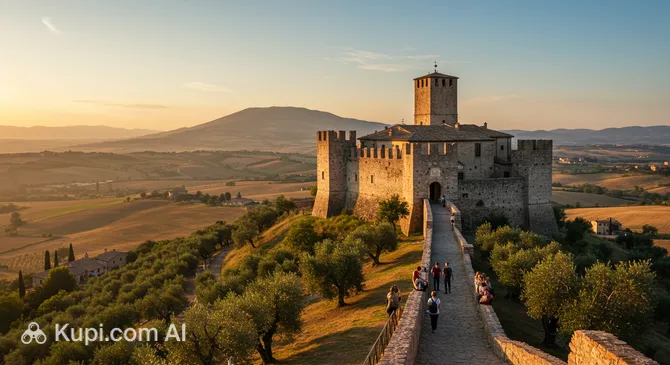
For a truly unique experience that blends history with hospitality, travelers can look for accommodations set within ancient structures. A prime example of this is the Monterone Castle. Located just outside the city center, this neo-Gothic fortress has been transformed into a residence where guests can sleep within medieval walls while enjoying modern comforts and views of the green Umbrian hills.

Monterone Castle. Source: Kupi.Binoculars

Regarding costs, Perugia caters to various budgets. Budget travelers can find hostel beds or simple guest rooms for approximately €50 to €80 per night. Mid-range hotels typically charge between €90 and €150, while luxury stays and exclusive historic residences can exceed €200 per night. Booking is generally done through major online platforms, though contacting smaller B&Bs directly can sometimes yield better rates or personalized service.

Booking Tip: It is highly recommended to book your accommodation well in advance if you plan to visit during the city's major international events. During the Umbria Jazz festival in July and the Eurochocolate festival in October, the city fills up completely, and finding a room at the last minute can be nearly impossible without prior arrangements.

Nearby Cities

For those looking to explore the surroundings, Perugia serves as an excellent base for day trips to several interesting nearby locations:

City Population Distance (km)
Foligno 56,999 31
Citta di Castello 39,632 41
Gubbio 31,736 31
Fabriano 30,809 49
Assisi 28,352 19

One of the most essential visits is to Assisi, located just a short drive away. As the birthplace of St. Francis, this UNESCO World Heritage site is a spiritual and artistic treasure trove. Visitors flock to the magnificent Basilica of San Francesco to admire frescoes by masters like Giotto and Cimabue, while the town's serene atmosphere and pink stone medieval streets offer a peaceful retreat from the modern world.

Another captivating destination is Gubbio, often called the "City of Stone." Perched on the slopes of Mount Ingino, it is one of the most ancient and well-preserved medieval towns in the region. Highlights include the imposing Palazzo dei Consoli, which dominates the skyline, and a well-preserved Roman Theatre just outside the walls. It is also famous for the "Corsa dei Ceri," a spectacular annual race held in May.

For a change of pace, Foligno offers a different experience as one of the few Umbrian cities built on a plain rather than a hilltop. This makes it particularly easy to explore on foot or by bike. It is a lively commercial hub known for the historic Palazzo Trinci and its beautiful frescoes, as well as the vibrant Giostra della Quintana, a baroque-inspired jousting tournament that transforms the city twice a year.

These nearby destinations offer a glimpse into the diverse culture and landscapes of the region.

Shopping & Souvenirs

Shopping in Perugia is a delightful experience that favors quality craftsmanship and authentic local tradition over mass-market consumerism. The historic center serves as an elegant open-air shopping gallery, where ancient stone streets are lined with a mix of high-end fashion boutiques, historic artisan workshops, and gourmet food stores. Visitors will find that the city is particularly renowned for its artistic heritage, which is reflected in the exquisite ceramics, textiles, and, of course, the world-famous chocolate available throughout the town.

The beating heart of the city's retail scene is the majestic Corso Vannucci. This pedestrian-only boulevard, stretching from Piazza IV Novembre to Piazza Italia, is the place to see and be seen. Here, you can browse through elegant shop windows displaying Italian designer clothing, leather goods, and jewelry. For a more bohemian and artisan vibe, explore the side streets such as Via dei Priori and Corso Cavour. These winding alleys are home to smaller, independent shops selling unique handmade crafts, vintage items, and local art, offering a stark contrast to the luxury brands on the main promenade.

Palazzo dei Priori. Source: Kupi.Binoculars

While the historic center focuses on boutiques, those looking for a comprehensive modern shopping experience with large international chains should head to the Centro Commerciale Collestrada. Located just a short drive or bus ride outside the city walls near the highway exit, this is the largest shopping mall in the area. It houses a vast hypermarket and dozens of stores ranging from electronics to fast fashion, making it a convenient stop for practical needs or a rainy day activity.

Markets play a significant role in the daily life of the locals. The most important one is the Mercato del Sabato (Saturday Market) held at Pian di Massiano. It is a massive, bustling affair where you can find everything from fresh produce and cheeses to clothing and household goods at bargain prices. During the winter season, the underground streets of the Rocca Paolina fortress often host a magical Christmas market, where stalls selling handicrafts and gifts are set up within the atmospheric medieval vaults.

When it comes to souvenirs, Perugia offers several iconic options. The city is the capital of chocolate in Italy, so a box of Baci Perugina or artisanal pralines from a local chocolatier is a must-buy. Umbria is also known as the "Cashmere Valley," making high-quality cashmere knitwear a popular investment. Additionally, the region is famous for its majolica pottery; while the town of Deruta is the production hub, many shops in the city center sell these beautifully hand-painted ceramics, which make for exquisite gifts.

Store opening hours generally follow the traditional Italian schedule. Shops typically open around 9:30 AM or 10:00 AM, close for a lunch break (the "pausa pranzo") from approximately 1:00 PM to 4:00 PM, and then reopen until 7:30 PM or 8:00 PM. However, larger stores along Corso Vannucci and shopping centers may stay open throughout the day. Major credit cards are widely accepted, but it is always useful to carry some cash for smaller transactions in markets or traditional workshops. Visitors from outside the EU should also look for the "Tax Free" signage in shop windows to claim a VAT refund on qualifying purchases before leaving the country.

Reached the end of the page?

That means the route is fully explored