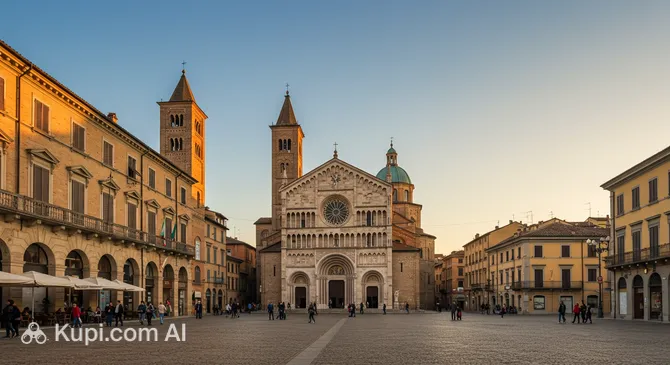
Reggio Emilia is a captivating destination in Northern Italy, known for its high quality of life, cultural vibrancy, and welcoming atmosphere. Situated in the fertile Po Valley within the Emilia-Romagna region, the city is home to approximately 172,000 residents. Its strategic location and pleasant climate make it an excellent hub for exploring the surrounding art cities and picturesque landscapes.
Reggio Emilia. Illustration.
Source: Kupi.com AI
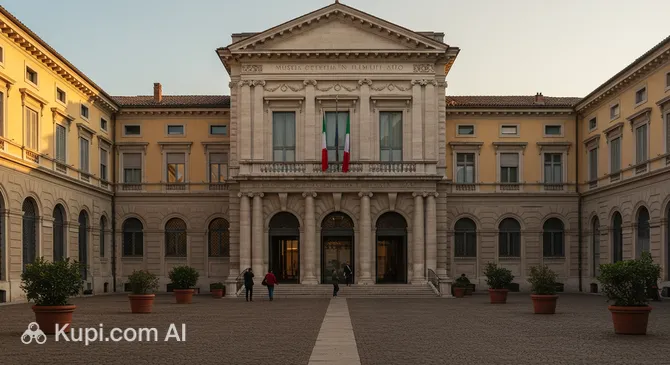
The city holds a special place in the nation's heritage as the "City of the Tricolour." It was here that the Italian flag was first adopted in 1797. Travelers exploring the history of Reggio Emilia can visit the dedicated museum and the Sala del Tricolore to learn more about this pivotal moment. Beyond its historical significance, the city is renowned worldwide for its innovative approach to early childhood education and its magnificent theaters, such as the neoclassical Teatro Municipale Valli.
Gastronomy is another pillar of local identity. Reggio Emilia is part of the production area for the world-famous Parmigiano Reggiano cheese and Traditional Balsamic Vinegar. Visitors can enjoy strolling through the elegant Piazza Prampolini or admiring the stunning Basilica della Ghiara. Whether you are a history buff, a foodie, or an art lover, Reggio Emilia offers an authentic and delightful Italian experience waiting to be discovered.
Weather Overview
The climate in Reggio Emilia is characterized by distinct seasons, offering a mix of hot summers and cold winters typical of the Po Valley. During the peak summer months of July and August, average temperatures hover around 25°C, with daytime highs frequently reaching 30°C, creating a warm atmosphere perfect for evening strolls. Conversely, winters are quite chilly, with January seeing average temperatures dip to 4.4°C and lows hovering just above freezing.
Precipitation is spread relatively evenly throughout the year, so it is always wise to pack an umbrella. Spring brings milder temperatures but also frequent showers; May is notably the dampest month, recording up to 16 wet days. To help you pack the right clothing for your specific travel dates, we recommend consulting the detailed guide to the weather in Reggio Emilia before your departure.
Average monthly temperature
Average monthly precipitation
Interesting Facts
Beyond the main attractions, Reggio Emilia holds many fascinating secrets and cultural milestones that surprise even the most seasoned travelers. From revolutionary educational methods to miraculous architectural feats, the city's identity runs far deeper than just its culinary fame.
The city is the birthplace of the world-renowned "Reggio Emilia Approach" to education, a philosophy developed by Loris Malaguzzi after World War II that views children as possessing "a hundred languages" of expression and is now studied by teachers globally.
While the city is famous for the Italian flag, the Museum of the Tricolour offers a specific look at the Cispadane Republic of 1797, where the green, white, and red banner was adopted as a sovereign symbol decades before national unification.
The stunning Basilica of the Blessed Virgin of Ghiara owes its existence to a local miracle from 1596, when a young deaf-mute boy named Marchino reportedly regained his speech and hearing after praying before a fresco of the Madonna.
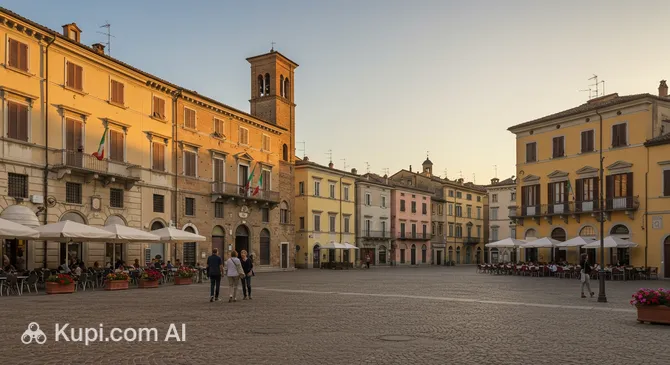
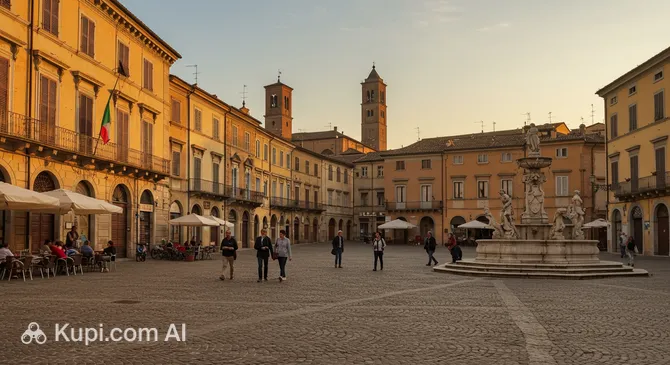
Locals often refer to Camillo Prampolini Square as "Piazza Grande," and if you look closely, you will find a statue representing the Crostolo stream depicted as an old man, a relic originally from the Ducal Palace of Rivalta.
Camillo Prampolini Square. Illustration.
Source: Kupi.com AI
Traveler photos:
How to Get There
Reaching this charming Emilian city is quite straightforward thanks to its strategic location in Northern Italy. Whether you prefer flying or taking the train, there are several convenient options available. For a complete overview of routes and travel tips, you can read more about how to get to Reggio Emilia.
The city of Reggio Emilia does not have its own airport, but you can fly into Guglielmo Marconi Airport (BLQ) in the city of Bologna, which is about 55 km from Reggio Emilia. It is the most convenient international hub for travelers, offering numerous connections. The journey by taxi or shuttle bus typically takes around 105 minutes. Alternatively, travelers can choose Verona Villafranca Airport (VRN), located in Verona approximately 80 km away. The transfer from there takes about 140 minutes by road.
For clarity, here is a summary of the main airports:
Traveling by train is often the most efficient way to arrive, as the city is served by the spectacular Reggio Emilia AV Mediopadana Station. This high-speed railway hub is located directly in Reggio Emilia, just 2.8 km from the city center, making it incredibly accessible. Designed by architect Santiago Calatrava, it connects the city to major Italian destinations like Milan and Bologna in record time. If you are arriving from further afield, you might also pass through Bologna Centrale Station in Bologna, a major national junction located about 60 km away, before catching a quick connecting train.
Below is a list of the closest and most significant railway stations:
Reggio Emilia is a treasure trove of art, history, and vibrant public spaces. While the city is famous for its revolutionary spirit and culinary delights, its architectural landmarks and museums offer a deep dive into the local culture. A stroll through the historic center reveals a harmonious blend of medieval structures, Renaissance palaces, and lively squares that invite visitors to linger and explore.
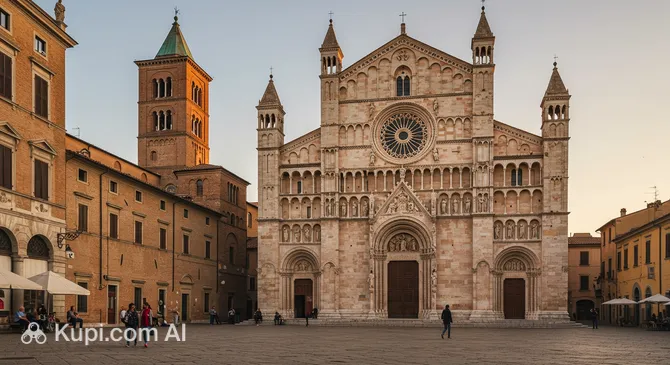
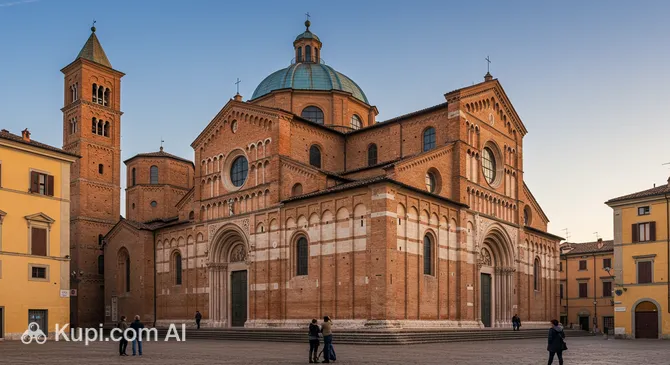
Standing proudly in the heart of the city is the Reggio Emilia Cathedral (Cattedrale di Santa Maria Assunta). Located on the central Piazza Prampolini, this religious edifice is a fascinating mix of styles, featuring an unfinished façade that hints at its long history. Inside, visitors can admire beautiful Romanesque mosaics and a crypt that dates back to the 12th century. It serves as the spiritual center of the city and offers a quiet retreat from the bustling square outside.
Reggio Emilia Cathedral. Illustration.
Source: Kupi.com AI
Traveler photos:
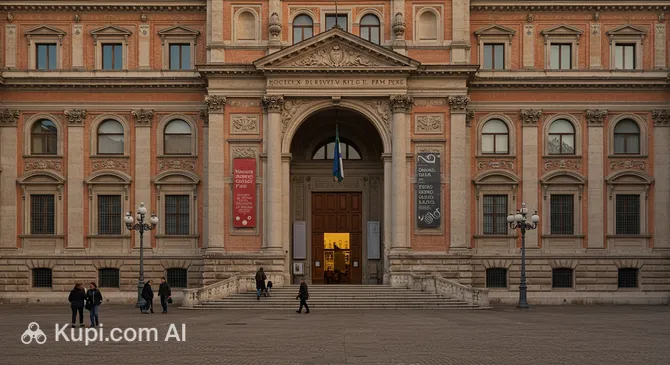
For those interested in a diverse cultural experience, the Civic Museums of Reggio Emilia are a must-visit. Housed primarily in the Palazzo San Francesco, the museum is renowned for its eclectic collections that range from archaeology and ethnography to natural history. One of the highlights is the historical collection of Lazzaro Spallanzani, which remains displayed in its original 18th-century furnishings, offering a unique glimpse into the history of science and collecting.
Civic Museums of Reggio Emilia. Illustration.
Source: Kupi.com AI
Traveler photos:
If you are looking for a picturesque spot to enjoy the local atmosphere, head to Antonio Fontanesi Square. Unlike the main institutional squares, this space is characterized by a canopy of lime trees and elegant porticoes, giving it a distinctively intimate and romantic feel. It is a favorite gathering place for locals, especially during market days or for an evening aperitivo at one of the many outdoor cafes that line the perimeter.
Antonio Fontanesi Square. Illustration.
Source: Kupi.com AI
Traveler photos:
Art enthusiasts should not miss the Palazzo Magnani Exhibition Venue. This magnificent 16th-century building is not only an architectural gem but also the city's premier location for high-profile temporary art exhibitions. From photography retrospectives to classical painting showcases, the palace hosts events that attract visitors from all over the region, making it a dynamic hub of creativity within the historic walls of Reggio Emilia.
Local Cuisine
The culinary landscape of Reggio Emilia is deeply rooted in the rich traditions of the Emilia-Romagna region, often cited as the gastronomic heart of Italy. The local cuisine is characterized by robust flavors and high-quality ingredients, most notably the world-famous Parmigiano Reggiano cheese and the exquisite Traditional Balsamic Vinegar of Reggio Emilia. These two staples find their way into many recipes, elevating simple dishes into gourmet experiences.
Among the must-try specialties is Erbazzone, a savory pie that is ubiquitous in local bakeries and homes. It is made with a filling of spinach or chard, onions, pancetta, and plenty of parmesan cheese, all encased in a thin, flaky crust. For a more substantial meal, fresh pasta is king. Visitors should taste Cappelletti, small hat-shaped pasta stuffed with a meat mix and typically served in a hot capon broth, or Tortelli Verdi, filled with ricotta and greens. Another seasonal favorite is Tortelli di Zucca, which balances the sweetness of pumpkin with savory condiments.
No meal in Reggio Emilia is complete without the local wine. The region is the land of Lambrusco, a sparkling red wine that is often served chilled. Its slight effervescence and acidity cut through the richness of the local meats and cheeses perfectly. For white wine lovers, the local Spergola offers a refreshing alternative with floral notes.
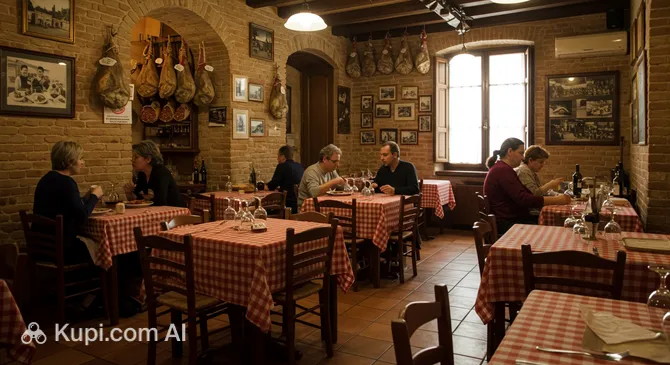
The food culture here is social and relaxed, with locals frequenting traditional trattorias and osterias that have served generations of families. For those seeking an authentic dining atmosphere, the Trattoria del Macellaio Fornaciari is a well-regarded establishment where visitors can sample classic meat dishes and regional specialties prepared with passion. Whether you are grabbing a quick slice of erbazzone from a street vendor or sitting down for a long Sunday lunch, the city's food scene is sure to leave a lasting impression.
Trattoria del Macellaio Fornaciari. Illustration.
Source: Kupi.com AI
Traveler photos:
Travel Tips
Welcome to Reggio Emilia, a city that perfectly balances its revolutionary history with a relaxed, high-quality lifestyle typical of the Emilia-Romagna region. To help you navigate the cobblestone streets and local customs with ease, we have put together some essential practical advice for your journey.
Clothing and Gear: The climate in the Po Valley varies significantly, so pack accordingly. In summer, light, breathable fabrics are essential to handle the humidity, while winters require warm layers, a heavy coat, and a sturdy umbrella. Since the historic center is best explored on foot, bring comfortable walking shoes. If you plan to visit religious sites like the Basilica della Ghiara, remember to dress modestly, covering shoulders and knees.
Transportation: The city center is compact and pedestrian-friendly, making walking the best way to get around. Reggio Emilia is also incredibly bike-friendly; you can rent a bicycle to blend in with the locals. For longer distances, the local bus service (SETA) is reliable. Note that the high-speed Mediopadana Station is about 4 km from the center, so you will need to take a taxi or a connecting bus/train to reach the historic heart.
Finances: The currency is the Euro (€). While credit and debit cards (Visa and Mastercard) are widely accepted in shops and restaurants, it is wise to carry some cash for small purchases at cafés or the open-air markets. ATMs (Bancomat) are plentiful. Tipping is not mandatory as a service charge (coperto) is usually added to the bill, but rounding up the total is a polite gesture for good service.
Health and Safety: Reggio Emilia is generally a very safe city for tourists. In case of a medical emergency, dial 112. Pharmacies are marked by a green cross; look for the "Farmacia di turno" sign outside any shop to find the nearest one open after hours. As in any busy area, keep an eye on your belongings in crowded squares or markets, though violent crime is rare.
Communication: Italian is the primary language. While staff in hotels and major attractions usually speak English, it may be less common in smaller, family-run establishments. Learning a few basic phrases like "Buongiorno" (Good morning) and "Grazie" (Thank you) goes a long way. Free public Wi-Fi is often available in main squares via the "EmiliaRomagnaWiFi" network.
Local Etiquette: Politeness is highly valued here. Always greet shopkeepers when entering or leaving a store. When visiting the local markets to buy fresh produce, never touch the fruit or vegetables with your bare hands; wait to be served or use the plastic gloves provided. Coffee culture is strictly codified: order and drink your espresso at the counter ("al banco") for a lower price and a quick chat with the barista.
What to Avoid: Do not walk in the bicycle lanes. Locals cycle fast and use these lanes extensively for their daily commute, so blocking them can be dangerous and is considered rude. Also, try to avoid ordering a cappuccino after a meal; locals consider milk-heavy coffee strictly a breakfast drink and prefer an espresso (caffè) to finish lunch or dinner.
Local Insight: Embrace the ritual of the aperitivo. Between 6:00 PM and 8:00 PM, head to Piazza Fontanesi or Piazza San Prospero. Ordering a drink usually grants you access to a buffet of snacks or a plate of appetizers. It is the perfect way to unwind and people-watch in one of the city’s most atmospheric settings.
With these tips in hand, you are ready to immerse yourself in the authentic charm of Reggio Emilia. Whether you are cycling past Renaissance palaces or savoring a plate of fresh pasta, we hope your stay in the City of the Tricolour is as smooth as it is memorable.
Entertainment & Nightlife
While Reggio Emilia may not have the chaotic clubbing scene of Milan or the beach parties of the Romagna coast, its nightlife is vibrant, authentic, and deeply rooted in social connection. The city comes alive in the evening, particularly on Wednesdays, Fridays, and Saturdays, when the historic center transforms into an open-air salon. The local "movida" is less about thumping bass and more about the ritual of the aperitivo, long dinners, and animated conversations that spill out from bars onto the cobblestone streets.
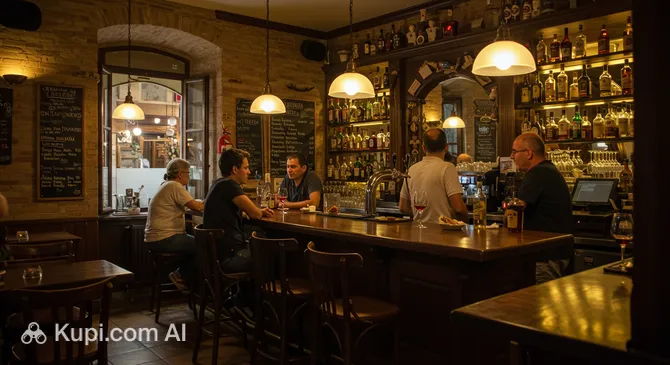
The epicenter of evening entertainment is undoubtedly the historic squares. Piazza Fontanesi is the beating heart of the city's nightlife, where a diverse crowd gathers under the lime trees to enjoy wine and cocktails. The atmosphere here is chic yet relaxed, with people standing outside crowded venues until late at night. Another key area is Piazza San Prospero, often filled with university students and younger locals, offering a slightly more boisterous vibe. For those who enjoy a lively pub atmosphere with a touch of local history, Cirenaica OsteriaPub is a fantastic choice, often hosting live music events and serving a wide selection of beers.
Cirenaica OsteriaPub. Illustration.
Source: Kupi.com AI
Traveler photos:
For a truly unique experience that combines irony with indulgence, visitors should check out Terme del Colesterolo. Despite its name, which translates to "Cholesterol Spa," this venue is a beloved spot for savory late-night snacks and drinks, embodying the region's love for rich, hearty food. The dress code in Reggio Emilia is generally "smart casual." Italians tend to dress well even for a casual drink, so leaving the beachwear at the hotel is advisable. Bars typically stay open until 1:00 or 2:00 AM, while the few dance clubs located on the outskirts may go later.
From a practical standpoint, the city center is safe to walk around at night. The pedestrian zones are well-lit and populated. However, if your accommodation is far from the center or you plan to stay out very late, it is best to book a taxi in advance, as hailing one on the street can be difficult. The average price for a cocktail or a glass of wine ranges from €5 to €8, making a night out reasonably affordable compared to larger Italian tourist hubs.
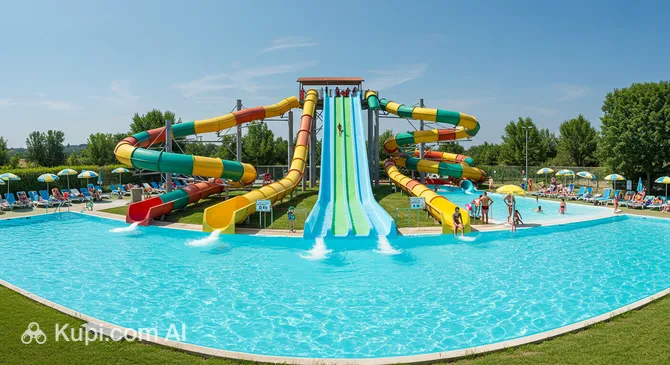
Beyond the nightlife, Reggio Emilia offers excellent daytime entertainment options. Culture lovers can attend world-class opera, ballet, and concerts at the majestic Teatro Municipale Valli. For families or those seeking relief from the summer heat, Aquatico Water Park is a popular destination featuring pools, slides, and relaxation areas. Meanwhile, shopping enthusiasts can explore I Petali, a modern shopping mall located within the Mapei Stadium complex, offering a mix of retail stores, a cinema, and dining options.
Aquatico Water Park. Illustration.
Source: Kupi.com AI
Traveler photos:
Parks & Museums
Reggio Emilia is a city that seamlessly blends its urban fabric with refreshing green spaces and a profound respect for its cultural heritage. Beyond the bustling squares and culinary hotspots, visitors will find a network of parks ideal for relaxation and a selection of museums that narrate pivotal moments in Italian history. Whether you are seeking a quiet afternoon in nature or a deep dive into the artistic and political roots of the nation, the city offers diverse experiences for every traveler.
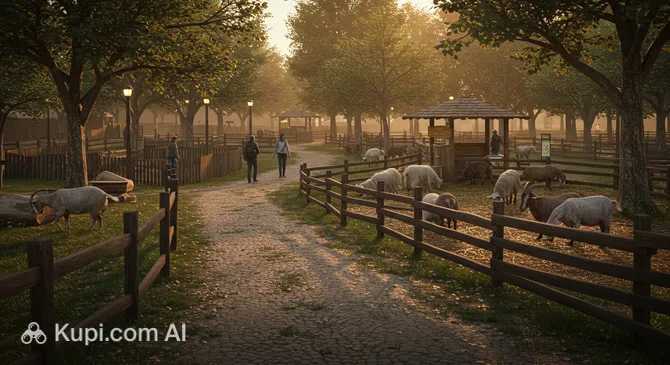
For those who enjoy spending time outdoors, the city center is anchored by the historic Parco del Popolo (Public Gardens). Located just steps from the main theaters, this park occupies the site of the former citadel and features century-old trees, fountains, and monuments, making it a perfect spot for a leisurely stroll. Just outside the immediate center lies the beloved Parco delle Caprette (Park of the Little Goats). Situated along the Crostolo stream, this extensive green area is a favorite among families and joggers. It gets its name from the Tibetan goats that roam freely in a fenced area, delighting younger visitors, while the shaded paths offer a peaceful escape from the city noise.
Parco delle Caprette. Illustration.
Source: Kupi.com AI
Traveler photos:
In terms of culture, Reggio Emilia holds a unique distinction in Italian history as the birthplace of the national flag. The Museum of the Tricolour is an essential stop for anyone interested in the Risorgimento. Located within the Palazzo del Comune, the museum documents the events of 1797 when the green, white, and red flag was first adopted by the Cispadane Republic. Through documents, memorabilia, and interactive displays, visitors can trace the evolution of this national symbol and the political fervor that shaped modern Italy.
Museum of the Tricolour. Illustration.
Source: Kupi.com AI
Traveler photos:
Art lovers should also venture slightly out of the historic center to visit the Collezione Maramotti. Housed in the former manufacturing plant of the Max Mara fashion house, this private collection is one of the most significant contemporary art venues in Italy. It features a vast array of works from the mid-20th century to the present, showcasing international artists in a stunning industrial-chic setting. Visits usually require advance booking, but the experience of seeing world-class art in such a unique architectural context is well worth the effort.
Among the city's architectural and artistic jewels, the Basilica of the Blessed Virgin of Ghiara stands out as a masterpiece of the Emilian Baroque. Built in response to a miraculous event in the late 16th century, the church is a treasure trove of frescoes and altar pieces by renowned artists of the time, such as Guercino and Carracci. The interior is breathtakingly ornate, with a Greek cross plan that draws the eye upward to the magnificent dome, offering a spiritual and aesthetic experience that rivals the grand churches of larger Italian cities.
Basilica of the Blessed Virgin of Ghiara. Illustration.
Source: Kupi.com AI
Traveler photos:
For a truly authentic experience, take a walk to the Chiostri di San Pietro (Cloisters of Saint Peter). This monumental complex, formerly a Benedictine monastery, is a hidden gem of Renaissance architecture. Recently restored, it often hosts cultural events and festivals, but even when empty, the silent elegance of its courtyards provides a contemplative atmosphere that feels miles away from the modern world.
Getting Around
Navigating Reggio Emilia is straightforward and efficient, primarily relying on a well-organized bus network managed by SETA. The city does not have a metro or tram system, but the urban bus lines cover the entire municipal area comprehensively. A distinctive feature of the local transport system is the Minibù service. These smaller, agile buses connect the historic center with the main free parking lots located on the outskirts of the city walls. They are a favorite among locals and tourists alike for quickly reaching the heart of the town from the peripheral "park and ride" areas.
For visitors, the ticketing system is unified for all urban bus lines. A standard single ticket typically costs around €1.50 and is valid for 75 minutes from the moment of validation, allowing for transfers between different buses within that timeframe. Tickets can be purchased at authorized retailers such as tobacconists (look for the "T" sign), newsstands, and the ticket office near the central railway station. For convenience, you can also purchase tickets directly on board using a contactless credit card or via mobile apps like Roger or MooneyGo, which allow you to buy and validate digital tickets on your smartphone.
It is crucial to validate your paper ticket immediately upon boarding using the yellow or green machines found inside the bus; failure to do so can result in a hefty fine. Bus services generally operate from early morning, around 6:00 AM, until approximately 8:30 PM or 9:00 PM. Service frequency is reduced on Sundays and public holidays, so it is always a good idea to check the timetables at the bus stops or on the official SETA website when planning your day.
Given the flat terrain and compact size of the city, cycling is an extremely popular alternative to public transport. Reggio Emilia is often called the "City of Bicycles," boasting an extensive network of cycle paths that make getting around on two wheels safe and enjoyable. Bike-sharing services are available, and you will see residents of all ages cycling through the piazzas. If you prefer not to pedal, taxis are available but cannot usually be hailed on the street. You must find a designated taxi rank, such as the one in front of the train station or the Valli Theater, or call the local Radio Taxi service to book a ride.
A specific note for travelers arriving at the Mediopadana AV Station (the high-speed train station designed by Santiago Calatrava): it is located about 4 kilometers from the city center. To reach the historic heart or the Central Station from there, you can take the dedicated bus lines or the local regional train that connects the two stations. This link is vital for tourists, as the high-speed station is separate from the main urban hub.
Accommodation
Accommodation:
Reggio Emilia offers a welcoming variety of accommodation options that cater to different travel styles and budgets. While it may not have the sheer volume of hotels found in major tourist hubs like Florence or Milan, the quality of hospitality here is high, reflecting the region's reputation for excellent service. Visitors can choose from modern business hotels, charming bed and breakfasts housed in historic buildings, and functional guesthouses. For a truly authentic Emilian experience, the surrounding countryside offers numerous agriturismos (farm stays), where guests can enjoy a peaceful environment and often taste locally produced food right on the premises.
For most tourists, the best area to stay is the historic center (Centro Storico). Staying within the hexagon of the old city walls allows you to be within walking distance of major landmarks like the Cathedral and the Valli Theater, as well as the vibrant evening scenes in the main piazzas. This area is perfect for those who want to immerse themselves in the local atmosphere and enjoy the pedestrian-friendly streets. Alternatively, business travelers or those on a quick stopover might prefer accommodations near the Reggio Emilia AV Mediopadana Station. While further from the city center, this area offers modern facilities and quick access to the high-speed rail network connecting to Milan and Bologna.
The price range in Reggio Emilia is generally more affordable than in neighboring Bologna. Budget travelers can find economical guesthouses and hostels, while mid-range hotels offer excellent value with comfortable amenities. Luxury options are available but tend to be understated and focused on elegance rather than opulence. Prices can fluctuate depending on the season and local events.
Booking Tip: It is highly recommended to book your accommodation in advance, especially if you are visiting during major trade fairs held in nearby Bologna or during local festivals like the "Fotografia Europea" festival. During these times, rooms in the city can fill up quickly. Most properties can be easily booked via major online platforms, though contacting smaller B&Bs directly can sometimes secure a better rate or a more personalized experience.
Nearby Cities
For those looking to explore the surroundings, Reggio Emilia serves as an excellent base for day trips to several interesting nearby locations:
City
Population
Distance
Cadelbosco di Sopra
10 691
7 km
Bagnolo in Piano
9 752
7 km
Cavriago
9 917
9 km
Albinea
8 830
10 km
Scandiano
25 758
12 km
Among these, Carpi is a standout destination, famous for hosting one of the largest squares in Italy, the magnificent Piazza dei Martiri. Visitors can spend hours exploring the Palazzo dei Pio, an impressive castle complex that blends medieval and Renaissance architecture. Just a short distance away lies Sassuolo, renowned not only for its industrial heritage but also for the stunning Palazzo Ducale. This baroque masterpiece, often called the "Little Versailles" of the region, features elaborate frescoes and beautiful gardens that make for a perfect afternoon escape.
Closer to home, the town of Scandiano offers a rich historical experience with its Rocca dei Boiardo, a fortress that dominates the town center and was once the home of the celebrated poet Matteo Maria Boiardo. Alternatively, Correggio invites art lovers to walk the streets of the birthplace of the famous Renaissance painter Antonio Allegri, known simply as "Il Correggio."
These nearby destinations offer a glimpse into the diverse culture and landscapes of the region.
Shopping & Souvenirs
Shopping in Reggio Emilia is a delightful experience that reflects the city's character: elegant, relaxed, and deeply connected to quality. While it may not have the frenetic pace of Milan, the city is a hidden gem for fashion lovers, being the birthplace of the renowned Max Mara fashion house. Visitors can expect a blend of high-end boutiques, historic artisan workshops, and modern retail spaces, all set against the backdrop of beautiful Renaissance architecture. The true highlight, however, is the gastronomic shopping, as the city sits in the heart of Italy's famous "Food Valley."
The main shopping activity is concentrated within the historic "Hexagon," the city center defined by the old perimeter walls. The primary artery is Via Emilia, which cuts through the town and is lined with major clothing chains, bookstores, and jewelry shops. Branching off from the main squares, streets like Via Roma and Corso Garibaldi offer a mix of independent boutiques and vintage stores. For a more upscale experience, the area around Piazza Prampolini and the Broletto gallery features elegant shop windows showcasing Italian design and luxury goods.
For those who prefer a modern, all-in-one shopping experience, the city offers excellent shopping centers. The most popular among locals and visitors alike is I Petali. Uniquely located within the Mapei Stadium complex, this vibrant mall is a hub for youth culture and entertainment, housing numerous fashion brands, a cinema, and a variety of dining options. It is an ideal spot for a rainy day or for finding international brands in a convenient setting.
I Petali. Illustration.
Source: Kupi.com AI
Traveler photos:
Another notable destination is Le Querce Shopping Center, situated slightly further from the center. It provides a comprehensive retail experience with a large supermarket and various specialty stores, making it practical for travelers who need to stock up on supplies or browse for everyday items in a comfortable environment.
To truly understand the local lifestyle, a visit to the open-air markets is essential. The weekly market takes place on Tuesday and Friday mornings, transforming the historic piazzas into a bustling bazaar. Piazza San Prospero and Piazza Fontanesi are the focal points, where vendors sell everything from clothing and leather goods to fresh flowers. Piazza Fontanesi, in particular, hosts a "Farmer's Market" where local producers sell seasonal fruits, vegetables, and regional specialties directly to the public, offering a colorful and fragrant atmosphere.
When it comes to souvenirs, Reggio Emilia offers edible treasures that are appreciated worldwide. The top choice is undoubtedly a wedge of Parmigiano Reggiano; look for the "Red Cows" (Vacche Rosse) variety, which is a prestigious local specialty. Another must-buy is the Traditional Balsamic Vinegar of Reggio Emilia, sold in distinctive inverted tulip-shaped bottles, which differs from the version found in neighboring Modena. Bottles of Lambrusco or Spergola wine also make excellent gifts to bring a taste of the region home.
Store opening hours generally follow the traditional Italian schedule. Shops typically open around 9:00 AM or 9:30 AM, close for a lunch break (siesta) from 1:00 PM to 3:30 PM, and reopen until 7:30 PM. However, larger chains and shopping malls like I Petali usually remain open throughout the day (orario continuato). Most shops are closed on Sundays, except during the holiday season or special events. Payment by credit and debit card is widely accepted, even for small amounts.
Tourists residing outside the European Union are eligible for a VAT (IVA) refund on purchases exceeding a certain threshold made in a single store. Look for the "Tax Free" logo in shop windows. To claim the refund, you must ask the merchant for a tax-free form at the time of purchase and present your passport. The forms must then be validated at customs upon leaving the EU.