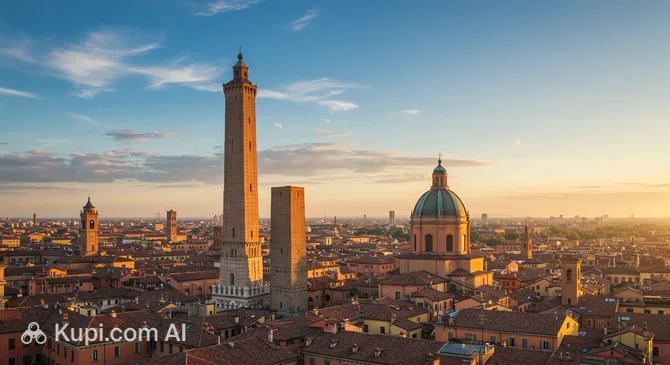
Bologna is the vibrant capital of the Emilia-Romagna region, celebrated for its unique blend of medieval charm and youthful energy. Located in northern Italy, this bustling city serves as a crucial crossroads between the northern and southern parts of the country. With a population of nearly 400,000 inhabitants, it offers a lively urban environment that still retains a welcoming, community-focused atmosphere.
Bologna. Illustration.
Source: Kupi.com AI
Often referred to as "La Dotta" (The Learned), the city is home to the oldest university in the Western world, founded in 1088. Those who delve into the history of Bologna will find a rich tapestry of academic prestige and architectural marvels. The city center is one of the best-preserved in Europe, characterized by the warm red and orange hues of its buildings, which have earned it the nickname "La Rossa" (The Red).
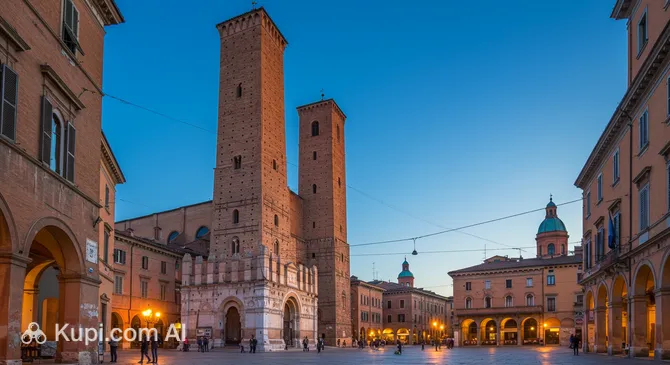
Visitors are immediately struck by the extensive network of porticoes, a UNESCO World Heritage site that stretches for nearly 40 kilometers within the city, allowing for pleasant walks in any weather. The skyline is punctuated by the iconic Two Towers (Due Torri), Asinelli and Garisenda, which stand as enduring symbols of the city's medieval past. Additionally, Bologna is famously known as "La Grassa" (The Fat) for its incredible culinary contributions, including mortadella and fresh handmade pasta.
Whether you are exploring its grand piazzas or enjoying a meal in a traditional trattoria, Bologna promises an unforgettable experience. It is a perfect destination for travelers seeking authentic culture, exceptional food, and a deep dive into Italian heritage.
Weather Overview
Bologna experiences a semi-continental climate with distinct seasonal variations, ranging from chilly winters to hot, humid summers. For travelers planning their itinerary, checking the specific weather in Bologna is recommended to ensure you pack the right clothing. The city generally warms up significantly from June through August, with average temperatures hovering between 23.4°C and 25.9°C, and daily maximums frequently reaching above 31°C.
In contrast, the winter months of December, January, and February are quite cold. January is typically the coldest month, with an average temperature of 4.9°C and lows dipping down to 1.0°C. Spring and autumn offer milder conditions, though May stands out as the month with the highest frequency of rain, recording approximately 15 wet days. Generally, expect warm summers with occasional rain and cold winters where layers are essential.
Average monthly temperature
Average monthly precipitation
Interesting Facts
Beyond the main attractions, Bologna holds many fascinating secrets and urban legends that often go unnoticed by the casual observer. From hidden waterways to acoustic marvels, the city is full of surprises waiting to be discovered by curious travelers.
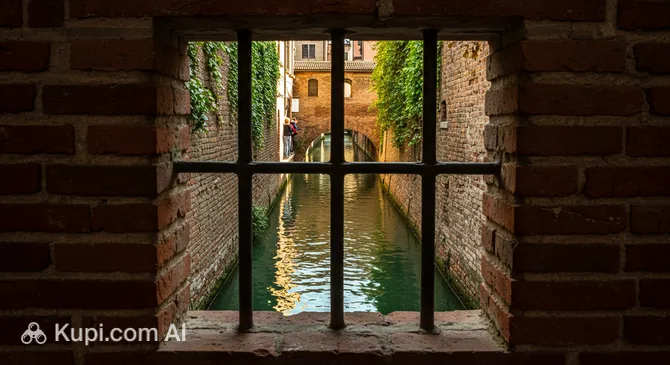
Although it is far from the sea, the city hides a network of ancient canals that once fueled a thriving silk industry. You can catch a glimpse of this watery past at the Finestrella on Via Piella (Little Window on the Canale di Reno), where opening a small shutter reveals a picturesque view that looks remarkably like a scene from Venice.
The magnificent Fountain of Neptune is the subject of a humorous local legend involving a visual trick. It is said that the sculptor, Giambologna, designed the statue so that from a specific angle near the library, the god's thumb aligns with his groin to create a suggestive optical illusion as a subtle rebellion against church censorship.
While the Leaning Tower of Pisa gets all the fame, The Two Towers of Bologna include the Garisenda, which leans even more precariously relative to its height. The tower's dramatic tilt was so renowned in the Middle Ages that it was immortalized by Dante Alighieri in his literary masterpiece, the Divine Comedy.
In the heart of Piazza Maggiore, under the vault of the Palazzo del Podestà, there is a "wireless phone" effect created by the architecture. The acoustics are so precise that if you whisper into one corner of the archway, a person standing in the diagonally opposite corner can hear you perfectly, a feature originally used to confess lepers without direct contact.
Finestrella on Via Piella (Little Window on the Canale di Reno). Illustration.
Source: Kupi.com AI
Traveler photos:
How to Get There
Bologna is a strategic transportation hub in northern Italy, making it easily accessible for travelers from around the world. Whether you prefer flying or taking the train, there are numerous options to suit your itinerary. For a complete guide on planning your journey, you can read more about all ways to reach the city on our detailed page.
The most convenient gateway is Guglielmo Marconi Airport (IATA: BLQ), located directly in Bologna, just 6.2 km from the city center. As a major international airport, it serves a large volume of passengers annually. Getting to the heart of the city is quick and easy; a taxi or bus ride takes approximately 30 minutes.
If you cannot find a direct flight to Bologna, you might consider arriving at Firenze-Peretola Airport (IATA: FLR) in the city of Florence. It is located about 77 km away, and the travel time to Bologna by road is roughly 2 hours and 15 minutes. Another alternative is Verona Villafranca Airport (IATA: VRN) in Verona, situated approximately 106 km from Bologna.
For clarity, here is a summary of the main airports:
Traveling by train is another excellent way to reach the city, as Bologna is a key node in the Italian railway network. The primary station is Bologna Centrale Station, situated just 1.2 km from the city center. It is one of the busiest railway hubs in the country, handling millions of passengers and offering high-speed connections to major Italian cities.
Travelers may also pass through Firenze Santa Maria Novella Station in Florence, which is a significant hub located about 80 km away. However, direct trains to Bologna are frequent and efficient, making the local station the best point of arrival.
Below is a list of relevant railway stations in the region:
Bologna is a city that rewards exploration, with a historic center packed with architectural masterpieces, sacred sites, and cultural institutions. While simply walking under the endless porticoes is an attraction in itself, there are several specific landmarks that define the character of this medieval metropolis.
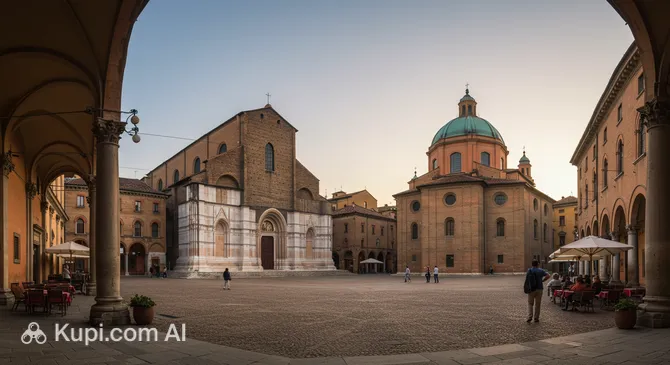
The heart of the city is undoubtedly Piazza Maggiore. This grand central square has been the focal point of Bolognese life for centuries. It is surrounded by some of the most important buildings in the city, including the imposing Basilica of San Petronio and the medieval Palazzo d'Accursio. It is the perfect place to sit and watch the world go by, soaking in the lively atmosphere that permeates the city from morning until late at night.
Just a short distance away, you will find one of the most evocative sites in Bologna, Piazza Santo Stefano. This triangular square is famous for hosting the "Seven Churches" complex, a unique sanctuary of interconnected religious buildings that date back to different eras. Walking through its courtyards and ancient chapels feels like stepping back in time, offering a peaceful retreat from the bustling city streets.
Piazza Santo Stefano. Illustration.
Source: Kupi.com AI
Traveler photos:
Given Bologna's status as a university city, a visit to the Archiginnasio Municipal Library is essential. Once the main seat of the university, this stunning palace is renowned for its walls adorned with thousands of coats of arms from former students. Inside, the Teatro Anatomico, a 17th-century anatomical theatre carved entirely from spruce wood, stands as a testament to the city's long history of medical science and learning.
Art lovers should make their way to the Basilica of San Domenico. This church is not only a significant religious site housing the remains of Saint Dominic but also a treasure trove of art. The shrine inside features early sculptures by Michelangelo, Nicola Pisano, and Niccolò dell'Arca, making it a must-see for anyone interested in Renaissance sculpture.
For those looking to experience the city's contemporary side, the MAMbo - Museum of Modern Art of Bologna offers a refreshing contrast to the medieval architecture. Located in a converted bread bakery, the museum showcases a wide range of experimental art and visual culture from World War II to the present day, highlighting Bologna's continuing role as a center for creativity.
Local Cuisine
There is a good reason why Bologna is affectionately nicknamed "La Grassa" (The Fat). The city is widely regarded as the gastronomic capital of Italy, offering a culinary tradition that is rich, hearty, and deeply rooted in history. For food lovers, a visit here is a pilgrimage to the birthplace of some of the world's most beloved dishes. The local cuisine relies heavily on high-quality pork products, fresh egg pasta, and Parmigiano Reggiano cheese, creating flavors that are robust and unforgettable.
The most iconic dish is undoubtedly Tagliatelle al Ragù. Contrary to popular belief abroad, you will not find "Spaghetti Bolognese" here; instead, the rich, slow-cooked meat sauce is paired with wide, golden ribbons of fresh egg pasta which hold the sauce perfectly. Another staple is Tortellini, tiny ring-shaped pasta stuffed with a mix of meat and cheese. Traditionally, these are served in brodo (in a clear, savory broth), a dish that is considered the ultimate comfort food by locals. For those seeking a modern twist on fresh pasta, Sfoglia Rina is a popular spot to enjoy these handmade delicacies.
No description of Bolognese food is complete without mentioning Mortadella, the grand ancestor of what many call "bologna sausage." This cured pork meat, often studded with pistachios, is a source of immense local pride. You can sample various gourmet versions of this deli meat at specialized sandwiches shops like Mortadella Lab, where the portions are generous and the flavor is authentic. Another masterpiece of the local oven is Lasagne alla Bolognese, featuring layers of green spinach pasta, ragù, and creamy béchamel sauce.
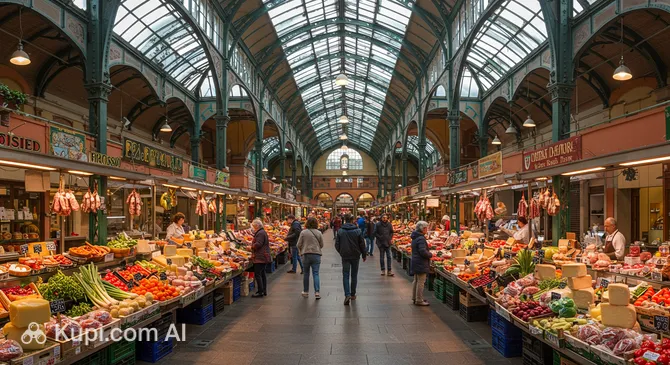
Mercato di Mezzo. Illustration.
Source: Kupi.com AI
Traveler photos:
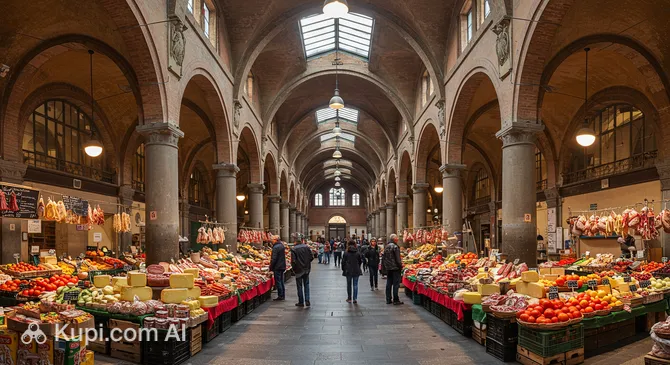
The food culture in Bologna is best experienced in its bustling markets. The Mercato di Mezzo, located in the heart of the medieval Quadrilatero district, is a historic indoor market where you can buy fresh produce or sit down for a quick meal at one of the many stalls. Similarly, the Mercato delle Erbe offers a vibrant atmosphere where locals shop for groceries and gather for lunch. These markets are the perfect places to soak up the city's lively energy while enjoying street food.
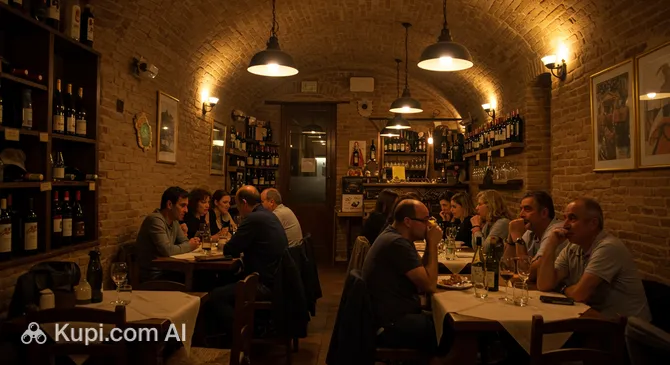
When it comes to drinks, the city has a thriving aperitivo culture. As the evening approaches, locals flock to bars to enjoy a glass of wine accompanied by small snacks. The region is famous for Pignoletto, a crisp and slightly sparkling white wine, and Lambrusco, a sparkling red that pairs famously well with the fatty, rich local dishes. For a truly unique experience, visit the Osteria del Sole. Dating back to 1465, it is one of the oldest taverns in the world; here, you purchase wine at the bar but are welcome to bring your own food from the nearby market to eat at the communal tables.
Travel Tips
Visiting Bologna is a delightful experience, but like any historic Italian city, it has its own unique rhythm and set of unwritten rules. These practical tips are designed to help you navigate the "Red City" smoothly, ensuring you spend less time worrying about logistics and more time enjoying the incredible food and culture.
Clothing and Gear: The historic center is paved with uneven cobblestones, so comfortable walking shoes are an absolute must for exploring. While the city is generally casual, remember that a modest dress code applies to religious sites like the Basilica of San Petronio; ensure your shoulders and knees are covered before entering.
Transportation: The best way to see the city is on foot, as the center is compact and pedestrian-friendly. Avoid renting a car for city travel, as the historic zone is a ZTL (Limited Traffic Zone) monitored by cameras, and unauthorized entry results in heavy fines. For longer distances, the TPER bus system is reliable, and the Marconi Express monorail offers a quick link to the airport.
Finances: The local currency is the Euro (€). While credit and debit cards are widely accepted even for small amounts, carrying some cash is useful for older cafés or market stalls. Tipping is not mandatory since a coperto (cover charge) is usually included in the bill, but rounding up the total is a common and appreciated way to show gratitude.
Health and Safety: Bologna is a safe city with a large student population, but you should remain vigilant against pickpockets in crowded areas like Bologna Centrale station and Piazza Maggiore. Pharmacies are easily identified by a green cross sign, and for any general emergency, the universal number to dial is 112.
Communication: While Italian is the official language, English is widely spoken, especially in the center and university districts. However, locals appreciate the effort; using basic phrases like "Buongiorno" (Good morning) and "Grazie" (Thank you) will often result in warmer service. Free Wi-Fi is available in many public squares under the "Bologna WiFi" network.
Local Etiquette: Coffee culture is serious here; remember that drinking espresso standing at the bar (al banco) is significantly cheaper than sitting at a table. Also, try to follow the local custom of not ordering cappuccino after a meal—it is strictly considered a breakfast drink.
What to Avoid: Do not ask for "Spaghetti Bolognese" in a traditional restaurant, as this dish does not exist in local cuisine; the authentic version is Tagliatelle al Ragù. Additionally, avoid walking in the designated bicycle lanes, as locals cycle fast and frequently, and blocking the path can be dangerous.
The Portico Advantage: One specific life hack for Bologna is that you rarely need an umbrella or sun hat in the city center. The UNESCO-listed porticoes span nearly 40 kilometers, providing excellent shelter from both rain and the scorching summer sun, allowing you to explore comfortably in almost any weather.
Armed with this local knowledge, you are all set to explore the winding streets and culinary delights of Bologna with confidence. Embrace the lively atmosphere, respect the local traditions, and your trip to this captivating city is sure to be memorable.
Entertainment & Nightlife
As the sun sets, Bologna transforms from a studious medieval city into a vibrant hub of nightlife and entertainment. Thanks to its massive student population, the city boasts an energy that is youthful, alternative, and incredibly welcoming. The nightlife here is less about exclusive VIP clubs and more about socializing in crowded piazzas, spilling out of bars under the porticoes, and enjoying live music in intimate venues.
The epicenter of the city's alternative scene is undoubtedly Via del Pratello. This long, porticoed street is lined with pubs, taverns, and social centers where the atmosphere is bohemian and relaxed. It is the perfect place to grab a beer and mingle with locals outside, regardless of the weather. For a more intense and gritty vibe, the University District, particularly along Via Zamboni, offers affordable drinks and a loud, high-energy crowd that parties late into the night. Conversely, those seeking a sophisticated evening should head to the streets around the Quadrilatero or the former Jewish Ghetto, where chic wine bars serve excellent local vintages.
Music lovers will find Bologna to be a jazz capital. One of the most renowned spots is Cantina Bentivoglio, located in the cellars of a historic palazzo. It combines top-tier live jazz performances with traditional Bolognese cuisine, making it an ideal choice for a dinner show. For a truly unique experience, visit Bar Senza Nome (The Bar Without a Name) near the Mercato delle Erbe. Run by hearing-impaired bartenders, this venue is not only a cool spot for a drink but also a beautiful example of social inclusion, attracting a diverse and friendly crowd.
Cantina Bentivoglio. Illustration.
Source: Kupi.com AI
Traveler photos:
If you are looking to dance the night away, the city has several options outside the historic center. The Covo Club is a legendary institution in the Italian indie and rock scene, hosting international bands and DJ sets that keep the energy high until the early hours. For techno and electronic music enthusiasts, the industrial outskirts often host larger club nights and events.
Practical Tips for Nightlife:
Timing: The evening typically starts with the ritual of aperitivo between 6:30 PM and 9:00 PM. Dinner is usually eaten late, around 9:00 PM or 10:00 PM, and clubs generally do not fill up until after midnight.
Prices: Bologna is generally more affordable than Milan or Rome. A glass of wine or a spritz often costs between €5 and €8, and many bars offer complimentary snacks with your drink during aperitivo hours.
Dress Code: The vibe is predominantly casual and eclectic. While some upscale wine bars appreciate smart-casual attire, you will fit in almost anywhere with comfortable, stylish clothing.
Safety and Transport: The city center is safe to walk at night, though the area around the university can get rowdy and attracts petty crime, so keep an eye on your belongings. Buses run until late, and there are specific night lines (lines N) on weekends. Taxis are best booked via app or phone, as hailing them on the street is difficult.
Beyond the bars and clubs, Bologna offers rich daytime and cultural entertainment. The city is home to the Cineteca di Bologna, one of the most important film archives in Europe, which screens classic and restored films year-round. Theater enthusiasts can catch opera or ballet at the stunning Teatro Comunale. While there are no massive amusement parks within the city limits, the surrounding Emilia-Romagna region is famous for them, with easy train connections to parks near the coast for a day of family fun.
Parks & Museums
While Bologna is famously known as "La Rossa" for its terracotta rooftops and brick architecture, the city also offers refreshing green spaces and a wealth of cultural institutions that preserve its artistic legacy. Beyond the bustling piazzas and porticoes, visitors can find tranquility in historic gardens or immerse themselves in centuries of Emilian art and history within the city's numerous museums.
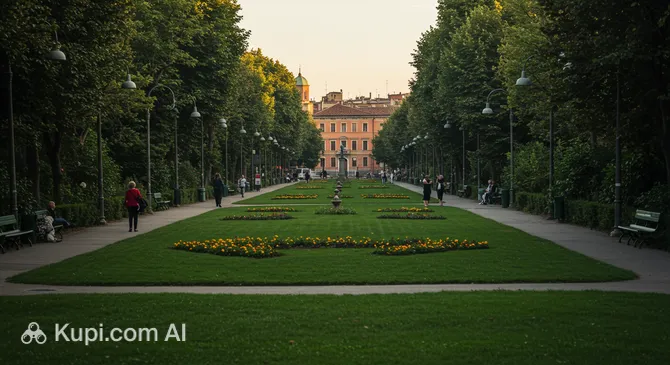
The most beloved green space in the city is the Margherita Gardens (Giardini Margherita). Opened in 1879, this sprawling park draws inspiration from English romantic gardens, featuring wide lawns, a small lake, and tree-lined avenues. It is the perfect spot for a relaxing afternoon, popular with locals for jogging, picnicking, or simply escaping the urban heat. During the summer, the park often hosts markets and open-air events, making it a lively hub of social activity.
Margherita Gardens. Illustration.
Source: Kupi.com AI
Traveler photos:
For those seeking a more elevated view of nature, the hills surrounding Bologna offer spectacular scenery. The Parco di Villa Ghigi is a fantastic natural area just outside the city walls. It provides a mix of cultivated land and woodland, with trails that offer breathtaking panoramic views over Bologna's red skyline. It is an ideal destination for hikers and nature lovers who want to experience the countryside without straying too far from the center.
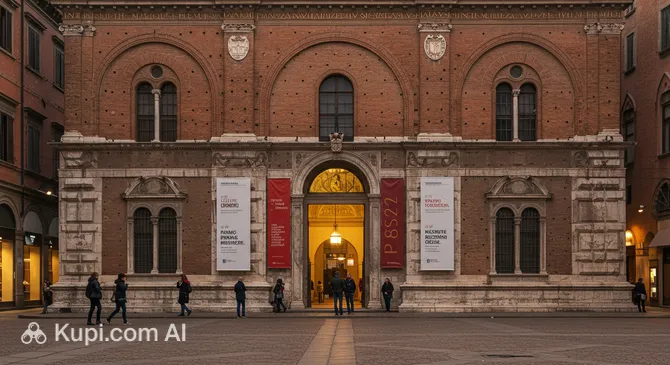
Bologna's cultural depth is best explored through its museums. The National Art Gallery of Bologna (Pinacoteca Nazionale) is a must-visit for art enthusiasts. Located in the university district, it houses a prestigious collection of Emilian paintings from the 13th to the 18th century. Here, you can admire masterpieces by renowned artists such as Giotto, Raphael, and the Carracci cousins, as well as works by Guido Reni, which define the city's artistic Golden Age.
National Art Gallery of Bologna. Illustration.
Source: Kupi.com AI
Traveler photos:
Another significant cultural venue is Palazzo d'Accursio, the historic town hall located on Piazza Maggiore. While the building itself is an architectural marvel, it also houses the Municipal Art Collections. Visitors can wander through lavishly decorated halls, such as the Hall of the Farnese, and view a diverse array of art ranging from medieval sculptures to 19th-century paintings, all set within the grandeur of a palace that has been the seat of city power for centuries.
History buffs will appreciate the imposing Palazzo Re Enzo. Built in the 13th century, this fortress-like palace is steeped in history, famously serving as the "golden prison" for King Enzio of Sardinia for over 20 years. Today, it stands as a magnificent example of medieval civic architecture and often hosts cultural exhibitions and events that bring its ancient halls to life.
For a unique experience that combines architecture and exercise, head to Porta Saragozza. This historic city gate marks the beginning of the famous Portico of San Luca, the longest portico in the world. Walking from this gate up to the Sanctuary of San Luca is a beloved local tradition; the 3.8-kilometer trek takes you through a rhythmic tunnel of arches, gradually ascending the hill to reward you with stunning views and a sense of accomplishment.
Getting Around
Navigating Bologna is remarkably straightforward, thanks to its compact size and an efficient public transport network managed by TPER (Trasporto Passeggeri Emilia-Romagna). While the historic center is best explored on foot, the comprehensive system of buses and trolleybuses is essential for reaching outer districts, the fairgrounds, or the surrounding hills. It is important to note that the city does not have an underground metro system; instead, it relies on a dense web of bus lines that crisscross the urban area, ensuring that almost every corner of the city is accessible.
For most tourists, the standard bus ticket is the primary way to get around. A single ticket typically costs around €1.50 if purchased in advance and is valid for 75 minutes, allowing for transfers between lines. Tickets can be bought at tabaccherie (tobacconists), newsstands, and authorized TPER points. Recently, the city has modernized its payment methods, allowing passengers to pay directly on board using contactless credit cards or debit cards via the "StarTap" validators found on most urban buses. Alternatively, you can use the Roger app to purchase and validate digital tickets directly from your smartphone, which is often the most convenient option for visitors.
If you plan to use public transport frequently, consider buying a City Pass (a strip of 10 rides) or a 24-hour daily pass, which offers unlimited travel within the urban zone. A crucial rule for all travelers is to validate your ticket immediately upon boarding. For paper tickets, insert them into the machine until you hear a stamp sound; for digital or contactless payments, tap your phone or card against the reader. Ticket inspectors are frequent and strict, and failing to validate can result in a hefty fine on the spot.
Transport services generally operate from early morning, around 05:30 AM, until shortly after midnight. For late-night travel, especially on weekends and holidays, there is a network of night buses known as "Tper Night" that connects the center with the suburbs. When waiting for a bus, remember to signal the driver to stop by raising your hand, as buses do not automatically stop at every station unless requested.
A standout feature of the local transport infrastructure is the Marconi Express, a futuristic monorail system that connects the central train station to the airport in just seven minutes. Suspended above the ground, it offers a fast and scenic transfer, avoiding city traffic entirely. Another unique option for tourists is the "San Luca Express," a tourist train on wheels that connects the city center to the hilltop Sanctuary of San Luca, saving you the steep climb while offering audio guides along the route.
For those who prefer alternatives to buses, Bologna is an incredibly bike-friendly city. You will see locals cycling everywhere, and visitors can easily join in by using the RideMovi bike-sharing service. You simply locate a bike via the app, scan the QR code to unlock it, and park it in designated areas when finished. Taxis are also available but remember that you cannot simply hail them on the street; you must call a dispatch service, use an app, or walk to a designated taxi rank, usually found near major squares and the train station. Car-sharing services like Corrente and Enjoy are also widely available and popular for short, flexible trips.
Accommodation
Where to Stay:
Finding the perfect place to stay in Bologna is generally easy, as the city offers a wide spectrum of accommodation options to suit every preference and budget. Visitors can choose from elegant luxury hotels housed in restored historic palaces, reliable mid-range international chains, and a vast array of charming Bed & Breakfasts. In recent years, the number of short-term rental apartments has also surged, providing a "home away from home" experience that is particularly popular with families and those wishing to live like a local.
For most tourists, the best area to stay is undoubtedly the Centro Storico (Historic Center). Staying within the medieval walls places you within walking distance of major landmarks such as Piazza Maggiore and the iconic The Two Towers of Bologna. This area is pedestrian-friendly and brimming with restaurants and cafes. If you prefer a livelier, more youthful atmosphere (and often lower prices), the University District around Via Zamboni is a good alternative, though it can be noisy at night. Conversely, business travelers often opt for the modern hotels in the Fiera District (Fairgrounds) or near Bologna Cathedral for easier access to transport links.
The Two Towers of Bologna. Illustration.
Source: Kupi.com AI
Traveler photos:
A crucial tip for booking accommodation in Bologna is to check the city's trade fair calendar. Bologna is a major exhibition hub, hosting massive international events like the Cosmoprof and the Children's Book Fair. During these periods, hotel availability plummets and prices can double or triple. Therefore, it is highly recommended to book your room well in advance if your trip coincides with these dates, or to avoid them if you are traveling purely for leisure.
Regarding costs, prices are generally moderate compared to other major Italian tourist cities like Venice or Milan, but they fluctuate seasonally. Budget travelers can find hostels and affordable guesthouses ranging from €40 to €80 per night, while mid-range hotels typically charge between €90 and €150. Luxury options will naturally cost significantly more. Booking is most conveniently done through major online platforms, though contacting smaller B&Bs directly can sometimes secure a better rate or a more personalized experience.
Nearby Cities
For those looking to explore the surroundings, Bologna serves as an excellent base for day trips to several interesting nearby locations: The region of Emilia-Romagna is densely packed with historic towns and cultural landmarks, making it easy to venture out for a few hours or a full day.
One of the most popular destinations is Modena, located just a short distance northwest of Bologna. Famous worldwide for its traditional balsamic vinegar and its heritage as the land of Ferrari and Maserati, it offers a perfect mix of gastronomy and engineering excellence. The city's cathedral and the Ghirlandina tower are UNESCO World Heritage sites that showcase stunning Romanesque architecture.
Another captivating option is Ferrara, known as the city of the Renaissance. It is encircled by well-preserved ancient walls and dominated by the imposing Estense Castle, complete with a moat. Ferrara is also incredibly bike-friendly, allowing visitors to explore its cobblestone streets and historic palaces at a leisurely pace.
For travelers interested in smaller towns and the immediate vicinity, here is a list of nearby locations:
City
Population
Distance
Casalecchio di Reno
36 456
5 km
San Lazzaro di Savena
32 473
7 km
Castel Maggiore
18 349
9 km
Calderara di Reno
13 224
9 km
Zola Predosa
18 939
10 km
These nearby destinations offer a glimpse into the diverse culture and landscapes of the region.
Shopping & Souvenirs
Shopping:
Shopping in Bologna is a delightful experience that mirrors the city's character: a blend of elegance, tradition, and accessibility. Visitors will find everything from high-end Italian fashion and historic artisan workshops to bustling food markets and modern retail chains. The city is particularly renowned for its "Made in Italy" leather goods, footwear, and, of course, its exceptional gastronomic products, making it an ideal destination for those looking to take a piece of Italian culture home with them.
The main shopping artery of the city is Via dell'Indipendenza, a wide street that stretches from the central train station to Piazza Maggiore. It is lined with popular international brands, clothing boutiques, and shoe stores, all sheltered by the city's famous porticoes, allowing for comfortable window shopping regardless of the weather. For those seeking luxury, Via Luigi Carlo Farini and the surrounding streets form the city's high-fashion district, hosting prestigious designer labels and upscale jewelers in a sophisticated setting.
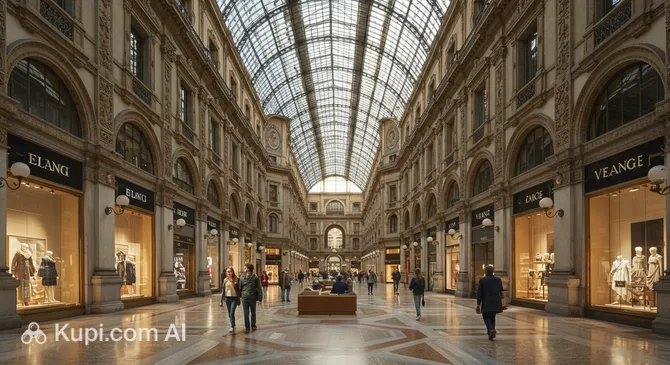
If you prefer a concentrated shopping experience, the city offers several excellent options. In the heart of the luxury district lies Galleria Cavour, an exclusive indoor arcade that houses some of the world's most famous fashion houses. It is a destination in itself for admirers of high-end style. For a more extensive retail mix, the Meraville Shopping Park is located on the outskirts of the city. It is one of the largest retail parks in Italy, featuring a vast array of electronics, clothing, and home goods stores.
Galleria Cavour. Illustration.
Source: Kupi.com AI
Traveler photos:
Markets are an integral part of Bolognese life and offer a unique shopping atmosphere. While the Mercato di Mezzo is famous for dining, the Mercato delle Erbe is the perfect place to buy fresh local produce, cheeses, and cured meats directly from vendors. For a different kind of treasure hunting, the historic La Piazzola market takes place in Piazza VIII Agosto on Fridays and Saturdays. This massive open-air market, which has roots dating back to 1251, sells everything from clothes and shoes to household items and vintage finds at bargain prices.
Mercato delle Erbe. Illustration.
Source: Kupi.com AI
Traveler photos:
When it comes to souvenirs, food is the undisputed king in Bologna. Vacuum-packed wedges of Parmigiano Reggiano, bottles of traditional Balsamic Vinegar of Modena, and whole or sliced Mortadella are the most popular gifts. Beyond food, the city is known for its artisan craftsmanship; look for handmade leather sandals, intricate ceramics, or unique stationery from the historic shops scattered throughout the city center.
Store opening hours in Bologna generally follow the traditional Italian schedule. Smaller shops and artisan boutiques typically open from 10:00 AM to 1:00 PM and reopen from 3:30 PM to 7:30 PM. However, major chains, department stores, and shops on the main tourist streets usually operate with continuous hours (orario continuato) from morning until evening. Credit and debit cards are widely accepted, even for small purchases, though carrying some cash is advisable for small market stalls.
Tourists residing outside the European Union are eligible for a VAT (Value Added Tax) refund on purchases exceeding a certain amount (typically around €155) made in a single store. Look for the "Tax Free" logo in shop windows and ask for the refund form at the checkout. You will need to present your passport and process the paperwork at the airport customs office before leaving the EU.