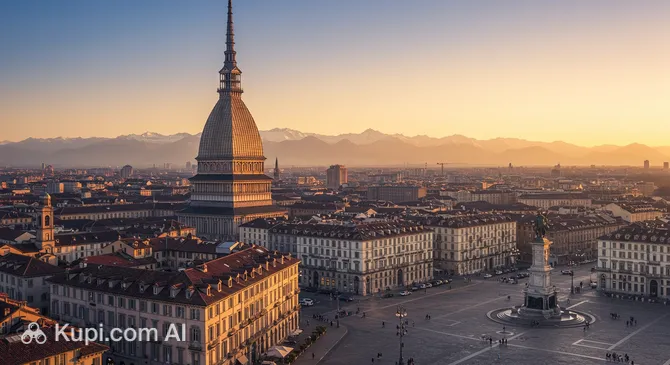
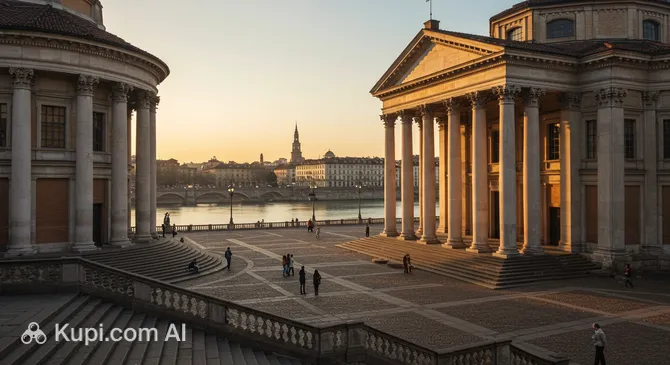
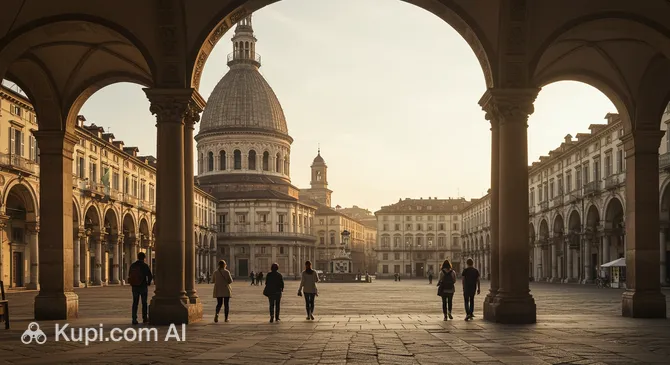
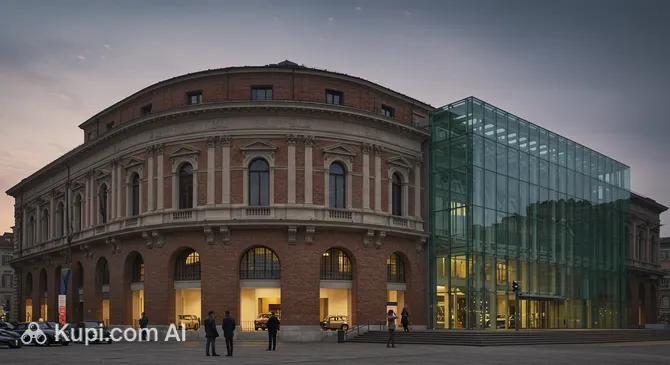
Turin is a sophisticated metropolis that effortlessly blends royal elegance with industrial innovation. Often referred to as the "Paris of Italy" due to its wide boulevards and grand architecture, this city offers a unique atmosphere that is both regal and dynamic. Located in the northwest of Italy, at the foot of the majestic Alps, Turin serves as the capital of the Piedmont region and is traversed by the serene Po River.
With a population of approximately 870,000 inhabitants, it is an important cultural and business hub. The history of Turin is rich and fascinating, having served as the first capital of a unified Italy and the seat of the powerful House of Savoy. This legacy is visible in its stunning baroque buildings and historic cafés that line the city's porticoed streets.
Turin. Illustration.
Source: Kupi.com AI
Visitors are drawn to the city's remarkable landmarks, such as the iconic Mole Antonelliana, which dominates the skyline and houses the National Museum of Cinema. Another must-see is the Egyptian Museum, considered one of the most significant collections of Egyptian artifacts outside of Cairo. Additionally, the city is famous for its culinary delights, particularly its chocolate and the celebrated gianduja.
Whether you are exploring its royal residences, enjoying an aperitivo in a bustling square, or using the city as a gateway to the Alps, Turin promises an unforgettable experience. It is a destination that invites you to slow down and appreciate the finer things in life, making it a perfect addition to any travel itinerary.
Weather Overview
Turin experiences a varied climate with distinct seasons, largely influenced by its location at the foot of the Alps. Visitors can generally expect warm summers with occasional rain and cold, dry winters. The weather transitions from crisp, chilly days at the start of the year to pleasant warmth during the peak holiday season.
Winter months like January and December are the coldest, with average temperatures hovering around 2.7°C and minimums dropping to -1.3°C. While cold, these months see relatively low precipitation amounts of about 2mm. As spring approaches, the city warms up, but it also becomes wetter; May is typically the dampest month, recording up to 21 wet days.
The summer season brings higher temperatures, with July and August reaching average highs of approximately 26.7°C. Despite the warmth, June and July can still see frequent rainfall. For more specific data to help you pack for your trip, check the detailed weather in Turin page.
Average monthly temperature
Average monthly precipitation
Interesting Facts
Beyond the famous boulevards and royal palaces, Turin holds many fascinating secrets and urban legends that add to its mysterious allure. From esoteric myths to groundbreaking culinary inventions, here are some intriguing details about the city that often escape the casual observer.
Turin is widely considered a city of magic and mystery. Esoteric legends claim it is one of the corners of the "triangle of white magic" (along with Lyon and Prague) and the "triangle of black magic" (with London and San Francisco). The Gran Madre di Dio Church is often cited as a focal point of positive energy, with some myths even suggesting a connection to the Holy Grail.
While Switzerland is famous for chocolate today, Turin is actually the birthplace of the solid chocolate bar. In the 18th century, local chocolatiers invented a machine to solidify chocolate, moving away from the hot chocolate drinks that were popular at the time. The city also gave the world the Gianduiotto, a hazelnut-infused treat created when cocoa was scarce.
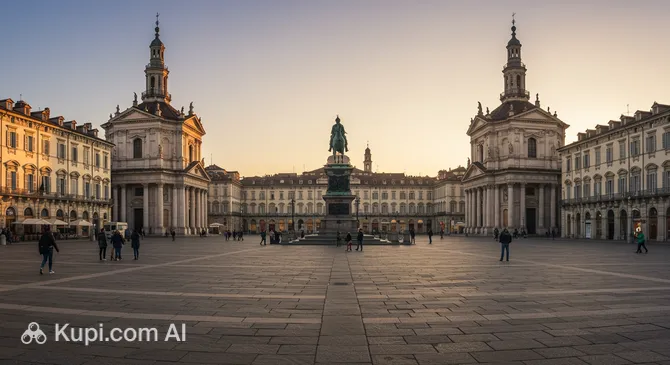
In the elegant Piazza San Carlo, visitors often participate in a curious local tradition for good luck. Embedded in the pavement under the arcades is a bronze relief of a bull, the city's symbol. It is said that stepping on the bull brings good fortune, a ritual performed by locals and tourists alike.
The city is the guardian of one of the most debated relics in Christendom, the Shroud of Turin. This ancient linen cloth is housed in the Cathedral of Saint John the Baptist. The relic is closely associated with the Chapel of the Holy Shroud, a baroque masterpiece designed by Guarino Guarini to preserve it.
Gran Madre di Dio Church. Illustration.
Source: Kupi.com AI
Traveler photos:
How to Get There
Reaching the capital of Piedmont is quite convenient, thanks to its strategic location in northwest Italy and excellent transport connections. Whether you prefer flying or taking the train, there are multiple options to suit your travel plans. For a comprehensive guide on all available routes and tips, you can read more about how to get to Turin on our detailed page.
The most direct way to arrive by air is via Turin Airport (IATA: TRN), also known as Caselle Airport. Located just north of the city, it serves as the main gateway for visitors. A taxi or bus ride from here to the city center takes approximately 45 minutes. For those arriving on intercontinental flights, the Milano Malpensa Airport (IATA: MXP) is a major alternative. Although it is located in the city of Milan, about 101 km away, it offers a wider range of international connections. The journey from Malpensa to Turin by road typically takes around 3 hours, though frequent shuttle buses and train connections are available to bridge the distance.
For clarity, here is a summary of the main airports:
Traveling by train is another excellent option, as the city is a key hub in the Italian railway network. The primary station is Porta Nuova Railway Station, which is centrally located and stands as one of the busiest stations in the country, handling a vast number of passengers annually. It connects the city with major Italian destinations and neighboring European countries. Another significant hub is Porta Susa Railway Station, situated about 1.6 km from the center. Both stations offer modern facilities and easy access to local public transport, making your arrival seamless.
Below is a list of the nearest and most significant railway stations:
Turin is a city of elegant discoveries, where royal history meets innovative culture. While simply walking through its porticoed streets is a delight, the city boasts several world-class landmarks that define its character. From ancient treasures to baroque splendor, here are some of the essential places to visit.
One of the most unique experiences in the city is visiting the National Museum of Cinema. Housed inside the towering Mole Antonelliana, the symbol of Turin, this museum takes you on a vertical journey through the history of film. It is fascinating for its interactive exhibits and the spectacular panoramic elevator, which lifts visitors through the center of the dome to a viewing platform offering breathtaking 360-degree views of the city and the Alps.
For history enthusiasts, the Egyptian Museum is an absolute must-see. It holds the distinction of being the oldest museum in the world dedicated entirely to Egyptian culture and contains the most significant collection of artifacts outside of Cairo. Visitors can spend hours marveling at the statues, sarcophagi, and the impressive Gallery of Kings, which brings the mysteries of the ancient world to life in the heart of Italy.
Royal Palace of Turin. Illustration.
Source: Kupi.com AI
Traveler photos:
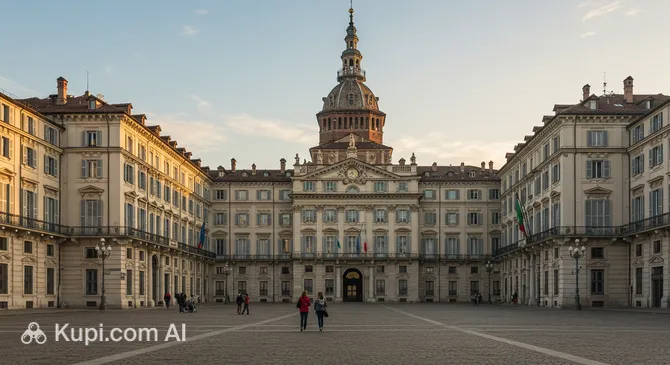
To witness the regal past of the House of Savoy, a tour of the Royal Palace of Turin is essential. Located in the central Piazza Castello, this UNESCO World Heritage site dazzles with its opulent throne rooms, intricate tapestries, and the Royal Armory. It offers a vivid glimpse into the lavish lifestyle of Italy's former royalty and connects directly to the Chapel of the Holy Shroud.
Just a short distance from the city center, the Venaria Reale stands as a masterpiece of Baroque architecture. Often compared to Versailles, this monumental complex features the stunning Gallery of Diana and is surrounded by vast, manicured gardens. It is a perfect destination for a half-day trip, offering a blend of art, history, and natural beauty that captivates every visitor.
If you are looking for a green escape, Valentino Park provides a serene atmosphere along the banks of the Po River. It is the city's most famous public park, home to the beautiful Valentino Castle and a fascinating replica of a Medieval Village. It is an excellent spot for a leisurely stroll, a picnic, or simply to enjoy the contrast between nature and the city's urban elegance.
Local Cuisine
The culinary landscape of Turin is refined, rich, and deeply rooted in the traditions of the Piedmont region. Unlike the tomato-based dishes found in the south of Italy, the local cuisine here relies heavily on butter, sage, and high-quality meats, reflecting a blend of Italian passion and French sophistication. The city is also the birthplace of the "Slow Food" movement, ensuring that ingredients are locally sourced and of the highest quality.
When it comes to main courses, you absolutely must try agnolotti, a type of small, ravioli-like pasta typically filled with roasted meat and served with a roast sauce or butter and sage. Another signature dish is vitello tonnato, consisting of thinly sliced veal served cold with a creamy, mayonnaise-like sauce flavored with tuna and capers. For those visiting in colder months, bagna cauda—a warm dip made from garlic, anchovies, and olive oil served with raw vegetables—is a communal dining experience that warms the soul.
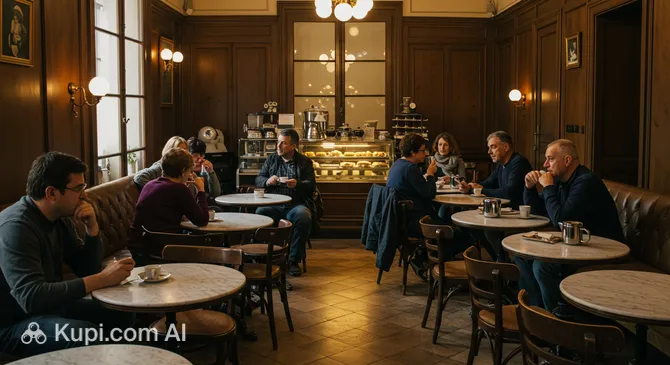
Turin is also a haven for those with a sweet tooth, particularly chocolate lovers. The city gave the world gianduja, a luscious blend of chocolate and hazelnuts. You will find this flavor in the famous gianduiotto chocolates, which are shaped like upturned boats and melt in your mouth. Beyond chocolate, the city's historic cafés are institutions in themselves, offering a glimpse into the 19th-century aristocracy.
Caffè Al Bicerin. Illustration.
Source: Kupi.com AI
Traveler photos:
No culinary tour of the city is complete without tasting its namesake drink at the historic Caffè Al Bicerin. The Bicerin is a layered hot drink made of espresso, chocolate, and cream, served in a small glass so you can see the beautiful layers before sipping. It has been a local favorite since the 18th century and perfectly embodies the elegant spirit of the city.
As evening approaches, locals participate in the ritual of the aperitivo. Turin is the birthplace of Vermouth, and enjoying a glass accompanied by a buffet of appetizers is a daily tradition. From grand piazzas to the riverside, the atmosphere buzzes with conversation and clinking glasses. Whether you choose a traditional wine bar to sample a glass of Barolo or a modern venue like Gørilla for a cocktail, the experience is an essential part of the local lifestyle.
Travel Tips
Visiting Turin is a delightful experience, but like any major Italian city, a little local knowledge goes a long way in ensuring a smooth trip. To help you navigate the capital of Piedmont with confidence and ease, we have compiled a list of essential practical tips for your stay.
Clothing and Gear: The weather in Turin can change quickly due to its proximity to the Alps, so dressing in layers is highly recommended. Bring comfortable, sturdy shoes, as you will likely do a lot of walking on cobblestones and under the city's extensive porticoes. Italy uses Type F, L, and C power plugs, so ensure you pack a universal adapter to keep your devices charged.
Transportation: The city center is compact and best explored on foot, but for longer distances, the local public transport system (GTT) is efficient and includes buses, trams, and Italy's first automated driverless metro line. Avoid renting a car for city exploration, as the historic center is protected by ZTL (Limited Traffic Zones) with cameras that issue heavy fines to unauthorized vehicles.
Finances: The currency is the Euro (€). While credit and debit cards (Visa and Mastercard) are widely accepted in restaurants and museums, it is wise to carry some cash for small purchases at cafés or street markets. Tipping is not mandatory as a service charge (coperto) is usually added to the bill, but leaving small change for good service is appreciated.
Health and Safety: Turin is generally a safe city for tourists, but standard precautions against pickpocketing should be taken, especially around the Porta Nuova railway station and on crowded trams. Pharmacies are easily identified by a flashing green cross; for any serious emergencies, the universal number to dial is 112.
Communication: The official language is Italian. While English is widely spoken in hotels, museums, and major restaurants, it is less common in smaller local shops. Learning a few basic phrases like Buongiorno (Good morning) and Grazie (Thank you) will be warmly received by locals. Free Wi-Fi is often available in public squares and museums.
Local Etiquette: Politeness is highly valued here; always greet shopkeepers or staff when entering and leaving an establishment. If you plan to visit religious sites like the Cathedral or the Gran Madre di Dio, remember to dress modestly—shoulders and knees should be covered to show respect.
What to Avoid: One of the most common mistakes tourists make is forgetting to validate their transport tickets. You must stamp your bus or tram ticket at the yellow or blue machines immediately upon boarding; failure to do so can result in an on-the-spot fine, even if you have a ticket in your pocket.
Smart Sightseeing: If you plan to visit multiple museums and royal residences, consider purchasing the Torino+Piemonte Card. It offers free entry to most major cultural sites, including the Royal Palace and the Egyptian Museum, and can save you a significant amount of money and time during your trip.
Armed with these practical insights, you are ready to explore the elegant boulevards and historic treasures of Turin without worry. Enjoy the unique blend of royal history and modern culture that makes this city one of the most sophisticated destinations in the region.
Entertainment & Nightlife
Turin's nightlife is an elegant affair that typically begins with the sacred ritual of the aperitivo and extends late into the night. The city sheds its industrious daytime persona to reveal a vibrant social scene, characterized by historic wine bars, modern cocktail lounges, and bustling riverside clubs. The atmosphere is generally sophisticated yet welcoming, with a crowd that ranges from university students in the vibrant San Salvario district to chic professionals in the city center.
One of the most spectacular places to start your evening is Piazza Vittorio Veneto. As one of the largest squares in Europe, it is lined with numerous cafés and bars that spill out under the porticoes, offering stunning views of the illuminated hills across the river. It serves as a natural gathering point where locals meet for a drink before heading to the nearby Murazzi area along the Po River, which pulses with energy and music, especially during the summer months.
Piazza Vittorio Veneto. Illustration.
Source: Kupi.com AI
Traveler photos:
For a unique experience immersed in nature without leaving the city, Imbarchino is a beloved spot located within Valentino Park. Situated right on the riverbanks, it offers a relaxed environment that transforms from a quiet study spot during the day into a lively venue for music and drinks at night. If you prefer a more refined setting, the Victoria Hotel Bar provides a classic atmosphere perfect for sipping high-quality cocktails in a luxurious environment.
Practicalities are important for a smooth night out. The nightlife in Turin kicks off later than in many other cities, with clubs often filling up after midnight. Dress codes are generally smart-casual; locals tend to dress well when going out, so avoid overly sporty attire if you plan to visit upscale venues. Public transport, including the "Night Buster" bus network, operates on weekends, but for safety and convenience late at night, calling a taxi via an official app or finding a designated rank is recommended. The city center is generally safe for walking at night, particularly in the well-lit main piazzas.
While the night belongs to the bars and clubs, daytime entertainment in Turin offers its own variety. Beyond the world-class museums and theaters, families and thrill-seekers can enjoy outdoor fun at Adventure Three Oaks Park, which offers climbing courses and active leisure. Whether you are catching a show at the Teatro Regio or exploring a local amusement park, the city ensures there is never a dull moment from sunrise to sunrise.
Parks & Museums
Beyond its grand piazzas and royal palaces, Turin offers an impressive array of museums and green spaces that cater to every interest, from automotive history to contemporary art. The city's cultural landscape is vast, ensuring that whether you are a history buff, an art lover, or someone seeking a quiet escape in nature, there is always something new to discover.
Given the city's status as the birthplace of the Italian automotive industry, a visit to the National Automobile Museum (MAUTO) is essential. Located in the southern part of the city, this futuristic museum tells the story of the automobile from its invention to the present day. The collection includes rare vintage cars, iconic racing models, and interactive exhibits that explore the future of mobility. It is widely regarded as one of the most important automotive museums in the world.
National Automobile Museum. Illustration.
Source: Kupi.com AI
Traveler photos:
For those passionate about art and history, the city center holds two remarkable treasures. Palazzo Madama, situated in Piazza Castello, is not only an architectural marvel with its Roman, Medieval, and Baroque facades but also houses the Civic Museum of Ancient Art. Inside, you can admire a vast collection of paintings, ceramics, and decorative arts. In contrast, the GAM - Gallery of Modern and Contemporary Art offers a journey through the 19th and 20th centuries, featuring works by masters such as Modigliani, De Chirico, and Klee.
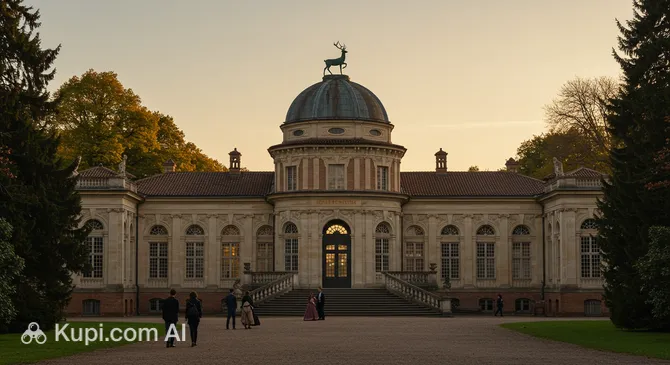
The legacy of the House of Savoy extends to the city's outskirts, where royal residences blend magnificent architecture with expansive parklands. The Hunting Lodge of Stupinigi is a UNESCO World Heritage site located just outside the city. This Rococo masterpiece, topped by a bronze stag, was originally built for royal hunting parties and is surrounded by a vast natural park. Closer to the center, nestled on the hills across the Po River, the Villa della Regina offers a more intimate royal experience with its beautiful Italian gardens and panoramic views over the city.
Hunting Lodge of Stupinigi. Illustration.
Source: Kupi.com AI
Traveler photos:
When you need to escape the urban bustle, the city offers excellent green retreats. While Valentino Park is the most famous, locals often prefer Pellerina Park (Parco della Pellerina) for true relaxation. As the largest park in the city, it features lakes, walking paths, and vast meadows perfect for picnics and sports. It is a genuine slice of nature where you can unwind away from the tourist crowds.
Finally, no description of Turin's museums would be complete without mentioning its devotion to football. The Juventus Museum, located within the Juventus Stadium complex, is a pilgrimage site for sports fans. It chronicles the history of one of Italy's most successful football clubs through trophies, jerseys, and multimedia installations that capture the emotion of the beautiful game.
Getting Around
Turin boasts an efficient and integrated public transport network managed by GTT (Gruppo Torinese Trasporti), designed to make navigating the city straightforward. The backbone of the system is the modern, automated Metro line. It is driverless, fast, and punctual, connecting the two main railway stations, Porta Nuova and Porta Susa, with the Lingotto exhibition center and other key districts. The metro is often the quickest way to cross the city, avoiding surface traffic entirely.
Complementing the metro is a dense web of tram and bus lines that cover every corner of the metropolitan area. Trams are a particularly scenic way to travel through the city's wide boulevards, offering views of the architecture as you move. Buses reach areas where the rails do not, including the hilly neighborhoods across the river. For late-night travelers, the "Night Buster" service operates on weekends, ensuring safe and convenient travel for those enjoying the local nightlife.
The ticketing system is unified, meaning a single ticket works across buses, trams, and the metro. The standard "City 100" ticket is valid for 100 minutes from the first validation, allowing for unlimited transfers on surface transport and one journey on the metro within that timeframe. For tourists, purchasing a Daily Pass or a Multi-day pass (available for 48 or 72 hours) is often the most economical and convenient choice, removing the need to buy single tickets repeatedly.
You can purchase physical tickets at authorized tobacconists (look for the "T" sign), newsstands, and automatic vending machines located inside all metro stations. For a digital approach, the official GTT app allows you to buy and validate tickets directly from your smartphone using NFC technology. It is crucial to remember to validate your paper ticket immediately upon boarding a bus or tram using the yellow or blue machines, or at the turnstiles before entering the metro. Failure to do so can result in significant fines during inspections.
The city also offers unique transport experiences that double as tourist attractions. The Historic Tram Line 7 operates on weekends and holidays, serving as a "moving museum" that loops around the city center using restored carriages from the 1930s. Another highlight is the Sassi-Superga Rack Railway. This historic tramway climbs the steep hillside to the Basilica of Superga, offering a charming ride in vintage carriages and spectacular panoramic views of the city below.
If you prefer alternatives to public transit, official white taxis are readily available. It is customary to find them at designated ranks or book them via phone or app rather than hailing them on the street. For shorter distances, the city is very bike-friendly, with numerous cycle paths and rental services available. Electric scooters and car-sharing services are also widely popular and can be easily accessed via their respective mobile apps for flexible urban mobility.
Accommodation
Where to Stay:
Turin offers a diverse range of accommodation options that cater to every type of traveler, from those seeking royal luxury to backpackers on a budget. The city’s hospitality sector blends historic charm with modern efficiency, featuring everything from grand hotels housed in 18th-century palazzos to contemporary apartments and cozy bed-and-breakfasts. Whether you are visiting for culture, business, or gastronomy, finding a suitable place to stay is relatively easy, though the style of accommodation often varies significantly by neighborhood.
For first-time visitors, the **Centro Storico** (Historic Center) is undoubtedly the most convenient area. Staying here puts you within walking distance of the main attractions and the city's elegant porticoed shopping streets. Hotels in this area are often situated in beautifully renovated historic buildings. Locations near Piazza Castello and the sophisticated Piazza San Carlo are particularly sought after, offering immediate access to museums and historic cafés.
Piazza San Carlo. Illustration.
Source: Kupi.com AI
Traveler photos:
If you prefer a more vibrant and youthful atmosphere, the **San Salvario** district is an excellent choice. Known for its lively nightlife and multicultural vibe, this area is packed with bars, restaurants, and artisan shops. It is located close to the Porta Nuova railway station and the scenic Valentino Park, making it a strategic base for exploring both the city center and the riverbanks. For business travelers or those attending events, the **Lingotto** district to the south offers modern hotels and easy access to the trade fair center and the metro line.
When planning your trip, it is advisable to book your accommodation well in advance, especially if you are visiting during peak seasons like spring or autumn, or during major events such as the ATP Finals or the Terra Madre Salone del Gusto. While Turin has a good supply of rooms, the best value options in the city center tend to fill up quickly.
The price range for accommodation in Turin is generally competitive compared to other major Italian cities like Milan or Rome. Budget travelers can find hostels and guesthouses starting from approximately **€40 to €80** per night. Mid-range hotels typically charge between **€90 and €150**, offering comfortable amenities and good locations. For a luxury experience in a five-star property, expect to pay upwards of **€200** per night. Most bookings can be made easily via major online platforms, though booking directly with smaller establishments can sometimes yield better rates or personalized service.
Nearby Cities
For those looking to explore the surroundings, Turin serves as an excellent base for day trips to several interesting nearby locations. The metropolitan area is rich in history, royal heritage, and cultural landmarks that are easily accessible for a short visit.
One of the most notable destinations is Moncalieri, situated just south of the city on the banks of the Po River. It is famous for the majestic Castello di Moncalieri, a UNESCO World Heritage site and one of the Residences of the Royal House of Savoy. Visitors can explore the charming historic center which climbs up the hill, offering picturesque views and a glimpse into the region's aristocratic past.
Another must-see town is Rivoli, located to the west. It is best known for the Castello di Rivoli, an imposing structure that sits atop a morainic hill. Uniquely, this historic building houses the Museum of Contemporary Art, creating a fascinating contrast between its baroque architecture and the modern avant-garde works inside. The castle grounds also provide a spectacular panoramic view of Turin and the Alps.
City
Population
Distance
San Mauro Torinese
19 048
7 km
Nichelino
47 721
8 km
Moncalieri
57 234
8 km
Venaria Reale
33 564
8 km
Borgaro Torinese
11 931
9 km
These nearby destinations offer a glimpse into the diverse culture and landscapes of the region, making them perfect for extending your travel itinerary beyond the city limits.
Shopping & Souvenirs
Shopping in Turin is an experience that combines retail therapy with architectural admiration. The city is famous for its 18 kilometers of arcades, or porticoes, which allow visitors to browse shop windows comfortably regardless of the weather. From high-end luxury boutiques to historic artisan workshops, the city offers a diverse range of goods, with a particular emphasis on fashion, gastronomy, and antiques.
The heart of the city's shopping scene is undoubtedly Via Roma, an elegant street that stretches from the main railway station to the Royal Palace. Here, you will find prestigious international brands and designer labels housed in imposing buildings. For those seeking high-street fashion and trendy chains, the pedestrian-only Via Garibaldi is one of the longest shopping streets in Europe and a favorite among locals. Another key area is the sophisticated Via Lagrange, which has recently emerged as a hub for luxury fashion and fine tailoring.
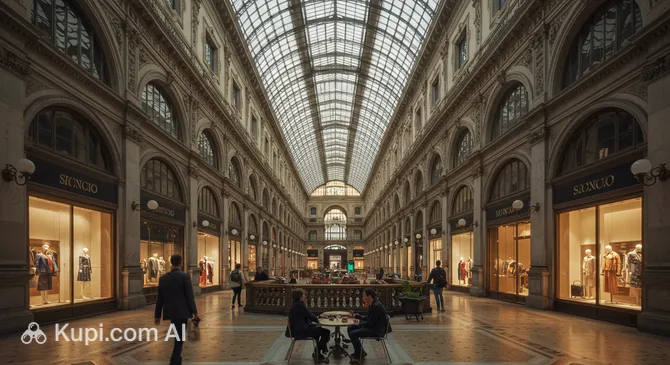
For a shopping experience enclosed in history, the Galleria San Federico is a must-visit. Built in the 1930s, this T-shaped architectural gem features soaring glass roofs and marble floors, housing a historic cinema, elegant offices, and upscale shops. It captures the refined soul of the city perfectly.
Galleria San Federico. Illustration.
Source: Kupi.com AI
Traveler photos:
If you prefer a modern, all-in-one shopping destination, the Le Gru Shopping Center is located just outside the city center in Grugliasco. As one of the largest malls in the region, it hosts over 180 stores ranging from electronics to clothing, along with a wide selection of dining options, making it convenient for a full day of shopping.
Markets are an integral part of daily life here. The Porta Palazzo market is the largest open-air market in Europe, offering an explosion of colors and scents with its fresh produce, cheeses, and clothing stalls. Nearby, the historic Balon district hosts a famous flea market every Saturday, which expands into the "Gran Balon" antique market on the second Sunday of every month, attracting collectors from all over.
When it comes to souvenirs, Turin offers exquisite local products. The city is the capital of chocolate, so a box of Gianduiotti (hazelnut chocolates) is the classic gift to bring home. A bottle of Vermouth, the aromatic fortified wine invented here, is another excellent choice. For football fans, merchandise from the local teams is widely available and popular.
Most shops in the city center are open from 10:00 AM to 7:30 PM. While major chains and department stores stay open all day, smaller boutiques may close for a lunch break between 1:00 PM and 3:30 PM, especially on Mondays. Credit and debit cards are widely accepted, though having some cash for markets is advisable.
Travelers residing outside the European Union are eligible for a VAT refund on purchases exceeding a certain amount (typically around €154.94) in a single store. Look for the "Tax Free" sign in shop windows and ask for the refund form at the checkout to claim your tax back at the airport.