Support

Turin Airport

About the Airport

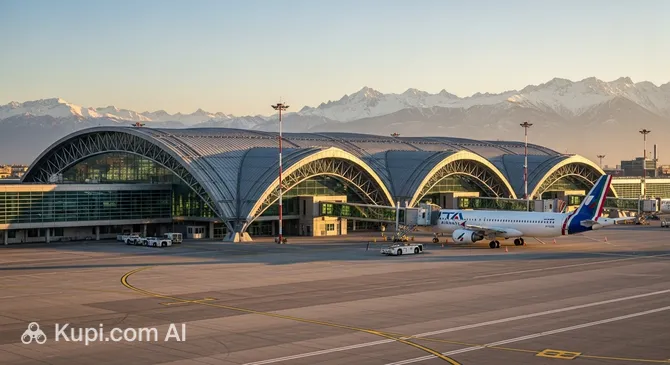
Turin Airport. Source: Kupi.com Binoculars

Turin Airport, also known as Sandro Pertini Caselle Airport, is not merely a transport hub, but a true gateway to the Italian Alps and the gastronomic region of Piedmont. Located at the foot of the mountains, it immediately sets travellers in the mood for winter sports or a cultural retreat in royal residences. Thanks to its compact size and well-thought-out logistics, this airport eliminates the bustle of the capital, offering a cosy and calm start to your Italian adventure.

IATA Code TRN
ICAO Code LIMF
City Turin
Distance to Centre ~16 km
Status International
Passengers per Year over 4.5 million
Schedule Available on the official website

Features and Advantages of the Airport

Turin Airport is renowned for its status as a major hub for winter sports enthusiasts. During the season, direct transfers operate from here to the famous "Milky Way" (Via Lattea) ski resorts and the Olympic slopes of Sestriere, making it an ideal entry point for skiers and snowboarders. The terminal was significantly updated for the 2006 Olympics and has repeatedly received awards as the best European airport in its category.

The infrastructure is thought out to the smallest detail: a single terminal allows you to quickly go through all formalities without long transfers. Inside, travellers will find shops with Piedmontese delicacies — an excellent opportunity to purchase the famous Turin chocolate or local beverages before departure. You can reach the city in just half an hour by bus or taxi, making the trip as comfortable as possible.

Contact Information

  • Official Website: www.aeroportoditorino.it
  • Help Desk Phone: +39 011 567 6361 / +39 011 567 6362 (daily from 08:00 to 20:00)
  • Address: Strada San Maurizio, 12, 10072 Caselle Torinese TO, Italy
  • Email: For general inquiries and feedback, it is recommended to use the contact form on the airport's official website.
  • Social Media: The airport has official pages on Facebook, X (formerly Twitter), Instagram, and LinkedIn, where news and current information are published.
  • Lost & Found: If items are lost in the terminal, please contact the Oggetti Smarriti office. If your luggage has not arrived or is damaged, you must immediately contact your airline's representative at the airport.
  • Passenger Support Contacts: For assistance regarding your flight, schedule, or airport services, you may contact the main help desk numbers.

How to Get to the Airport

There are several convenient ways to get to the international airport of Turin (TRN), located approximately 16 kilometres northwest of the city centre. The choice of the optimal option depends on your budget, amount of luggage, and personal preferences. The transport system in this part of Italy is well developed, allowing you to easily plan your route.

Public Transport is the most popular and economical method. The main carrier is the bus company Arriva (formerly SADEM), whose shuttles run between the airport and the centre of Turin. Buses depart every 15-30 minutes and travel to the city's main railway stations — Porta Nuova and Porta Susa. The journey takes approximately 45-50 minutes, and the ticket cost is about 7-8 Euros. There is also a rail connection: the GTT train connects the airport to the Dora GTT station in Turin. The train journey takes about 20 minutes, but from the Dora station, you will likely need to transfer to other transport to reach the city centre.

Taxis and Transfers offer maximum comfort, especially if you are travelling with family or a large number of suitcases. A taxi ride from the city centre to the airport will take about 30 minutes, depending on traffic conditions. The cost is generally fixed and will be approximately 30-40 Euros. Taxi ranks are located directly outside the arrivals terminal exit. For greater peace of mind, you can book a private transfer in advance — the driver will meet you with a sign and assist with luggage.

If you plan to actively travel around the Piedmont region, car rental is an excellent solution. Offices of all major international and local rental companies are located within the airport building. This gives you freedom of movement and the opportunity to explore the surroundings of Turin at your own pace. For those arriving at the airport in their own vehicle, both short-term and long-term parking facilities are provided. A multi-level covered car park is located in immediate proximity to the terminal.

Terminals and Map

The airport of Turin (TRN), also known as Sandro Pertini Caselle Airport, represents a modern and well-organised complex. Its key feature is a single passenger terminal, which significantly simplifies navigation for travellers. You will not have to worry about transfers between buildings or using shuttles for connections.

The structure of the terminal is logical and intuitive. The building is divided into three main levels:

  • Ground Floor (Piano Terra): This is the arrivals area. Here you will find baggage claim belts, customs control counters, car rental points, tourist information offices, and exits to public transport and taxis.
  • First Floor (Primo Piano): The departures area. You enter here when arriving at the airport. This level houses airline check-in counters and baggage drop-off points.
  • Second Floor (Secondo Piano): The control and boarding area. After check-in, you proceed to this level for security screening. Immediately beyond it opens a spacious area with shops, restaurants, cafes, and boarding gates.

Thanks to its compactness and well-thought-out layout, orienting yourself in Turin Airport is very easy. There are clear signs in Italian and English everywhere. Navigation will not cause difficulties even for those visiting for the first time. To complete all formalities — check-in, baggage drop, and security control — it is recommended to arrive at the airport 2-2.5 hours before international flights and 1.5-2 hours before flights within Italy and the Schengen zone. This time is usually more than sufficient to go through all procedures without haste and enjoy a cup of coffee before the flight.

Airport History

The history of Turin Airport (TRN), officially known as Aeroporto di Torino-Caselle, is closely linked to the industrial and cultural development of the Piedmont region. The airport was opened in 1953 to serve the growing economic needs of the capital of the Italian automotive industry and to become an important transport hub in the north of Italy.

The first decades of its operation were marked by a gradual increase in passenger traffic and cargo transportation. However, a real breakthrough in development occurred in the run-up to two landmark events. First, a partial modernisation was carried out for the 1990 Football World Cup, but the key moment that defined the modern look of the airport was the 2006 Winter Olympic Games.

As part of the preparation for the Olympics, the airport underwent a massive and impressive transformation. A new, more spacious and modern passenger terminal was built, as well as a railway station connecting the airport with the centre of Turin. This reconstruction allowed the airport not only to brilliantly welcome thousands of athletes, journalists, and fans from all over the world but also laid the foundation for further growth. The infrastructure was completely renewed, which significantly increased capacity and comfort for passengers.

In subsequent years, the airport continued to develop, adapting to new requirements. It became an important hub for low-cost airlines and a key access point to popular Alpine ski resorts. One interesting fact is that the airport bears the name of Sandro Pertini, the seventh President of the Italian Republic, highlighting its national significance. Today, Turin Airport is a modern complex that successfully handles both business travellers and tourists attracted by the region's cultural heritage and natural beauty.

Services and Amenities

Turin Airport (TRN) offers its guests a wide range of services to make waiting for a flight as comfortable and productive as possible. Regardless of the purpose of your trip, you will find everything you need here, from places for rest and work to shops and restaurants.

For those wishing to have a snack or go shopping, the terminal features numerous cafes, bars, and restaurants offering both Italian cuisine and international snacks. In the shops, including the Duty Free zone, you can purchase souvenirs, perfumes, clothing from famous brands, and of course, famous Piedmontese delicacies — from chocolate to local beverages.

Free Wi-Fi is available throughout the airport, allowing you to stay connected or work while waiting for departure. Numerous power outlets and USB ports are provided for charging electronic devices. Passengers preferring enhanced comfort can use the services of VIP lounges, where snacks, beverages, and fresh press are offered in a quiet atmosphere.

Financial services are represented by bank branches, ATMs, and currency exchange points. In case of necessity, passengers can contact the medical point for first aid. Special mother and child rooms are equipped for travellers with children, and some zones have play areas so that young passengers do not get bored.

The airport is fully adapted for passengers with reduced mobility. Special assistance (Sala Amica) is provided, and ramps, lifts, and equipped restrooms are available. It is recommended to book the assistance service in advance through the airline. For business travellers, conference rooms and business centres are available where you can hold a meeting or work in silence. If you have an early departure or a long layover, several hotels of various price categories are located in the immediate vicinity of the terminal.

Where to Eat

The airport of Turin (TRN) offers travellers a decent selection of establishments where you can have a snack or a full lunch before departure. The gastronomic concept of the airport emphasises the quality and traditions of the cuisine of Italy and, in particular, the Piedmont region, allowing guests to enjoy local flavours until the very last moment of their stay.

In the public area (Landside), before security control, several cosy cafes are located. This is an ideal place for those who arrived at the airport early or are seeing off friends and family. Here you can drink a cup of aromatic coffee with fresh pastries, such as a croissant (cornetto), or grab a light sandwich.

The main part of the restaurants and bars is located in the secure area (Airside), after passport control and screening. For those who have time and want to enjoy a full meal, restaurants operate here offering classic Italian dishes: pasta, risotto, and oven-baked pizza. This is an excellent opportunity to try local cuisine without leaving the terminal. The price range is average for European airports — be prepared to pay slightly more for a main course than in the city.

Numerous bars and fast-food points are perfect for a quick snack. Here you will find a wide selection of panini (hot Italian sandwiches) with various fillings, focaccia, as well as sweets and desserts. Of course, one cannot miss the chance to drink a real Italian espresso or cappuccino. Some shops offer local delicacies, such as the famous Turin Gianduja chocolate, which makes for an excellent edible souvenir.

Most establishments are open throughout the day, adapting to the main flight schedule. Regarding special dietary needs, vegetarians will easily find suitable options, for example, pasta with tomato sauce, vegetable salads, or "Margherita" pizza. It is best to verify the availability of halal, gluten-free, or vegan dishes directly at each cafe or restaurant.

Travel Tips

Planning a trip through Turin Airport becomes significantly easier if you consider a few useful tips. To avoid rushing, arrive at the airport in advance: 2 hours before flights within the Schengen zone and at least 3 hours before international flights. This will give you enough time to go through all procedures calmly. Try to check in online to save time at the airline counters. Security control here is standard for Europe, but queues are possible during peak hours, so a little extra time won't hurt.

When choosing a seat on a plane departing from Turin, note that in clear weather, magnificent views of the Alps open up from the aircraft. A window seat (A or F) will give you unforgettable impressions. If comfort and the ability to stretch your legs are more important to you, choose an aisle seat. Regarding hand luggage, remember the standard restrictions on carrying liquids — no more than 100 ml in one container, packed in a transparent bag. Please note that some soft cheeses or pastes that you might buy in Italy may be classified as liquids by customs services.

Passengers with a connection in Turin should carefully follow the "Transiti/Connecting Flights" signs. If you are flying with a single airline, your luggage will likely be transferred automatically, but it is always better to clarify this when checking in for the first flight. When passing through customs control, travellers from non-EU countries must go through the red or green channel depending on the presence of goods to declare. For those arriving from EU countries, the procedure is usually formal and quick.

To save money, book a transfer to or from the city in advance online — this is often cheaper than taking a taxi on the spot. You can also use the shuttle bus, which is a more budget-friendly option. In case of a flight delay, first check the information on the departure board and your airline's website. Learn about your rights as a passenger — in the EU they are well protected. Do not hesitate to contact the airline information desk for clarifications, meal vouchers, or hotel accommodation in case of long delays.

Reached the end of the page?

That means the route is fully explored