Support

Marseille Provence Airport

About the Airport

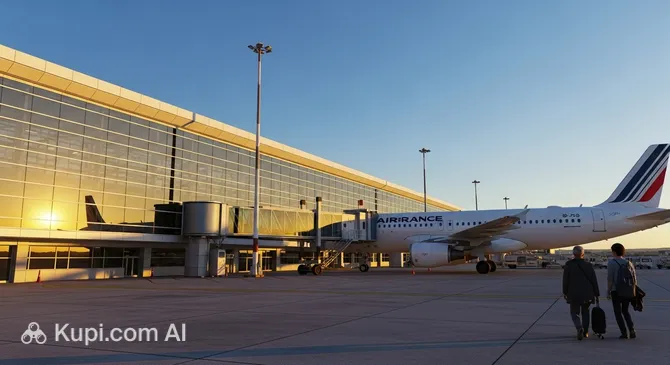
Marseille Provence Airport. Source: Kupi.com Binoculars

Marseille Provence Airport is not merely a transport hub, but a true southern gateway to France, where the journey begins with the scent of lavender and a salty sea breeze. Located on the shores of the Etang de Berre, it welcomes guests with bright sunshine and unique architecture that combines modern design with the relaxed atmosphere of Provence. This airport perfectly conveys the spirit of the region: here, the bustle of a major hub harmoniously coexists with the leisurely pace of the southern lifestyle, offering tourists a comfortable start for exploring the Côte d'Azur and the picturesque villages of the Luberon.

IATA Code MRS
ICAO Code LFML
City Marseille
Distance to Centre ~27 km
Status International
Annual Passengers ~11.2 million (2024)
Schedule Available on the official website

Airport Features and Highlights

Marseille Provence Airport stands out for its convenient zoning and recent large-scale renovation. The main pride of the updated complex is the "Heart of the Airport" (Cœur d'Aérogare) — a bright and spacious building designed by the famous Foster + Partners bureau, which connects the historic halls of Terminal 1. Here, passengers are greeted by panoramic windows, green zones, and a wide selection of shops where you can buy authentic souvenirs: from Marseille soap to traditional calissons sweets.

For budget travellers, a separate terminal, MP2, operates specifically for low-cost carriers. It features a simple and functional design, allowing for quick completion of all formalities. The airport is also renowned for excellent transport accessibility: high-speed shuttles (Navette) depart for the Marseille-Saint-Charles railway station every 10–15 minutes, and a special bus connects the terminals to the Vitrolles train station, from where you can easily reach other cities in the region by train.

Contact Information

For your convenience, we have compiled the main contact information for Marseille Provence Airport (MRS). We recommend checking the official website for the most up-to-date data before your trip.

  • Official Website: The most reliable source of information is the airport's official website. Here you will find flight schedules, terminal maps, and detailed information about services. Website address: www.marseille.aeroport.fr.
  • Information Desk Phone: For general inquiries related to airport operations, you can call: +33 820 811 414 (toll call) or +33 4 42 14 14 14.
  • Airport Address: Aéroport Marseille Provence, 13727 Marignane cedex, France.
  • Email: The airport does not provide a general email address for passengers. To contact specific departments, it is recommended to use the dedicated contact forms available on the official website.
  • Social Media: You can follow news, special offers, and operational updates on the airport's official pages on popular social networks such as Facebook, X (formerly Twitter), and Instagram.
  • Lost Luggage Information: In case of loss or damage to checked baggage, first contact your airline's baggage tracing service. If you have left personal items within the terminal building, you should contact the Lost and Found service (Objets Trouvés), contact details for which are listed on the airport website.
  • Passenger Support Service: Assistance for passengers, including those with reduced mobility, can be requested through your airline when booking your ticket or by approaching the information desks directly in the airport terminals.

How to Get to the Airport

Marseille Provence Airport (MRS) is located approximately 27 kilometres northwest of the centre of Marseille, making it a convenient transport hub for travellers arriving in the region. There are several ways to get from the airport to the city and back, and the choice depends on your budget, time, and desired level of comfort.

Public Transport:

The most budget-friendly and popular option is the shuttle bus (Navette) L91, which directly connects the airport with Marseille's main railway station, Saint-Charles. The journey takes about 25–30 minutes excluding traffic, and buses run at intervals of 15–20 minutes. This is the optimal choice in terms of price and speed.

An alternative route is by train. A free shuttle runs from the airport terminals to the nearest railway station, Vitrolles-Aéroport Marseille Provence (travel time — 5 minutes). From there, regional TER trains will take you to Saint-Charles station. This method may prove faster during peak hours.

Taxi and Transfer:

For those who value comfort or are travelling with heavy luggage, a taxi is the ideal option. Taxi ranks are located at the terminal exits. A trip to the centre of Marseille will cost approximately 50–60 Euros during the day; rates are higher at night and on public holidays. To save money and ensure a fixed price, you can book a transfer service in advance.

Car Rental and Parking:

If you plan to explore the picturesque corners of Provence, renting a car is the best solution. Desks of leading international and local rental companies are located within the airport building. For those arriving in their own car, various parking zones are available: from express parking at the terminals to more affordable long-term car parks connected to the terminals by free buses.

It is also worth noting that other airports may be convenient for travelling around the south of France. For example, Avignon-Caumont Airport is excellent for starting a trip through the heart of Provence, while Montpellier-Méditerranée Airport or Toulon-Hyères Airport can serve as convenient starting points for exploring the coast.

Terminals and Map

Marseille Provence Airport (MRS) has a simple and clear structure consisting of two main passenger terminals: Terminal 1 (T1) and Terminal 2 (T2), also known under the brand mp².

Terminal 1 is the main and largest building of the airport. It serves flights for the majority of traditional and network airlines. This terminal is divided into two halls: Hall A is used for international flights outside the Schengen area, while Hall B is for domestic flights within France and other Schengen countries. Terminal 1 houses the majority of shops, restaurants, and business lounges.

Terminal 2 (mp²) was one of the first terminals in Europe built specifically for budget airlines (low-cost carriers). It is distinguished by a minimalist design and a focus on speed of service. Everything here is organised for maximum efficiency: from check-in counters to boarding gates, where boarding is often done on foot across the tarmac. The selection of services here is more modest than in the main terminal.

Navigation between the terminals is very simple. They are located in close proximity to each other, and walking between them takes no more than 5 minutes via a convenient covered corridor. The airport layout is logical: arrival zones are located on the ground floor in both terminals. Departure zones in Terminal 1 are located on the first floor, while in Terminal 2 they are on the same ground floor as check-in.

It is recommended to arrive 2 hours before departure for domestic and Schengen flights and 3 hours before international flights to complete check-in and security checks. Although procedures in T2 can be faster due to the simple layout, queues may arise during peak hours. A crucial tip: be sure to check your ticket in advance to see which terminal — T1 or T2 — your flight operates from, to avoid confusion and rushing.

Airport History

The history of Marseille Provence Airport is a fascinating journey from a hydroport to a modern international hub. Its story began in 1922, when a seaplane base was opened on the shores of the Etang de Berre lagoon. This location was strategically important and unique for its time, making Marseille one of the pioneers of civil aviation in France.

World War II caused serious damage to the infrastructure, but the post-war years became a period of active restoration and transformation. A key moment was the construction of a new terminal, which opened in 1961. Its design was developed by the renowned architect Fernand Pouillon, and the building is still considered an important example of modernist architecture. The airport completely reoriented itself to handle land-based aircraft, opening a new chapter in its development.

In subsequent decades, the airport constantly expanded to meet growing passenger traffic. Its history also contains dramatic pages: in December 1994, it became the scene of the conclusion of the operation to free hostages from Air France Flight 8969. This event drew worldwide attention to the airport and went down in the history of counter-terrorism.

The beginning of the 21st century marked a new era of modernisation. In 2006, terminal mp2 was opened — one of the first in Europe designed specifically to serve budget airlines. This step made Marseille Provence Airport a pioneer in the development of low-cost travel in the region and significantly increased its attractiveness to tourists. Since then, the airport continues to update itself, implementing large-scale projects to expand and improve service quality.

Among interesting facts is its initial specialisation in seaplanes, which was rare even at the dawn of aviation. The airport has repeatedly set records for passenger traffic in the south of France, and its ability to adapt to new trends, such as the emergence of low-cost carriers, confirms its status as one of the country's most dynamically developing aviation hubs.

Services and Amenities

Marseille Provence Airport (MRS) offers passengers a wide range of services designed to make their stay in the terminals as comfortable and convenient as possible. Regardless of the purpose of your trip, you will find everything necessary for a pleasant wait for your flight.

For gourmets and shopping enthusiasts, numerous restaurants, cafés, and dining spots operate within the airport. Here you can grab a quick bite at well-known chain establishments or enjoy local cuisine in a cosy setting. Shops, including a spacious Duty Free area, offer a rich selection of perfumes, cosmetics, souvenirs, and French delicacies.

Passengers wishing to rest in a quieter atmosphere can use the services of VIP lounges. Free Wi-Fi is available to all travellers throughout the terminals, and numerous charging stations for gadgets allow you to stay connected at all times. Financial matters can be easily resolved at bank branches or currency exchange points.

For families with children, nursing rooms and play areas are provided. Passengers with disabilities are provided with all necessary assistance and escort services; a barrier-free environment has been created for their convenience. A medical centre is available if needed. For business travellers, modern conference rooms and business centres are equipped. If you have a long layover or an early morning flight, several comfortable hotels are located within walking distance of the terminals.

Where to Eat

Marseille Provence Airport (MRS) offers passengers a wide selection of establishments to suit every taste and budget. Here you will find both popular international chains and cafés with an authentic atmosphere reflecting the culinary traditions of Marseille and the whole of Provence. Regardless of whether you are rushing to board or have time to relax, you will easily find an option to experience the gastronomy of France.

In the public area, before security control, there are cafés ideally suited for a quick snack or meeting with people seeing you off. You can visit classic French bakeries such as Brioche Dorée or Paul, where you will be offered fresh pastries, sandwiches, and aromatic coffee. This is an excellent choice for a light breakfast or lunch.

The main concentration of restaurants and lounges is located in the secure area, accessible after passing security checks. Terminal 1 (Halls A and B) offers the largest selection. Here, full-service restaurants operate where you can try French and Mediterranean cuisine, as well as lounges inviting you to relax before your flight. For example, at Chefs en Provence, dishes from renowned chefs of the region are presented.

If you need a quick snack, numerous kiosks and cafés are at your service. For a more substantial lunch, it is worth choosing one of the restaurants in the departure zone. Be sure to take the opportunity to try some local specialities, for example, a salad with Provençal olives and goat cheese or the famous "Tarte Tropézienne" dessert, which is a hallmark of the Côte d'Azur. For those who prefer more familiar food, popular fast-food chains also operate.

Regarding special dietary preferences, most establishments offer vegetarian options (salads, vegetable sandwiches). Gluten-free and vegan dishes may be harder to find, so it is recommended to study the menu in advance or ask the staff. Prices at the airport are expectedly higher than in the city: the average bill for lunch in a restaurant is about 25-40 Euros, and a snack in a café is 10-15 Euros. Most establishments open early in the morning and work until the last evening flight.

Tips for Travellers

To ensure your journey through Marseille Provence Airport goes as smoothly as possible, take advantage of our tips. This is a modern and convenient hub serving both domestic and international flights, and a little preparation will make your experience even more pleasant.

Arrival Time and Check-in. We recommend arriving at the airport 2-3 hours before international flights and 1.5-2 hours before flights within France and the Schengen area. During peak seasons (summer and holidays), it is better to allow extra time. To save time, complete online check-in on your airline's website and save the boarding pass on your phone. If you are travelling with hand luggage only, this will allow you to go straight to security control.

Hand Luggage and Seat Selection. Remember the standard rules for carrying liquids: all containers must be no more than 100 ml in volume and packed in a single transparent bag. Sharp objects and flammable substances are prohibited. When choosing a seat on the plane, if possible, select a window seat on the coastal side — in good weather during take-off or landing, picturesque views of the Mediterranean Sea open up.

Transfers and Customs Control. If you have a connecting flight in Marseille, follow the signs for "Correspondances" / "Transfers". The airport is quite compact, and changing planes usually does not take much time. However, if you are arriving from a country outside the Schengen area and flying further into Schengen, you will need to pass through passport control. Customs control for flights within the EU is usually a formality (green channel), but be prepared for random checks.

Savings and Unforeseen Situations. To save money, book a taxi or transfer online in advance. You can also bring an empty water bottle and fill it at drinking fountains after passing security control. In case of a flight delay, first contact your airline representative for information on further actions and potential vouchers for food or accommodation. The waiting lounges have free Wi-Fi, cafés, and shops that will help pass the time.

Reached the end of the page?

That means the route is fully explored