Support

Toulouse-Blagnac Airport

About the Airport

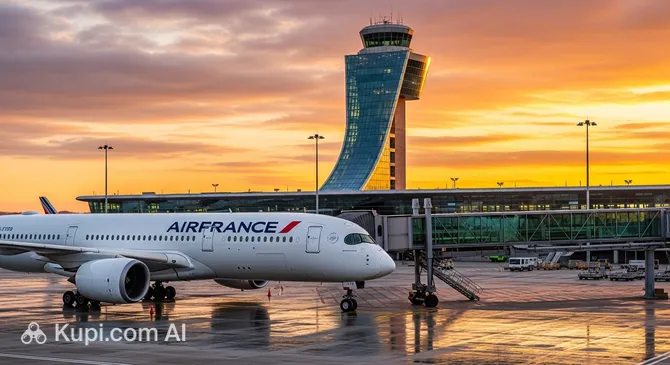
Toulouse-Blagnac Airport. Source: Kupi.com Binoculars

Toulouse-Blagnac Airport is not merely a transport hub, but a true gateway to the "Pink City" and the aviation capital of Europe. Upon landing, observant travellers may notice the massive hangars of the Airbus factory and, with a bit of luck, the unique Beluga aircraft parked nearby, as this is where legendary liners are born. The terminal combines French charm with advanced technology, offering guests a cosy atmosphere and an incredibly close proximity to the city centre, which is a rarity for major international airports.

IATA Code TLS
ICAO Code LFBO
City Toulouse (Blagnac)
Distance to Centre ~7 km
Status International
Annual Passengers ~7.8 million (2023 data)
Schedule Live flight board on the official website

Features and Advantages of the Airport:

The main highlight of Toulouse-Blagnac is its inseparable link to aviation manufacturing. The airport shares its runways with the Airbus test centre, so passengers often witness test flights of the newest aircraft models directly from the terminal windows or the departure lounge.

Logistically, the airport is incredibly convenient. It is located just a 15–20 minute drive from the Place du Capitole. For transfers, it is convenient to use the dedicated shuttle bus (Navette Aéroport), which runs to the Matabiau railway station, or a taxi. Inside, the single terminal is divided into four halls (A, B, C, and D), making navigation intuitive even for first-time visitors.

The infrastructure includes everything necessary for a comfortable wait: from shops selling local delicacies (be sure to look for violet-themed souvenirs and regional specialities) to unlimited Wi-Fi. The compact nature of the terminal allows for quick completion of all formalities, leaving more time to explore the Occitanie region.

Contact Information

  • Official Website: www.toulouse.aeroport.fr. The site provides the most up-to-date information on flight schedules, parking, services, and security regulations.
  • Information Desk Phone: +33 825 380 000. Please note that calls to numbers starting with 08 in France may incur a charge.
  • Airport Address: Aéroport Toulouse-Blagnac, CS 90103, 31703 Blagnac Cedex, France.
  • Email: To contact airport representatives, it is recommended to use the dedicated contact form available on the official website in the "Contacts" section.
  • Social Media: You can follow news and operational updates on the airport's official pages on Facebook, X (formerly Twitter), and Instagram.
  • Lost Luggage Information: In case of lost checked baggage, you must immediately contact your airline's representative. If you have left personal items within the terminal building, you should contact the Lost and Found service (Service Objets Trouvés), the details of which are listed on the airport website.
  • Passenger Support Contacts: For general inquiries and assistance, you can contact the information desk by phone or via the feedback form on the website.

How to Get to the Airport

Getting to Toulouse-Blagnac Airport (TLS) from the centre of Toulouse is straightforward—the city's transport system offers several convenient and fast options to suit any budget. The airport is located just 8 km northwest of the city centre, making the journey short and predictable.

Public Transport

This is the most popular and economical method. You have two main options:

  • Tram Line T2: A direct and reliable route connecting the Palais de Justice station in the city centre directly to the airport terminal. The journey takes about 30-35 minutes. This is an excellent choice if you are travelling light and wish to avoid traffic. The fare is the same as a standard Tisséo public transport ticket.
  • Shuttle Bus (Navette Aéroport): A special express bus runs between the Matabiau railway station and the airport, making several stops at key points in the city. Travel time is between 20 to 45 minutes depending on traffic conditions. The shuttle ticket costs more than standard transport, but this is compensated by speed and comfort, especially if you have significant luggage.

Taxi and Transfer

For maximum comfort, especially if travelling with family or at night, a taxi is the ideal option. A trip from the city centre will take approximately 15-25 minutes. The cost varies but is usually in the range of 25-35 Euros. Ride-hailing app services (such as Uber) are also available and may offer competitive rates. For complete peace of mind, you can book a private transfer in advance—the driver will meet you at the designated spot with a name sign.

By Car and Parking

If you are travelling in your own or a rental car, the airport is easily accessible via the ring road (périphérique) by following the signs. Toulouse-Blagnac Airport offers a wide range of parking options: from express drop-off zones to covered short-term car parks (P0, P1, P2) and more budget-friendly long-term lots (P5, P6). It is recommended to book your parking space online in advance—this often allows for significant savings.

Alternative Airports Nearby

If your route through the south of France is not limited to Toulouse, it is worth considering other airports in the region. For example, Carcassonne Airport (CCF) is perfect for visiting the famous medieval fortress, while Tarbes-Lourdes-Pyrénées Airport (LDE) serves popular destinations in the Pyrenees. Other nearby options include airports in Castres (DCM), Rodez (RDZ), and Pau (PUF), expanding your opportunities for travelling through picturesque Occitanie.

Terminals and Map

Toulouse-Blagnac Airport (TLS) is arranged very logically and conveniently for passengers. In fact, it is one large terminal which, for ease of navigation, is divided into four interconnected halls: A, B, C, and D. Thanks to this unified structure, moving between halls does not require going outside or using shuttles—simply follow the signs inside the building. All zones are easily accessible on foot.

Each hall has its specific focus, although flight distribution can change. Hall A is often used for regional and budget airlines. Hall B historically serves many domestic flights, including Air France. Hall C is multi-functional and handles both Schengen and some international flights. Hall D is the newest and most spacious, serving the majority of long-haul and international destinations, offering passengers modern amenities.

Departure zones are located on the upper level, while the arrival zone is on the lower level. Check-in counters are situated in the general hall before the entrance to the respective security area. Navigation through the airport is intuitive thanks to clear signage in French and English. After passing security control, passengers enter a common airside zone with shops and restaurants, from where there is access to the boarding gates of each hall.

The time required to complete formalities is usually short but may increase during morning and evening peak hours, as well as during the height of the tourist season. It is recommended to arrive at the airport at least 2 hours before domestic and Schengen flights and 3 hours before international flights. To avoid confusion, always check your hall number on the departure boards or your boarding pass and follow the corresponding signs.

Airport History

The history of Toulouse-Blagnac Airport is inextricably linked to the history of aviation in France. Although the first airfields in the region appeared in the early 20th century, the current site in Blagnac began development in 1939. Initially used for military purposes, its role began to shift towards civil aviation after World War II. The official opening of the first passenger terminal took place in 1953, marking the starting point for the airport's transformation into a modern passenger hub.

A key factor in the airport's development was its location in the heart of the aviation industry. It was here, in close proximity to the assembly lines, that legendary aircraft underwent testing and made their maiden flights. Toulouse Airport entered world history as the site of the first flight of the supersonic passenger liner Concorde in 1969 and the world's largest passenger aircraft, the Airbus A380, in 2005. This close connection with Airbus continues to define the unique status of the airport today, serving not only for passenger transport but also as a centre for the delivery and testing of the newest aircraft.

With the growth of passenger traffic, the airport has been repeatedly expanded and modernised. Important milestones included the opening of Hall A in 1978, followed by Hall B in 1993. The most significant reconstruction occurred in the late 2000s, when the spacious and modern Hall D was commissioned in 2010, significantly increasing capacity. Recent years have also been marked by work to optimise space, create a single security screening area, and update commercial zones to enhance passenger comfort.

An interesting fact: Toulouse-Blagnac Airport is one of the few places in the world where, from the terminal window, you can watch the taxiing and take-off of brand-new aircraft that have not yet been handed over to airlines. Its proximity to the Airbus factories and the Aeroscopia museum makes it not just a transport facility, but a real attraction for anyone passionate about the history and future of aviation.

Services and Facilities

Toulouse-Blagnac Airport (TLS) offers passengers a wide range of services to make waiting for a flight as comfortable as possible. For those feeling hungry, there are numerous options: from full-service restaurants where you can enjoy French cuisine to cosy cafes and fast-food outlets. Before departure, you can visit the shops: the Duty Free zone offers a classic range of perfumes, cosmetics, and international brands, while other boutiques sell souvenirs, fashion, and delicacies from the Occitanie region.

For travellers who value privacy and enhanced comfort, the La Croix du Sud VIP Lounge is available. Here you can relax in a quiet atmosphere, enjoy complimentary drinks and snacks, and read the latest press. Free Wi-Fi is available throughout the terminal, and numerous charging stations for gadgets ensure you stay connected. For business people, there is a business centre and meeting rooms where you can hold a meeting or work in silence.

Practical aspects are also well thought out at Toulouse Airport. Passengers have access to ATMs and currency exchange points. In case of need, first aid is available at the medical centre. Families with children will appreciate the play areas and baby care rooms equipped with everything necessary for looking after little ones. Passengers with reduced mobility are provided with special assistance: airport staff will help with movement around the terminal, passing through controls, and boarding the aircraft.

If you have an early flight or a long layover, you can stay at one of the hotels located in the immediate vicinity of the terminal. Some of them, such as the NH Toulouse Airport, are located right within the airport complex, allowing you to reach the check-in desk in a matter of minutes. This is a convenient solution that saves time and energy before a flight.

Where to Eat

Toulouse-Blagnac Airport (TLS) offers passengers diverse dining opportunities to suit various tastes and budgets. Whether you are looking for a quick snack before departure or wish to enjoy a full lunch in the style of South-West France, you will find a suitable establishment both in the public area and after passing security control.

In the Public Area (Landside), before security control, there are several cafes and restaurants. This is a convenient option for those seeing someone off or arriving at the airport early. Here you can have coffee with fresh pastries at a bakery, such as Paul, or grab a bite at fast-food outlets. Prices here are generally slightly lower than in the departure zone.

After Security (Airside), the choice becomes even wider. In the various departure halls (Halls A, B, C, D), there are bars, coffee shops, and restaurants. For a quick snack, sandwich bars and coffee shops like Starbucks are ideal. If you have time, pay attention to restaurants offering local cuisine. For example, at the J'Go restaurant, you can try dishes featuring duck or famous Toulouse specialities, allowing you to enjoy the region's gastronomy right up until your departure.

Regarding special dietary needs, many establishments offer vegetarian dishes, such as salads or vegetable sandwiches. Finding certified gluten-free, Halal, or vegan options may be more limited; however, staff are usually willing to assist and provide information about the ingredients of dishes. It is recommended to check for such options directly at the cafe or restaurant. Most establishments operate according to the flight schedule, opening early in the morning and closing after the departure of the last aircraft.

Travel Tips

To ensure your journey through Toulouse-Blagnac Airport goes as smoothly as possible, make use of these tips. We recommend arriving at the airport at least 2 hours before departure for domestic and Schengen flights, and 3 hours for international flights. During school holidays and summer vacations, it is best to allow extra time for passing through controls.

To save time, complete check-in online and save the boarding pass on your smartphone. If you are travelling without checked luggage, this allows you to head straight to the security checkpoint. When passing through security, remember that all liquids in hand luggage must be in containers of no more than 100 ml and packed in a single transparent bag, and laptops and tablets will need to be removed from your bag.

When choosing a seat on the plane, consider your priorities. Window seats will offer you beautiful views of Toulouse and the surroundings, while aisle seats provide more freedom of movement. If you have a short connection, choose seats in the front part of the cabin to be among the first to disembark.

It is strictly forbidden to carry sharp objects, flammable substances, and liquids in containers exceeding 100 ml in hand luggage. Always check the current baggage allowance on your airline's website. To save money, bring an empty water bottle with you and fill it at drinking fountains after passing security.

Passengers with connecting flights should clarify in advance whether their luggage will be automatically transferred to the next flight. At the airport, follow the "Correspondances" (Connections) signs. If you are flying from a non-Schengen country to another Schengen country, you will have to pass passport control, so factor in extra time for this.

Customs control when entering France from non-EU countries operates on a "Red" and "Green" channel system. If you have goods to declare, choose the Red channel. Otherwise, choose Green. Familiarise yourself with customs regulations in advance to avoid unpleasant surprises.

In the event of a flight delay or cancellation, first contact your airline's representative. Depending on the length of the wait, you may be provided with vouchers for meals or even hotel accommodation. Be sure to keep all receipts for necessary expenses to claim compensation later.

Reached the end of the page?

That means the route is fully explored