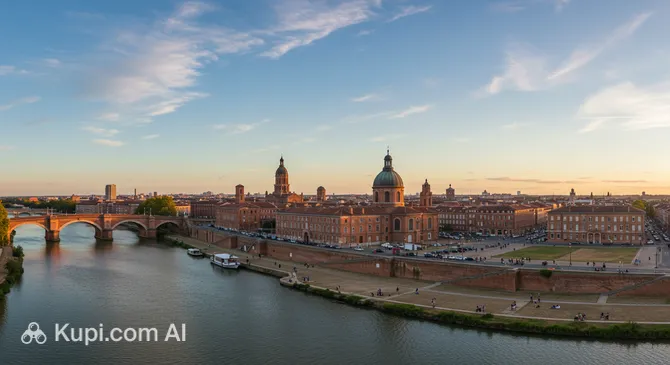
Welcome to Toulouse, a captivating metropolis in the heart of the Occitanie region that effortlessly blends a rich heritage with a cutting-edge spirit. Often referred to as La Ville Rose (The Pink City) due to the distinctive terracotta bricks used in many of its buildings, the city glows with a warm, rosy hue at sunset. As the fourth-largest city in the country, it offers a vibrant atmosphere fueled by a large student population and a thriving cultural scene.
Geographically, the city is situated in the southwest of France, stretching along the banks of the Garonne River and intersected by the famous Canal du Midi. Its strategic location places it roughly halfway between the Atlantic Ocean and the Mediterranean Sea, and just a short distance from the Pyrenees mountains. With a population of nearly half a million, it serves as a major economic and industrial hub, particularly renowned as the European capital of the aerospace industry.
Toulouse. Illustration.
Source: Kupi.com AI
The history of Toulouse is deeply layered, dating back to its origins as a Roman settlement and its time as the capital of the Visigothic Kingdom. Today, visitors can admire this legacy at the majestic Place du Capitole, the grand square that serves as the heart of the city, or by visiting the Basilica of Saint-Sernin, a UNESCO World Heritage site and a masterpiece of Romanesque architecture. For those interested in modern achievements, the Cité de l'Espace offers a fascinating look into space exploration, reflecting the city's status as a leader in aviation.
Whether you are strolling along the picturesque riverbanks, indulging in local culinary delights like the famous cassoulet, or exploring its ancient streets, Toulouse promises an unforgettable experience. It is a destination that invites travelers to slow down and enjoy the "art de vivre" unique to southern France.
Weather Overview
Toulouse enjoys a temperate climate with distinct seasons, making it a pleasant destination for most of the year. To help you pack appropriately for your trip, it is helpful to review the specific weather in Toulouse. Generally, the city experiences mild springs and autumns, while the summer months bring considerable warmth and sunshine.
During the peak of summer, particularly in July and August, temperatures average around 23°C to 24°C, with daily highs frequently reaching nearly 30°C. This period is also the driest, with usually only about 8 wet days per month. In contrast, winters are cool but rarely freezing; January is typically the coldest month with an average temperature of 6.4°C and lows dipping to around 3°C.
Rainfall is fairly consistent throughout the year, though the transitional seasons of spring and late autumn can be damper. Months like March, May, November, and December often see up to 14 wet days, so carrying an umbrella is recommended. Overall, you can expect warm summers with occasional rain and cool, wetter winters.
Average monthly temperature
Average monthly precipitation
Interesting Facts
Beyond its famous terracotta architecture and aerospace achievements, Toulouse holds many fascinating secrets and quirks waiting to be discovered by curious travelers. Here are a few unique aspects of the city that often surprise visitors:
The City of Violets: While it is known as the Pink City, Toulouse has a deep historical connection to the color purple. Since the mid-19th century, the city has been the French capital of violets. This delicate flower is celebrated annually and is used to create unique local specialties, including crystallized candies, liqueurs, and signature perfumes.
The "Oldest" New Bridge: Despite its name translating to "New Bridge," the Pont Neuf is actually the oldest bridge in the city standing today. Construction began in the 16th century, and its irregular arches and special openings were ingeniously designed to withstand the fierce floods of the Garonne River, which had destroyed all previous crossings.
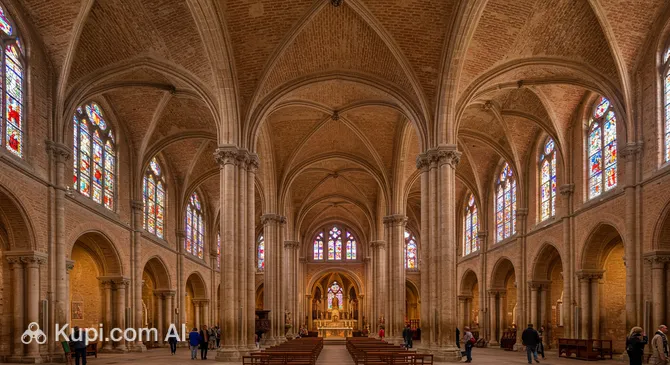
A Palm Tree Made of Stone: Hidden inside the Jacobins Convent is a masterpiece of Gothic architecture known as "The Palm Tree." This single, soaring column supports the roof of the choir with twenty-two stone ribs fanning out like palm fronds, creating a stunning visual effect of weightlessness that has inspired architects for centuries.
Built on "Blue Gold": Before the era of aviation, the city amassed immense wealth during the Renaissance through the trade of woad (pastel), a plant used to produce a vibrant blue dye. This economic boom allowed wealthy merchants to build magnificent palaces, such as the Bemberg Foundation – Hôtel d’Assézat, which remains one of the finest examples of Renaissance architecture in southern France.
Jacobins Convent. Illustration.
Source: Kupi.com AI
Traveler photos:
How to Get There
Reaching this dynamic city is straightforward, thanks to its status as a major transport hub in southwestern France. Whether you prefer flying or taking the train, there are multiple convenient options to suit your itinerary. For a detailed breakdown of routes and tips, you can read more about how to get to Toulouse.
The primary gateway for air travelers is Toulouse-Blagnac Airport (TLS), located just 6.9 km from the city center. As a major international airport, it handles a large volume of passengers annually and connects the region to numerous European and international destinations. A taxi or shuttle ride to the downtown area is quick, typically taking around 30 minutes depending on traffic.
Travelers may also consider alternative landing spots in the region. For instance, you can fly into Carcassonne Airport (CCF), which is located in the city of Carcassonne, approximately 82 km from Toulouse. The journey by road from there takes approximately 1 hour. Another option is Tarbes Ossun Lourdes Airport (LDE) in Lourdes, situated about 126 km away, with a travel time of around 1.5 hours by taxi.
For clarity, here is a summary of the main airports:
If you prefer traveling by rail, the city is well-served by the high-speed train network. The main railway hub is Matabiau Station (TXQ), conveniently situated right in Toulouse, just 1.2 km from the center. It is a major station with high passenger traffic, linking the city to Paris, Bordeaux, and other key French destinations. A short taxi or bus ride from the station will get you to most central accommodations in about 20 minutes.
Here is an overview of the nearest railway stations:
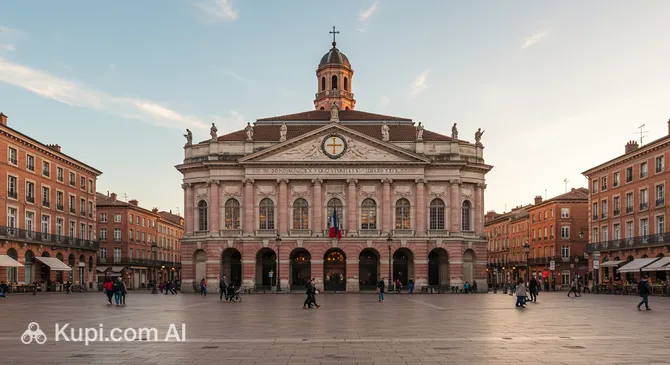
No visit to the "Pink City" is complete without standing in the vast, open space of Capitole Square. As the beating heart of the city, this grand pedestrian plaza is dominated by the magnificent Capitole building, which houses both the City Hall and the Théâtre du Capitole with its stunning neoclassical facade. Tourists flock here to admire the Occitan cross paved into the ground, enjoy a coffee at the historic terraced cafes, and soak in the lively atmosphere that defines the local culture.
Capitole Square. Illustration.
Source: Kupi.com AI
Traveler photos:
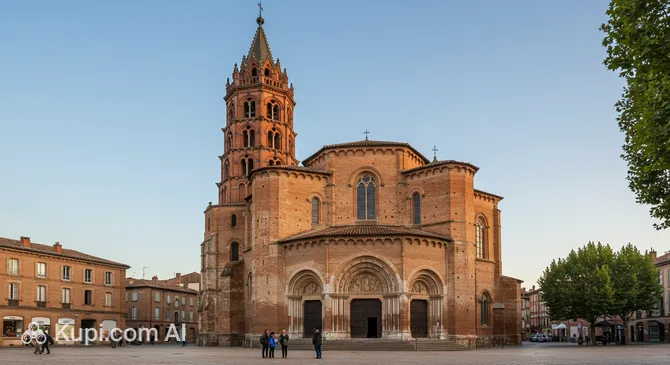
For history enthusiasts and architecture lovers, the Basilica of Saint-Sernin of Toulouse is an absolute must-see. Recognized as a UNESCO World Heritage site, it stands as one of the finest and largest surviving Romanesque churches in Europe. Originally built to welcome pilgrims on the way to Santiago de Compostela, its soaring bell tower and intricate sculptures continue to inspire awe. Inside, visitors can explore the crypt and admire the vast, vaulted ceilings that have stood the test of centuries.
Basilica of Saint-Sernin of Toulouse. Illustration.
Source: Kupi.com AI
Traveler photos:
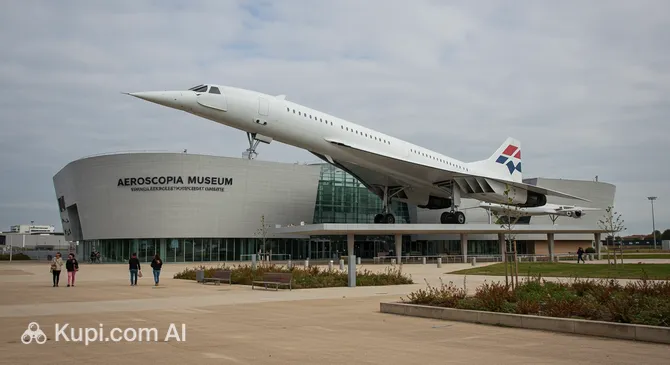
Reflecting the city's modern identity as a global aerospace hub, the Aeroscopia Museum offers a fascinating journey through the history of aviation. Located near the Airbus factory, this museum allows you to step aboard legendary aircraft, including the supersonic Concorde and the massive Super Guppy. It is a thrilling destination for families and technology fans, providing a unique insight into the engineering marvels that have shaped the way we travel.
Aeroscopia Museum. Illustration.
Source: Kupi.com AI
Traveler photos:
Another architectural gem is Saint Stephen's Cathedral, often noted for its unusual and somewhat disjointed appearance. This religious monument is a fascinating mix of architectural styles, appearing as if two different churches were stitched together—one Romanesque and the other Gothic. This peculiarity, along with its beautiful stained glass windows and tapestries, makes it an intriguing stop for those looking to explore the city's ecclesiastical heritage beyond the more famous Basilica.
Local Cuisine
The culinary scene in Toulouse is a true reflection of the French South West—hearty, generous, and deeply rooted in tradition. Known for its rich flavors and high-quality ingredients, the local gastronomy is a major draw for visitors. The undisputed king of the table is the Cassoulet, a slow-cooked casserole made with white haricot beans, duck confit, and pork. While variations exist across the region, the Toulouse version is distinguished by the inclusion of the city's signature sausage, creating a comforting and savory dish that is perfect for a substantial meal.
Meat lovers will find themselves at home here, as duck and goose feature prominently on menus. Beyond the cassoulet, you should try magret de canard (duck breast), often grilled to perfection, or confit de canard, where the meat is preserved and cooked in its own fat for incredible tenderness. Another staple is the authentic Saucisse de Toulouse, a fresh pork sausage seasoned simply with salt and pepper, which is strictly regulated to ensure its quality and traditional taste.
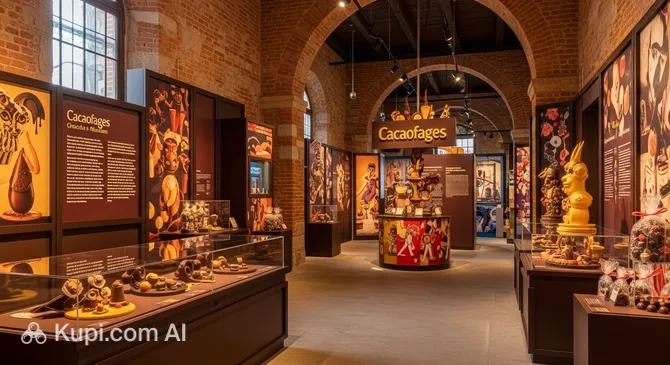
For those with a sweet tooth, the city offers unique delights inspired by its floral emblem. As the "City of Violets," Toulouse incorporates this flower into crystallized candies, syrups, and desserts. Chocolate enthusiasts also have plenty to explore. You can even dive deeper into the history of cocoa at the Cacaofages Chocolate Museum, which offers a fascinating look at chocolate making, a craft taken very seriously in this region.
Cacaofages Chocolate Museum. Illustration.
Source: Kupi.com AI
Traveler photos:
No meal in Toulouse is complete without the appropriate beverage. The region is surrounded by excellent vineyards, with the Fronton appellation being the most local, known for its Négrette grape that produces aromatic red and rosé wines. For an aperitif or a digestive, you might encounter Armagnac, a distinctive brandy from the nearby Gascony region, or a glass of violet liqueur served with sparkling wine, known as a Kir Violet.
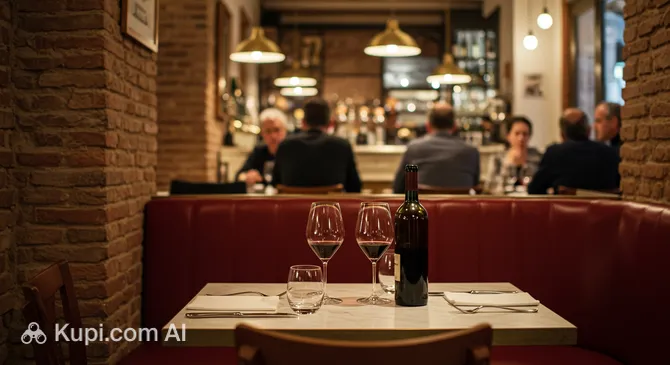
The food culture here is vibrant and social, ranging from bustling covered markets like the Marché Victor Hugo, where locals buy fresh produce and eat at upstairs bistros, to refined dining establishments. For a memorable gastronomic experience in a beautiful setting, you might visit Au Pois Gourmand, a well-regarded restaurant housed in a 19th-century building overlooking the Garonne River. Whether grabbing a quick bite of street food or sitting down for a multi-course dinner, eating in Toulouse is always a celebration of the "art de vivre."
Au Pois Gourmand. Illustration.
Source: Kupi.com AI
Traveler photos:
Travel Tips
To ensure your visit to the "Pink City" is as smooth and enjoyable as possible, we have compiled a list of essential practicalities. From navigating the local transport network to understanding regional etiquette, these tips will help you experience Toulouse with the confidence of a local.
Clothing and Gear: Toulouse enjoys a sunny, temperate climate, so lightweight clothing is ideal for summer, while layers and a waterproof jacket are recommended for the cooler, wetter months of spring and autumn. Since the historic center is best explored on foot, bring comfortable walking shoes to navigate the cobblestone streets. If you plan to visit religious sites like the Basilica of Saint-Sernin, ensure your shoulders and knees are covered as a sign of respect. For electronics, bring a standard Type E power adapter.
Transportation: The city center is compact and very walkable, but for longer distances, the Tisséo network is excellent. It includes two automated metro lines (A and B), trams, and an extensive bus system. Tickets work across all modes of transport. For a scenic alternative, use the VélôToulouse bike-sharing service. Renting a car is generally unnecessary and can be stressful due to traffic and limited parking; it is best reserved for day trips into the surrounding countryside.
Finances: The currency is the Euro (€). Credit and debit cards (Visa and Mastercard) are widely accepted in hotels, restaurants, and shops. However, it is wise to carry some cash for small purchases at bakeries or local markets. ATMs are plentiful throughout the city. Tipping is not mandatory as a service charge is legally included in the bill, but leaving small change or rounding up is a polite gesture if the service was exceptional.
Health and Safety: Toulouse is generally a safe city for tourists, but standard precautions against pickpocketing should be taken in crowded areas like the Matabiau train station or Sunday markets. Pharmacies are easily identifiable by a flashing green cross and can provide advice for minor ailments. In case of a serious emergency, dial 112 for universal European assistance.
Communication: The official language is French. While many younger locals and tourism professionals speak English, it is not universally spoken in smaller shops. Learning a few basic phrases will go a long way; always start an interaction with "Bonjour" (Hello) and use "Merci" (Thank you). Free Wi-Fi is available in many public spaces, including the Capitole square and most cafes.
Local Etiquette: Politeness is paramount in French culture. When entering a shop or restaurant, it is customary to greet the staff immediately. Lunch is typically served between 12:00 PM and 2:00 PM, and dinner often starts later than in some other countries, usually around 7:30 PM or 8:00 PM. Do not rush your meal; dining is a leisure activity here.
What to Avoid: Never refer to the local chocolate-filled pastry as a "pain au chocolat." In Toulouse and the southwest, it is proudly called a chocolatine. Using the wrong term is a common faux pas that will immediately mark you as a tourist (and might earn you a friendly lecture!). Also, avoid raising your voice in public places or on public transport, as locals tend to speak softly.
Additional Tip: Consider purchasing the Toulouse Tourism Pass if you plan to do a lot of sightseeing. It offers free access to public transport and free or discounted entry to many major museums and attractions, making it a budget-friendly option for exploring the city's rich culture.
Armed with these practical insights, you are ready to immerse yourself in the vibrant life of Toulouse. Whether you are debating the name of pastries with a baker or cycling along the Canal du Midi, embracing these local customs will surely make your stay memorable.
Entertainment & Nightlife
As the sun sets over the Garonne River, the "Pink City" transforms into a vibrant hub of evening activity. Thanks to its large university population and warm southern temperament, Toulouse boasts one of the most energetic nightlife scenes in France. The atmosphere is generally welcoming and unpretentious, ranging from rowdy student pubs to sophisticated wine bars tucked away in medieval courtyards.
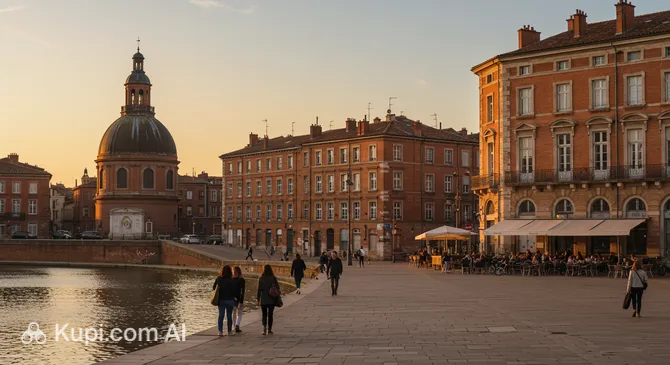
The epicenter of the city's festive spirit is undoubtedly Place Saint-Pierre. Located right on the riverbank, this square is legendary among locals and students. On warm evenings, the terraces here are packed with people enjoying drinks while watching the sunset illuminate the Pont Saint-Pierre. It is the perfect starting point for a night out, offering a lively, communal vibe where crowds often spill out onto the pavement.
Place Saint-Pierre. Illustration.
Source: Kupi.com AI
Traveler photos:
For those seeking a unique outdoor experience, Zapata Toulouse is a popular destination, particularly during the warmer months. Located near the Sesquières lake, this venue is known for its festive atmosphere, often featuring themed parties and an open-air setting that feels like a beach club. It attracts a diverse crowd looking to dance and socialize in a more relaxed, spacious environment compared to the cramped city center bars.
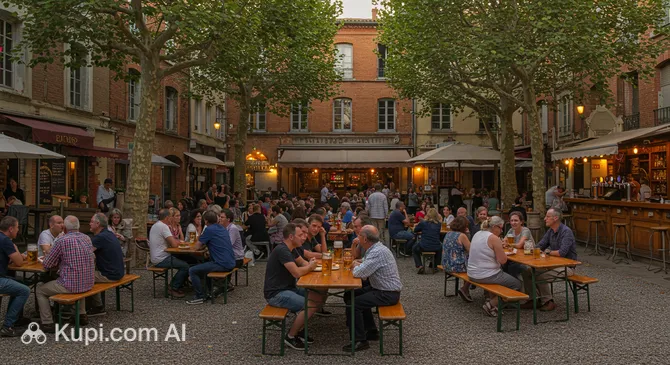
If you prefer a more traditional pub setting with a wide selection of drinks, The Biergarten offers a slice of Bavarian culture in the heart of Occitanie. With its large outdoor terrace and communal tables, it is an excellent spot for groups to gather for a pint and a pretzel before heading to a club. For late-night dancing, the Jean Jaurès district and the streets around Gabriel Péri are lined with clubs that stay open until the early hours of the morning.
The Biergarten. Illustration.
Source: Kupi.com AI
Traveler photos:
When planning your night out, keep in mind that the dress code is usually casual to smart-casual; very few places require formal attire. The metro system typically runs until midnight during the week and until 3:00 AM on Fridays and Saturdays, making it easy to get around. However, if you are staying out very late, taxis and ride-sharing apps are the safest and most convenient options. The city center is generally safe for night walks, but it is always wise to stay in well-lit, populated areas.
Beyond the nightlife, Toulouse offers plenty of entertainment during the day. Families and thrill-seekers can head to Sesquières Water Park for aquatic fun or wakeboarding. For a more cerebral experience, the city's numerous theaters and performance halls, such as the Halle aux Grains, host concerts and shows year-round, ensuring there is always something to see before the sun goes down.
Parks & Museums
Beyond its bustling squares and aerospace achievements, the city offers a wealth of serene green spaces and cultural institutions that invite exploration. Whether you are looking to escape the urban rhythm among exotic plants or dive into the region's artistic and scientific heritage, the local parks and museums provide a perfect counterbalance to the lively streets.
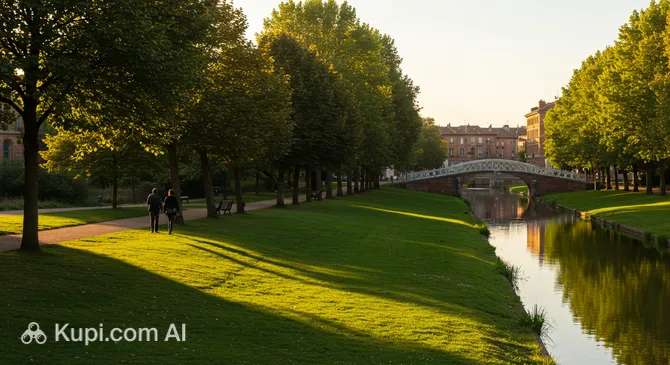
One of the most beloved green lungs in the city is the Jardin des Plantes. Originally created as a botanical garden for medical students in the 18th century, this seven-hectare park is now a public haven featuring ancient trees, winding streams, and waterfalls. It is an ideal spot for a leisurely stroll or a family picnic, where you can watch ducks and swans navigate the ponds. Connected by footbridges to the neighboring Grand Rond and the Royal Garden, it forms a vast verdant belt in the heart of the city.
Jardin des Plantes. Illustration.
Source: Kupi.com AI
Traveler photos:
For a more exotic experience, the Compans-Caffarelli Garden offers a unique surprise: a meticulously designed Japanese Garden. Classified as a "Remarkable Garden" of France, this secluded area transports visitors to the Far East with its red wooden bridge, tea pavilion, and dry stone garden. It provides a rare moment of Zen and tranquility, perfect for meditation or simply admiring the harmonious landscape design amidst the city bustle.
Compans-Caffarelli Garden. Illustration.
Source: Kupi.com AI
Traveler photos:
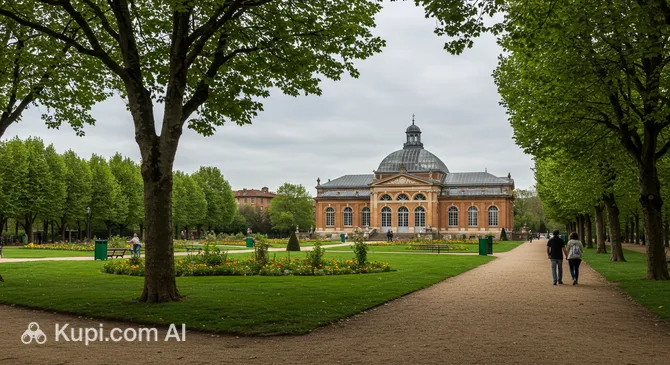
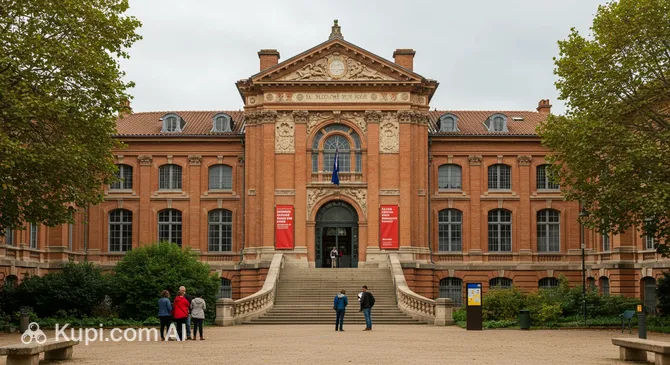
When it comes to museums, the Museum of Toulouse stands out as one of the most significant natural history museums in France. Located just beside the Jardin des Plantes, it explores the relationship between nature and humanity through modern, interactive exhibits. Its vast collection ranges from geological treasures to ethnographic artifacts and impressive animal skeletons, making it a fascinating educational stop for visitors of all ages.
Museum of Toulouse. Illustration.
Source: Kupi.com AI
Traveler photos:
Art enthusiasts should not miss Les Abattoirs, a dynamic museum of modern and contemporary art housed in the city's former slaughterhouses. This heritage building on the left bank of the Garonne has been transformed into a spacious cultural venue that hosts rotating exhibitions and a permanent collection. It is famously home to Picasso's massive stage curtain, "The Remains of the Minotaur," which is displayed for part of the year, adding a prestigious touch to its avant-garde offerings.
For those seeking a breath of fresh air with a view, a trip to Pech-David Park offers a different perspective. Situated on a hill overlooking the Garonne valley, this expansive natural zone is popular for hiking and outdoor sports. On clear days, it provides a stunning panoramic view of the city skyline, with the majestic peaks of the Pyrenees mountains visible in the distance.
Getting Around
Navigating the city is remarkably easy thanks to an efficient and integrated public transport network managed by Tisséo. The system is designed to be user-friendly, connecting the historic center with the suburbs through a combination of modes. The backbone of the network consists of two automated metro lines, Line A and Line B. These driverless, rubber-tired trains are fast, frequent, and clean, making them the most popular choice for getting across town quickly. Complementing the metro are tram lines that serve the outer districts and an extensive bus network, which includes the high-frequency "Linéo" buses that run later into the evening than standard routes.
A standout feature of the local transit system is Téléo, the longest urban cable car in the region. This aerial link connects the Oncopole to Paul Sabatier University, passing over the Garonne River and the Pech David hill. Riding the cable car is not only a practical way to cross the southern part of the metropolis but also offers a scenic experience with stunning panoramic views. It is fully integrated into the transport network, meaning you can use a standard transport ticket to ride it.
For tourists, paying for travel is straightforward. You can purchase magnetic tickets from vending machines located at metro and tram stations, or at authorized retailers. A single trip costs approximately €1.80, but if you plan to travel frequently, it is more economical to buy a 1-day, 2-day, or 3-day pass, which allows for unlimited travel during the validity period. A highly convenient option for visitors is the open payment system, which allows you to validate directly using your contactless credit or debit card on the terminals aboard buses, trams, and at metro gates. The fare is automatically calculated and capped at the price of a day pass if you make multiple journeys.
Practicality is key when using the system. You must validate your ticket or tap your card every time you board a vehicle or enter a metro station, even when transferring between different lines. The metro generally operates from 5:15 AM until midnight from Sunday to Thursday. On Fridays and Saturdays, service is extended until 3:00 AM to accommodate the weekend nightlife. Most bus lines stop running earlier, around 9:00 PM or 10:00 PM, although the main Linéo routes continue until after midnight.
If you prefer active mobility, the city offers a popular bike-sharing service called VélôToulouse. With hundreds of stations scattered throughout the streets, you can easily rent a bicycle for a short trip. The first 30 minutes of each rental are typically free, making it an excellent option for short hops between attractions. Taxis and ride-sharing apps are also readily available, though traffic in the narrow streets of the old town can sometimes make walking or taking the metro a faster alternative.
Accommodation
Where to Stay:
Finding the perfect place to rest your head in Toulouse is relatively easy, as the city offers a diverse spectrum of accommodation options to suit every preference and budget. Whether you are looking for the opulence of a historic luxury hotel, the convenience of a modern apartment rental, or the social atmosphere of a budget-friendly hostel, the "Pink City" is well-equipped to welcome its guests. From charming boutique establishments tucked away in medieval streets to reliable international chains, the standard of hospitality is generally high.
For most tourists, the best area to stay is undoubtedly the historic center (Capitole and Carmes districts). Staying here puts you within walking distance of major attractions like the Basilica of Saint-Sernin and the Garonne riverbanks. If you are traveling by train or looking for more affordable rates, the area around Matabiau Station is a practical choice, offering excellent connectivity to the rest of the region. Alternatively, the Saint-Cyprien neighborhood on the left bank of the river offers a trendy, village-like atmosphere with a vibrant local market and plenty of restaurants, just a short walk across the bridge from the downtown core.
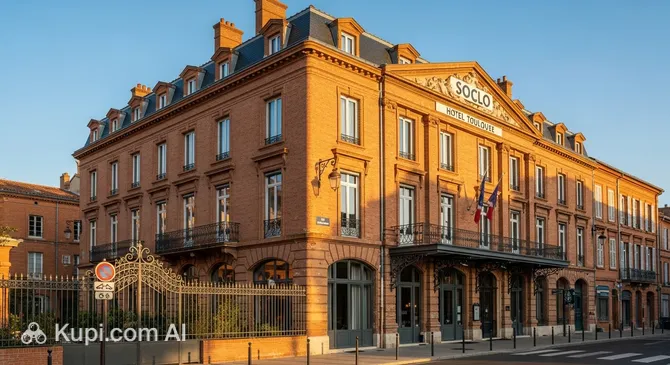
Among the notable options available, travelers seeking a refined and relaxing experience might consider the SOCLO Hotel Toulouse. This establishment is often praised for its unique character and comfortable amenities, providing a serene urban retreat in the heart of the city.
SOCLO Hotel Toulouse. Illustration.
Source: Kupi.com AI
Traveler photos:
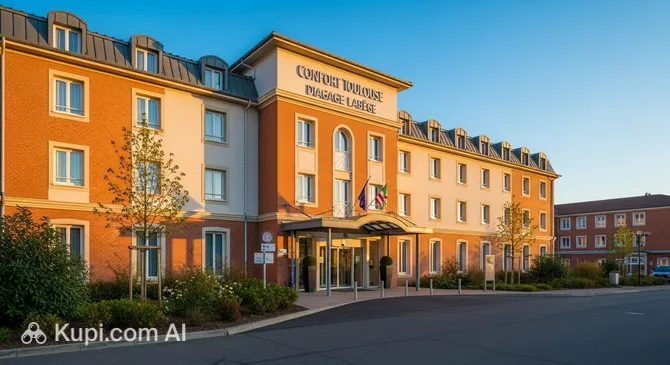
For those who prefer the flexibility of an apartment setting or are visiting for business near the innovation hubs, the Confort Toulouse Diagora Labège Apart Hotel is another available choice. Located slightly further out in the Labège area, it typically offers more spacious living arrangements and is convenient for those who might need easy access to the surrounding business districts or main highways.
Booking Tips and Prices: As a popular destination for both business and leisure, Toulouse can get quite busy, especially during the spring and summer months. It is highly recommended to book your accommodation in advance to secure the best rates and availability. Prices vary significantly by season and location; you can expect to pay anywhere from €60–€90 per night for budget to mid-range options, while luxury stays and boutique hotels in the center can range from €150 upwards. Most properties can be easily booked via major online platforms or directly through their websites.
Nearby Cities
For those looking to explore the surroundings, Toulouse serves as an excellent base for day trips to several interesting nearby locations:
One of the most spectacular destinations within easy reach is Carcassonne, located approximately an hour away. This medieval fortified city is a UNESCO World Heritage site, famous for its double ring of ramparts and fairytale turrets. Visitors can wander through the ancient streets of La Cité, explore the Count's Castle, and immerse themselves in a historic atmosphere that feels like stepping back in time.
Another fascinating option is Albi, often referred to as the "Red City" due to the distinctive brickwork of its architecture. It is home to the massive Sainte-Cécile Cathedral, a masterpiece of Southern Gothic style, and the Toulouse-Lautrec Museum, which houses the largest public collection of the famous painter's works. The city's charm and artistic heritage make it a perfect spot for a cultural excursion.
Closer to the city limits, visitors can explore the immediate vicinity, including towns known for their connection to the aerospace industry and local life. Below is a list of nearby towns and cities:
City
Population
Distance
Blagnac
25 525
5 km
Balma
16 625
5 km
Aucamville
8 968
7 km
Ramonville-Saint-Agne
14 600
7 km
L'Union
11 798
7 km
These nearby destinations offer a glimpse into the diverse culture and landscapes of the region.
Shopping & Souvenirs
Shopping in Toulouse offers a delightful mix of sophisticated style and authentic local charm, making it a rewarding experience for any visitor. The city center is a walkable open-air mall where major international brands sit comfortably alongside independent boutiques and century-old family shops. Whether you are looking for high-end fashion, unique regional crafts, or gastronomic treasures, the "Pink City" provides a diverse retail landscape that caters to all tastes and budgets.
For those who love the bustle of city streets, the Rue d'Alsace-Lorraine serves as the main artery for shopping. This pedestrian-friendly avenue is lined with beautiful Haussmann-style buildings hosting popular department stores and well-known clothing chains. If you prefer a more bohemian vibe, wander through the narrow, winding streets of the Quartier des Carmes or the Saint-Étienne district. Here, you will find antique dealers, luxury designers, and concept stores tucked away in medieval courtyards, offering a more exclusive and intimate shopping experience.
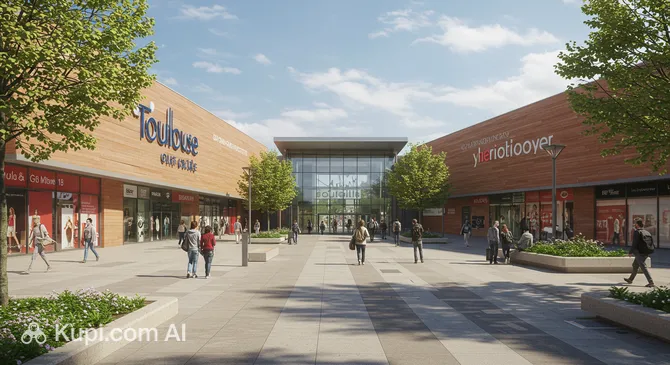
If you prefer a modern, all-in-one shopping destination, the city outskirts feature impressive malls. The Blagnac Shopping Center, located near the airport, is one of the largest in the region, housing over 120 shops, restaurants, and a cinema. It is a convenient stop for travelers looking to grab last-minute items or enjoy a day of retail therapy indoors. Another significant commercial hub is the Espaces Fenouillet Shopping Mall to the north of the city, which offers a vast selection of fashion, home decor, and leisure activities in a spacious, contemporary setting.
Blagnac Shopping Center. Illustration.
Source: Kupi.com AI
Traveler photos:
No shopping trip to Toulouse is complete without visiting its vibrant markets. The Marché Victor Hugo is an institution for food lovers, where you can marvel at stalls piled high with fresh cheese, charcuterie, and seafood before heading upstairs to lunch at one of the market restaurants. For a different atmosphere, the Sunday morning market around the Basilica of Saint-Sernin offers a mix of clothes, books, and bric-a-brac, perfect for those who enjoy rummaging for hidden gems and soaking up the local Sunday culture.
When it comes to souvenirs, the city has several signature items that make for perfect gifts. Look for anything related to the violet, the city's emblematic flower; you can find crystallized violets, scented soaps, and even violet liqueur. Another unique local product is Pastel (woad), a plant that produces a distinctive blue dye. Historically the source of the region's wealth, it is now used in cosmetics, textiles, and art supplies. Gastronomic souvenirs like tin-canned cassoulet, duck confit, or chocolates are also excellent choices to bring a taste of the southwest back home.
Store hours in the city center typically run from 10:00 AM to 7:00 PM, Monday through Saturday. While some smaller boutiques may close for a lunch break between 12:00 PM and 2:00 PM, major stores usually remain open. It is important to note that most shops are closed on Sundays, although some food markets and small convenience stores may be open in the morning. Payment is easy, with credit and debit cards (Visa and Mastercard) being widely accepted, though carrying some cash is advisable for small purchases at outdoor markets.
For visitors residing outside the European Union, tax-free shopping is available. If you spend more than a certain threshold (typically around €100) in a single store, you may be eligible for a VAT refund. Be sure to ask the shop assistant for a "détaxe" form at the time of purchase and have your passport handy to process the paperwork before leaving the country.