Support

Clermont-Ferrand

About

Nestled at the foot of a dramatic chain of dormant volcanoes, Clermont-Ferrand offers a landscape and atmosphere unlike any other city in Europe. As a major urban hub in the Auvergne-Rhône-Alpes region of France, it is renowned for its distinctive dark architecture, constructed from the local volcanic stone known as "pierre de Volvic." This unique material gives the city a striking, somewhat gothic appearance that is both imposing and deeply charming, setting it apart from typical French destinations.

Geographically, the city is situated on the Limagne plain, overlooked by the iconic Puy de Dôme. With a population of approximately 148,000 inhabitants, it maintains a lively yet manageable size, making it perfect for exploration on foot. The climate is generally temperate, though its proximity to the mountains ensures crisp, refreshing air and distinct seasons. Visitors are often captivated by the history of Clermont-Ferrand, which spans from the heroic days of Vercingetorix—whose statue proudly stands in the main square—to its modern identity as the industrial home of the Michelin tire company.
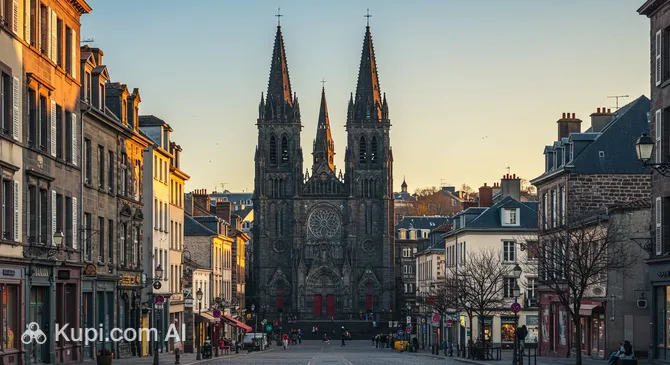
Clermont-Ferrand. Source: Kupi.Binoculars

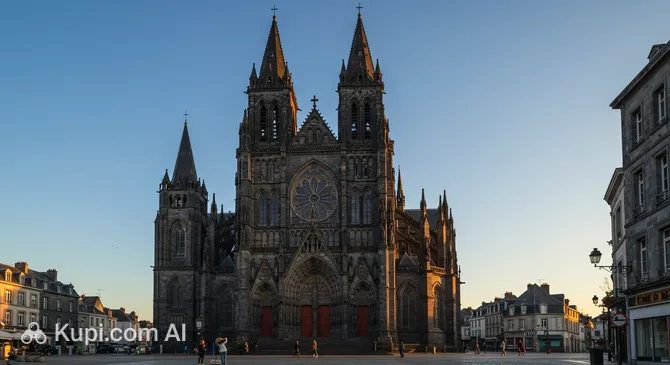
The city's skyline is dominated by the spectacular Cathedral of Our Lady of the Assumption. Its twin spires, made entirely of black lava stone, are a masterpiece of Gothic art and a symbol of the city. Another essential stop is the expansive Place de Jaude, the beating heart of the town where locals gather among fountains, statues, and bustling cafes. For a different kind of cultural experience, L'Aventure Michelin offers a fascinating museum journey through the legacy of the famous tire manufacturer that shaped the city's economy.

Whether you are a nature enthusiast eager to hike the nearby Chaîne des Puys or a traveler seeking unique architecture and rich heritage, Clermont-Ferrand is a destination that truly surprises. It serves as an ideal gateway to the volcanic heart of the country, inviting you to discover a region of raw beauty and vibrant culture.
Weather Overview

The climate in this region is characterized by distinct seasons, offering a mix of pleasant warmth and crisp, cool air depending on when you visit. During the peak summer months of July and August, the city enjoys its warmest conditions, with average temperatures hovering around 20°C and daily maximums reaching a comfortable 25°C. While these are the driest months in terms of frequency, travelers should still be prepared for about 10 wet days per month.

As autumn transitions into winter, the temperature drops significantly. January is typically the coldest month, with averages around 3.4°C and minimums often nearing the freezing point at 0.5°C. Precipitation is a consistent feature year-round, but it peaks in frequency during months like May and December, which can see up to 17 wet days. To pack the right gear for your trip, it is helpful to review the detailed forecast for the weather in Clermont-Ferrand. Expect warm, enjoyable summers and cold winters with frequent rainfall throughout the year.

Interesting Facts

Beyond the main attractions, Clermont-Ferrand holds many fascinating secrets that reveal the depth of its character. From its geological roots to its industrial legacy, there are plenty of surprising details that define this volcanic capital.
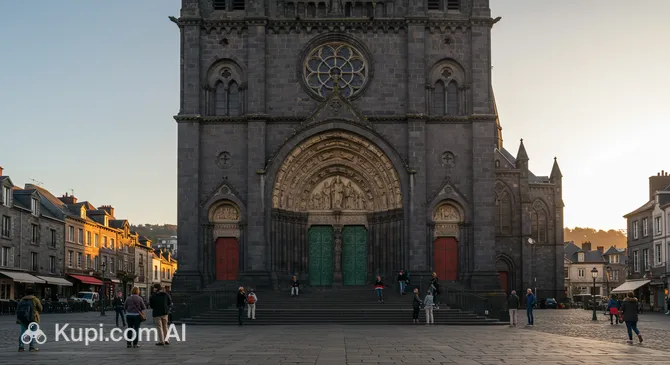
Clermont-Ferrand Cathedral. Source: Kupi.Binoculars
  • The city is frequently referred to as the "Black City" due to its distinctive architecture. This is most notably seen in the Clermont-Ferrand Cathedral, which is constructed entirely from Pierre de Volvic, a local lava stone that gives the building its intense dark color and exceptional durability.

  • For centuries, Clermont and Montferrand were actually two separate cities with their own fortifications and governance. They were forcibly united by King Louis XIII in 1630, yet a fierce rivalry between the inhabitants of the two districts persisted for nearly 300 years before they truly integrated.

  • The city is the birthplace of the world-renowned Michelin tire company. Founded here in 1889, the company's influence is still deeply felt, and visitors can trace the history of the iconic "Bibendum" mascot at the Michelin Adventure museum.

  • Clermont-Ferrand is home to the world's most prestigious international festival dedicated to short films. Often described as the "Cannes of Short Film," this major cultural event draws thousands of cinephiles and industry professionals to the city every February.

How to Get There

Reaching the volcanic heart of France is relatively straightforward, with several options available depending on your starting point. Whether you prefer to fly directly into the region or travel through major nearby hubs, you can easily find a route that suits your itinerary. For a detailed breakdown of all transport modes and routes, you can read more about how to get to Clermont-Ferrand.

The most convenient entry point by air is the Clermont-Ferrand Auvergne Airport (IATA: CFE). Located directly in the city of Clermont-Ferrand, it is situated just 7.0 km from the city center. This proximity makes for a quick transfer; a taxi or bus ride typically takes around 30 minutes. While it is a regional airport, it handles a steady flow of travelers and serves as the primary aerial gateway to the Auvergne region.

For a wider range of international connections, many travelers choose to fly into Lyon Saint-Exupéry International Airport (IATA: LYS). This major transport hub is located in the city of Lyon, approximately 157 km from Clermont-Ferrand. As a large international airport, it offers significantly more flight options. From Lyon, the journey to Clermont-Ferrand by road is quite efficient, typically taking between 1.5 and 2 hours via the motorway. Train connections are also available, though they generally involve a transfer and take slightly longer.

For clarity, here is a summary of the main airports:

Airport Name City Passenger Traffic Km from City
Lyon Saint-Exupéry International Airport Lyon Large 156.7
Bellegarde Airport Limoges Medium 147.8
Clermont-Ferrand Auvergne Airport Clermont-Ferrand Medium 7.0
Laroche Airport Brive-la-Gaillarde Small 150.1
Aurillac Airport Aurillac Small 112.7

Regarding rail travel, while the city is connected to the national network, travelers coming from certain directions or looking for specific high-speed TGV options might route through major hubs in the Rhône-Alpes region. One significant nearby hub is Lyon Part-Dieu Station, located in the city of Lyon, about 138.5 km from Clermont-Ferrand. It is one of the busiest stations in the country. From there, renting a car allows you to reach Clermont-Ferrand in approximately 1 hour and 45 minutes, while a connecting regional train usually completes the trip in about 2.5 hours. Another option in the same city is Gare de Lyon-Perrache, situated roughly 136 km away.

Below is a list of major railway stations in the broader region:

Station City Passenger Traffic Km to Center
Lyon Part-Dieu Station Lyon Large 138.5
Grenoble Railway Station Grenoble Large 216.5
Gare de Lyon-Perrache Lyon Large 135.9
Dijon Railway Station Dijon Large 226.3
Valence TGV Station Valence Large 173.4

Main Attractions

While the black volcanic cathedral often dominates the skyline, the Basilica of Notre-Dame du Port is a hidden gem that architecture enthusiasts simply cannot miss. Hidden away in the port district, this UNESCO World Heritage site is a masterpiece of Romanesque art. Unlike its Gothic counterpart, it is built from blonde arkose sandstone, giving it a warm, golden hue. Visitors are drawn to its intricately carved capitals and the serene atmosphere of its crypt, making it a peaceful retreat from the city bustle.

Basilica of Notre-Dame du Port. Source: Kupi.Binoculars

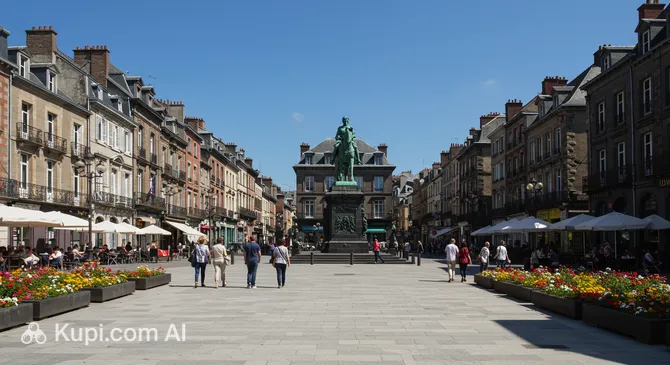
For a taste of local life, head to the Place de Jaude. This expansive square is the beating heart of Clermont-Ferrand, lined with grand buildings, department stores, and lively terraces. It is famously home to the majestic statue of Vercingetorix, the Gallic chieftain, sculpted by Bartholdi, the same artist who created the Statue of Liberty. It is the perfect spot to enjoy a coffee, watch the fountains, or start a shopping spree at the nearby Centre Jaude.

No trip to this industrial capital would be complete without visiting the Michelin Adventure. This fascinating museum spans 2,000 square meters and tells the incredible story of the Michelin brothers and their global impact on transportation. Tourists love the interactive exhibits, which feature everything from the very first detachable bicycle tire to modern lunar wheels. The evolution of the legendary "Bibendum" (Michelin Man) is a highlight that delights visitors of all ages.

Michelin Adventure. Source: Kupi.Binoculars

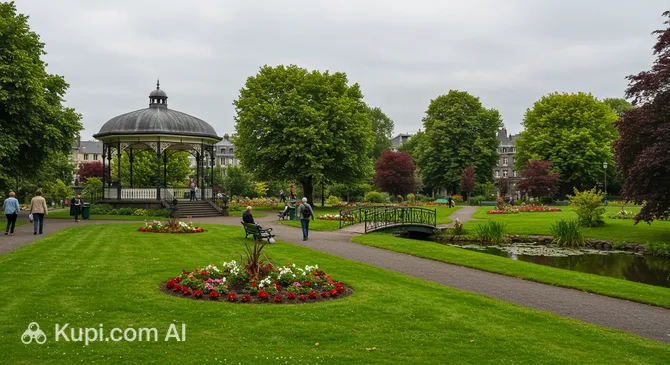
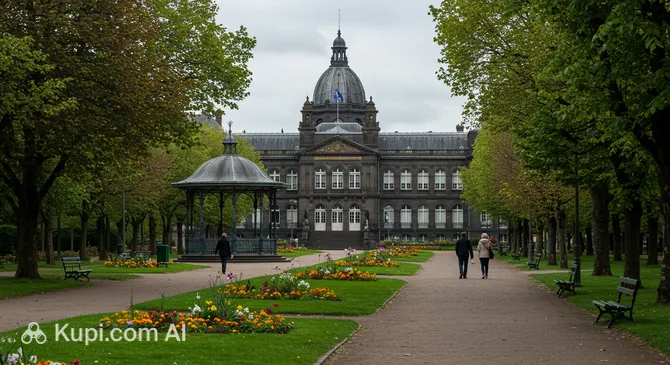
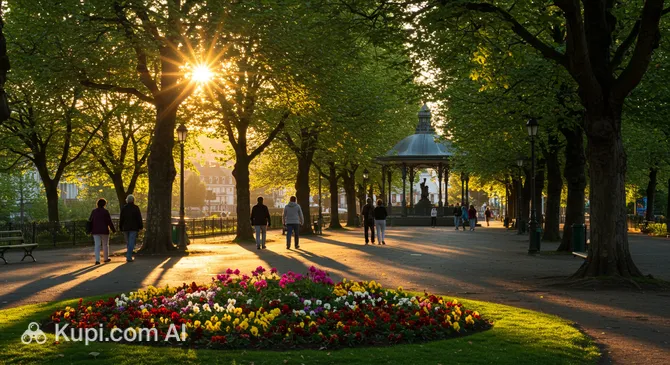
If you are looking for a breath of fresh air, the Jardin Lecoq offers a lush, green escape right in the city center. This English-style public park covers five hectares and features winding paths, a picturesque ornamental lake, and vibrant flowerbeds. It is a favorite location for a leisurely afternoon stroll, a picnic on the grass, or simply admiring the seasonal blooms and the resident swans.

Jardin Lecoq. Source: Kupi.Binoculars

Art lovers should make time for the Roger Quilliot Art Museum (MARQ). Housed in a beautifully converted Ursuline convent with a modern architectural extension, the museum displays a rich collection of fine arts from the Middle Ages to the 20th century. The exhibits provide a deep dive into the region's cultural history while also showcasing significant works of painting and sculpture that appeal to a broad international audience.

Local Cuisine

The culinary scene in Clermont-Ferrand is a true reflection of the Auvergne region: rustic, generous, and deeply comforting. This is a destination for travelers with a hearty appetite, where the cuisine focuses on high-quality local ingredients like cured meats, wild mushrooms, and, most importantly, cheese. The volcanic soil of the surrounding area produces rich pastures, resulting in some of the finest dairy products in France, which form the backbone of many traditional recipes.

The absolute star of local menus is Truffade. This thick, savory pancake is made from sliced potatoes slowly cooked in goose fat and mixed with fresh tome cheese (tomme fraîche) until it melts into a gooey, golden delight. It is almost always served with a side of Auvergne ham and a green salad. Another classic dish to look for is Potée Auvergnate, a robust stew featuring cabbage, potatoes, pork, and sausage, which is perfect for warming up after a day of exploring. Cheese lovers will be in heaven here, as the region boasts five prestigious AOP cheeses, including the creamy Saint-Nectaire and the sharp Bleu d'Auvergne.

To accompany these rich meals, locals often turn to the wines of the Côtes d'Auvergne. The volcanic terroir gives these wines, particularly the Gamay and Pinot Noir reds, a distinct mineral character that pairs beautifully with the heavy local dishes. For an aperitif, you might be offered a glass of Gentiane, a bittersweet liqueur made from the roots of yellow gentian flowers harvested in the mountains. To finish the meal, a sip of Verveine, a bright green herbal liqueur, is the traditional digestive. For a non-alcoholic option, the region is world-famous for its volcanic mineral water, which is served proudly at every table.

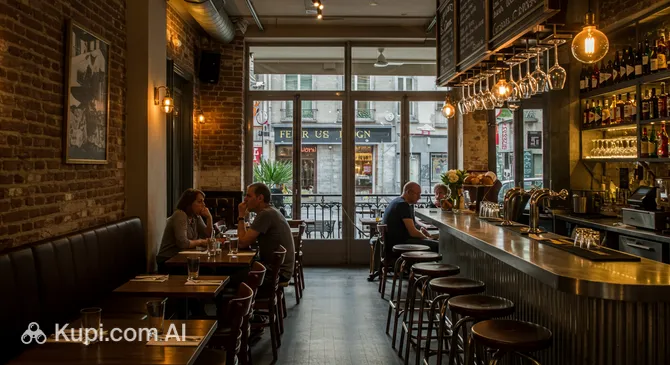
Le Comptoir. Source: Kupi.Binoculars

The food culture in Clermont-Ferrand is laid-back and convivial. You will find locals gathering in the bustling Marché Saint-Pierre to buy fresh produce or enjoying long lunches in traditional bouchons and brasseries. For a taste of this welcoming atmosphere, you can visit Le Comptoir, a popular spot that exemplifies the city's casual yet quality-focused dining style. Whether you are sitting on a sunny terrace or inside a cozy stone-walled restaurant, eating here is about sharing good food and good company.

Travel Tips

Welcome to the capital of the Auvergne, where urban energy meets the raw beauty of dormant volcanoes. To help you navigate the "Black City" with ease and enjoy every moment from the bustling Place de Jaude to the quiet historic streets, here are some practical tips for your journey.

  1. Dress for the Microclimate: The weather in Clermont-Ferrand can be influenced by the nearby mountains. Even in summer, evenings can become cool, so bringing layers is essential. If you plan to hike the Chaîne des Puys or walk up the steep city streets, pack sturdy, comfortable walking shoes. For visiting religious sites like the cathedral, modest attire covering shoulders and knees is recommended.
  2. Mastering Local Transport: The city has an excellent public transport network managed by T2C, featuring a distinctive tramway system that runs on tires to handle the local gradients. The red trams are efficient and connect major points of interest. However, the historic center, known as the Plateau central, is best explored on foot. For short trips, consider using the C.Vélo bike-sharing service.
  3. Currency and Payments: As in the rest of France, the currency is the Euro (€). Credit and debit cards (Visa and Mastercard) are widely accepted even for small amounts in bakeries and cafes. However, it is wise to carry some cash for small purchases at the Marché Saint-Pierre or for tipping, which is optional but appreciated (rounding up the bill is common practice).
  4. Health and Safety Standards: Clermont-Ferrand is generally a safe city for tourists. Pharmacies are easily identifiable by a flashing green neon cross and are well-stocked for minor ailments. In case of any emergency, dial 112, the universal European emergency number. Tap water here is not only safe but often exceptional, as it comes from the surrounding volcanic aquifers.
  5. Communication Essentials: While younger locals and tourism professionals often speak English, it is not universally spoken by everyone. Learning a few basic French phrases will go a long way. A simple "Parlez-vous anglais?" (Do you speak English?) is a polite opener. Free Wi-Fi is available in many public squares and cafes, and prepaid SIM cards can be bought at "Tabac" shops or mobile operator stores.
  6. The Importance of "Bonjour": Local etiquette hinges on one crucial word: Bonjour. When entering a shop, restaurant, or even asking a stranger for directions, always greet them with "Bonjour" (or "Bonsoir" in the evening) before saying anything else. Omitting this is considered rude and may result in colder service.
  7. Respecting Meal Times: Avoid trying to find a sit-down lunch after 1:30 PM or dinner before 7:00 PM. Traditional French restaurants operate on strict schedules, usually serving lunch between 12:00 PM and 2:00 PM. If you miss these windows, look for "Service Continu" signs or grab a quick bite at a bakery (boulangerie).
  8. Local Insight - The ClermontPass: To save money and time, consider purchasing the ClermontPass from the tourist office. It offers free or discounted entry to major museums like L'Aventure Michelin and includes a guided tour of the historic center, making it a great value for first-time visitors eager to see the highlights.

Armed with these practical insights, you are ready to delve into the unique culture and landscapes of this volcanic region. Whether you are tasting truffade in a cozy tavern or gazing up at the dark Gothic spires, Clermont-Ferrand is sure to offer a memorable and hassle-free adventure.

Entertainment & Nightlife

As a vibrant university city, Clermont-Ferrand boasts a nightlife scene that is energetic, unpretentious, and welcoming. The presence of thousands of students ensures that the city center remains lively throughout the week, particularly on Thursday, Friday, and Saturday nights. Unlike the exclusive club scenes of larger metropolises, the atmosphere here is characterized by convivial pub culture, casual wine bars, and busy terraces where locals gather to socialize over local beverages and music.

The epicenter of evening entertainment is undoubtedly the historic district surrounding the cathedral. Place de la Victoire is the beating heart of the action, lined with numerous bars and pubs that spill out onto the cobblestones in warmer months. It is the perfect spot to start your night with a local craft beer or a glass of Auvergne wine. The nearby streets, such as Rue des Gras and Rue de la Soif (a nickname often given to streets with many bars), offer a variety of venues ranging from rock pubs to cozy cocktail lounges. The dress code is almost universally casual; jeans and a nice top are perfectly acceptable everywhere.

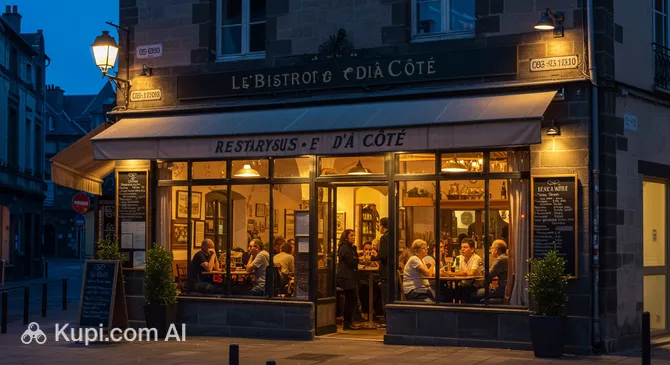
For those who prefer a culinary start to their evening, the city offers excellent options for late dining or a relaxed dinner before hitting the town. A great choice for an authentic experience is Le Bistrot d'à Côté. Known for its warm ambiance and traditional dishes, it provides a perfect setting to enjoy the region's gastronomy before exploring the nearby nightlife. Reservations are recommended on weekends as popular spots fill up quickly.

Le Bistrot d'à Côté. Source: Kupi.Binoculars

If you are looking for high-energy entertainment that goes beyond the typical bar scene, the city has several unique attractions. Speed enthusiasts can head to Speed2max, an indoor electric go-karting complex that offers a thrilling experience for groups and friends. It is a fantastic way to inject some adrenaline into your evening before relaxing with a drink. For music lovers, the venue La Coopérative de Mai is a legendary concert hall in the region, hosting everything from indie rock bands to electronic DJs, so checking their schedule is a must.

Speed2max. Source: Kupi.Binoculars

Regarding practicalities and safety, Clermont-Ferrand is generally very safe for night walks, especially in the illuminated city center and around Place de Jaude. However, as with any city, it is advisable to stay in populated areas late at night. Public transport (trams and buses) runs until around midnight or 1:00 AM depending on the line and day, but after that, taxis and ride-sharing apps are the most reliable way to get around. Prices for drinks are reasonable compared to Paris or Lyon, with a pint of beer typically costing between 5 and 7 euros.

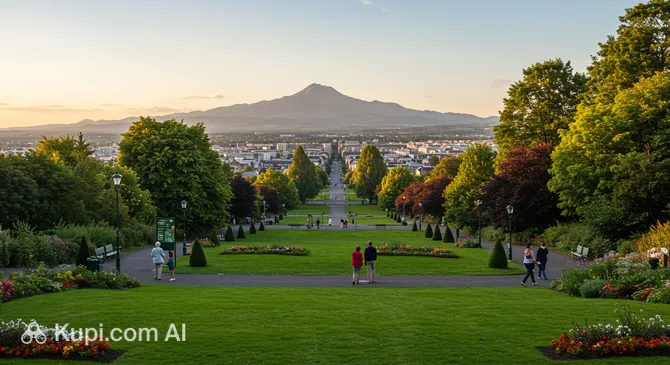
While nightlife is a major draw, the city also offers splendid daytime entertainment. Culture seekers can enjoy performances at the Comédie de Clermont or explore the various museums. For a more relaxed afternoon with panoramic views of the city and the distant volcanoes, a visit to Montjuzet Park is highly recommended. Perched on a hill, it is the ideal place to watch the sunset before descending into the city for a night out.

Montjuzet Park. Source: Kupi.Binoculars

Parks & Museums

Beyond its striking volcanic architecture and bustling squares, Clermont-Ferrand surprises visitors with its abundant greenery and rich cultural institutions. The city and its surroundings offer a refreshing balance between urban energy and natural tranquility, while its museums provide a deep dive into everything from fine arts to industrial history.

For a peaceful escape just outside the city center, Bargoin Park is a delightful retreat located on the border of Chamalières and Royat. This expansive English-style garden is renowned for its unique microclimate, which allows exotic species like century-old sequoias and ginkgo biloba trees to thrive. It spans roughly seven hectares and offers winding paths that lead to shaded lawns, making it a favorite spot for families and nature lovers seeking a quiet afternoon. The park's elevated position also provides lovely glimpses of the surrounding urban landscape amidst the foliage.

Bargoin Park. Source: Kupi.Binoculars

Another green gem worth exploring is Pierre Montgroux Park, situated in the nearby town of Cébazat. This modern space is beautifully designed around the theme of water, featuring a revitalized stream and serene ponds that attract local wildlife. What sets it apart is the integration of contemporary sculptures throughout the grounds, turning a simple walk into an open-air art experience. It is an impeccably maintained area that offers a perfect contrast to the wilder natural landscapes of the nearby volcanoes.

Pierre Montgroux Park. Source: Kupi.Binoculars

When it comes to culture, the city boasts several impressive venues. The premier institution for art enthusiasts is the Roger Quilliot Art Museum (MARQ). Housed in a former Ursuline convent that has been masterfully renovated with modern architectural elements, the building itself is a sight to behold. Inside, the collections span from the Middle Ages to the 20th century, offering a comprehensive look at European painting and sculpture. The museum frequently hosts high-quality temporary exhibitions that draw visitors from across the region.

While the Michelin Adventure covers the industrial heritage, those interested in older history should look for the Musée Bargoin (located near the city center). Although smaller, it is fascinating for its dual focus: one floor is dedicated to rich archaeological finds from the Gallo-Roman era of the region, while another showcases an exceptional collection of textiles from around the world. It is a testament to the city's curiosity and connection to both its roots and the globe.

For a truly authentic experience, take a moment to visit the historical Jardin Lecoq during the golden hour. While it is the most famous park in the city, finding a bench near the ornamental lake as the sun sets over the distant Puy de Dôme offers a magical perspective on local life, far removed from the typical tourist rush.

Getting Around

The public transport system in Clermont-Ferrand is managed by the T2C network and is known for being efficient, clean, and well-adapted to the city's unique geography. The backbone of the network is the tramway, specifically Line A, which connects the northern and southern parts of the city while passing through the most important districts, including the historic center and the Place de Jaude. Complementing the tram is a comprehensive network of buses that reach into the suburbs and neighborhoods not covered by the main rail line. For most tourists, the combination of the tram and the high-frequency bus lines (labeled B and C) will be sufficient to visit all major attractions.

A distinctive feature of the local transport is the tram itself, which is a "translohr" or tramway on tires. Unlike traditional trams that run on steel wheels, this system uses rubber tires with a central guidance rail. This technology was specifically chosen to handle the steep gradients of the city, which sits on the slopes of an ancient volcanic structure. Riding it offers a smooth experience and is often a point of curiosity for visitors interested in engineering or urban planning.

Payment options are designed to be flexible for short-term visitors. You can purchase a single trip ticket (Ticket Unité), which costs approximately 1.60 euros and is valid for one hour, allowing for transfers between the tram and buses. For those planning a full day of sightseeing, a 24-hour pass is a highly economical choice, offering unlimited travel for a set price. Tickets can be bought at automatic vending machines located at every tram stop, which accept both coins and credit cards. Alternatively, you can buy tickets via the "MyBus" mobile app, which is very convenient and avoids the need for physical paper tickets.

When using the system, it is crucial to validate your ticket immediately upon boarding. On the tram, validators are located on the platform or inside the vehicle depending on the station type, while on buses, they are found near the driver. Failure to validate can result in a fine, even if you have a ticket. The transport network generally operates from around 5:00 AM until shortly after midnight, though bus frequencies decrease significantly in the evening and on Sundays. It is advisable to check the T2C website or app for real-time schedules.

For those who prefer active mobility, the city offers an excellent bike-sharing service called C.Vélo. You will see these bright yellow bicycles stationed throughout the city center and near the train station. They are an affordable and pleasant way to navigate the relatively compact downtown area, especially on sunny days. Taxis and ride-sharing services are also available but are less frequently hailed on the street compared to larger capitals; it is better to book them in advance or find them at designated ranks near the main station or Place de Jaude.

Accommodation

Where to Stay:

Finding the perfect place to stay in Clermont-Ferrand is relatively easy, as the city offers a wide spectrum of accommodation options to suit every budget and preference. The selection ranges from economical hostels and budget-friendly chain hotels to charming boutique establishments and comfortable mid-range residences. For those seeking more independence, there is also a growing number of furnished apartments and aparthotels, which are particularly popular for longer stays or family trips.

For the vast majority of tourists, the most convenient area to base yourself is the city center (Centre-Ville). Staying here puts you within walking distance of the main historic sights, restaurants, and shopping districts. Specifically, the streets surrounding the Place de Jaude are highly sought after. This location serves as the central hub of the city, offering immediate access to the tram network and a lively atmosphere right on your doorstep. Another excellent option is the historic district near the cathedral, where you can find smaller, more atmospheric hotels tucked away in ancient stone buildings.

Place de Jaude. Source: Kupi.Binoculars

If you prefer a quieter environment or are traveling by car, looking for accommodation slightly further out, perhaps near the Montferrand district, can be a good alternative. This area retains a medieval village feel while being well-connected to the center by tram. Business travelers often choose hotels near the train station or the Polydome congress center, which offer practical amenities and easy transport links.

Regarding costs, accommodation in Clermont-Ferrand is generally more affordable than in major tourist hubs like Paris or Nice. You can typically find a decent double room in a mid-range hotel for a reasonable price, while luxury options remain accessible. However, a crucial booking tip is to plan well in advance if you are visiting in February. During the International Short Film Festival, the city is flooded with cinema professionals and enthusiasts, causing hotels to fill up months ahead of time. Similarly, the summer months can be busy, so securing your reservation early ensures the best choice of location and rates. Most bookings can be easily made via major online platforms, though contacting smaller establishments directly can sometimes yield better offers.

Nearby Cities

For those looking to explore the surroundings, Clermont-Ferrand serves as an excellent base for day trips to several interesting nearby locations:

Vichy is perhaps the most famous destination in the vicinity, known globally as the "Queen of Spa Towns." Located less than an hour away, it offers a striking architectural contrast to Clermont-Ferrand with its elegant Second Empire, Art Nouveau, and Art Deco buildings. Visitors can enjoy a relaxing day strolling through the Napoleon III parks along the Allier River, admiring the grand Opera House, or indulging in treatments at one of the historic thermal baths.

Just a short distance to the north lies Riom, the former capital of the Auvergne region. Designated as a "Town of Art and History," it is renowned for its remarkable preservation of Renaissance architecture. The town center features numerous mansions and fountains built from the local dark volcanic stone, offering a sophisticated and historic atmosphere that feels like a quieter, aristocratic sibling to Clermont-Ferrand.

Further afield, Montluçon offers a journey back into medieval times. The town is dominated by the imposing Château des Ducs de Bourbon, which watches over a charming historic center filled with timber-framed houses and winding narrow streets. It serves as a cultural gateway to the Bourbonnais province and provides a picturesque setting for history enthusiasts.

City Population Distance (km)
Montluçon 34,938 71
Roanne 34,004 82
Vichy 24,980 46
Cournon-d'Auvergne 20,322 11
Riom 19,011 12

These nearby destinations offer a glimpse into the diverse culture and landscapes of the region.

Shopping & Souvenirs

Shopping in Clermont-Ferrand offers a delightful mix of modern convenience and regional tradition, set against the backdrop of its unique volcanic architecture. The city center is compact and pedestrian-friendly, allowing visitors to easily alternate between browsing international high-street brands and exploring charming independent boutiques. From high-end fashion to artisanal crafts, the retail scene reflects the distinct character of the Auvergne capital.

The primary shopping district radiates from the central Place de Jaude. The streets branching off this square, particularly Rue Blatin and Rue des Gras, are lined with a diverse array of stores ranging from clothing retailers to bookstores and perfumeries. Rue des Gras, which leads up towards the cathedral, is especially scenic, offering a selection of specialty shops and boutiques housed in historic buildings made of black lava stone.

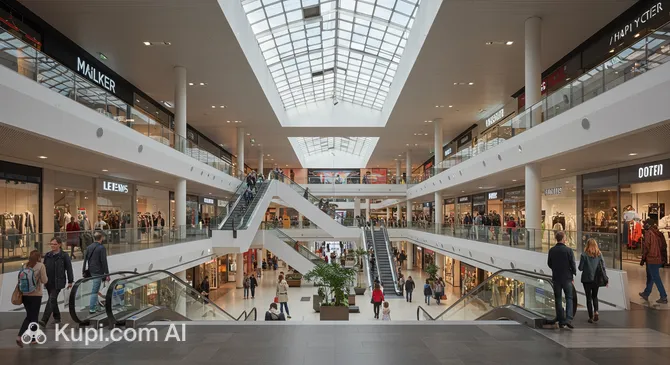
For a comprehensive shopping experience under one roof, the Centre Jaude is the city's premier destination. Located directly on the main square, this large modern mall houses dozens of popular fashion chains, beauty stores, and multimedia outlets. It serves as a convenient hub for travelers needing to pick up essentials or looking for well-known brands in a comfortable, climate-controlled environment.

Centre Jaude. Source: Kupi.Binoculars

To truly taste the local culture, a visit to the Marché Saint-Pierre is mandatory. This covered market is the gastronomic soul of the city, bustling with vendors selling fresh produce, regional cured meats, and the famous cheeses of Auvergne. It is the perfect place to assemble a picnic or buy edible gifts. On weekends, particularly Sunday mornings, flea markets often pop up in squares like the Place de la Victoire or the Salins district, offering antiques and second-hand books for collectors.

When searching for souvenirs, visitors are spoiled for choice with distinct local products. Gastronomy is a top priority, with Saint-Nectaire cheese, Auvergne dry sausages, and traditional pâte de fruits (fruit jellies) being the most popular items to take home. Given the city's deep connection to the tire industry, Michelin branded merchandise—featuring the iconic Bibendum mascot—is a unique keepsake found in several shops. Additionally, jewelry or decorative items carved from the local volcanic stone make for elegant and enduring reminders of the region.

Most shops in the city center operate from approximately 10:00 AM to 7:00 PM, Monday through Saturday. While department stores and the Centre Jaude remain open throughout the day, smaller independent boutiques may close for a lunch break between 12:00 PM and 2:00 PM. Sundays are generally quiet with most retail stores closed, although food markets and bakeries are usually open in the morning. Credit and debit cards are widely accepted, but carrying cash is recommended for small purchases at the markets.

Travelers residing outside the European Union may be eligible for a VAT refund on purchases. If you spend over a certain threshold (typically €100.01) in a single store that participates in the tax-free scheme, you can request a tax refund form ("détaxe"). Look for the "Tax Free" sign in shop windows and ensure you have your passport with you to process the paperwork, which must then be validated at customs upon your final departure from the EU.

Reached the end of the page?

That means the route is fully explored