Support

Le Puy-en-Velay

About

Le Puy-en-Velay. Source: Kupi.Binoculars

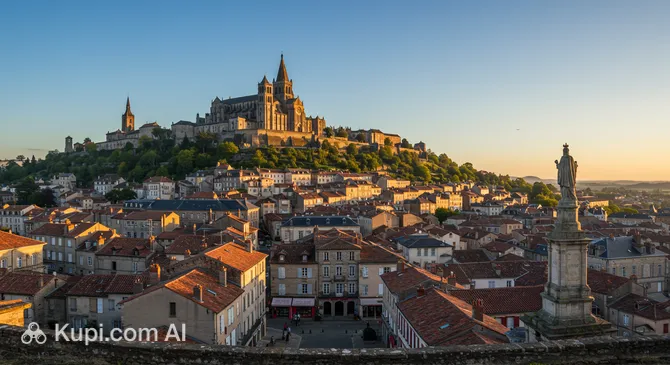
Nestled in the heart of the Massif Central, Le Puy-en-Velay is a destination that truly defies imagination with its surreal landscape. Famous for its dramatic volcanic plugs jutting out from the valley floor, this city offers a visual spectacle unlike anywhere else in Europe. It serves as the historic starting point of the Via Podiensis, one of the main pilgrimage routes to Santiago de Compostela, drawing walkers and spiritual seekers from around the globe.

Located in the Auvergne-Rhône-Alpes region of France, the city sits at an altitude of approximately 600 meters, surrounded by green hills and ancient volcanoes. With a population of around 19,000 inhabitants, it maintains a charming, small-town atmosphere while offering the cultural richness of a much larger city. The climate here is generally continental, offering warm summers that are perfect for exploring the steep, cobblestone streets.

The rich history of Le Puy-en-Velay is deeply intertwined with its unique geology and religious heritage. Visitors are often awestruck by the Chapel of Saint-Michel d'Aiguilhe, perched precariously atop a narrow volcanic needle that rises 85 meters into the air. Another unmissable landmark is the UNESCO World Heritage-listed Notre-Dame du Puy Cathedral, a masterpiece of Romanesque art known for its striking polychrome facade and serene cloister.

Whether you are a history enthusiast, a pilgrim beginning a long journey, or simply a traveler looking for breathtaking views, Le Puy-en-Velay promises an unforgettable experience. Its blend of dramatic nature and architectural marvels makes it a must-visit gem in the French countryside.

Weather Overview

The climate in Le Puy-en-Velay is characterized by distinct seasons, influenced by its location in the Massif Central. Visitors can generally expect pleasant, warm summers perfect for outdoor activities, while winters tend to be cold and damp. For a more detailed breakdown of conditions throughout the year, you can check the weather in Le Puy-en-Velay page to help plan your trip.

During the peak summer months of July and August, average temperatures hover around 19°C, with daytime highs reaching up to 24.6°C. These are typically the driest months, with only about 8 to 10 wet days, making it an ideal time for exploring the city's famous volcanic landmarks. In contrast, spring sees rising temperatures but also frequent showers, particularly in May, which experiences around 17 wet days.

Winter brings a distinct chill to the region, with average temperatures dropping to between 2.0°C and 4.0°C in January and February. Overnight lows can dip below freezing, and precipitation is frequent, with December seeing up to 16 wet days. Overall, expect warm summers with occasional rain and cold winters with regular precipitation, so packing layers is always a good strategy regardless of when you visit.

Interesting Facts

Beyond the main attractions, Le Puy-en-Velay holds many fascinating secrets and unique traditions that add depth to its volcanic landscape. Here are a few surprising details about this historic city that often escape the casual visitor.
Notre-Dame de France. Source: Kupi.Binoculars
  • The monumental statue of Notre-Dame de France is not just a solid sculpture; it is actually hollow, allowing visitors to climb a spiral staircase inside the figure all the way up to the crown for a stunning panoramic view.

  • The city is the home of the "Green Lentil of Le Puy," a legume so revered for its gastronomic quality that it was the first vegetable in France to receive a protected AOC designation, earning it the nickname "the caviar of the poor."

  • Inside the Cathedral of Our Lady of Le Puy, you can find the "Fever Stone," a prehistoric volcanic slab believed to be a remnant of a druidic dolmen capable of miraculous healing for those who lie upon it.

  • The chapel atop Saint Michael's Rock of Aiguilhe was consecrated in 962 AD, and reaching this architectural marvel requires ascending 268 steps carved directly into the steep volcanic plug.

How to Get There

Reaching the historic city of Le Puy-en-Velay requires a bit of planning, as it is tucked away in the scenic Massif Central. While the journey involves traversing some of France's most beautiful landscapes, there are several transport hubs nearby that facilitate arrival. You can read more about how to get to Le Puy-en-Velay and the specific routes available to suit your travel plans.

The city of Le Puy-en-Velay does not have its own major international airport, so most visitors fly into larger regional hubs and complete the journey by road or rail. One of the most convenient options is Lyon Saint-Exupéry International Airport (IATA: LYS), located in the city of Lyon. It is approximately 121 km away, and the transfer by taxi or bus typically takes around 200 minutes. Alternatively, you can fly into Clermont-Ferrand Auvergne Airport (IATA: CFE) in Clermont-Ferrand, which is closer at about 100 km from Le Puy-en-Velay. The travel time from there is roughly 170 minutes.

For clarity, here is a summary of the main airports:

Airport Name City Passenger Traffic Km from City
Lyon Saint-Exupéry International AirportLyonLarge121.3
Garons AirportNimesMedium149.0
Clermont-Ferrand Auvergne AirportClermont-FerrandMedium99.8
Marcillac AirportRodezSmall131.5
Aurillac AirportAurillacSmall116.5

Traveling by train is another popular way to approach the region, often involving a connection from a high-speed TGV line. Although Le Puy-en-Velay has a local station, many travelers arrive via the Valence TGV Station in the city of Valence, which is a major hub about 87 km away. From there, you can get a taxi or bus, which takes about 150 minutes. Another significant option is the Lyon Part-Dieu Station in Lyon, located roughly 110 km from Le Puy-en-Velay. The onward journey by road from this busy station takes approximately 186 minutes.

Below is a list of the nearest major railway stations:

Station City Passenger Traffic Km to Center
Lyon Part-Dieu StationLyonVery Large110.5
Gare de Lyon-PerracheLyonLarge107.7
Avignon Railway StationAvignonLarge143.8
Nîmes Railway StationNimesLarge139.9
Valence TGV StationValenceLarge86.5

Main Attractions

Le Puy-en-Velay is a city where history and geology merge in spectacular fashion. Its skyline, punctuated by volcanic peaks crowned with monuments, offers visitors a unique journey through time. From UNESCO World Heritage sites to imposing fortresses, the city's main landmarks are as spiritually significant as they are visually stunning.

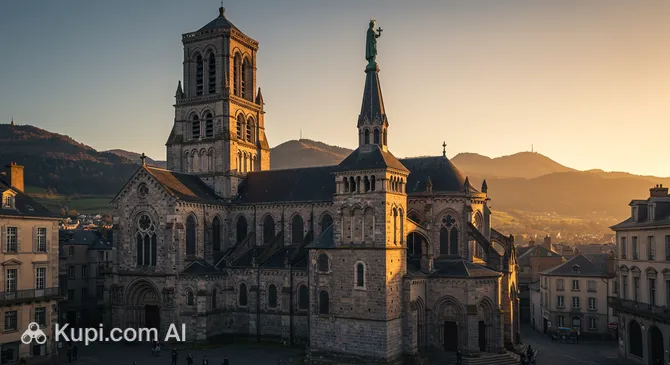
A masterpiece of Romanesque art, the Cathedral of Our Lady of Le Puy stands at the foot of the Corneille Rock. This UNESCO World Heritage site is famous for its striking polychrome facade and for being the historic starting point of the Via Podiensis pilgrimage route to Santiago de Compostela. Inside, visitors can admire the revered Black Madonna statue and explore the serene 12th-century cloister, which is considered one of the most beautiful in Europe.

Cathedral of Our Lady of Le Puy. Source: Kupi.Binoculars

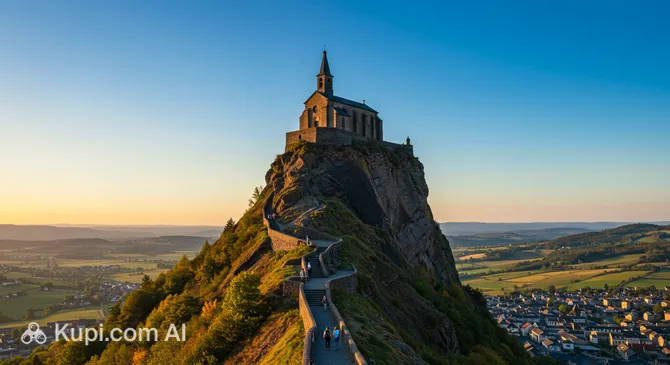
Perhaps the most iconic image of the city is Saint Michael's Rock of Aiguilhe. This volcanic plug rises abruptly 85 meters from the ground, topped by a small chapel dedicated to Saint Michael. Built in the 10th century, the chapel is reached by climbing 268 steps carved directly into the rock. The ascent is rewarding, offering a close-up look at the ancient stonework and breathtaking panoramic views of the city and the surrounding landscape.

Saint Michael's Rock of Aiguilhe. Source: Kupi.Binoculars

Watching over the town from the highest point is the monumental statue of Notre-Dame de France. Painted in a distinctive red hue, this 16-meter tall statue was created in the 19th century from the iron of melted cannons. Tourists can climb the spiral staircase inside the hollow statue to reach the crown, where glass openings provide a unique perspective of the cathedral and the rooftops below.

Just a short distance from the city center lies the majestic Polignac Castle. Perched on a volcanic plateau, this fortress played a crucial role in the region's history and offers a glimpse into medieval military architecture. The keep, standing 32 meters high, allows visitors to survey the Velay basin. The site often hosts cultural events and treasure hunts, making it an engaging destination for families and history buffs alike.

Local Cuisine

The gastronomy of Le Puy-en-Velay is deeply rooted in the rustic and hearty traditions of the Auvergne region. The undisputed star of the local table is the famous Green Lentil of Le Puy (Lentille Verte du Puy). Celebrated by chefs worldwide for its peppery taste and ability to hold its shape during cooking, this legume is a staple in many local recipes. You will often find it served as a warm side dish, in cold salads, or as the base for the classic petit salé, a comforting meal of salted pork slow-cooked with lentils.

Beyond lentils, the region is a paradise for lovers of cured meats and cheese. The mountainous terrain is perfect for grazing, resulting in exceptional artisanal cheeses such as the "Velay" or nearby varieties like Saint-Agur and Fourme d'Ambert. These are typically enjoyed at the end of a meal or as part of a platter accompanied by local charcuterie. For a main course, look out for dishes featuring local beef or lamb, often prepared with wild mushrooms gathered from the surrounding forests.

When it comes to drinks, the city is synonymous with Verveine du Velay. This bright green herbal liqueur has been produced locally since the 19th century using lemon verbena and a secret blend of over 30 other herbs and spices. It is traditionally consumed as a digestif after a hearty meal, though it is also used to flavor ice creams and pastries. For a non-alcoholic alternative, herbal teas made from local verbena offer a soothing and aromatic experience.

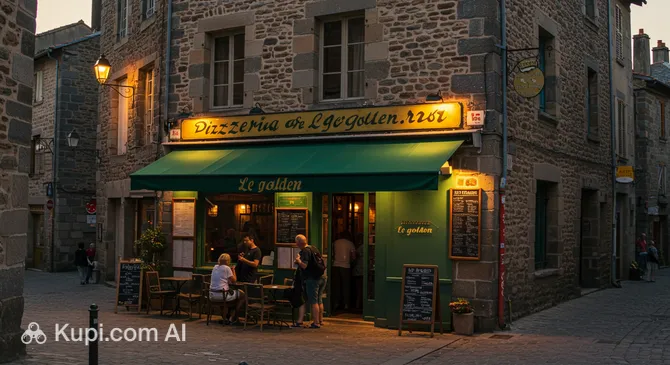
Pizzeria Le Golden. Source: Kupi.Binoculars

The food culture in Le Puy-en-Velay is vibrant and community-focused, best experienced at the bustling Saturday morning market on Place du Plot. Here, locals and tourists alike gather to buy fresh produce, honey, and jams directly from producers. For dining out, the narrow cobblestone streets are lined with charming bistros and eateries. Whether you are looking for traditional Auvergnat fare or a casual bite at spots like Pizzeria Le Golden, the city offers a welcoming atmosphere to savor the flavors of the Haute-Loire.

Travel Tips

Welcome to Le Puy-en-Velay, a city where history is etched into the very volcanic rock it stands upon. To ensure your visit to this unique pilgrimage site is as smooth and enjoyable as possible, we have compiled a list of essential practical tips to help you navigate the local lifestyle and terrain.

  1. Prioritize Footwear and Layering. The topography of Le Puy-en-Velay is defined by steep volcanic plugs and cobblestone streets. Exploring the city often involves climbing hundreds of stairs, particularly if you plan to ascend Saint Michael's Rock or the statue of Notre-Dame de France. Sturdy, comfortable walking shoes are absolutely essential; high heels or flimsy sandals will make the trek difficult. Additionally, the weather in the Massif Central can change quickly, so bring layers, including a waterproof jacket, even in summer. If you plan to enter the cathedral or chapels, remember to dress modestly (covering shoulders and knees).

  2. Navigating the City. The historic center is best explored on foot, as many streets are narrow and pedestrian-friendly. However, be prepared for the verticality of the town. For those with limited mobility or if you simply need a break, the local bus network (Tudip) is efficient and covers the main areas. If you arrive by car, it is best to park in one of the lots on the outskirts or at your hotel and walk, as parking in the medieval center can be scarce and difficult to navigate.

  3. Money Matters. The currency is the Euro (€). While credit cards (Visa and Mastercard) are widely accepted in hotels, restaurants, and major attractions, it is wise to carry some cash. You will likely need it for small purchases at the famous Saturday market, in smaller bakeries, or for buying local lace souvenirs. ATMs are readily available throughout the town center. Tipping is not mandatory as a service charge is included in the bill, but leaving small change or rounding up the bill is a polite gesture if the service was good.

  4. Health and Safety. Le Puy-en-Velay is a safe and peaceful city with a low crime rate. However, standard travel precautions apply: keep an eye on your belongings in crowded areas. Pharmacies are easily recognized by a flashing green cross sign and can provide advice for minor ailments. For serious medical emergencies, dial 112 (the European emergency number). The local hospital is well-equipped to handle tourists' needs.

  5. Language and Communication. The official language is French. While staff at the main tourist office and major hotels usually speak English, this is a rural region deeply connected to tradition, and English proficiency among locals may vary. Learning a few basic phrases like "Bonjour" (Hello), "Merci" (Thank you), and "Parlez-vous anglais?" (Do you speak English?) will be greatly geographically appreciated and can open doors to friendlier interactions. Free Wi-Fi is often available in public squares and cafes.

  6. Respecting Local Etiquette. Politeness is highly valued in French culture. Always greet shopkeepers or staff with a "Bonjour" when entering a store and say "Au revoir" when leaving. As Le Puy-en-Velay is a major religious hub and the starting point of the Via Podiensis pilgrimage, you will encounter many pilgrims. Maintain a respectful volume and demeanor in religious sites like the Cathedral and the Chapel of Saint-Michel d'Aiguilhe, especially during services.

  7. What to Avoid. Do not expect businesses to be open continuously throughout the day. Many smaller shops, museums, and even some restaurants close for a lunch break, typically between 12:00 PM and 2:00 PM. Plan your day accordingly. Also, avoid being loud or intrusive with photography in places of worship; these are active sites of prayer, not just tourist attractions.

  8. Experience the "Puy de Lumières". If you are visiting between late spring and early autumn, do not miss the spectacular light show projected onto the city's main monuments after dark. It is a free event that illuminates the Cathedral, the Theater, and the Rock of Aiguilhe, telling the history of the city through stunning visuals. It is a magical way to see the landmarks you hiked to during the day from a different perspective.

By keeping these tips in mind, you will be well-prepared to immerse yourself in the spiritual and historical wonders of Le Puy-en-Velay. Embrace the slower pace, enjoy the breathtaking views, and let the charm of this volcanic gem captivate you.

Entertainment & Nightlife

While Le Puy-en-Velay is world-renowned for its spiritual heritage and daytime pilgrimages, the city transforms into a cozy and inviting hub of social activity once the sun sets. The nightlife here is not defined by thumping nightclubs or sprawling dance floors, but rather by a convivial atmosphere found in its lively squares and historic streets. The vibe is distinctly relaxed and friendly, characterized by locals and visitors gathering on terraces to enjoy local wines, craft beers, and animated conversation.

The heart of the evening action is undoubtedly centered around the Place du Plot and the surrounding cobblestone lanes of the old town. In the warmer months, this area buzzes with energy as restaurant and bar terraces spill out onto the square. It is the perfect spot to start your night with an aperitif or a late dinner. Places like Pizzeria Le Golden offer a casual dining environment where you can fuel up before exploring the nearby bars. The crowd is a mix of local students, hikers resting from their treks, and tourists, creating a welcoming and diverse environment where the dress code is almost always casual and comfortable.

For those seeking a memorable visual experience after dark, the city hosts the spectacular "Puy de Lumières" show during the tourist season. This free event illuminates the main monuments with breathtaking light projections, effectively turning the city into an open-air theater. After watching the show, visitors often head to the bars along Rue Pannessac or near Place Cadelade for a nightcap. Most bars stay open until around 1:00 AM, though things can wind down earlier on weekdays. Prices are generally reasonable compared to larger French cities, with a pint of beer or a glass of wine costing significantly less than in Paris or Lyon.

Safety is rarely a concern in Le Puy-en-Velay, making it a pleasant city for night walks. The historic center is well-lit and pedestrian-friendly, though the steep streets require some caution in the dark. Public transport is limited late at night, so if your accommodation is on the outskirts, it is advisable to book a taxi in advance, as hailing one on the street can be difficult. Walking is usually the best way to get around the compact center.

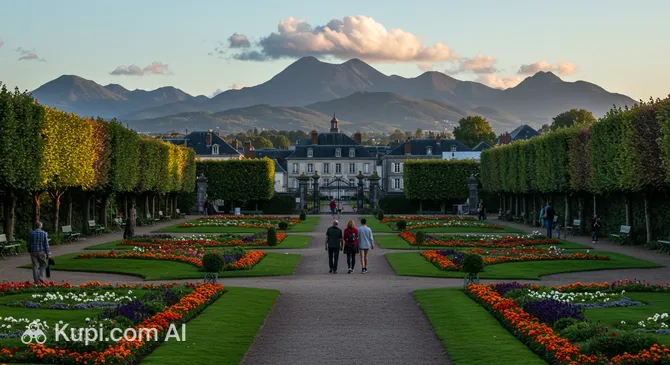
Henri Vinay Garden. Source: Kupi.Binoculars

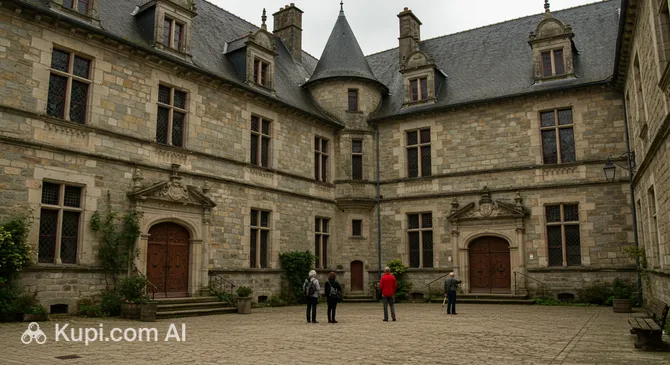
Before the evening festivities begin, the city offers plenty of cultural entertainment to fill your day. A stroll through the Henri Vinay Garden is a relaxing way to spend the afternoon; this lush park features a museum, fountains, and even a small animal enclosure. For history and art lovers, the Crozatier Museum, located within the garden, provides a fascinating look into the region's past with its eclectic collections of geology, mechanics, and fine arts.

Parks & Museums

Beyond its dramatic volcanic peaks and religious fervor, Le Puy-en-Velay offers a surprising wealth of green spaces and cultural institutions that invite visitors to slow down and explore. The city's layout, seamlessly integrating nature with medieval architecture, provides ample opportunities to enjoy tranquil gardens and world-class museums that chronicle the region's unique heritage.

The city's primary "green lung" is the delightful Henri Vinay Garden. Located in the center of town, this English-style park is a favorite among locals for its centuries-old trees and peaceful atmosphere. It serves as a perfect respite from the steep streets of the old town, offering shaded paths, vibrant flower beds, and a playground for children. Visitors can admire the ornamental ponds and the majestic Ferrières fountain, making it an ideal spot for a leisurely afternoon picnic.

For those interested in delving deeper into the history and arts of the Haute-Loire, the Crozatier Museum is an unmissable cultural gem located right within the Henri Vinay Garden. Recently renovated, this encyclopedic museum houses a diverse collection that ranges from paleontology and archaeology to fine arts and mechanics. It is particularly noted for its exhibits on the region's volcanic origins and its impressive gallery of 19th-century lace, reflecting the city's industrious past.

Crozatier Museum. Source: Kupi.Binoculars

Le Puy-en-Velay is historically world-famous for its lace-making tradition, and this heritage is preserved at the Bobbin Lace Learning Centre (Centre d'Enseignement de la Dentelle au Fuseau). Here, the delicate art of lace-making is not just displayed but practiced. Tourists can visit the exhibition rooms to see exquisite antique pieces and watch skilled artisans demonstrating the intricate techniques that have been passed down through generations. Another significant cultural venue is "Le Camino," a museum dedicated to the history of the pilgrimage to Santiago de Compostela, located in the Saint-Alexis district.

Just a few kilometers from the city center stands the imposing Polignac Castle, a historical site that combines architectural grandeur with natural beauty. Perched on a volcanic plateau, the fortress offers a fascinating glimpse into medieval military life. The grounds surrounding the castle are excellent for walking, providing panoramic views of the Velay basin and the distant mountains, blending a history lesson with an outdoor adventure.

Polignac Castle. Source: Kupi.Binoculars

For a truly authentic experience, seek out the small, independent lace workshops scattered around the pedestrian streets near the Cathedral. Unlike the larger museums, these intimate ateliers often allow you to chat directly with the lace-makers. Also, keep an eye out for the "Jardin des Plantes" near the huge statue of Notre-Dame de France; it is a smaller, lesser-known garden that offers medicinal plants and one of the best vantage points for photographing the red roofs of the city below.

Getting Around

Public transport in Le Puy-en-Velay is primarily served by an efficient bus network managed by an organization known as Tudip. Given the modest size of the city, there is no metro or tram system. Instead, the bus lines are well-designed to connect the historic center with the surrounding neighborhoods and nearby communes. For visitors, the most useful service is often the electric shuttle (Navette), which navigates the narrow, winding streets of the city center, saving you from some of the steep uphill climbs that characterize the area.

The payment system is straightforward and tourist-friendly. You can purchase a single trip ticket (Ticket Unité) directly from the bus driver upon boarding, though it is helpful to have small change ready. For those planning to stay longer or use the bus frequently, a booklet of ten tickets or a day pass offers better value. These can be bought at the Boutique Tudip, located near the main railway station, or at various authorized tobacco shops (tabacs) throughout the city displaying the Tudip logo. Prices are generally very affordable, with a single ride costing just over one euro.

For a smooth experience, always remember to validate your ticket immediately upon entering the bus to avoid fines. Operating hours typically run from early morning until around 7:00 PM or 8:00 PM, but be aware that service frequencies drop significantly on Sundays and public holidays. It is highly recommended to check the schedules in advance via the Tudip website or the local mobile app, especially if you are venturing to the outskirts of the city.

Beyond buses, there are several alternatives for getting around. Taxis are available but can be scarce on the street; it is best to book one by phone or through your hotel reception in advance. Due to the city's hilly terrain, standard cycling can be challenging, but electric bike rentals (Véludip) are increasingly popular and can be rented for short periods. Of course, the historic center is largely pedestrianized, making walking the most common way to explore, provided you have comfortable shoes for the cobblestones.

A special feature worth mentioning for tourists is the Petit Train (Little Train). While not part of the standard public transit network, this tourist train is an excellent way to navigate the steep gradients between the lower town and the major monuments like the Cathedral and the Statue of Notre-Dame de France. It offers a guided commentary loop that allows you to see the sights without the physical exertion of climbing the volcanic slopes.

Accommodation

Finding the perfect place to stay in Le Puy-en-Velay is an integral part of the experience, as the city’s accommodation options reflect its unique status as a major historical and spiritual hub. The range of lodging is diverse, catering to everyone from weary pilgrims embarking on the Via Podiensis to leisure tourists seeking comfort and charm. Visitors can choose from budget-friendly communal hostels, known locally as gîtes d'étape, to mid-range hotels and charming bed-and-breakfasts housed in restored medieval buildings.

When choosing an area to stay, the decision often comes down to atmosphere versus accessibility. The historic center (Haute Ville) is undoubtedly the most picturesque location, placing you right next to the cathedral and the cobblestone streets. staying here offers an immersive medieval experience, but keep in mind that many hotels in this zone may not have elevators or direct parking due to the ancient architecture. For those arriving by car or train, the Lower Town (Ville Basse) near the railway station or Place du Breuil offers more modern conveniences, easier parking, and level ground, while still being just a short walk from the main sights.

Because Le Puy-en-Velay is the starting point for one of the most famous pilgrimage routes in Europe, the hospitality culture is warm but can be quite busy. A unique feature of the local accommodation scene is the abundance of pilgrim-oriented lodgings, which prioritize communal living and affordability. However, for those seeking more privacy, there are plenty of standard hotels and private apartment rentals that offer modern amenities and stunning views of the volcanic peaks.

Booking Tip: The city experiences a significant influx of visitors between May and September, as well as during major religious festivals. Since it is a departure point for the Camino de Santiago, budget accommodations fill up very quickly. It is highly recommended to book your room several months in advance if you plan to visit during the peak season.

In terms of pricing, Le Puy-en-Velay is generally more affordable than larger French tourist hubs. Budget travelers and pilgrims can find beds for a modest fee in communal hostels, while mid-range hotels offer excellent value for money. Luxury options are fewer but present, often taking the form of boutique guest houses. Booking can easily be done through major online platforms, though contacting smaller gîtes directly is often the best way to secure a spot in the more traditional establishments.

Nearby Cities

For those looking to explore the surroundings, Le Puy-en-Velay serves as an excellent base for day trips to several interesting nearby locations. The region offers a mix of industrial heritage, architectural marvels, and gateways to the sunny south of France.

One of the most notable destinations is Saint-Étienne, located just about an hour's drive away. Known as a UNESCO City of Design, it has successfully transformed its industrial past into a vibrant cultural scene. Visitors can explore the impressive Cité du Design or the Museum of Art and Industry. Nearby, the smaller town of Firminy is a must-see for architecture enthusiasts, hosting the largest ensemble of works by the famous architect Le Corbusier in Europe, including a striking church and cultural center.

For a different atmosphere, heading southeast brings you to Valence. Often referred to as the "Door to the South," this city offers a warmer, more Mediterranean vibe. It is famous for its culinary heritage, bustling markets, and the Romanesque Saint-Apollinaire Cathedral. A stroll through its Jouvet Park offers beautiful views of the Rhône river and the Crussol Ruins across the water.

City Population Distance (km)
Saint-Étienne17382159
Valence6474981
Saint-Chamond3497969
Bourg-lès-Valence1988981
Firminy1698150

These nearby destinations offer a glimpse into the diverse culture and landscapes of the region, ranging from modern artistic hubs to historic riverside towns.

Shopping & Souvenirs

Shopping in Le Puy-en-Velay offers a delightful departure from the generic experience of large international chains. Instead of sprawling modern complexes, the city invites visitors to explore a maze of pedestrian-friendly streets filled with independent boutiques, artisanal workshops, and gourmet food stores. The shopping scene here is deeply connected to the region's heritage, focusing on high-quality local craftsmanship and the renowned gastronomic products of the Auvergne. It is the perfect place to find unique items that tell a story of tradition and skill.

The heart of the commercial activity lies in the lower town and the streets winding up towards the historic upper districts. Rue Saint-Gilles and Rue Pannessac are among the liveliest thoroughfares, lined with clothing stores, bookshops, and gift boutiques. As you wander through these cobblestone lanes, you will find a mix of modern fashion and traditional shops. The pedestrianized areas around Place du Plot are particularly charming, offering a relaxed atmosphere where you can browse window displays without the noise of traffic.

Given the historic nature and modest size of Le Puy-en-Velay, you will not find massive shopping malls within the city center itself. The downtown area is dedicated to smaller, specialized retailers. However, for those needing practical items, supermarkets, or larger chain stores, there are commercial zones located on the outskirts of the city, such as in the neighboring commune of Vals-près-Le-Puy. These areas are easily accessible by car or local bus but lack the atmospheric charm of the historic center.

The true highlight of shopping in Le Puy-en-Velay is undoubtedly its vibrant market culture. The weekly Saturday morning market is an institution, taking over the Place du Plot and Place du Breuil. It is one of the most beautiful markets in the region, where local farmers sell fresh cheese, cured meats, and seasonal vegetables. It is the best place to mingle with locals and experience the authentic pulse of the city. In the summer, artisan night markets often pop up, showcasing the work of local potters, jewelers, and woodworkers.

When it comes to souvenirs, three items stand out as essential purchases. First is the famous Green Lentil of Le Puy (Lentille Verte du Puy), often sold in attractive fabric bags or tins. Second is Verveine du Velay, the iconic green herbal liqueur produced locally; you can buy bottles of varying sizes or even verbena-flavored candies. Finally, the city is world-famous for its handmade lace. Authentic lace shops near the cathedral offer exquisite doilies, bookmarks, and shawls, often accompanied by a demonstration of the craft.

Visitors should be aware of the traditional opening hours observed in the region. Most small shops open around 9:00 AM or 10:00 AM and close for a lunch break typically between 12:00 PM and 2:00 PM. They reopen in the afternoon until 7:00 PM. Many boutiques are closed on Sundays and Monday mornings, although souvenir shops near major attractions may have extended hours during the peak tourist season. Payment by credit card (Visa and Mastercard) is widely accepted, but it is advisable to carry cash for small purchases at the market.

For travelers residing outside the European Union, a tax refund (détaxe) may be available on purchases exceeding a certain amount, typically around €100, in a single store. Look for the "Tax-Free Shopping" sign in shop windows and ask the merchant for a tax refund form at the time of purchase. You will need to present your passport to qualify for this benefit.

Reached the end of the page?

That means the route is fully explored