Support

Carcassonne

About

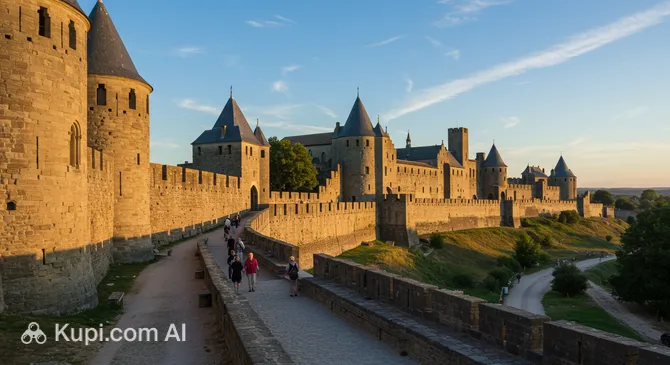
Stepping into Carcassonne feels like walking into the pages of a fairytale book. Famous worldwide for its remarkably preserved medieval fortress, this city in southern France offers a unique atmosphere that captivates visitors from the moment they arrive. With its massive defensive walls, pointed turrets, and cobbled streets, it stands as one of the most iconic and visually striking landmarks in Europe.
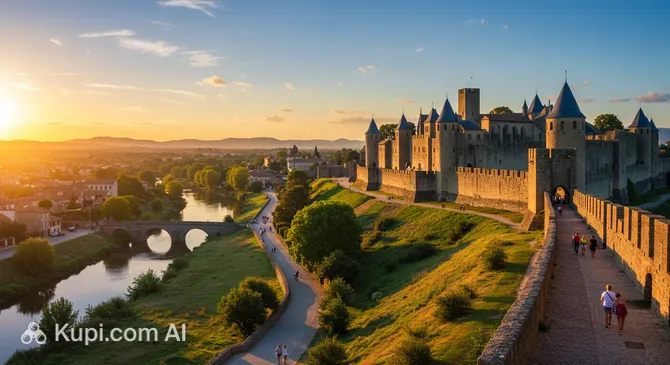
Carcassonne. Source: Kupi.Binoculars

Located in the picturesque Occitanie region, the city is strategically situated on a hilltop overlooking the valley of the Aude River. While it is home to a population of approximately 47,000 residents, the city retains an intimate and welcoming charm. The local climate is typically Mediterranean, characterized by hot, sunny summers and mild winters, making it a pleasant destination for exploration throughout most of the year.

The history of Carcassonne is deeply ingrained in every stone, spanning over two thousand years of strategic importance and architectural evolution. Uniquely, the city is divided into two distinct parts: the famous fortified Cité on the hill and the Bastide Saint-Louis, the lower town that bustles with daily life, shops, and cafes. This duality allows travelers to experience both the ancient heritage and the vibrant modern culture of the region in a single visit.

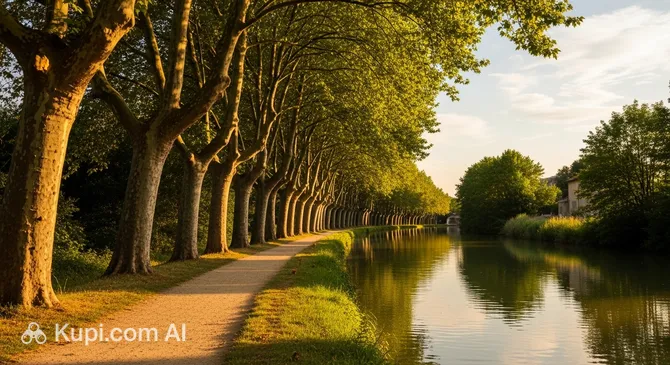
Most visitors come to marvel at the Cité de Carcassonne, a UNESCO World Heritage site featuring a double ring of ramparts and the impressive Château Comtal. Another major attraction is the Canal du Midi, also a UNESCO site, which flows through the city and offers opportunities for relaxing boat rides or scenic walks along its shaded banks. Whether you are a history enthusiast or simply looking for a romantic escape, Carcassonne promises an unforgettable journey through time.
Weather Overview

The climate in Carcassonne is generally mild and influenced by its proximity to the Mediterranean, offering distinct seasons that cater to various travel preferences. For a comprehensive forecast and monthly breakdowns, you can consult the detailed weather in Carcassonne guide to help plan your daily activities.

Summers are typically the warmest and driest part of the year, making them a favorite for tourists. During July and August, average temperatures sit around 23°C, with daytime highs frequently reaching 28°C. Rainfall is least frequent during this period, with August seeing only about 7 wet days, providing ample sunshine for exploring the city's outdoor heritage.

In contrast, the winter months of December and January are cooler and damper. Average temperatures drop to approximately 6°C to 7°C, with overnight lows occasionally falling near 3°C. Rainfall is more common in the cooler seasons and spring; for instance, May can experience up to 15 wet days. Overall, visitors should expect warm, sunny summers and cool, frequent showers during the winter months.

Interesting Facts

Beyond the postcard-perfect views of the medieval citadel, Carcassonne holds many fascinating secrets and legends that often escape the casual observer. From mythical strategies to architectural rescues, the city's past is as dramatic as its skyline.

  • The Legend of the Flying Pig: The city’s name is said to originate from a clever ruse by Lady Carcas during a siege by Charlemagne. As the story goes, she fattened the last pig with the remaining wheat and threw it over the walls to convince the enemy they had plenty of food. When Charlemagne retreated in despair, she rang the bells, prompting the cry "Carcas sonne" (Carcas rings). A bust of this legendary figure greets visitors at the Narbonne Gate.

  • Saved from Demolition: It is difficult to imagine today, but the magnificent City of Carcassonne was removed from the list of official fortresses in the 19th century and was slated for demolition due to disrepair. It was saved by the campaign of a local historian and the subsequent restoration by architect Eugène Viollet-le-Duc, who gave the fortress its current, iconic appearance.

  • A Rerouted Waterway: The famous Canal du Midi did not originally pass through Carcassonne when it was constructed in the 17th century due to a dispute over funding. The canal was only rerouted to flow through the city in the 19th century, a change that significantly boosted the local economy and created the scenic port area seen today.

  • Center of the Inquisition: Carcassonne played a pivotal role during the Albigensian Crusade and the subsequent Inquisition against the Cathars. The Count's Castle within the citadel served as a headquarters for these operations, and today, its museum offers a glimpse into this turbulent religious history.

Count's Castle. Source: Kupi.Binoculars

How to Get There

Reaching this medieval jewel in the Occitanie region is straightforward, with several convenient options available for travelers. Whether you prefer flying directly into the area or taking a scenic train ride through the French countryside, you can easily find a route that suits your itinerary. For a complete guide on all available transport methods, you can read more about how to get to Carcassonne.

If you prefer air travel, the most convenient option is the local Carcassonne Airport (CCF), also known as Salvaza Airport. It is located just 3.9 km from the city center, making the final leg of your journey incredibly short; a taxi or shuttle bus can get you to the medieval citadel in approximately 25 minutes. Although it is a smaller regional hub, it serves as a key entry point for visitors from various European destinations.

For those arriving from further afield, Toulouse-Blagnac Airport (TLS) in the city of Toulouse is a major international gateway. Situated about 92.4 km from Carcassonne, it handles a large volume of passenger traffic and offers a wider range of flight connections. From Toulouse, you can reach Carcassonne in roughly 1 hour and 30 minutes by car or by taking a connecting train.

For clarity, here is a summary of the main airports:

Airport Name City Passenger Traffic Km from City
Toulouse-Blagnac AirportToulouseLarge92.4
Llabanère AirportPerpignanMedium67.6
Carcassonne AirportCarcassonneMedium3.9
Beziers Vias AirportBéziersSmall82.0
Marcillac AirportRodezSmall132.8

Traveling by train is another excellent way to approach the region. While Carcassonne has its own central station, many travelers connect through major railway hubs in nearby cities. One of the most significant is Matabiau Station in Toulouse, located approximately 85.1 km away. This large station connects to high-speed lines across France, and the subsequent transfer to Carcassonne takes just under an hour by regional train.

Another option is the Perpignan Station in the city of Perpignan, situated about 72.0 km from Carcassonne. It serves as a convenient hub for those coming from the south or Spain. From here, you can rent a car or take a connecting train to reach your destination in approximately 1 hour and 30 minutes.

Below is a list of major railway stations in the vicinity that can serve as transit points:

Station City Passenger Traffic Km to Center
Matabiau StationToulouseLarge85.1
Montpellier Railway StationMontpellierLarge131.0
Perpignan StationPerpignanMedium72.0
Montauban Railway StationMontaubanMedium119.6
Agde StationAgdeMedium91.0

Main Attractions

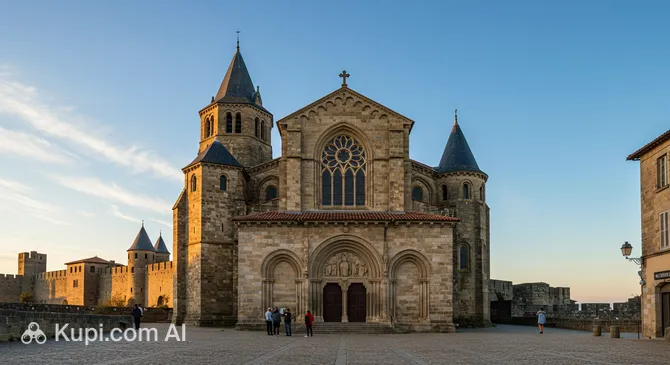
A visit to this medieval marvel is anchored by the breathtaking Basilica of Saints Nazarius and Celsus. Located within the citadel walls, this architectural gem is a harmonious blend of Romanesque and Gothic styles. It is most famous for its magnificent stained glass windows, which are considered some of the finest in southern France, casting a kaleidoscope of colors onto the ancient stone interior during sunny days.

Basilica of Saints Nazarius and Celsus. Source: Kupi.Binoculars

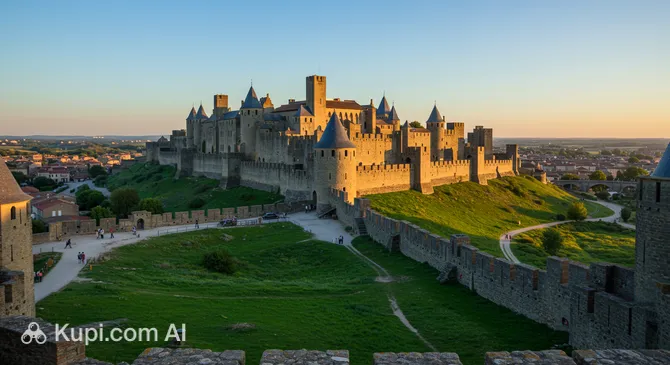
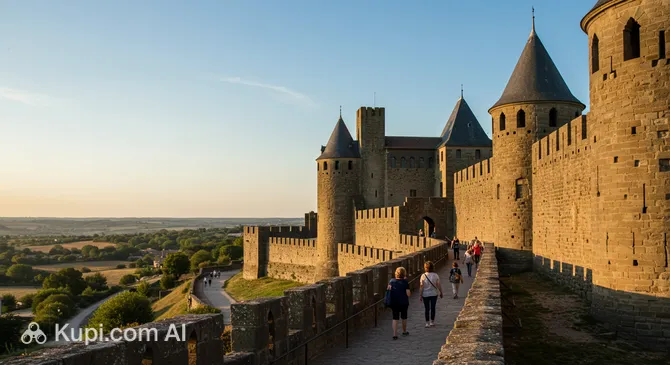
For those seeking panoramic views and a tangible sense of history, walking the Castle and Ramparts of the City of Carcassonne is an absolute must. The double line of fortifications stretches for three kilometers and is punctuated by 52 towers. Strolling along the lices (the space between the two walls) allows you to appreciate the sheer scale of the defenses while enjoying sweeping vistas of the lower town and the distant Pyrenees mountains.

Castle and Ramparts of the City of Carcassonne. Source: Kupi.Binoculars

While the main entrance is often crowded, the Porte d’Aude offers a more dramatic and rugged perspective of the fortress. Situated on the western side, this gate was historically difficult to breach and now serves as a picturesque entry point for pedestrians coming from the river. Its imposing stone arch and the steep path leading up to it make it one of the most photogenic spots in the city, resembling a scene from a fantasy movie.

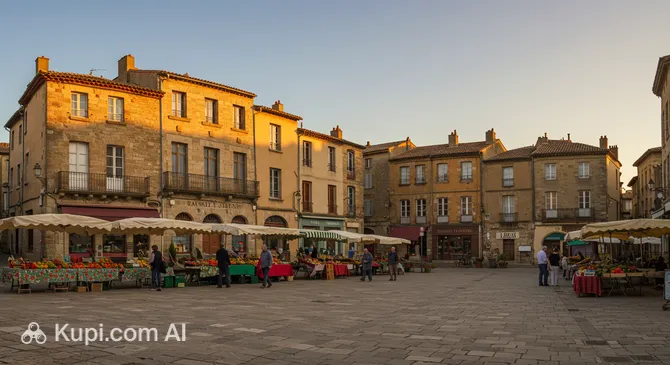
To experience the local rhythm of life away from the historic citadel, head to Place Carnot in the center of the Bastide Saint-Louis. This charming square is the social heart of the city, shaded by large plane trees and centered around the Neptune Fountain. It is the perfect place to relax at a café terrace or explore the vibrant local market that takes place here, offering fresh regional produce and a lively atmosphere.

Place Carnot. Source: Kupi.Binoculars

Local Cuisine

The cuisine of Carcassonne is a proud reflection of the Occitanie region, characterized by robust flavors, rustic ingredients, and a deep love for slow cooking. Food here is not just sustenance; it is a celebration of the land, featuring high-quality poultry, fresh vegetables, and time-honored recipes passed down through generations. Visitors will find that dining in this city is a hearty affair, perfect for refueling after a day of exploring the ramparts.

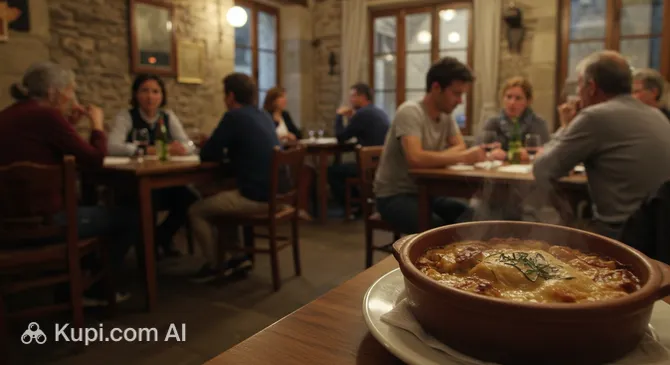
No visit to this city is complete without trying its most famous culinary treasure: Cassoulet. This rich white bean stew, slow-cooked with duck confit, pork sausages, and mutton, is the soul of local gastronomy. While you can find it on almost every menu, specialist restaurants like La Demeure du Cassoulet offer a truly authentic experience, serving the dish bubbling hot in traditional earthenware pots known as cassoles.

La Demeure du Cassoulet. Source: Kupi.Binoculars

Beyond the famous stew, the region is renowned for its exceptional duck dishes, including foie gras and magret de canard (duck breast). The dining scene ranges from cozy, family-run bistros to high-end establishments. For those seeking a gourmet twist on local ingredients, La Table de Franck Putelat provides an exceptional fine dining experience, showcasing the sophistication that modern French cuisine brings to traditional flavors.

To eat like a local, venture down to the lower town, known as the Bastide Saint-Louis. Here, the atmosphere is often more relaxed than in the fortified city on the hill. The weekly markets held at Place Carnot are a feast for the senses, offering fresh fruit, regional cheeses like goat's milk Pélardon, and cured meats. It is the perfect spot to grab ingredients for a picnic or simply observe the daily rhythm of life in southern France.

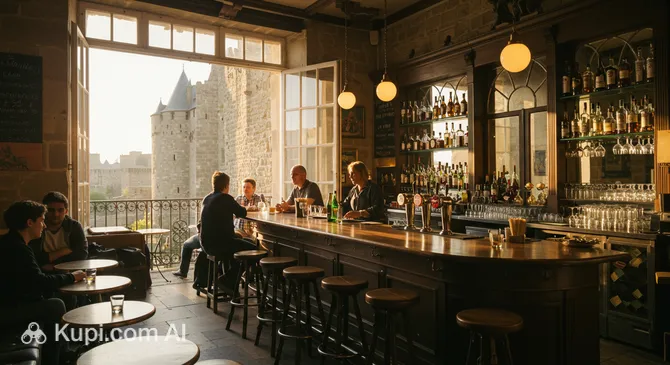
A meal in Carcassonne is best accompanied by the excellent wines of the Languedoc region. The vineyards surrounding the city produce bold reds from the Corbières and Minervois appellations, which pair perfectly with the heavy local food. For something sparkling, try a glass of Blanquette de Limoux, which locals proudly claim is the world's oldest sparkling wine. If you want to explore a wide variety of beers and wines in a friendly setting, V and B Carcassonne is a popular spot to unwind in the evening.

Travel Tips

Welcome to Carcassonne! To help you navigate the medieval cobblestones and enjoy the local culture without a hitch, we have compiled a list of essential advice. These practical tips will ensure your journey through this historic fortress and the charming lower town is as smooth and enjoyable as possible.

  1. Clothing and Gear: The most important item to pack is a pair of sturdy, comfortable walking shoes. The Cité is paved with uneven medieval cobblestones that can be treacherous for high heels or flip-flops. Since the region can be windy due to the Tramontane winds, bringing a light windbreaker or scarf is wise, even in warmer months. If you plan to visit the France religious sites like the Basilica, ensure your shoulders and knees are covered as a sign of respect.

  2. Transportation: The best way to explore the city itself is on foot, though the walk between the hilltop Cité and the lower Bastide Saint-Louis takes about 20 to 30 minutes. If you prefer not to walk, local buses and a dedicated tourist "little train" (Le Petit Train) connect the two main areas. While renting a car is excellent for exploring the wider Occitanie region, avoid trying to drive inside the fortified walls; parking is restricted and expensive. Use the designated paid parking lots just outside the ramparts.

  3. Finances: The local currency is the Euro (€). Credit and debit cards (Visa and Mastercard) are widely accepted in hotels, restaurants, and larger shops. However, it is recommended to carry some cash for small purchases at local markets, bakeries, or for buying souvenirs in smaller stalls. Tipping is not mandatory as a service charge is included in the bill, but leaving small change or rounding up is a polite gesture appreciated by waitstaff.

  4. Health and Safety: Carcassonne is generally a very safe city for tourists. Pharmacies are easily identifiable by a flashing green cross sign and are well-stocked for minor ailments. For emergencies, dial 112. In the height of summer, the sun can be intense, especially within the stone walls of the fortress which radiate heat, so staying hydrated and wearing sunscreen is essential.

  5. Communication: The official language is French. While staff in the main tourist hub of the Cité generally speak good English, it may be less common in the lower town or smaller local establishments. Learning a few basic phrases like "Bonjour" (Hello), "Merci" (Thank you), and "S'il vous plaît" (Please) goes a long way in establishing a friendly rapport with locals. Free Wi-Fi is often available in cafes and hotels, and prepaid SIM cards can be bought at tobacco shops (Tabac) or supermarkets.

  6. Local Etiquette: Politeness is highly valued here. It is customary to greet shopkeepers and staff with a polite "Bonjour" or "Bonsoir" upon entering an establishment and "Au revoir" when leaving. When visiting restaurants, wait to be seated rather than choosing your own table. In public places and religious sites, maintain a moderate volume to respect the peaceful atmosphere.

  7. What to Avoid: Do not assume that the Cité is the only place to eat; restaurants within the walls can sometimes be pricier and more tourist-oriented. For a more authentic and reasonably priced meal, head down to the Bastide Saint-Louis. Also, avoid visiting the most popular spots between 11:00 AM and 3:00 PM in July and August if you dislike crowds; the narrow streets can get quite congested.

  8. Bonus Tip: Many visitors don't realize that access to the Cité itself is free and open 24/7; you only pay to enter the Château Comtal (Count's Castle) and walk on the ramparts. A pro tip is to return to the fortress at night. The crowds disappear, and the illuminated walls create a magical, almost ghostly atmosphere that offers a completely different experience from the daytime bustle.

With these tips in hand, you are ready to step back in time and experience the magic of Carcassonne with confidence. Whether you are marveling at the fortifications or enjoying a quiet coffee in the lower town, a little preparation will help you create unforgettable memories in this enchanting southern city.

Entertainment & Nightlife

Entertainment and Nightlife:

While Carcassonne is renowned for its medieval history, the city transforms as the sun sets, offering a distinct and welcoming nightlife experience. Unlike the bustling metropolises of France, the evening scene here is more about relaxed conviviality, fine wine, and intimate gatherings than massive rave clubs. The atmosphere is generally laid-back, reflecting the southern French "art de vivre," where evenings are meant to be savored slowly with friends.

The nightlife is primarily divided between the two main districts. Within the fortified walls of the Cité, the vibe is romantic and quiet, perfect for a moonlit stroll or a calm drink on a terrace overlooking the ramparts. However, for a more vibrant scene with locals, you should head to the lower town, the Bastide Saint-Louis. The area around Place Carnot and the streets leading to the train station are where you will find the highest concentration of bars and pubs.

For those looking to enjoy a classic French brasserie atmosphere with a lively evening crowd, Café de la Comedie is a popular choice. Located centrally, it is an excellent spot to mingle with locals, enjoy a refreshing drink, and soak in the bustling street life. The dress code in most bars is casual, and the prices are reasonable compared to larger tourist hubs.

Café de la Comedie. Source: Kupi.Binoculars

If you are in the mood for dancing or a late-night party, options are more limited but present. Venues like the Charme & Design Night Club offer a place to continue the night after the bars close. These clubs typically pick up steam after midnight, attracting a mix of younger locals and tourists. Another notable spot is the Hôtel du Château Night Club, which provides a unique setting near the historic area.

Regarding safety, Carcassonne is generally secure at night, especially in the main tourist areas. However, the streets can become quite empty late at night in the Bastide, so it is advisable to stick to well-lit main avenues. Taxis are available but can be scarce on the street; it is highly recommended to book one in advance or have a restaurant call one for you if you are staying far from the center.

During the day, the city offers a variety of cultural and leisure activities beyond the castle walls. Art lovers should visit the Museum of Fine Arts of Carcassonne, which houses a respectable collection of European paintings and ceramics. For families traveling with children, the Australian Park provides an entertaining break with kangaroos and interactive exhibits, offering a fun contrast to the region's medieval themes.

Parks & Museums

While the medieval citadel often steals the spotlight, Carcassonne also boasts a variety of serene green spaces and cultural institutions that offer a deeper understanding of the region's heritage. Beyond the stone fortifications, visitors can find lush gardens, artistic treasures, and scenic natural areas that provide a refreshing counterpoint to the city's military history.

The most significant green artery running through the city is the Canal du Midi (Carcassonne). This UNESCO World Heritage site is lined with majestic plane trees and offers a peaceful setting for walking, cycling, or enjoying a leisurely boat trip. The towpaths provide a shaded retreat during the hot summer months, allowing travelers to experience the slow-paced charm of southern France while watching barges glide through the historic locks.

Canal du Midi (Carcassonne). Source: Kupi.Binoculars

For a more immersive nature experience, the nearby Lac de la Cavayère, often referred to as "Carcassonne Plage," is a favorite among locals. Located just a short drive from the center, this artificial lake is surrounded by pine forests and offers distinct swimming areas. It is also home to the Aquaviva Water Park Carcassonne, an inflatable aquatic course that provides fun and excitement for families. Another unique outdoor attraction is the Australian Park, a wildlife park where visitors can walk among kangaroos and wallabies, offering an unexpected slice of the southern hemisphere in the heart of Occitanie.

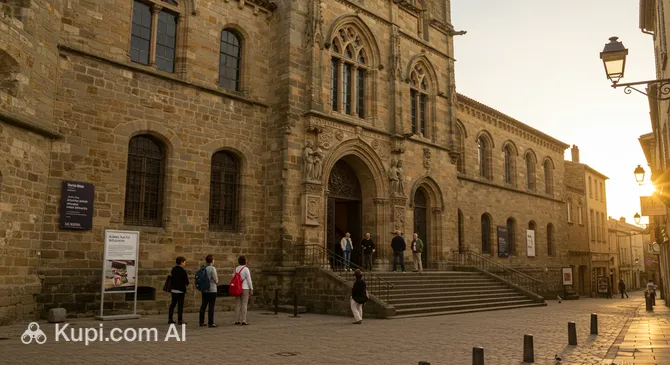
In terms of culture, the Museum of Fine Arts of Carcassonne (Musée des Beaux-Arts) is a must-visit. Situated in the Bastide Saint-Louis, this museum houses a rich collection of European paintings from the 17th to the 19th centuries, as well as a notable selection of ceramics and tapestries. It provides a quiet and sophisticated atmosphere where art lovers can admire works by masters such as Rigaud and Courbet, often with free admission to the permanent collections.

Museum of Fine Arts of Carcassonne. Source: Kupi.Binoculars

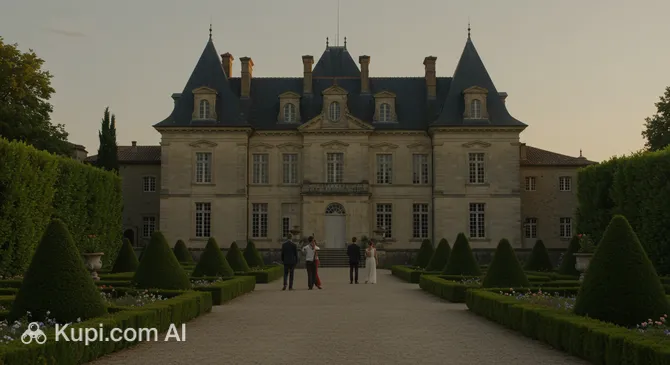
A short distance from the city, history and architecture enthusiasts will find the magnificent Château de Pennautier. Known as the "Versailles of Languedoc," this historic monument features stunning French-style gardens designed by Le Nôtre, the same landscape architect behind the gardens of Versailles. A visit here offers a glimpse into the grandeur of the 17th century, combining architectural elegance with beautifully manicured grounds perfect for a romantic stroll.

Château de Pennautier. Source: Kupi.Binoculars

Within the lower town, the Saint Vincent Church of Carcassonne stands as a prime example of Languedoc Gothic architecture. Its massive bell tower, which is accessible to the public, serves as a fantastic vantage point. Climbing the stairs rewards visitors with a breathtaking view over the rooftops of the Bastide towards the medieval Cité on the hill. Nearby, the Saint Michael's Church of Carcassonne serves as the cathedral for the lower town, featuring a fortress-like exterior that reflects the region's turbulent past.

For an authentic local experience and the best photo opportunity away from the crowds, head to the Carcassonne Castle Viewpoint on the banks of the Aude River. This spot, located near the Old Bridge (Pont Vieux), offers the classic postcard view of the fortress rising above the water, particularly enchanting at sunset when the golden light hits the ancient ramparts.

Getting Around

Navigating Carcassonne is surprisingly simple, as the city is relatively compact and pedestrian-friendly. The public transport system is primarily composed of a reliable bus network operated by RTCA (Régie des Transports de Carcassonne Agglo). These buses connect the main residential areas, the train station, the lower town (Bastide Saint-Louis), and the medieval Cité. Since there is no metro or tram system here, the bus is the main motorized option for getting around the city limits.

For tourists, the most useful lines are typically those that run between the SNCF Train Station, the downtown area (Place Carnot), and the hilltop fortress. In the summer months, specific shuttle buses (often labeled as "Navette Cité") run more frequently to transport visitors from the lower town and parking lots up to the medieval ramparts, saving you a steep uphill walk. Additionally, a dedicated Airport Shuttle connects the local airport to the city center and the Cité, timed to coincide with flight arrivals.

The payment system is straightforward and affordable. A single trip ticket typically costs around €1.20 and is valid for one hour, allowing for transfers. You can purchase tickets directly from the bus driver upon boarding (it is best to have small change or coins ready) or buy a booklet of tickets at the RTCA boutique in the city center. For added convenience, travelers can download the RTCA mobile app, which allows you to purchase "M-Tickets" on your phone and scan them when you board.

A unique and popular alternative for sightseeing is the Petit Train (Little Train). This tourist train offers a scenic, guided loop that connects the Bastide Saint-Louis to the Cité. It is an excellent option for families or those who want to see the main landmarks without the physical exertion of walking between the two districts. The tour usually includes commentary in multiple languages, providing historical context as you travel.

Regarding alternatives, walking remains the most popular way to explore the historic centers, as many streets are narrow and pedestrianized. However, if you need to travel late at night or to outlying areas, taxis are available. Unlike in larger capitals, you cannot easily hail them on the street; it is essential to book one by phone or locate a designated taxi rank, usually found near the train station. Bike rentals are also a great choice, particularly for riding along the flat, shaded towpaths of the Canal du Midi.

A practical tip for visitors is to be mindful of operating hours. The bus service is not 24/7; most lines stop running in the early evening, around 8:00 PM, and service is significantly reduced on Sundays and public holidays. If you plan to dine late in the Bastide and stay near the Cité (or vice versa), be prepared to walk or pre-book a taxi for your return journey.

Accommodation

Where to Stay:

Finding the perfect place to stay in Carcassonne is an essential part of the travel experience, with options ranging from atmospheric medieval lodgings to modern city apartments. The accommodation scene is diverse, catering to backpackers, families, and luxury travelers alike. Whether you dream of sleeping within ancient fortified walls or prefer the convenience of the town center, the city offers a variety of choices to suit different budgets and preferences.

The most coveted location for many visitors is inside the Cité itself. Staying within the ramparts allows you to experience the magic of the medieval fortress early in the morning and late at night, long after the day-trippers have departed. These hotels are often housed in historic buildings with stone walls and antique charm, offering a romantic and immersive atmosphere. However, keep in mind that accommodation here tends to be pricier and space can be more limited due to the age of the structures.

For those prioritizing convenience and value, the Bastide Saint-Louis (the Lower Town) is often a better choice. This area is the center of local life, filled with shops, restaurants, and markets. It is located just a short walk or bus ride from the fortress but offers a wider range of mid-range hotels, budget hostels, and vacation rentals. Staying here also places you closer to the train station and the Canal du Midi, making it a strategic base for exploring the wider region without the premium price tag of the citadel.

If you prefer a quieter retreat, the countryside surrounding Carcassonne is dotted with charming gîtes (holiday cottages) and converted farmhouses. Some travelers even choose to stay in renovated châteaux or wine estates in the nearby vineyards, combining their visit with a taste of the rural French lifestyle. These options are particularly great for families or those with a car who want to escape the summer crowds.

Booking Tip: Carcassonne is one of the most visited cities in France, especially during the peak summer months of July and August. It is highly recommended to book your accommodation several months in advance to secure the best rates and availability. If you visit during the famous Bastille Day fireworks (July 14th), booking up to a year ahead is often necessary.

In terms of pricing, the city accommodates all wallets. You can find budget-friendly hostels and economy hotels primarily in the Lower Town and on the outskirts. Mid-range options are plentiful in the Bastide, while the luxury segment is largely concentrated within or immediately adjacent to the Cité. Most accommodations are listed on major online booking platforms, but contacting smaller bed-and-breakfasts directly can sometimes yield better personalized service or offers.

Nearby Cities

For those looking to explore the surroundings, Carcassonne serves as an excellent base for day trips to several interesting nearby locations:

One of the most captivating destinations is Narbonne, located just a short drive toward the coast. Once a major Roman capital, it offers a rich historical tapestry, including the unique Horreum (underground Roman warehouses) and the majestic, unfinished Cathedral of Saint-Just and Saint-Pasteur. Visitors can also enjoy a relaxing walk along the Canal de la Robine, which runs through the heart of the city.

To the north lies Castres, a charming town often referred to as the "Little Venice of Languedoc" due to its colorful houses overhanging the Agout river. It is a cultural haven, notably home to the Goya Museum, which houses the second-largest collection of Spanish art in France after the Louvre. The town's peaceful atmosphere makes it perfect for a leisurely afternoon of exploration.

Another fascinating option is Béziers, one of the oldest cities in Europe. It is famous for the Fonserannes Locks, a UNESCO World Heritage site and a masterpiece of engineering on the Canal du Midi. The city also boasts a vibrant wine culture and offers stunning views of the Orb valley from the terrace of the Saint-Nazaire Cathedral.

City Population Distance (km)
Perpignan 119344 74
Béziers 78308 71
Narbonne 55516 53
Castres 42079 44
Pamiers 15659 62

These nearby destinations offer a glimpse into the diverse culture and landscapes of the region.

Shopping & Souvenirs

Shopping in Carcassonne is a delightful tale of two cities, offering experiences that range from medieval nostalgia to modern French chic. The retail scene is distinctly divided between the historic Cité on the hill and the bustling Bastide Saint-Louis below. Whether you are hunting for unique artisanal souvenirs, regional gastronomy, or high-street fashion, the city provides a diverse array of options to suit every taste.

Within the fortified walls of the City of Carcassonne, the atmosphere is vibrant and undeniably tourist-focused. The narrow cobblestone lanes, particularly Rue Cros-Mayrevieille, are lined with boutiques brimming with medieval-themed items. Here, visitors can find beautifully crafted tapestries, heraldic shields, and wooden swords that make perfect gifts for children. It is also an excellent place to purchase local handicrafts and textiles that reflect the rich heritage of the Occitanie region.

City of Carcassonne. Source: Kupi.Binoculars

For those seeking a more contemporary shopping experience, the lower town or Bastide Saint-Louis is the place to be. The pedestrianized Rue Georges Clemenceau serves as the main commercial artery, flanked by popular French fashion brands, shoe stores, and independent bookshops. This area offers a more authentic glimpse into the daily life of the locals, away from the crowds of the citadel. It is the ideal spot to update your wardrobe with a touch of French style or find unique home decor items.

Gastronomy plays a central role in the local culture, making edible souvenirs a top choice for travelers. You cannot leave without considering a jar of authentic cassoulet, the region's signature bean and meat stew, which allows you to bring the flavors of the south of France home with you. The area is also famous for its sweets, such as chocolates and fruit candies, as well as excellent local wines. Shops and cellars like V and B Carcassonne offer a wide selection of bottles from the nearby Minervois and Corbières vineyards.

To experience the true heartbeat of the city, a visit to the local markets is essential. The most famous is held at Place Carnot in the center of the Bastide. On Tuesday, Thursday, and Saturday mornings, this square transforms into a sensory delight filled with stalls selling fresh seasonal fruits, vegetables, cheeses, and flowers. It is a wonderful opportunity to mingle with residents and purchase fresh ingredients for a picnic by the canal.

When planning your shopping excursion, it is helpful to know that opening hours can vary between the two districts. Shops in the Bastide typically follow the traditional French schedule, closing for a lunch break between 12:00 PM and 2:00 PM and remaining closed on Sundays. In contrast, the boutiques within the Cité generally remain open all day, seven days a week, to cater to the influx of visitors. Most establishments accept credit cards, though carrying some cash is recommended for small purchases at the open-air markets.

Reached the end of the page?

That means the route is fully explored