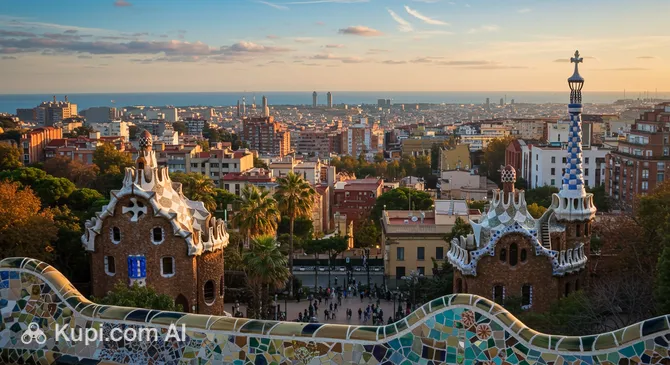
Barcelona is more than just a city; it is a living embodiment of Mediterranean temperament and architectural genius. The capital of Catalonia, located in northeastern Spain, harmoniously combines a rich heritage of the past with bold modern innovations. With a population of about 4.8 million in its metropolitan area, it remains one of Europe's most dynamic and cosmopolitan centers, attracting travelers with its unique light, sea breeze, and endless creativity.
Barcelona. Illustration.
Source: Kupi.com AI
The city is like a vast open-air museum where the Gothic spires of the Old City stand alongside the fantastic forms of Modernism. Barcelona's rich historical past is felt at every step: from ancient Roman ruins to majestic palaces. A special atmosphere is created by the cozy cafes of the Gothic Quarter and the wide avenues of the Eixample district, while 4.2 kilometers of coastline with golden beaches make a holiday here truly versatile.
The heart of the city pulses at Plaça de Catalunya, from which the main arteries lead to the sea and the mountains. It is impossible to imagine Barcelona without the masterpieces of Antoni Gaudí or the lively La Rambla boulevard. We invite you to dive into this whirlwind of colors and flavors to personally experience the magic of a city that is equally beautiful in the rays of the morning sun and the lights of the night illumination.
Weather Overview
Barcelona delights its visitors with a classic Mediterranean climate, which makes visiting the city comfortable at almost any time of year. There are more than 250 sunny days a year, creating an atmosphere of eternal celebration and light. To better plan your wardrobe and activities, we recommend checking the current weather in the city in advance.
Summer in Barcelona is hot and quite humid, with peak temperatures in July and August reaching 28–30°C. This is the ideal time for a beach holiday and evening strolls along the promenade. Winter is very mild: the thermometer rarely drops below 8–10°C, and the bright sun often shines during the day, warming the air to a pleasant 15°C. Expect warm summers with occasional thunderstorms and sunny, cool winters with minimal rainfall in December.
The most favorable seasons for excursions are considered spring (April-May) and autumn (September-October). During these periods, the air temperature stays around 20–25°C, which is perfect for long walks in the parks and sightseeing. September and October can be rainy, but the precipitation is usually short-lived and followed by clear skies.
Average monthly temperature
Average monthly precipitation
Interesting Facts
Barcelona is a city capable of surprising even those who visit often. Here are a few facts that will help you see the Catalan capital from a new perspective:
Secrets underfoot: At the Born Market in the La Ribera district, you can see entire city quarters that were demolished in 1714 beneath a glass floor. This is one of the largest archaeological complexes of its kind in Europe.
The real main cathedral: Contrary to popular belief, the city's Cathedral is not the Sagrada Família, but the Cathedral of the Holy Cross and Saint Eulalia in the Gothic Quarter. Here, 13 white geese live in one of the courtyards — in honor of the patron saint.
A home for a genius: The Picasso Museum occupies five magnificent Gothic buildings. Its collection houses rare works from the "Blue Period," allowing visitors to see the development of the great artist.
Natural balance: The city is uniquely located between the sea and the mountains. There are 4.2 km of equipped beaches, and directly above the city lies the vast Serra de Collserola Natural Park, considered one of the largest urban parks in the world.
Administrative mosaic: The city is officially divided into 10 districts, but a tourist's heart always belongs to three main ones: the historical Old City, the modernist Eixample, and the panoramic Montjuïc.
How to Get There
Barcelona is one of the largest transport hubs in the Mediterranean, making it easily accessible from anywhere in the world. The city welcomes millions of tourists annually thanks to its developed network of air connections, high-speed trains, and seaport. To ensure your trip goes smoothly, it is useful to research the current route to the city in advance and choose the most suitable transport option.
The city's main air gateway is Barcelona–El Prat Airport (IATA: BCN). It is a modern aviation hub located just 13 km from the center. You can reach Plaça de Catalunya by Aerobús express buses, R2 Nord suburban trains, or by metro (line L9 Sud). A taxi ride takes about 20–30 minutes depending on traffic.
If you are traveling through Spain or Europe by train, your main point of arrival will be Sants Station (YJB). This is the largest railway hub, where high-speed AVE trains from Madrid and trains from France arrive. The station is conveniently connected to the city metro. Another important station is the historic Estació de França (YJD), located near Ciutadella Park and the sea, which is an architectural monument in its own right.
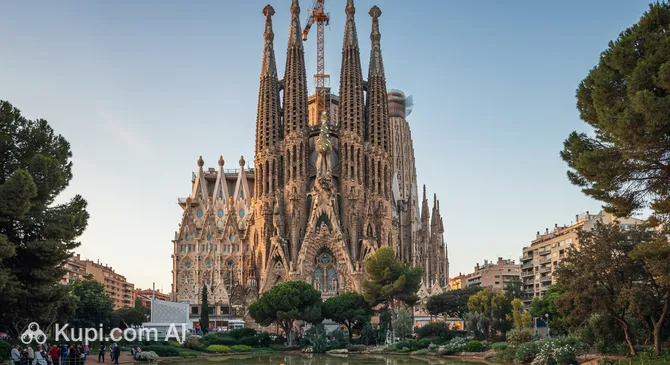
The architectural silhouette of Barcelona is impossible to imagine without Antoni Gaudí's most ambitious project — the Sagrada Família Basilica. This masterpiece, under construction for over a century, strikes the imagination with its detailed facades and a forest of columns inside that flood the space with magical light through multi-colored stained-glass windows. The temple is rightfully considered the symbol of the city and a must-visit for every tourist.
Basilica of the Sagrada Familia. Illustration.
Source: Kupi.com AI
Traveler photos:
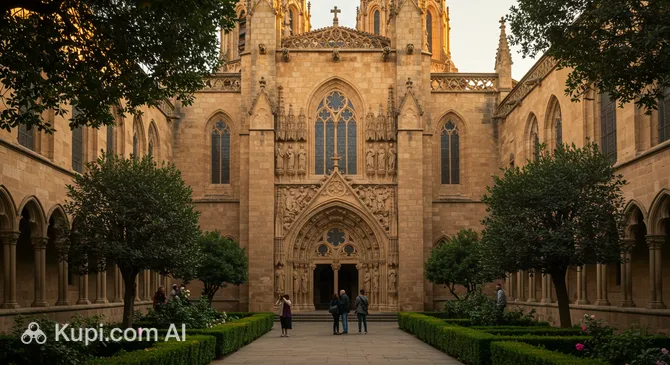
For those seeking seclusion and tranquility, the Monastery of Pedralbes is an ideal location. Founded in the 14th century, this Gothic ensemble with a magnificent three-story cloister allows you to travel back to the Middle Ages. Here, you can stroll through quiet galleries and see unique frescoes in the Chapel of St. Michael, enjoying the silence far from the bustling center.
Monastery of Pedralbes. Illustration.
Source: Kupi.com AI
Traveler photos:
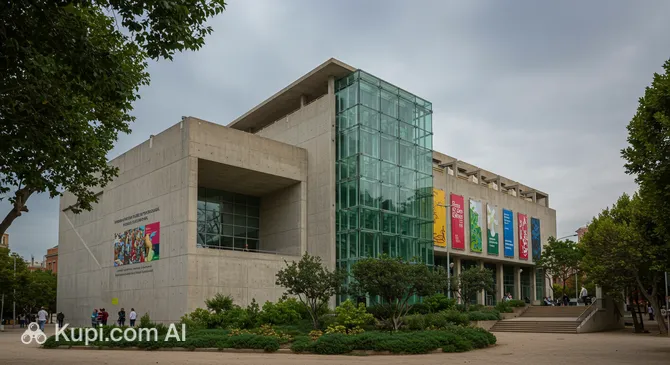
Interactive adventures await guests at the CosmoCaixa Science Museum. It is one of the most modern spaces of its kind in Europe, where you can literally "touch" science. Of particular note is the "Flooded Forest" — a huge greenhouse with an Amazonian ecosystem, home to caimans, birds, and fish. The museum will be interesting not only for children but also for adults thanks to its hands-on experiments and planetarium.
CosmoCaixa Science Museum. Illustration.
Source: Kupi.com AI
Traveler photos:
Local Cuisine
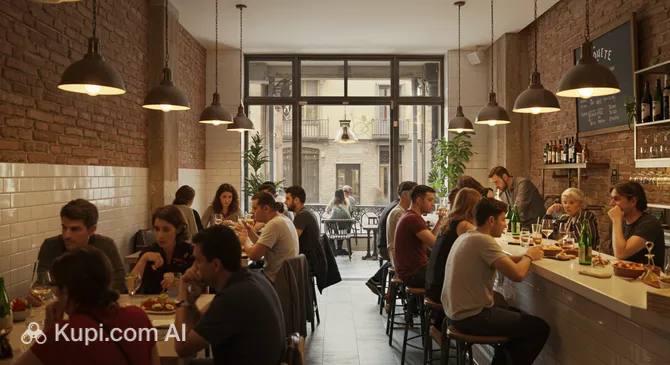
Barcelona's gastronomy is a vibrant mix of Catalan traditions and modern culinary trends. The main emphasis here is on the freshest seafood, vegetables, and olive oil. Be sure to try paella or its Catalan version, fideuà (which uses short noodles instead of rice). Among snacks, favorites remain pa amb tomàquet (bread with tomato) and various tapas, which are best sampled in lively bars like Cañete.
Cañete. Illustration.
Source: Kupi.com AI
Traveler photos:
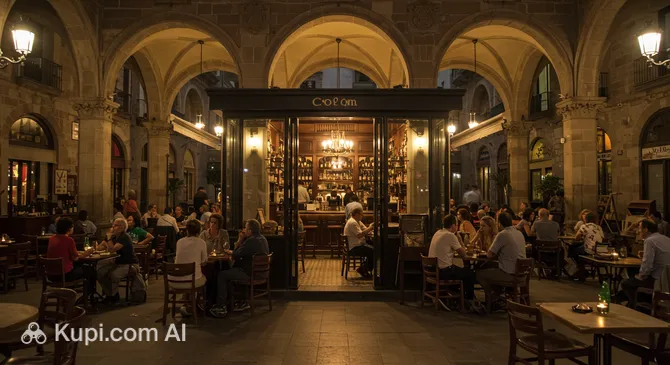
Markets hold a special place in the city's culinary culture. The famous Boqueria on La Rambla is a true temple of food, where you can not only buy products but also have a snack right at the counters. For a more relaxed dinner in a classic setting, the Colom Restaurant is excellent, serving traditional dishes in the heart of the Old City. For dessert, be sure to order Crema Catalana — a delicate treat with a crispy caramel crust.
Colom Restaurant. Illustration.
Source: Kupi.com AI
Traveler photos:
Regarding drinks, it is customary to accompany a meal in Barcelona with a glass of chilled Cava (Spanish sparkling wine) or a refreshing sangria with fruit. Dining culture here is very important: lunch usually starts at 2:00 PM, and dinner no earlier than 8:00 PM. Many popular establishments require advance reservations, especially on weekend evenings when locals head out for traditional family dinners.
Travel Tips
Preparing for a trip to Barcelona will be easier if you consider a few important nuances. We have collected practical tips for you to help you feel confident in the capital of Catalonia.
Clothing and comfort: Choose the most comfortable shoes for walking on the cobblestones of the Old City. In summer, sunglasses and sunscreen are essential, and for visiting churches (such as the Sagrada Família), remember the dress code: shoulders and knees should be covered.
Transport: The most economical way to get around is the T-Casual card for 10 trips. It is valid on the metro, buses, and trams. In the city center, it is better to walk or use bicycles.
Finances: Spain uses the Euro. Cards are accepted almost everywhere, even in small cafes, but it's worth having some cash for markets and small souvenirs. Tips are usually around 5-10% but are not mandatory.
Safety: Barcelona is a safe city, but pickpockets operate in tourist areas (La Rambla, beaches). Keep an eye on your bags and do not leave phones on tables in street cafes.
Communication: The official languages are Spanish and Catalan. English is widely spoken in tourist zones. A few phrases in Catalan, such as "Bon dia" (Good day) or "Gràcies" (Thank you), will evoke genuine friendliness from locals.
Local etiquette: Greetings are usually accompanied by a light handshake or two kisses on the cheek (between acquaintances). Remember the siesta time: some shops may be closed from 2:00 PM to 5:00 PM.
What to avoid: Do not buy drinks from street vendors on La Rambla and do not walk around the city in swimwear outside the beach zone — this is considered disrespectful and can lead to a fine.
Booking in advance: Be sure to buy tickets online in advance for popular sites like the Sagrada Família or Park Güell. Queues at the box office can take several hours, and tickets for the current day are often simply unavailable.
We wish you an unforgettable journey and bright emotions in this magnificent city!
Entertainment & Nightlife
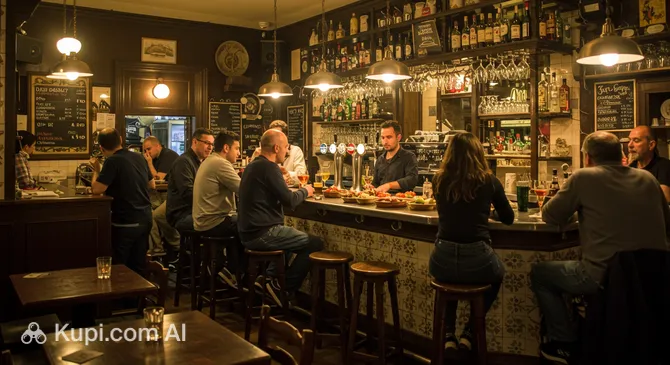
When the sun dips below the horizon, Barcelona transforms, opening the doors of its many establishments. The city's nightlife is concentrated in several key spots: the Gothic Quarter and El Born entice with cozy bars featuring live music, while parties roar in prestigious clubs along the Barceloneta waterfront. Start the evening with the traditional tapas ritual, stopping by atmospheric places like Vivo Tapas or the legendary El Xampanyet, where the spirit of good old Catalonia reigns.
Vivo Tapas. Illustration.
Source: Kupi.com AI
Traveler photos:
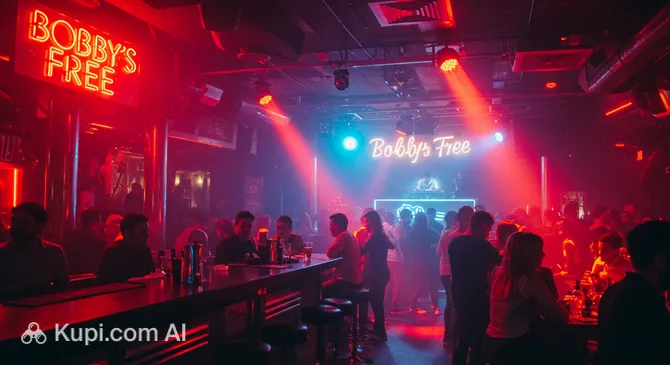
For fans of unusual formats and signature cocktails, Bobby's Free is a perfect choice — a speakeasy bar disguised as an old-fashioned barbershop. The atmosphere here is steeped in the spirit of the Prohibition era, and the crowd appreciates quality drinks and privacy. If you are looking for cultural entertainment, you can spend the evening at one of the theaters on Paral·lel or enjoy the Magic Fountain show on Montjuïc hill.
Bobby's Free. Illustration.
Source: Kupi.com AI
Traveler photos:
Getting between bars and clubs at night is most convenient by taxi or Nitbus night buses. Overall, Barcelona is considered a safe city for night walks, but you should remain vigilant in crowded areas like La Rambla. Most places come to life after midnight, and the dancing continues until dawn, when the first rays of sun illuminate the city's deserted beaches.
Parks & Museums
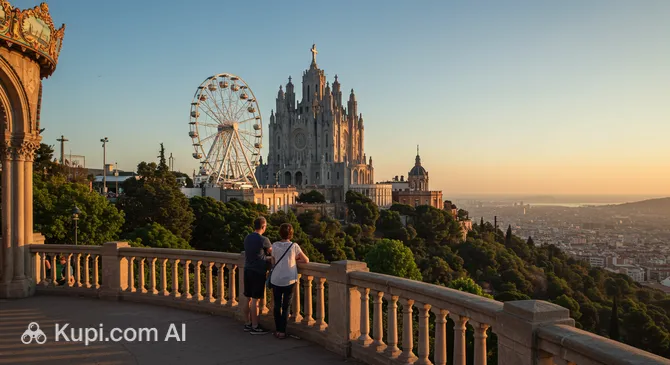
Barcelona's green spaces offer an amazing variety: from fairytale gardens to wild forest tracts. The undisputed favorite is Park Güell — Gaudí's creation, where winding mosaic benches and gingerbread houses create an atmosphere of fantasy. For fans of panoramic views, a visit to the Tibidabo Panoramic Area will be unforgettable, where the oldest amusement park sits alongside the majestic Temple of the Sacred Heart.
Tibidabo Panoramic Area. Illustration.
Source: Kupi.com AI
Traveler photos:
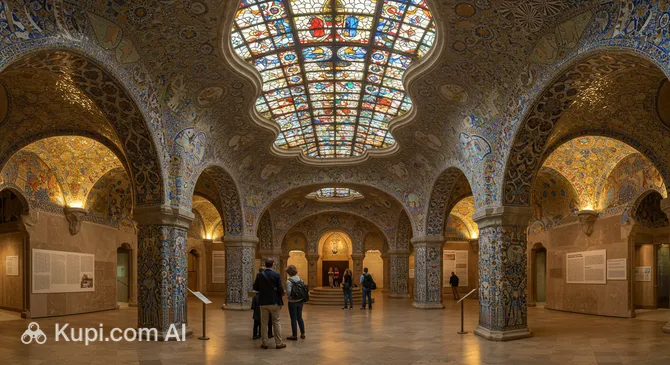
The city's museum map is capable of satisfying any taste. In the Gothic Quarter, it is worth seeing the elegant Bishop's Bridge, which connects important historical buildings, and visiting the City History Museum, where you can literally descend into the underground of Ancient Rome. Fans of Modernist architecture should definitely visit Palau Güell — one of Antoni Gaudí's early and very atmospheric works, included in the UNESCO heritage list.
Palau Güell. Illustration.
Source: Kupi.com AI
Traveler photos:
A cultural stroll can continue on Montjuïc hill, home to many gardens, the National Art Museum of Catalonia, and the Joan Miró Foundation. If the sea calls to you, the Maritime Museum, located in the old Royal Drassanes shipyards, tells of the times when Barcelona was the mistress of the sea routes. Each of these sites opens its own chapter in the city's rich history.
Getting Around
Barcelona's transport system is considered one of the most efficient and straightforward in Europe. The core is the metro, with 12 lines covering almost all areas important to a tourist. For example, Line 4 (yellow) is convenient for trips to the beaches and the historic center via the Jaume I station. The metro runs until midnight on weekdays, until 2:00 AM on Fridays, and 24 hours on Saturdays.
In addition to the metro, the city has an excellently developed network of buses and trams. For traveling between the Eixample and Montjuïc districts, the bus is often more convenient. A major hub is Plaça de Catalunya, where metro routes, FGC suburban trains, and airport buses intersect. For tourists, the most cost-effective payment option is the T-Casual card for 10 trips, which is valid on all types of city transport in Zone 1.
If you prefer active recreation, Barcelona will please you with its abundance of bike lanes and bike rental services. Also, it is easy to find taxis (black and yellow cars) throughout the city, which can be stopped by simply raising your hand. For traveling short distances in the center, walking is best, as many attractions are located literally a few minutes from each other, and the atmosphere of Barcelona's streets themselves invites leisurely exploration.
Accommodation
Choosing where to stay in Barcelona depends directly on the atmosphere you want to experience. For lovers of history and narrow streets, the Gothic Quarter or La Ribera is ideal, where many boutique hotels are located in historic buildings. If you prefer wide avenues, luxury shops, and Modernist architecture, look into the Eixample district. Those dreaming of waking up to the sound of waves should choose hotels in Barceloneta or along the Poblenou waterfront.
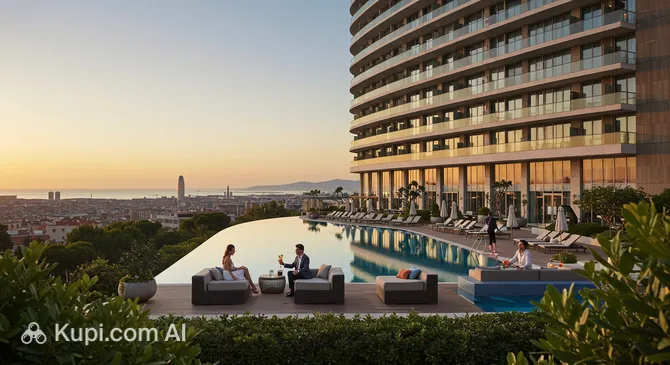
For connoisseurs of high-level service and exclusivity, Barcelona offers hotels like the Grand Hyatt Barcelona, which provides panoramic views and impeccable comfort. If your goal is total relaxation after long walks, look into spa hotels like the Bali Spirit Luxury Art Spa, where Eastern traditions meet European luxury.
Grand Hyatt Barcelona. Illustration.
Source: Kupi.com AI
Traveler photos:
During the peak tourist season (spring and summer), the demand for accommodation is huge, so it is recommended to book apartments or hotel rooms at least 2–3 months before your trip. Prices range from budget hostels to luxury suites, but on average, Barcelona remains a city where you can find quality accommodation for any budget, especially if you consider areas slightly away from Plaça de Catalunya.
Nearby Cities
Barcelona serves as an ideal starting point for exploring the beauty of the Catalonia region. Within just an hour's drive are places that allow you to swap city noise for the tranquility of the mountains or the charm of coastal villages. The Rodalies suburban train network makes traveling around the area as simple and accessible as possible for tourists.
Very close to the metropolis is the city of Badalona, known for its ancient ruins and long sandy beaches, which are often less crowded than those in central Barcelona. For those who want to see cozy suburbs with traditional architecture, interesting destinations include Sant Adrià de Besòs or the picturesque Sant Just Desvern.
We highly recommend setting aside at least one day to leave the city limits. You can head to the mountains to the Montserrat sanctuary or enjoy the views from the hills of Esplugues de Llobregat. Such trips allow for a deeper understanding of Catalan culture and a chance to see landscapes that have inspired artists and poets for centuries.
Shopping & Souvenirs
Shopping in Barcelona is an engaging activity that combines visits to luxury boutiques, ancient shops, and colorful markets. The city's main shopping axis stretches from Plaça de Catalunya up Passeig de Gràcia, where international high-fashion brands are represented, and down through the historic streets of the Gothic Quarter, where you can find unique designer jewelry and accessories.
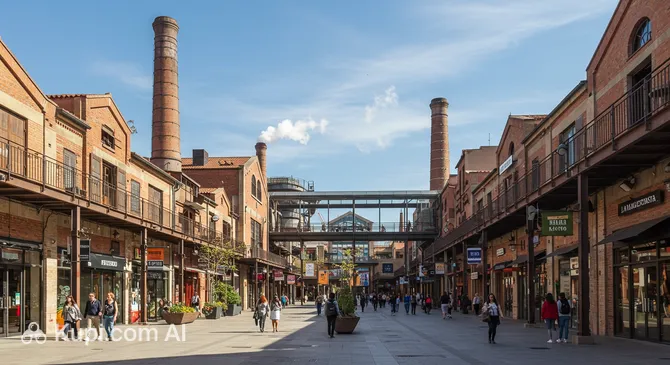
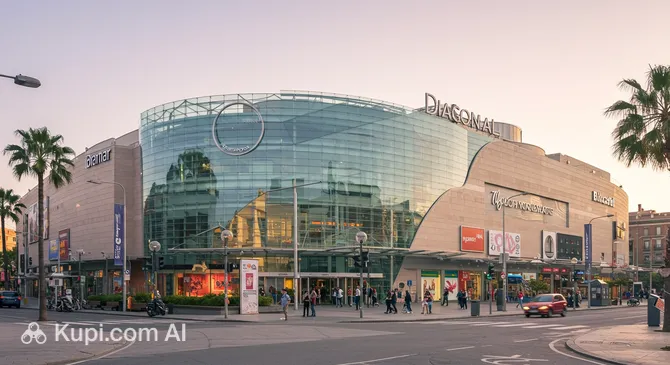
For those who prefer an "all-in-one" format, modern shopping centers operate in the city. La Maquinista is a huge open-air complex where the shopping process turns into a pleasant stroll. Another great option is the Diagonal Mar Shopping Center, located near the sea, allowing you to combine shopping with relaxation by the water.
La Maquinista. Illustration.
Source: Kupi.com AI
Traveler photos:
It is impossible to leave Barcelona without gastronomic souvenirs: stop by the Boqueria Market for jamón, cheeses, and turrón. Also, a great gift would be "trencadís" style ceramics (Gaudí's mosaic) or handmade products from the El Born quarter. Shops usually open from 10:00 AM to 9:00 PM or 10:00 PM, though small shops may close for siesta in the middle of the day. Don't forget the possibility of Tax Free shopping to make your purchases even more advantageous.