Support

Reus Airport

About the Airport

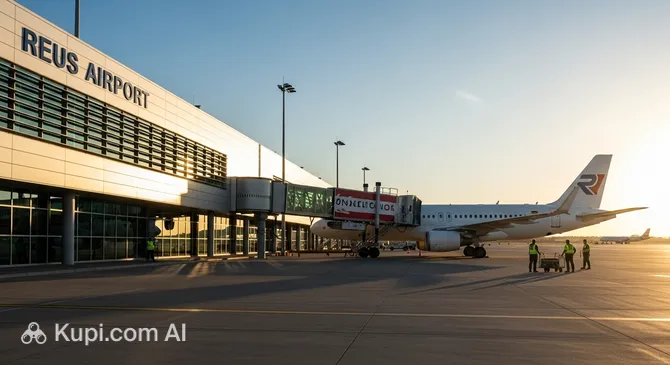
Reus Airport. Source: Kupi.com Binoculars

Reus Airport is not merely a transport hub, but a true "golden gateway" to the sunny Costa Daurada coast and the homeland of the great architect Antoni Gaudí. This cozy air haven serves as an ideal alternative to the bustling Barcelona airport, allowing travelers to begin their holiday without unnecessary hustle or long transfers. Thanks to its incredible proximity to the popular resorts of Salou and Cambrils, as well as the PortAventura World theme park, your vacation here begins literally from the moment you collect your luggage. The compact size of the terminal creates an atmosphere of home-like comfort and Catalan hospitality, setting the right mood for the entire journey.

IATA Code REU
ICAO Code LERS
City Reus
Distance to center ~3 km
Status International
Passengers per year ~1.2 million (2024 data)

Airport Features and Advantages:

The main advantage of Reus is its strategic location for those seeking the sea and entertainment. The airport is located just a 15–20 minute drive from the famous PortAventura theme park and the golden beaches of Salou and La Pineda. This makes it a favorite among families with children who value every minute of their vacation.

Despite its international status, the airport retains a relaxed, uncrowded atmosphere. There are rarely huge queues at passport control or security checks, allowing you to complete all formalities as quickly as possible. For tourists, this means less stress and more time to enjoy the Spanish sun.

Another important feature is the convenient transport connection. Buses run directly from the terminal not only to nearby resorts but also to Barcelona, which is about 100 km away. This is an excellent option for those who want to combine a beach holiday with an excursion to the capital of Catalonia but prefer to be based in a quieter region.

Contact Information

To contact the administration of Reus Airport, obtain reference information, or resolve any issues, you can use the following contact details:

  • Official Website: Current information on flights, services, and regulations is available on the official portal of the management company Aena: aena.es/es/reus.
  • Information Service Phone: +34 91 321 10 00 (general information line for the Aena airport network).
  • Airport Address: Autovía Tarragona-Reus, s/n, 43204 Reus, Tarragona, Spain.
  • Email: A direct email address for general inquiries is not published. It is recommended to use the contact forms on the official website for communication.
  • Social Media: Official Aena accounts on social networks (e.g., X/Twitter: @aena) regularly publish important updates concerning all airports in Spain.
  • Lost Luggage Information: If you have left personal belongings in the terminal building, contact the Lost and Found service (Objetos Perdidos) by phone: +34 977 779 813. In case of lost checked baggage, you must contact your airline's representative directly.
  • Passenger Support Contacts: For questions regarding assistance for passengers with reduced mobility (PRM) and other special requests, please contact the general phone number or use the services on the airport website.

How to Get to the Airport

Getting to Reus Airport (REU), which serves as the gateway to the popular Costa Daurada resort coast in Spain, is quite simple. Depending on your budget, time, and preferences, you can choose one of several convenient methods.

Public Transport

The most economical way to get to the airport is by bus. The municipal bus line No. 50 (L50) operated by Reus Transport runs between the city center of Reus (train and bus stations) and the airport. The trip takes about 20-25 minutes, and the ticket cost is just a few euros. Buses run regularly throughout the day, but the schedule may change depending on the season, so it is recommended to check it in advance. Buses also depart from the airport to other major cities and resorts in the region, including Tarragona, Salou, Cambrils, and even Barcelona.

Taxi and Transfer

For greater comfort, especially if you are traveling with family or a large amount of luggage, a taxi is an excellent option. The taxi rank is located directly outside the arrivals terminal exit. A trip to the center of Reus will take about 10-15 minutes and will cost approximately 20-25 euros. A trip to Salou will cost around 30-35 euros. You can also book a private transfer in advance — this can be slightly cheaper and saves you from waiting in line.

Car Rental

If you plan to actively explore the Costa Daurada coast and its surroundings, renting a car is the best solution. Offices of several major international and local rental companies operate at Reus Airport. By renting a car, you gain complete freedom of movement. The drive to the city center by car will take no more than 15 minutes.

Parking at the Airport

For those arriving at the airport in their own or rented vehicle, convenient parking is provided. There are options for both short-term and long-term parking. The parking lot is located within a few minutes' walk from the terminal, making it very convenient for passengers.

Getting Here from Other Airports

Although Reus Airport is convenient for many destinations, it is worth knowing that there are other air hubs in the region. The largest of them is Barcelona–El Prat Airport, located approximately 80 km away. From there, you can get to Reus by direct bus or by train with a transfer. Other alternatives include Girona–Costa Brava Airport and Lleida–Alguaire Airport, although transport connections with them may be less direct.

Terminals and Map

Reus Airport (REU) is a compact and modern airport distinguished by a simple and clear structure. Thanks to its small size, navigation here will not cause difficulties even for inexperienced travelers. All operations — from check-in to boarding — take place within a single passenger terminal.

The terminal serves both domestic and international flights, including many charters during the summer season. The building is functionally divided into two main levels. On the Ground Floor, you will find check-in counters, the arrivals area with baggage claim belts, and car rental desks. The First Floor is entirely dedicated to the departures area: here you will find security checkpoints, passport control, and boarding gates.

Since the airport has only one terminal, moving between zones takes minimal time. After checking in on the ground floor, passengers go up to the first floor to complete pre-flight formalities. All navigation is intuitive, with clear signs in Spanish, Catalan, and English throughout.

Despite its modest size, the airport can be quite busy during the peak tourist season (from June to September). It is recommended to arrive for check-in 2–2.5 hours before departure to calmly drop off luggage, pass security, and find your boarding gate. During the rest of the year, procedures usually go very quickly.

Airport History

The history of Reus Airport (REU) is a vivid example of how a small airfield can transform into an important international transport hub. The airport was founded in 1935 thanks to the initiative of the local Reus Aeroclub. Initially, it was used for training and sports flights, but soon its history took a new turn: during the Civil War in Spain, it served as one of the key military airbases.

The transition to civil aviation began gradually after the war, but the airport's true flourishing occurred in the 1990s. This period coincided with the tourism boom on the Costa Daurada coast. Travelers from all over Europe discovered the resorts of Salou and Cambrils, and Reus Airport became their main aerial gateway. It was then that it began active cooperation with charter and budget airlines, which determined its further development.

To cope with the growing passenger flow, the airport was modernized repeatedly. One of the most significant renovations took place ahead of the 1992 Olympic Games in Barcelona. However, the most large-scale expansion took place in the 2000s, when new arrival and departure halls were built, and the total terminal area was significantly increased. This allowed the airport to serve millions of passengers annually, especially during the peak summer season.

One interesting fact is that the airport unofficially bears the name "Gateway to the World of Gaudí," as the city of Reus is the birthplace of the great architect Antoni Gaudí. Furthermore, its strategic location just a few kilometers from the famous PortAventura World theme park has made it an integral part of the tourism infrastructure of the entire Catalonia region.

Services and Amenities

Reus Airport (REU) offers passengers all necessary services for a comfortable wait for their flight. Despite its relatively small size, the terminal is well-equipped and designed for the convenience of travelers arriving on the Costa Daurada coast.

For those wishing to have a snack or do some shopping, the airport has several cafes and restaurants offering both local snacks and international cuisine. In the departure area, shops are available, including a classic Duty Free, where you can purchase perfumes, confectionery, tobacco products, and souvenirs. This is a great opportunity to buy gifts for loved ones before departure.

Staying connected is easy — free Wi-Fi is available throughout the terminal. Special stations and power outlets are provided in waiting halls for charging electronic devices. Additionally, the airport has ATMs and currency exchange points, allowing you to settle financial matters right on the spot.

Reus Airport cares about the comfort of all categories of passengers. For travelers with children, nursing rooms and play areas are equipped. Passengers with reduced mobility are provided with free assistance upon prior request (Sin Barreras service). The airport also has a VIP lounge for those who prefer to wait for their flight in a quieter and more secluded setting. If necessary, you can contact the first aid medical point.

Although there are no hotels directly on the airport grounds, several hotels of various levels are located in the vicinity, which can be quickly reached by taxi or bus. Business travelers can use basic services, but specialized conference halls are not provided in the terminal itself, as the airport is primarily oriented towards leisure tourists.

Where to Eat

Reus Airport (REU), despite its compact size, offers passengers several convenient options for a snack or a full meal before departure. The main catering establishments are concentrated in the departure area, after passing security control, which allows you to spend time comfortably while waiting for your flight.

The airport features both places for a quick bite and cafes with more substantial meals. In the public area before security control (landside), a coffee shop usually operates where you can have coffee with pastries while meeting or seeing off travelers. The main selection awaits passengers in the departure area (airside). Here, self-service establishments and cafes offering sandwiches, salads, hot and cold drinks are located.

If you want to try something from the local cuisine, look out for classic Spanish bocadillos — large sandwiches on a crispy baguette with various fillings, for example, with cheese (queso) or tuna. This is an excellent and filling option, popular throughout Spain. For a full meal, you can choose a plato combinado — a mixed platter including a main hot dish (meat or fish), a side dish, and salad.

For travelers with special dietary needs, the choice may be limited. Vegetarian options are generally available — these can be salads or sandwiches with vegetables and cheese. Finding certified gluten-free or vegan dishes is more difficult, so if you have strict restrictions, it is recommended to bring food with you. Prices at the airport are higher than in establishments in the city of Reus and correspond to the average European level for airports.

The operating hours of catering establishments depend directly on the flight schedule. Cafes and restaurants open well before the first departure and operate until the last flight leaves, so you will always have the opportunity to have a snack. For a quick coffee and croissant, any cafe will do, while for a relaxed lunch, it is best to settle in the main restaurant in the departure area.

Travel Tips

When planning a departure from Reus Airport, especially during the peak tourist season (from June to September), arrive in advance — approximately 2–2.5 hours before the departure of an international flight. Although the airport is not as large as capital city airports, during the summer months it serves many charter flights, and queues for check-in and security can be long. To save time, use online check-in if your airline provides this option.

Hand luggage rules at Reus Airport are standard for the European Union. All liquids (gels, creams, pastes) must be in containers of no more than 100 ml and packed in a single transparent bag with a volume of up to 1 liter. Sharp objects, weapons, and flammable substances are prohibited. Prepare for the security check in advance: take electronics and the bag of liquids out of your luggage to speed up the process.

When choosing a seat on the plane, consider your preferences. A window seat will give you magnificent views of the Costa Daurada coast as a farewell, especially during takeoff or landing in clear weather. An aisle seat will provide more legroom and allow you to stand up freely without disturbing neighbors. Seat reservation is often available in advance during online check-in.

Passengers arriving from non-Schengen countries must pass customs control. Follow the green channel if you have nothing to declare, or the red channel if you are carrying goods subject to declaration. Reus Airport mainly serves direct flights and is not a major transfer hub. If you do have a connection planned, check with your airline whether you need to collect and re-check your luggage yourself.

To save money, bring an empty water bottle with you and fill it at drinking fountains after passing security control — prices for drinks at the airport are typically higher. You can also book a transfer to your resort or to the city of Reus in advance, which is often more favorable than taking a taxi on the spot, especially in high season.

In case of a flight delay, remain calm. First, check the information on the departure boards or on the official airport website. Contact your airline representative for clarification. Remember your rights: for long delays (depending on flight distance), passengers in the EU are entitled to drinks, meals, and if necessary, hotel accommodation. While waiting for your flight, you can spend time in the few cafes or shops at the airport.

Reached the end of the page?

That means the route is fully explored