Support

Palma de Mallorca Airport

About the Airport

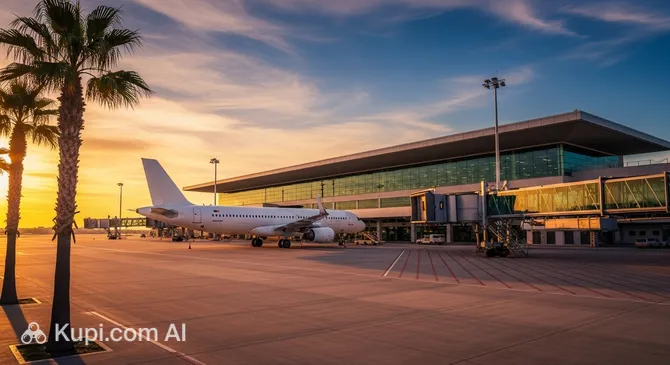
Palma de Mallorca Airport. Source: Kupi.com Binoculars

Palma de Mallorca Airport, also known as Son Sant Joan, is the main aerial gateway to the Balearic Islands and one of Spain's busiest aviation hubs, especially during the height of the summer season. Located just a few minutes' drive from the island's capital, this airport immerses arrivals in the atmosphere of a Mediterranean resort from the very first moments. The immense modern complex is designed to handle a colossal flow of tourists while remaining convenient and intuitive for travellers.

IATA Code PMI
ICAO Code LEPA
City Palma
Distance to Centre 8 km
Status International
Passengers per Year ~33.3 million (2024)

Features and Advantages of the Airport

The airport complex consists of one main terminal divided into four modules (A, B, C, and D), each serving specific types of flights, which helps avoid congestion even on peak dates. Module C is the largest, handling the majority of European flights, while Module B is typically used for flights between the islands of the archipelago.

Travellers highly appreciate the developed infrastructure: there are numerous shops, including large Duty Free zones, as well as various cafes and restaurants where you can try Spanish tapas before departure. The airport is renowned for excellent transport accessibility: you can reach the centre of Palma in just 15–20 minutes by bus or taxi, and car rental desks offer a huge selection of vehicles for independent exploration of Mallorca.

Contact Information

  • Official Website: You can find all current information about flights, services, and airport regulations on the official website of the Spanish airport operator Aena: www.aena.es/es/palma-de-mallorca.html
  • Information Phone: For inquiries, you can call the general Aena airport network line: (+34) 91 321 10 00.
  • Address: 07611 Palma, Balearic Islands, Spain.
  • Email: A direct email address for general questions is not provided. It is recommended to use the feedback form on the official website.
  • Social Media: You can follow news on the official social media pages of the operator Aena (e.g., X/Twitter @aena).
  • Lost Luggage: If your luggage was lost during the flight, you should contact your airline's representative directly. If you lost personal items within the terminal, contact the airport's Lost and Found office (Oficina de Objetos Perdidos).
  • Passenger Support Service: Information desks are located within the terminal. You can also use the general enquiry phone number listed above.

How to Get to the Airport

Palma de Mallorca Airport (PMI) is located just 8 kilometres east of the island's capital, the city of Palma. Thanks to its convenient location and developed transport network, getting to or from the airport to any point on the island is straightforward. Here are the main ways to do so.

Public Transport: Bus
This is the most economical way to reach the airport. Two main city routes connect the airport with key locations.

  • Route A1: Runs between the airport and Palma city centre (Plaza de España). Buses depart approximately every 15 minutes. The journey takes about 20-30 minutes.
  • Route A2: Connects the airport with the popular resort area of S'Arenal. This route is particularly convenient for tourists staying in hotels along the coast.
The ticket price is approximately 5 Euros, and it can be purchased directly from the driver. This is an excellent choice for travellers without a large amount of luggage.

Taxi and Transfer
A taxi is a fast and comfortable way to get to the airport. The official taxi rank is located right outside the arrivals area. A trip from the centre of Palma to the airport will take about 15-20 minutes and cost approximately 20-25 Euros. For families with children or large groups, it may be beneficial to book a private transfer in advance. This guarantees a fixed price and a vehicle of the required capacity upon your arrival.

Car Rental
If you plan to actively explore the picturesque corners of Mallorca, renting a car is the ideal solution. Offices of all leading international and local rental companies are located at Palma Airport. You can pick up the car immediately upon arrival or return it before departure, which is very convenient. The road to the airport from the city centre is simple and well-signposted.

Airport Parking
For those arriving at the airport in their own or a rented vehicle, numerous parking zones are provided. There is both short-term parking for quick drop-offs or pick-ups, and long-term parking for those leaving their car for several days. The cost depends on the parking type and its distance from the terminal. It is recommended to book a spot in the long-term car park online to secure a more favourable rate.

Terminals and Map

Palma de Mallorca Airport, known as Son Sant Joan (PMI), has one large central terminal area from which four separate boarding modules extend: Module A, Module B, Module C, and Module D. This structure allows for the effective management of immense passenger traffic, especially in the summer season. All check-in, baggage drop, and security screening procedures take place in a single building, after which passengers proceed to their specific module.

The airport layout is quite logical. The check-in area is located on the second floor of the main building. After receiving a boarding pass and checking in luggage, passengers pass through a single security control point, which grants access to all four modules. The arrivals area with baggage reclaim belts and customs control is located on the ground floor. Navigation through the airport is intuitive thanks to numerous signs in Spanish, Catalan, English, and German.

Each module has its own specialisation, which is important to consider when planning your time:

  • Module A mainly serves flights from non-Schengen countries, primarily from the UK and Ireland. There is an additional passport control here.
  • Module B is the smallest of the four and is used for regional flights, for example, to Ibiza and Menorca. It may be closed during the winter period.
  • Module C is the largest and serves the majority of European flights from Schengen countries. This is the busiest module.
  • Module D also serves Schengen flights, mainly for major airlines.

All modules are connected to the central departure area by pedestrian walkways. Moving between them does not require passing through security again. However, distances to some gates, especially in Modules C and D, can be significant. For passenger convenience, travelators (moving walkways) are installed on long sections. Carefully check your gate number and module on your boarding pass to correctly calculate travel time.

During the peak season (from June to September), the time required for check-in and security checks can take up to 1-1.5 hours. It is recommended to arrive at the airport at least 2.5-3 hours before departure. In the off-season, all procedures are significantly faster, and 1.5-2 hours is usually sufficient. To avoid rushing, head to your module immediately after passing security, as the walk may take 15-20 minutes.

Airport History

The history of Palma Airport, officially known as Son Sant Joan Airport, is inextricably linked to Mallorca's transformation into one of Europe's main tourism hubs. Its roots go back to the 1920s when a seaplane base appeared on the island. Later, a military airfield was built, but the real turning point came on 7 July 1960, when the airport was officially opened to civilian commercial traffic, replacing the old Son Bonet airfield.

The rapid growth of tourism in the 60s became the main engine of the airport's development. By 1965, a new passenger terminal was opened, and the runway was extended to accommodate jet aircraft. Passenger traffic grew exponentially: while in 1962 the airport served 1 million passengers, by the mid-70s this figure had increased several times over. This required constant expansion and the construction of new modules and aircraft parking spaces.

The largest modernisation in the airport's history occurred on the eve of the new millennium. In 1997, a new main terminal (known today as Terminal A) was inaugurated, designed by local architect Pere Nicolau Bover. This modern building was constructed with future passenger growth in mind and remains the foundation of the airport's infrastructure today. This reconstruction allowed the airport to become one of the most modern and efficient in Spain.

Today, Palma de Mallorca Airport is the third busiest airport in Spain after Madrid and Barcelona. During peak summer months, it becomes one of the busiest in Europe, serving millions of tourists arriving in the Balearic Islands. An interesting fact: on the busiest day of the season, the number of take-offs and landings here can exceed the figures of some major capital airports. This fact vividly illustrates its key role in the Mediterranean tourism industry.

Services and Amenities

Palma de Mallorca Airport (PMI) offers passengers a wide range of services and amenities to make their stay as comfortable as possible while waiting for a flight. The terminal infrastructure is thought out to the smallest detail and meets the needs of various categories of travellers.

For those wishing to have a snack or go shopping, the airport features numerous restaurants, cafes, and dining venues where you can try both local Spanish cuisine and familiar international snacks. Extensive Duty Free shops offer perfumes, cosmetics, tobacco products, and souvenirs. Additionally, there are fashion boutiques, electronics stores, and newsstands.

Passengers who value comfort can utilise the VIP Lounges (Salas VIP). These spaces provide conditions for quiet relaxation: comfortable seating, complimentary snacks and beverages, press, and high-speed internet. It is an ideal place to work or relax away from the noise of the main departure hall.

Free Wi-Fi is available throughout the airport, and numerous charging stations with sockets and USB ports are equipped for gadgets. Financial matters can be resolved at bank branches, ATMs, or currency exchange points. For urgent cases, a medical centre is open around the clock, ready to provide first aid.

Families with children will appreciate the play areas where young travellers can burn off energy before the flight, as well as nursing rooms for infant care. Special assistance is available for passengers with reduced mobility — this service must be booked in advance through the airline. Travellers needing to stay near the airport will find several hotels just a few minutes' drive away, accessible by taxi or shuttle. For business people, conference rooms and business centres are provided, allowing for meetings or work in a quiet environment.

Where to Eat

At Palma de Mallorca Airport (PMI), travellers will find a wide selection of venues to suit every taste and budget. Whether you are looking for a quick snack before departure or wish to have a leisurely lunch, you will easily find a suitable option here. Most cafes and restaurants are concentrated in the departure area after security control (airside), although there are a few venues in the public area (landside).

For those wanting a quick coffee and something light to eat, international coffee chains such as Starbucks and Costa Coffee, as well as local cafes, operate in the airport. You can also find the traditional Mallorcan pastry — ensaimada. This airy spiral bun, dusted with icing sugar, is available in many cafes and makes for a notable local specialty to see during your journey through Spain.

If you have enough time for a full meal, consider the restaurants and dining areas. Here you will find global fast-food chains (such as Burger King and McDonald's) as well as establishments specialising in Mediterranean and Spanish cuisine. You can visit a tapas bar to enjoy a variety of snacks or choose an à la carte restaurant. This is a wonderful opportunity to sample local dishes in a comfortable setting.

Most establishments offer options for passengers with specific dietary needs. Vegetarian salads, sandwiches, and fresh fruit can be found on the menus of many cafes. Some restaurants are ready to offer gluten-free or vegan dishes upon request. The price range varies: from budget-friendly coffee with pastries to a full lunch in a restaurant, which will cost more. Opening hours of the main food outlets are adapted to flight schedules, with most open from early morning until late at night.

Travel Tips

To ensure your journey through Palma de Mallorca Airport goes as smoothly as possible, make use of our tips. Proper planning will help avoid stress and save time for enjoying your holiday in Spain.

Arrival Time at the Airport. At the height of the season (from June to September), the airport can be very busy. We recommend arriving 2.5-3 hours before international flights and 1.5-2 hours before flights within the Schengen area. This time will be sufficient to calmly pass through all procedures.

Check-in and Security Control. To save time, complete online check-in and save your boarding pass on your phone. If you are travelling only with hand luggage, you can proceed directly to security. Be prepared for queues at security control: pack all liquids (in containers up to 100 ml) in a transparent bag in advance and be ready to remove large electronic devices from your bag.

Seat Selection on the Plane. Want to enjoy stunning views of the Mallorca coastline during take-off or landing? Choose a window seat. If the ability to stretch your legs or leave the plane quickly upon arrival is more important to you, your ideal seat is by the aisle.

Hand Luggage Rules. In hand luggage, liquids are permitted in containers not exceeding 100 ml, packed in a single transparent bag with a capacity of up to 1 litre. Sharp objects, weapons, and flammable substances are prohibited. Always check the exact allowances for baggage and hand luggage on your airline's website, as they may differ.

Transfer Passengers. Palma Airport consists of several modules (A, B, C, D). If you have a single ticket, your luggage will likely be automatically transferred to the next flight. If you are flying on separate tickets, you will need to collect your luggage, exit the secure zone, check in again, and pass through security control.

Customs Control. For travellers arriving from EU countries, customs control is a formality. If you are arriving from outside the European Union, follow the signs: "Green Channel" if you have no goods to declare, "Red Channel" if you are carrying goods exceeding duty-free limits.

Saving Time and Money. Bring an empty reusable water bottle and fill it at drinking fountains after passing security. The most budget-friendly way to get to the city is by public bus. To avoid wasting time upon arrival, study the airport map and book your transfer in advance, especially if your hotel is located in a remote resort.

In Case of Flight Delay. First, contact your airline representative for information. For long delays or cancellations of flights departing from the EU, your rights are protected by regulation EU261. Keep all receipts for food, drinks, and other necessary expenses — they may be subject to compensation. There are many shops and cafes in the airport where you can pass the time while waiting.

Reached the end of the page?

That means the route is fully explored