Support

Alicante-Elche Airport

About the Airport

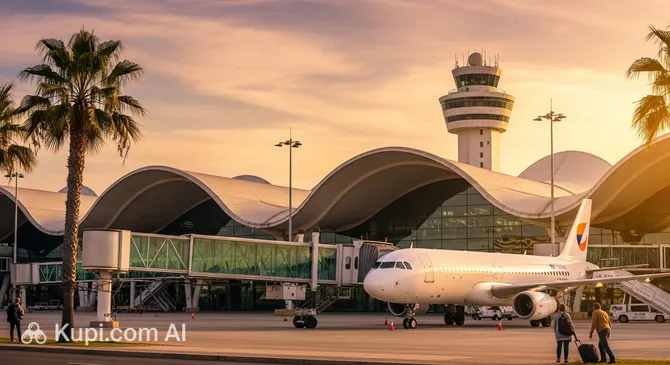
Alicante-Elche Airport. Source: Kupi.com Binoculars

Alicante-Elche Miguel Hernández Airport serves as the main aerial gateway to the sunny Costa Blanca, welcoming millions of tourists from across Europe every year. Located between the historic city of Alicante and the famous palm groves of Elche, this hub immerses travellers in the atmosphere of a Mediterranean resort from the very first minute. The modern terminal, featuring huge panoramic windows and spacious halls, makes waiting for your flight comfortable and pleasant. Thanks to its convenient location, you can reach the popular beaches of Benidorm, Torrevieja, or Calpe in just an hour from here.

IATA Code ALC
ICAO Code LEAL
City Alicante
Distance to centre 9 km
Status International
Passengers per year ~18.4 million (2024)

Airport Features and Highlights

Alicante-Elche Airport has been repeatedly recognised as one of the best in its category due to its well-thought-out infrastructure and service quality. The single passenger terminal (NAT) was opened in 2011 and designed to maximise the use of natural light, creating a sense of space and lightness.

Key advantages of this air hub include:

  • Convenient Transport Accessibility: The airport is connected to the centre of Alicante by the C-6 bus route, which operates around the clock at 20-minute intervals. Direct buses to Benidorm, Murcia, and Torrevieja also depart from here.
  • Shopping and Gastronomy: The departure area features a large Duty Free shop, as well as numerous boutiques offering Spanish brands. Travellers can begin their acquaintance with local cuisine in cafés and dining venues offering traditional snacks and coffee.
  • Comfort for All: Passengers have access to the spacious VIP lounge Sala VIP Ifach with views of the runway, free unlimited Wi-Fi throughout the territory, and excellent facilities for passengers with reduced mobility (Sin Barreras service).

Contact Information

For your convenience, we have compiled the main contact information for Alicante-Elche Miguel Hernández Airport (ALC). We recommend verifying the data on official resources before your trip.

  • Official Website: You will find the most complete and up-to-date information on flights, services, and regulations on the airport's official website: www.aena.es. The site is available in several languages, including Spanish and English.
  • Information Service Phone: For general enquiries, you can contact the Aena information service (the operator of Spanish airports) by phone: (+34) 91 321 10 00.
  • Address: The airport is located at: 03195, L'Altet, Alicante, Spain (03195, L'Altet, Alicante, España).
  • Email: A direct email address for general enquiries is usually not provided. It is recommended to use the official feedback form on the Aena website for communication.
  • Social Media: You can follow news and updates on Aena's official social media pages: X (formerly Twitter) – @aena, as well as on their Facebook, Instagram, and YouTube channels.
  • Lost Luggage and Items:
    • If your luggage was lost by the airline during the flight, you must contact your airline's Lost and Found service directly.
    • If you have lost personal items within the airport (in the terminal, security zone, etc.), you should contact the airport's Lost Property Office (Oficina de Objetos Perdidos). Contact information and the application form are available on the official Aena website.
  • Passenger Support Service: For questions related to airport services, including assistance for passengers with reduced mobility ("Sin Barreras" service), you can call the general information phone (+34) 91 321 10 00 or book the service in advance via the Aena website.

Getting to the Airport

Getting to Alicante-Elche Airport (ALC) from the centre of Alicante or neighbouring resorts is quite simple thanks to a well-developed transport network. Regardless of your budget and preferences, you can choose a convenient option, be it public transport, taxi, or a rental car. The airport is located approximately 9 km southwest of the city, making the journey fast and convenient.

Public Transport is the most popular and budget-friendly way to get to the airport. The main route is the C-6 bus, which runs between the centre of Alicante and the airport, stopping at key points including the railway station and the bus station. Buses run every 20-30 minutes throughout the day. The trip takes about 25-30 minutes, and the ticket price is approximately €3.85. Buses also depart from the airport to other coastal cities such as Benidorm, Calpe, Murcia, and Torrevieja.

Taxi and Transfer services are the ideal choice for those who value comfort, are travelling with heavy luggage, or arriving at inconvenient times. Official taxi ranks are located directly outside the arrivals hall exit. A trip to the city centre will take about 15-20 minutes and costs on average €20-25. At night and on public holidays, the fare may be slightly higher. Alternatively, you can book a private transfer in advance—this is particularly convenient for families and large groups, as the price is fixed and the driver will meet you in the arrivals area.

If you plan to explore the Costa Blanca coast, car rental will be the most practical solution. Offices of all major international and local rental companies are represented at Alicante Airport. Driving to the airport is very straightforward—simply take the A-7 motorway or the N-332 national road. When returning the car, follow the "Rental Car Return" signs within the airport grounds, which will lead you to the designated car park.

For those travelling to the airport by private car, various parking options are provided. Alicante-Elche Airport has both express parking for quick passenger drop-offs and several long-term car parks. To save money, it is recommended to book a space in the official airport car park online in advance—this often allows for a significant discount.

Terminals and Map

Alicante-Elche Airport consists of one main and modern terminal, known as NAT (Nueva Área Terminal). The old terminals T1 and T2 are currently closed for passenger traffic, so all navigation is concentrated in one large building. This significantly simplifies orientation for travellers, as there is no need to move between different buildings.

The terminal building has several levels, but two are key for passengers. The Departures Area is located on the upper floor (P2). Here you will find check-in counters (from 1 to 170), security checkpoints, and the main access to the gates. The Arrivals Area occupies the ground floor (P0), where baggage claim belts, customs control, and exits to bus stops, taxis, and car parks are located.

After passing security control, passengers enter a spacious commercial zone with shops and restaurants. From here, two main corridors lead to the boarding gates: Pier B is used for flights within the Schengen area, and Pier C for all other destinations, including flights to the UK and non-EU countries. Signs are in Spanish, Valencian, and English, making navigation intuitive.

When planning a departure from Alicante, it is worth allowing enough time to go through all procedures. During the peak season (June to September), queues for check-in and security can be significant. It is recommended to arrive at the airport at least 2 hours before departure for Schengen flights and 3 hours for international flights, especially if you are travelling with luggage.

For comfortable navigation, check in advance which pier (B or C) your flight departs from to correctly calculate the time needed to reach the gate—some are located at a considerable distance. If you have any questions, you can always approach the Aena information desks in the terminal.

Airport History

The history of Alicante-Elche Airport (ALC) is a story of rapid development, inextricably linked to the transformation of the Costa Blanca coast into one of Europe's main tourism centres. The airport was officially opened on 4 May 1967, replacing the old La Rabassa aerodrome. Initially, it was named El Altet, after the district in which it is located.

The first commercial flight—a Convair Metropolitan aircraft by Aviaco—landed on opening day, launching regular air services. It was followed almost immediately by Iberia. Development was swift: already in the 1970s, to cope with the growing flow of charter flights from the UK and Germany, the first passenger terminal was built and the runway was extended. By 1978, the airport had already served its first million passengers.

A key moment in the airport's modern history was the opening in March 2011 of the new terminal, known as NAT (Nueva Área Terminal). This modern and spacious complex replaced the two old terminals (T1 and T2) and multiplied the capacity, allowing for the handling of up to 20 million passengers per year. This massive modernisation was a response to the region's ever-growing popularity among tourists.

In 2013, the airport received its current official name—Alicante-Elche Airport, highlighting its equal importance to the two major cities of the province. Today, it is one of the busiest airports in Spain, continuing to play a central role in the economy and tourism appeal of the entire Costa Blanca coast.

Services and Amenities

Alicante-Elche Airport (ALC) offers passengers modern and convenient infrastructure to make waiting for a flight as comfortable as possible. Here you will find numerous restaurants, cafés, and dining outlets to suit every taste—from fast food points and coffee shops to establishments where you can enjoy Spanish cuisine. Numerous shops, including a large Duty Free zone, offer a wide range of goods: from souvenirs and local delicacies to perfumes, cosmetics, and fashion apparel.

Free Wi-Fi is available throughout the terminal, allowing you to stay connected or work while waiting for departure. Special stands and power outlets are provided in rest zones for charging electronic devices. If you wish to spend time in a quieter and more private environment, the VIP lounge (Sala VIP Costa Blanca) is at your service, offering guests snacks, beverages, fresh press, and comfortable workstations.

For financial matters, ATMs of various banks and currency exchange points are located in the terminal. Passengers can be assured of their health safety: a first aid station operates around the clock at the airport, and there is also a pharmacy where necessary medicines can be purchased.

The airport is well-prepared for welcoming passengers with children. For young travellers, children's play areas are equipped, as well as nursing rooms where you can feed and change a baby in a quiet setting. Passengers with reduced mobility can pre-book a free assistance service, and the terminal itself is fully accessible for wheelchair movement thanks to lifts and ramps.

Although there are no hotels directly within the airport building, several hotels are located just a few minutes away by taxi or shuttle. For business travellers who need to work, in addition to the VIP lounge, nearby hotels often provide conference rooms and business centres with a full range of services.

Dining Options

At Alicante-Elche Airport (ALC), travellers will find plenty of options for a snack or a full meal to suit any taste and budget. Most establishments are located in the departures area after passing security control, but a few cafés are also available in the public zone.

Before Security (Landside): In the public area, the selection is limited but sufficient for those meeting passengers or arriving early. You can usually find a coffee shop here, such as Costa Coffee, offering hot and cold beverages, sandwiches, and pastries. It is an excellent place to have a coffee before checking in for your flight.

After Security (Airside): The majority of restaurants and cafés are located in the secure zone.

  • For a quick snack, world-famous chains such as Burger King are perfect for standard burgers and fries, or Subway for lovers of sandwiches with fresh ingredients. There are also several coffee shops, including Starbucks and Lavazza.
  • For a full lunch or dinner, it is worth visiting sit-down restaurants. La Pausa offers Mediterranean dishes in a self-service format, which is convenient if you are short on time. To experience the flavour of Spain, visit the Dehesa Santamaría tapas venue, where you can try authentic *jamón*, cheeses, and other traditional snacks.

Be sure to try local specialities. Consider ordering a bocadillo de jamón (sandwich with Iberian cured meat) or tortilla española (potato omelette). regarding special dietary needs, vegetarian options such as salads and vegetable sandwiches are available in almost every café. Gluten-free and vegan dishes may be harder to find, but restaurants like La Pausa often have suitable options—it is best to study the menu or ask the staff.

Most establishments in the departure zone operate from early morning until the last flights depart. Prices at the airport are generally higher than in the city: the cost of coffee and pastries starts from 5-7 euros, and a full lunch will cost on average 15-25 euros per person. To save money, you can use the vending machines with drinks and snacks placed throughout the terminal.

Travel Tips

To ensure your journey through Alicante-Elche Airport, which serves the popular Costa Blanca resorts, is as comfortable as possible, we recommend arriving well in advance. During the peak tourist season (June to September) and on public holidays, it is best to be at the airport 3 hours before international flights depart. For domestic flights within Spain, 1.5-2 hours is usually sufficient. This allows enough time to check in luggage without rushing, pass through security, and reach the boarding gate.

To save time, always complete online check-in. This allows you to proceed directly to the baggage drop-off counter or, if travelling with hand luggage only, to the security checkpoint. Be prepared for potential queues at security control. Remove laptops and other large electronics from your bags in advance, and pack all liquids (in containers up to 100 ml) in a single transparent bag.

When choosing a seat on a plane departing from Alicante, note that window seats often offer beautiful views of the Mediterranean Sea and the coastline. If comfort and legroom are important to you, choose aisle seats or those in the emergency exit row (these are usually available for an additional fee and have restrictions).

Hand luggage rules are standard for EU airports. Any sharp objects, weapons, and flammable substances are prohibited. All liquids must be in containers of no more than 100 ml, and their total volume must not exceed 1 litre per passenger. Carefully review the weight and size limits for hand luggage of your airline, as they can vary significantly.

Alicante-Elche Airport is not a major transfer hub; most flights are direct. If you do have a transfer planned, ensure it is booked on a single ticket. In this case, your luggage will likely be transferred automatically, and you simply need to follow the "Connections" signs to the required boarding gate. For self-transfer between flights of different airlines, allow at least 3-4 hours, as you will need to collect your luggage and go through the entire check-in and security procedure again.

Customs control is mandatory when arriving from countries outside the Schengen area. Have your passport and boarding pass ready. If you are arriving from another EU country, passport control is not required. For those with nothing to declare, the "Green Channel" is available. Please remember the limits on bringing tobacco, restricted goods, and large amounts of cash from outside the European Union.

To save money, book your transfer from the airport to the city or resort online in advance—this is often cheaper than taking a taxi on the spot. Also, bring an empty reusable water bottle: after passing security, you can fill it with drinking water for free at special fountains.

In the event of a flight delay, remain calm. All up-to-date information is displayed on departure boards and in your airline's app. Remember your rights: under EU Regulation No 261/2004, for long delays, the airline is obliged to provide you with meals, beverages, and if necessary, hotel accommodation. Contact your airline's representative at the airport for assistance and instructions.

Reached the end of the page?

That means the route is fully explored