Support

Girona-Costa Brava Airport

About the Airport

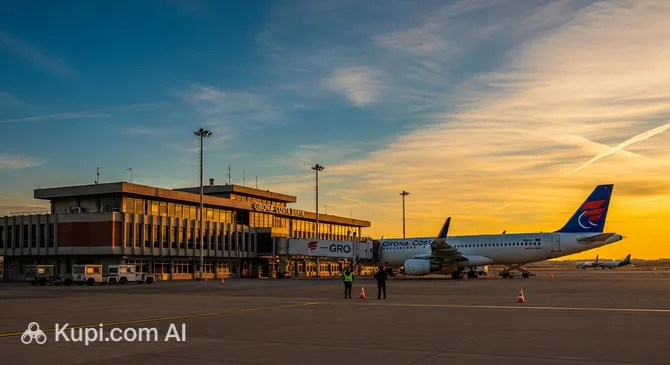
Girona-Costa Brava Airport. Source: Kupi.com Binoculars

Girona-Costa Brava Airport is often called the "secret gateway" to Catalonia for those who value economy and comfort. Located in a picturesque area, it serves as an ideal starting point both for beach lovers heading to the coast and for those planning to explore the cultural riches of the region. Instead of the hustle and bustle of capital hubs, you will be welcomed here by a measured atmosphere, allowing you to begin your holiday without unnecessary stress immediately after landing.

IATA Code GRO
ICAO Code LEGE
City Girona
Distance to Centre ~12-13 km
Status International
Passengers per Year Over 1.5 million
Schedule Available on the online board

Airport Features and Advantages

The main advantage of this airport is its strategic location. It is situated just a half-hour drive from popular Costa Brava resorts, such as Lloret de Mar and Blanes, and serves as a convenient hub for trips to the Pyrenees. Thanks to the compact size of the terminal, all procedures—from check-in to baggage reclaim—are completed significantly faster than at the congested El Prat in Barcelona.

Despite its small size, the airport offers excellent transport accessibility. Regular bus services are established from here not only to the centre of Girona but also directly to Barcelona (travel time is about 1 hour 15 minutes), making it a popular choice for budget travellers using low-cost airlines. The terminal has everything necessary for a comfortable wait: from cafes and Duty Free shops to car rental desks.

Contact Information

  • Official Website: You can always find up-to-date information on flights, services, and airport regulations on the official Aena network website: www.aena.es/es/girona-costa-brava.html
  • Information Service Phone: For information, you can call the unified Aena airport network number: (+34) 913 211 000.
  • Address: Carretera de l'Aeroport, s/n, 17185 Vilobí d'Onyar, Girona, Spain.
  • Email: A direct email for general enquiries is not provided. It is recommended to use the feedback form on the airport's official website for communication.
  • Social Media: Official news and updates are published on Aena network accounts, for example, on X (formerly Twitter) @aena.
  • Lost Luggage Information: In case of loss or damage to luggage, it is necessary to contact your airline's representative or their ground handling agent at the airport directly.
  • Passenger Support Contacts: Assistance can be obtained at the information desks within the terminal building or via the general information service phone number.

How to Get to the Airport

Getting to Girona-Costa Brava Airport (GRO) from the centre of Girona or other cities in Catalonia is quite simple. The airport is located just 12 kilometres southwest of the city, and several convenient transport options are available for travellers, suitable for any budget and travel style.

Public Transport: Buses

The most economical and popular way to get to the airport is by bus. Special shuttles (operator Sagalés) run between the Girona bus station (next to the railway station) and the airport. The journey takes approximately 25–30 minutes. The cost of a one-way ticket is just a few Euros. Important note: bus schedules are often coordinated with flight arrival and departure times, so it is recommended to check the current departure times in advance on the carrier's website.

Taxi and Private Transfer

For those who value comfort and speed, a trip by taxi will be the ideal choice. The travel time from the centre of Girona will be about 20 minutes depending on traffic conditions. The cost of the trip usually varies between 25–35 Euros. To avoid price surprises and guarantee the availability of a car, you can book a private transfer in advance. This is particularly convenient if you are travelling with a large amount of luggage or with family.

Car Rental and Parking

If you plan to explore the Costa Brava coast and other corners of Spain by car, you can drive to the airport in a rental car and return it there before departure. Representations of all major rental companies operate at Girona Airport. For those arriving in their own vehicle, official parking is provided on the airport territory with options for short-term and long-term stays.

Alternative Airports Nearby

When planning your journey, it is useful to know about other air harbours in the region. The largest transport hub nearby is Barcelona-El Prat Airport, located approximately 88 km away. Also within reach are Reus Airport, and several airports in neighbouring France: Perpignan–Rivesaltes Airport (Llabanère), Carcassonne Airport, and Béziers Cap d'Agde Airport.

Terminals and Map

Girona-Costa Brava Airport (GRO) is distinguished by its compactness and simple structure, making it very convenient for travellers. The airport operates one passenger terminal, which handles all flights—both domestic and international. Thanks to this, you will not have to worry about complex transfers or searching for the right building: all services and zones are concentrated in one edifice.

The terminal layout is intuitive. The building consists of three levels. Ground Floor (Planta 0) is the Arrivals area (Llegadas). Here, passengers reclaim luggage, pass through customs control, and exit into the general hall, where car rental desks, tourist offices, and exits to bus stops and taxis are located. First Floor (Planta 1) is entirely dedicated to the Departures area (Salidas). Airline check-in counters and the central security checkpoint are located here.

All pre-flight procedures take place on the first floor. After checking in for the flight and dropping off luggage, you proceed to security screening. Having passed security control, you enter a unified departure zone where Duty Free shops, cafes, restaurants, and boarding gates are located. Since all gates are in one hall, navigation causes no difficulties—simply follow the signs.

Completing formalities at Girona Airport usually takes less time than in the major hubs of Spain. Nevertheless, during the peak tourist season (from June to September), passenger flow increases significantly, which can lead to queues. It is recommended to arrive at the airport at least 2–2.5 hours before an international flight and 1.5–2 hours before a domestic one to pass all stages without rushing.

For comfortable navigation through the terminal, it is sufficient to follow the standard signs in Spanish, Catalan, and English. Due to the airport being small, getting lost here is practically impossible. Top tip: immediately after entering the building, determine which floor you need (up for departures or remain on the ground floor to meet arrivals) and follow the information boards.

Airport History

Girona-Costa Brava Airport (GRO), officially opened on 1 April 1965, was built with the ambitious goal of becoming the main air gateway for the rapidly developing tourist region of Costa Brava in Spain. Initially, the airport served predominantly charter flights, and its development proceeded at a moderate pace. By 1967, a passenger terminal was built, and the runway was extended to accommodate larger aircraft.

A real breakthrough in the airport's history occurred in the early 2000s. The key event was the decision by the Irish budget airline Ryanair to make Girona one of its European hubs. This decision radically changed the airport's status, transforming it from a modest regional node into one of the fastest-growing airports in Europe. Passenger flow began to grow exponentially, attracting millions of tourists from the UK, Ireland, Germany, and other countries.

The peak of popularity came in 2008, when the airport served a record number of passengers—more than 5.5 million people. This impressive result required significant investments in infrastructure. During these years, large-scale works were carried out to expand the terminal and increase the number of check-in counters, boarding gates, and parking spaces to cope with the increased load and meet modern service standards.

One of the interesting facts from the airport's history lies in its strategic location. Although it bears the name of Girona, it is often used as an alternative and more accessible airport for travel to Barcelona, which is about 90 kilometres away. This dual role—gateway to the Costa Brava and auxiliary airport for the Catalan capital—remains one of the main features of its operation today.

Services and Amenities

Girona-Costa Brava Airport (GRO) offers passengers all necessary services for a comfortable wait for their flight. Although the airport is not as large as the main Barcelona hub, it is well-equipped to satisfy the needs of travellers.

Dining and Shopping: Within the terminal, you will find several cafes and bars where you can have a snack, drink coffee, or have a full meal. For those wishing to shop, a Duty Free store operates with a wide range of perfumes, cosmetics, beverages, and souvenirs, as well as other shops with travel goods and local products.

Lounges and VIP Services: For passengers preferring enhanced comfort, the airport has a VIP lounge. Here you can relax in a quiet atmosphere, enjoy complimentary snacks and beverages, and work using access to Wi-Fi and power outlets.

Connectivity and Device Charging: Passengers can utilise access to free Wi-Fi throughout the terminal. Special stations and power outlets are provided in waiting areas for charging mobile phones, tablets, and laptops.

Financial Services: ATMs for cash withdrawal and currency exchange points are located in the terminal, where you can exchange money before departure or upon arrival.

Additional Amenities:

  • Medical Assistance: A first aid point operates on the airport premises, ready to assist if necessary.
  • For Passengers with Children: There are mother and child rooms equipped with changing tables, and small play areas are available in some zones.
  • For Passengers with Reduced Mobility: The airport is fully adapted for the needs of passengers with reduced mobility. An escort service is provided (pre-booking required), and there are ramps, lifts, and specially equipped restrooms.
  • Hotels and Business Services: There are no hotels directly inside the airport building, but hotels are located a few minutes' drive away, some of which offer transfers. For business travellers, basic services such as workspaces and internet are available in the VIP lounge.

Where to Eat

Girona-Costa Brava Airport (GRO) offers passengers various opportunities for a snack or a full lunch to wait for their flight in comfort. Most establishments are concentrated in the single passenger terminal, making navigation simple and convenient.

Before Security Control (Landside): In the general zone of the airport, accessible to all visitors, you will find several cafes. This is an ideal place to have a cup of coffee with pastries if you have arrived early or are seeing off friends and family. Here you can leisurely have a sandwich or salad in a calmer atmosphere.

After Security Control (Airside): The main selection of establishments is located in the Departures area, after passport and customs control. Here at your service are:

  • Restaurants and Cafes: For those who want a full lunch, the self-service restaurant La Pausa operates, offering Mediterranean and Catalan cuisine. This is an excellent opportunity to enjoy a final taste of Spain by ordering tapas, paella, or fresh salads.
  • Bars and Coffee Shops: If time is limited, you can have a quick snack at Foodies' cafe. Here they will offer you traditional Spanish sandwiches (bocadillos) with cured meat or cheese, fresh pastries, and, of course, excellent coffee. There are also bars where you can order refreshing beverages.
  • Fast Food: For lovers of quick and familiar food, a Burger King restaurant operates, where you can order burgers, chips, and other popular dishes.

Regarding special dietary requirements, most cafes have vegetarian options, for example, salads or sandwiches with vegetables. It is best to check directly with the staff regarding the availability of vegan, gluten-free, or Halal dishes, as the assortment may change. The price range at the airport is generally higher than the city average. Most establishments open early in the morning and operate until the departure of the last flight, adjusting to the flight schedule.

Travel Tips

When planning a departure from Girona-Costa Brava Airport, especially during the height of the tourist season (from June to September), arrive in advance—approximately 2.5-3 hours before an international flight and 1.5-2 hours before a domestic one. This will give you enough time to complete all pre-flight formalities without rushing, even if there are queues in the terminal.

To save time, take advantage of online check-in, which is offered by most airlines. This will allow you to proceed immediately to baggage drop or, if you are travelling light, to the security checkpoint. At security control, be prepared to present liquids (in containers up to 100 ml, packed in a transparent bag) and remove laptops and other large electronics from your hand luggage.

Seat selection on the plane depends on your preferences. Window seats will gift you magnificent views of the Costa Brava coast during takeoff or landing. If comfort and the ability to stand up freely without disturbing neighbours are important to you, choose an aisle seat. For more legroom, pay attention to seats at emergency exits, but note that airlines often charge an additional fee for them.

It is prohibited to carry sharp objects, flammable substances, and liquids in containers larger than 100 ml in hand luggage. It is better to check the full list of restrictions in advance on your airline's website, as rules regarding the weight and dimensions of hand luggage may differ. Do not forget to pack power banks and other batteries specifically in hand luggage, not in checked baggage.

Girona Airport is not a major transfer hub, but if you have a connection planned, pay attention to the details. If you are flying with different airlines or arriving from a country outside the Schengen area, you may need to pass passport control, collect your luggage, and check it in again. Always allow at least two hours for a transfer.

Customs control at airports in Spain for tourists arriving from EU countries usually proceeds quickly. If you are arriving from outside the European Union, follow the corridors: "green" if you have nothing to declare, and "red" if you have goods subject to declaration. To avoid fines, familiarise yourself with the customs regulations for importing goods in advance.

A few simple tips will help save your budget and time. Book your transfer from the airport or parking in advance if you are driving your own car—this is often cheaper than paying on the spot. Take an empty water bottle with you to fill it at drinking fountains after passing security control and avoid spending on drinks. Also, compare the cost of buses and taxis to your resort—public transport is usually significantly more economical.

In case of a flight delay or cancellation, first contact your airline representative for information. According to European regulation EU Regulation 261/2004, for long delays, passengers are entitled to drinks, meals, and sometimes hotel accommodation. Keep all receipts for unforeseen expenses and check the terms of your travel insurance—it may cover such cases.
Reached the end of the page?

That means the route is fully explored