Support

Sabadell Airport

About the Airport

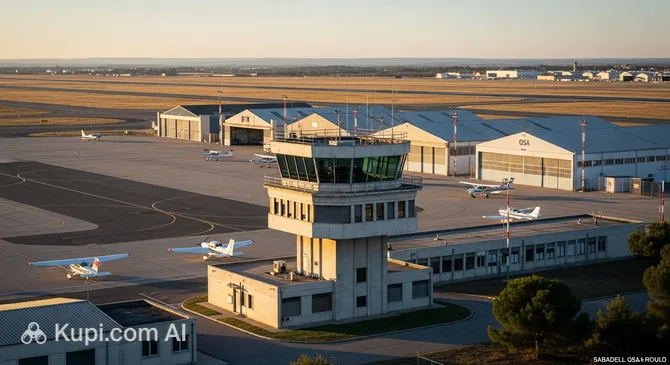
Sabadell Airport. Source: Kupi.com Binoculars

Sabadell Airport is not merely a transport hub, but the true heart of light aviation in Catalonia, where the history of aeronautics intertwines with modern technology. Unlike bustling international giants, a unique, almost club-like atmosphere reigns here, attracting private pilots, business jet owners, and those who dream of conquering the skies. This airport serves as a crucial base for flight crew training and specialized operations, while remaining a cozy and strategically important air haven just a step away from Barcelona.

AirportSabadell Airport
IATAQSA
ICAOLELL
CitySabadell
TimezoneEurope/Madrid
ScheduleOnline board

Sabadell Airport possesses a number of unique features that make it an important object on the aviation map of Spain:

Pilot Training Center: This is the main training base in the region. The Aeroclub Barcelona-Sabadell is based here — the oldest aeroclub in Spain, founded in the early 20th century. About 70% of all airport activity comes from training flights, creating a special academic environment here.

Exclusivity and Comfort: The airport specializes in receiving private jets, helicopters, and air taxis. For VIP passengers, this is the ideal way to get to Barcelona, bypassing the busy main airport, El Prat. The drive to the center of the Catalan capital takes only about 25–30 minutes.

Versatility of Services: In addition to passenger transport, Sabadell is a base for emergency services, firefighting aviation, and companies involved in aerial photography and advertising. A wide range of service centers for maintaining light aircraft is located here.

Contact Information

  • Official Airport Website: www.aena.es/sabadell
  • Information Service Phone: +34 913 211 000 (Aena Unified Information Service) or +34 937 28 21 00 (Airport Administration)
  • Airport Address: Carretera de Bellaterra, s/n, 08205 Sabadell, Barcelona, Spain
  • Email: sabadell@aena.es (General inquiries and administration), qsaceops@aena.es (Operations office)
  • Airport Social Media: Official news is published on Aena network channels on X (Twitter) and Instagram
  • Lost Luggage Information: There is no centralized Lost & Found service at the airport, unlike in major hubs. For questions regarding forgotten items, you must contact the airline, aeroclub, or pilot school whose services you used, or the airport administration office directly.
  • Passenger Support Contacts: Available through the Aena information portal or via the hotline (+34 91 321 10 00).

How to Get to the Airport

Getting to Sabadell Airport is effortless thanks to its favorable location near Catalonia's developed transport network. Since the airport is located just a few kilometers from the center of Sabadell and approximately 20 km from Barcelona, travelers can choose the most convenient option for themselves: from economical public transport to comfortable taxis.

It is important to remember that this airport serves private aviation, so there are no typical shuttles for package tourists here, however, the region's regular transport works excellently.

Public Transport: Train and Bus

The most popular and reliable way to get to the airport area is by commuter trains. Rail connections here are superbly developed.

  • Rodalies de Catalunya (Renfe): Line R4 connects Barcelona (stations Sants, Plaça Catalunya, Arc de Triomf) with the city of Sabadell. You need to get off at Sabadell Sud (Sabadell Sur) station. It is about a 15–20 minute walk from the station to the airport entrance, but with luggage, it is more convenient to take a taxi for the short distance. Trains run every 15–20 minutes.
  • FGC (Ferrocarrils de la Generalitat de Catalunya): Line S2 runs from Plaça Catalunya in Barcelona to Sabadell. The closest station to the airfield is Can Feu | Gràcia. A short taxi ride or walk will also be required from here.
  • Buses: There are intercity bus routes (for example, by Moventis) connecting Barcelona and Sabadell (routes A1, B1, B2). Within Sabadell itself, TUS city buses operate, with stops located within walking distance of the airfield.

The cost of a train journey depends on the number of zones (usually it is the 2nd or 3rd zone from Barcelona), the ticket price is approximately 2.50 – 4.50 EUR one way.

Taxi and Private Transfer

This is the most comfortable way to get directly to the terminal or hangar, especially if you are carrying equipment or heavy luggage. Both official black and yellow taxis and popular ride-hailing apps (FreeNow, Cabify, Uber) operate in the region.

  • From the center of Sabadell: The trip will take about 10 minutes and will cost approximately 10–15 EUR.
  • From Barcelona: Travel time will be 25–35 minutes (depending on traffic). The estimated cost is 35–50 EUR.

Car Rental and Personal Transport

The airport is located next to the major C-58 highway, which links Barcelona with the interior regions of Catalonia. You need to follow signs for Sabadell and look for the exit to "Aeroport". The drive is simple and scenic.

Unlike large international hubs, car rental offices are not always located directly in the Sabadell terminal building. It is recommended to rent a car in advance in the city or order a car delivery to your flight's arrival through specialized services.

Parking at the Airport

One of the main advantages of Sabadell Airport is accessible parking. There is a parking zone on the territory for visitors, pilots, and employees. As a rule, finding a free space here is much easier than at major airports, and the rates are significantly more reasonable. The parking is located in the immediate vicinity of the administrative buildings and aeroclub hangars.

Other Airports Nearby

If you are planning a trip by regular airlines, it is worth considering the major international airports located in the region. The most obvious choice is Catalonia's main hub, Barcelona–El Prat Airport, which is located just 25 km away and receives flights from all over the world.

For budget travelers or those heading to the coast, convenient alternatives may be Girona–Costa Brava Airport (about 69 km away) or Reus Airport, located 89 km to the south. If your route runs through the south of France, the nearest hubs are Perpignan–Rivesaltes Airport and the slightly more distant Carcassonne Airport.
Terminals and Map

Structure and Terminals of Sabadell Airport (QSA)

Sabadell Airport differs radically from familiar international hubs. Here you will not find endless corridors, Duty Free shops, or multi-level parking lots. It is a compact, functional, and very cozy airfield, where all infrastructure is designed for maximum efficiency and convenience of private aviation.

Features of the Terminal Complex

In fact, Sabadell Airport functions with one main terminal (General Aviation Terminal), which serves as an administrative and operational center. However, the airport structure is decentralized: many operations do not pass through the main building, but directly through operator offices and hangars.

  • Main Building (Edificio Terminal): This houses the administration of Aena (the Spanish airport operator), meteorological service offices, and pilot briefing rooms. For passengers, there is a small waiting area and a cafeteria with a view of the airfield.
  • Aeroclub Zone (Aeroclub Barcelona-Sabadell): This is the "heart" of the airport's social life. The club has its own building with a reception, classrooms, a lounge area for club members, and a restaurant open to all visitors.
  • Hangars and Service Centers: Numerous private company hangars are located along the runway. If you have rented a private jet or helicopter, your "terminal" is the office of the specific carrier company located in one of these hangars.

Navigation and Movement Scheme

The airport territory has a linear structure, stretching along the runway. Orienting yourself here is very simple:

Public Zone (Landside): This is the area from the street side, where parking lots, entrances to flight school offices, the aeroclub, and the restaurant are located. You can move freely here.

Controlled Zone (Airside): Access to the apron (the area where aircraft are parked) is strictly limited. You can get there only through security control points located in the main building or in the offices of authorized operators. Passengers usually proceed to boarding accompanied by a pilot or ground service staff member.

Check-in and Screening Procedures

The main advantage of Sabadell is speed. There are no luggage check-in queues or passport control lines in the form they exist at large airports.

  • Arrival Time: You do not need to arrive 2–3 hours early. Usually, it is enough to arrive 15–20 minutes before departure.
  • Check-in: Occurs instantly upon meeting your pilot or company representative. It is sufficient to present your documents.
  • Screening: A security check is mandatory but proceeds quickly and on an individual basis. There are practically no queues.

Departure and Arrival Zones

There is no separation into departure and arrival levels at the airport. Everything is located on the ground floor. Boarding the aircraft is done on foot: passengers exit the building and walk to the plane standing on the apron (usually no more than 50–100 meters). This creates a special sense of involvement in aviation, which passengers of large liners with jet bridges are deprived of.

Navigation Recommendations for Tourists

If you have a scenic flight or a private jet transfer planned, be sure to check the exact meeting place with the operator. Often this is not the main airport entrance, but a specific hangar (e.g., Hangar 1, Hangar 7, etc.) or the entrance to the aeroclub restaurant. The "Meeting point" is always agreed upon individually.

Airport History

The history of Sabadell Airport began long before the advent of modern business jets and navigation systems. This airfield is a living witness to the development of Spanish aviation, having gone from a humble dirt field to the most important center of general aviation in Catalonia.

The initiative to create the airfield arose in the early 1930s. The Sabadell City Council, understanding the importance of air communication for the development of the region, handed over the territory for construction. The official opening took place on August 1, 1934. Initially, the facility was used for military purposes, playing a strategic role in the turbulent years of the mid-20th century, but its true calling was in civil aviation.

Key Development Stages:

  • 1953 — A New Era: A turning point in history was the relocation of the Aeroclub Barcelona-Sabadell here from El Prat Airport. Barcelona's large international airport was growing and could no longer comfortably accommodate light aviation. From that moment, Sabadell became the main home for private pilots and sky enthusiasts.
  • 1965: The airfield received the official administrative status of an airport.
  • 1970: An important stage of modernization — the paving of the runway. Before this, planes took off and landed on dirt, which made flights dependent on weather conditions and soil state.
  • 1979: The airport opened to international air traffic (for flights under visual flight rules, VFR). This allowed for the reception of private flights from neighboring France and other European countries.

In recent decades, under the management of Aena, the airport has undergone extensive reconstruction. A new, architecturally expressive control tower was built, hangars were updated, and security systems were improved, allowing the facility to meet strict European standards.

Interesting Facts and Historical Heritage:

One of the main highlights of the airport is the activity of the Catalonia Aviation Park Foundation (FPAC). A unique collection of historical aircraft is based on the territory of Sabadell. Enthusiasts of the foundation do not just keep them as museum exhibits but also maintain many machines in flying condition. On certain days (usually the third Sunday of the month), open days are held here, when tourists can see legendary biplanes and piston aircraft of the middle of the last century in the sky.

The airport is also known for its "invisible records". Despite its modest size, in terms of the number of take-offs and landings (operations), it often rivals major regional airports in Spain. This is explained by the high intensity of training flights: it was here that hundreds of pilots, who today fly huge liners for the world's largest airlines, received their first "wings".

Services and Facilities

The services and infrastructure of Sabadell Airport (QSA) are adapted to the specifics of general aviation. Here you will not find huge Duty Free zones or food courts with fast food. Instead, the airport offers functional service focused on the comfort of private pilots, aircraft owners, and their guests. The compactness of the territory allows access to all amenities in a matter of minutes.

Restaurants and Dining

The gastronomic center of the airport is the Aeroclub Restaurant (Restaurant de l'Aeroclub). It is a popular spot not only among aviators but also among locals.

  • Cuisine and Atmosphere: The restaurant offers dishes of traditional Catalan and Mediterranean cuisine, from hearty breakfasts ("esmorzars de forquilla") to full lunches and tapas.
  • Terrace with a View: The main highlight of the establishment is the spacious open terrace overlooking the airfield directly. This is the ideal spot to have coffee while watching planes take off and land just a few dozen meters away from you.

Shops

There is no typical shopping zone at the airport. However, specialized pilot shops operate on the territory (usually in the aeroclub zone or near the hangars). Here you can purchase aviation charts, professional literature, headsets, aviation-style clothing, and aviation-related souvenirs. This is a great place to find a unique gift for sky lovers.

VIP Lounges and Business Services

Since the airport is oriented towards business aviation, the concept of VIP service is implemented differently here than in mass terminals.

  • Lounges: Enhanced comfort waiting services are provided by private operators (FBOs) in their own hangar offices. Soft lounge areas, refreshments, and press are available there.
  • Conference Rooms: The Aeroclub building and the administrative block have rooms for briefings, meetings, and small conferences. The halls are equipped with the necessary audiovisual technology. Rental should be arranged in advance.

Communication and Finance

  • Wi-Fi: Wireless internet access is provided free of charge in the restaurant area and in the aeroclub premises. Guest networks are also usually available in the offices of private carrier companies.
  • Charging Stations: There are no specialized stands for charging gadgets in common areas, but power outlets are available in the cafe and waiting lounges.
  • Banks and Currency Exchange: There are no currency exchange points or bank branches at the airport. It is recommended to have Euros with you (cash or card). The nearest ATMs are located in the city of Sabadell, a few minutes' drive away.

Services for Special Categories of Passengers

  • For Passengers with Children: There are no special playrooms, but children are usually delighted to visit the restaurant terrace, which turns into an exciting attraction for watching planes. High chairs are available in the restaurant.
  • For Passengers with Reduced Mobility: The airport complies with basic European accessibility standards. Buildings are equipped with ramps and specially equipped restrooms. Since boarding the aircraft takes place from the ground, the absence of jet bridges is not a problem, however, the need for assistance when boarding a specific type of private vessel must be reported to the flight operator in advance.
  • Medical Assistance: There is no full-fledged medical center for passengers at the airport, but there is first aid equipment (defibrillators) and trained personnel. In emergencies, rescue services arrive very quickly, as the airport is located within the city limits.

Hotels and Accommodation

There are no hotels directly on the airport territory (as there is no need for them due to the specifics of the traffic), but thanks to the proximity to the city, the choice of accommodation is extensive:

  • Within a 2-3 km radius: Comfortable hotels are located in the city of Sabadell, such as Hotel Catalonia Sabadell, Hotel Urpí, or Campanile Barcelona Sud. They are excellent for crews and business travelers.
  • UAB Campus: Nearby, in the Bellaterra area, is a hotel complex at the Autonomous University of Barcelona (Vila Universitària), offering budget accommodation.

Where to Eat

The gastronomic map of Sabadell Airport (QSA) differs significantly from what passengers of major international hubs are used to. Here you will not find chain coffee shops, fast food, or 24-hour food courts. However, this is compensated by quality and a unique atmosphere: dining here is organized in a "for our own" format, but with traditional Catalan hospitality, open to every guest.

Since the airport serves general aviation, all establishments are located in the public zone (Landside). There are no food points in the "sterile" departure zone (Airside), so we recommend having a meal before passing pre-flight screening or meeting the pilot.

Aeroclub Restaurant (Restaurant de l'Aeroclub)

This is the main and most popular gastronomic spot at the airport, located in the Aeroclub Barcelona-Sabadell building. The establishment is famous not only for its cuisine but also for its magnificent open terrace, which is literally a few meters from the aircraft parking area. Lunch here turns into an exciting air show.

  • Cuisine and Specialties: The restaurant specializes in traditional Catalan and Mediterranean cuisine. Particular attention should be paid to "esmorzars de forquilla" ("breakfasts with a fork") — these are hearty morning meals popular in Catalonia. Be sure to try botifarra amb mongetes (traditional sausages with white beans), grilled meat (brasa), or fresh tapas with cured meats and local cheeses.
  • Format: Suitable for both a quick coffee at the counter and a leisurely lunch with the whole family or business negotiations.
  • Average Bill: A full lunch (menu of the day or à la carte) will cost 15–25 EUR per person. Breakfast or a snack — 5–10 EUR.
  • Opening Hours: The restaurant usually opens early in the morning (around 8:00) to feed pilots before the first flights, and works until the evening (until sunset or around 20:00).

Cafeteria in the Main Terminal

A small cafeteria-bar often operates in the airport administration building (Edificio Terminal). This is a more utilitarian place intended for airport employees, flight school cadets, and those who need a quick snack.

  • Assortment: Hot and cold beverages, fresh pastries (croissants, muffins), and classic Spanish "bocadillos" (baguettes filled with cheese, turkey, or omelet) are served here.
  • Recommendation: An ideal option for those in a hurry. You can grab a coffee and a sandwich to go (take away) before going out to the apron.

Dietary Needs and Special Requests

Given the traditional focus of the local cuisine, the menu is oriented towards classic meat and fish dishes, however, options can be found for everyone:

  • Vegetarians: The restaurant menu always features fresh salads, grilled vegetables (escalivada), and the famous Spanish tortilla (potato omelet).
  • Vegans: Choices may be limited. It is recommended to check the ingredients with the waiter, but vegetable side dishes and salads are always available.
  • Gluten-Free: There is usually no specialized menu, but many dishes (grilled meat, salads) are naturally gluten-free. Staff are generally knowledgeable about allergens.
  • Halal: Certified halal cuisine is not available at the airport. Guests observing strict dietary rules are advised to choose vegetarian or fish options from the menu.

Recommendations for Travelers

If you have at least 40 minutes before departure, we strongly recommend choosing a table on the terrace of the Restaurant de l'Aeroclub. The combination of delicious local food, the scent of aviation fuel, and the sound of engines creates a unique atmosphere of travel romance, which passengers of large "glass" terminals are deprived of.

Travel Tips

Traveling through Sabadell Airport (QSA) is radically different from the experience of flying through major international hubs. There is no hustle, endless queues, or rigid regulations characteristic of commercial airlines. Since the airport serves private aviation, air taxis, and training flights, the rules of the game here are dictated by the comfort, flexibility, and safety of small aircraft. To ensure your flight goes perfectly, we have prepared a list of recommendations relevant specifically for this unique airfield.

Optimal Arrival Time

Forget the rule of "being at the airport 2 or 3 hours early". At Sabadell, this will only lead to a long wait.

  • Recommended Time: Usually, it is enough to arrive 20–30 minutes before the scheduled departure time. This is enough to meet the pilot, go through formalities, and calmly walk to the plane.
  • Coordination: Always confirm the meeting time with your operator or pilot. In private aviation, the schedule is often adjusted to the passenger, but the departure slot (dispatcher clearance) may be fixed.

Check-in and Security Control

Procedures here are maximally simplified and personalized.

  • Documents: Keep your passport or ID card handy. Identity verification is conducted quickly, often immediately before boarding.
  • Absence of Counters: There are no familiar check-in counters with luggage belts here. You will be met at the company office or in the aeroclub lobby and escorted to the aircraft.
  • Screening: Security control is mandatory, but it takes place without crowds. You may be asked to walk through a metal detector frame or have your bags checked with a handheld scanner. This takes a couple of minutes.

Luggage and Hand Carry: Specifics of Light Aviation

This is perhaps the most important point when planning a flight on a private plane or helicopter.

  • Type of Bags: It is strongly recommended to use soft travel bags instead of rigid plastic suitcases. Luggage compartments of light aircraft (such as Cessna or Piper) have a non-standard shape, and it is much easier to fit a soft bag there.
  • Weight Matters: In light aviation, every kilogram counts. Strictly observe the weight limits stated by the pilot. Excess weight may lead to the inability to take off or the need to leave part of the belongings behind.
  • Liquids: The "100 ml" rule is often not applied here as strictly as on commercial flights (if you are flying privately), however, always clarify this point with the operator in advance.
  • Prohibited Items: The standard list (weapons, explosives, flammable items) is relevant here too. Safety comes first.

Choosing a Seat on the Plane

In small planes and helicopters, seating is often determined not by passenger preference, but by the center of gravity of the aircraft.

  • Listen to the Pilot: The captain will indicate where you should sit to ensure the correct balance of the plane.
  • Best Views: The good news is that in small planes, practically every seat is a "window seat" and provides a panoramic view.
  • Co-pilot Seat: If the flight is performed on an aircraft certified for a single pilot, sometimes a passenger is allowed to occupy the seat to the right of the commander (the co-pilot's seat). This is a unique experience worth asking about politely in advance.

Recommendations for Transit Passengers

Sabadell Airport is often used as an arrival point near Barcelona for transferring to a large international flight.

  • Changing Airports: Remember that regular flights depart from Barcelona–El Prat Airport (BCN). There is usually no direct air transfer between them. You will need a taxi (30–40 minutes drive).
  • Time Buffer: Allow a minimum of 3–4 hours between arrival at Sabadell and departure from El Prat to account for time for disembarking, road travel (traffic jams are possible), and going through procedures at the large airport.

Customs Nuances

Sabadell is an international airport, but with restrictions.

  • Schengen Area: Flights within Schengen do not require complex customs clearance.
  • Non-Schengen (e.g., Andorra or UK): Flights outside the Schengen zone require the presence of police and customs officers. This must be requested in advance (usually 24 hours prior). Ensure your air broker or pilot has filed a request for passport control, otherwise departure will be impossible.

Tips for Saving Money

  • Transfer: If you are not overloaded with luggage, use the R4 train (Sabadell Sud station). This will save you about 40–50 EUR on a taxi to Barcelona, and you will lose very little time.
  • Empty Legs: If you are looking for an opportunity to fly on a private jet cheaper, ask local operators about "Empty Legs" flights (ferrying an empty plane) — discounts can reach 50–70%.

What to Do in Case of Flight Delay

In light aviation, delays are most often related to weather. What is unnoticeable for a Boeing can be critical for a light aircraft.

  • Stay Calm: The pilot makes the decision to take off guided solely by your safety. Do not pressure the crew.
  • Waiting in Comfort: If the flight is delayed, head to the Aeroclub restaurant terrace. Watching training flights and having a delicious coffee will brighten the wait better than sitting in a waiting room.
  • Plan "B": Always have a backup option (ground transport) if the weather turns completely bad (for example, heavy fog or a thunderstorm).

Reached the end of the page?

That means the route is fully explored