Support

Teruel Airport

About the Airport

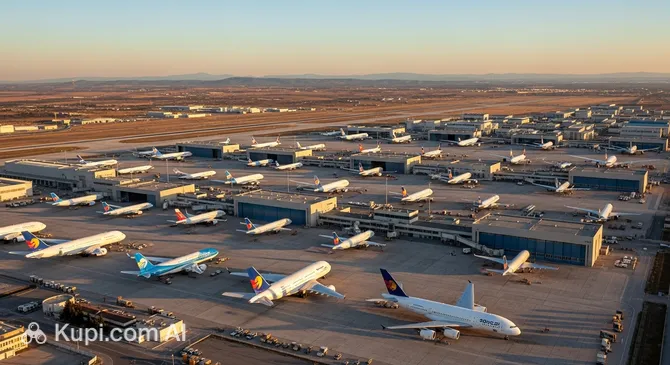
Teruel Airport. Source: Kupi.com Binoculars

Teruel Airport (PLATA) is a truly unique air hub that breaks all travel stereotypes. Unlike bustling terminals filled with tourists, a majestic silence reigns here, broken only by the sound of airliner engines arriving for a "rest" or maintenance. It is Europe's largest industrial airport and aircraft storage centre, where, against the backdrop of the reddish landscapes of Aragon, you can see hundreds of "sleeping" giants from the world's leading airlines awaiting their next flight.

IATA Code TEV
ICAO Code LETL
City Teruel
Distance to City Centre ~12 km
Status International (Industrial/Technical)
Passengers per Year 0 (no scheduled passenger flights)
Schedule Technical and private flights only

Features and Advantages of the Airport:

Although you cannot buy a ticket for a scheduled flight from Teruel, this facility possesses a range of amazing characteristics that make it significant in the world of aviation:

  • Ideal Climate for Storage: Its location at an altitude of about 1,000 metres above sea level and the dry continental climate create perfect conditions for preserving machinery. Low humidity protects the metal parts of aircraft from corrosion, making Teruel a preferred location for the long-term parking of liners from all over the world.
  • "Parking" for Giants: This is one of the few sites in Europe capable of accepting up to 250 wide-body aircraft for long-term storage simultaneously. Here you can see rare and massive machines, such as the Airbus A380 and Boeing 747, lined up in neat rows, attracting the attention of spotters and photographers shooting panoramas from outside the perimeter.
  • Innovation Hub: Besides storage, the airport serves as a base for testing rocket engines (PLD Space company) and aircraft recycling. It is a true technology park where old planes find a second life or are ecologically recycled, and new space technologies undergo endurance testing.

Contact Information

  • Official Airport Website: www.aeropuertodeteruel.com
  • Information Desk Phone: +34 978 61 77 42 (Consortium Administration)
  • Airport Address: Polígono de Tiro, 4, 44396 Caudé, Teruel, España (Spain)
  • Email: info@aeropuertodeteruel.com (for general and commercial enquiries)
  • Airport Social Media: The airport (PLATA) maintains active profiles on LinkedIn and X (Twitter), publishing news about industrial projects and the arrival of rare aircraft.
  • Lost Luggage Information: Not applicable. As the airport does not serve scheduled passenger flights, there is no Lost & Found service here.
  • Passenger Support Contacts: None. The airport is a closed industrial facility for maintenance and storage; access for tourists and passengers is not provided.

How to Get to the Airport

Since Teruel Airport (PLATA) is an industrial facility and does not serve commercial passenger flights, standard tourist infrastructure (shuttles, airport express trains) is absent here. However, if your goal is a business visit, a visit to the administration, or a desire to photograph planes from permitted perimeter points, getting to the site is not difficult, as it is located just a few kilometres from the city.

By Car

This is the most convenient and common method. The airport is located approximately 12 kilometres from the centre of Teruel, near the village of Caudé. The drive takes about 15–20 minutes.

  • Route: Drive along the A-23 motorway (Autovía Mudéjar). You will need to take the exit leading to the N-234, following signs for Aeropuerto or Polígono Industrial. The road is paved and in good condition.
  • Car Rental: There are no car rental desks at the airport itself. It is recommended to rent a car in advance in the city of Teruel or at your arrival airports (Valencia, Zaragoza, Madrid) through which you enter the region.

Taxi and Transfer

A taxi is the only direct way to get to the airport gate for those without personal transport.

  • Cost: A trip from the centre of Teruel or the railway station will cost approximately 20–30 EUR one way.
  • Recommendation: Since there is no taxi rank with cars waiting for passengers on the airport grounds, be sure to arrange a return pickup time with the driver or keep the taxi service number to call a car to the gate.

Public Transport

There is no direct connection (metro, bus) to the terminal. The nearest bus stop is in the village of Caudé, from where you would have to walk several kilometres to the airport entrance, which is not recommended, especially in hot weather. The railway station is located in the city of Teruel.

Parking

There is parking for staff and visitors at the administrative building and the main gate. As this is a restricted facility, access inside with a private vehicle is strictly regulated and requires a prior pass. You can leave your car at the outer perimeter (for spotting) for free, but it is important to observe traffic rules and not block service access roads.

How Tourists Get Here: Nearest Passenger Airports

Since it is impossible to fly directly into Teruel, travellers use large international airports nearby and then reach the province by rental car, train, or bus. Here is a list of the nearest air hubs:

  • Castellón Airport (~112 km). A small airport on the coast, convenient for those combining a trip to the mountains with a seaside holiday.
  • Valencia Airport (~120 km). The nearest major international hub. Travel time to Teruel by car is about 1.5 hours. It is also convenient to get there by direct train or bus from here.
  • Zaragoza Airport (~140 km). Located north of Teruel. Convenient for travellers arriving from other European cities. The drive along the A-23 is very scenic.
  • Adolfo Suárez Madrid-Barajas Airport (~200 km). The main air gateway of Spain. Despite the distance, excellent transport accessibility allows you to reach Teruel by car in 2.5–3 hours or by train with a transfer.
  • Reus Airport (~217 km). A popular option for charter flights during the holiday season, located in Catalonia.

Terminals and Map

It is important to understand that Teruel Airport (TEV) differs radically from typical passenger hubs. You will not find bustling waiting lounges, Duty Free shops, or check-in queues here. Since the airport is exclusively an industrial and technical complex, its structure is designed to service aircraft, not people. Therefore, the classic division into passenger terminals is absent.

Airport Structure and Zoning

Instead of the usual Terminal 1 or 2, the airport territory is divided into functional zones designed for logistics and maintenance:

  • Administrative Building (Edificio de Servicios Generales): This is the "heart" and "brain" of the airport. It houses management offices, the control tower (AFIS), conference rooms, and service areas for pilots arriving on technical flights. This is the only place resembling a classic terminal, but access is restricted to staff and authorised visitors.
  • Hangar Zone: Huge spaces for the repair and retrofitting of aircraft. The hangars here are capable of accommodating even giants like the Airbus A380. It is in this zone that the work of engineers and technicians is in full swing.
  • Long-term Storage Zone (Campa de Estacionamiento): The most extensive part of the airport — a giant open-air asphalt platform where preserved aircraft stand in rows.
  • Recycling and Dismantling Zone: A specialised sector where the ecological dismantling of decommissioned liners takes place.

Arrival and Departure Zones

At Teruel Airport, there are no familiar flight schedule boards. "Arrival" and "Departure" here refer exclusively to aircraft:

  • Arrival: Planes land on the runway and follow a "Follow Me" vehicle either to the parking zone or straight to a hangar. There are no passengers on board — only the crew.
  • Departure: After storage or maintenance is complete, the liner undergoes pre-flight preparation on the apron and departs for its destination to return to service.

Check-in and Security Procedures

Since there are no commercial passenger flights, procedures look completely different:

  • Flight Check-in: Completely absent. You do not need to arrive 2–3 hours in advance.
  • Security and Access Control: The airport is a restricted facility with a high level of security. Strict document checks are carried out at the single gate. The time it takes to pass depends on the purpose of the visit: if you have a prior pass, the procedure will take 5–10 minutes. Ordinary tourists are not admitted inside.
  • Customs: Operates on request for crews of international ferry flights, but not for mass flows of people.

Navigation Recommendations

Orienting yourself here is very simple, as there is only one route for a visitor (if you have a scheduled business visit):

  1. The exit from the highway leads directly to the main gate and the administrative building.
  2. The car must be left in the guest parking lot before the barrier.
  3. Further movement within the territory is possible only via service transport accompanied by airport personnel for safety reasons. Walking on the apron is strictly prohibited.

Airport History

The history of Teruel Airport is a fascinating story of how a bold idea turned a desolate area into a global aviation centre in just one decade. Unlike most air hubs, whose history is measured in half-century stages, Teruel (PLATA) burst into the industry rapidly and immediately occupied a unique niche.

From Military Airfield to Industrial Giant

The place where huge liners now stand has an aviation past. Previously, the Caudé Military Airfield (Aeródromo de Caudé), used by the Spanish Air Force, was located here. For many years it served as an artillery range and auxiliary base until, in the early 21st century, the authorities of Aragon and the Teruel City Council saw different potential in this site.

Key Dates and Development Stages:

  • 2007: Creation of a consortium to promote the airport. The bet was not on passenger transport (which would be unprofitable in a region with low population density), but on the maintenance, storage, and recycling of aircraft.
  • 2009–2011: Active construction phase. The runway, aprons, and basic infrastructure were built.
  • February 2013: The airport received official operating authorisation from the Spanish Aviation Safety and Security Agency.
  • August 2013: Arrival of the first commercial aircraft for storage — an Air France Boeing 747. This event marked the beginning of the airport's real operations.

"Finest Hour" During the Pandemic

True worldwide fame came to Teruel Airport in 2020. When the COVID-19 pandemic halted global air travel, airlines urgently needed a place to park their fleets. Teruel's dry climate proved to be a salvation.

During this period, the airport was filled almost to capacity. Giants such as Lufthansa, British Airways, Air France, and Etihad moved their fleets here. Photos of rows of hundreds of huge planes, including dozens of double-decker Airbus A380s, circulated in all global media, cementing Teruel's status as the main "bedroom" for aircraft in Europe.

Expansion and Modernisation

The success of the project required immediate expansion. In its short history, the airport has gone through several stages of modernisation:

  • Asphalting of Parking Zones: Initially, some stands were unpaved, but growing demand led to the phased concreting of huge areas (Phases III and IV).
  • Hangar Construction: One of the largest hangars in Spain was built, capable of accommodating two Airbus A380s simultaneously for complex repair work.
  • Night Flights: In the 2020s, a lighting system was installed and certification for night operations was obtained, allowing aircraft to be accepted around the clock.

Space Technologies and Records

Teruel's history is linked not only to aviation but also to space. The company PLD Space is based on the airport grounds, conducting rocket engine fire tests here. This makes Teruel one of the few points in Europe where the aerospace industry is integrated into the structure of an active airport.

Interesting Facts:

  • The airport reached operating profit much faster than expected, becoming a rare example of a highly profitable state infrastructure project in Spain.
  • Despite the lack of passengers, the runway length (2,825 metres) allows it to accept the largest cargo and passenger aircraft in the world.
  • Locals often call the airport a "parking lot", but engineers insist on the term "platform", emphasising the high-tech nature of the work conducted here.

Services and Amenities

Since Teruel Airport (TEV) is a specialised industrial-technical hub and not a passenger hub, the range of services provided here differs radically from what tourists are used to seeing in ordinary airports. You will not find entertainment infrastructure oriented towards travellers here. All services and amenities are concentrated in the administrative building and are intended exclusively for staff, ferry flight crews, and business partners.

Restaurants, Cafés, and Shops

The airport completely lacks Duty Free shops, boutiques, souvenir stalls, or chain coffee shops.

  • Dining: There are no public restaurants within the complex. A staff canteen and cafeteria operate in the general services building for airport employees and engineers, but access for outside visitors is restricted.
  • Shopping: The nearest supermarkets and shops are located outside the airport, in the village of Caudé or directly in the city of Teruel.

Lounges and VIP Services

Classic business lounges for loyalty card holders or VIP zones for passenger relaxation are not provided here, as there are no passengers.

  • For Crews: For pilots and technicians arriving on planes, rest rooms and briefing rooms are equipped in the administrative block, where flight documentation can be completed and rest taken before a transfer.

Financial and Medical Services

  • Banks and Currency Exchange: There are no ATMs or currency exchange points on the premises. It is recommended to settle all financial matters in the city beforehand.
  • Medical: There is no first aid point for tourists. However, as at any major industrial facility, a strict occupational safety system is in place, and means for providing emergency aid to employees are available. The nearest hospital (Hospital Obispo Polanco) is located in Teruel.

Communication and Technology

  • Wi-Fi: There is no free public Wi-Fi network for visitors. High-speed internet access is provided only in office premises for the needs of the administration and resident companies.
  • Charging Stations: There are no specialised stands for charging gadgets in common areas; power sockets are available only in offices and conference rooms.

Services for People with Reduced Mobility

The airport infrastructure is designed in compliance with Spanish accessibility standards for administrative buildings, but without tourist services:

  • Passengers with Children: Mother and child rooms, playgrounds, and child escort services are absent.
  • Passengers with Disabilities: The administrative building is equipped with ramps, lifts, and adapted washrooms for the access of employees or business visitors in wheelchairs. There is no specialised assistance service (like Service Assistance in passenger airports).

Conference Rooms and Business Centres

This is one of the few service categories that is actually developed here, as the airport is a venue for business meetings of aviation consortia.

  • Conference Hall: The general services building houses a modern conference hall with a capacity of up to 100 people, equipped with audiovisual technology. It is used for tenders, meetings with investors, and training seminars.
  • Meeting Rooms: Several small rooms are available for private meetings of airline representatives and engineering firms.

Hotels at the Airport and Nearby

There are no hotels or capsule hotels on the airport territory itself (neither airside nor landside). Since overnight stays at the industrial facility are prohibited, visitors and crews stay in nearby settlements. The travel time to any of them by taxi does not exceed 15–20 minutes.

Popular Accommodation Options Nearby:

  • Parador de Teruel: A high-standard hotel located in a historic mansion on the outskirts of the city, closest to the road leading to the airport. An excellent option for business travellers who value comfort and quiet.
  • Hotel Reina Cristina: Located in the historic centre of Teruel, convenient for those who want to combine a business trip with sightseeing of Mudéjar architecture.
  • Sercotel Torico Plaza: A modern hotel in the city centre offering a basic set of business services and a good breakfast.
  • Civera Hotel: A budget-friendly and practical option in the new part of the city, often used by business travellers due to convenient access to the highway.

Where to Eat

Since Teruel Airport (TEV) is an industrial-technical complex and not a passenger hub, the issue of dining is resolved quite differently here than in ordinary air terminals. It is important for passengers to know in advance that there is no familiar gastronomic infrastructure — food courts, coffee shops like Starbucks, or fast-food restaurants — on the airport territory.

Restaurants and Cafés Inside the Airport

Inside the secured perimeter (airside and landside service zone), dining options are extremely limited and strictly regulated:

  • Staff Canteen (Cantina): A cafeteria operates in the administrative building, intended exclusively for airport staff, engineers, technicians, and crews arriving on ferry flights.
  • Access: Ordinary visitors, tourists, or spotters located outside the perimeter do not have access to this establishment.
  • Assortment: The menu here is basic, oriented towards set lunches for staff (Menu del dia).

Where to Eat Nearby: Recommendations for Visitors

If you have come to the airport for business or to watch planes (spotting), the nearest places where you can have a proper meal are located outside the airport grounds.

1. Village of Caudé

Located just 2–3 kilometres from the airport gate. There are several local bars and roadside restaurants here.

  • Type of Establishments: Traditional Spanish bars and "venta" (roadside inns).
  • What to Expect: Simple, hearty homemade food, sandwiches (bocadillos), coffee, and tapas.
  • Prices: Low. Lunch will cost 10–15 EUR.

2. City of Teruel

Located a 15-minute drive from the airport, the city is famous for its gastronomy. This is where you should head for a quality lunch or dinner.

Local Dishes Worth Trying

The Aragon region and Teruel province are known for their meat delicacies and hearty dishes, ideally suited to the local climate:

  • Jamón de Teruel (Jamón de Teruel DOP): The main gastronomic pride of the region. This is the first ham in Spain to receive Protected Designation of Origin status. It is distinguished by a less salty taste and delicate texture. Be aware this is a pork product.
  • Ternasco de Aragón: Tender roasted young lamb, a classic dish of the region.
  • Migas (Migas a la pastora): A traditional shepherd's dish made of fried breadcrumbs with garlic, often with added chorizo and bacon (pork products) and grapes.
  • Trufa Negra (Black Truffle): Teruel is one of the world centres for black truffle harvesting. In season (winter), many restaurants offer dishes with this delicacy added.

Dietary Nutrition (Vegetarian, Halal, Gluten-Free)

Since there is no choice at the airport itself, special requests can only be satisfied in restaurants in the city of Teruel:

  • Vegetarians and Vegans: Spanish cuisine in the countryside is traditionally meat-based, but in the city, you can find salads, grilled vegetables (parrillada de verduras), or gazpacho (in season). Specialised vegan cafés are few, but ordinary restaurants are usually accommodating.
  • Halal Options: Travellers requiring Halal food should note that many traditional dishes contain pork (Jamón, chorizo). It is advisable to opt for vegetarian, seafood, or lamb dishes (Ternasco) and confirm preparation methods with the restaurant staff.
  • Gluten-Free Food: Spain is very friendly to people with coeliac disease. Look for establishments with the "Sin Gluten" sign. Almost any supermarket in the city (Mercadona, Carrefour) has large sections of gluten-free products.

Restaurant Opening Hours in the Region

When planning your trip, remember the specific Spanish schedule:

  • Lunch: Usually served from 13:30 to 15:30.
  • Dinner: Restaurants open no earlier than 20:00 or 20:30.
  • Siesta: Many kitchens are closed from 16:00 to 20:00; during this time, you can usually only count on cold snacks and drinks in cafés.

Tips for Spotters and Tourists

If you plan to spend several hours at the airport perimeter photographing planes:

  1. Bring Food with You: The area around the airport is desert-like. There is nowhere to buy water or snacks on site (vending machines are only inside the closed zone). Be sure to stock up on water, especially on hot summer days.
  2. Picnic: There are no equipped picnic areas by the fence, but you can have a snack in your car while enjoying the view of the giant liners. Please do not leave litter in nature.

Travel Tips

Since Teruel Airport (PLATA) is a unique industrial facility and not a standard passenger hub, traditional travel tips take on a completely different meaning here. You won't find check-in counters or boarding queues here, but if you are planning a visit (business or as an aviation enthusiast), these recommendations will help you avoid misunderstandings and plan your time correctly.

Arrival Time Recommendations

Since there are no scheduled flights, the "arrive 2 hours early" rule does not apply here. Your arrival time depends on the purpose of your visit:

  • For Business Visits: If you have a scheduled meeting with the administration or representatives of companies based at the airport, arrive at the main checkpoint 15–20 minutes before the appointed time. This is sufficient for document checks and issuing a one-time pass.
  • For Spotters (Photographers): The best time to observe planes from the outer perimeter is early morning or the pre-sunset hours, when the light is softest and allows for spectacular shots against the backdrop of the red lands of Aragon. Keep in mind that planes do not land here on a schedule every 5 minutes; check tracking apps (e.g., FlightRadar24).

Check-in and Security Features

Classic flight check-in does not exist here. However, security measures at Teruel are stricter than at ordinary airports, as it is a closed storage zone for expensive machinery.

  • Documents: If you have permission to enter, be sure to carry the physical original of your passport or national identity card (ID). Digital copies on a phone may not be accepted by security.
  • Control: Instead of metal detector frames, a check at the gate (security checkpoint) awaits you. Security guards will inspect your vehicle and check details against lists of authorised persons.

Tips for "Choosing a Seat"

In the context of Teruel, this advice is relevant not for a passenger seat, but for a viewing point:

  • Best Views: Since tourists are not allowed inside, the best "seats" are located along the airport's outer fence. Experienced spotters recommend looking for high ground on the side of the N-234 road, offering a panorama of rows of parked A380 and Boeing 747 giants.
  • Optics: Don't forget binoculars or a camera with a good zoom. Distances on the territory are vast, and it will be difficult to see details of the planes with the naked eye.

Hand Luggage: What to Take With You

There are no restrictions on carrying liquids (100 ml) here, as you do not undergo pre-flight screening. On the contrary, the right "equipment" is critical for comfort:

  • Water and Food: This is the most important tip. There are no shops near the airport. If you are going to photograph planes, be sure to take a large supply of water and snacks with you, especially in summer when temperatures in Aragon can exceed +35°C.
  • Sun Protection: The terrain is open and desert-like. A hat, sunglasses, and sun cream are mandatory attributes.

Recommendations for Connecting Passengers

It is important to understand: Teruel Airport is not a transit hub. You cannot buy a single ticket with a transfer in Teruel.

  • Logistics: If your final destination is the city of Teruel, plan a "transfer" from the plane to ground transport at Valencia (Manises) or Madrid (Barajas) airports. Allow at least 1.5–2 hours for the journey from Valencia to Teruel by car or train.

Customs Control Features

Customs in Teruel works exclusively with cargo and aviation machinery. For the ordinary visitor, this point is irrelevant. If you are bringing professional filming equipment for an agreed commercial report, ensure you have all documents for the equipment to avoid questions upon exit, although such checks are extremely rare.

Tips for Saving Time and Money

  • Transport: Do not try to get to the airport by taxi from Valencia or Zaragoza — this will cost hundreds of Euros. It is much more economical to rent a car immediately upon arrival in Spain. This will give you freedom of movement around the region.
  • Accommodation: Book a hotel in the city of Teruel, rather than looking for options "near the airport". In the city itself, prices are lower, and the choice of quality accommodation and restaurants is much greater.
  • Beware of Scams: Never buy "flight tickets" to Teruel on dubious websites. If you see a ticket for a passenger flight with the code TEV on sale, it is a mistake or a scam.

What to Do in Case of "Flight Delay"

In this case, we are talking about a delay in the arrival of a plane you came to photograph.

  • Patience: Technical ferry flights often shift in time or are cancelled at the last moment due to weather or vessel readiness.
  • Plan B: If the expected aircraft did not arrive, do not be upset. Visit the city of Teruel itself — the capital of Mudéjar architecture and the home of the story of the Lovers of Teruel. This will turn the wait into a fascinating cultural excursion.
Reached the end of the page?

That means the route is fully explored