Support

Béziers

About

Béziers is a captivating destination nestled in the heart of the Occitanie region in southern France. Often overshadowed by its larger neighbors, this historic city offers an authentic glimpse into the Mediterranean lifestyle, combining ancient heritage with a vibrant modern culture. With a population of approximately 78,000 residents, it strikes a perfect balance between a bustling urban center and a relaxed provincial town, making it an inviting place for travelers.

Perched on a rocky bluff overlooking the Orb River, the city boasts a strategic location surrounded by vast vineyards, cementing its reputation as a major center for Languedoc wine. As one of the oldest European cities, dating back to 575 BC, the history of Béziers is rich and complex, visible in its winding streets and architectural landmarks. The climate here is typically Mediterranean, characterized by hot, sunny summers and mild winters, which allows for pleasant sightseeing year-round.
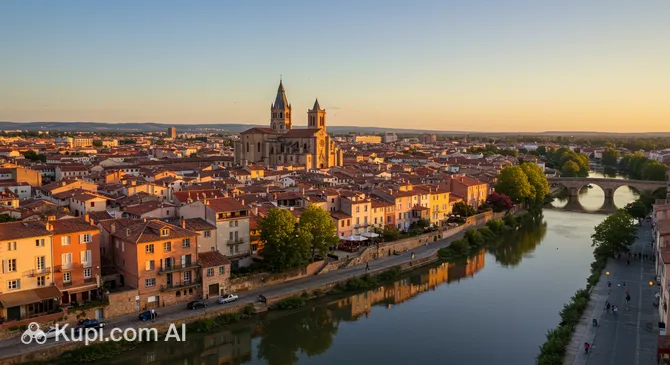
Béziers. Source: Kupi.Binoculars

Visitors are often drawn to the majestic Saint-Nazaire Cathedral, a Gothic fortress-like structure that dominates the skyline and offers panoramic views of the surrounding plains. Another engineering marvel is the Fonseranes Locks (Écluses de Fonseranes) on the Canal du Midi, a UNESCO World Heritage site that showcases the ingenuity of 17th-century water transport. Whether you are strolling across the medieval Old Bridge or exploring the shaded Allées Paul-Riquet, the city invites exploration at every turn.

Béziers is an ideal stop for travelers seeking culture, gastronomy, and scenic beauty without the overwhelming crowds of larger tourist hubs. From its lively summer festivals to its quiet, sun-drenched squares, this charming city promises a memorable experience for anyone eager to discover the soul of the south.

Weather Overview

Béziers enjoys a delightful Mediterranean climate, characterized by hot, sunny summers and generally mild winters. This weather pattern makes the city a welcoming destination year-round, though the atmosphere changes distinctively with the seasons. To help you pack the right gear for your trip, it is helpful to review the specific forecast and trends for the weather in Béziers before you travel.

The summer months are ideal for sun-seekers, with July and August bringing the warmest temperatures. During this peak season, average highs reach approximately 29°C, and rainfall is scarce, with July seeing as few as 5 wet days. Conversely, the cooler months remain quite temperate compared to northern Europe. In January, the coldest month, temperatures typically range between a low of 3.7°C and a high of 10.1°C. While precipitation volume is generally low, autumn can be damper, with November experiencing up to 13 wet days.

Interesting Facts

Beyond the main attractions, Béziers holds many fascinating secrets and historical quirks that often escape the casual visitor. From ancient legends to engineering triumphs, the city's past is woven with intriguing stories waiting to be uncovered.
  • The Legend of the Camel: One of the city's most curious symbols is a camel. Legend has it that the first bishop, Saint Aphrodise, arrived from Egypt riding a camel. When the bishop passed away, the locals took care of the animal, and today, "Lou Camel" is a beloved totem often celebrated during local festivals.

  • Older Than Marseille: While Marseille is frequently cited as the oldest city in France, archaeological discoveries suggest that Béziers might actually hold that title. Excavations indicate that a settlement existed here well before the traditional dates assigned to its famous coastal neighbor, challenging the historical timeline of the region.

  • A Golden Age of Wine: In the 19th century, the region's wine industry boomed, making Béziers one of the wealthiest cities in the country for a time. This immense prosperity funded the construction of elegant Haussmann-style buildings and grand public spaces like the Place Jean Jaurès, giving the city center a distinctly Parisian flair.

  • A Native Genius: Pierre-Paul Riquet, the visionary engineer behind the Canal du Midi, was born in Béziers. He largely financed the project himself, creating a waterway that transformed trade in southern France. His legacy is best admired at the nearby Nine Locks of Fonseranes, a masterpiece of hydraulic engineering.

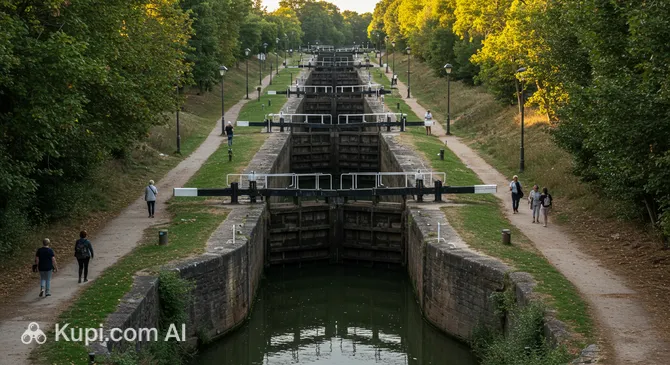
The Nine Locks of Fonseranes. Source: Kupi.Binoculars

How to Get There

Reaching this sun-drenched corner of Occitanie is straightforward, thanks to a variety of transport options connecting it to the rest of France and Europe. Whether you prefer flying directly into the region or taking a scenic train ride through the southern landscapes, you can easily plan your journey. For a detailed breakdown of all available routes and tips, you can read more about how to get to Béziers.

The most convenient option for air travelers is the local Beziers Vias Airport (IATA: BZR), situated just 11.4 km from the city center. It is a focused regional hub that welcomes numerous visitors annually. A taxi or shuttle ride from this airport to the heart of the city is a quick and easy transfer. Alternatively, for a broader selection of international connections, you can fly into Montpellier Mediterranee Airport (IATA: MPL). Located in the city of Montpellier, approximately 65.5 km away, this major airport serves as a key gateway to the region. The transfer by road from Montpellier to Béziers typically takes about an hour.

For clarity, here is a summary of the main airports:

Airport Name City Passenger Traffic Km from City
Montpellier Mediterranee Airport Montpellier Large 65.5
Llabanère Airport Perpignan Medium 72.7
Carcassonne Airport Carcassonne Medium 75.2
Beziers Vias Airport Béziers Medium 11.4
Garons Airport Nimes Medium 107.3

Travelers exploring the region by rail can also utilize major nearby transport hubs. The Montpellier Railway Station (IATA: XPJ) is a significant node in the network, located in the city of Montpellier, about 61.1 km from your destination. It handles a very large volume of passengers, making it a common transit point. From there, a car or taxi ride to Béziers takes roughly an hour. Closer to the city is Agde Station (IATA: EAG), situated in Agde, just 20.5 km away. This station offers a much shorter transfer to the city center.

Below is a list of nearby railway stations that facilitate access to the area:

Station City Passenger Traffic Km to Center
Montpellier Railway Station Montpellier Large 61.1
Nîmes Railway Station Nimes Large 107.5
Perpignan Station Perpignan Large 77.0
Nîmes Pont du Gard Station Nimes Large 116.7
Agde Station Agde Medium 20.5

Main Attractions

Béziers is home to an array of remarkable sites that reflect its long history and vibrant culture. From engineering masterpieces to ancient religious monuments, the city's landmarks offer a fascinating journey through time. Here are some of the top places to visit during your stay.

Undoubtedly the most famous attraction is The Nine Locks of Fonseranes, a UNESCO World Heritage site and a jewel of the Canal du Midi. This spectacular staircase of water chambers allows boats to descend 21.5 meters over a distance of just 300 meters. It is a masterpiece of 17th-century engineering designed by Pierre-Paul Riquet. Visitors can walk along the banks, watch boats navigate the locks, or enjoy the visitor center which offers immersive insights into the canal's history.

Dominating the city skyline from its rocky perch is the Saint-Nazaire Cathedral. This imposing Gothic structure resembles a fortress more than a traditional church, a design influenced by the region's turbulent medieval past. Its massive walls and towers are awe-inspiring, but the highlight for many is the climb to the top of the central tower. From there, you are rewarded with a stunning panoramic view stretching over the Orb River, the vineyards, and all the way to the Mediterranean Sea.

Saint-Nazaire Cathedral. Source: Kupi.Binoculars

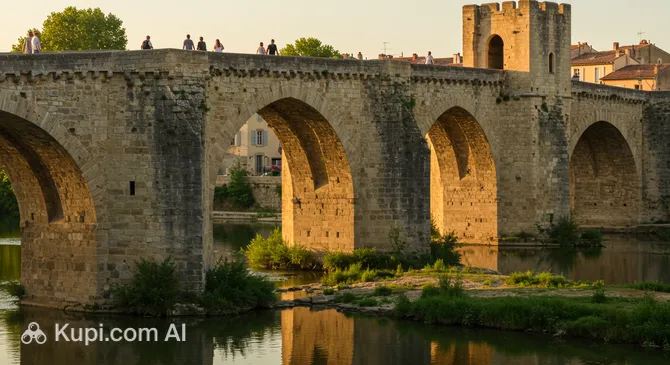
Just below the cathedral lies the majestic Old Bridge (Pont Vieux), one of the most picturesque spots in the city. Dating back to the 12th century, this Romanesque stone bridge was for a long time the only crossing point over the Orb River. It remains a beloved landmark today, offering a perfect vantage point for photographers who want to capture the city's silhouette rising dramatically above the riverbanks.

Old Bridge. Source: Kupi.Binoculars

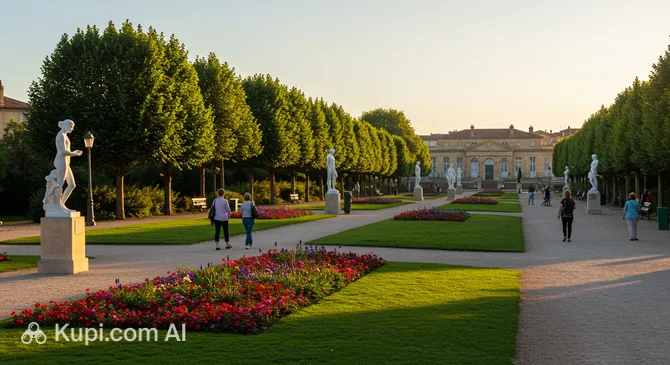
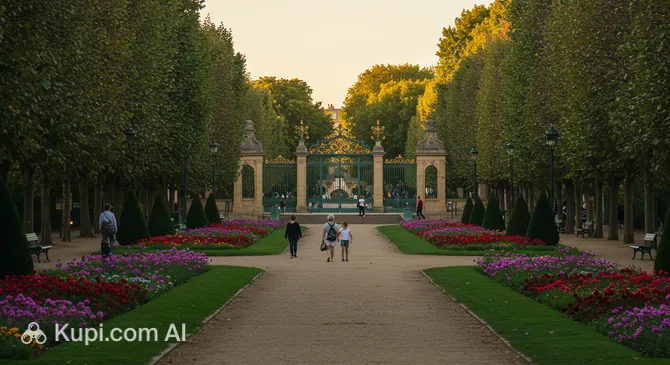
For a relaxing break amidst greenery, the Plateau des Poètes is a must-visit. Located at the end of the Allées Paul-Riquet, this vast English-style park was laid out in the late 19th century. It features winding paths, a lake, and rare botanical species, creating a tranquil atmosphere in the heart of the city. The park is adorned with statues and busts of famous poets born in Béziers, blending natural beauty with cultural pride.

Plateau des Poètes. Source: Kupi.Binoculars

Another symbol of the city's heritage is the Béziers Arena. Built in 1897 and modeled after Spanish bullrings, this grand amphitheater can hold over 13,000 spectators. While it is the center of excitement during the August Feria, it also serves as a prestigious venue for concerts and operas throughout the year, showcasing the city's love for festive gatherings and the arts.

Local Cuisine

Béziers offers a delightful gastronomic journey that reflects its strategic position between the Mediterranean Sea and the rugged hinterlands of the Haut-Languedoc. The local cuisine is sunny and generous, heavily relying on olive oil, garlic, and fresh seasonal produce. Seafood lovers will appreciate the abundance of fresh oysters and mussels sourced from the nearby coast, while those preferring heartier fare can indulge in dishes centered around duck, game, and lamb, often prepared with fragrant herbs like thyme and rosemary.

One of the city's most traditional specialties is the Ragoût d'Escoubilles, a savory stew historically made from leftovers, which typically includes sausage, carrots, celery, and olives served in a rich sauce. For those with a sweet tooth, the Coque de Béziers (or Coque Saint-Aphrodise) is a must-try. This delicious brioche, flavored with orange blossom and adorned with candied fruit, is deeply rooted in local legend and makes for a perfect breakfast or afternoon treat.

No meal in this region is complete without a glass of local wine. The vineyards surrounding the city produce excellent reds, whites, and rosés under the IGP Coteaux de Béziers label, making wine pairing an essential part of the dining experience. While wine is the staple, the city also embraces modern trends. For a change of pace, you can visit the Beer District Béziers, a popular spot to sample craft brews in a lively atmosphere. Before dinner, it is also customary to enjoy a glass of Pastis, the anise-flavored aperitif that is iconic to southern France.

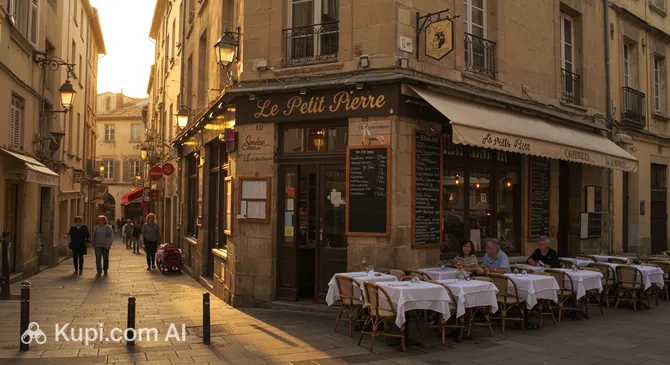
La Maison de Petit Pierre. Source: Kupi.Binoculars

The heart of the local food culture beats in the markets, particularly at the historic covered market, Les Halles, where you can buy fresh ingredients or enjoy a casual lunch at a counter. For a more refined dining experience, the city boasts several excellent establishments. A standout is La Maison de Petit Pierre, run by a celebrated chef, which offers creative dishes in a charming setting. Whether dining in a bustling square or a quiet courtyard, eating out in Béziers is a true celebration of the southern French "art de vivre".

Travel Tips

Preparing for a trip to Béziers is exciting, but a few insider details can transform a good vacation into a seamless experience. Here is a collection of practical advice to help you blend in with the locals and enjoy the city's southern charm without a hitch.

  1. Clothing and Gear: In the summer, lightweight, breathable clothing is essential to handle the Mediterranean heat, along with a hat and high-SPF sunscreen. Since the historic center is built on a hill and features many cobblestone streets, sturdy and comfortable walking shoes are a must. If you plan to visit religious sites like the Saint-Nazaire Cathedral, remember to dress modestly by covering your shoulders and knees.
  2. Transportation: The city center is compact and best explored on foot, although you should be prepared for some steep inclines. For longer distances, the local BeeMob bus network provides reliable service throughout the city and to nearby towns. While a car is not necessary for the city itself, renting one is highly recommended if you intend to tour the surrounding vineyards or visit the beaches at Valras-Plage.
  3. Finances: The local currency is the Euro (€). International credit cards (Visa and Mastercard) are widely accepted, but it is advisable to carry some cash for small purchases, especially at the Les Halles market or independent bakeries. Tipping is not mandatory as a service charge is included in the bill, but leaving a few coins or rounding up as a pourboire is a polite way to show appreciation.
  4. Health and Safety: Béziers is generally a safe destination for tourists, but standard precautions against pickpocketing should be taken in crowded areas. Pharmacies are easily identified by a flashing green cross and are typically open during business hours, with a rotating schedule for nights and Sundays. In case of any serious emergency, the universal European number to dial is 112.
  5. Communication: French is the primary language, and while hospitality staff often speak English, it is not universally spoken by all locals. Learning a few basic phrases such as "Bonjour" (Hello), "Merci" (Thank you), and "S'il vous plaît" (Please) will be greatly appreciated. You can purchase prepaid SIM cards at tobacco shops (tabacs) or supermarkets to stay connected.
  6. Local Etiquette: Politeness is a cornerstone of daily life here. It is customary to greet shopkeepers with a friendly "Bonjour" when entering a store and "Au revoir" when leaving; skipping this can be seen as rude. Lunch is a cherished time of day, so do not be surprised if service is slower and more relaxed—patience is key to enjoying the local rhythm.
  7. What to Avoid: Do not expect all shops to remain open throughout the day. Many smaller businesses and boutiques close for a lunch break, typically between 12:00 PM and 2:00 PM, and remain closed on Sundays. Additionally, avoid touching produce at market stalls without permission; it is polite to let the vendor serve you.
  8. Seasonal Insight: If you are visiting in mid-August, be aware that the city hosts the Féria de Béziers, one of the largest festivals in southern France. The streets become incredibly crowded with festivities, music, and bullfighting events. If you prefer a quiet, relaxing holiday, you might want to plan your trip outside of these lively dates.

With these tips in hand, you are ready to navigate the winding streets of Béziers with confidence and ease. Embrace the relaxed pace of the south, soak up the rich history, and enjoy every moment of your French getaway.

Entertainment & Nightlife

Béziers offers a nightlife scene that perfectly reflects its Mediterranean soul: warm, convivial, and centered around enjoying the outdoors. While it may not have the frantic pace of a mega-club capital, the city provides a delightful array of evening entertainment, from sophisticated wine bars to lively public squares. The nightlife here is less about thumping basslines and more about the "art de vivre"—gathering with friends for long dinners, sipping local wines on terraces, and enjoying the balmy southern evenings.

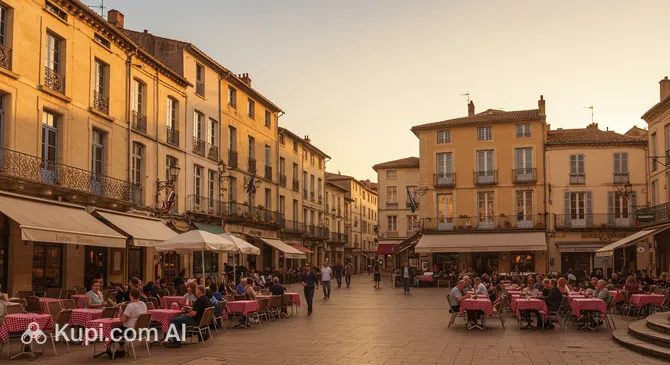
The beating heart of the city's nightlife is undoubtedly the Place Jean Jaurès. Recently revitalized, this expansive square transforms as the sun sets, becoming a vibrant hub for locals and tourists alike. Surrounded by cafes and brasseries, it is the perfect spot to start your evening. In the summer, the atmosphere is magical, often enhanced by the mesmerizing musical fountain shows that light up the square, providing a festive backdrop for your night out.

Place Jean Jaurès. Source: Kupi.Binoculars

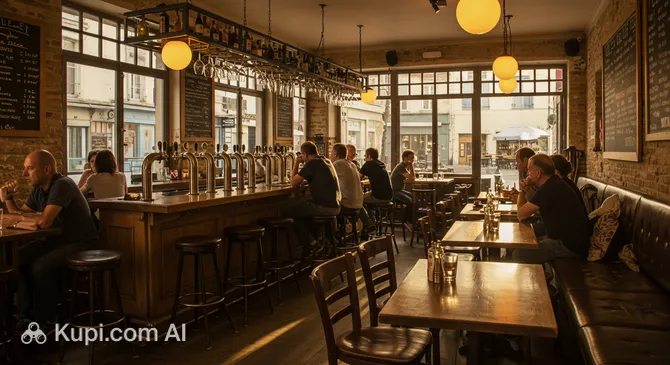
For those who prefer hops over grapes, the Beer District Béziers is a standout venue. Located near the cathedral, this establishment has carved out a niche for itself by offering an impressive selection of craft beers in a stylish, industrial-chic setting. It attracts a diverse crowd, from students to young professionals, making it a great place to mingle and soak up the local energy. The dress code throughout the city is generally "casual chic"—smart but relaxed, fitting the warm climate.

Beer District Béziers. Source: Kupi.Binoculars

Music lovers should keep an eye on the schedule for the Béziers Arena. While famous for its historical architecture, this grand amphitheater frequently hosts large-scale concerts, festivals, and cultural events under the stars, particularly during the summer season. For a more modern entertainment experience, including cinema and late-night shopping, the Polygone Béziers is a contemporary open-air complex that bridges the gap between daytime leisure and evening fun, offering a variety of dining options and a bowling alley.

Before the sun goes down, Béziers offers plenty of cultural diversions to fill your day. You can explore the rich collections at the Musée des Beaux-Arts or take a leisurely boat trip along the Canal du Midi. For families or those seeking lighthearted fun, the city has several parks and nearby amusement centers that remain open until the early evening.

When planning your night out, keep in mind that the rhythm of life here is relaxed. Restaurants typically start serving dinner around 8:00 PM, and bars get busier after 10:00 PM. In terms of safety, the city center and main squares are well-lit and secure for walking. However, as in any city, it is advisable to stay in populated areas late at night. Public transport is limited in the late hours, so it is best to have the number of a local taxi service handy or use a ride-sharing app, though availability can vary.

Parks & Museums

Beyond its bustling squares and historic monuments, Béziers offers a refreshing array of green spaces and cultural institutions that provide a deeper understanding of the city's heritage. Whether you are looking to escape the midday sun under the shade of ancient trees or dive into the region's artistic and archaeological past, the city's parks and museums are essential stops on your itinerary.

For a peaceful retreat near the water, the Jardin de la Plantade is a favorite among locals. Located along the banks of the Orb River, below the city center, this historic garden dates back to the 19th century and retains a charming, rustic atmosphere. With its towering plane trees and proximity to the river's old mills, it offers a cool, shaded environment perfect for picnics or a quiet stroll away from the urban noise. It is particularly scenic in the autumn when the foliage turns golden, reflecting beautifully in the water.

Jardin de la Plantade. Source: Kupi.Binoculars

Culture enthusiasts should not miss the Musée des Beaux-Arts, housed in the elegant Hôtel Fayet. This 17th-century mansion provides a stunning backdrop for an impressive collection of paintings and sculptures. The museum is particularly renowned for its extensive collection of works by Jean-Antoine Injalbert, a native sculptor whose statues adorn many of the city's public spaces. Walking through the period rooms offers a dual experience of enjoying fine art and admiring the preserved interior architecture of a bourgeois home.

To understand the long and complex history of the region, the Musée du Biterrois is the place to go. Located in the former Saint-Jacques barracks, this museum focuses on archaeology, ethnography, and natural history. Its exhibits trace the evolution of human settlement in Béziers from prehistory to the present day, with a special emphasis on the local wine-making culture that shaped the city's economy. It provides fascinating context to the sights you see on the streets, explaining the deep roots of the local identity.

For a lesser-known cultural gem, seek out the Jardin de la Villa Antonine. This was the summer residence and studio of the sculptor Injalbert. Today, it is a tranquil public garden where you can see sketches and plaster casts in a more intimate setting, often surrounded by blooming flowers and Mediterranean vegetation, offering a quiet, artistic sanctuary hidden from the main tourist trails.

Getting Around

Navigating Béziers is relatively straightforward, as the city is compact and well-connected by a reliable bus network. Unlike larger metropolises, Béziers does not have a metro or tram system. Instead, the public transport infrastructure relies primarily on buses, which serve the city center, the surrounding suburbs, and the nearby coastal resorts. For visitors, this means that getting around is both affordable and uncomplicated, though it often requires checking schedules in advance, especially during weekends or holidays.

The local bus network is operated by BeeMob. It offers extensive coverage, linking key locations such as the railway station, the historic center, and major shopping areas like the Polygone. A particularly useful service for tourists during the summer months is the beach shuttle, which connects the city center to the Mediterranean beaches at Valras-Plage and Sérignan. These buses are modern and comfortable, making them a practical choice for day trips to the coast without the need for a rental car.

The payment system is designed to be user-friendly. Tickets are very affordable, with a single journey typically costing around 1 Euro. You can purchase tickets directly from the driver upon boarding, though it is often requested to have the exact change. For those planning multiple trips, a 10-trip card or a day pass offers better value. These can be bought at the Boutique BeeMob located near the bus station or at authorized tobacco shops (tabacs) throughout the city. Additionally, the network has a mobile app that allows you to buy and validate tickets directly from your smartphone, which is a convenient option for travelers.

When using the bus, it is essential to validate your ticket immediately upon boarding to avoid fines. Operating hours generally run from early morning until around 8:00 PM or 9:00 PM, depending on the line. Be aware that service is significantly reduced on Sundays and public holidays. If you are staying out late, you will likely need to rely on alternative forms of transport, as night buses are not a standard feature of the network.

For a more scenic and tourist-oriented experience, look out for the Petit Train de Béziers. This trackless tourist train operates seasonally and is a favorite among visitors. It offers a charming loop that connects the historic city center with the famous Nine Locks of Fonseranes. It provides a narrated tour, allowing you to rest your legs while learning about the city's history and enjoying the views without tackling the steep incline between the canal and the cathedral on foot.

Beyond buses, taxis are available but can be harder to hail on the street compared to bigger cities. It is advisable to locate a taxi rank, typically found outside the train station or near the Allées Paul-Riquet, or to book one by phone or app in advance. Cycling is also a popular alternative, particularly for leisure rides along the Canal du Midi towpaths. Several rental shops operate in the city, offering bikes suitable for both urban exploration and longer rides through the vineyards.

Accommodation

Finding the perfect place to stay in Béziers is relatively easy, as the city offers a welcoming mix of accommodation options to suit various budgets and travel styles. While it does not boast an extensive array of ultra-luxury resorts, visitors can choose from charming boutique hotels, reliable mid-range chains, and a growing number of private apartment rentals. For those seeking a more authentic experience, there are also numerous "chambres d'hôtes" (bed and breakfasts) located in renovated historic townhouses, offering a personal touch and a glimpse into local life.

When choosing a location, the historic center is often the most atmospheric choice. Staying here places you within walking distance of the main landmarks, lively squares, and the best restaurants. However, for those who prioritize accessibility and modern conveniences, the area near the railway station and the Polygone Béziers shopping district is highly recommended. This neighborhood offers easy access to transport links and features newer establishments with contemporary amenities.

Polygone Béziers. Source: Kupi.Binoculars

Travelers looking for a quieter retreat might consider the outskirts of the city or the banks of the Canal du Midi. These areas provide a peaceful environment, often with more space and sometimes even a pool, which is a significant bonus during the hot summer months. While the city center is compact, having accommodation with parking can be a challenge in the old streets, so this is an important factor to check if you are traveling by car.

Price-wise, Béziers is generally more affordable than the coastal resorts or the larger cities in the region. You can find excellent value for money, particularly in the shoulder seasons. However, availability tightens significantly in July and August. A crucial tip for prospective visitors: if you plan to visit during the famous Féria de Béziers in mid-August, you must book your accommodation months in advance, as hotels fill up quickly and prices can spike due to the high demand.

Nearby Cities

For those looking to explore the surroundings, Béziers serves as an excellent base for day trips to several interesting nearby locations. The region is rich in history and diverse landscapes, offering travelers the chance to discover ancient Roman heritage, vibrant ports, and bustling urban centers just a short journey away.

One of the most fascinating stops is Narbonne, located just a quick drive or train ride to the southwest. This city was once a major capital in Roman Gaul, and its legacy is visible in the impressive Horreum, an underground network of ancient warehouses. Visitors can also admire the unfinished yet majestic Saint-Just and Saint-Pasteur Cathedral and stroll along the charming Canal de la Robine. For a coastal change of pace, Sète offers a unique maritime atmosphere. Known as the "Venice of Languedoc," it is famous for its network of canals, working fishing port, and delicious seafood. A hike up Mont Saint-Clair rewards you with breathtaking views of the Mediterranean Sea.

If you prefer a larger city experience, Montpellier is a dynamic destination that blends the old with the new. From the medieval streets of the Écusson district to the neoclassical grandeur of the Antigone neighborhood, it is a hub of culture, shopping, and gastronomy.

City Population Distance (km)
Montpellier 295542 61
Narbonne 55516 25
Sete 43858 40
Agde 29600 22
Frontignan 23028 45

These nearby destinations offer a glimpse into the diverse culture and landscapes of the region.

Shopping & Souvenirs

Shopping in Béziers offers a pleasant mix of traditional southern charm and modern convenience. The city provides a relaxed retail experience where visitors can browse through independent boutiques, explore vibrant local markets, and enjoy contemporary shopping centers. Whether you are looking for high-end fashion, artisanal crafts, or gastronomic specialties, the city caters to a variety of tastes and budgets, all within a relatively compact area.

The heart of the shopping action lies in the historic city center. The Allées Paul-Riquet, the city's grand promenade, serves as a central spine for retail activity, hosting various shops and cafes. Branching off from here, streets such as Rue de la République and Rue du 4 Septembre are lined with clothing stores, shoe shops, and small boutiques selling jewelry and home decor. Walking through these pedestrian-friendly zones allows you to admire the architecture while hunting for unique finds.

For a comprehensive shopping experience in a modern setting, the Polygone Béziers is the premier destination. Uniquely designed as an open-air lifestyle center, it connects the historic town with the canal area. This architectural landmark houses over 100 shops, including major international brands, a cinema, and numerous restaurants. Its airy, tiered design makes it a delightful place to stroll, offering not just retail therapy but also scenic views of the famous locks nearby.

No trip to Béziers is complete without experiencing its authentic markets. The historic covered market, Les Halles, located near the town hall, is a temple of local gastronomy. Open every morning from Tuesday to Sunday, it is the best place to find fresh regional produce, cheeses, and meats. Additionally, a colorful flower market takes over the Allées Paul-Riquet on Friday mornings, creating a fragrant and picturesque atmosphere that attracts both locals and tourists.

When it comes to souvenirs, the region's culinary heritage offers the best options. A bottle of local Languedoc wine or a jar of Lucques olives—a prized local variety—makes for an excellent gift. Pottery and ceramics are also traditional to the area. For something sweeter, look for boxes of Coques de Béziers, the city's traditional brioche, or artisanal chocolates from local confectioners.

Store opening hours generally run from 10:00 AM to 7:00 PM. It is important to note that many smaller independent shops in the city center close for a lunch break, typically between 12:00 PM and 2:00 PM. However, the larger stores in the Polygone complex usually remain open throughout the day. Sunday is a quiet day with most shops closed, although food markets operate in the morning. Payment by credit card (Visa and Mastercard) is widely accepted, though carrying cash is recommended for small purchases at market stalls.

For visitors residing outside the European Union, a tax refund (VAT refund) may be available on purchases exceeding a certain amount in a single store. Look for the "Tax-Free Shopping" sign in store windows and ask the merchant for a tax refund form at the time of purchase to claim your refund at the airport or border upon departure.

Reached the end of the page?

That means the route is fully explored