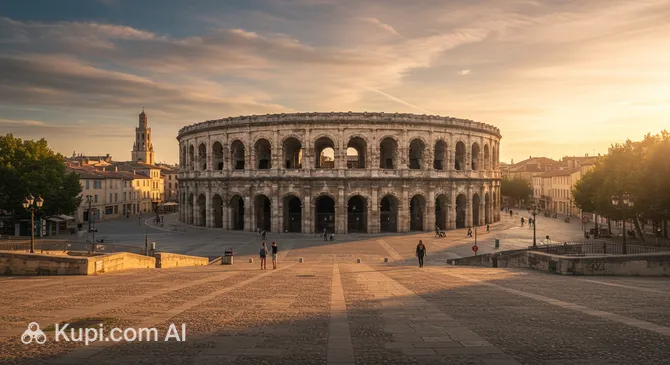
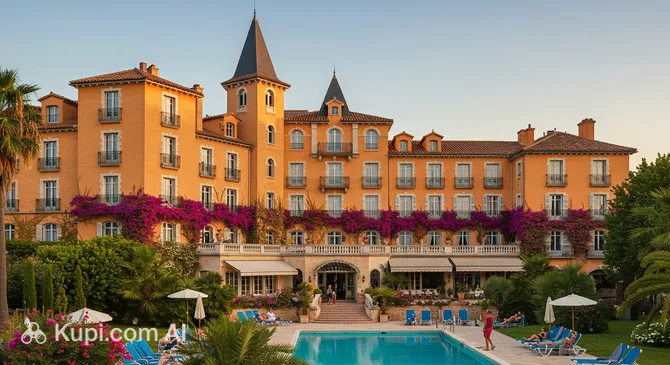
Known affectionately as the "French Rome," Nimes is a captivating destination that seamlessly blends ancient heritage with the vibrant energy of the south. Located in the Occitanie region of France, the city sits strategically between the Mediterranean Sea and the Cévennes mountains. With a population of approximately 150,000 residents, it serves as a bustling cultural hub that enjoys a sunny, warm climate for much of the year, making it an attractive stop for travelers exploring the region.
The city's past is its most defining feature. The rich history of Nimes stretches back to the Roman Empire, and its legacy is visible in the incredibly well-preserved monuments scattered throughout the town. This deep connection to antiquity gives the city a unique atmosphere where millennia-old architecture stands proudly alongside modern cafes and boutiques.
Nimes. Illustration.
Source: Kupi.com AI
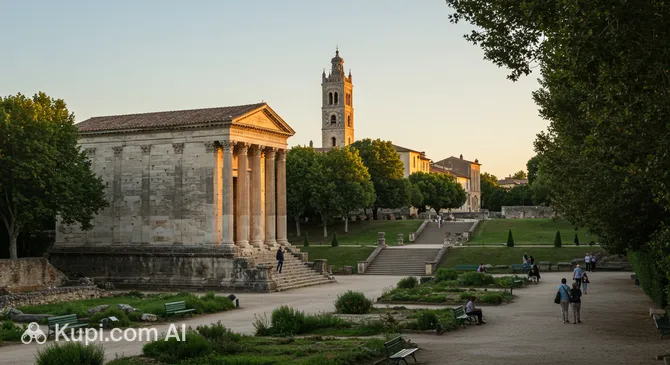
Visitors are drawn to the iconic Arena of Nîmes, a majestic double-tiered amphitheater that rivals the Colosseum in Rome and still hosts concerts and events today. Just a short walk away lies the Maison Carrée, one of the best-preserved Roman temples in the world, which continues to awe spectators with its classical beauty. For a change of pace, the Jardins de la Fontaine offer a lush, romantic escape featuring 18th-century landscaping built around ancient Roman ruins.
Whether you are passionate about archaeology or simply looking to soak up the relaxed Provencal lifestyle, Nimes offers an unforgettable experience. Its combination of historical grandeur and contemporary liveliness makes it a must-visit city on any French itinerary.
Weather Overview
Nimes generally enjoys a pleasant climate with significant seasonal variations. The summer months are the hottest and driest, with July seeing average temperatures of 25.9°C and highs often reaching up to 32.1°C. In contrast, winters are much cooler; January is typically the coldest month with an average temperature of 7.3°C and lows dipping to around 3.4°C.
Precipitation is relatively low throughout the year, though autumn tends to bring more frequent showers, particularly in October and November which see the highest number of wet days. For those planning a visit, expect hot, dry summers perfect for exploring and mild winters with occasional rain. You can find more specific forecasts and historical data on our dedicated weather in Nimes page.
Average monthly temperature
Average monthly precipitation
Interesting Facts
Beyond the famous Roman monuments, Nimes holds several fascinating secrets and historical curiosities that often surprise visitors. From the origins of everyday global fashion to unique heraldic symbols, the city's legacy extends far beyond its ancient stone walls.
The world's most popular fabric has its roots right here in the city. The durable cotton twill now known as "denim" was originally called "serge de Nîmes" (serge from Nimes). Over time, the name was shortened to the word we use today, forever linking the city to blue jeans history.
You might notice a curious symbol throughout the city: a crocodile chained to a palm tree. This coat of arms dates back to Roman times and commemorates the victory of Emperor Augustus in Egypt. He granted land in Nimes to the veteran legionnaires who fought in the Nile campaigns, and the symbol remains the city's emblem to this day.
The Jardin de la Fontaine is often cited as one of the first public gardens in Europe. Created in the 18th century, it was designed not just as a green space, but to highlight the ancient sanctuary and ruins found around the local spring, blending neoclassical design with Roman history.
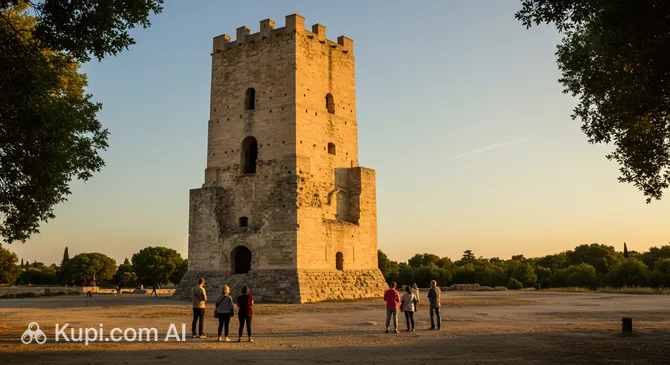
Standing atop Mount Cavalier, the Tour Magne is the only survivor of the ancient Augustan fortifications. Originally, the city's massive defensive wall included roughly 80 such towers, but today this solitary monument offers the best panoramic views over the rooftops of Nimes.
Tour Magne. Illustration.
Source: Kupi.com AI
Traveler photos:
How to Get There
Reaching this historic destination is quite convenient, with several transport options available depending on your starting point. Whether you prefer flying into a nearby hub or taking a scenic train ride, the region is well-connected. For a detailed breakdown of all routes and logistics, you can read more about how to get to Nimes.
The closest air travel option is Garons Airport (FNI), located directly in Nimes just 9.6 km from the city center. It is a smaller regional facility, offering a quick and easy arrival. For those seeking more international connections, Marseille Provence Airport (MRS) is a major gateway. Situated in Marseille, approximately 82 km away, the journey to Nimes takes about an hour by road. Another viable option is Montpellier Mediterranee Airport (MPL) in the city of Montpellier. Located 43 km from Nimes, the transfer is a short drive, typically taking less than an hour.
For clarity, here is a summary of the main airports serving the region:
Traveling by train is also a very efficient way to arrive, as the city is integrated into the high-speed rail network. The primary hub is the Nîmes Railway Station (ZYN), which is conveniently located right in the city center, only 0.5 km from the main attractions. It handles a significant volume of travelers and offers easy access to local transport. Additionally, the Nîmes Pont du Gard Station (NPD) serves as a secondary hub for certain high-speed lines. It is situated on the outskirts, approximately 12 km from the center, requiring a short commute to reach the downtown area.
Below is an overview of the nearest railway stations:
While the famous Arena and Maison Carrée often steal the spotlight, Nimes offers a wealth of other fascinating sites that showcase its deep historical roots and vibrant culture. From state-of-the-art museums to romantic ruins, the city's attractions provide a diverse journey through time.
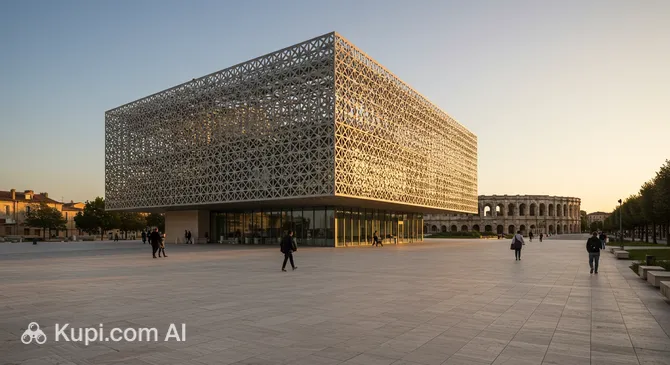
Facing the ancient amphitheater is the ultra-modern Museum of Romanity. This architectural marvel is wrapped in a translucent glass façade that mimics the draping of a Roman toga. Inside, visitors can explore an immense collection of 25,000 artifacts, ranging from intricate mosaics to daily objects that bring the ancient city to life. It is not just a museum but a technological experience, using multimedia to immerse you in history before offering a stunning panoramic view of Nimes from its rooftop terrace.
Museum of Romanity. Illustration.
Source: Kupi.com AI
Traveler photos:
For a quieter, more atmospheric experience, the Temple of Diana offers a glimpse into the mystery of the past. Located within the lush Jardin de la Fontaine, these romantic ruins date back to the 1st century BC. Despite its name, its true function remains a subject of debate among historians, with many believing it was actually a library rather than a religious temple. Today, it serves as a picturesque spot where tourists can wander among the ancient stones and arches.
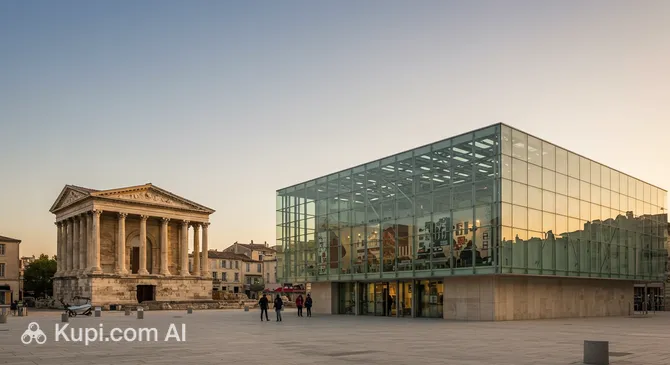
Art lovers should not miss the Carré d'Art, a striking glass-and-steel structure designed by the renowned architect Norman Foster. Situated directly opposite the classical Maison Carrée, it creates a fascinating dialogue between antiquity and modernity. The building houses a contemporary art museum and a library, hosting regular exhibitions that feature international artists. It is a perfect place to enjoy modern culture while appreciating the city's architectural evolution.
Carré d'Art. Illustration.
Source: Kupi.com AI
Traveler photos:
Another significant historical landmark is the Porte d'Auguste. Once the main entrance to the city for travelers arriving from Rome via the Via Domitia, this ancient gate was a vital part of the massive defensive walls built by Emperor Augustus. Although only two of the original four arches remain visible today, standing before them gives you a tangible sense of the grandeur and strategic importance of Nimes in the Roman world.
Local Cuisine
The culinary scene in Nimes is a delicious reflection of its geographical location, bridging the gap between the sunny Provence region, the wild Camargue, and the Cévennes mountains. The local food is characterized by Mediterranean flavors, featuring abundant use of olive oil, garlic, and aromatic herbs like thyme and rosemary. For visitors, dining here is not just about sustenance; it is a way to experience the city's warm and convivial soul.
One cannot visit Nimes without trying its most famous specialty, Brandade de Morue. This creamy, comforting dish is made from salt cod that has been poached and emulsified with olive oil and milk until it reaches a smooth, mousse-like consistency. It is traditionally served warm with bread or potatoes and is a staple in local households. Another iconic dish is the Gardiane de Taureau, a rich stew made with bull meat from the nearby Camargue region. Slow-cooked in red wine with black olives and herbs, it is a hearty meal often served with Camargue rice, celebrating the area's ranching traditions.
For a quick savory snack, look for the Petit Pâté de Nîmes. These small, golden pastries are filled with a mixture of veal and pork stuffing, dating back to the 19th century. They are perfect for eating on the go while exploring the city streets. On the sweeter side, almond lovers should try Croquants Villaret, hard almond biscuits that have been a local favorite for generations.
To accompany these meals, the region offers excellent beverages. The vineyards surrounding the city produce the renowned Costières de Nîmes wines. These wines, which can be red, rosé, or white, are known for their fruity and spicy notes, pairing perfectly with the robust local cuisine. For a non-alcoholic option, the area is the birthplace of the world-famous sparkling water, Perrier, whose source is located just a few kilometers away in Vergèze.
Les Halles de Nîmes. Illustration.
Source: Kupi.com AI
Traveler photos:
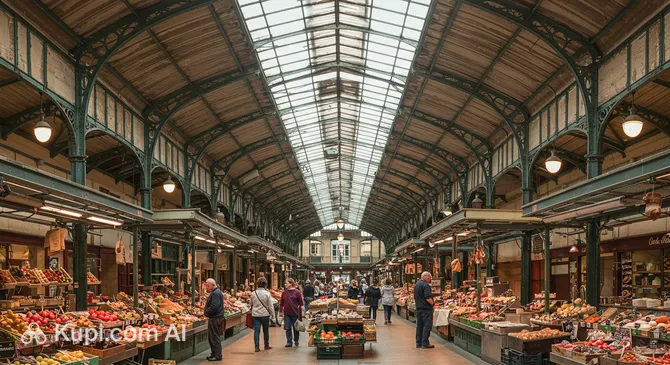
The beating heart of the local food culture is undoubtedly Les Halles de Nîmes. This covered market is where locals come to shop for the freshest regional produce, cheeses, and charcuterie. It is a vibrant gathering place where you can wander past colorful stalls, sample olives, or enjoy a casual lunch at one of the internal food counters. Beyond the market, the city's dining scene revolves around its lively squares, where terraces fill up quickly during lunch and dinner, offering a relaxed atmosphere to enjoy the Southern French lifestyle.
Travel Tips
To help you make the most of your visit to the "French Rome," we have compiled a list of essential travel advice tailored to the local lifestyle and environment. These practical tips will ensure your journey through Nimes is as smooth and enjoyable as possible, allowing you to focus on the history and culture around you.
Clothing and Gear: Nimes enjoys a sunny Mediterranean climate, so if you are visiting in summer, lightweight, breathable clothing, a hat, and high-SPF sunscreen are absolute musts. The heat can be intense, especially when exploring open-air sites like the Arena. Winters are mild but can be breezy due to the Mistral wind, so packing a windproof jacket and layers is wise. Since the historic center is best explored on foot, bring comfortable, sturdy walking shoes to navigate the cobblestone streets and ancient ruins.
Transportation: The city center is compact and very pedestrian-friendly; you can easily walk between the major monuments like the Maison Carrée and the Arena. For longer distances, the local Tango bus network is reliable and affordable. Unless you plan to explore the surrounding countryside or the Camargue, renting a car is unnecessary and can be a hassle due to limited parking in the historic core. Taxis and ride-sharing apps are available but less frequent than in larger metropolises like Paris.
Finances: The currency is the Euro (€). Credit and debit cards (Visa and Mastercard) are widely accepted in hotels, restaurants, and most shops. However, it is highly recommended to carry some cash for small purchases at local markets, bakeries, or for small tips. ATMs are plentiful throughout the city. Tipping is not mandatory as a service charge is included in the bill, but leaving small change or rounding up is a polite gesture for good service.
Health and Safety: Nimes is generally a safe city for tourists, but standard precautions against pickpocketing should be taken, especially in crowded areas or during the busy Feria festivals. Pharmacies are easily identifiable by a flashing green cross sign and are well-stocked; the staff can often provide advice for minor ailments. In case of a serious medical emergency, dial 112, which is the universal European emergency number.
Communication: French is the official language. While staff in major museums, hotels, and tourist restaurants often speak English, it is not universally spoken in smaller local shops or by older residents. Learning a few basic phrases like "Bonjour" (Hello), "Merci" (Thank you), and "S'il vous plaît" (Please) goes a long way and is greatly appreciated by the locals. Free Wi-Fi is often available in public squares and cafes, and SIM cards can be purchased at tobacco shops (tabacs) or mobile provider stores.
Local Etiquette: Politeness is paramount in French culture. Always greet shopkeepers or staff with a friendly "Bonjour" when entering an establishment and "Au revoir" when leaving; failing to do so can be considered rude. When visiting religious sites like the Cathedral, dress modestly and speak softly. Dinner is typically served later than in some other countries, usually starting around 7:30 PM or 8:00 PM.
What to Avoid: Avoid rushing your meals; dining in Nimes is a leisurely experience meant to be savored. Do not expect shops and smaller businesses to be open during lunch hours (roughly 12:00 PM to 2:00 PM), as many close for a midday break. Also, avoid touching the ancient stones or artifacts in monuments unless explicitly permitted, as preservation is taken very seriously.
Market Insight: If you plan to visit the famous Les Halles de Nîmes market, be sure to go in the morning. It is a morning market that typically closes by 1:00 PM or 1:30 PM. Arriving early not only guarantees the freshest produce but also lets you experience the authentic buzz of locals doing their daily shopping before the midday heat sets in.
By keeping these simple tips in mind, you will be well-prepared to embrace the relaxed rhythm and rich heritage of Nimes. We hope this advice helps you navigate the city with confidence and leaves you with wonderful memories of your time in the south of France.
Entertainment & Nightlife
As the sun sets over the ancient Roman monuments, Nimes transforms into a lively hub of Mediterranean nightlife. The city's evening atmosphere is characterized by a relaxed, convivial vibe where locals gather on outdoor terraces to enjoy the warm southern air. The historic center, particularly the "Ecusson" district, is the beating heart of the action, with narrow streets filled with chatter, clinking glasses, and music spilling out from various venues.
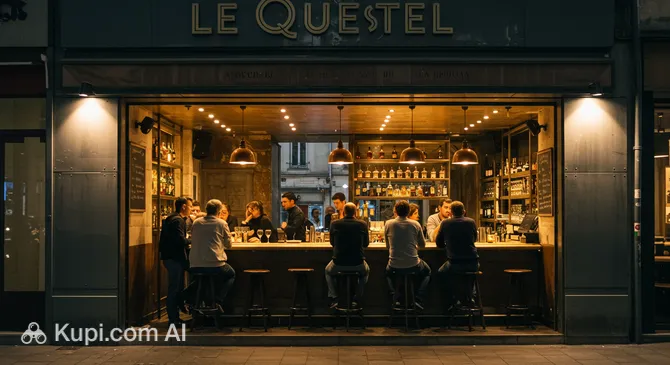
For those looking to start their evening with a drink in a stylish setting, the area around Boulevard Victor Hugo and the Place d'Assas is a popular choice. Here, you will find a mix of sophisticated wine bars and lively pubs. One notable spot to experience the local bar scene is Le Questel. It is a great place to mingle with residents and enjoy a refreshing cocktail or a glass of regional wine before heading out for dinner or dancing.
Le Questel. Illustration.
Source: Kupi.com AI
Traveler photos:
If you prefer to continue the night into the early hours, the city offers several options for clubbing. The nightlife here caters to a diverse crowd, ranging from students to young professionals. A well-known venue for late-night entertainment is the Flamingo Night Club. It provides a vibrant atmosphere with DJ sets and a dance floor that stays busy until dawn, making it a key destination for party-goers in the region.
Flamingo Night Club. Illustration.
Source: Kupi.com AI
Traveler photos:
Another venue that contributes to the city's evening landscape is La Boucherie. While the city is not famous for massive mega-clubs, these local spots offer a spirited and authentic French night out. The dress code in Nimes is generally smart-casual; while you don't need to be overly formal, leaving the beachwear at the hotel is recommended for entering clubs and upscale bars.
Regarding practicalities, the nightlife typically kicks off later in the evening, with bars filling up around 10:00 PM and clubs getting busy after midnight. Prices are reasonable compared to larger French cities, with a beer or glass of wine costing around 5 to 7 euros. The city center is compact and walkable, making it easy to hop from one venue to another. However, if you are staying further out or it is very late, it is best to call a taxi or use a ride-sharing app, as public transport options diminish after midnight. The city is generally safe for night walks, especially in the well-lit main squares, but it is always wise to stay in populated areas.
Before the sun goes down, Nimes offers plenty of daytime entertainment to fill your schedule. Beyond the historical sites, you can enjoy contemporary plays and musical performances at the Théâtre de Nîmes or catch a movie at one of the local cinemas. The city also hosts various cultural festivals throughout the year, bringing street performers and parades to the boulevards, ensuring that there is always something to see before the nightlife begins.
Parks & Museums
Beyond its stone monuments, Nimes is a city that breathes through its magnificent green spaces. The most iconic of these is the Jardin de la Fontaine, a masterpiece of 18th-century landscaping that has been designated as a "Remarkable Garden." Built around the ancient spring that originally gave birth to the settlement, the park is a harmonious blend of classical French design and Mediterranean vegetation. Visitors can wander among balustrades, ornamental vases, and statues in the lower canals, or explore the shaded paths winding up the slopes of Mount Cavalier, where cypress and pine trees offer a cool retreat from the sun.
Jardin de la Fontaine. Illustration.
Source: Kupi.com AI
Traveler photos:
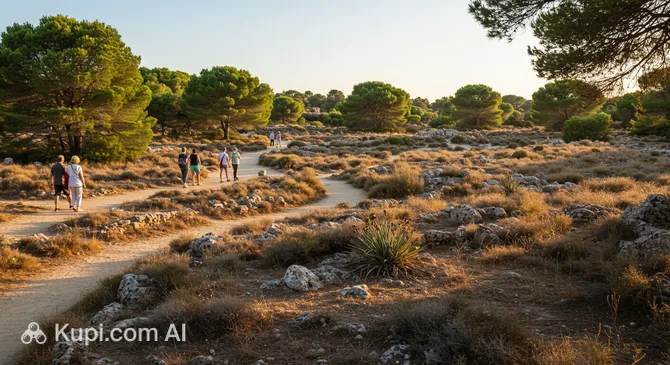
For a more rugged immersion in nature, the Bois des Espeisses offers a perfect escape into the local "garrigue" landscape. Located just a few minutes from the city center, this protected natural area spans over 80 hectares and is designed for family leisure and outdoor sports. With its network of marked trails for jogging and hiking, picnic areas, and children's playgrounds, it allows travelers to experience the wild, aromatic scrubland of Southern France without leaving the city limits.
Bois des Espeisses. Illustration.
Source: Kupi.com AI
Traveler photos:
While the Museum of Romanity and the Carré d'Art are the modern flagships of the city's cultural scene, Nimes is home to several other institutions that preserve its diverse history. The Museum of Fine Arts (Musée des Beaux-Arts) is a must-visit for art lovers, housing a prestigious collection of French and European paintings alongside one of the finest Roman mosaics in the region. For a deeper look into local traditions, the Museum of Old Nimes (Musée du Vieux Nîmes) invites visitors into the former Bishop's Palace to discover the city's social history, including the fascinating origins of the "serge de Nîmes" fabric that would eventually conquer the world as denim.
Getting Around
Public transportation in Nimes is efficient, modern, and primarily managed by the Tango network. While the city does not have an underground metro system, it features a high-quality bus network that covers the city center, the suburbs, and surrounding villages. The backbone of this system is the Tram'bus, a Bus Rapid Transit (BRT) service that combines the flexibility of a bus with the efficiency and comfort of a tram. These vehicles run on dedicated lanes, ensuring punctual service even during rush hours, and serve key locations such as the Roman Arena, the main railway station, and the hospital.
The Tram'bus lines, specifically T1 and T2, are the most useful routes for visitors. Line T1 connects the north and south of the city, looping around the historic center, while Line T2 runs from the university hospital to the Marguerite area. Complementing these main lines is a comprehensive network of standard buses that reach neighborhoods further afield. For travelers arriving by air, a dedicated airport shuttle service links Nimes-Alès-Camargue-Cévennes Airport to the city center, coordinating with flight schedules.
Navigating the payment system is straightforward. You can purchase a single-trip ticket, which is valid for one hour and allows for transfers, or opt for a Day Pass if you plan to explore multiple areas in a 24-hour period. Tickets can be bought at vending machines located at all Tram'bus stations, at the Tango shop in the city center, or directly from the driver on standard buses (though it is often slightly cheaper to buy beforehand). For added convenience, the M-Ticket feature on the Tango mobile app allows you to buy and validate tickets directly from your smartphone, eliminating the need for paper tickets entirely.
A few practical tips will help ensure a smooth journey. Always remember to validate your ticket immediately upon boarding; failure to do so can result in a fine during random inspections. Buses and Tram'buses typically operate from early morning, around 5:30 AM, until roughly 9:00 PM or 10:00 PM, though the main Tram'bus lines may run slightly later. Be aware that service frequency is reduced on Sundays and public holidays, so it is wise to check the timetables in advance via the official website or app.
For those who prefer active travel, Nimes offers a bike rental service known as Vélotango. While not a dock-to-dock sharing scheme like in some major capitals, it allows for short-term and long-term rentals, perfect for enjoying the sunny climate. Taxis and ride-sharing apps are also available but are less frequently hailed on the street; it is recommended to book them by phone or app, especially for late-night travel when public transport has ceased. However, given the compact nature of the historic district, walking remains one of the best ways to navigate the city center, with the bus system serving as an excellent option for reaching attractions on the outskirts.
Accommodation
Finding the perfect place to stay in Nimes is relatively easy, as the city offers a diverse range of accommodation options to suit various travel styles and budgets. Whether you are looking for the opulence of a five-star historic hotel, the convenience of a modern apartment rental, or the charm of a smaller, family-run guesthouse, the "French Rome" has something to offer. The hospitality sector here blends the city's ancient heritage with modern comfort, ensuring a pleasant base for your explorations.
For most visitors, the most convenient area to stay is the historic center, known as L'Écusson. Staying within or near this district places you within walking distance of the major Roman monuments, the bustling market hall, and the best dining spots. The streets here are pedestrian-friendly and atmospheric, allowing you to immerse yourself in the local lifestyle immediately upon stepping out of your door. If you prefer a quieter environment, the residential neighborhoods surrounding the Jardin de la Fontaine offer a more tranquil retreat while still being close to the action.
Travelers seeking a luxurious experience with a deep connection to the city's artistic past often choose L'Imperator. This iconic hotel is a landmark in itself, famous for having hosted illustrious guests such as Ernest Hemingway and Ava Gardner. It combines Art Deco charm with high-end amenities, serving as a sanctuary of elegance in the heart of the city.
L'Imperator. Illustration.
Source: Kupi.com AI
Traveler photos:
For those who prioritize location and independence, the Nîmes Arènes Aparthotel is an excellent choice. As the name suggests, it is situated just steps away from the majestic Roman amphitheater, offering travelers the chance to wake up right next to one of the ancient world's best-preserved monuments. This type of accommodation is particularly popular among families or those planning a longer stay who appreciate having their own kitchenette and living space.
Regarding costs, Nimes is generally more affordable than the nearby French Riviera or Paris, offering good value for money across the board. Prices can range from budget-friendly rates in simple hotels to premium prices in luxury resorts. However, it is crucial to note that rates fluctuate significantly during the city's famous Feria festivals (typically in late May/early June and September). During these periods, the city is packed, and prices can double or triple. Therefore, a key booking tip is to reserve your accommodation several months in advance if your trip coincides with these vibrant celebrations or the peak summer season. Most bookings can be easily managed through major online platforms or by contacting hotels directly.
Nearby Cities
For those looking to explore the surroundings, Nimes serves as an excellent base for day trips to several interesting nearby locations:
Just a short distance away lies Avignon, a city famous worldwide for its stunning medieval architecture. Known as the "City of Popes," it is home to the imposing Palais des Papes, the largest Gothic palace in the world, and the legendary Pont Saint-Bénézet (Pont d'Avignon). Beyond its history, Avignon is a vibrant cultural hub, hosting a renowned annual theater festival that transforms the city into a stage.
Another unmissable destination is Arles, located to the south near the Camargue delta. This city offers a fascinating mix of Roman heritage, including a well-preserved amphitheater, and artistic history, as it was the home and inspiration for Vincent van Gogh during one of his most productive periods. Its narrow, colorful streets and rich traditions make it a perfect complement to a stay in Nimes.
For nature lovers, Alès serves as the gateway to the Cévennes mountain range. While it has a strong industrial past, today it offers access to breathtaking natural landscapes and hiking trails, providing a refreshing contrast to the urban historical centers of the region.
City
Population
Distance
Marguerittes
8 656
8 km
Vauvert
11 633
17 km
Saint Gilles
13 931
18 km
Beaucaire
15 906
23 km
Tarascon
15 811
24 km
These nearby destinations offer a glimpse into the diverse culture and landscapes of the region.
Shopping & Souvenirs
Shopping:
Shopping in Nimes offers a delightful mix of Provencal charm and modern retail therapy, deeply rooted in the city's history. As the birthplace of the fabric that gave the world "denim" (derived from "de Nîmes"), the city holds a special place in fashion history. Today, visitors can explore a variety of options ranging from chic boutiques in the pedestrianized historic center to large, contemporary shopping complexes on the outskirts. Whether you are looking for high-end French fashion, artisanal crafts, or gastronomic delights, the city caters to all tastes.
The heart of the shopping experience lies within the L'Écusson district, the historic city center. Here, a labyrinth of picturesque, pedestrian-friendly streets invites you to wander and browse. The main arteries, such as Rue de l'Aspic, Rue de la Madeleine, and Rue Général Perrier, are lined with well-known international brands, luxury fashion houses, and independent clothing stores. This area is also home to specialized boutiques selling jewelry, home decor, and books, all nestled within beautiful old buildings that add a touch of elegance to your window shopping.
For those who prefer a more concentrated retail experience with everything under one roof, Nimes boasts several significant shopping centers. One of the most prominent is La Galerie (Cap Costières), located near the football stadium and the highway exit. This large mall features a hypermarket and dozens of shops ranging from fashion and beauty to sports and technology. Nearby, you will also find the Family Village Costières Sud, an open-air retail park that hosts major big-box retailers and furniture stores, making it a convenient stop for extensive shopping needs.
La Galerie. Illustration.
Source: Kupi.com AI
Traveler photos:
No trip to Nimes is complete without experiencing its vibrant market culture. The culinary soul of the city is found at Les Halles de Nîmes, a lively covered market in the city center. While primarily a food market, it is the perfect place to shop for authentic local products like olives, cheeses, and charcuterie. For a more eclectic experience, the weekly open-air market on Avenue Jean Jaurès (typically held on Friday mornings) offers everything from fresh produce to clothes and household items, set against the backdrop of one of the city's grandest boulevards.
When searching for the perfect souvenir, look for items that reflect the region's heritage. Given the city's connection to jeans, a high-quality denim product is a fitting keepsake; several local ateliers still craft authentic pieces. Gastronomy is another strong suit, with olive oil (look for the AOP Nîmes label), tapenade, and the famous Brandade de Morue (salt cod purée) being top choices. For those with a sweet tooth, a box of Croquants Villaret—hard, golden almond biscuits—is a traditional and delicious gift to bring home.
Store opening hours in Nimes generally follow the standard French pattern. Most shops in the city center are open from roughly 10:00 AM to 7:00 PM, Monday through Saturday. Smaller independent boutiques often close for a lunch break between 12:00 PM and 2:00 PM, so it is best to plan accordingly. Large shopping malls and supermarkets usually remain open throughout the day without interruption. On Sundays, most retail stores are closed, although some food shops and markets operate in the morning.
Payment methods are convenient for international travelers. Major credit and debit cards (Visa and Mastercard) are widely accepted in almost all shops, malls, and restaurants. However, if you plan to make small purchases at market stalls or buy a baguette at a local bakery, it is advisable to carry some cash, as smaller vendors may have a minimum limit for card payments. Contactless payment is standard practice for quick transactions.
Travelers residing outside the European Union may be eligible for a VAT refund (tax-free shopping) on purchases exceeding a certain amount, typically around €100, made in a single store on the same day. Look for the "Tax-Free" signage in shop windows and be sure to ask the staff for a tax refund form (détaxe) at the checkout. You will need to present your passport to process the paperwork, which must then be validated at customs upon your final departure from the EU.