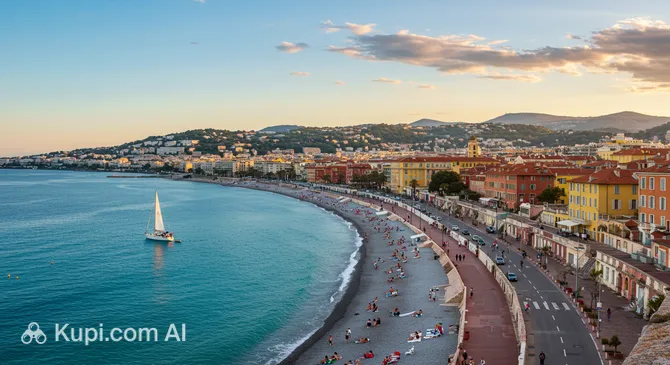
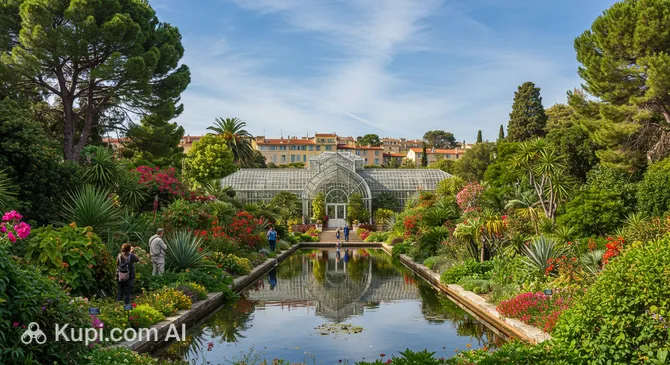
Nice, the capital of the **French Riviera**, is a destination that effortlessly combines natural beauty with urban sophistication. Located on the southeastern coast of France, nestled between the mountains and the Mediterranean Sea, it serves as a major hub in the Provence-Alpes-Côte d'Azur region.
Nice. Illustration.
Source: Kupi.com AI
Known for its exceptional climate and clear blue waters, the city is home to over 340,000 residents, making it the fifth-largest city in the country. The deep and fascinating history of Nice is evident in its architecture and culture, reflecting a unique blend of French and Italian influences that gives the city its distinct character.
Visitors are captivated by the world-famous **Promenade des Anglais**, a legendary seaside walkway lined with palm trees and grand hotels. The charming **Vieux Nice** (Old Town) invites exploration with its narrow, winding streets and vibrant flower markets like the Cours Saleya. For those seeking panoramic views, a trip up to **Castle Hill** offers breathtaking vistas of the Baie des Anges and the city's red-tiled roofs.
Whether you are looking for artistic inspiration, culinary delights, or simply a relaxing beach holiday, Nice provides an unforgettable experience. It is a must-visit destination for anyone wishing to discover the heart and soul of the Côte d'Azur.
Weather Overview
Nice benefits from a pleasant Mediterranean climate, making it an inviting destination throughout the year. The city typically experiences mild winters and warm, sunny summers, which attract visitors from all over the world. For a more comprehensive breakdown of what to expect during your visit, you can consult the guide to the weather in Nice.
During the peak summer months of July and August, the weather is generally warm with average temperatures hovering around 22.5°C. Daily highs in this period often reach 26°C, providing excellent conditions for enjoying the coast. However, rain is not entirely absent during the summer, with data showing between 9 and 11 wet days in these months.
The winter season remains relatively gentle. January is usually the coolest month, with an average temperature of 6.5°C and lows around 2.9°C. As spring approaches, temperatures become milder, though it is often accompanied by increased rainfall frequency; May, for example, can see up to 19 wet days. Overall, expect warm summers with occasional rain and mild, generally comfortable winters.
Average monthly temperature
Average monthly precipitation
Interesting Facts
Beyond the famous coastline and vibrant streets, Nice holds a treasure trove of historical curiosities and cultural distinctions that make it truly unique. Here are a few fascinating insights into the capital of the Riviera.
The Noon Cannon: If you hear a loud boom at exactly 12:00 PM, do not be alarmed. It is a tradition started in the 1860s by Sir Thomas Coventry, a Scottish lord who wanted to remind his wife to return from her morning walk for lunch. The city has kept the custom alive ever since, marking midday with a pyrotechnic blast.
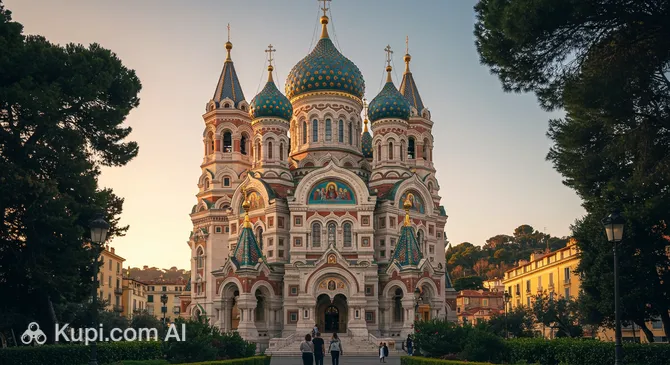
A Piece of Russia: Surprisingly, Nice is home to the largest Eastern Orthodox cathedral in Western Europe. The stunning St Nicholas Orthodox Cathedral was built in 1912 to serve the large community of Russian nobility who spent their winters on the Côte d'Azur.
Italian Roots: Nice only officially became part of France in 1860. For centuries prior, it belonged to the House of Savoy and the Kingdom of Sardinia. This rich past is evident in the colorful architecture of the Old Town and the local cuisine, which leans heavily on Italian influences.
An Artist's Muse: The city's light has captivated painters for generations, including Henri Matisse, who lived here for nearly 40 years. His deep connection to the city is celebrated at the Matisse Museum, located in a 17th-century Genoese villa in the Cimiez neighborhood.
St Nicholas Orthodox Cathedral. Illustration.
Source: Kupi.com AI
Traveler photos:
How to Get There
Reaching the capital of the French Riviera is quite convenient thanks to its popularity as a major global tourist destination. Whether you prefer flying directly to the coast or traveling by train through the scenic landscapes of southern France and Italy, there are numerous options available. For a detailed breakdown of all transport modes, you can read more about how to get to Nice.
The most direct way to arrive is via Nice Côte d'Azur Airport (NCE), which is situated within the city limits, just 6.8 km from the center. As a major international airport, it handles a large volume of passengers annually. The short commute to the downtown area typically takes around 30 minutes by taxi or bus. Alternatively, travelers may choose to land at Marseille Provence Airport (MRS) in the city of Marseille. Although it is approximately 168 km away from Nice, it serves as a significant regional hub. The journey from Marseille to Nice typically takes between 2 and 2.5 hours, making it a viable option for international arrivals.
For clarity, here is a summary of the main airports:
If you are traveling by rail from neighboring regions, you might connect through major stations in nearby cities. For instance, you can arrive at Toulon Railway Station in the city of Toulon, which is located about 126 km from Nice. From there, continuing your journey by train is efficient and scenic, taking approximately 1.5 hours to reach the heart of Nice. Another option for those coming from Italy is the Porta Nuova Railway Station in Turin. Located roughly 154 km away, it is a massive transport hub offering connections that facilitate travel towards the Riviera.
Below is a list of relevant railway stations in the wider region:
Nice offers a diverse array of sights that range from historic architectural gems to lush green spaces and world-class art galleries. Exploring the city reveals a blend of Belle Époque grandeur and vibrant Mediterranean life. Below are some of the most captivating places to include in your itinerary.
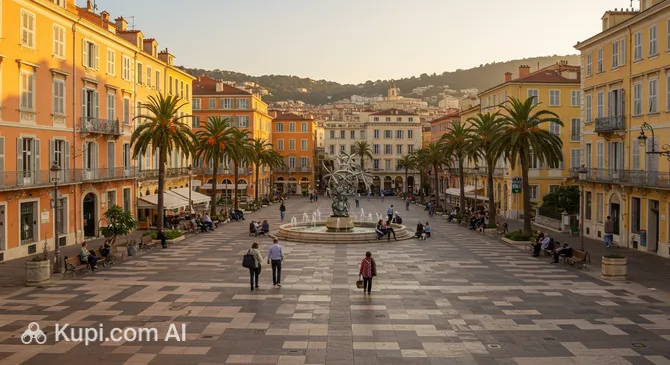
The beating heart of the city is arguably Place Masséna. This stunning main square is instantly recognizable by its striking black-and-white checkerboard pavement and the vibrant red ochre buildings that surround it. It serves as the perfect connecting point between the historic Old Town and the modern city. Visitors often gather here to admire the contemporary art installations and the majestic Fountain of the Sun, which features a grand statue of Apollo at its center.
Place Masséna. Illustration.
Source: Kupi.com AI
Traveler photos:
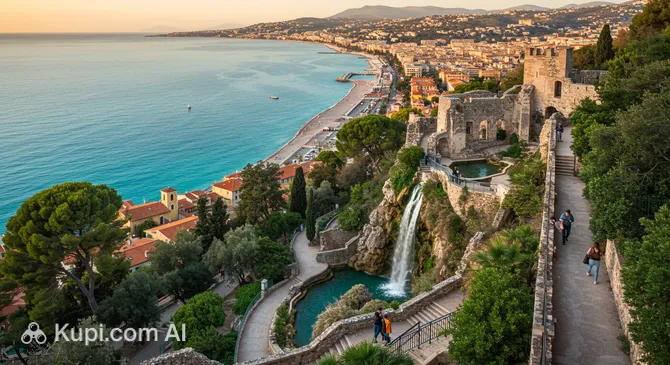
For those seeking the most spectacular panoramic views of the Baie des Anges, a visit to Castle Hill is essential. Although the original castle was dismantled centuries ago, the site is now a beautiful hilltop park filled with exotic plants and shaded walkways. It is a favorite spot for families and photographers alike, offering not only sweeping vistas of the coastline but also a chance to see the refreshing Castle Hill Waterfall, a man-made cascade that provides a cool respite on warm days.
Castle Hill. Illustration.
Source: Kupi.com AI
Traveler photos:
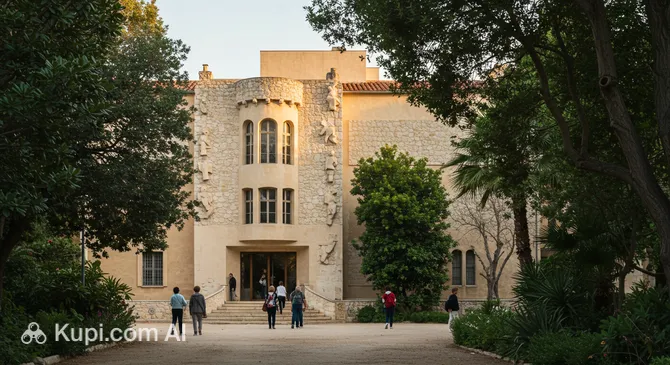
Art enthusiasts will find a spiritual and artistic haven at the Marc Chagall National Museum. Located in the Cimiez neighborhood, this museum was designed specifically to house Chagall’s monumental series, Biblical Message. The collection is displayed in a bright, serene space that allows the vibrant colors of the paintings to shine. The surrounding garden, planted with olives, cypresses, and oaks, enhances the peaceful atmosphere, making it a truly reflective experience.
Marc Chagall National Museum. Illustration.
Source: Kupi.com AI
Traveler photos:
To delve into the glamorous history of the Riviera, the Villa Masséna Museum of Art and History is a must-visit. Situated right on the Promenade des Anglais, this architectural jewel retains its original Belle Époque interiors and lush gardens. Inside, the museum showcases artifacts, jewelry, and documents that tell the story of Nice from the 19th century through the roaring 20s, offering a fascinating glimpse into the era when the city became a playground for the world's aristocracy.
Local Cuisine
The culinary landscape of Nice is a vibrant reflection of its sun-drenched location and its unique history between France and Italy. Known as Cuisine Nissarde, the local gastronomy relies heavily on fresh Mediterranean ingredients like olive oil, garlic, tomatoes, and aromatic herbs. It is a simple yet flavorful cooking style that celebrates the produce of the region, offering a distinct identity separate from classic French cuisine.
One of the most iconic street foods you must try is Socca. This large, thin pancake made from chickpea flour, olive oil, and water is baked in a wood-fired oven until the top is crisp and golden while the inside remains soft. Served piping hot with a generous dusting of black pepper, it is a favorite snack among locals, often enjoyed while wandering through the markets or as an appetizer before a meal.
No culinary tour of the city is complete without tasting the world-famous Salade Niçoise. While variations exist globally, the authentic version is a fresh, raw salad typically composed of tomatoes, hard-boiled eggs, Niçoise olives, anchovies or tuna, and radishes, all dressed with high-quality olive oil. For a portable version perfect for a beach picnic, try the Pan Bagnat, which features the same delicious ingredients stuffed inside a round, olive oil-soaked bun.
Another savory specialty is Pissaladière, a dish that resembles a pizza but without the tomato sauce. It is a thick dough topped with a bed of caramelized onions, black olives, and anchovies. The sweetness of the slow-cooked onions contrasts perfectly with the salty toppings, making it a staple at local bakeries and food stalls.
When it comes to drinks, the region is famous for its crisp, pale Rosé wines from the nearby vineyards of Provence. These wines are the standard accompaniment to lunch or dinner, especially during the warm summer months. For an authentic aperitif experience, locals often sip on Pastis, an anise-flavored spirit that is diluted with water and ice, turning a milky yellow color.
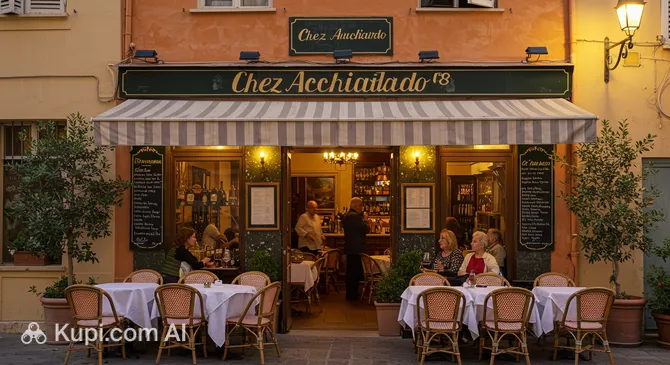
The dining culture in Nice is relaxed and social, with a strong emphasis on outdoor eating. The winding streets of the Old Town (Vieux Nice) are lined with family-run bistros and terraces where the atmosphere is lively until late at night. For a taste of traditional hospitality and authentic dishes, you can visit Chez Acchiardo, a well-regarded establishment that has been serving locals for generations.
Chez Acchiardo. Illustration.
Source: Kupi.com AI
Traveler photos:
Those looking for a more modern brunch or coffee spot might enjoy EDMOND Café, which offers a contemporary twist on dining in the city. Whether you are browsing the colorful stalls of the Cours Saleya market for fresh produce or sitting down for a three-course meal, the food scene in Nice promises to be a highlight of your trip.
Travel Tips
Visiting Nice is a delightful experience, but a little insider knowledge can make your trip to the capital of the French Riviera much smoother and more enjoyable. Here are some practical tips to help you navigate the city like a local, covering everything from packing essentials to cultural nuances.
Clothing and Gear: In summer, lightweight, breathable fabrics are essential, along with a good sunhat and sunglasses. However, the most critical item to pack is a pair of water shoes (aquashoes). The beaches along the Promenade des Anglais are made of smooth but hard pebbles (galets), which can be painful to walk on barefoot. If you plan to visit religious sites like the St Nicholas Orthodox Cathedral, remember to dress modestly, covering your shoulders and knees.
Transportation: The city has an excellent public transport network called Lignes d'Azur, consisting of trams and buses. The tramway is the most convenient way to get around, connecting the airport directly to the city center and the port for a very low cost. Renting a car is generally not recommended for staying within Nice due to heavy traffic and expensive parking; save the car rental for day trips to the countryside. Uber and local taxis are also readily available.
Finances: The currency is the Euro (€). Credit and debit cards (Visa and Mastercard) are widely accepted in most shops and restaurants. However, it is wise to carry some cash for small purchases, especially at the outdoor markets like Cours Saleya or for small cafés. Tipping is not mandatory as a service charge is included in the bill, but leaving small change or rounding up is a polite gesture appreciated by waitstaff.
Health and Safety: Nice is generally a safe city for tourists, but like any popular destination, pickpocketing can occur in crowded areas, on trams, and along the Promenade. Pharmacies are easily recognizable by a flashing green cross and are plentiful; they can provide advice for minor ailments. For emergencies, dial 112, the universal European emergency number.
Communication: The official language is French. While English is widely spoken in the tourism and hospitality sectors, learning a few basic phrases goes a long way. Always start an interaction with "Bonjour" (Hello) and end with "Merci, au revoir" (Thank you, goodbye). Free Wi-Fi is available in many public spots, including parks and trams, but buying a local SIM card or an eSIM is recommended for reliable navigation.
Local Etiquette: Politeness is paramount in French culture. When entering a shop, elevator, or waiting room, it is customary to greet others with a "Bonjour." Unlike in some fast-paced cultures, dining is a leisurely activity here; don't rush your meal, and you will usually need to ask for the bill ("L'addition, s'il vous plaît") when you are ready to leave, as waiters will not bring it automatically to avoid rushing you.
What to Avoid: Do not walk around the city center in your swimwear. It is considered disrespectful and is actually prohibited by local bylaws once you leave the beach area. Also, avoid buying goods from illegal street vendors on the Promenade or in the streets, as this can lead to fines.
Validation Rule: If you use public transport, remember to validate your ticket every time you board a bus or tram, even if you are transferring. Failure to do so can result in a hefty fine from inspectors who patrol frequently.
By keeping these practicalities in mind, you can focus on soaking up the sun and enjoying the vibrant atmosphere of the Côte d'Azur. Nice is a welcoming city that rewards those who take the time to understand its rhythm and customs, ensuring your vacation is as relaxing as it is memorable.
Entertainment & Nightlife
Entertainment and Nightlife:
When the sun sets over the Mediterranean, Nice transforms from a relaxed seaside resort into a vibrant hub of nocturnal activity. The city offers a diverse nightlife scene that caters to all tastes, from sophisticated wine bars and rooftop lounges to energetic nightclubs and live music venues. Whether you prefer sipping a cocktail with a sea view or dancing until dawn, the capital of the Riviera has something to offer.
The epicenter of nightlife is undoubtedly Vieux Nice (Old Town). By day, the Cours Saleya is a bustling flower market, but by night, it becomes a giant open-air terrace filled with diners and party-goers. The narrow, winding streets surrounding it, particularly Rue de la Préfecture and Place Rossetti, are packed with pubs and small bars where the atmosphere is casual and lively. For a more trendy and upscale vibe, head to The Port (Le Port) district. This area has emerged as a local favorite, lined with chic bars and restaurants facing the yachts, attracting a stylish crowd.
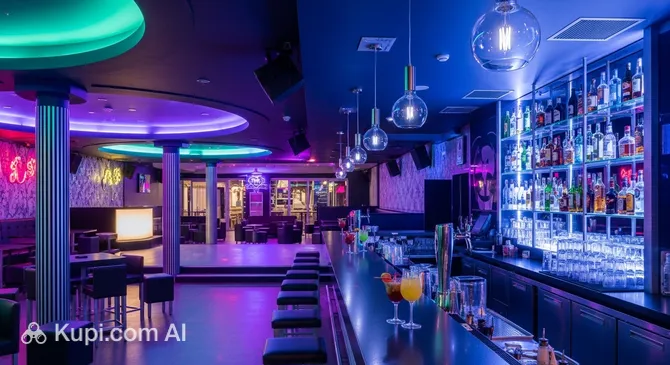
If you are looking for a spirited place to start your evening or keep the energy high, Tipsy Bar is a well-known spot in the city. It is popular for its friendly staff and extensive drink menu, making it a great location to mingle with both locals and fellow travelers.
Tipsy Bar. Illustration.
Source: Kupi.com AI
Traveler photos:
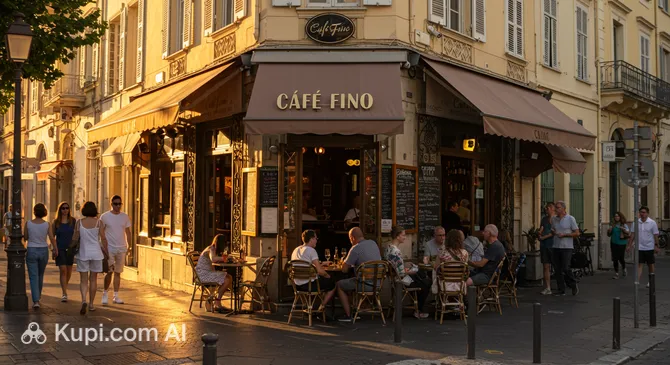
For those who appreciate a venue that transitions seamlessly from a daytime hangout to an evening destination, Café Fino is an excellent choice. Its stylish interior and relaxed ambiance make it perfect for enjoying a glass of wine or a signature cocktail in a more intimate setting. Another notable venue is FELIX Brasserie, which combines the culinary delights of a French brasserie with the festive atmosphere of a nightspot, often featuring music and a lively crowd.
Café Fino. Illustration.
Source: Kupi.com AI
Traveler photos:
Practical advice for enjoying the night includes timing and attire. The nightlife in Nice starts relatively late; bars begin to fill up around 10:00 PM, while clubs often don't get busy until well after midnight. The dress code is generally "smart casual" (tenue correcte). While beach shorts are fine for the day, most evening venues expect long trousers and proper shoes for men. Prices can be on the higher side, typical of the Côte d'Azur, with cocktails often ranging from €12 to €18.
Safety and transportation are well-managed in the city. The Noctambus (night bus) network operates on main routes from Thursday to Saturday nights, providing an affordable way to get home. Taxis and ride-sharing services like Uber are also readily available and reliable. Nice is generally safe for night walks, especially in the busy districts of the Old Town and the Promenade des Anglais, but it is always wise to stay aware of your surroundings and avoid unlit, deserted streets or the beach itself very late at night.
Beyond the nightlife, the city offers plenty of daytime entertainment to break up the sightseeing. Families and thrill-seekers might enjoy Laser Tag Nice or the challenging puzzles at Aventure Escape Game Nice. For those who prefer retail therapy, the CAP3000 shopping mall, located just across the river near the airport, provides a massive array of shops and restaurants with sea views.
Parks & Museums
Nice is not only defined by its pebbled beaches and azure waters; the city is also a sanctuary of greenery and a powerhouse of fine art. With a long heritage of inspiring world-renowned painters and a commitment to preserving natural spaces, the city offers a rich tapestry of parks and museums that allows visitors to escape the urban bustle and dive into culture.
For a truly immersive natural experience, Phoenix Park is an exceptional destination located near the airport at the western entrance of the city. Spanning seven hectares, this "Floral Power" park is home to one of the largest greenhouses in Europe, housing six different tropical climates. Visitors can wander through themed gardens, admire over 2,500 plant species, and encounter free-roaming animals like iguanas and exotic birds. It is a perfect spot for families and nature lovers seeking a break from the city center.
Phoenix Park. Illustration.
Source: Kupi.com AI
Traveler photos:
Closer to the heart of the action lies the Albert I Garden. As one of the oldest public gardens in Nice, it serves as a lush green corridor connecting the Promenade des Anglais to Place Masséna. This sprawling park is an oasis of calm amidst the downtown traffic, featuring century-old palm trees, fragrant rose bushes, and spacious lawns where locals often relax. It also hosts the Trident Fountain and an open-air theater, making it a vibrant cultural space as well as a natural one.
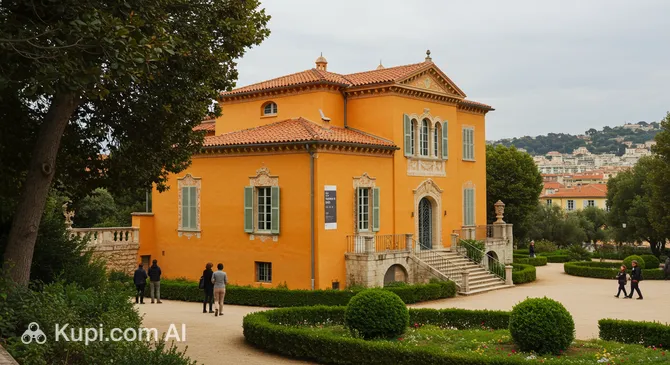
The city's artistic legacy is profoundly linked to Henri Matisse, who spent a significant portion of his life here. The Matisse Museum, situated on the Cimiez hill, is an essential stop for art enthusiasts. Housed in a magnificent 17th-century Genoese villa painted in red ochre, the museum holds one of the world's largest collections of his works. From his early paintings to his famous paper cut-outs, the exhibits offer a comprehensive journey through his creative evolution, all set within the tranquil surroundings of an olive grove.
Matisse Museum. Illustration.
Source: Kupi.com AI
Traveler photos:
Another cultural highlight is the Museum of Fine Arts of Nice (Musée des Beaux-Arts). Located in a former private mansion built for a Ukrainian princess, the building itself is an architectural marvel. Inside, the collection spans from the 16th to the 20th century, featuring masterpieces by artists such as Jules Chéret, Fragonard, and Rodin. It provides a quiet and elegant atmosphere to appreciate the artistic movements that have influenced the region.
For those interested in historical architecture and the baroque style, the Lascaris Palace Museum in the Old Town is a hidden jewel. This aristocratic residence boasts a monumental staircase adorned with frescoes and houses a fascinating collection of ancient musical instruments. Additionally, adjacent to Phoenix Park, you can find the Museum of Asian Arts, a striking white building designed by Kenzo Tange that sits on a lake, offering a serene contemplation of Asian cultures.
If you are looking for a unique spot off the beaten path, make your way to the Gairaut Waterfall. Located in the northern hills of Nice, this artificial cascade was built in the 19th century to commemorate the arrival of drinking water to the city. It offers stunning panoramic views over Nice and remains a peaceful, less crowded alternative to the more famous viewpoints.
Getting Around
Navigating Nice is remarkably easy and efficient, thanks to the comprehensive public transport network known as Lignes d'Azur. The backbone of the system is the modern tramway, which consists of three main lines connecting key areas of the city. Line 1 winds through the city center and Masséna square, while Line 2 is particularly useful for visitors as it runs West-East, linking the airport directly to the Port via the city center. Line 3 serves the western districts and the stadium. Complementing the trams is an extensive bus network that reaches the hilly neighborhoods and surrounding towns where the tram lines do not go.
The payment system has recently been modernized to phase out traditional paper tickets. Travelers now use a rechargeable card called "La Carte" or a dedicated mobile app to pay for their journeys. You can purchase this anonymous, reloadable card at automatic vending machines located at every tram station. A single trip typically costs around €1.70 and allows for transfers within 74 minutes. For tourists planning extensive travel, purchasing a 1-day or 7-day pass is often more economical and convenient than topping up for individual rides.
Practicality is key when using the network. While you can buy tickets at the tram stop machines (which accept coins and credit cards), it is important to note that bus drivers generally do not sell tickets on board, so you must purchase your fare in advance. Validation is mandatory every time you board a tram or bus, even when transferring; simply place your card or phone against the electronic readers. The trams generally operate from early morning, around 4:30 AM, until shortly after midnight, with night buses (Noctambus) taking over main routes during the late hours.
For those who prefer more active or private modes of transport, the city offers excellent alternatives. The Vélobleu public bike rental system is popular, with stations scattered throughout the city, alongside various free-floating electric scooter and e-bike services like Lime and Pony that can be unlocked via smartphone apps. Taxis and ride-sharing services like Uber are also plentiful, though traffic in the city center can be dense. If you need a taxi, it is best to book one in advance or find a designated rank, as hailing them on the street is not common practice.
A unique feature of the local transport landscape is the Train des Pignes (Chemins de fer de Provence). Departing from its own dedicated station, the Gare du Sud (not the main central station), this scenic railway takes passengers on a picturesque journey into the hinterland towards Digne-les-Bains. Additionally, during the summer months, visitors crossing the port can enjoy a ride on Lou Passagin, a small, free electric ferry boat that carries pedestrians from one side of the harbor to the other, reviving a charming local tradition.
Accommodation
Where to Stay:
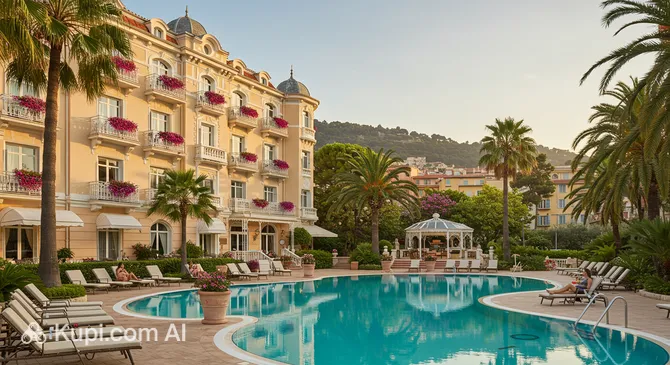
Finding the perfect place to stay in Nice is relatively easy, as the city caters to a wide spectrum of travelers and budgets. The accommodation landscape ranges from friendly youth hostels and budget-friendly guesthouses to charming boutique hotels and some of the world's most prestigious luxury palaces. Additionally, the rental market for apartments is robust, offering tourists the chance to live like a local in renovated flats with typical Niçois shutters and balconies.
When choosing a location, the neighborhood largely depends on the type of experience you desire. The Promenade des Anglais is ideal for those who want immediate beach access and sea views, though it comes with a higher price tag. The Old Town (Vieux Nice) is perfect for visitors who want to be in the center of the action, surrounded by narrow streets, restaurants, and markets, though it can be noisy at night. For a quieter but still central experience, the Musicians' Quarter (Quartier des Musiciens) offers elegant architecture and proximity to the train station and main shopping streets.
For travelers seeking a stylish stay in the heart of the city, Hotel La Villa Nice Victor Hugo is a notable option. Located on a prestigious, tree-lined boulevard, it combines contemporary design with the classic Belle Époque architecture that defines the area. It serves as an excellent base for exploring both the beach and the cultural sites.
Hotel La Villa Nice Victor Hugo. Illustration.
Source: Kupi.com AI
Traveler photos:
If you are looking for the ultimate luxury experience on the French Riviera, the Grand-Hotel du Cap-Ferrat is legendary. Although situated on the exclusive peninsula just east of the city limits, it is often the choice for those seeking seclusion, world-class service, and stunning gardens overlooking the Mediterranean. It represents the glamour and sophistication for which the Côte d'Azur is famous.
Regarding costs, prices fluctuate significantly depending on the season. In the summer peak (July and August), rates are at their highest, and availability can be scarce. It is highly recommended to book several months in advance if you plan to visit during this period. Generally, budget options can be found for under €100 per night, mid-range hotels typically charge between €120 and €250, while luxury establishments often start upwards of €400. Most accommodations can be easily booked via major online platforms or directly through hotel websites.
Nearby Cities
For those looking to explore the surroundings, Nice serves as an excellent base for day trips to several interesting nearby locations:
Just a short distance down the coast lies Cannes, a city synonymous with glamour and cinema. Famous for its international film festival, it offers visitors the chance to walk the legendary Croisette, shop in high-end boutiques, and relax on sandy beaches, which provide a distinct contrast to the pebbled shores of Nice.
Another captivating destination is Antibes, located conveniently between Nice and Cannes. This historic town is known for its impressive ramparts, the star-shaped Fort Carré, and the Picasso Museum housed in a seaside castle. It is also home to Port Vauban, one of the largest marinas in the Mediterranean, often filled with spectacular superyachts.
For a journey inland, Grasse offers a fragrant escape into the hills. Recognized as the world's perfume capital, it invites travelers to explore its International Perfume Museum and visit historic factories to learn about the art of fragrance creation amidst the scenic landscapes of the French Riviera's hinterland.
City
Population
Distance
La Trinité
10 115
5 km
Saint Laurent du Var
29 169
7 km
Cagnes-sur-Mer
52 178
10 km
Carros
12 550
11 km
Vence
18 940
12 km
These nearby destinations offer a glimpse into the diverse culture and landscapes of the region.
Shopping & Souvenirs
Shopping:
Nice distinguishes itself as a premier shopping destination on the French Riviera, offering a delightful mix of high-end luxury, popular international brands, and authentic local craftsmanship. Whether you are looking for the latest fashion trends or traditional Provençal souvenirs, the city provides a diverse retail experience that caters to every taste and budget.
The main artery for retail therapy is the bustling Avenue Jean Médecin, which runs from the railway station down to Place Masséna. This wide street is lined with major department stores and popular clothing chains. Ideally situated in the middle of this avenue is the Nicetoile Shopping Center. This multi-story complex is a convenient stop for fashion, beauty, and home decor, offering a cool retreat from the summer heat while you browse its numerous boutiques.
For those seeking luxury and designer labels, the "Carré d'Or" (Golden Square) is the place to be. Streets such as Avenue de Verdun, Rue Paradis, and Rue de la Liberté are home to prestigious fashion houses like Chanel, Louis Vuitton, and Cartier. This elegant district, located just steps from the sea, offers a sophisticated shopping atmosphere where window shopping is an activity in itself.
A completely different vibe awaits in the winding streets of Vieux Nice (Old Town). Here, the focus shifts to small, independent artisans and traditional shops. You can find unique gifts, local art, and regional specialties such as olive oil, spices, and fabrics. The famous Cours Saleya market is a highlight, bustling with flower and food stalls daily, and transforming into a treasure trove for antique hunters on Mondays.
For a comprehensive shopping experience with a view, CAP3000 is a must-visit destination. Located just west of Nice in the nearby town of Saint-Laurent-du-Var, near the airport, it was the first shopping center built in France in the late 1960s. Recently renovated to open up towards the Mediterranean, it features hundreds of shops and restaurants, allowing visitors to enjoy a meal overlooking the sea after a day of purchasing goods.
When it comes to souvenirs, Nice offers plenty of authentic options beyond the typical trinkets. Look for "Savon de Marseille" (traditional soap), sachets of dried lavender, and bottles of local olive oil. Candied fruits are another specialty of the region, often beautifully packaged and perfect for taking a taste of the Riviera back home.