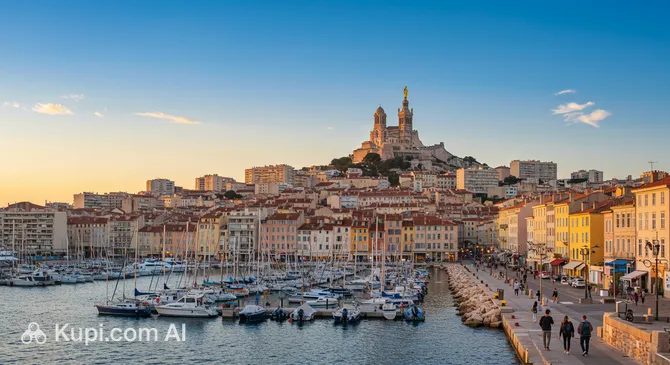
Marseille is a city with a unique soul, serving as a vibrant crossroads of cultures and trade on the Mediterranean coast. As the second-largest city in France, it offers a dynamic blend of ancient heritage and modern urban energy. Located in the picturesque Provence-Alpes-Côte d'Azur region, it is a gateway to the south, boasting a distinct atmosphere that sets it apart from the rest of the country.
The city is blessed with a sunny Mediterranean climate and a dramatic landscape where limestone cliffs meet the turquoise sea. With a population of approximately 870,000 inhabitants, it is a bustling metropolis that retains a strong sense of local identity. The geography is defined by its sprawling coastline and the surrounding hills, providing stunning panoramic views from various vantage points.
Marseille. Illustration.
Source: Kupi.com AI
Exploring the history of Marseille reveals a rich tapestry dating back to 600 BC when it was founded by Greek sailors, making it the oldest city in the country. Today, visitors are captivated by the iconic Vieux-Port (Old Port), which remains the beating heart of the city, filled with boats and lively markets. High above the city stands the basilica of Notre-Dame de la Garde, offering protection to sailors and breathtaking vistas to travelers. Nature lovers are also drawn to the nearby Calanques National Park, known for its majestic fjords and crystal-clear waters.
Whether you are strolling through the colorful streets of the Le Panier district or enjoying fresh bouillabaisse by the water, Marseille promises an unforgettable experience. It is a destination that invites you to embrace the warmth of the south and discover a multifaceted city full of surprises.
Weather Overview
Marseille benefits from a sunny Mediterranean climate that makes it an inviting destination throughout the year. If you are looking to time your visit perfectly or need to know what to pack, it is helpful to consult the detailed guide to the weather in Marseille. The city is known for its distinct seasonal rhythms, offering bright skies for the majority of the year.
Summers here are typically hot and dry, ideal for enjoying the coastline. During July and August, average temperatures hover around 25°C, with daytime highs frequently reaching 30°C or more. Rainfall is exceptionally rare during this peak season, especially in July. In contrast, winters are cool but generally mild compared to other parts of France. January is usually the coldest month, with average temperatures of 7.3°C and lows dipping to around 3.4°C.
The transitional seasons of spring and autumn bring pleasant warmth, with May averages reaching 17.2°C and September remaining balmy at 20.5°C. However, these periods can be wetter; May and November, for instance, typically see about 10 wet days each. Expect warm summers with minimal rain and cool winters where precipitation is more frequent but temperatures rarely drop below freezing.
Average monthly temperature
Average monthly precipitation
Interesting Facts
Beyond the main attractions, Marseille holds many fascinating secrets that reveal the depth of its character. Here are a few surprising facts about France's oldest city that you might not know.
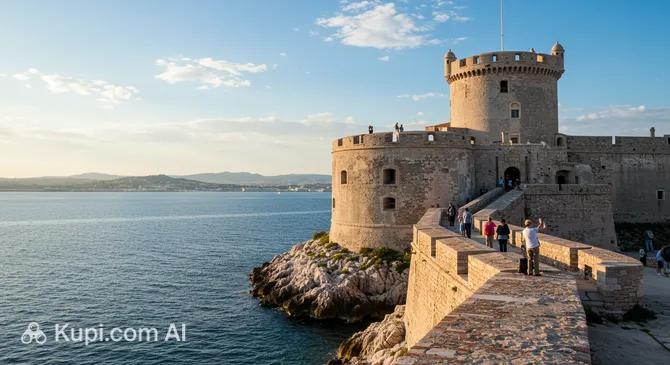
Château d'If. Illustration.
Source: Kupi.com AI
Traveler photos:
France's national anthem, "La Marseillaise," was actually written in Strasbourg, not Marseille. It earned its famous name because revolutionary volunteers from this city sang it with such fervor as they marched into Paris in 1792, forever linking the rousing tune to the people of Provence.
The city is famous for its traditional soap, Savon de Marseille, which has been produced here for nearly 600 years. By a royal edict signed by Louis XIV in 1688, the authentic green cubes must be made with at least 72% vegetable oil and contain no animal fats. You can discover the history of this "clean" heritage at the Marseille Soap Museum.
Hidden deep beneath the sea lies the Cosquer Cave, a prehistoric treasure trove containing cave paintings dating back 27,000 years. The entrance is submerged 37 meters underwater, making the original site accessible only to expert divers, though a replica allows visitors to explore its wonders on dry land.
The island fortress of Château d'If is often called the French Alcatraz. While it served as a prison for centuries, it is most famous globally as the setting for Alexandre Dumas's novel The Count of Monte Cristo, even though the fictional protagonist was the only one to ever successfully "escape" its walls.
How to Get There
Reaching this vibrant Mediterranean metropolis is straightforward, thanks to its well-connected transport network. Whether you prefer flying or taking the scenic route by train, you can find detailed information on all ways to reach the city to help plan your journey.
The primary gateway for air travelers is Marseille Provence Airport (MRS). As a major international hub, it welcomes a significant volume of passengers annually and connects the region to numerous destinations. Located approximately 19 km from the city center, the transfer is convenient; a taxi or shuttle bus ride typically takes around 50 minutes, depending on traffic.
Another option for visitors is Hyeres Airport (TLN), situated in the city of Toulon. Although it is smaller and located about 67 km from Marseille, it serves as a viable alternative for accessing the Provence-Alpes-Côte d'Azur region. Travel time from this airport to Marseille is generally around 2 hours by road.
For clarity, here is a summary of the main airports:
Traveling by train is also a popular and efficient way to arrive. The city's main railway hub is Marseille Saint-Charles Station. It is centrally located just 0.9 km from the heart of the city, allowing for quick and easy access to local attractions immediately upon arrival. This major station handles a vast number of passengers and offers extensive connections across France and Europe.
Alternatively, you can arrive at the Aix-en-Provence TGV Railway Station, located in the neighboring city of Aix-en-Provence. Situated approximately 23 km from Marseille, this station is a key stop for high-speed trains. From here, a transfer to Marseille by bus or taxi takes about 55 minutes.
Marseille is a city of contrasts, where ancient history meets modern vitality. Its diverse neighborhoods and stunning natural surroundings offer a wealth of experiences for every type of traveler. From panoramic viewpoints to historic districts and architectural marvels, here are some of the must-visit sights in the city.
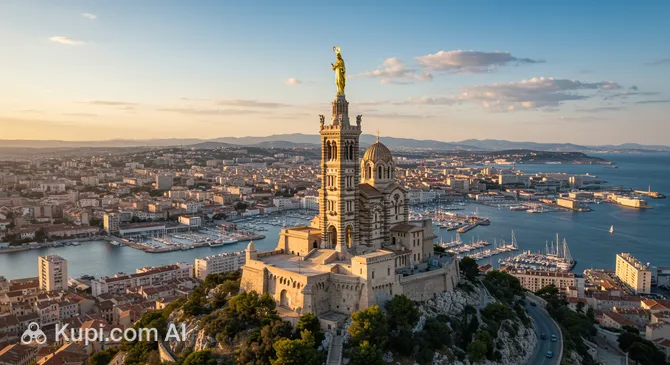
Watching over the city from its highest natural point, Notre-Dame de la Garde is undoubtedly the most iconic landmark in Marseille. Known affectionately by locals as "La Bonne Mère" (The Good Mother), this Neo-Byzantine basilica is famous for its opulent interior filled with mosaics and ex-voto offerings from sailors. For tourists, the climb to the top is rewarded with an unparalleled 360-degree panoramic view of the red-tiled roofs, the Old Port, and the Frioul archipelago.
Notre-Dame de la Garde. Illustration.
Source: Kupi.com AI
Traveler photos:
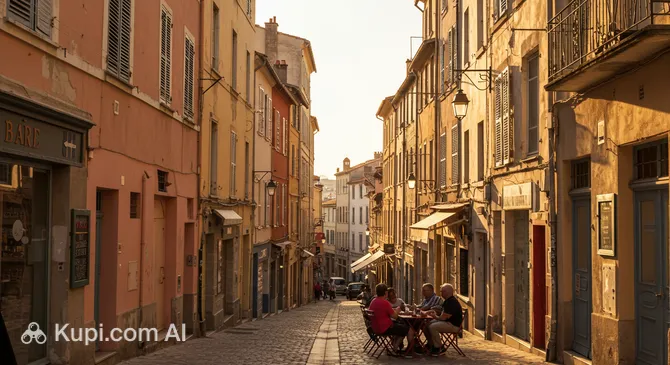
For a deep dive into the city's roots, a stroll through Le Panier is essential. As the oldest district in Marseille, it sits on a hill just north of the harbor and feels like a village within the city. Its narrow, winding streets are lined with colorful facades, artisan workshops, and lively terraced cafes. It is a perfect place to get lost in the charm of Provence, discover unique street art, and soak up the authentic local atmosphere.
Le Panier. Illustration.
Source: Kupi.com AI
Traveler photos:
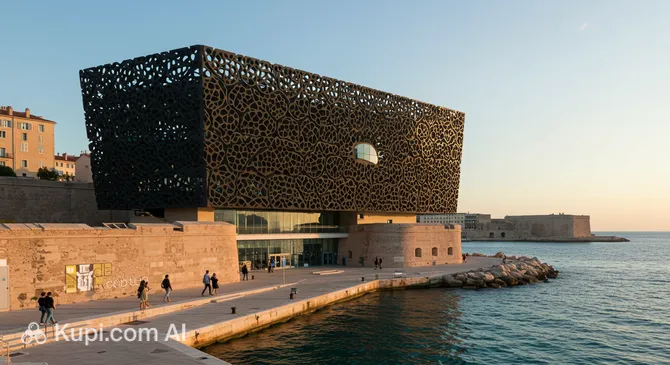
A striking symbol of the city's cultural renaissance is the Museum of European and Mediterranean Civilisations, commonly known as MuCEM. Located at the entrance to the Old Port, this architectural gem bridges the past and present by connecting the historic Fort Saint-Jean to a modern concrete lace cube via a high footbridge. Visitors are drawn here not only for the fascinating exhibitions on Mediterranean history but also for the spectacular seaside promenades and gardens.
Museum of European and Mediterranean Civilisations. Illustration.
Source: Kupi.com AI
Traveler photos:
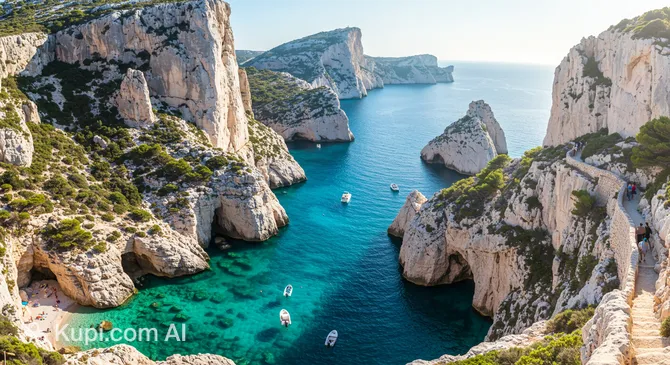
Nature lovers will find paradise just a short distance from the city center at the Calanques National Park. This breathtaking stretch of coast is renowned for its dramatic white limestone cliffs that plunge into turquoise waters, creating secluded inlets known as calanques. Whether you explore by hiking the rugged trails or taking a relaxing boat tour, the park offers some of the most stunning natural scenery in France.
Calanques National Park. Illustration.
Source: Kupi.com AI
Traveler photos:
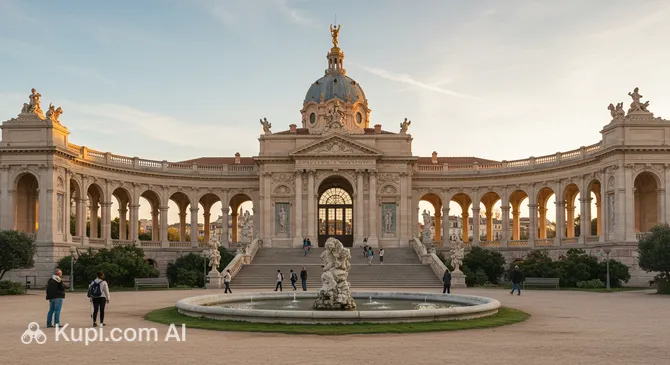
Another architectural masterpiece worth visiting is the Palais Longchamp. Built in the 19th century to celebrate the arrival of water from the Durance canal to the city, this monument is a grand spectacle of fountains, waterfalls, and colonnades. It houses both the Museum of Fine Arts and the Natural History Museum, and its surrounding park is a favorite spot for a peaceful afternoon walk among lush greenery.
Palais Longchamp. Illustration.
Source: Kupi.com AI
Traveler photos:
Local Cuisine
The cuisine of Marseille is a vibrant reflection of its sun-drenched location and its history as a bustling Mediterranean port. At the heart of the local gastronomy is the city's obsession with fresh seafood. The undisputed star of the culinary scene is Bouillabaisse, a rich traditional fish stew. Originally a humble dish made by fishermen from their unsold catch, it has evolved into a sophisticated delicacy flavored with saffron, fennel, and orange zest, typically served with rouille (a garlic-chili mayonnaise) and crusty bread.
Beyond seafood, the city offers a variety of unique street foods and snacks that are perfect for eating on the go. You must try Panisse, delicious fried discs made from chickpea flour, which are crispy on the outside and soft on the inside. Marseille is also surprisingly famous for its pizza; the city has a longstanding love affair with wood-fired ovens and pizza trucks. For those with a sweet tooth, the boat-shaped biscuits known as Navettes, flavored with orange blossom water, are a local staple often enjoyed with coffee.
No culinary journey here is complete without tasting the local "milk of Marseille," Pastis. This anise-flavored spirit is the quintessential apéritif of the south. Locals typically enjoy it diluted with fresh water and ice, watching the world go by from a sunny terrace. It is more than just a drink; it is a ritual that marks the transition from a busy day to a relaxing evening.
Deïa Coffee & Kitchen. Illustration.
Source: Kupi.com AI
Traveler photos:
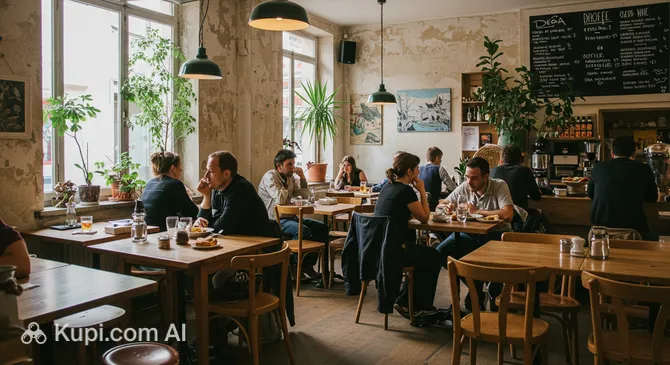
The dining culture in Marseille ranges from bustling markets like Noailles, filled with the scents of spices, to chic seaside bistros. While the restaurants lining the Old Port offer picturesque views, exploring the winding streets can lead to hidden gems. For a cozy atmosphere and a taste of the modern local food scene, you might visit Deïa Coffee & Kitchen, a spot that captures the welcoming spirit of the city's hospitality.
Travel Tips
To ensure your visit to Marseille is as smooth and enjoyable as the Mediterranean breeze, a few practical insights can make all the difference. These tips are designed to help you navigate the city's unique rhythm, from packing the right gear to mingling effortlessly with the locals.
Clothing and Gear: Marseille enjoys a sunny climate, so light, breathable clothing is essential for summer, along with a hat and high-SPF sunscreen. However, the famous Mistral wind can blow strongly even on clear days, so packing a windbreaker or a light scarf is smart year-round. Since the city is built on hills, particularly around Le Panier and Notre-Dame de la Garde, comfortable walking shoes are non-negotiable.
Transportation: The city has an efficient public transport network (RTM) consisting of two metro lines, three tram lines, and extensive bus routes. For a scenic and practical experience, use the maritime shuttles (sea bus) that connect the Old Port to neighborhoods like L'Estaque or Pointe Rouge. Taxis and ride-hailing apps like Uber are available, but driving a rental car in the city center can be stressful due to traffic and limited parking; it is better to reserve cars for day trips to the countryside.
Finances: The currency is the Euro (€). Credit and debit cards (Visa and Mastercard) are widely accepted in most restaurants and shops. However, it is advisable to carry some cash for small purchases at local markets or bakeries. Tipping is not mandatory as a service charge is included in the bill, but leaving small change or rounding up is a polite gesture appreciated by waitstaff.
Health and Safety: Pharmacies are easily recognized by a flashing green cross and are generally open during standard business hours, with some designated as "de garde" for after-hours emergencies. While Marseille is a vibrant city, it is wise to stay vigilant against pickpockets in crowded tourist areas like the Old Port and Saint-Charles station. Avoid leaving valuables visible in parked cars and stick to well-lit, busy streets at night.
Communication: The official language is French. While many people in the tourism industry speak English, it is not universally spoken by everyone. Learning a few basic phrases—such as "Bonjour" (Hello), "S'il vous plaît" (Please), and "Merci" (Thank you)—will go a long way in earning goodwill. Free Wi-Fi is often available in public parks and museums, and purchasing a local SIM card is easy at tobacco shops (tabacs) or mobile provider stores.
Local Etiquette: Politeness is paramount in French culture. Always greet shopkeepers or staff with a friendly "Bonjour" when entering a store and "Au revoir" when leaving; skipping this is considered rude. When dining, remember that lunch is typically served between 12:00 PM and 2:00 PM, and dinner often starts after 7:30 PM.
What to Avoid: Do not criticize the local football team, Olympique de Marseille (OM), as football is akin to a religion here. Also, avoid rushing your meals; dining is a leisurely social activity in Provence, so expect service to be slower and more relaxed than in fast-paced capitals.
Additional Tip: If you plan to visit multiple museums and use public transport, consider buying the Marseille City Pass. It offers unlimited access to public transport, entry to major museums like MuCEM, and even a boat trip to the Château d'If, saving you both time and money.
Armed with these practical tips, you are ready to embrace the authentic spirit of Marseille with confidence. Relax, soak up the sun, and let the city's vibrant energy and warm hospitality guide you through an unforgettable journey.
Entertainment & Nightlife
As the sun sets over the Mediterranean, Marseille transforms into a vibrant hub of nocturnal activity. The city's nightlife is as diverse as its population, offering everything from laid-back seaside aperitifs to pulsing electronic music clubs. The atmosphere is generally relaxed and unpretentious, reflecting the warm southern character. Whether you prefer sipping pastis on a terrace or dancing until dawn, the city has a rhythm to match your mood.
The epicenter of the action is often the Vieux-Port (Old Port), where bars line the waterfront, providing perfect spots for people-watching and enjoying the cool sea breeze. However, for a more bohemian and artistic vibe, travelers should head to the Cours Julien district. This neighborhood is famous for its colorful street art, lively squares, and a younger crowd gathering at eclectic bars and music venues. Nearby, La Plaine offers a similar energy with a slightly grittier, authentic edge.
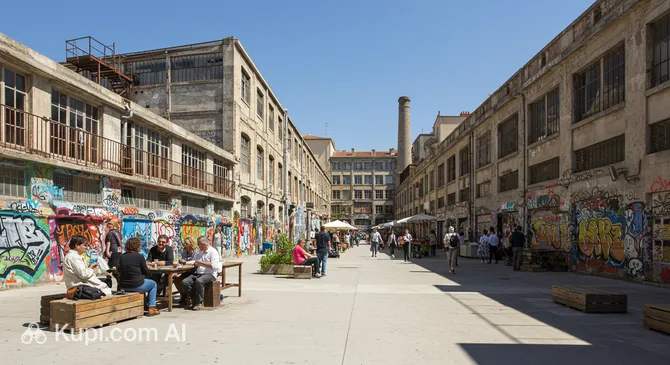
For a unique cultural and festive experience, Friche la Belle de Mai is a must-visit. Housed in a former tobacco factory, this immense cultural complex features exhibition spaces, a skate park, and a massive rooftop terrace that hosts open-air cinema nights and DJ sets during the summer months. It is a perfect example of how the city reinvents its industrial heritage into modern playgrounds.
Friche la Belle de Mai. Illustration.
Source: Kupi.com AI
Traveler photos:
If you are looking for a venue that combines food, drink, and entertainment in a stylish setting, La Place des Canailles is an excellent choice. Located in the Docks Village, this food hall and event space offers a lively atmosphere where you can enjoy local delicacies and music. For those who prefer a classic pub vibe with rock music and a wide selection of beers, Le Black Stone Pub provides a welcoming environment to unwind with friends.
Practical Nightlife Tips: Most bars are open until 1:00 AM or 2:00 AM, while nightclubs typically stay open until 5:00 AM or later. The dress code is generally casual chic; comfortable shoes are recommended as you might find yourself walking on cobblestones. Prices are reasonable compared to Paris, with a pint of beer costing around €6-8 and cocktails between €10-14.
Safety and Transport: While the city center is generally safe for night walks, especially in busy areas like the Old Port and Cours Julien, it is advisable to stay vigilant and avoid poorly lit streets north of the center late at night. The metro usually closes around 12:30 AM, so if you are staying out late, rely on the "Fluobus" night bus network or, more conveniently, use ride-sharing apps or taxis to get back to your accommodation safely.
Beyond the party scene, the city offers rich daytime and evening cultural entertainment. The historic Marseille Opera House hosts world-class ballet and operatic performances in an Art Deco masterpiece. For families or groups seeking fun interactive experiences during the day, SENSAS Marseille offers a unique sensory journey that challenges participants in the dark, blending amusement with awareness.
Parks & Museums
Marseille is not only a city of the sea but also a place of lush green spaces and profound cultural depth. Beyond the bustling port, visitors can discover a quieter side of the city in its elegant gardens and world-class museums that preserve the rich heritage of Provence.
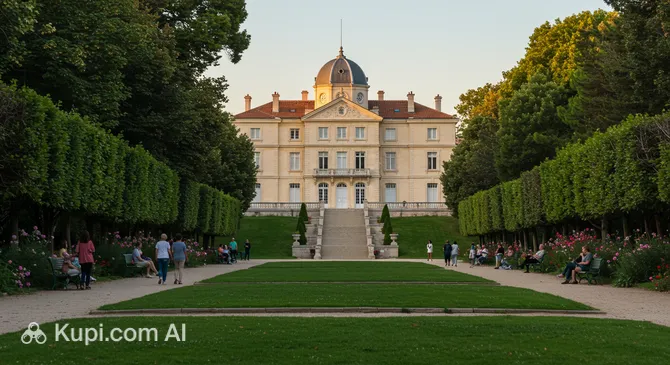
One of the most beloved green escapes in the city is Parc Borély. Classified as one of the Notable Gardens of France, it offers a delightful mix of styles, featuring a formal French garden and a more relaxed English landscape park. Visitors can rent boats to paddle on the lake, stroll through the rose garden, or admire the 18th-century Château Borély which sits majestically within the grounds. It is the perfect spot for a leisurely afternoon picnic away from the urban noise.
Parc Borély. Illustration.
Source: Kupi.com AI
Traveler photos:
For those who prefer the ocean breeze with their greenery, Prado Beach offers a vast seaside park known as the Parc Balnéaire du Prado. While famous for its beaches, the area also features 26 hectares of green lawns and playgrounds stretching along the coast. It is a favorite location for flying kites, jogging, or simply watching the sunset over the Mediterranean islands.
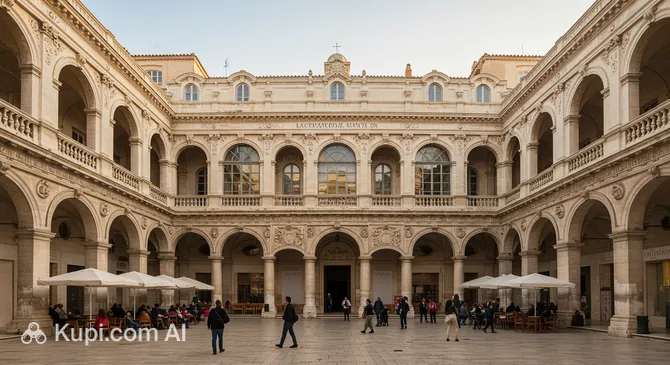
In terms of culture, the city boasts impressive venues housed in historic monuments. La Vieille Charité is an architectural masterpiece located in the heart of the Panier district. Built in the 17th century as an almshouse, this stunning complex with its pink stone arcades and central baroque chapel now houses the Museum of Mediterranean Archaeology and the Museum of African, Oceanian, and Amerindian Arts. The serene courtyard alone is worth the visit for its harmonious beauty.
La Vieille Charité. Illustration.
Source: Kupi.com AI
Traveler photos:
Connecting history with military architecture, Fort Saint-Jean stands guard at the entrance to the Old Port. While it is physically linked to the modern MuCEM, the fort itself is a labyrinth of historic walkways, vaulted rooms, and Mediterranean gardens offering spectacular views of the sea and city. Just across the harbor lies its counterpart, Fort Saint-Nicolas, a star-shaped citadel built by Louis XIV to protect the city—and to keep an eye on its rebellious inhabitants.
For a truly authentic experience, try to find the small, hidden garden within the Abbey of Saint Victor if it is open, or simply take a walk up to the Jardin de la Colline Puget. As the oldest public garden in Marseille, the latter offers steep paths that reward you with shaded benches and a commanding view over the rooftops, providing a peaceful vantage point that few tourists find.
Getting Around
Navigating Marseille is relatively easy thanks to its efficient and integrated public transport network managed by the Régie des Transports Métropolitains (RTM). The system connects the city center with the suburbs and key tourist sites, making it a convenient option for visitors who want to explore without a car. The network consists of two metro lines, three tram lines, and an extensive web of bus routes that cover the entire metropolitan area.
The metro is the fastest way to travel across the city. There are two lines: Line 1 (Blue) and Line 2 (Red). They operate daily from approximately 5:00 AM until 12:30 AM. The stations are easily engaging, often decorated with distinctive motifs, and provide quick access to major hubs like the Saint-Charles train station and the Old Port. For a more scenic journey, the tramway system is an excellent choice. Its modern cars glide through the city streets, offering a great way to see the architecture while moving between neighborhoods like Euroméditerranée and La Blancarde.
For destinations not reached by rail, the bus network is comprehensive. It includes standard lines and the "Fluobus" night service, which ensures you can still get around after the metro closes. A unique feature of Marseille's transport is the maritime shuttles. These sea buses connect the Old Port to outlying coastal districts like Pointe Rouge and L'Estaque during the warmer months. Additionally, the historic "Ferry Boat" offers a charming and very short crossing from one side of the Old Port to the other, a service that has become a beloved symbol of the city.
The payment system is unified, meaning the same ticket works on the metro, tram, and bus. You can purchase a rechargeable card known as "La Carte" or buy single-trip tickets (Solo) from vending machines located at all metro and tram stations. These machines accept coins and credit cards and offer instructions in multiple languages. For tourists, the most practical options are often the 24-hour or 72-hour passes, which allow unlimited travel across the entire network for a fixed price, offering excellent value for money.
When using public transport, it is crucial to validate your ticket every time you board a bus or tram, and when entering the metro gates. Failure to validate can result in a fine, even if you have a valid ticket. Keep your ticket with you until you exit the station or vehicle. If you prefer digital solutions, the RTM app allows you to plan routes and check real-time schedules, which is highly recommended for navigating the bus system efficiently.
For those who prefer active travel, the city offers a self-service bike rental scheme called "Le Vélo." With stations scattered throughout the city, it is a fun way to ride along the Corniche Kennedy and enjoy the sea views. Alternatively, taxis and ride-sharing apps are widely available and can be convenient for late-night trips or when traveling with heavy luggage, though traffic in the city center can be dense during rush hours.
Accommodation
Where to Stay:
Marseille offers a diverse range of accommodation options that cater to every budget and travel style, from luxurious seafront resorts to charming boutique hotels and budget-friendly hostels. Whether you prefer the hustle and bustle of the city center or a relaxing retreat by the Mediterranean, you will find a place that suits your needs.
For those who want to be in the heart of the action, the area around the Vieux-Port (Old Port) is the most popular choice. Staying here places you within walking distance of major attractions, boat tours, and a lively dining scene. Just north of the port, the historic district of Le Panier offers a more romantic and authentic atmosphere with its narrow, winding streets and artistic vibe, perfect for travelers seeking a quaint, village-like experience.
If you prioritize sea views and beach access, consider the neighborhoods along the Corniche Kennedy or near Prado Beach. These areas are ideal for summer visitors who want to combine city exploration with relaxation by the water. The southern districts offer a resort-style feel, often with spacious hotels featuring pools and terraces overlooking the Mediterranean.
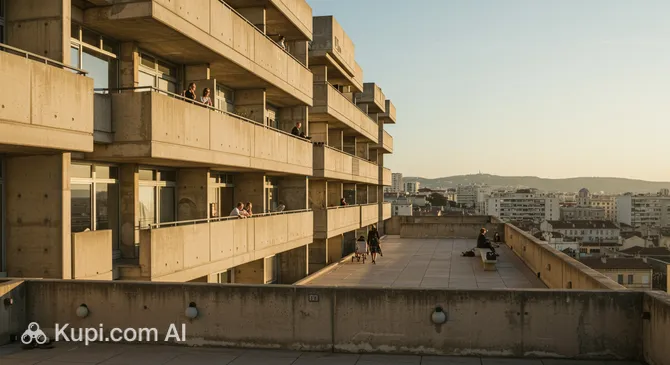
Unité d'Habitation. Illustration.
Source: Kupi.com AI
Traveler photos:
For architecture enthusiasts, the city offers a truly unique accommodation experience. It is possible to book a stay within the iconic Unité d'Habitation, the modernist masterpiece designed by Le Corbusier. Known locally as "La Cité Radieuse," this UNESCO-listed building houses a hotel that allows guests to immerse themselves in the visionary design of the 20th century.
Booking Tips and Prices: Marseille is a year-round destination, but demand peaks significantly during the summer months (July and August). It is highly recommended to book your accommodation at least two to three months in advance if you plan to visit during this period.
Budget: Hostels and budget hotels typically range from €30 to €80 per night.
Mid-range: Comfortable 3-star and 4-star hotels generally cost between €80 and €150 per night.
Luxury: High-end hotels and resorts start from €150 and can go significantly higher depending on the season and location. Most bookings can be easily made via major online platforms or directly through hotel websites.
Nearby Cities
For those looking to explore the surroundings, Marseille serves as an excellent base for day trips to several interesting nearby locations:
Just a short journey inland lies Aix-en-Provence, a city renowned for its refined elegance and artistic heritage. Often called the city of a thousand fountains, it invites visitors to stroll along the leafy Cours Mirabeau and explore the studio of the famous painter Paul Cézanne. Its vibrant markets, historic architecture, and thermal springs make it a perfect cultural escape.
For a coastal retreat, La Ciotat is a charming destination steeped in history. It is celebrated as the birthplace of cinema, where the Lumière brothers screened their first moving pictures. Beyond its cinematic legacy, the town offers beautiful beaches and access to the stunning Calanques du Mugel, providing a relaxed seaside atmosphere.
Another unique spot is Martigues, often affectionately called the "Venice of Provence." This picturesque town is defined by its canals, bridges, and colorful fishermen's houses, particularly around the scenic Miroir aux Oiseaux. It offers a tranquil contrast to the bustling city life, ideal for a peaceful afternoon by the water.
These nearby destinations offer a glimpse into the diverse culture and landscapes of the region.
Shopping & Souvenirs
Shopping in Marseille is a delightful reflection of the city itself: a mix of traditional Provençal charm, modern luxury, and vibrant multicultural energy. Whether you are looking for high-end fashion, unique artisanal crafts, or bustling food markets, the city offers a diverse retail landscape. From the polished boutiques of the renovated docks to the lively, spice-scented streets of the center, there is something to satisfy every taste and budget.
The city's main retail artery is the Rue Saint-Ferréol, a pedestrian street lined with major international brands, department stores, and popular fashion chains. It connects the Old Port to the Préfecture and is always buzzing with activity. For a more upscale experience, stroll down the elegant Rue de la République, characterized by its stunning Haussmannian architecture and chic boutiques. If you prefer independent designers and artistic shops, the historic Le Panier district and the bohemian streets around Cours Julien are perfect for finding one-of-a-kind clothing, vintage items, and handmade jewelry.
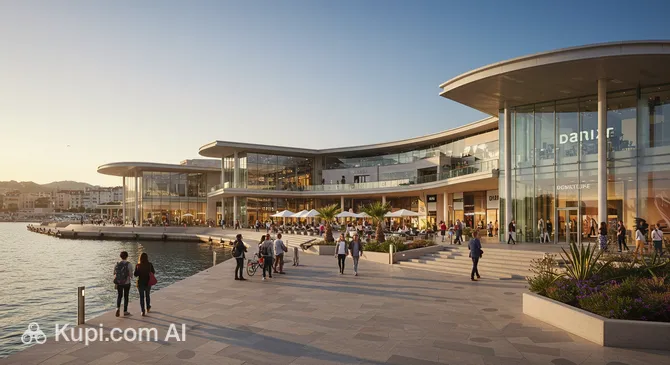
Marseille has undergone a significant transformation with the opening of spectacular modern shopping centers by the sea. One of the most impressive is Les Terrasses du Port, a massive complex located in the Joliette district. It features nearly 190 shops and restaurants, but its crowning jewel is the expansive outdoor terrace offering breathtaking views of the Mediterranean. It is a unique spot where you can combine a shopping spree with a relaxing break overlooking the ferries.
Les Terrasses du Port. Illustration.
Source: Kupi.com AI
Traveler photos:
Just a short walk away, you will find Les Docks Village. Housed in a beautifully restored historic warehouse, this center focuses on lifestyle, decoration, and gastronomy rather than standard fast fashion. The architecture alone, with its open atriums and industrial details, makes it a must-visit destination. It offers a curated selection of boutiques and concept stores that highlight local creativity and design.
Markets are the soul of daily life here. The most iconic is the Fish Market on the Quai des Belges at the Vieux-Port, where fishermen sell their catch directly from their boats every morning. For a sensory explosion, head to the market in Noailles (Marché des Capucins). Often called the "belly of Marseille," this vibrant area is packed with stalls selling exotic spices, fresh fruits, vegetables, and North African delicacies, offering a chaotic but authentic glimpse into the city's multicultural identity.
When it comes to souvenirs, the most famous item to bring home is undoubtedly Savon de Marseille (Marseille soap). Look for the authentic cubes stamped with "72% d'huile" to ensure quality. Another classic local craft is the santon, a small hand-painted clay figurine used in traditional nativity scenes. Foodies might also want to pick up a bottle of Pastis or a bag of Navettes, the orange-blossom flavored biscuits shaped like boats.
Most shops in the city center are open from 10:00 AM to 7:00 PM, Monday through Saturday. Smaller boutiques may close for a lunch break between 1:00 PM and 2:00 PM. While Sunday trading is generally limited, shops in major tourist areas like the Old Port and large malls like Les Terrasses du Port often remain open seven days a week. Credit and debit cards are widely accepted, though it is useful to have some cash for small purchases at markets.
Visitors residing outside the European Union are eligible for a tax refund (détaxe) on purchases made in a single store exceeding a certain amount (typically €100.01). Look for the "Tax Free" sign in shop windows and be sure to ask for the necessary refund form at the checkout, which you will need to validate at customs upon leaving the EU.