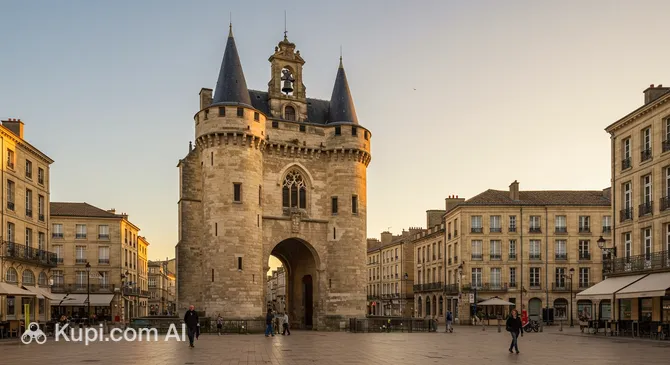
Bordeaux is a city that effortlessly blends historic grandeur with a vibrant, modern energy. Often referred to as the "Pearl of Aquitaine," it is globally renowned not just for its legendary vineyards but also for its exceptional quality of life and stunning urban landscape. As the capital of the Nouvelle-Aquitaine region in southwestern France, it serves as a major hub for culture, gastronomy, and art.
Bordeaux. Illustration.
Source: Kupi.com AI
Situated on the banks of the Garonne River, the city enjoys a mild oceanic climate that makes exploring its streets pleasant throughout much of the year. With a population of approximately 260,000 inhabitants, it offers the amenities of a metropolis while maintaining a welcoming and accessible atmosphere. The deep history of Bordeaux is visible at every turn, particularly in its well-preserved 18th-century architecture, which has earned nearly half the city a place on the UNESCO World Heritage list.
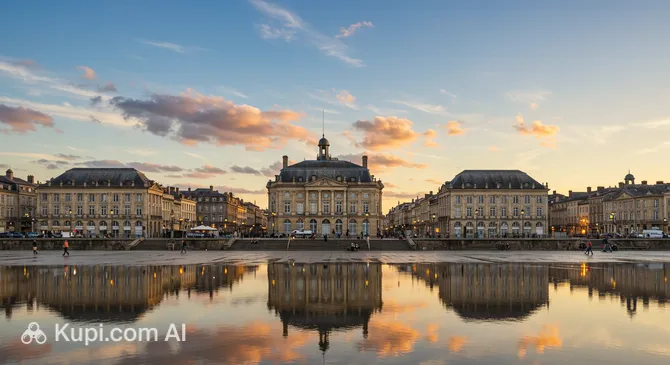
Travelers are drawn to iconic sights such as the majestic Place de la Bourse, famed for its mesmerizing Miroir d'eau (Water Mirror), the largest reflecting pool in the world. Another must-visit is La Cité du Vin, a unique cultural center dedicated to the universal heritage of wine, housed in a strikingly modern building. Whether you are strolling through the historic Chartrons district or tasting local delicacies at the Capucins Market, Bordeaux promises an unforgettable experience for every visitor.
Weather Overview
Bordeaux enjoys a temperate oceanic climate, characterized by mild winters and warm summers, largely influenced by its proximity to the Atlantic Ocean. This ensures that extreme temperatures are rare, making the city a pleasant destination year-round. For a more detailed breakdown of conditions for your specific travel dates, you can consult the guide on weather in Bordeaux.
The summer months of July and August are typically the warmest, with average highs reaching up to 27.7°C. While these are the driest months, travelers should still be prepared for some precipitation, as there are usually around 8 wet days per month. Winters are generally cool but not freezing; January is often the coldest month with an average temperature of 7.3°C. Rainfall is more frequent during this season, particularly in December, which sees about 15 wet days.
Spring and autumn are delightful transition periods, with May offering comfortable averages of 16.3°C and September retaining much of the summer's warmth at nearly 20°C. Overall, you can expect warm summers with occasional rain and cool, damp winters, so packing layers and a waterproof jacket is recommended regardless of when you visit.
Average monthly temperature
Average monthly precipitation
Interesting Facts
Beyond the main attractions, Bordeaux holds many fascinating secrets and historical quirks that add depth to its elegant facade. Here are some intriguing facts about the city that often go unnoticed by casual visitors:
Submarine Base. Illustration.
Source: Kupi.com AI
Traveler photos:
For many years, the city was nicknamed "Sleeping Beauty" (La Belle au Bois Dormant). Its magnificent 18th-century limestone buildings were once blackened by soot and pollution, hiding their golden hue until a massive urban renewal project in the late 1990s cleaned the facades and revealed the city's true architectural splendor.
There is a direct historical link between the region's wine production and its famous pastry, the canelé. Winemakers traditionally used egg whites to clarify or "fine" their wines, and the surplus yolks were given to local nuns, who used them to invent these delicious, caramelized vanilla and rum cakes.
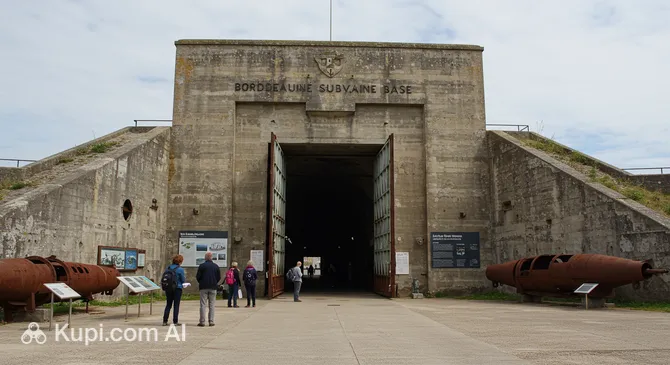
Bordeaux is home to a colossal Submarine Base built during World War II. This massive concrete bunker, which was too difficult to destroy after the war, has been creatively repurposed into a vibrant cultural center that hosts immersive digital art exhibitions known as the Bassins des Lumières.
The Grosse Cloche, one of the oldest belfries in France, served a darker purpose in the past. While it is now a beloved landmark, it once functioned as a prison with dungeons used to lock up citizens for minor offenses, such as breaking curfews or disturbing the peace.
Shopping enthusiasts might be surprised to learn that the Rue Sainte-Catherine is often cited as the longest pedestrian shopping street in Europe. Stretching for 1.2 kilometers, it cuts through the city center and offers an uninterrupted retail experience from major brands to small boutiques.
How to Get There
Reaching the heart of the Nouvelle-Aquitaine region is quite convenient, with multiple transport options catering to international and domestic travelers. Whether you prefer flying or taking the train, the city is well-connected to the rest of Europe. You can find detailed information on all ways to reach the city in our dedicated guide.
The primary gateway for air travelers is Bordeaux Airport (IATA: BOD). Located approximately 10.7 km from the city center, it is a bustling international hub. A trip from the airport to downtown Bordeaux by taxi or shuttle generally takes about 36 minutes. For those exploring the wider region, Roumanières Airport (IATA: EGC) is another option, though it is located in the city of Bergerac, about 87 km away from Bordeaux. Alternatively, La Rochelle Airport (IATA: LRH) in La Rochelle serves the area but is situated roughly 156 km from the city.
For clarity, here is a summary of the main airports:
If you prefer rail travel, the city is excellently served by Bordeaux Saint-Jean Station (IATA: ZFQ). This historic and busy station is located just 2.7 km from the city center, meaning a taxi or public transport ride to your hotel will likely take only around 24 minutes. It is a major hub with high-speed TGV connections to Paris and other key destinations. While there are other stations in the broader region, such as Agen Railway Station (IATA: AEN) in Agen, they are significantly further away (about 118 km) and are less practical for direct arrival into Bordeaux.
Below is a list of the nearest railway stations for reference:
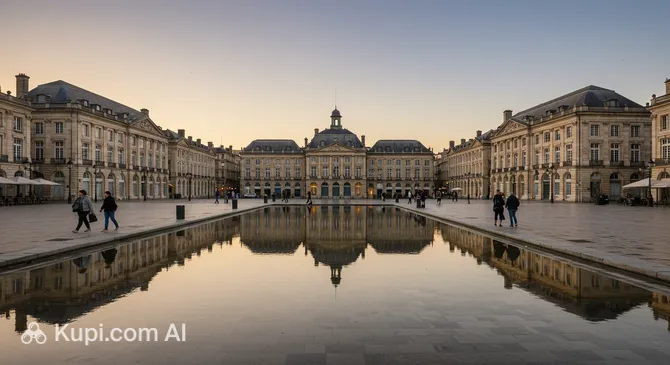
Bordeaux is a city where history and modernity stand side by side, offering visitors a wealth of architectural marvels and cultural landmarks. One of the most iconic sights is the Place de la Bourse. Built in the 18th century, this majestic square epitomizes the elegance of French classicism. It was designed to open the city to the river and impress visitors with its symmetry and grandeur. Directly across from it lies the fascinating Water Mirror (Miroir d'eau), the world's largest reflecting pool, which alternates between a mirror-like effect and a mysterious fog, creating a magical atmosphere for photos and relaxation.
Place de la Bourse. Illustration.
Source: Kupi.com AI
Traveler photos:
For those interested in religious heritage and Gothic architecture, the Bordeaux Cathedral (Cathédrale Saint-André) is an absolute must-see. Consecrated by Pope Urban II in 1096, this imposing structure has hosted royal weddings, including that of Eleanor of Aquitaine. Its separate bell tower, the Tour Pey-Berland, offers panoramic views of the city for those willing to climb its narrow steps. The cathedral’s intricate stone carvings and massive scale serve as a testament to the city's medieval importance.
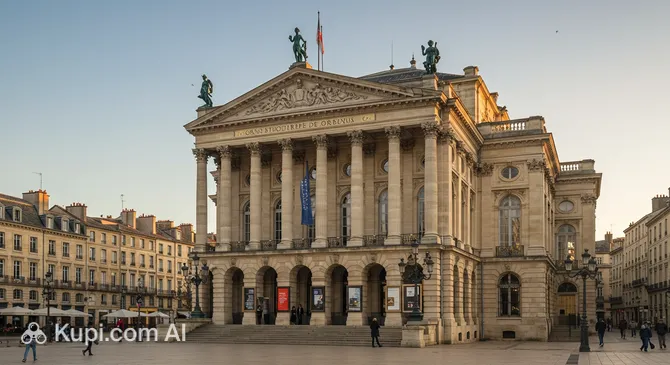
Culture lovers will be enchanted by the Grand Théâtre de Bordeaux, considered one of the most beautiful opera houses in the world. Inaugurated in 1780, its neoclassical facade features twelve Corinthian columns topped with statues of the nine Muses and three goddesses. Inside, the auditorium is a masterpiece of blue, gold, and white, renowned for its exceptional acoustics. It remains the vibrant heart of the city's performing arts scene and a symbol of Bordeaux's artistic legacy.
Grand Théâtre de Bordeaux. Illustration.
Source: Kupi.com AI
Traveler photos:
Stepping back further into history, the Porte Cailhau offers a glimpse of the city's medieval fortifications. Built in 1494 to commemorate a military victory, this fairytale-like gate looks more like a castle entrance than a defensive structure. With its high conical roofs and detailed sculptures, it provides a charming contrast to the surrounding 18th-century architecture. Visitors can climb inside to learn about its history and enjoy lovely views of the Garonne River and the oldest bridge in the city.
To truly understand the region's rich past, a visit to the Museum of Aquitaine is highly recommended. This extensive museum takes visitors on a journey from prehistory to the present day, covering everything from Roman Gaul to the city's golden age of commerce. It is particularly noted for its honest and detailed exhibits regarding Bordeaux's maritime history and its role in the Atlantic trade. It serves as an essential educational stop for anyone wanting to dig deeper into the identity of this fascinating region.
Local Cuisine
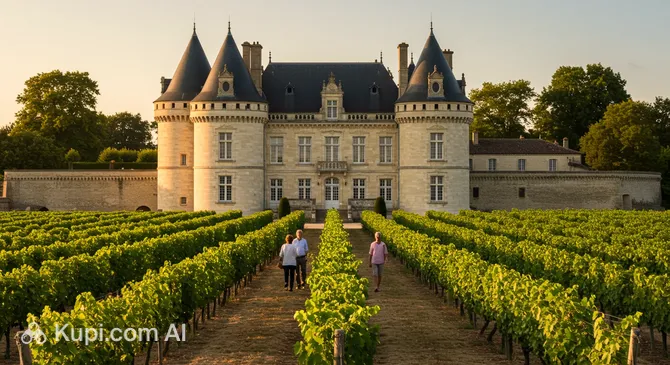
Bordeaux is a true paradise for food lovers, offering a cuisine that perfectly balances the rustic flavors of the southwest countryside with the fresh bounty of the nearby Atlantic Ocean. A signature dish that every visitor must try is the Entrecôte à la Bordelaise. This rib steak is traditionally cooked over vine shoots, giving it a unique smoky flavor, and is smothered in a rich sauce made from red wine, butter, shallots, and bone marrow. Seafood also plays a major role here, particularly the fresh oysters from the Arcachon Bay, which are a staple starter on many local menus.
Naturally, no meal in this region is complete without a glass of the world-renowned local wine. While the bold reds—typically blends of Merlot and Cabernet Sauvignon—are the most famous, the dry whites and sweet Sauternes are equally exceptional. To truly understand the history behind these labels, a visit to the Bordeaux Wine and Trade Museum provides fascinating context. For a pre-dinner drink, locals often choose Lillet, a refreshing aperitif made from a blend of wine, liqueurs, and fruits that originated in the area.
Château Pape Clément. Illustration.
Source: Kupi.com AI
Traveler photos:
The city's food culture is vibrant and social, revolving around bustling markets and lively brasseries. The Marché des Capucins is known as the "belly of Bordeaux," where you can wander among stalls selling local cheeses, foie gras, and the famous canelé pastries. For a classic dining experience, restaurants like Chez Anatole offer a welcoming atmosphere to enjoy traditional French cooking. Whether you are snacking on street food or sitting down for a multi-course dinner, the gastronomic scene in Bordeaux is designed to be savored slowly.
Travel Tips
Visiting Bordeaux is a delightful experience, blending the sophistication of a major metropolis with the relaxed pace of the southwest. To ensure your trip to this renowned wine capital goes as smoothly as the vintage in your glass, here are some practical tips to keep in mind.
Clothing and Gear: Since the weather can be changeable due to the oceanic climate, packing layers is essential. Bring a waterproof jacket or a sturdy umbrella, even in summer, as showers can occur unexpectedly. Comfortable walking shoes are a must, as the historic center is best explored on foot and features many cobblestone streets. While the general style is smart-casual, remember to cover your shoulders and knees if you plan to visit religious sites like the cathedral.
Transportation: The city center is pedestrian-friendly, but for longer distances, the public transport network (TBM) is excellent, featuring modern trams, buses, and even river shuttles (Bat3). You can buy tickets at tram stops or via the mobile app. Avoid renting a car for city exploration; traffic can be dense, and parking is expensive. Instead, consider using the city's self-service bike system, V3, which is a favorite among locals.
Finances: The currency used is the Euro (€). Credit and debit cards (Visa and Mastercard) are widely accepted in hotels, restaurants, and most shops. However, it is wise to carry some cash for small purchases at local markets or bakeries. Tipping is not mandatory as a service charge is included in the bill, but leaving small change or rounding up the amount is a polite gesture if the service was good.
Health and Safety: Bordeaux is generally a very safe city for tourists. However, as in any popular destination, keep an eye on your belongings in crowded areas like the Rue Sainte-Catherine or on public transport. Pharmacies are easily recognized by a flashing green cross sign and are plentiful; for after-hours emergencies, search for a "pharmacie de garde." The universal emergency number is 112.
Communication: The official language is French. While many younger people and those in the tourism industry speak English, it is not guaranteed everywhere. Learning a few basic phrases like "Bonjour" (Hello), "Merci" (Thank you), and "S'il vous plaît" (Please) is highly appreciated. Free Wi-Fi is available in many public parks and squares, and prepaid SIM cards can be purchased at tobacco shops (tabacs) or mobile provider stores.
Local Etiquette: Politeness is paramount in France. Always greet shopkeepers or staff with a friendly "Bonjour" when entering an establishment and say "Au revoir" when leaving; failing to do so can be considered rude. When dining, remember that lunch is typically served between 12:00 PM and 2:00 PM, and dinner often starts after 7:30 PM.
What to Avoid: Do not rush your meals; dining is a cultural ritual here meant to be enjoyed slowly. Also, avoid handling produce at outdoor markets without permission. It is customary to let the vendor select the fruits or vegetables for you unless it is a self-service stall.
Sunday Closures: Be aware that Sunday is traditionally a day of rest. Most shops, supermarkets, and even some restaurants will be closed or have very limited hours. Plan to visit museums, parks, or the lively Sunday morning market at Chartrons on this day instead of planning a shopping spree.
By keeping these simple guidelines in mind, you will find it easy to blend in with the locals and navigate the city with confidence. Bordeaux is a welcoming place that rewards those who take the time to appreciate its rhythm, ensuring your stay is as relaxing as it is memorable.
Entertainment & Nightlife
Entertainment and Nightlife:
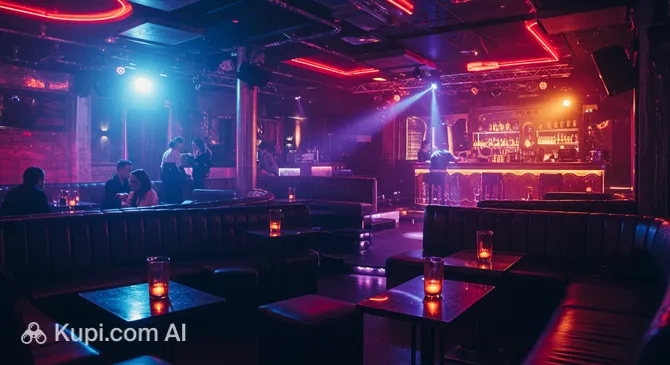
As the sun sets over the Garonne River, Bordeaux transforms from a historic wine capital into a bustling hub of nocturnal activity. The city’s nightlife is diverse and vibrant, catering to everyone from jazz enthusiasts and cocktail connoisseurs to those looking to dance until dawn. The atmosphere is generally sophisticated yet welcoming, with a mix of students, locals, and tourists filling the terraces and venues. Whether you prefer a quiet glass of rouge in a dimly lit cellar or a high-energy club experience, the "Pearl of Aquitaine" has plenty to offer after dark.
The heart of the action is undoubtedly the Saint-Pierre district in the historic center. Here, the narrow cobblestone streets around Place du Parlement and Place Saint-Pierre are packed with lively bars and pubs. It is the perfect spot for a pub crawl or a casual evening out. For a more modern and eclectic vibe, head north to the Bassins à Flot area. This former industrial wet dock has been revitalized into a trendy nightlife district, home to unique venues, concert halls, and nightclubs often housed on boats or in repurposed warehouses.
Madame Pang. Illustration.
Source: Kupi.com AI
Traveler photos:
For those seeking a refined evening with exceptional drinks, Madame Pang is a standout choice. Located in the city center, this venue combines the elegance of a cocktail bar with the flavors of high-end Dim Sum, making it a favorite for a chic night out. If you are looking for a more interactive and fun experience with friends, the Karaoke Box Chartrons offers private rooms where you can sing your heart out in a comfortable and festive setting. Meanwhile, the lively Ivazio Island provides a mix of bar atmosphere and indoor leisure activities, perfect for starting the night.
When planning your night, keep in mind that bars typically stay open until 2:00 AM, while nightclubs often welcome guests until 6:00 AM. The dress code in Bordeaux is generally "smart casual"—you don't need a tuxedo, but leaving the beachwear at the hotel is advisable, especially for clubs. Prices are moderate compared to Paris; expect to pay around €6–€10 for a pint of beer and €10–€15 for a cocktail. Happy hours are common in the early evening, offering a great way to sample local drinks at a discount.
Getting around at night is relatively easy. The city's tram system is efficient and runs until approximately 1:00 AM on weekdays and even later on weekends. After the trams stop, ride-sharing apps and local taxis are readily available. Bordeaux is generally a safe city for night walks, particularly in the center and the Chartrons district. However, as with any major city, it is wise to stay aware of your surroundings and avoid unlit or deserted areas late at night.
While the nights are exciting, the city also offers engaging entertainment during the day. Beyond the classical museums and theaters, thrill-seekers can immerse themselves in modern technology at the Vortex Virtual Reality Experience, which offers cutting-edge VR adventures. Whether you are exploring digital worlds by day or sipping fine wine by night, the city ensures every moment is filled with enjoyment.
Parks & Museums
While the city is famous for its stone architecture and wine heritage, it also boasts a remarkable array of green spaces and cultural institutions that offer a refreshing break from the urban bustle. From manicured English-style gardens to cutting-edge science centers, the parks and museums of Bordeaux provide diverse experiences for relaxation and learning.
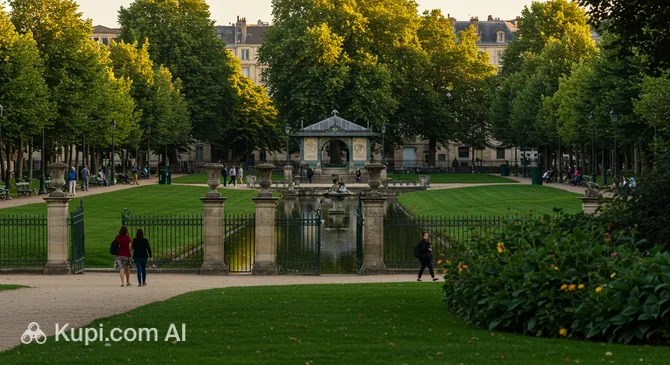
One of the most beloved green havens in the city is the Public Garden (Jardin Public). Created in 1746, this English-style park is an oasis of calm in the city center, featuring ancient trees, a winding stream, and a botanical garden. It is the perfect spot for a leisurely picnic or a morning jog. For a larger natural escape, the Parc Bordelais offers 28 hectares of woodland and lawns. It is particularly popular with families due to its small farm, puppet theater, and ample space for children to play, making it a true "countryside" experience within the city limits.
Public Garden. Illustration.
Source: Kupi.com AI
Traveler photos:
The city's museum scene is equally impressive, catering to curious minds of all ages. Located on the banks of the Garonne, Cap Sciences is a dynamic center dedicated to scientific culture. Unlike traditional museums, it focuses on interactive exhibitions and workshops that make complex topics accessible and fun, offering a great outing for families and technology enthusiasts. For those interested in the natural world, the Bordeaux Museum of Science and Nature, located within the Public Garden, has been beautifully renovated. Its extensive collections of zoological specimens are displayed in a contemporary setting that highlights the diversity of life on Earth.
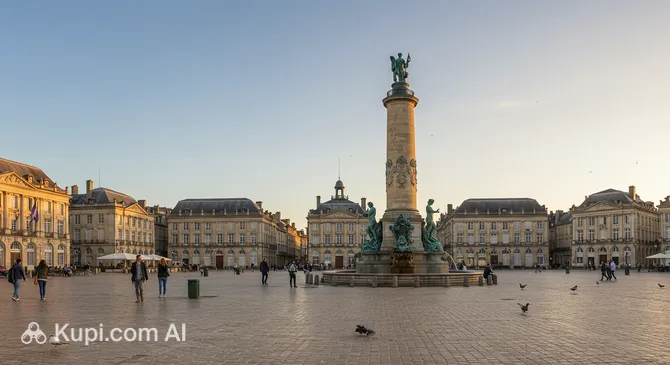
Beyond the parks and museums, the city is dotted with monumental squares and towers that narrate its history. The massive Quinconces Square is one of the largest city squares in Europe. It is dominated by the soaring Monument to the Girondins, a tribute to the revolutionaries of the region, featuring dramatic bronze fountains that are a favorite subject for photographers. Nearby, visitors looking for a bird's-eye view can climb the Pey Berland Tower. Standing separate from the cathedral to protect the church from bell vibrations, this 15th-century tower offers a breathtaking panorama over the city's tiled roofs.
Quinconces Square. Illustration.
Source: Kupi.com AI
Traveler photos:
For a unique excursion off the beaten path, consider heading to the suburb of Gradignan to visit the René Canivenc Animal Park. This free animal park is a hidden gem where you can see deer, wallabies, and farm animals in a natural forest setting, offering a peaceful retreat away from the main tourist trails.
Getting Around
The public transport system in Bordeaux, managed by TBM (Transports Bordeaux Métropole), is highly efficient, modern, and the best way to navigate the city. The backbone of the network is the tramway, which consists of four main lines (A, B, C, and D) connecting the city center with the suburbs and key locations like the train station. A unique feature of this system is its ground-level power supply (APS) used in the historic districts. This technology eliminates the need for overhead wires, preserving the aesthetic beauty of the city's 18th-century architecture and UNESCO-listed sites.
Complementing the trams is an extensive bus network that covers areas not reached by rail. For a more scenic route, the Bat3 (river shuttle) offers a delightful way to cross the Garonne River. These catamarans are fully integrated into the public transport system, meaning you can use the same ticket to hop on a boat as you would for a bus or tram. It is a practical and picturesque alternative for traveling between the left and right banks.
For tickets and payment, the system is user-friendly. You can purchase a rechargeable card or disposable tickets at vending machines located at every tram stop, or use the TBM mobile app to buy digital tickets directly on your smartphone. A single trip costs approximately €1.80 and is valid for one hour, allowing for transfers between different modes of transport. For tourists, a 24-hour pass (around €5.00) or a 7-day pass is often the most economical choice. Remember that you must validate your ticket or card every time you board a vehicle, even when transferring, to avoid fines.
The transport network generally operates from 5:00 AM until midnight, with extended service until around 1:00 AM on Thursdays, Fridays, and Saturdays to accommodate the nightlife. If you prefer to travel on two wheels, the city offers a popular self-service bike rental scheme known as V3 (VCub). With stations dotted throughout the city, it is an excellent way to explore the flat, bike-friendly streets along the river quays.
While taxis and ride-sharing apps like Uber are available, they are not always the fastest option due to traffic restrictions in the pedestrian-heavy city center. Walking is often the most pleasant way to see the historic core. However, for longer distances or late-night travel when trams are not running, taxis can be found at designated ranks or booked via phone and apps.
Accommodation
Accommodation:
Finding the perfect place to stay in Bordeaux is an integral part of the travel experience, as the city offers a diverse array of accommodation options that reflect its rich heritage and modern lifestyle. From opulent five-star hotels housed in 18th-century limestone mansions to charming boutique guesthouses and budget-friendly hostels, there is something to suit every traveler's taste and budget. In recent years, the rental apartment market has also flourished, allowing visitors to live like locals in renovated historic flats with high ceilings and stone walls.
For those visiting for the first time, the most convenient area to stay is the City Center (specifically the Saint-Pierre and Saint-Christoly districts). This pedestrian-friendly zone places you within walking distance of major landmarks like the Place de la Bourse and the Grand Théâtre. It is the beating heart of the city, filled with restaurants, cafes, and shops. If you prefer a more trendy and village-like atmosphere, the Chartrons district is an excellent choice. Historically the home of wine merchants, it is now known for its antique shops, chic bistros, and a slightly quieter vibe compared to the hyper-center.
Grosse Cloche. Illustration.
Source: Kupi.com AI
Traveler photos:
Travelers on a tighter budget or those prioritizing connectivity might consider the area around the Saint-Jean Train Station. While it is a bit further from the main tourist sights (about a 10-15 minute tram ride), it offers more affordable hotel rates and immediate access to high-speed trains and airport shuttles. Alternatively, the Bastide district on the right bank of the Garonne River provides a modern perspective of the city, often with spacious rooms and stunning views looking back across the river at the historic facade of the left bank.
Prices for accommodation vary significantly depending on the season and location. A night in a mid-range hotel typically costs between €100 and €180, while luxury options can easily exceed €250. Budget travelers can find hostels or economy hotels for around €60 to €90 per night. Booking platforms and direct hotel websites are the most common ways to secure a room. It is highly recommended to book your accommodation several months in advance, especially if you plan to visit during the summer peak season or during the wine harvest in September and October, when the city is particularly busy.
Nearby Cities
For those looking to explore the surroundings, Bordeaux serves as an excellent base for day trips to several interesting nearby locations:
City
Population
Distance
Le Bouscat
23 924
3 km
Floirac
18 181
4 km
Talence
43 820
4 km
Begles
30 642
4 km
Bruges
19 403
5 km
While the immediate vicinity includes vibrant suburbs like Pessac, which is notable for the Cité Frugès—a modernist housing project designed by Le Corbusier and listed as a UNESCO World Heritage site—travelers often venture slightly further to discover the region's most iconic treasures. A short journey east brings you to the medieval village of Saint-Émilion. Famous worldwide for its prestigious vineyards, this charming town offers more than just wine tasting; its steep cobblestone streets and the remarkable monolithic church, carved entirely from limestone, provide a fascinating journey into history.
For those seeking the coast, a trip west to Arcachon is a must. This elegant seaside resort is the perfect gateway to the Atlantic Ocean and the stunning Arcachon Bay. Just a stone's throw away lies the magnificent Dune du Pilat, the tallest sand dune in Europe. Climbing to its summit rewards visitors with breathtaking panoramic views of the forest on one side and the ocean on the other, making it an unforgettable nature experience.
These nearby destinations offer a glimpse into the diverse culture and landscapes of the region.
Shopping & Souvenirs
Shopping:
Shopping in Bordeaux is a delightful blend of luxury, history, and local charm, offering everything from high-end fashion to artisanal gastronomic treasures. The city center is compact and largely pedestrianized, making it easy to drift from chic boutiques to bustling markets. Whether you are looking for the latest French fashion trends or seeking the perfect bottle of vintage wine, the city provides a sophisticated yet accessible retail experience that caters to all tastes and budgets.
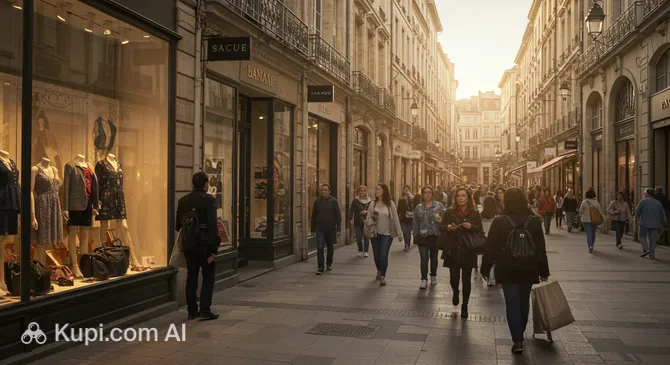
The undisputed backbone of the city's retail scene is Rue Sainte-Catherine. Stretching for over a kilometer, it is famously known as the longest pedestrian shopping street in Europe. Here, you will find all the major international high-street brands, department stores, and lively cafes. As you stroll along this busy artery, you might pass through the historic Porte Dijeaux, a monumental gate that marks the entrance to the western part of the old town. For those with a taste for luxury, the "Golden Triangle" (Triangle d'Or)—formed by Cours de l'Intendance, Cours Georges Clemenceau, and Allées de Tourny—is the place to be. This elegant district is home to prestigious designer labels, fine jewelers, and upscale interior design shops.
Promenade Sainte-Catherine. Illustration.
Source: Kupi.com AI
Traveler photos:
For a more concentrated shopping experience, the city boasts several modern complexes. Located right in the historic center, Promenade Sainte-Catherine is a unique open-air lifestyle center. Built on the site of a former newspaper headquarters, it features a harmonious mix of shops, restaurants, and residential spaces around a central fountain, offering a relaxed atmosphere away from the crowds of the main street. If you are venturing further out or looking for a larger commercial hub with extensive parking and a wider variety of services, the Saint-Médard Shopping Gallery in the nearby suburb is a significant destination for major retail therapy.
Markets are the soul of daily life in the region. The Marché des Capucins, often called the "Belly of Bordeaux," is the premier spot for foodies. Here, you can buy fresh produce, local cheeses, and seafood, or simply enjoy a plate of oysters with white wine at a stall. For antique lovers, the district around the Basilica of Saint-Michel is a treasure trove. The square hosts a vibrant flea market (brocante) several times a week, where you can hunt for vintage books, furniture, and unique curiosities in a lively, multicultural setting.
When it comes to souvenirs, local specialties are the best choice. A bottle of Bordeaux wine is the classic gift, and there are countless wine shops (cavistes) ready to offer expert advice and shipping services. For those with a sweet tooth, canelés are essential; these small, caramelized cakes with a custard center are the city's signature pastry. Boxes of Sarments du Médoc (chocolate twigs with orange or mint notes) also make for delicious and easily transportable gifts.
Most shops in Bordeaux are open from Monday to Saturday, typically between 10:00 AM and 7:00 PM. Smaller boutiques may close for a lunch break around 1:00 PM, though major stores and malls usually remain open all day. Sunday trading is limited, although some shops in tourist areas and the Promenade Sainte-Catherine may be open. Credit and debit cards (Visa and Mastercard) are widely accepted, but carrying some cash is useful for small market purchases. Visitors residing outside the European Union may be eligible for a VAT refund (détaxe) on purchases over a certain amount in a single store, so be sure to ask for a tax-free form when buying higher-value items.