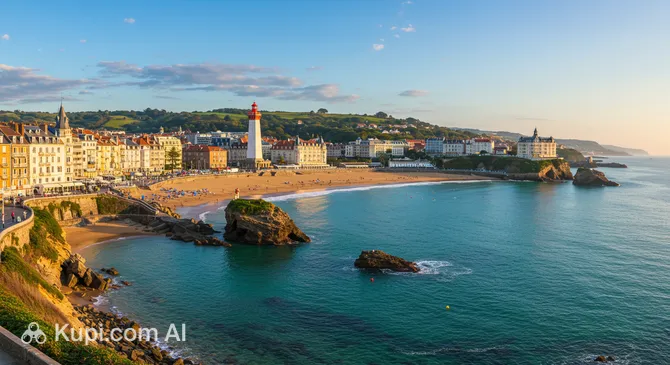
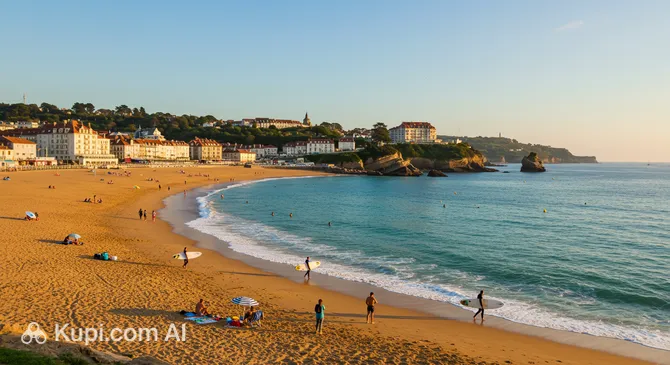
Biarritz is an elegant seaside town that perfectly blends aristocratic heritage with a laid-back surf culture. Located in the Nouvelle-Aquitaine region of southwestern France, this gem of the Basque Coast sits along the Bay of Biscay. With a population of approximately 25,000 residents, the city offers a lively yet intimate atmosphere, characterized by a mild maritime climate that makes it a pleasant destination throughout the year.
The transformation of this destination from a humble whaling port to a fashionable resort is truly fascinating. Exploring the history of Biarritz reveals its rise to international fame in the 19th century, when European royalty, including Empress Eugénie, began frequenting its shores. Today, the city retains its regal charm while embracing a modern, sporty spirit that appeals to a diverse range of visitors.
Biarritz. Illustration.
Source: Kupi.com AI
Travelers are often captivated by the city's stunning natural and architectural landmarks. The **Rocher de la Vierge**, a dramatic rock formation topped with a statue of the Virgin Mary, offers breathtaking panoramic views of the ocean and the rugged coastline. Biarritz is also celebrated as the historic surfing capital of Europe, with the iconic **Grande Plage** attracting wave enthusiasts and sunseekers from around the globe.
Whether you are looking to relax in world-class thalassotherapy centers, enjoy delicious Basque cuisine, or catch the perfect wave, Biarritz promises an unforgettable experience. Its unique mix of luxury, history, and invigorating ocean vitality makes it a must-visit destination for your next holiday.
Weather Overview
Biarritz benefits from a temperate oceanic climate, ensuring that the city avoids extreme temperature fluctuations throughout the year. Summers are delightfully warm but rarely scorching, with August seeing average highs of around 24.0°C, making it perfect for beach activities. Even during the warmest months, the Atlantic breeze keeps the air fresh, although travelers should be prepared for about 11 to 13 wet days per month in July and August.
Winters are mild compared to many other European destinations, with January temperatures typically hovering around 8.8°C and rarely dropping below 6.5°C. Rainfall is a regular feature of the region's weather pattern, particularly in late autumn and winter; November and December are usually the dampest months, averaging 17 wet days each. For a more detailed breakdown to help you pack, you can consult the guide to the weather in Biarritz.
In general, you can expect warm summers with occasional showers and mild, wetter winters. This moderate climate makes the city a comfortable destination for sightseeing and coastal walks regardless of the season.
Average monthly temperature
Average monthly precipitation
Interesting Facts
Beyond the sun-soaked beaches and elegant promenades, Biarritz holds several fascinating stories that surprise many visitors. Digging into its past reveals a city of unexpected origins and architectural curiosities that go far beyond its reputation as a luxury resort.
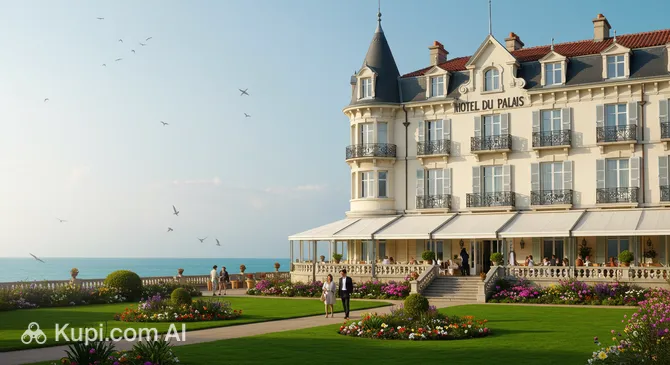
Hôtel du Palais Biarritz. Illustration.
Source: Kupi.com AI
Traveler photos:
While the city is now synonymous with luxury, it actually began as a humble whaling port in the Middle Ages. This gritty maritime history is still honored today in the official coat of arms of Biarritz, which features a large whaling boat and a harpoon, contrasting sharply with its modern glamorous image.
Biarritz is widely considered the cradle of European surfing, a culture that started somewhat accidentally in 1957. The sport was introduced at Côte des Basques Beach by screenwriter Peter Viertel, who was in town to film The Sun Also Rises and decided to try riding the Atlantic waves with a board brought from California.
The magnificent Hôtel du Palais Biarritz was originally built as a summer residence for Empress Eugénie by her husband, Napoleon III. A unique architectural detail often missed from the ground is that the building was constructed in the shape of the letter "E," serving as a romantic tribute to the Empress.
The famous metal footbridge connecting the mainland to the Rock of the Virgin is an engineering marvel with a prestigious connection. It was designed by the workshops of Gustave Eiffel in 1887 to replace an older wooden structure that could not withstand the powerful ocean storms.
How to Get There
Reaching this elegant coastal destination is quite convenient, thanks to its well-connected transport network. Whether you prefer flying or taking the train, there are several options to suit your travel plans. For a detailed breakdown of routes and tips, you can read more about how to get to Biarritz.
The most direct way to arrive is via the Biarritz - Anglet - Bayonne Airport (IATA: BIQ). Conveniently located just 3.3 km from the city center, this regional hub welcomes a significant number of travelers annually. The short distance makes the transfer very quick; a taxi or bus ride typically takes around 25 minutes. It is the primary gateway for visitors looking to land practically on the doorstep of their hotel.
Another viable option, especially for those exploring the wider Basque Country, is the San Sebastian Airport (IATA: EAS). Although it is located in the city of San Sebastian in neighboring Spain, it is only about 23.5 km away from Biarritz. The journey by road is relatively short, taking approximately 55 minutes. For travelers coming from further afield, the Bilbao Airport (IATA: BIO) in Bilbao offers a larger range of international connections. It is situated about 111 km away, with a transfer time of roughly 3 hours depending on traffic.
For clarity, here is a summary of the main airports:
If you are traveling by rail, you can also utilize stations in nearby towns which serve as good connecting points. The St-Jean-de-Luz-Ciboure Railway Station is located in the city of Saint-Jean-de-Luz, approximately 13.6 km from Biarritz. A transfer from there to your final destination usually takes about 40 minutes. Additionally, the San Sebastian Railway Station in San Sebastian is another major hub in the region, situated roughly 38.6 km away, with a travel time of around 1 hour and 20 minutes to Biarritz.
Below is a list of nearby railway stations that can facilitate your journey:
Biarritz is renowned for its blend of imperial history and ocean-centric culture, offering visitors a variety of captivating sights. From architectural marvels to interactive educational centers, the city's landmarks reflect its unique character as a prestigious seaside resort on the Basque coast.
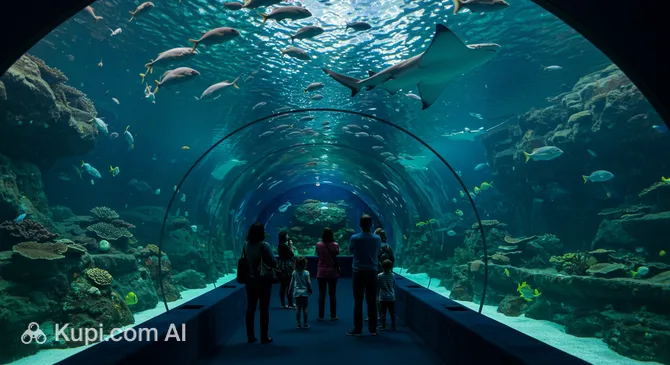
One of the most popular destinations for families and marine enthusiasts is the Biarritz Aquarium. Located in a stunning Art Deco building facing the ocean, it invites visitors to explore the underwater world of the Bay of Biscay and beyond. The aquarium features a massive shark tank, a seal pool where you can watch feeding sessions, and diverse exhibits showcasing marine life from the Caribbean to the Indo-Pacific. It is a perfect spot to learn about ocean biodiversity while enjoying spectacular views of the coastline.
Biarritz Aquarium. Illustration.
Source: Kupi.com AI
Traveler photos:
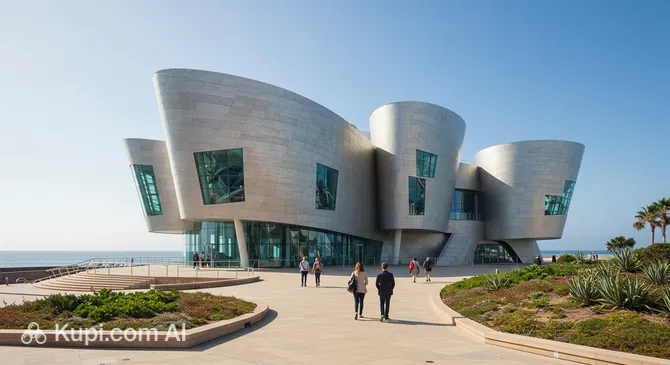
For a more modern and interactive take on the sea, the Cité de l'Océan offers a futuristic experience. This scientific center is designed to help visitors understand the mysteries of the ocean through immersive 3D animations and virtual reality experiences. You can try virtual surfing, explore the depths of the sea in a bathyscaphe, and engage with educational exhibits that highlight the importance of ocean conservation. Its striking architecture, shaped like a wave, is an attraction in itself.
Cité de l'Océan. Illustration.
Source: Kupi.com AI
Traveler photos:
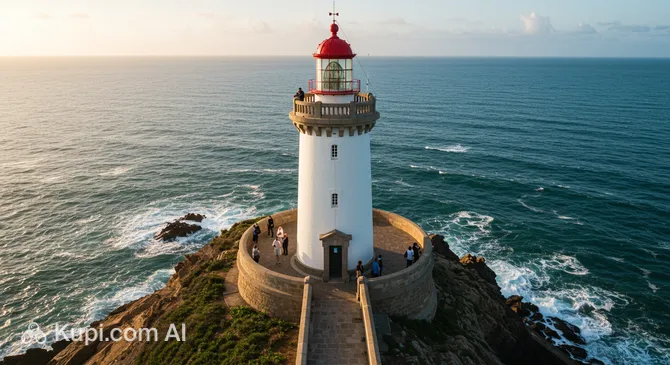
Standing tall at the tip of Saint-Martin Point, the Biarritz Lighthouse is an iconic symbol of the city. Built in 1834, this white tapered tower rises 73 meters above sea level. Visitors who climb the 248 steps to the top are rewarded with a breathtaking panoramic view that stretches from the sandy beaches of the Landes to the rocky Basque coastline and the distant Pyrenees mountains. It is particularly magical at sunset when the light sweeps across the bay.
Biarritz Lighthouse. Illustration.
Source: Kupi.com AI
Traveler photos:
Overlooking the old port, the Sainte-Eugénie Church of Biarritz is a masterpiece of Neo-Gothic architecture. Dedicated to Saint Eugenia, the patron saint of Empress Eugénie, the church was constructed between 1898 and 1903. Its grey stone exterior contrasts beautifully with the blue of the ocean, while the interior features impressive stained glass windows and a rich history connected to the imperial past of the city. It remains an active place of worship and a serene stop for those exploring the city center.
Local Cuisine
The culinary landscape of Biarritz is a delightful reflection of its location in the French Basque Country, blending the refinement of French gastronomy with the rustic, bold flavors of Basque traditions. The local food scene is heavily influenced by the ocean and the fertile hinterland, meaning you can expect high-quality seafood sitting alongside cured meats and farm-fresh produce. A staple on almost every menu is the famous Bayonne ham, a cured ham that is often served as a starter or used to enhance other dishes.
When it comes to main courses, visitors should definitely try Axoa, a traditional veal stew prepared with onions, tomatoes, and the region's signature Espelette pepper, which adds a mild, aromatic heat. Seafood lovers will appreciate chipirons (small squid), typically grilled à la plancha with garlic and parsley. For those with a sweet tooth, the Gâteau Basque is an unmissable treat; this crumbly, buttery cake is traditionally filled with either black cherry jam or vanilla pastry cream and makes for a perfect afternoon snack.
Dining in Biarritz is as much about the atmosphere as it is about the food. The culture of pintxos—the Basque version of tapas—is vibrant here. These small, elaborate bites are usually served on a slice of baguette and are meant to be enjoyed socially, often while standing at a bar counter. The area surrounding the Les Halles market is the heartbeat of this dining style, where locals and tourists alike gather to hop from one spot to another, sampling different creations.
To accompany your meal, the local beverage choices are unique and refreshing. Basque cider, or Sagardoa, is distinctively tart and barely carbonated, traditionally poured from a height to aerate it. For a stronger finish to a meal, Patxaran is a popular anise-flavored liqueur made from soaking sloe berries, often served chilled. Wine enthusiasts will also enjoy reds and rosés from the nearby Irouléguy vineyards.
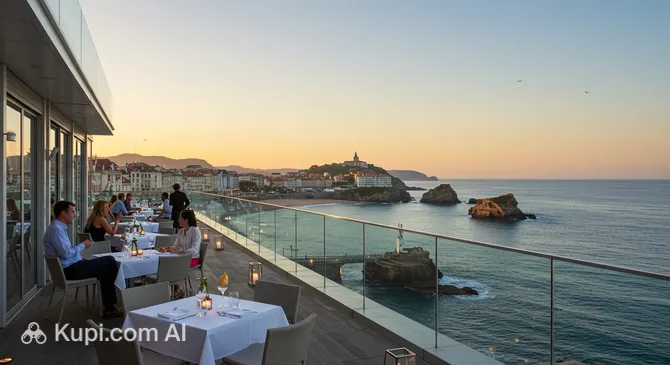
The Roof. Illustration.
Source: Kupi.com AI
Traveler photos:
For a dining experience that combines local flavors with spectacular scenery, you might visit The Roof. Establishments like this offer a modern twist on seaside dining, allowing you to enjoy fresh ingredients while soaking in the ocean views that make Biarritz so special. Whether you are looking for a casual beachside snack or a sophisticated dinner, the city's diverse culinary offerings promise to be a highlight of your trip.
Travel Tips
Welcome to Biarritz! To help you navigate this elegant coastal city with ease and make the most of your stay, here is a collection of practical advice designed to ensure a smooth and enjoyable experience.
Pack for the Atlantic Climate. The weather on the Basque Coast can be changeable, even in summer. Bring layers and a waterproof jacket or umbrella, as sudden showers are common due to the ocean influence. Since Biarritz is quite hilly and best explored on foot, comfortable walking shoes are essential. If you plan to visit the casino or upscale restaurants in the evening, pack some smart-casual attire, as the city retains a touch of its aristocratic flair.
Prioritize Walking and Public Transport. The city center is compact and very walkable, though be prepared for some steep inclines. For longer distances or trips to neighboring Anglet and Bayonne, the Txik Txak bus network is reliable and affordable. Renting a car is generally unnecessary if you are staying within the city, and parking can be difficult and expensive during the peak summer season. Ride-hailing apps and taxis are available if needed.
Managing Your Finances. The currency is the Euro (€). Credit and debit cards (Visa and Mastercard) are widely accepted in hotels, restaurants, and shops. However, it is wise to carry some cash for small purchases at markets or bakeries. Tipping is not mandatory in France as service is included in the bill, but leaving small change or rounding up for good service is a polite gesture appreciated by locals.
Health and Ocean Safety. Biarritz is a safe city, but the ocean demands respect. Always swim in designated areas supervised by lifeguards and pay attention to the flag system: a green flag means safe, yellow means caution, and red means swimming is prohibited due to dangerous currents or waves. Pharmacies are easily identified by a flashing green cross and are well-stocked for minor ailments; for emergencies, dial 112.
Language and Communication. French is the official language. While Biarritz is in the Basque Country and you may see bilingual signs, French is the primary language of daily interaction. English is widely spoken in the tourism and hospitality sectors. A polite "Bonjour" (Good morning) or "Bonsoir" (Good evening) when entering a shop or speaking to someone is the golden rule of interaction here. Free Wi-Fi is often available in public spaces and cafes.
Respect Local Etiquette. Politeness is highly valued. Always greet staff when entering a store and say "Au revoir" (Goodbye) when leaving. While Biarritz is a beach resort, it is considered impolite to walk around the town center, shops, or restaurants in swimwear or shirtless. Always cover up with a shirt, dress, or sarong once you leave the sand.
What to Avoid. Do not assume that because you are near the border, everyone speaks Spanish; addressing locals in French first is much better received. Also, avoid underestimating the tides if you are walking along the rocky coast or the beaches below the cliffs—the water can rise quickly and cut off your path.
Market Morning Ritual. For a truly local experience, visit the Halles de Biarritz (covered market) in the morning. It is the social hub of the city where you can buy fresh produce or enjoy a coffee and pintxos. It is busiest and most vibrant between 9:00 AM and 1:00 PM, offering a perfect glimpse into the daily life of the residents.
Armed with these tips, you are ready to embrace the unique rhythm of Biarritz, from its thundering waves to its sophisticated streets. Enjoy your journey through this captivating corner of the French Basque Country!
Entertainment & Nightlife
As the sun sets over the Atlantic, the atmosphere in Biarritz shifts from a laid-back surf town to a vibrant hub of evening entertainment. The nightlife here is a unique blend of Basque conviviality and Parisian chic, offering everything from relaxed beach bars to sophisticated nightclubs. The energy is concentrated primarily in the city center, particularly around the Quartier des Halles. This market district becomes the beating heart of the evening, where locals and visitors gather to enjoy tapas, wine, and spirited conversation that spills out onto the streets.
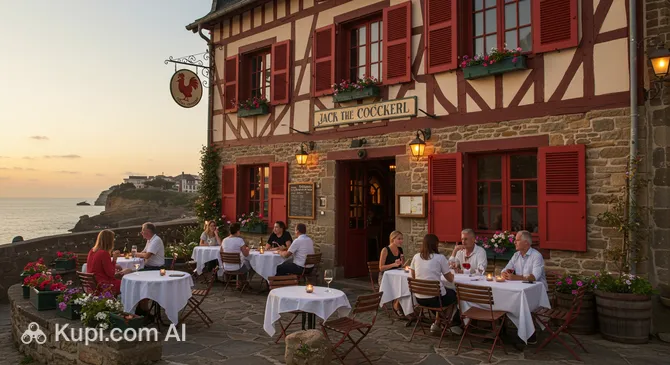
For those looking to start the evening with a festive vibe and ocean views, Jack the Cockerel is a popular choice. Located near the Grande Plage, this establishment combines the feel of a brasserie with a lively bar atmosphere, making it an excellent spot for sunset cocktails or a pre-party dinner. The crowd in Biarritz is diverse, ranging from surfers in casual wear to well-dressed vacationers, so a "smart casual" dress code is generally the safest bet for most venues.
Jack the Cockerel. Illustration.
Source: Kupi.com AI
Traveler photos:
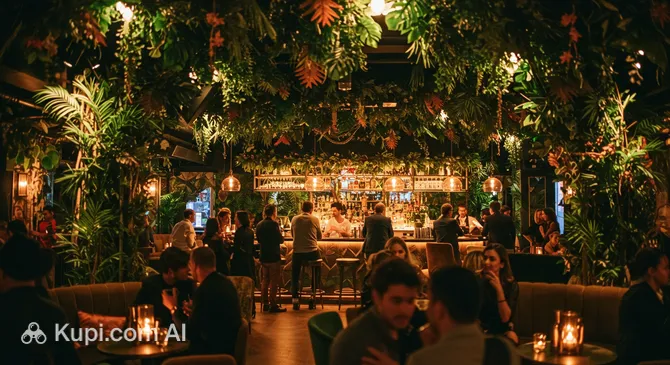
As the night progresses, the party often moves to the city's clubs. Jungle Café is a well-known spot for those who want to dance until the early hours. It typically features a mix of commercial and electronic music, attracting a younger, energetic crowd. If you prefer a more relaxed setting to enjoy a drink, L'Océan offers a pleasant environment to unwind. Most bars stay open until 2:00 AM, while nightclubs keep the energy going until dawn, usually opening their doors around 11:00 PM or midnight.
Jungle Café. Illustration.
Source: Kupi.com AI
Traveler photos:
Practicalities are important for a smooth night out. Biarritz is generally a very safe city for evening walks, especially in the busy center and along the illuminated promenades. However, if your accommodation is further out, or if you are visiting venues in neighboring Anglet like the Aperock Café - Beach Bar Anglet, it is advisable to take a taxi. Ride-hailing apps are available, but traditional taxis can also be found at designated ranks. Prices for drinks and entry fees can be on the higher side, comparable to major cities, particularly during the peak summer season.
Beyond the nightlife, Biarritz offers a variety of daytime entertainment options that add to its charm. The city is famous for its casinos, such as the Art Deco-style Casino Barrière, which sits right on the waterfront and offers slot machines, table games, and a theater. Cultural enthusiasts can visit the Gare du Midi, a converted railway station that now hosts ballet performances, concerts, and festivals. Whether you are catching a wave, watching a show, or dancing the night away, the city ensures there is never a dull moment.
Parks & Museums
While Biarritz is famous for its surf and imperial glamour, the city also boasts serene green spaces and a rich cultural tapestry that invites exploration. Beyond the bustling promenades, visitors can find tranquil gardens and fascinating museums that offer a deeper insight into the region's history and artistic heritage.
For a breath of fresh air combined with spectacular scenery, Côte des Basques Beach is more than just a surfing hotspot; it is a stunning natural amphitheater. Framed by light-colored cliffs and offering views that stretch all the way to the Spanish coast, it is a perfect place for a scenic walk at low tide. The natural setting here is rugged and wild, providing a stark, beautiful contrast to the manicured elegance of the town center.
Côte des Basques Beach. Illustration.
Source: Kupi.com AI
Traveler photos:
If you are looking for a traditional green escape, Lac Marion is a peaceful sanctuary located just a short distance from the city center. This 20-hectare protected natural area features a serene lake surrounded by an oak forest, making it an ideal spot for a quiet stroll, a family picnic, or a morning jog away from the ocean winds. It serves as the green lung of the city, offering a welcome respite with its shaded paths and playgrounds.
On the cultural front, Biarritz surprises visitors with the Musée Asiatica, which houses one of the top five collections of Asian art in Europe. This museum is a hidden gem that transports you far from the Basque coast, featuring an incredible array of artifacts, sculptures, and paintings from India, Nepal, Tibet, and China. It is a must-visit for art lovers, offering a quiet and contemplative atmosphere dedicated to the cultures of the East.
To understand the transformation of the city from a humble whaling port to the "Queen of Resorts," the Musée Historique de Biarritz is the place to go. Located in a former Anglican church, the museum chronicles the town's fascinating evolution through a collection of photographs, costumes, and paintings. It pays special attention to the imperial era of Napoleon III and Empress Eugénie, whose influence shaped the city's destiny.
Architectural enthusiasts should not miss the Chapelle Impériale, a stunning chapel built in 1864 for Empress Eugénie. Nestled quietly in a residential street, this monument blends Romanesque and Byzantine styles with Hispano-Moorish influences, featuring intricate tile work and a beautifully decorated interior that reflects the Empress's personal taste and devotion.
For a truly authentic experience, wander down to the Port des Pêcheurs (Fishermen's Port). Tucked away at the foot of the cliffs, this tiny village-within-a-city consists of small, rustic cottages once used by fishermen. It is a charming, lesser-known spot where you can enjoy fresh seafood in a simple, unpretentious setting, feeling worlds away from the grand palaces above.
Getting Around
Navigating Biarritz is relatively straightforward, as the city is compact and pedestrian-friendly, but a reliable public transport network is available for longer journeys or trips to neighboring towns. The primary mode of public transportation is the bus system operated by Txik Txak. This extensive network connects Biarritz seamlessly with the nearby cities of Anglet and Bayonne, as well as other villages in the Basque Country. The buses are modern, comfortable, and a convenient way to reach the train station or the airport without needing a car.
A standout feature for tourists visiting the city center is the system of free electric shuttles, known locally as Navettes Gratuites. These small, agile buses run on specific loops connecting the main parking areas outside the center to key locations like the Grande Plage, the Côte des Basques, and the commercial district. They are completely free to use, run frequently (often every 15 to 20 minutes), and are an excellent way to save your legs from the city's steep hills. You can simply hop on and off at designated stops without needing a ticket.
For the standard bus lines, the payment system is flexible and user-friendly. A single trip ticket typically costs around €1.20 if purchased in advance or slightly more if bought on board. Tickets are valid for one hour and allow for transfers. Travelers can opt for a reusable contactless card or use the official Txik Txak mobile app to buy and store tickets digitally, which is often the most convenient option. For those planning to explore extensively over a few days, 24-hour passes or 7-day passes offer great value and unlimited travel across the entire network.
Tickets can be purchased at automatic vending machines located at major stops (like the Tourist Office or town hall), at authorized retailers (often tobacconists), or directly via the mobile app. If you choose to buy a ticket from the driver, try to have the exact change. It is essential to validate your ticket or scan your card every time you board a bus, even when transferring. Operating hours generally run from early morning, around 6:00 or 7:00 AM, until about 8:30 or 9:00 PM. During the peak summer season, the network often extends its service with night lines to accommodate the lively evening crowd.
While buses are efficient, other alternatives are available. Taxis are present but can be quite expensive, and it is often necessary to book them in advance rather than hailing one on the street. Ride-sharing apps are operational but availability can vary. For a more active approach, electric bike rentals are becoming increasingly popular to tackle the city's undulating terrain. Additionally, the "Petit Train de Biarritz" offers a charming, albeit touristy, way to see the main sights along the coast with audio commentary, functioning more as a sightseeing loop than standard transport.
Accommodation
Accommodation in Biarritz caters to a wide spectrum of travelers, reflecting its dual identity as both a prestigious imperial resort and a laid-back surfing capital. The options range from opulent palaces and boutique hotels to charming guesthouses and budget-friendly surf hostels. While the city is famous for its luxury, there is a growing market for vacation rentals and mid-range apartments, particularly appealing to families and those staying for longer periods.
Choosing the right area depends largely on the type of experience you seek. The City Center and the neighborhoods around Les Halles are perfect for visitors who want to be in the thick of the action, close to restaurants, markets, and nightlife. For those prioritizing ocean views and immediate beach access, the seafront along the Grande Plage is the most coveted—and typically most expensive—location. Alternatively, the Côte des Basques area offers a more relaxed, surfer-friendly vibe, while the Saint-Charles district provides a quieter, more residential atmosphere just a short walk from the main attractions.
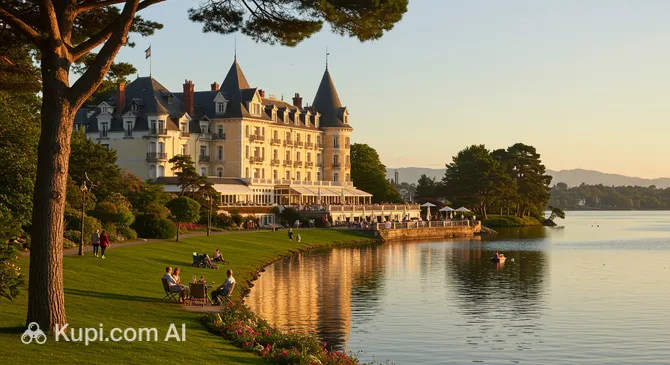
Biarritz is home to some truly legendary establishments that define the city's architectural landscape. The most iconic is undoubtedly the Hôtel du Palais Biarritz. As the only "Palace" distinction hotel on the Atlantic coast, it offers an immersion into the imperial history of France, having been the former residence of Napoleon III and Empress Eugénie. For a different kind of luxury set slightly apart from the coastal bustle, Brindos, Lake & Château provides a serene retreat. Located on a private lake, this resort combines Basque tradition with modern elegance, offering a peaceful sanctuary just minutes from the city center.
Brindos, Lake & Château. Illustration.
Source: Kupi.com AI
Traveler photos:
Booking Tip: Biarritz is an extremely popular summer destination, particularly in July and August. During these peak months, occupancy rates soar, and the best places sell out quickly. It is highly recommended to book your accommodation at least several months in advance to secure your preferred location and better rates. If you travel during the shoulder seasons of May-June or September-October, you will find more availability and often more competitive pricing.
Price Range and Booking: Generally, prices in Biarritz are higher than the French average due to its premium status. Budget options and hostels can range from €30 to €80 per night, while mid-range hotels typically cost between €100 and €250. Luxury stays can easily exceed €400 per night, especially in high season. Most accommodations can be booked via major online travel platforms, though booking directly through a hotel's website can sometimes offer perks like free breakfast or better cancellation policies.
Nearby Cities
For those looking to explore the surroundings, Biarritz serves as an excellent base for day trips to several interesting nearby locations:
Just a few kilometers away lies Bayonne, the historical and cultural capital of the French Basque Country. This vibrant city is famous for its narrow medieval streets, half-timbered houses, and the magnificent Gothic Cathedral of Sainte-Marie, a UNESCO World Heritage site. It is also a haven for food lovers, celebrated globally for its cured ham and its long tradition of chocolate making.
Directly adjacent to Biarritz is Anglet, often referred to as "Little California" due to its extensive surfing culture. It offers a more natural setting with eleven distinct beaches and the vast Chiberta Forest, which provides shaded trails for walking and cycling. It is the perfect spot for those who want to combine ocean activities with a relaxing day in nature.
For a trip further inland, Pau offers a regal change of scenery with its breathtaking views of the Pyrenees mountains. Visitors can stroll along the famous Boulevard des Pyrénées or explore the Château de Pau, the birthplace of King Henry IV, to immerse themselves in the region's royal history.
These nearby destinations offer a glimpse into the diverse culture and landscapes of the region.
Shopping & Souvenirs
Shopping in Biarritz is a delightful reflection of the city's dual personality: one part elegant imperial resort, one part laid-back surf capital. Visitors can easily transition from browsing high-end luxury boutiques to exploring trendy surf shops within a few blocks. Whether you are looking for haute couture, artisanal Basque crafts, or the latest beachwear, the city offers a diverse retail experience that caters to both sophisticated tastes and casual needs.
The heart of the shopping district is centered around Place Georges Clemenceau and the adjacent streets, such as Rue Mazagran. This area serves as the city's upscale hub, where you will find prestigious French fashion houses, independent designer boutiques, and fine jewelry stores. Just a short walk away, Rue Gambetta offers a different vibe; it is lined with charming interior design shops, delicatessens selling regional products, and specialized boutiques that feel more bohemian and local. It is the perfect street for a leisurely stroll to discover unique items that you won't find on a standard high street.
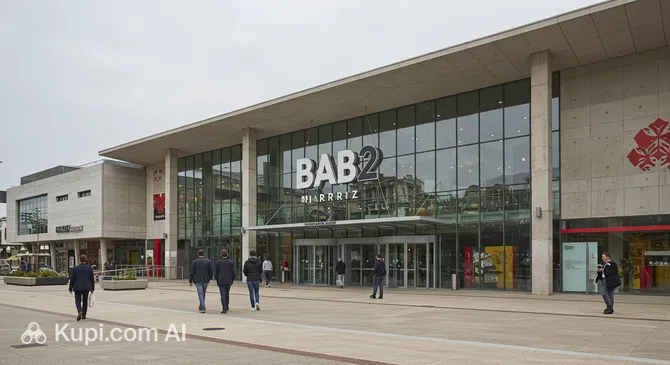
For those who prefer a comprehensive shopping experience under one roof, the region offers larger commercial centers. The most prominent nearby is the BAB2 Shopping Center. Although technically located in the neighboring municipality of Anglet, it is a major retail destination for Biarritz residents and visitors alike. It houses a vast hypermarket and over 100 shops, ranging from international fashion chains to beauty stores and electronics retailers, making it a convenient stop for practical needs or a rainy day activity.
BAB2 Shopping Center. Illustration.
Source: Kupi.com AI
Traveler photos:
Markets are an essential part of the local lifestyle, and the Halles de Biarritz is the undisputed star. While it is a famous spot for dining, it is also the best place to shop for edible souvenirs. Here, you can purchase vacuum-packed Bayonne ham, jars of Espelette pepper, and fresh sheep's cheese directly from producers. In addition to food, seasonal craft markets and flea markets often pop up around the city, particularly during the summer months, offering antiques and handmade goods.
When it comes to souvenirs, Biarritz offers high-quality local craftsmanship rather than just generic trinkets. Basque linen (linge basque) is a top choice; these colorful, striped textiles are used for tablecloths, tea towels, and bags. Another iconic buy is a pair of espadrilles, the traditional rope-soled shoes of the region, which are hand-stitched by local artisans. For those with a sweet tooth, boxes of Basque chocolates or the famous macarons from historic confectioners like Maison Adam are excellent gifts to bring home.
Store opening hours generally run from 10:00 AM to 7:00 PM. While major chains and department stores in the city center often stay open throughout the day, smaller independent boutiques may close for a lunch break between 12:30 PM and 2:30 PM. On Sundays, many shops in the tourist center remain open, especially during the summer season, though hours may be reduced. Payment is easy, with credit and debit cards (Visa and Mastercard) widely accepted, though carrying some cash is advisable for small purchases at markets.
Tourists residing outside the European Union are eligible for a VAT refund (détaxe) on purchases. If you spend more than a certain threshold (typically around €100) in a single store, you can ask the retailer for a tax-free form. This allows you to claim a refund on the Value Added Tax upon your departure from the EU, provided you show the goods and documents to customs.