Support

Bilbao

About

Bilbao is a captivating metropolis in the northern part of Spain, serving as the vibrant heart of the Basque Country. Once known primarily as an industrial port, the city has undergone a remarkable transformation into a world-class center for art, architecture, and design. Nestled between lush green mountains and the estuary of the Nervión River, Bilbao offers a unique atmosphere where avant-garde modernity seamlessly blends with deep-rooted traditions.

With a metropolitan population of approximately 775,000 inhabitants, it is a bustling hub that feels both energetic and welcoming. The city's location in the province of Biscay ensures a mild, oceanic climate, which keeps the surrounding landscapes beautifully verdant throughout the year. Visitors interested in the past can explore the history of Bilbao to understand how it evolved from a medieval commercial settlement into the dynamic cultural destination it is today.
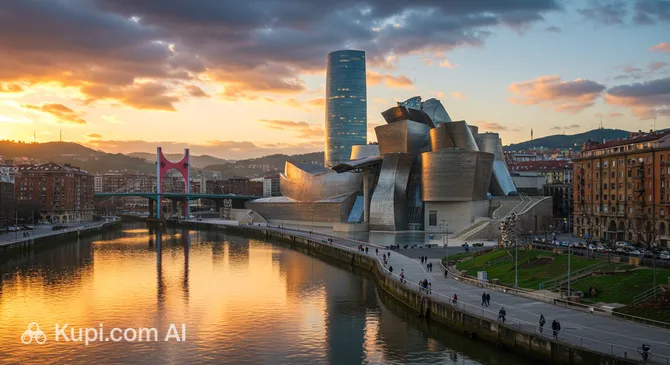
Bilbao. Source: Kupi.Binoculars

The city's most iconic landmark is undoubtedly the Guggenheim Museum, a titanium-clad masterpiece designed by Frank Gehry that has become a symbol of the city's renewal. Beyond modern architecture, the charming Casco Viejo (Old Town) invites travelers to get lost in its "Seven Streets," which are packed with historic buildings and lively bars serving famous Basque pintxos. For those seeking the best views, a ride on the Artxanda Funicular offers a spectacular panorama of the city nestled within the valley.

Whether you are drawn by world-class museums, exceptional cuisine, or the scenic beauty of the Basque coast, Bilbao promises an unforgettable experience. It is a city that constantly reinvents itself while staying true to its identity, making it a perfect stop for your next travel adventure.

Weather Overview

Bilbao experiences a mild oceanic climate, ensuring that extreme temperatures are rare, although grey skies and showers are quite common. The city's proximity to the sea moderates the weather, creating a generally temperate environment year-round. To help plan your packing list, it is helpful to review the current weather in Bilbao before your trip.

Summers are comfortable and warm without being scorching. August is typically the warmest month, with average temperatures around 20.2°C and highs reaching 22.8°C. While this is the driest period of the year, rain is still a regular occurrence, with July and August seeing between 11 and 13 wet days.

Winters are cool and damp. January sees the lowest temperatures, averaging 8.9°C, with minimums hovering around 6.7°C. Rainfall is most prevalent during the cooler months and transitional seasons; January, March, and November each average about 18 wet days, making a sturdy umbrella an essential travel accessory.

Interesting Facts

Beyond its famous titanium museum and delicious cuisine, Bilbao holds many fascinating secrets and quirky details that often escape the casual observer. From architectural mishaps to heartwarming sporting traditions, the city has a unique character defined by these lesser-known stories.

Puppy. Source: Kupi.Binoculars
  • The giant floral dog known as Puppy, standing guard outside the Guggenheim, was originally intended to be a temporary installation for the museum's opening. The citizens of Bilbao fell in love with the West Highland Terrier sculpture so deeply that the city acquired it permanently; today, its "coat" consists of nearly 40,000 fresh flowers that are meticulously replanted twice a year to match the seasons.

  • Football is treated with religious reverence here, which is why the San Mamés Stadium is widely known as "The Cathedral." A unique and enduring tradition dictates that when a visiting team plays at this stadium for the very first time, their captain must place a bouquet of flowers at the bust of Rafael Moreno "Pichichi," a legendary striker from the early 20th century, to pay their respects.

  • The stunning Zubizuri Bridge, designed by Santiago Calatrava, is famous for a slight practical oversight regarding the local climate. Its original glass deck became dangerously slippery during Bilbao's frequent rainy days, eventually forcing the city to cover the translucent surface with a black non-slip carpet to ensure pedestrian safety.

  • The entrances to the city's metro system are affectionately known by locals as "Fosteritos" in honor of their architect, Sir Norman Foster. These distinctive curved glass structures, which resemble the shell of a crustacean rising from the ground, are celebrated as masterpieces of modern design that bring natural light into the underground stations.

How to Get There

Reaching the vibrant capital of Biscay is quite convenient thanks to its well-connected transport infrastructure. Whether arriving by air or rail, visitors have multiple entry points to choose from. For a comprehensive overview of all travel options, routes, and tips, you can read more about how to get to Bilbao in our detailed guide.

The most direct way to arrive is via Bilbao Airport (BIO), which serves as the main international gateway to the region. Located just 4.6 km from the city center, it is a significant hub handling millions of passengers annually. The short journey into town is quick and efficient, typically taking around 25 to 30 minutes by taxi or shuttle bus.

Travelers may also consider alternative airports in neighboring cities if direct flights to Bilbao are unavailable. Vitoria Airport (VIT) is located in Vitoria-Gasteiz, approximately 45.6 km away; a transfer from there takes roughly 90 minutes. Another option is Santander Airport (SDR) in Santander, which is about 74.3 km from Bilbao, with a travel time of approximately 2 hours and 10 minutes by road.

For clarity, here is a summary of the main airports:

Airport Name City Passenger Traffic Km from City
Bilbao Airport Bilbao Large 4.6
Santander Airport Santander Medium 74.3
Biarritz - Anglet - Bayonne Airport Biarritz Medium 116.7
San Sebastian Airport San Sebastian Small 93.4
Vitoria Airport Vitoria-Gasteiz Small 45.6

Rail travel is another excellent way to reach the city, offering scenic views of the Basque countryside. The primary hub is Abando Railway Station (YJI), conveniently situated right in Bilbao, just 0.6 km from the city center. As a major station with high passenger traffic, it connects the city to the rest of Spain efficiently. Travelers arriving here are immediately in the heart of the action, with easy access to local transport and hotels.

Below is a list of the nearest railway stations:

Station City Passenger Traffic Km to Center
Abando Railway Station Bilbao Large 0.6
Santander Railway Station Santander Medium 74.4
San Sebastian Railway Station San Sebastian Medium 78.0
Vitoria Railway Station Vitoria-Gasteiz Small 51.5
Logroño Railway Station Logroño Small 98.2

Main Attractions

Bilbao is a city where culture and history converge, offering visitors a rich tapestry of experiences ranging from avant-garde art to medieval heritage. While the city is famous for its industrial transformation, its specific landmarks tell the deeper story of its identity. Exploring these sites provides a perfect balance between the ultra-modern and the deeply traditional.

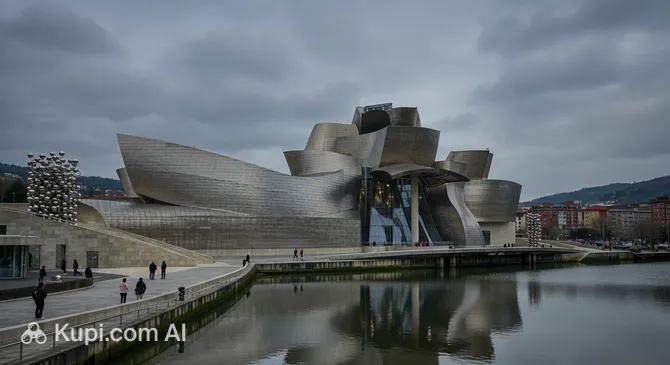
No visit to the city is complete without standing before the Guggenheim Museum Bilbao. This architectural marvel, designed by Frank Gehry, is more than just a museum; it is a global icon of deconstructivism that revitalized the entire region. The titanium curves of the exterior catch the light in mesmerizing ways, while the interior houses a world-class collection of modern and contemporary art. Tourists are drawn here not only for the exhibitions but for the building itself, which stands as a monumental sculpture along the riverbank.

Guggenheim Museum Bilbao. Source: Kupi.Binoculars

For art lovers who wish to delve deeper, the Bilbao Fine Arts Museum is an essential stop. Located near the Doña Casilda Iturrizar Park, it is considered one of the most important art museums in Spain. Its vast collection spans from the 12th century to the present day, featuring works by masters such as El Greco, Goya, and Bacon, alongside prominent Basque artists. It offers a quieter, more comprehensive artistic journey that complements the modern focus of its famous neighbor.

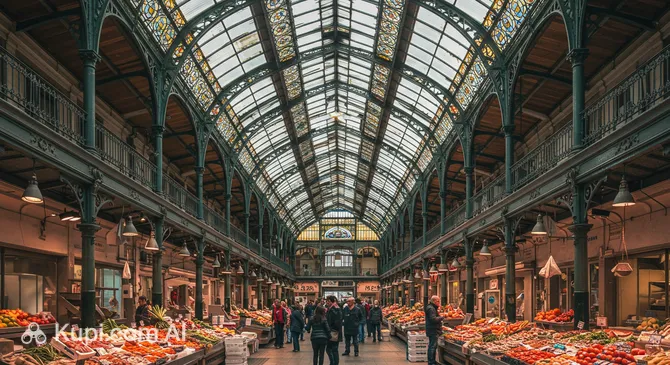
Gastronomy is central to Basque culture, and the Ribera Market is its beating heart. recognized as the largest covered market in Europe, this Art Deco building sits right on the edge of the estuary. It is a vibrant sensory experience where locals shop for fresh seafood, meats, and produce. For tourists, the highlight is the gastro-bars located within the market, where you can sample delicious pintxos made from the very ingredients sold at the stalls, all while enjoying views of the river.

Ribera Market. Source: Kupi.Binoculars

In the heart of the Casco Viejo (Old Town) stands the Santiago Cathedral of Bilbao, the city's oldest building. Dedicated to the Apostle Saint James, it is a significant stop on the Northern Way of the Camino de Santiago. Its Gothic architecture, with a beautiful 19th-century facade and tower, offers a serene retreat from the bustling streets. Visitors can admire the stunning cloister and the intricate stone carvings that whisper tales of the city's medieval past.

Local Cuisine

The culinary scene in Bilbao is widely regarded as one of the most exciting in the world, serving as a cornerstone of Basque identity. Food here is not merely sustenance; it is a social ritual and a source of immense local pride. The most famous entry point into this gastronomic culture is the pintxo. Unlike typical tapas, pintxos are elaborate, bite-sized culinary creations often served on a slice of bread and held together with a toothpick. Bars in the city center display counters stacked high with these treasures, ranging from the classic Gilda (olive, anchovy, and pickled pepper) to avant-garde miniature dishes.

For a more substantial meal, seafood is a dominant force, reflecting the city's proximity to the Cantabrian Sea. The most iconic ingredient is salt cod, or bacalao, prepared in distinctive local styles. You must try Bacalao al pil-pil, a dish where the fish is cooked slowly in olive oil and garlic until the natural gelatin creates a rich, creamy emulsion. Another favorite is Bacalao a la Vizcaína, which smothers the cod in a deep red sauce made from red onions and choricero peppers, a staple of Biscayan cooking.

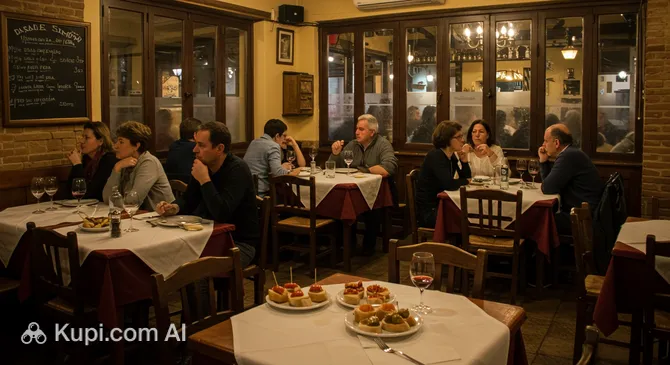
Meat lovers will find their paradise in the traditional asadors (steakhouses) that dot the region. The highlight is the txuleta, a massive, dry-aged rib-eye steak grilled over wood or charcoal to perfection. Places like Asador Txakoli Simón are legendary for offering these high-quality cuts in a rustic setting, often accompanied by fresh salads and peppers.

Asador Txakoli Simón. Source: Kupi.Binoculars

To wash down these rich flavors, locals turn to Txakoli, a slightly sparkling, very dry white wine produced in the vineyards surrounding Bilbao. It is traditionally poured from a height to aerate the wine and release its aromas. For a non-alcoholic option or a casual street drink, you might encounter Kalimotxo, a surprisingly popular mixture of red wine and cola that originated in the Basque Country.

Those seeking a blend of history and fine dining should consider visiting Kate Zaharra. Located in a traditional baserri (farmhouse) on the distinct hillsides, it offers classic Basque dishes with stunning views over the city. Whether you are hopping from bar to bar for pintxos or sitting down for a multi-course feast at a place like Amaren Restaurant, renowned for its ox meat, eating in Bilbao is an unforgettable experience.

Travel Tips

Welcome to Bilbao! To ensure your visit to this dynamic Basque city is as seamless as it is memorable, we have compiled a list of essential travel tips that will help you navigate local customs and logistics with ease.

  1. Clothing and Gear: Bilbao is famous for its mild but unpredictable weather, often characterized by sirimiri (a fine, light rain). Always pack a sturdy umbrella and a waterproof jacket, even in summer. Since the city, especially the Casco Viejo, is best explored on foot, bring comfortable, non-slip walking shoes to handle cobblestones. If you plan to visit religious sites like the Santiago Cathedral, dress modestly by covering your shoulders and knees.
  2. Transportation: The city is very walkable, but for longer distances, the public transport system is excellent. The Metro Bilbao, designed by Norman Foster, is efficient and clean. To save money, purchase a rechargeable Barik card, which can be used on the metro, trams, and Bilbobus. Taxis are safe and reliable, but ride-hailing apps are less dominant here than in other major capitals. You generally do not need to rent a car unless you plan to explore the surrounding Basque countryside.
  3. Finances: The currency is the Euro (€). While credit and debit cards (Visa and Mastercard) are widely accepted in most restaurants and shops, it is highly recommended to carry some cash, particularly small bills and coins. Many smaller, traditional pintxo bars may prefer cash for small transactions. Tipping is not mandatory; locals typically round up the bill or leave some loose change for good service, but large tips are not expected.
  4. Health and Safety: Bilbao is generally a very safe city for tourists. Pharmacies are marked with a flashing green cross; if you need one after hours, look for a list of farmacias de guardia (on-duty pharmacies) displayed on the door of any pharmacy. For general emergencies, dial 112. While violent crime is rare, exercise standard caution with your belongings in crowded tourist areas like the Guggenheim surroundings or during festivals.
  5. Communication: The two official languages are Spanish (Castilian) and Basque (Euskera). While everyone speaks Spanish, locals appreciate it if you know a few words of Euskera, such as Kaixo (Hello) and Eskerrik asko (Thank you). English is widely spoken in hotels, major museums, and tourist-focused restaurants, but may be less common in traditional neighborhood bars or older shops.
  6. Local Etiquette: Dining times in Bilbao adhere to Spanish norms, meaning they are much later than in many other countries. Lunch is typically served between 2:00 PM and 3:30 PM, and dinner often doesn't start until 9:00 PM or later. When eating pintxos, the custom is to stand at the bar or high tables, have one or two snacks with a small drink (a zurito of beer or txikito of wine), and then move on to the next bar—a practice known as txikiteo.
  7. What to Avoid: Avoid discussing sensitive political topics regarding Basque independence or identity unless you are well-versed in the nuances; it is a complex subject for many locals. Additionally, do not expect to find dinner service at 6:00 PM or 7:00 PM; most kitchens will be closed, and you will likely have to rely on cold pintxos until the evening shift begins.
  8. Sunday Planning: Be aware that Sundays are traditionally quiet days for commerce. Most shops, supermarkets, and boutiques will be closed all day. However, museums usually remain open, and the atmosphere in the Old Town bars is lively as families gather for their Sunday appetizers. Plan your shopping for Saturday and reserve Sunday for culture and gastronomy.

By keeping these practical tips in mind, you will be well-prepared to embrace the unique rhythm of Bilbao. Enjoy the incredible food, the stunning architecture, and the warm hospitality of the Basque people!

Entertainment & Nightlife

Bilbao's nightlife is a vibrant extension of its social culture, offering everything from relaxed evenings of pintxos hopping to energetic nights on the dance floor. The city comes alive after sunset, with distinct neighborhoods catering to different moods and crowds. The atmosphere is generally welcoming and safe, characterized by the Basque tradition of socializing in the streets and moving from venue to venue rather than staying in one place all night.

The heart of the action often begins in the Casco Viejo, particularly around the Plaza Nueva and the "Seven Streets." Here, the evening starts with txikiteo—hopping between bars for small drinks and snacks. As the night progresses, the crowds move towards Indautxu, a district known for its upscale atmosphere and bustling nightlife streets like Calle García Rivero. For those seeking a more alternative and bohemian vibe, the Bilbao La Vieja and San Francisco districts offer trendy bars and cultural spaces, though visitors should remain attentive to their surroundings in these areas late at night.

For those looking to dance until dawn, the city offers several iconic venues. Holiday Discotheque is a staple of Bilbao's night scene, featuring multiple rooms with different musical styles to suit various tastes. It is a popular spot where locals and tourists mingle, often staying open until the early morning hours.

Holiday Discotheque. Source: Kupi.Binoculars

Another excellent option for a lively evening is Grafit Café, known for its rock and indie atmosphere. It provides a great alternative to the mainstream clubs and is perfect for enjoying drinks with friends in a spirited setting. If you prefer a more relaxed start to your evening with a distinct flavor, Kalí Órexi offers a delightful spot to unwind before heading out to the busier dance floors.

Practical advice for enjoying Bilbao at night includes adjusting to the local schedule. The real party typically doesn't start until well after midnight, with clubs filling up around 2:00 AM. Thursday nights are particularly popular among university students, while Fridays and Saturdays draw a mixed crowd of all ages. Dress codes are generally smart-casual; you don't need to be overly formal, but looking neat is appreciated. Prices are reasonable compared to other major European cities, with beers and mixed drinks being quite affordable.

While nightlife is a major draw, Bilbao also offers plenty of daytime entertainment to fill the hours before sunset. Beyond the famous museums and theaters, families and thrill-seekers can burn off energy at JumpYard Bilbao, an indoor activity park that provides fun for all ages.

Regarding safety, Bilbao is secure for night walks, but standard precautions apply. The city center and Indautxu are very safe, while it is advisable to stick to well-lit main streets if exploring the San Francisco neighborhood late at night. Public transport, including the metro, runs late on weekends, and taxis are readily available at designated ranks or can be hailed by phone, ensuring a safe trip back to your accommodation.

Parks & Museums

Bilbao offers a refreshing balance between urban energy and natural tranquility, with a wealth of green spaces and cultural institutions that extend far beyond its most famous landmarks. Exploring the city's parks and specialized museums allows visitors to connect with the local lifestyle and delve deeper into the maritime and historical roots of the Basque Country.

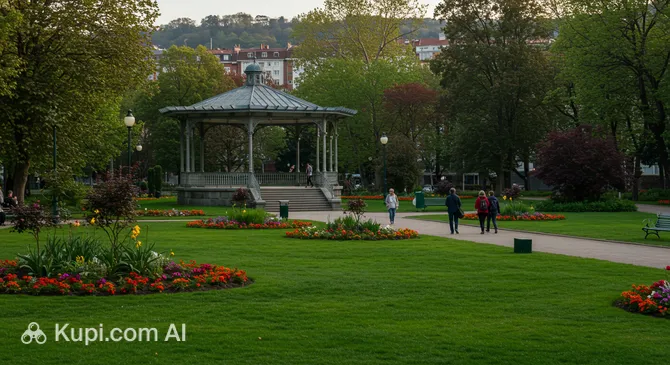
The city's principal green haven is Doña Casilda Iturrizar Park, affectionately known as the "green lung" of Bilbao. Designed in a romantic English style, this century-old park features winding paths, a classical carousel, and a picturesque duck pond that is a favorite among families. It serves as a peaceful retreat right next to the Fine Arts Museum, where locals gather to relax on the lawns or enjoy a coffee under the shade of ancient trees.

Doña Casilda Iturrizar Park. Source: Kupi.Binoculars

For a quieter break in the city center, the Albia Gardens provide a charming respite in the Abando district. This leafy square is surrounded by historic buildings and features statues of prominent local figures. It is an ideal spot to sit on a bench and admire the surrounding architecture, including the nearby Church of San Vicente, offering a moment of calm amidst the bustling shopping streets.

While the Guggenheim draws the crowds, the Itsasmuseum (Bilbao Maritime Museum) tells the essential story of the city's identity. Located on the site of the former Euskalduna shipyards, this museum explores the maritime history and industrial heritage that shaped Bilbao. Visitors can explore outdoor exhibits, including the iconic red "Carola" crane, and learn about the brave sailors and shipbuilders of the estuary.

History enthusiasts should not miss the Archaeological Museum of Biscay in the Old Town. Housed in the former station of Lezama, it takes you on a journey through the history of the region, from prehistoric times to the modern era. The exhibits are engaging and well-curated, offering context to the ancient traditions and settlements of the Basque territory.

For a truly atmospheric experience, seek out the Museum of Sacred Art of Bilbao. Located in a restored 16th-century convent, the building itself is as impressive as the collection of silverware, painting, and sculpture it houses. The tranquil cloister inside offers a hidden silence that feels worlds away from the modern city outside.

Getting Around

The public transport system in Bilbao is widely recognized for being efficient, modern, and exceptionally clean. Navigating the city is straightforward thanks to an integrated network that connects the city center with the suburbs and nearby coastal towns. The backbone of the system is Metro Bilbao, designed by the renowned architect Sir Norman Foster. Its stations are easily identifiable by their glass entrances, affectionately called "Fosteritos," which lead down to spacious, well-lit platforms. The metro consists of three lines that cover both banks of the estuary, making it the fastest way to travel between major districts and even to the beach.

For a more scenic journey, the Bilbao Tram (Euskotren) is an excellent option for tourists. The bright green trams glide along a single line that traces the riverbank, offering picturesque views of major landmarks such as the Guggenheim Museum, the Zubizuri Bridge, and the Old Town. It is a relaxed way to sightsee while moving between attractions. Additionally, the city is served by an extensive bus network. Bilbobus (red buses) operates within the city limits, reaching neighborhoods not covered by the metro, while Bizkaibus (green or yellow buses) connects Bilbao with the wider province, including the airport and surrounding towns.

A unique feature of the city's transport is the Artxanda Funicular. This historic cable railway, dating back to 1915, connects the city center near the Zubizuri Bridge to the summit of Mount Artxanda. The ride takes just a few minutes and rewards visitors with the most spectacular panoramic views of Bilbao. It functions as part of the regular public transport network, making it an affordable and essential experience for any visitor.

To use public transport, the most practical and cost-effective method is to purchase a Barik card. This rechargeable contactless card works across all modes of transport: the metro, tram, buses, the funicular, and even the Vizcaya Bridge gondola. While single tickets are available, they are significantly more expensive and less convenient. You can buy a Barik card at ticket machines in any metro station; the card itself costs a small fee, and you can top it up with credit as needed. One great advantage for groups is that a single Barik card can be used by multiple people on most services, provided you validate it for each person.

Validating your ticket is simple but varies slightly by mode. On the metro and train lines, you must tap your card at the turnstiles both when entering and exiting the station to calculate the correct fare. On trams and buses, you generally tap on entry; however, on regional Bizkaibus lines that cross zones, you may also need to tap out. Always check the signs or watch what locals do. Ticket inspectors are common, so ensure you have validated your journey to avoid fines.

Public transport generally operates from around 6:00 AM to 11:00 PM. On weekends, service hours are extended. The metro offers a special night service known as "Gau Txori" on Fridays and Saturdays, running later into the night or even 24 hours during major festivals like Aste Nagusia. Buses also have specific night lines for late-night revelers.

If you prefer alternatives, taxis are readily available and safe. They are white with a red stripe on the side and can be found at designated ranks or hailed on the street when the green light is on. Ride-sharing apps operate in the city but are less dominant than traditional taxis. For short distances, Bilbao is incredibly walkable, and the municipality offers a bike rental service, though many tourists find that exploring on foot is the best way to soak up the atmosphere of the city.

Accommodation

Where to Stay:

Finding the perfect place to stay in Bilbao is relatively easy, as the city offers a wide spectrum of accommodation options to suit every preference and budget. From sleek, design-forward hotels located near the river to charming boutique guesthouses tucked away in the historic quarter, visitors will find high-quality hospitality throughout the city. Whether you are looking for luxury lodging with views of the Guggenheim or functional apartments for a longer stay, Bilbao’s compact nature ensures you are never far from the main attractions.

The most popular area for tourists is undoubtedly the Abando and Indautxu districts (the Ensanche). This modern part of the city is home to the main shopping streets, the Guggenheim Museum, and many of the city's top restaurants. Staying here places you in the center of the action with excellent transport links. For those who prefer a more atmospheric and lively setting, the Casco Viejo (Old Town) is a fantastic choice. Here, you will be surrounded by medieval streets and the best pintxo bars, though it can be a bit noisier at night due to the vibrant street life.

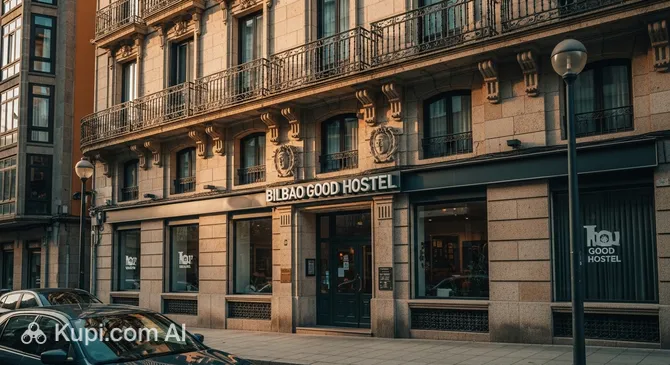
For travelers keeping an eye on their budget or seeking a more communal atmosphere, the city has excellent hostels and budget accommodations. A notable example is Bilbao Good Hostel, which offers a comfortable and accessible base for exploring the city without breaking the bank. Such places are often situated in convenient neighborhoods, allowing easy access to both the historic center and the newer districts.

Bilbao Good Hostel. Source: Kupi.Binoculars

Booking Tips: Bilbao has become a very popular destination, especially during the summer months and major events like the Aste Nagusia festival in August. It is highly recommended to book your accommodation well in advance—ideally two to three months prior—to secure the best rates and availability. During the off-peak season (late autumn and winter), it is easier to find last-minute deals.

Price Range and Methods: Prices in Bilbao are generally reasonable compared to other major European cultural capitals. Budget options and hostels typically range from €25 to €50 per night, while mid-range hotels usually cost between €80 and €150. Luxury establishments can go upwards of €200 per night. The most common way to secure a room is through major online booking platforms, though booking directly through a hotel's website can sometimes yield special offers or breakfast inclusions.

Nearby Cities

For those looking to explore the surroundings, Bilbao serves as an excellent base for day trips to several interesting nearby locations. The region offers a mix of industrial heritage, coastal beauty, and historic charm, all within a short distance of the city center.

One of the most essential stops is Portugalete, located at the mouth of the estuary. It is world-famous for the Vizcaya Bridge (Puente Colgante), a UNESCO World Heritage site and the oldest transporter bridge in the world. Visitors can cross the river in its hanging gondola or take an elevator to the upper walkway for panoramic views. Further along the coast lies Castro Urdiales, a picturesque fishing town known for its stunning Gothic church, medieval castle, and exceptional seafood restaurants, making it a perfect spot for a relaxing seaside lunch.

City Population Distance (km)
Barakaldo 100,907 6
Santurtzi 46,085 11
Portugalete 45,285 9
Castro Urdiales 33,109 26
Durango 29,935 27

These nearby destinations offer a glimpse into the diverse culture and landscapes of the region, allowing travelers to experience the broader Basque and Cantabrian atmosphere beyond the metropolis.

Shopping & Souvenirs

Shopping in Bilbao offers a delightful blend of cosmopolitan elegance and traditional Basque charm. The city is a fantastic destination for retail therapy, ranging from high-end international fashion houses to centuries-old family-run boutiques. Whether you are looking for the latest trends, unique local crafts, or gastronomic treasures, the city's compact size makes it easy to explore its diverse commercial districts on foot.

The premier destination for fashion lovers is the Gran Vía Don Diego López de Haro, often simply called the Gran Vía. Located in the Ensanche district, this wide, tree-lined boulevard serves as the city's "Golden Mile," hosting prestigious luxury brands, popular high-street chains, and elegant architecture. Parallel to this, streets like Calle Ercilla and Calle Rodríguez Arias offer a high concentration of shoe shops and exclusive boutiques, making the area a bustling hub of activity throughout the day.

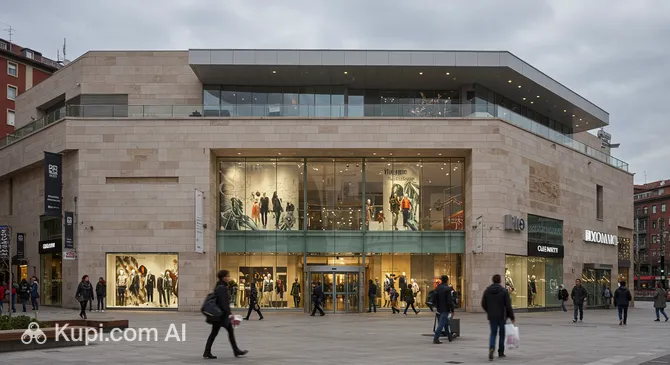
For those who prefer the convenience of having everything under one roof, the city center features several excellent options. A prominent stop is the El Corte Inglés Bilbao, a massive department store located right on the Gran Vía. It is a landmark in itself, offering everything from designer clothing and electronics to a gourmet food club. Nearby, you can find the Gran Vía Shopping Mall, which provides a modern shopping experience with a variety of stores and entertainment options in the heart of the city.

El Corte Inglés Bilbao. Source: Kupi.Binoculars

In contrast to the modern avenues, the Casco Viejo (Old Town) offers a more traditional and bohemian shopping experience. Its "Seven Streets" are lined with small, independent shops selling antiques, books, and local handicrafts. This is also where you will find the best gastronomic shopping. The Ribera Market is an essential stop for foodies wanting to buy vacuum-packed local delicacies. On Sundays, the Plaza Nueva often hosts a collectors' market for coins, stamps, and vintage items, while the Arenal area features a colorful flower market.

When it comes to souvenirs, Bilbao offers items that are deeply rooted in Basque culture. Culinary gifts are the most popular choice; look for bottles of Txakoli (local white wine), jars of Bonito del Norte (white tuna), or a wedge of smoked Idiazabal cheese. For something wearable, a traditional Basque beret, known as a txapela, is a classic and stylish keepsake. You might also find jewelry featuring the Eguzkilore (sun flower), a traditional symbol of protection in Basque mythology.

Store opening hours in Bilbao typically follow the Spanish rhythm. Small boutiques and traditional shops usually open from 10:00 AM to 1:30 PM and reopen from 4:30 PM to 8:00 PM. However, major chains, department stores, and shopping malls stay open continuously from 10:00 AM to 9:00 PM. Most shops are closed on Sundays, except for bakeries and some souvenir stores in tourist areas.

Credit and debit cards are widely accepted everywhere, even for small amounts. For international travelers from outside the European Union, Spain offers a VAT refund (Tax-Free) on purchases. Look for the "Tax Free" sign in store windows and ask for a DIVA form at the checkout, which you can validate digitally at the airport before leaving the country.

Reached the end of the page?

That means the route is fully explored