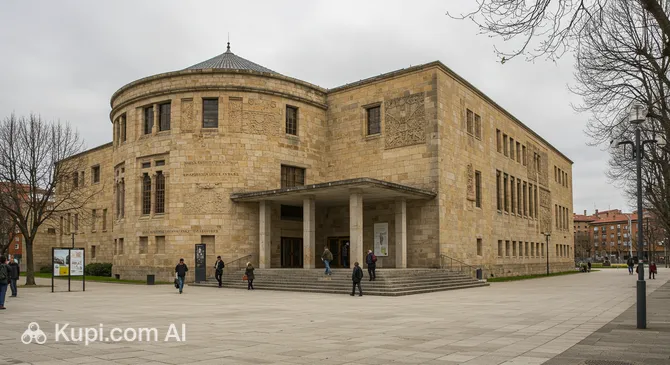
Oviedo, the elegant capital of the Principality of Asturias, is a captivating destination located in the verdant north of Spain. Known for its pristine streets, pedestrian-friendly center, and sophisticated atmosphere, the city offers a delightful contrast to the bustling coastal resorts of the region. With a population of approximately 217,000 inhabitants, Oviedo maintains a welcoming, community-focused vibe while providing all the cultural and modern amenities of a major urban hub.
Geographically, the city is situated on a rise within the Asturian basin, surrounded by rolling green hills and protected by the dramatic backdrop of the Cantabrian Mountains. This setting ensures a temperate oceanic climate, contributing to the lush landscapes that define "Green Spain." The history of Oviedo is particularly significant as the origin of the Camino de Santiago; it was from here that King Alfonso II the Chaste embarked on the very first pilgrimage to Santiago de Compostela, establishing the route known as the Camino Primitivo.
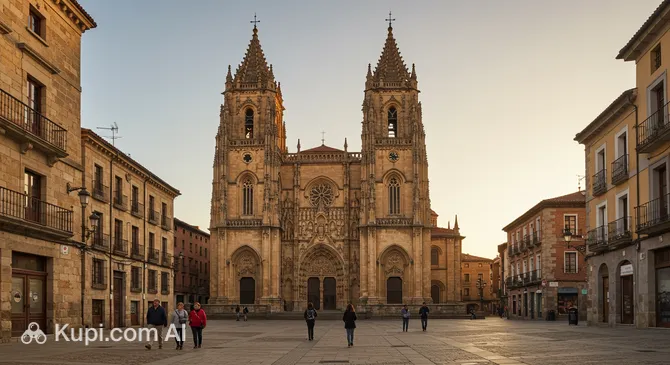
Visitors are often struck by the city's remarkable architectural heritage. A must-see is the Cathedral of San Salvador, a stunning Gothic complex that houses the Holy Chamber and ancient relics. Just outside the city center, the Pre-Romanesque churches of Santa María del Naranco and San Miguel de Lillo offer a glimpse into the 9th century and are recognized as UNESCO World Heritage Sites. Whether you are exploring the statues scattered throughout the city—including a tribute to Woody Allen—or enjoying the local cider culture, Oviedo invites you to experience its unique charm and timeless beauty.
Weather Overview
Oviedo experiences a temperate oceanic climate, typical of the "Green Spain" region, which ensures lush landscapes and moderate temperatures year-round. Unlike the southern parts of the country, this area rarely sees extreme heat, making it a comfortable destination for sightseeing. For a detailed forecast and specific monthly averages, you can consult the guide to weather in Oviedo to help plan your packing list.
The summer months are pleasant and mild rather than scorching, with August recording the highest average temperature of roughly 18.7°C and daily maximums reaching about 22.3°C. Winters are cool but generally avoid freezing conditions; January is typically the coldest month, with average temperatures around 7.7°C and lows dipping to 4.4°C. Rainfall is a frequent occurrence throughout the year, with the number of wet days ranging from 12 to 19 per month. Expect mild summers with regular showers and cool, damp winters that contribute to the region's famous greenery.
Average monthly temperature
Average monthly precipitation
Interesting Facts
Beyond the main attractions and historical sites, Oviedo holds many fascinating secrets and curious details that delight visitors. From cinematic acclaim to hidden geological history, the city has a unique personality that reveals itself in the most unexpected places.
Plaza del Fontán. Illustration.
Source: Kupi.com AI
Traveler photos:
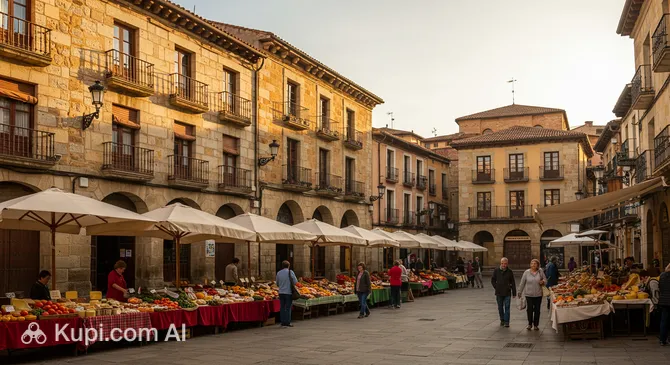
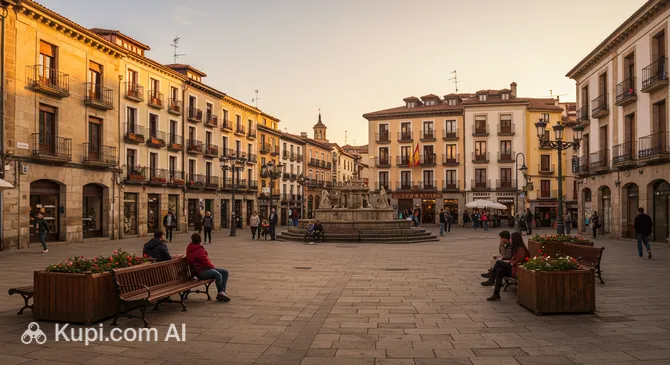
The picturesque Plaza del Fontán, now a lively hub of social life, gets its name from a natural lagoon that once occupied the site. Centuries ago, this area was a muddy pond fed by natural springs, quite different from the colorful, flower-adorned square you see today.
Oviedo has a special connection with the comic world, hosting a rare statue of Mafalda, the famous character created by the Argentine cartoonist Quino. Located in San Francisco Park, this Mafalda Statue is one of the very few authorized replicas outside of Buenos Aires, installed after Quino received the prestigious Prince of Asturias Award.
The city is widely recognized as one of the cleanest in Spain, a reputation it takes very seriously. It has received the "Golden Broom" (Escoba de Oro) award multiple times, a distinction given to cities with the best waste management and street cleaning standards in Europe.
Film director Woody Allen is an honorary devotee of the city, famously describing it as a "fairy tale" that doesn't belong to this world. His love for the Asturian capital is immortalized not just in his words but also with a life-sized Woody Allen Statue that stands casually on the sidewalk, often surprising pedestrians.
How to Get There
Reaching the capital of Asturias is straightforward, thanks to its well-connected transport network. Whether you prefer flying or taking the train, there are convenient options to suit your itinerary. For a detailed breakdown of routes and schedules, you can read more about how to get to Oviedo to plan your arrival smoothly.
The city of Oviedo does not have its own airport within the municipal limits, but it is primarily served by Asturias Airport (IATA: OVD). Located approximately 27 km from Oviedo, this is the main gateway to the region and handles a significant volume of passengers annually. The journey from the airport to the city center typically takes about 60 minutes by taxi or shuttle bus. For those looking for alternatives, Leon Airport (IATA: LEN) is situated in the city of Leon, about 87 km away. Although smaller, it provides an option for travelers coming from different directions, with a transfer time of roughly 2.5 hours by road.
For clarity, here is a summary of the main airports nearby:
Traveling by train is an excellent way to enjoy the scenic landscapes of Northern Spain. The city is served by the Oviedo Railway Station (often referred to as the North Station), which is centrally located just 0.7 km from the heart of the town. This major hub connects Oviedo with Madrid, Barcelona, and other key cities via high-speed and regional services. With an annual passenger traffic exceeding 3.5 million, it is a busy and well-equipped facility. Another nearby option for regional connections is the Gijón Railway Station in the neighboring city of Gijon, about 24 km away.
Below is a list of the closest and most significant railway stations:
Oviedo is a city where history is etched into every stone, offering a rich tapestry of architectural styles and cultural landmarks. The city center is a walkable museum in itself, where visitors can effortlessly transition from the medieval charm of the old quarter to the elegant expansion of the modern city. Exploring its main attractions provides a deep dive into the roots of the Kingdom of Asturias and the artistic evolution of the region.
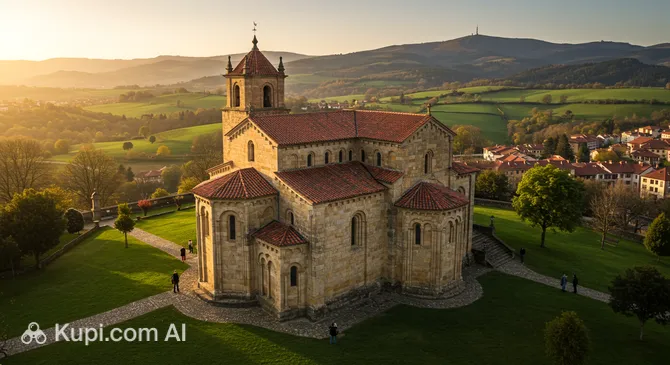
One of the most iconic symbols of the city and a UNESCO World Heritage Site is the Church of Santa María del Naranco. Originally built in 848 as a royal palace for King Ramiro I, this pre-Romanesque gem is located on the slopes of Mount Naranco, offering panoramic views over the city. It is celebrated for its unique structural harmony and decorative medallions, representing the pinnacle of Asturian art. Tourists flock here not just for the architecture, but for the serene atmosphere and the historical significance of standing in what was once a royal recreational residence.
Church of Santa María del Naranco. Illustration.
Source: Kupi.com AI
Traveler photos:
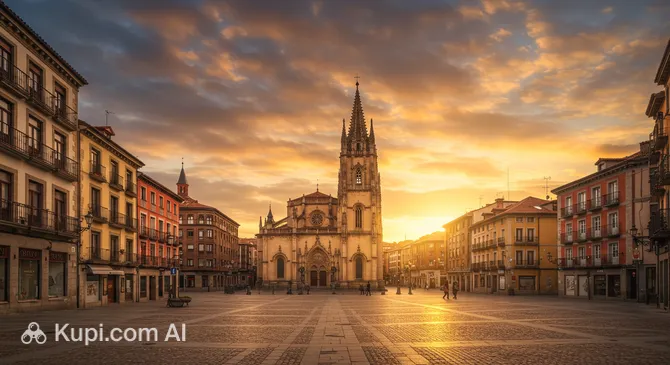
In the heart of the historic center lies Cathedral Square, the pulsating core of Oviedo's social and spiritual life. Dominated by the majestic Cathedral of San Salvador, the square is a meeting point for pilgrims walking the Camino de Santiago and locals alike. The plaza is surrounded by noble buildings and exudes a timeless atmosphere, making it the perfect spot to admire the Gothic spire of the cathedral or simply watch the world go by from a nearby café.
Cathedral Square. Illustration.
Source: Kupi.com AI
Traveler photos:
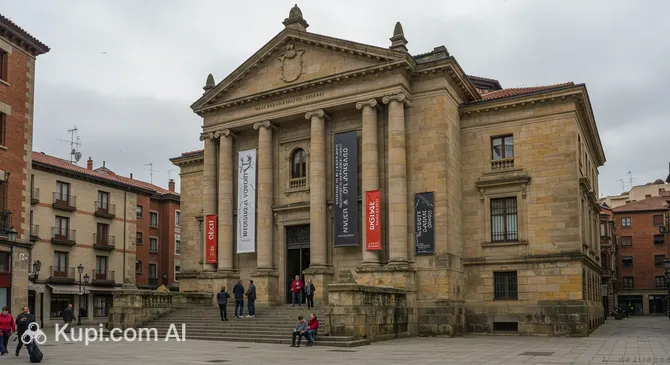
Art enthusiasts should not miss the Museum of Fine Arts of Asturias, which houses one of Spain's best public art collections. Located near the cathedral, the museum occupies several historic buildings, including the Velarde Palace. Its vast collection spans from the Middle Ages to the present day, featuring masterpieces by renowned artists such as El Greco, Goya, Sorolla, and Picasso. It offers a comprehensive journey through Spanish and Asturian art history, all within a beautifully restored architectural setting.
Museum of Fine Arts of Asturias. Illustration.
Source: Kupi.com AI
Traveler photos:
Another architectural marvel is the Basilica of San Juan el Real. Situated near the Campo de San Francisco, this grand church is often referred to as the "Cathedral of the Ensanche" due to its imposing size and eclectic style. Built in the early 20th century, it captivates visitors with its vibrant stained glass windows and ornate dome. It is a favorite among photographers and architecture lovers for its detailed facade and the solemn beauty of its interior.
Finally, a unique testament to the city's ancient engineering is La Foncalada. This 9th-century drinking fountain is the only surviving example of pre-Romanesque civil architecture in Europe and is also a UNESCO World Heritage Site. Still functioning today, it stands as a humble yet powerful reminder of the sophisticated infrastructure of the early medieval Kingdom of Asturias, tucked away in the modern streetscape of the city.
Local Cuisine
The local cuisine in Oviedo is a celebration of the region's rich natural pantry, combining fresh seafood from the Cantabrian Sea with hearty produce from the interior valleys. Asturian food is known for being generous and flavorful, perfect for recharging after a day of exploring. No visit is complete without trying the most famous regional dish, Fabada Asturiana. This rich white bean stew is slow-cooked with compango—a smoky trio of chorizo, morcilla (blood sausage), and pork shoulder—creating a comforting meal that melts in your mouth.
Another culinary icon you will encounter on almost every menu is the Cachopo. This impressive dish consists of two large veal fillets sandwiched around ham and cheese, then breaded and fried to golden perfection. It is often served in enormous portions meant for sharing, accompanied by fries and roasted peppers. For those with a sweet tooth, the city has its own signature pastry called Carbayones, a delicious almond and egg yolk puff pastry glazed with sugar, named after the locals themselves, who are affectionately known as "carbayones."
El Gato Negro Cider House. Illustration.
Source: Kupi.com AI
Traveler photos:
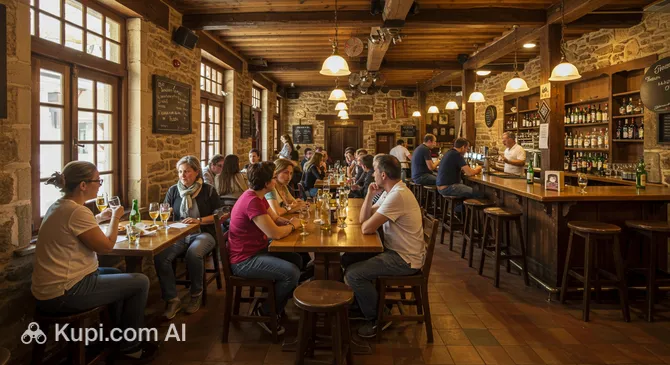
The drinking culture in Oviedo revolves almost entirely around Sidra (natural cider). Unlike the sparkling ciders found elsewhere, Asturian cider is still and must be poured from a height—a ritual known as escanciar—to aerate the drink and release its aromas. The best place to experience this is along Calle Gascona, often referred to as the "Cider Boulevard." Here, you can visit traditional establishments like El Gato Negro Cider House, where the lively atmosphere and sawdust-covered floors transport you to the heart of Asturian tradition.
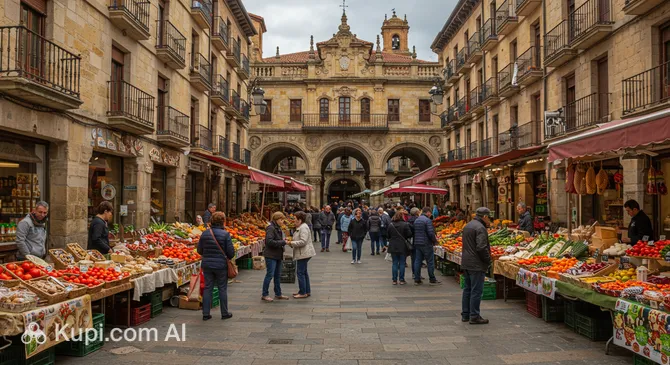
For a more modern take on local dining, places like Tierra Astur El Vasco Cider House offer a spectacular setting to sample wooden boards of local cheeses, including the potent Cabrales blue cheese. If you prefer to explore the raw ingredients that make this cuisine so special, a stroll through El Fontán Market is essential. This bustling market is filled with stalls selling fresh fish, artisanal cheeses, and cured meats, providing a vibrant sensory experience of the city's gastronomic soul.
Travel Tips
Welcome to Oviedo! To help you navigate the Asturian capital with ease and confidence, we have compiled a set of practical insights. These tips will ensure you are well-prepared for the local climate, customs, and daily rhythm of this charming northern city.
Prepare for "Green" Weather: Asturias is lush and verdant because it rains frequently throughout the year. Even if you visit in summer, it is essential to pack a sturdy umbrella and a light waterproof jacket. Since the historic center is best explored on foot, bring comfortable, non-slip walking shoes to handle the wet cobblestones safely.
Walk or Take the Bus: The city center is compact and pedestrian-friendly, making walking the most efficient way to see the sights. For trips to the outskirts or the pre-Romanesque monuments on Mount Naranco, the local bus network (TUA) is reliable and inexpensive. You generally do not need a rental car within the city limits, though it is useful for day trips to the coast.
Currency and Cash: The local currency is the Euro (€). While credit and debit cards are widely accepted in shops and restaurants, it is advisable to carry some cash for small purchases at traditional cider houses (*chigres*) or bakeries. Tipping is not mandatory, but rounding up the bill or leaving small change is appreciated for good service.
Health and Safety: Oviedo is known as one of the safest and cleanest cities in Spain. Pharmacies are easily identifiable by a flashing green cross; if you need one outside of business hours, look for a list of "Farmacias de Guardia" (on-duty pharmacies) posted on their doors. For any emergencies, dial 112.
Language and Communication: Spanish is the primary language spoken. You may hear Asturian (*Bable*) used locally, but everyone understands Spanish. English proficiency is growing among younger people and tourism staff, but it is less common among the older generation. Learning basic greetings like "Hola" (Hello) and "Gracias" (Thank you) is very helpful.
Cider Etiquette: Drinking *sidra* is a ritual with its own rules. Waiters will pour a small amount (*culín*) from a height to aerate it. The local custom is to drink the entire serving in one go immediately while it is frothy; do not let it sit in the glass or sip it slowly. It is a social experience often enjoyed standing up.
What to Avoid: Do not try to pour the cider yourself unless you are experienced, as you will likely splash the floor and nearby patrons. Also, avoid planning your dinner too early; local restaurants typically do not open their kitchens for the evening meal until 8:30 PM or 9:00 PM.
Value Dining Tip: On weekdays, look for the "Menú del Día" at local restaurants. This is a fixed-price lunch menu (usually served between 1:30 PM and 3:30 PM) that typically includes a starter, main course, dessert, bread, and wine for a very reasonable price, offering a great way to taste local cuisine on a budget.
With these practical tips in hand, you are ready to immerse yourself in the authentic atmosphere of Oviedo. Enjoy the rich culture, the delicious gastronomy, and the warm hospitality that make this city a unique destination in Northern Spain.
Entertainment & Nightlife
Oviedo comes alive after sunset with a vibrant and diverse nightlife scene that perfectly balances its traditional roots with a modern, university-fueled energy. The evening typically begins with the ritual of drinking cider in the bustling Calle Gascona, but as the night progresses, the action shifts towards the historic center. The atmosphere is generally welcoming and safe, characterized by people socializing in the streets, moving from bar to bar, and enjoying the spirited camaraderie that defines Asturian nights.
For those seeking the heart of the city's nocturnal activity, the Old Town (Casco Antiguo) is the place to be. The area around Calle Mon is legendary among locals and students for its high concentration of pubs and music venues. Nearby, Umbrella Square (Plaza del Paraguas) serves as a popular meeting point where groups gather before heading into the surrounding bars. The crowd here is eclectic, ranging from university students enjoying "Juepincho" (a Thursday tapas tradition) to older locals enjoying a relaxed drink. The dress code is mostly casual to smart-casual; you will fit in perfectly with jeans and a nice shirt.
Umbrella Square. Illustration.
Source: Kupi.com AI
Traveler photos:
Music lovers will find plenty of options catering to different tastes. If you are looking for an alternative vibe with indie music and cultural flair, La Salvaje is a standout venue known for its cool aesthetic and lively dance floor. It often hosts DJ sets and live performances, drawing a hip, creative crowd. For those who prefer heavier beats and guitar riffs, Rocket Rock Club offers a dedicated space for rock enthusiasts to enjoy classic anthems and a spirited atmosphere until the early hours.
Another unique spot worth visiting is Lata de Zinc. Located slightly away from the traditional center, this cultural space functions as a bar and performance venue, offering everything from underground concerts to theater and exhibitions. It is an excellent choice for travelers looking to experience the more artistic and alternative side of Oviedo's nightlife.
Practical advice for a night out includes adjusting to the local schedule. Bars typically start filling up around 11:00 PM or midnight, while clubs may not peak until 2:00 AM or 3:00 AM. Prices in Oviedo are generally reasonable compared to larger Spanish cities, with beers and mixed drinks being quite affordable. The city is very walkable, and moving between nightlife districts on foot is common and safe. However, if you need to travel further or return to your hotel late, white taxis are readily available at designated ranks or can be hailed by phone.
During the daylight hours, entertainment in Oviedo takes on a more relaxed pace. You can enjoy high-quality theater productions at the historic Campoamor Theater or explore the city's modern shopping options at the Salesas Shopping Center. For families or nature lovers looking for a daytime excursion, El Bosque Zoo offers a charming experience with local and exotic fauna just a short distance from the city center.
Parks & Museums
Oviedo is a city that seamlessly blends its urban elegance with abundant green spaces and a deep respect for its cultural heritage. Beyond its famous architectural landmarks, the Asturian capital offers a variety of lush parks and fascinating museums that allow visitors to connect with nature and explore the region's rich history in depth. Whether you are looking for a peaceful stroll among century-old trees or a journey through the archaeological roots of the Kingdom of Asturias, the city provides ample opportunities for leisure and learning.
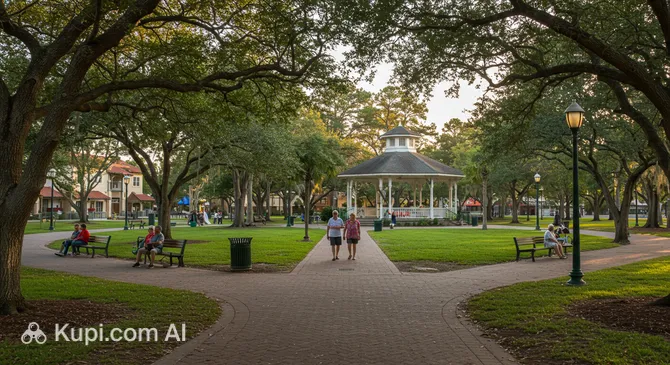
The most beloved green space in the heart of the city is the Campo de San Francisco. This historic park serves as the city's green lung, featuring manicured gardens, wide promenades, and resident peacocks roaming freely. For those seeking a more extensive natural area, Winter Park is an excellent choice. Located in the southern part of the city, this sprawling park is perfect for sports and relaxation, featuring numerous walking paths and recreational facilities. It also marks the starting point of the popular "Senda Verde," a greenway built on an old railway track that leads cyclists and walkers out into the Asturian countryside.
Winter Park. Illustration.
Source: Kupi.com AI
Traveler photos:
For a more rustic experience that combines exercise with panoramic views, the Finnish Trail is a favorite among locals. Situated on the lower slopes of Mount Naranco, this wood-chip path offers a fantastic vantage point over the city and is surrounded by nature, making it ideal for jogging or a refreshing morning walk. Another notable spot is Purificación Tomás Park, located near the foot of the mountain. It is a quieter, expansive area perfect for picnics and watching the sunset away from the city center's bustle.
When it comes to museums, the Archaeological Museum of Asturias stands out as an essential visit for history enthusiasts. Housed in the former Benedictine monastery of San Vicente, adjacent to the cathedral, the museum presents a comprehensive journey through the region's past. Its collections range from prehistoric times to the Middle Ages, with a special emphasis on the Pre-Romanesque period that defines Oviedo's identity. The building itself is a masterpiece, beautifully restoring the monastic cloister while integrating modern exhibition spaces.
Archaeological Museum of Asturias. Illustration.
Source: Kupi.com AI
Traveler photos:
Another cultural venue that reflects the city's appreciation for adaptive reuse is the Trascorrales Market Hall. Once the city's fish market, this striking 19th-century building with its iron and glass structure has been transformed into a dynamic cultural center. It frequently hosts temporary art exhibitions, gastronomic events, and fairs. Even when there isn't a specific event, the square outside and the architecture of the building itself make it a charming stop during a tour of the old town.
Getting Around
Navigating Oviedo is remarkably straightforward, primarily because the city is compact and designed with pedestrians in mind. For most visitors staying in the city center, walking is the most efficient and enjoyable way to get around. The historic Old Town and the main shopping streets are largely pedestrianized, allowing you to explore the major landmarks without needing any vehicle. However, for reaching the outskirts, the pre-Romanesque monuments on Mount Naranco, or nearby towns, the city offers a reliable and efficient public transport network.
The backbone of the urban transport system is the bus network, operated by TUA (Transportes Unidos de Asturias). You will easily recognize these buses by their dark blue color. They cover the entire municipality with frequent services, typically running from around 7:00 AM to 11:00 PM. Night bus services, known as "Búhos" (Owls), operate on weekends and holidays, providing a safe option for late-night travelers. Information panels at bus stops are generally clear, displaying route maps and estimated waiting times.
While Oviedo does not have a metro system, it is a key hub for the suburban train network known as Cercanías. The main railway station serves two types of lines: the standard Renfe tracks and the narrow-gauge Feve tracks. These commuter trains are less useful for moving strictly within the city center but are excellent for reaching suburban neighborhoods or planning day trips to nearby coastal cities and the metropolitan area. The station itself is centrally located at the end of Calle Uría, the city's main commercial avenue.
Regarding payment, the system is flexible for tourists. For occasional trips, you can purchase a single ticket directly from the bus driver when you board; it is advisable to carry small change or coins, as drivers may not have change for large banknotes. If you plan to use public transport frequently or travel throughout the region, consider purchasing a CTA (Consortium of Transport of Asturias) travel card. These rechargeable cards offer discounted fares and can be bought at tobacco shops (estancos) or ticket machines at train stations. You simply validate the card by tapping it on the reader upon entering the bus or at the station gates.
Taxis are another convenient alternative, especially if you are traveling with heavy luggage or returning late at night. Official taxis are white, often displaying the city's coat of arms on the door and a green light on the roof when available. They can be hailed on the street, found at designated ranks (paradas) located at key points like the train station and Plaza de América, or booked via telephone. Ride-hailing apps are less dominant here compared to larger capitals, so relying on the official taxi service is the standard practice.
For those interested in cycling, the city has been improving its infrastructure, although the hilly terrain can be a challenge in certain areas. Unlike the flat coastal cities, Oviedo's slopes might require a bit more physical effort, but electric bikes are becoming a popular solution. Car rentals are generally unnecessary for exploring the city itself due to the excellent walkability and parking restrictions in the historic center, but they remain a good option if you intend to explore the wider natural beauty of the province at your own pace.
Accommodation
Accommodation in Oviedo caters to a wide variety of preferences and budgets, reflecting the city's status as both a historic capital and a modern administrative hub. Visitors can choose from a range of options that include elegant hotels housed in restored 19th-century palaces, functional business hotels with modern amenities, and cozy guesthouses or hostels perfect for backpackers. The standard of hospitality is generally high, with an emphasis on cleanliness and comfort that aligns with the city's reputation for being well-maintained.
For those who wish to be in the heart of the action, staying in the Old Town (Casco Antiguo) is the ideal choice. This area places you within walking distance of the major monuments and the lively cider boulevards, allowing you to soak up the medieval atmosphere right from your doorstep. Alternatively, the City Center, particularly around Calle Uría and the San Francisco Park, offers a more cosmopolitan feel. This district is convenient for travelers arriving by train and is excellent for shopping enthusiasts, with major retail hubs like the Salesas Shopping Center located nearby.
Gran Bulevar El Vasco. Illustration.
Source: Kupi.com AI
Traveler photos:
Another emerging area for accommodation is around the Gran Bulevar El Vasco. This modern leisure and commercial complex has revitalized its surroundings, offering easy access to both the historic quarter and the main exit routes of the city. Staying in this vicinity provides a blend of contemporary convenience and proximity to traditional attractions, making it a strategic base for exploring the wider region.
Regarding costs, Oviedo offers excellent value for money compared to Spain's larger tourist capitals. Prices are generally moderate, with plenty of mid-range options that provide high-quality service without a luxury price tag. However, demand can spike significantly during specific events. It is highly recommended to book your accommodation well in advance if you plan to visit during the San Mateo festivities in September or the prestigious Princess of Asturias Awards in October, as the city reaches full capacity during these periods. Most accommodations can be easily booked via major online platforms, though contacting smaller guesthouses directly can sometimes yield better rates or specific room requests.
Nearby Cities
For those looking to explore the surroundings, Oviedo serves as an excellent base for day trips to several interesting nearby locations. The region offers a mix of coastal charm, historical depth, and modern culture, all within a convenient distance.
Just a short drive to the north lies Gijon, the largest city in Asturias. It offers a refreshing coastal atmosphere with the expansive San Lorenzo beach and the charming old fishermen's quarter of Cimavilla. Another nearby gem is Aviles, known for having one of the best-preserved medieval historic centers in the region, which stands in striking contrast to the futuristic architecture of the Oscar Niemeyer International Cultural Centre. For history enthusiasts, a trip to Leon is highly recommended to admire its spectacular Gothic cathedral and enjoy the lively tapas culture in the Barrio Húmedo.
City
Population
Distance
La Corredoria
19 191
3 km
Llanera
13 792
13 km
Mieres
37 026
14 km
Sama
38 683
15 km
Pola de Siero
51 792
16 km
These nearby destinations offer a glimpse into the diverse culture and landscapes of the region, making them perfect for short excursions.
Shopping & Souvenirs
Shopping in Oviedo is a delightful experience that mirrors the city's elegant and relaxed character. The Asturian capital is known for its high-quality commerce, ranging from sophisticated fashion boutiques to centuries-old artisanal shops. Unlike the frantic pace of larger metropolises, browsing here is a pleasant leisure activity, often enjoyed while strolling through pedestrianized streets and admiring the architecture. Whether you are looking for international luxury brands, unique local crafts, or gastronomic treasures, the city offers a diverse array of options within a compact and walkable area.
The undisputed heart of shopping in the city is Calle Uría. This grand avenue, built in the late 19th century to connect the city center with the railway station, is lined with impressive buildings and hosts the majority of major Spanish and international fashion chains. Branching off from Uría, streets like Calle Gil de Jaz and Calle Palacio Valdés offer a mix of upscale boutiques, shoe shops, and jewelers. For a more traditional atmosphere, the Old Town (Casco Antiguo) is the place to explore. Here, amidst the cobblestone lanes, you can find smaller, independent stores selling antiques, books, and regional handicrafts.
For those who prefer the convenience of having everything under one roof, the Salesas Shopping Center is the primary destination in the city center. Located right on Calle General Elorza, it is an architectural landmark in itself, integrated into a modern complex that includes the Hipercor department store. It offers several floors of fashion, accessories, and electronics. Another significant spot is Gran Bulevar El Vasco, a newer addition to the city's retail landscape. This modern complex combines shopping with leisure and dining, providing a vibrant space for entertainment just steps from the historic cathedral.
Salesas Shopping Center. Illustration.
Source: Kupi.com AI
Traveler photos:
Markets play a vital role in the daily life of Oviedo, and the most famous among them is El Fontán Market. Housed in a beautiful iron-and-glass structure, this market is a sensory feast of fresh local produce, seafood, and meats. It is the perfect place to see the high quality of Asturian ingredients up close. Just outside, in the surrounding square and streets, a popular flea market known as El Rastro takes place on Sunday mornings. It is a lively event where locals hunt for antiques, books, clothes, and curiosities, creating a bustling and colorful atmosphere.
El Fontán Market. Illustration.
Source: Kupi.com AI
Traveler photos:
When it comes to souvenirs, Oviedo has distinct local products that make for perfect gifts. The region is famous for Azabache (jet stone), a black gemstone that has been crafted into jewelry here since the Middle Ages; look for the "Cigüa" (a fist-shaped amulet) for good luck. Gastronomic souvenirs are also highly recommended. You can buy vacuum-packed Asturian cheeses (like the strong Cabrales or the milder Gamoneu), bottles of natural cider, or the famous Fabada bean kits. For those with a sweet tooth, boxes of Carbayones (almond pastries) or Moscovitas (thin chocolate and almond cookies) are essential purchases.
Store opening hours in Oviedo typically follow the traditional Spanish split schedule. Small shops generally open from 10:00 AM to 2:00 PM and reopen from 5:00 PM to 8:00 PM, closing for a midday break. However, major franchises, department stores, and shopping malls like Salesas usually stay open continuously from 10:00 AM to 10:00 PM. Most shops are closed on Sundays, except for specific holiday periods. Credit and debit cards are widely accepted everywhere, even for small amounts.
Travelers residing outside the European Union are eligible for VAT refunds (tax-free shopping) on purchases made in stores that participate in the scheme. Look for the "Tax Free" signage in shop windows. Spain uses the digital DIVA system for stamping tax-free forms, which can be easily done at airport kiosks or customs points before leaving the EU, allowing you to reclaim a percentage of your spending.