Support

Leon Airport

About the Airport

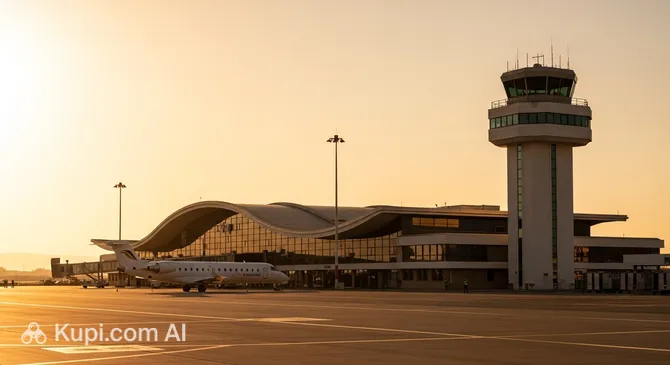
Leon Airport. Source: Kupi.com Binoculars
Leon Airport (Aeropuerto de León), picturesquely located in the town of La Virgen del Camino, is not merely a transport hub but the highest aerial gateway of the Iberian Peninsula. Landing here offers travellers a unique opportunity to view the rugged and beautiful landscapes of the Castile and León region from a bird's-eye view even before disembarking. Thanks to its intimate size and the absence of endless queues, this airport allows you to immerse yourself in the atmosphere of ancient Leon and its culinary delights just minutes after collecting your luggage.
IATA Code LEN
ICAO Code LELN
City Leon
Distance to centre 6 km
Status International and domestic
Passengers per year Over 63,000 (2023)
Schedule Official schedule on the Aena website

Features and Advantages of the Airport

Leon Airport possesses a number of unique characteristics that make it a convenient starting point for travelling across northern Spain:

Record Altitude and Views
Located at an altitude of over 900 metres above sea level, this airport is officially the highest commercial airport on the Iberian Peninsula. This geographical position ensures passengers enjoy breathtaking panoramic views of the surrounding plateaus and mountains during takeoff and landing.

Exceptional Proximity to the City
The airport is located just a 10–15 minute drive from the historical centre of Leon. Such proximity allows travellers to reach their hotel or start sightseeing as quickly as possible, without wasting time on long transfers typical of large metropolises.

Speed and Comfort
Thanks to the compact and modern terminal, opened after extensive renovation in 2010, all procedures here are completed lightning-fast. Passengers note the absence of queues at security checks and baggage claim, creating a relaxed atmosphere for the start of a holiday without stress or fuss.

Strategic Location
The airport is in close proximity to the famous pilgrimage route, the Way of St. James (Camino de Santiago), making it an ideal starting or finishing point for pilgrims wishing to walk part of the route through the Leon region.

Contact Information

Below is the main contact information for Leon Airport (LEN), which will help you plan your trip and resolve any potential queries.

  • Official Website: You can always find the most up-to-date information on flights, services, and airport regulations on the official website of the Spanish airport operator, Aena. The site is available in several languages, including English.
  • Information Desk Phone: For information, you can call the unified Aena number: (+34) 91 321 10 00.
  • Airport Address: Carretera Local LE-20, 24198 La Virgen del Camino, Leon, Spain.
  • Email: A direct email address for general inquiries is not provided. It is recommended to use the contact form on the official Aena website for communication.
  • Social Media: You can follow news and updates on Aena's official social media pages, which cover all the operator's airports.
  • Lost Luggage Information: In case of loss or damage to luggage, you should contact your airline's representative or the handling agent serving your flight directly. Contacts are usually available on the airport website in the "Airlines" section.
  • Passenger Support Service: For all questions related to your stay at the airport, you can contact the general information service phone number or the information desks within the terminal.

How to Get to the Airport

Leon Airport (LEN) is located just 6 kilometres from the city centre, so getting to or from Leon is effortless. Travellers have access to several convenient transport options suitable for any budget and travel style across Spain.

Public Transport: Bus
The most economical way to get to the airport is by bus. A special route operated by ALSA connects the centre of Leon with the airport, with the schedule usually coordinated with flight arrival and departure times. The trip takes approximately 20-30 minutes, and the ticket cost is just a few euros. This is an excellent choice for budget travellers and those travelling light.

Taxi and Transfer
For maximum comfort and speed, you can choose a taxi. The taxi rank is located right outside the terminal exit. A trip to the city centre will take just 15-20 minutes, and the cost will average 20-25 euros depending on the time of day and traffic conditions. If you are travelling with family or a large amount of luggage, a pre-booked private transfer can be a convenient solution.

Car Rental and Parking
If you plan to explore not only Leon but also the picturesque Castile and León region, renting a car is the ideal option. There are counters for several international and local rental companies at the airport. For those arriving at the airport in their own or a hired car, convenient parking is provided. The official car park is located in immediate proximity to the terminal and offers both short-term and long-term rates.

Alternative Airports
When planning your trip, it is worth noting that there are other airports in the region. The nearest major air hubs are Asturias Airport (OVD) at 113 km and Valladolid Airport (VLL) at 118 km from Leon. Another popular option is Santander Airport (SDR), located approximately 176 km away.

Terminals and Map

Leon Airport (LEN) is a small regional airport distinguished by its compactness and simplicity. If you are accustomed to huge international hubs, you will be pleasantly surprised by its convenience and lack of bustle.

The airport structure is extremely simple: it consists of one passenger terminal that handles both departing and arriving flights. There is no separation into terminals for domestic and international lines—all operations take place in one building. This completely eliminates the need for transfers between terminals and makes navigation intuitive.

The terminal layout is very logical. All key zones are located on the ground floor. Upon entering the building, you immediately find yourself in the general area where check-in counters and car hire points are located. After checking in, you proceed to the single security checkpoint. Beyond it lies a small but comfortable departure area with several boarding gates. The arrival area is equally compact: after disembarking from the aircraft, passengers enter the baggage claim hall, and from there, the main terminal hall.

Due to the small size of the airport, completing all formalities, including flight check-in and security screening, usually takes mere minutes. There are practically no long queues here. As a rule, arriving at the airport 60-90 minutes before a domestic flight departure is more than sufficient. Orienting yourself in the terminal is very easy: there are clear signs everywhere, and due to the limited space, it is practically impossible to get lost.

Airport History

The history of Leon Airport (LEN) begins long before its transformation into a modern passenger hub. Its roots go back to the 1920s, when a military airfield was created on this site. The first steps towards civil aviation were taken in 1929 when it was officially opened for civil air transport, although for decades its primary role remained military.

A new era for the airport began in the 1990s. In 1994, a key decision was made to fully open the airfield for civil flights. After the construction of necessary infrastructure, including a terminal and control tower, the airport was inaugurated on June 2, 1999. The first scheduled flight connected Leon with the capital of Catalonia, Barcelona, marking the beginning of its modern history as an important transport facility for the Castile and León region.

The most significant stage of development occurred in the 2000s. To accommodate growing passenger traffic and accept larger aircraft, extensive modernisation was carried out. In 2007, the runway was extended almost twofold—from 1700 to 3000 metres. The culmination of this process was the opening of a new, modern terminal in October 2010. This allowed the airport's capacity to increase several times over and brought the quality of service to a new level.

Today, Leon Airport is an example of a successful transformation from a military facility into a modern civil airport, playing an important role in the development of tourism and business ties in the province of Leon and all of Spain. It continues to serve both domestic and international destinations, serving as a convenient aerial gateway to this picturesque region.

Services and Amenities

Leon Airport (LEN), serving the province of Castile and León in Spain, is a compact and convenient terminal offering all necessary services for passengers. For a comfortable wait for your flight, free Wi-Fi from the Aena network is available throughout the airport. There are also areas for charging mobile devices in the waiting lounges. You can have a snack or a cup of coffee in the cafeteria, and purchase press, souvenirs, and travel goods in the small shop.

For travellers with special needs, a comprehensive support service for passengers with reduced mobility (Servicio de Asistencia a Personas con Movilidad Reducida) is provided, which is recommended to be booked in advance. Families with children can use the mother and child room. There are no specialised VIP lounges at the airport; however, information regarding possible access to premium comfort zones is best checked with your airline. A first aid point is also located in the terminal.

Financial services are represented by ATMs where you can withdraw cash Euros. It is worth noting that there may not be full currency exchange points at the airport, so it is better to exchange money in advance. There are no hotels or business centres within the airport itself. The nearest hotels, as well as conference rooms for business meetings, are located in the city of Leon, which is just a few kilometres away.

Where to Eat

Leon Airport (LEN) is a small regional airport, so the choice of dining establishments here is quite compact. Passengers should not expect a wide variety of restaurants as found in large international hubs; however, having a snack or drinking coffee before departure is certainly possible here.

The main and, effectively, the only place for dining at the airport is the cafeteria. It is located in the main hall of the terminal, in the public zone (landside), meaning before passing security control. This is convenient for both departing passengers and those seeing them off. After passing security (airside), dining options are unavailable, so it is best to make all purchases in advance.

The cafeteria menu features standard items for airports in Spain:

  • For a quick snack: Fresh pastries (croissants, buns), crisps, and chocolate.
  • For a more substantial lunch: Famous Spanish baguette sandwiches (bocadillos) with various fillings, ready-made salads, and tapas. We recommend trying the bocadillo de cecina (with cured beef) or chorizo de León—this is a great way to get acquainted with local gastronomy.
  • Beverages: Coffee, tea, juices, water, as well as beer and wine.

Options for passengers with special dietary needs (vegetarian, gluten-free) are very limited. Typically, you can find only basic options like salad without dressing or fruit. If you have strict dietary restrictions, it is safer to bring food with you. Prices in the cafeteria correspond to the average level for airports—they are higher than in the city. The establishment's opening hours are tied to the flight schedule: it opens for the first departures and closes after the last aircraft leaves.

Travel Tips

Travelling through Leon Airport in Spain is usually calm and hassle-free, as it is a small regional air hub. To make your experience as comfortable as possible, here are some useful tips.

Arrival Time at the Airport. Despite the airport's compact size, it is recommended to arrive 1.5–2 hours before departure. This time will be sufficient to check in luggage, pass security control, and reach the boarding gate without rushing.

Check-in and Security Control. To save time, use online check-in if your airline provides such a service. The screening procedure is standard, but thanks to the low passenger flow, it usually proceeds very quickly.

Seat Selection on the Plane. If you want to enjoy views of the picturesque landscapes of Castile and León during takeoff and landing, choose a window seat. For those who value comfort and the ability to stand up freely during the flight, an aisle seat is more suitable.

Hand Luggage Rules. Remember standard restrictions: liquids can be carried in containers of no more than 100 ml, packed in a transparent bag. Sharp and cutting objects are prohibited. Always check the hand luggage allowance of your specific airline, as they may differ in weight and dimensions.

Passengers with Connections. Leon Airport mainly handles direct flights, so complex connections are rare here. If you have a transfer planned, clarify at check-in whether your luggage will be automatically transferred to the next flight. Navigation in the airport is simple, and moving between boarding gates will not take much time.

Customs Control. For flights within the Schengen area, passport and customs controls are generally absent. If you are arriving from a country outside the Schengen area, you will need to go through the standard passport control procedure.

How to Save Time and Money. Book a taxi or transfer to the city in advance online—this may be cheaper than taking a car on the spot. To avoid spending on drinks, bring an empty bottle with you and fill it with water from drinking fountains after passing security.

In Case of Flight Delay. If your flight is delayed, contact your airline's representative counter for up-to-date information. According to EU regulations, for long delays, you are entitled to drinks, meals, and, if necessary, hotel accommodation at the carrier's expense. Keep your boarding pass and receipts for expenses.

Reached the end of the page?

That means the route is fully explored