Support

Santiago de Compostela Airport

About the Airport

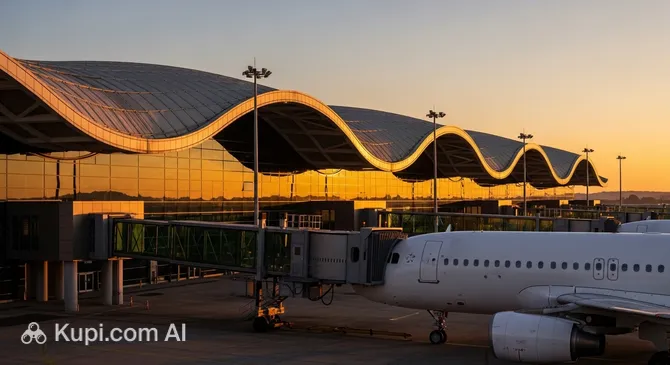
Santiago de Compostela Airport. Source: Kupi.com Binoculars

Santiago de Compostela Airport, proudly bearing the name of the great Galician poet Rosalía de Castro, is not just a vital transport hub but also a symbolic gateway to one of Spain's most picturesque regions. For thousands of travellers, it marks either the emotional conclusion of a pilgrimage along the Way of St. James (Camino de Santiago) or the beginning of a fascinating exploration of "Green Spain". The modern, light-filled terminal harmoniously combines functionality with comfort, setting guests into the calm rhythm of Galicia from the very first moments of arrival.

IATA Code SCQ
ICAO Code LEST
City Santiago de Compostela
Distance to Centre ~12 km
Status International
Annual Passengers ~3.6 million people
Schedule Available online

Airport Features and Highlights:

  • Modern Architecture: The new terminal, opened in 2011, is renowned for its distinctive Y-shape, symbolizing open arms. The building is designed to maximize natural light, creating an airy and relaxing atmosphere for passengers.
  • Convenience for Pilgrims: The airport is perfectly adapted to the needs of those who have completed the Camino de Santiago. It offers special services for packing bicycles and equipment, as well as comfortable rest areas before flying home.
  • Transport Accessibility: Reaching the historic centre is quick and affordable. Regular buses connect the terminal with key city locations, including Plaza de Galicia, with the journey taking only about 20–30 minutes.
  • Galician Flavour: Even while waiting for a flight, you can experience the taste of the region. The airport shops offer an excellent selection of local specialties — from the famous Tetilla cheese to traditional ceramics, allowing you to take a piece of Galicia with you.

Contact Information

For your convenience, we have compiled the essential contact information for Santiago-Rosalía de Castro Airport (SCQ).

  • Official Website: Up-to-date information on flights, services, and regulations can be found on the official website of the management company, Aena: www.aena.es/aeropuerto-santiago-compostela.
  • Information Desk Phone: For telephone enquiries, you can use the general Aena line: (+34) 91 321 10 00.
  • Airport Address: Aeropuerto de Santiago-Rosalía de Castro, 15820, Santiago de Compostela, A Coruña, Spain.
  • Email: A direct email address for general enquiries is not published. For communication, it is recommended to use the official contact form on the Aena website.
  • Social Media: News and updates can be followed on Aena's official pages on Twitter/X and Facebook.
  • Lost Luggage Information: For enquiries regarding luggage left on board the aircraft or lost during the flight, you must contact your airline directly or their ground handling agent at the airport.
  • Passenger Support Contacts: For general support and enquiries, use the information desk phone. For passengers with reduced mobility, a special assistance service is available, which can be booked in advance on the Aena website.

Getting to the Airport

Reaching Santiago de Compostela Airport (SCQ), located approximately 12 kilometres from the city centre, can be done through several convenient methods. The choice depends on your budget, time, and amount of luggage.

Public Transport: Bus

The most economical and popular option is the dedicated bus route (Line 6A), operated by the company Freire. Buses run regularly, approximately every 30 minutes, connecting the airport with key city locations, including the central Plaza de Galicia, the main bus station (Estación de Autobuses), and the railway station (Estación de Ferrocarril). The journey takes about 30-40 minutes depending on traffic. A one-way ticket costs approximately €3, making this the most affordable method.

Taxi and Transfer

For those who value comfort and speed, a taxi is the ideal choice. The trip from the city centre to the airport will take about 20 minutes. in Spain, fixed rates often apply for such routes; for Santiago de Compostela, it is around €21-€25. This is particularly convenient if you are travelling in a group or with bulky luggage. You can book a car by phone, via an app, or simply find one at one of the stands in the city.

Car Rental and Parking

If you plan to explore Galicia by car, you can return your rental vehicle directly at the airport before departure. Offices of all major international and local rental companies are present here. For those arriving at the airport in their own vehicle, convenient parking zones are provided. There are options for both short-term and long-term parking with varying rates.

Although Santiago de Compostela Airport is the main hub for this region, other terminals are located relatively nearby. The closest are A Coruña Airport (45 km) and Vigo Airport (76 km). Further away, across the border in Portugal, are Porto Airport, as well as smaller air terminals in the cities of Bragança and Vila Real.

Terminals and Map

Santiago de Compostela Airport (SCQ) features a modern and well-thought-out structure that makes it very convenient for travellers. All passenger traffic is handled in one spacious terminal, eliminating the need for complex transfers and confusion in finding the right building. This terminal handles both domestic and international flights.

The terminal layout is logical and intuitive. It consists of two main levels:

  • Planta 0 (Ground Floor) — This is the arrivals area. Passengers arrive here after disembarking, and baggage reclaim belts are located here. The general arrivals hall houses car rental counters, cafes, and exits to bus stops and the taxi rank.
  • Planta 1 (First Floor) — The departures area. Here you will find check-in counters (Counters 1-22) and self-service check-in kiosks. After checking in, passengers proceed to a single security checkpoint, beyond which lies a spacious departure lounge with shops, restaurants, and boarding gates (Gates 1-15).

Because all processes are concentrated in one building, navigating the airport is straightforward. There are clear signs in Spanish, Galician, and English throughout. Movement between the arrival and departure zones is facilitated by escalators and elevators located in the central part of the building.

Check-in and security procedures at Santiago Airport are generally quite quick. However, it is recommended to arrive at the airport approximately 1.5-2 hours before the departure of a domestic or Schengen flight. During peak seasons, especially in summer and during the Holy Year (Xacobeo) celebrations, when the city welcomes a huge number of pilgrims, it is worth allowing a little extra time for potential queues.

Airport History

The history of Santiago de Compostela Airport (SCQ) is inextricably linked to the city's development as a global pilgrimage centre. It all began in 1932 with the creation of a local flying club. The official opening of the airfield for civil and military needs took place on September 27, 1935, and by 1937, the airline Santiago-Salamanca-Zaragoza launched the first regular flights, connecting Galicia with other regions of Spain.

Significant steps in development were taken in the post-war years. Between 1948 and 1953, the runway was paved, and navigation and lighting equipment were installed, allowing for night operations. A major milestone was the construction of the first proper passenger terminal in 1969. Interestingly, the airport is often called "Lavacolla" after the stream where pilgrims traditionally washed themselves before entering the city.

The true flourishing of the airport began in the 1980s and 1990s, driven by the growing popularity of the Way of St. James. In anticipation of the Holy Year 1993 (Xacobeo '93), which attracted a massive number of pilgrims, the terminal was significantly expanded and modernized. It was then that the airport firmly established itself as Galicia's main aviation hub, surpassing neighbouring airports in passenger traffic.

The most massive project in the airport's recent history was the construction and opening of a new, modern terminal in 2011. This spacious and bright building, designed to meet all modern requirements, increased capacity to 4 million passengers per year. With the commissioning of the new complex, the old terminal ceased operations, and Santiago de Compostela Airport opened a new chapter in its history, becoming one of the most convenient and functional airports in northern Spain.

Services and Amenities

Santiago de Compostela Airport (SCQ) offers passengers all the necessary services for a comfortable wait. In the terminal, you will find several cafes and restaurants where you can have a snack or a cup of coffee, as well as shops, including a Duty Free area with a traditional selection of perfumes, confectionery, souvenirs, and local Galician delicacies.

For those who value enhanced comfort, the airport operates a VIP Lounge, where you can relax in a quiet atmosphere and enjoy complimentary beverages, snacks, and press. Access to free Wi-Fi is provided throughout the terminal, and charging stations for electronic devices are located in the waiting areas, allowing you to stay connected until departure.

Basic financial services are available at the airport: there are ATMs and a currency exchange point. For passengers with small children, nursery rooms with changing tables are provided. The airport is fully equipped to serve passengers with reduced mobility — special wheelchairs and staff assistance for boarding and disembarking are available, but this service is recommended to be booked in advance through the airline.

In case of necessity, a pharmacy and a first aid point operate in the terminal. Although there are no hotels directly on the airport grounds, many accommodation options are located a few minutes' drive away. For business travellers, basic business services, such as work zones and access to office equipment, may be available in the VIP Lounge.

Where to Eat

At Santiago de Compostela Airport (SCQ), you won't go hungry while waiting for your flight. There are several options for a snack or a full meal, located both in the public area and in the departures area after passing security control.

The majority of dining establishments are concentrated in the public area (landside) on the ground floor. Here, a self-service cafeteria-restaurant usually operates, where you can have a quiet lunch or dinner. This is an ideal place if you have plenty of time before departure or are seeing someone off. The menu features both standard European dishes and Spanish specialties, including bocadillo sandwiches and various salads.

After passing security control, in the departures area (airside), the selection is slightly more modest and focused on quick bites. At your service are several cafes and coffee shops where you can enjoy coffee with fresh pastries, grab a sandwich, juice, or a refreshing beverage before boarding. Vending machines with drinks and snacks are also located here and operate around the clock.

Being in Galicia, be sure to try some of the local dishes. Look out for the Galician empanada (a hearty pie filled with tuna, meat, or vegetables) or the famous almond cake "Tarta de Santiago", which is the region's signature dessert. These dishes can often be found on the menus of local cafes.

For travellers with specific dietary needs, choices may be limited, but vegetarians will find salads and vegetable sandwiches on the menu. Plant-based milk options are available in some cafes. Regarding Halal options, it is best to check with the staff at the specific establishment; typically, suitable options may be limited to packaged snacks, fruit, or vegetarian dishes.

Prices at the airport are expectedly higher than in the city but remain at an average level for European airports. Most cafes and restaurants open early in the morning to serve passengers on the first flights and operate until the departure of the last aircraft. If you plan a full meal, it is better to do so in the restaurant in the public area, while the cafes in the departures area are perfectly suitable for a quick coffee and croissant.

Travel Tips

To ensure your journey from Santiago de Compostela begins without haste or stress, follow these tips. It is recommended to arrive at the airport 2–2.5 hours before the departure of flights within Spain and Schengen countries, and at least 3 hours for other international destinations. This time is sufficient to calmly pass through all procedures, even in peak season.

The check-in and security control process here is organized quite efficiently. To save time, check in for your flight online and, if travelling only with hand luggage, proceed directly to the security screening area. Standard rules regarding liquids (in containers up to 100 ml, packed in a transparent bag) and the absence of sharp objects are strictly enforced. Always check the current requirements of your airline to avoid unpleasant surprises.

When choosing a seat on the plane, consider your preferences. Seats in the front of the cabin will allow you to disembark faster upon arrival. If you are sensitive to turbulence, choose seats over the wing — movement is felt least there. You can usually book a specific seat during online check-in.

Passengers connecting at this airport generally have nothing to worry about. There is only one terminal, it is modern and intuitive, making transit quick and easy. Verify whether you need to collect and re-check your luggage — this information is always indicated on your itinerary receipt. For transit between non-Schengen countries, a transit visa may be required.

Customs control when entering Spain from non-EU countries follows the "Green" and "Red" channel system. If you have no goods to declare, proceed confidently through the "Green" channel. If in doubt, it is better to choose the "Red" channel and consult with a customs officer.

In the event of a flight delay, Santiago de Compostela Airport offers everything necessary for a comfortable wait: several cafes, shops, a pharmacy, and free Wi-Fi. Remember your rights: for long delays, airlines are obliged to provide drinks, food, and if necessary, hotel accommodation, according to EU regulations.

Reached the end of the page?

That means the route is fully explored