Support

Porto Airport

About the Airport

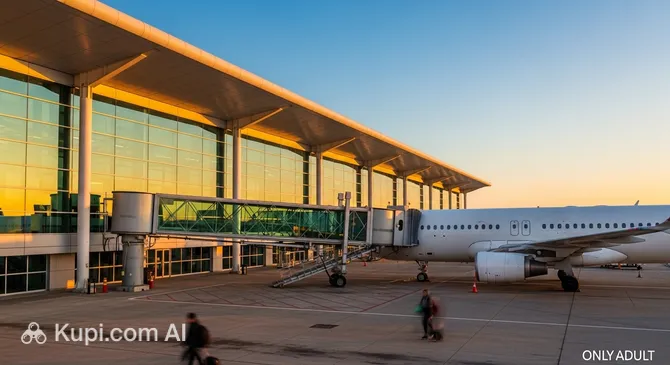
Porto Airport. Source: Kupi.com Binoculars

Your introduction to the northern capital of Portugal begins right here, and this introduction promises to be exceptionally pleasant. Francisco Sá Carneiro Airport is not a faceless transport hub, but a modern space flooded with natural light that sets the tone for your entire journey. Repeatedly recognised as one of the best in Europe, this air terminal welcomes guests with spaciousness, intuitive navigation, and a special atmosphere where technology harmoniously combines with Portuguese hospitality.

IATA Code OPO
ICAO Code LPPR
City Porto (located in the municipality of Maia)
Distance to centre 11 km
Status International
Annual Passengers Over 15 million (based on 2023 data)
Schedule Available on the online board of the official website

Porto Airport stands out among many European hubs for its unique approach to passenger comfort and architectural solutions. Here are the key features and advantages that make it convenient for travellers:

  • Recognised Quality: The airport regularly receives prestigious awards from Airports Council International (ACI) in the "Best Airport in Europe" category (among airports with a passenger flow of 15–25 million people). Passengers highly appreciate the cleanliness, the courtesy of the staff, and the overall organisation of processes.
  • Architecture and Light: The terminal building is designed using a large amount of glass and high vaulted ceilings. This ensures an abundance of natural light, creates a sense of airiness, and helps reduce stress levels before a flight.
  • Excellent Transport Accessibility: This is one of the few airports where a metro line (Line E) comes directly to the terminal. The station is integrated into the building, allowing you to get to the city centre quickly, cheaply, and without the need to go outside with luggage.
  • Compactness and Logistics: Despite the high passenger flow, the airport functions within a single terminal. This eliminates confusion and long transfers between buildings, making connections as simple and fast as possible.

Contact Information

For your convenience, we have compiled the main contact information for Francisco Sá Carneiro Porto Airport (OPO). You can contact airport representatives in several ways.

  • Official Website: www.aeroportoporto.pt — here you will find the most up-to-date information on flights, services, and airport rules.
  • Information Desk Phone: +351 229 432 400 (for international calls) or 707 502 254 (for calls within Portugal).
  • Address: Pedras Rubras, 4470-558 Maia, Portugal.
  • Email for General Enquiries: porto.airport@ana.pt.
  • Lost & Found: If you have lost personal items within the terminal, contact the service via email at porto.airport.lost.found@prosegur.com or by phone at +351 229 413 775. Please note: for issues regarding luggage lost by the airline during the flight, you should contact your carrier directly.
  • Social Media: You can follow airport news on its official pages on Facebook and Instagram.
  • Passenger Support Service: For assistance and consultations, you can use the main airport phone number and email address.

How to Get to the Airport

Getting to Francisco Sá Carneiro International Airport (OPO) from the city centre of Porto or back is possible via several convenient methods. Thanks to the developed transport infrastructure, every traveller can choose the optimal option depending on their budget, time, and comfort preferences.

Metro — this is perhaps the most convenient and economical way. The direct Violet Line (E) connects the airport with key stations in the city centre, such as Trindade and Bolhão. The journey takes approximately 30-35 minutes, and trains depart every 20-30 minutes. For travel, you will need an Andante card, which can be purchased and topped up at machines at any station. This is a reliable way to avoid traffic jams during peak hours.

City buses operated by STCP also offer several routes to the airport. During the day, these are routes 601, 602, and 604, which connect the air harbour with various districts of Porto. For those departing early in the morning or arriving late at night, the night bus 3M operates. A bus trip usually takes 40-50 minutes, but it may be more convenient if your accommodation is located far from metro stations.

Taxis and Private Transfers — the fastest and most comfortable option, especially if you have a lot of luggage or are travelling with family. Taxi ranks are located right at the exit of the arrivals terminal. A trip to the city centre will take 20-30 minutes and cost on average 25-35 Euros. Ride-hailing services such as Uber and Bolt also operate in the city and can offer competitive prices.

If you are travelling in your own or a rented vehicle, the airport provides various parking options: from short-term (for quick drop-off/pick-up) to long-term secure car parks. To get better rates, it is recommended to book a parking space online in advance. Offices of all major international car rental companies are also located in the terminal.

Porto Airport is the main transport hub for the north of Portugal, however, there are other air harbours in the region. Depending on your route, Vila Real Airport or the more distant Bragança Airport might be convenient. If you plan to visit neighbouring Spain, pay attention to Vigo Airport, located just over 100 km away, as well as the major international Santiago de Compostela Airport.

Terminals and Map

Porto Airport (OPO) is distinguished by a structure that is well thought out and convenient for passengers. It consists of one main passenger terminal, which significantly simplifies navigation and eliminates the need for long transfers between different buildings. The terminal serves both domestic and Schengen flights, as well as international destinations outside the Schengen zone. Its modern design and logical layout regularly receive high marks from travellers.

The terminal map is intuitive thanks to vertical zoning. The Arrivals Zone is located on the ground floor (Level 0). This is where you will arrive after landing, go through passport control (if necessary), collect luggage, and exit into the general hall to meet transfer company representatives and taxis. The Departures Zone is located on the third floor (Level 3), where check-in counters and the main security checkpoint are situated.

The departure process is organised as efficiently as possible. After checking in on the 3rd floor, passengers undergo centralised security screening. Afterwards, they enter the general "airside" area with shops and restaurants. This zone is divided into two main sectors: for passengers flying to Schengen Agreement countries, and for those flying to non-Schengen countries. Access to the non-Schengen zone requires passing through additional passport control, so it is worth allowing extra time for this.

Although Porto Airport is considered quite fast, the time required to complete all formalities can vary. On average, during periods of low load, check-in and security screening take about 20-30 minutes. However, queues can form during peak hours and at the height of the tourist season. It is recommended to arrive at the airport at least 2 hours before a Schengen flight and 3 hours before an international (non-Schengen) flight. All navigation in the terminal is duplicated in English, and numerous signs and electronic boards will not let you get lost.

Airport History

The history of Porto Airport, named after Francisco Sá Carneiro, began long before it received its modern name and appearance. Its opening took place on 3 December 1945, and initially, it was known as Pedras Rubras Airport (Aeroporto de Pedras Rubras) after the name of the locality. In the first decades of its existence, it served mainly for domestic flights and gradually increased its significance for the region.

A key moment in the airport's history occurred in 1990, when it was renamed in honour of Francisco Sá Carneiro, the Prime Minister of Portugal who tragically died in a plane crash in 1980. This step immortalised the memory of the prominent political figure and gave the airport a special status.

A real breakthrough in development happened in the run-up to the Euro 2004 Football Championship, which was held in Portugal. A large-scale reconstruction was carried out for this event: a new, modern, and spacious terminal was built, designed by Portuguese architect João Leão. This transformed the airport, turning it into one of the most convenient and functional in Europe. The project not only increased capacity but also received numerous architectural awards for its design, which harmoniously combines glass, steel, and concrete.

Since then, Porto Airport has been modernised and expanded multiple times to meet the growing passenger flow. It regularly receives prestigious awards from the Airports Council International (ACI) as one of the best airports in Europe in its category for service quality. Today, it is not just a transport hub, but an example of how historical heritage can be successfully combined with innovation and comfort for travellers from all over the world.

Services and Amenities

Francisco Sá Carneiro Porto Airport (OPO) offers passengers a full range of services, making waiting for a flight comfortable and productive. It is a modern and well-organised complex where the needs of various categories of travellers are considered.

For those who wish to have a bite to eat or do some shopping, the terminal presents a wide selection of restaurants, cafes, and lounges, offering both Portuguese cuisine and international options. Numerous shops, including a large Duty-Free, boutiques of famous brands, and souvenir stalls, allow you to purchase everything necessary — from perfumes and cosmetics to famous local specialties and delicacies.

Passengers can use free Wi-Fi throughout the airport. Numerous stations with power outlets and USB ports are equipped for charging electronic devices. For a more comfortable wait, the ANA Lounge is available, access to which can be purchased for a fee. It offers guests a cosy atmosphere, snacks, beverages, and a business zone.

Financial matters are easily resolved on the spot: the airport has bank branches, currency exchange points, and many ATMs (Multibanco). In case of necessity, you can visit the medical centre, where first aid will be provided. For travellers with children, there are mother and child rooms and play areas that will help pass the time before departure.

The airport is fully equipped for passengers with reduced mobility. The special MyWay service provides free assistance from the moment of arrival at the airport until boarding the plane. There are also adapted toilets, ramps, and lifts. If you require overnight accommodation, several hotels are located directly opposite the terminal and in its immediate vicinity. For business travellers, conference rooms and a business centre are available where meetings can be held or work can be done in a quiet environment.

Where to Eat

At Porto Airport (OPO), travellers will find a decent selection of establishments to have a snack before departure or a full lunch. Most cafes and restaurants are concentrated in the single passenger terminal, making navigation very convenient. Dining options are available both in the public area before security control and in the secure departure zone.

Before Security (Landside): In the arrivals area and on the check-in floor, there are several coffee shops where you can have coffee with fresh pastries or grab a sandwich. This is an ideal place if you are seeing someone off or have arrived at the airport well in advance. Here you can also find outlets of famous fast-food chains.

After Security (Airside): The main variety awaits passengers in the departure zone. Here the choice is significantly wider: from a food court with popular international chains like Burger King and Starbucks to restaurants offering à la carte dishes. You can find pizzerias, snack bars, and establishments serving more substantial dishes of Portuguese and European cuisine. Prices are generally typical for airports, but you can find both budget options for a quick snack and more expensive ones for waiting for your flight in comfort.

Be sure to take the opportunity to enjoy the tastes of Portugal one last time. In many cafes, you can order the famous pastel de nata pastry — it is a wonderful gastronomic souvenir. In the lounges, you can enjoy local beverages or specialties. For those looking for something more filling, some restaurants offer traditional sandwiches, such as the francesinha, in a version adapted for the airport.

Regarding special dietary needs, in most establishments, you can find vegetarian options (salads, sandwiches with vegetables). Vegan or gluten-free options are less common, so it is better to study the menu in advance or check with the staff. Most dining outlets open early in the morning and work until late in the evening, serving passengers of major flights. Numerous coffee shops and kiosks are suitable for a quick snack, while for a leisurely lunch or dinner, it is better to choose one of the restaurants in the main part of the departure zone.

Travel Tips

To ensure your journey through Porto Airport (OPO) goes smoothly, make use of our tips. It is recommended to arrive at the airport at least 2 hours before departure for flights within the Schengen zone and 3 hours for international flights. This time will be enough to check in luggage without rushing, pass through security control, and reach the boarding gate. To save time, always try to check in for your flight online.

Passing through security screening at Porto Airport is usually organised efficiently, but queues are possible during peak hours. Prepare liquids in advance for inspection (in containers no larger than 100 ml, packed in a transparent bag) and large electronic devices. In hand luggage, according to international rules, sharp objects and flammable substances are prohibited. When choosing a seat on the plane, if flying from Porto, choose window seats — you may be treated to a view of the Atlantic coast.

For passengers with a layover, the airport is very convenient due to its compactness and clear navigation. If you are arriving from a country outside the EU, you will have to go through passport and customs control. Follow the signs: "Green Channel" if you have nothing to declare, and "Red Channel" otherwise. For EU citizens, the procedure is significantly simpler and faster.

To save money, travel from the airport to the city centre by metro. The Violet Line (E) will take you to the heart of Porto, which is significantly cheaper than a taxi ride. In case of a flight delay, first of all, contact your airline representative to find out about the flight status and your rights as a passenger, including possible compensation. While waiting for departure, you can use the free Wi-Fi, relax in numerous cafes, or visit Duty-Free shops.

Reached the end of the page?

That means the route is fully explored