Support

Lisbon Portela Airport

About the Airport

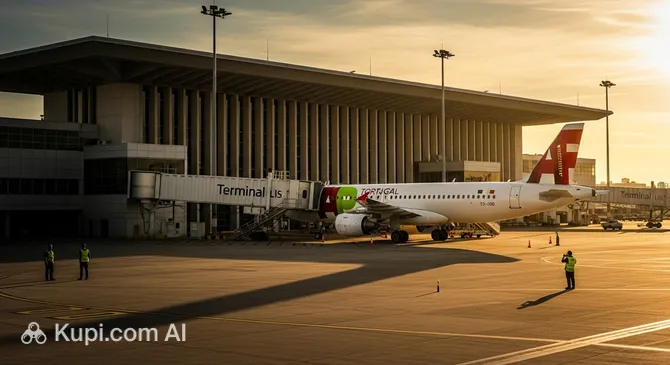
Lisbon Portela Airport. Source: Kupi.com Binoculars

Lisbon Airport is not just a transport hub, but a true gateway to the Atlantic, where the journey begins even before landing. Thanks to its unique location almost within the city limits, the approach offers breathtaking views of the tiled roofs, the Tagus River, and the famous 25 de Abril Bridge, as if inviting you on an aerial tour. Named after General Humberto Delgado, this hub serves as the main link between Europe, Brazil, and Africa, welcoming thousands of travellers daily into its lively and colourful atmosphere.

IATA Code LIS
ICAO Code LPPT
City Lisbon
Distance to Centre 7 km
Status International
Annual Passengers ~35.1 million (2024)
Schedule Online board on the official website

Airport Features and Advantages

The main advantage of this air harbour is its phenomenal proximity to the city centre. You can reach the heart of the city in just 20 minutes by metro (Red Line), making Lisbon one of the most convenient cities for short layovers. The airport consists of two terminals: Terminal 1 serves most classic airlines and is the main hub for the national carrier TAP Air Portugal, while Terminal 2, accessible via a free shuttle, is dedicated to low-cost carrier flights.

Despite being busy, the airport offers excellent opportunities for shopping and relaxation. In the departure area, you will find shops with local delicacies where you can buy the famous pastel de nata tarts and traditional Portuguese souvenirs as a last-minute gift. For those who value comfort, the Fast Track service is available and highly recommended to book in advance to avoid security queues, as well as several business lounges, including the flagship ANA Lounge with a panoramic view of the runway.

Contact Information

For the most up-to-date information on the operation of Lisbon Portela Airport (LIS), it is recommended to use official communication channels. Below are the main contact details that a traveller might need.

  • Official Website: You can find the most complete and latest information on flights, services, and regulations on the official website: www.aeroportolisboa.pt.
  • Information Desk Phone: For general enquiries, you can call: +351 218 413 500.
  • Airport Address: Alameda das Comunidades Portuguesas, 1700-111, Lisbon, Portugal.
  • Email: For written enquiries, you can use the address: lisboa.airport@ana.pt. A contact form for feedback is also available on the official website.
  • Social Media: The airport maintains official pages on popular social networks (e.g., Facebook, Instagram, LinkedIn), where news and important updates are published.
  • Lost Luggage Information: If items were lost within the terminal building, you should contact the "Lost & Found" service managed by the police (PSP). If your checked baggage did not arrive or was damaged, you must immediately contact your airline's representative.
  • Passenger Support Contacts: For assistance directly at the airport, please visit the Information desks located in the arrival and departure halls.

How to Get to the Airport

Getting to the main airport of Lisbon, Portela (LIS), from the city centre is possible via several convenient methods suitable for any budget and travel style. The airport is located just 7 kilometres from the centre, making the journey quick and simple.

Metro. One of the fastest and most budget-friendly ways is to use the Lisbon Metro. The Red Line (Linha Vermelha) leads directly to the arrivals terminal. The trip from central stations such as Saldanha or São Sebastião will take only 20-25 minutes. To pay, you will need a "Viva Viagem" transport card, which can be purchased and topped up at a machine at any station. This is the ideal option to avoid city traffic.

City Buses. Several Carris bus routes also serve the airport. For example, buses No. 744 and No. 783 connect it with various parts of the city. This is the cheapest method, but the trip may take longer due to stops and traffic (about 30-40 minutes). It is important to remember that city buses have luggage size restrictions (usually no more than 50x40x20 cm), so this option is not suitable for travellers with large suitcases.

Taxi and Transfer. For maximum comfort, especially if you have a lot of luggage or are travelling with family, it is better to choose a taxi or a ride-hailing service (such as Uber or Bolt). A trip from the centre will take 15-30 minutes depending on traffic conditions and will cost approximately 15-25 Euros. A pre-booked private transfer guarantees a fixed price and a meeting with the driver at a designated location.

Car Rental and Parking. If you have travelled around Portugal in a rented car, you can easily return it at the airport—offices of all major rental companies are present here. For those driving their own vehicle, several parking lots are provided at the airport: from premium covered ones (P1) to more budget-friendly long-term options (Low Cost) located slightly further from the terminals. It is recommended to book a parking space online in advance to get the best price.

Terminals and Map

Lisbon Portela Airport (LIS) consists of two terminals — Terminal 1 (T1) and Terminal 2 (T2). Understanding their structure and purpose is key to a smooth start or end to your journey. Navigation in the airport is quite simple, but it is important to know in advance which terminal you need, especially when departing.

Terminal 1 is the main and oldest building of the airport. It handles arrivals for all flights, both international and domestic, including low-cost carrier flights. Departures for most major and traditional airlines (e.g., TAP Air Portugal, Lufthansa, British Airways) also take place here. T1 houses all the main infrastructure: check-in counters, passport control, numerous shops, cafés, restaurants, business lounges, and Tax-Free refund points. After landing in Lisbon, you will find yourself in this terminal regardless of your airline.

Terminal 2 is a separate, more modern, and structurally simpler building used exclusively for departures of budget airlines (low-cost), such as Ryanair, Wizz Air, easyJet, and others. It is important to remember: there is no arrivals area in T2. All passengers, even those arriving on a low-cost flight, go through passport control and collect luggage in Terminal 1. The infrastructure in T2 is more modest: there are a few cafés, a small Duty-Free shop, and check-in counters, but the choice of services is significantly smaller than in T1.

The terminals are not connected by a pedestrian walkway. A free shuttle bus runs between them, departing every 10-15 minutes. The trip takes about 3-5 minutes. The shuttle stop is located outside the arrivals area of Terminal 1 and in front of the entrance to Terminal 2. Be sure to allow extra time for this transfer if your departure is from T2.

For a comfortable passage through all procedures, it is recommended to arrive at the airport in advance. For departures from Terminal 1, you should arrive 2 hours before a Schengen flight and 3 hours before an international flight. For departures from Terminal 2, despite its compact size, queues for security and check-in can be long, so also arrive at least 2-3 hours prior. Always check your departure terminal information on your ticket or the airline's website to avoid unnecessary haste and stress.

Airport History

The history of Lisbon Airport, officially known as Humberto Delgado Airport, is a fascinating narrative of growth and strategic importance. Its opening took place on October 15, 1942, in the midst of World War II. Due to the neutral status of Portugal, the airport became a unique place: routes of both Allied and German airlines intersected here. This turned it into a veritable hub for intelligence and a gateway for refugees, which was reflected in culture, including the atmosphere of the famous film "Casablanca".

After the war, the rapid growth of civil aviation began. Already in the 1950s and 1960s, the airport went through several stages of expansion to accommodate new jet aircraft, such as the Boeing 707. New runways and a modern passenger terminal were built, reinforcing its status as a key transatlantic hub.

Significant modernization was carried out in anticipation of the World Exhibition Expo '98, which was held in Lisbon. The airport was extensively reconstructed to cope with the huge flow of tourists. The main terminal (today known as Terminal 1) was completely renovated, which allowed for a significant increase in its capacity and the level of comfort for passengers.

With the growing popularity of budget airlines, Terminal 2 was opened in 2007, intended mainly for low-cost departures. This step helped to relieve the main terminal and optimize passenger flows. Another important event occurred in 2016, when the airport was named after Humberto Delgado — a renowned Portuguese Air Force general and political figure, serving as a tribute to his contribution to the country's aviation development.

One of the most interesting facts about Portela Airport is its unique location. It is one of the few major European airports located practically within the city limits, making the transfer to the centre quick and convenient. Today, Lisbon Airport continues to break records for passenger traffic, acting as the main air gateway to Portugal and an important transit hub on the way to Brazil, Africa, and the Americas.

Services and Amenities

Lisbon Portela Airport (LIS) offers passengers a full range of services and amenities to make waiting for a flight as comfortable as possible. Whether you are travelling for business or leisure, you will find everything you need here.

For those wishing to have a snack or go shopping, the airport features a wide selection of restaurants, cafés, and lounges where you can try both Portuguese cuisine and international favourites. Numerous shops, including a large Duty-Free, offer souvenirs, local delicacies, perfumes, clothing, and accessories from famous brands.

Passengers can use free Wi-Fi throughout the terminals, as well as numerous charging stations for mobile devices. For a more comfortable wait, paid VIP lounges are available, such as the ANA Lounge, which offers a buffet, beverages, press, and a cosy atmosphere away from the general bustle. Access to these can be purchased regardless of ticket class.

Bank branches, ATMs (Multibanco), and currency exchange points operate within the airport, allowing you to easily resolve all financial matters. In case of unforeseen situations, there is a medical centre ready to provide first aid.

The airport cares for passengers of all ages. For travellers with children, baby care rooms and small play areas are equipped. Passengers with reduced mobility are provided with the MyWay service — free escort and assistance at all stages, from check-in to boarding the aircraft.

If you need to rest between flights, the TRYP Lisboa Aeroporto hotel is located directly opposite Terminal 1, and there are many other accommodation options in the immediate vicinity. For business travellers, business centres and conference rooms with the necessary equipment for work and meetings are available in the lounges and nearby hotels.

Where to Eat

At Lisbon Portela Airport (LIS), travellers will find a wide selection of establishments to have a snack or a full lunch. Dining options are available for every taste and budget, from fast-food kiosks to à la carte restaurants located in both terminals.

Terminal 1, as the airport's main hub, offers the greatest variety. Both before and after passing security control (in the landside and airside zones), you will find numerous cafés, lounges, and restaurants. Famous international fast-food chains are represented here, as well as establishments offering local cuisine. For a quick snack, the numerous coffee shops are ideal, where you can order a sandwich, salad, or fresh pastries. Be sure to take the opportunity to try the famous Portuguese tart pastel de nata — it is offered in almost every café.

For a more substantial meal in the Terminal 1 departure area, there is a food court with various concepts — from pizzerias to sushi bars. Restaurants are also operating here, where you can leisurely enjoy Portuguese or European dishes. Prices at the airport are generally higher than in the city, but you can find options in the mid-price range from 15 to 30 Euros for a hot dish with a beverage.

Terminal 2, serving mainly budget airlines, offers a more modest selection. Here, the focus is on cafés and fast-food establishments designed for passengers who need to refresh themselves quickly before departure. Nevertheless, you can also find coffee, sandwiches, and snacks here. Most establishments operate from early morning until late evening, adjusting to the flight schedule.

Regarding special dietary needs, many cafés offer vegetarian sandwiches, salads, and fresh juices. In full-service restaurants, gluten-free dishes can usually be found — it is recommended to check with the staff. Finding certified Halal or Kosher meals might be challenging, so opting for vegetarian or seafood choices is recommended.

Travel Tips

To ensure your journey through Lisbon Airport goes smoothly, make use of these tips. Planning ahead will help avoid stress and save time, allowing you to enjoy your stay in the capital of Portugal.

Arrival Time at the Airport: Portela Airport can be quite busy, especially during the tourist season. It is recommended to arrive 2-2.5 hours before flights within the Schengen zone and at least 3 hours before international flights. This time will be sufficient to pass check-in, baggage drop, and security control without haste.

Check-in and Security Control: To save time, complete online check-in for your flight and save the boarding pass on your mobile device. Security queues can be long, so head to the checkpoints immediately after dropping off your luggage. Keep your passport and boarding pass handy, and prepare liquids and electronics for scanning in advance.

Seat Selection: If you want to enjoy views of Lisbon from the air, try to choose a window seat. When landing, the right side often offers a beautiful view of the city and the Tagus River. Booking a seat online in advance is usually cheaper than at the airport.

Hand Luggage: Remember the standard rules: liquids can be carried in containers up to 100 ml, packed in a transparent bag with a volume of no more than 1 litre. Sharp objects, weapons, and flammable substances are prohibited. Always check the hand luggage allowance of your airline, as they may differ.

Transfer Passengers: If you have a connecting flight in Lisbon, carefully study the information on the departure boards. Ensure you have enough time to transfer between terminals if necessary (Terminal 2 is used mainly by low-cost carriers). When transferring from an international flight to a flight within the Schengen zone, you will need to pass through passport control.

Customs Control: When arriving from a country outside the EU, use the channel system. "Green Channel" — if you have nothing to declare, "Red Channel" — if you are carrying goods exceeding duty-free limits. For travellers within the EU, customs control is selective.

Saving Time and Money: Besides online check-in, public transport will help you save. It is easy to get from the airport to the city centre by metro — it is fast and inexpensive. Bring an empty water bottle to fill it after passing security, and grab light snacks, as food and drinks at the airport can be expensive.

In Case of Flight Delay: Monitor the information on the boards and in your airline's app. If the flight is delayed for several hours, the airline is obliged to provide you with vouchers for food and drinks. For long delays or cancellations of flights departing from the EU, passengers are protected by rights (EC Regulation 261/2004), which may include compensation, hotel accommodation, and ticket refunds. Contact your airline's information desk for assistance.

Reached the end of the page?

That means the route is fully explored