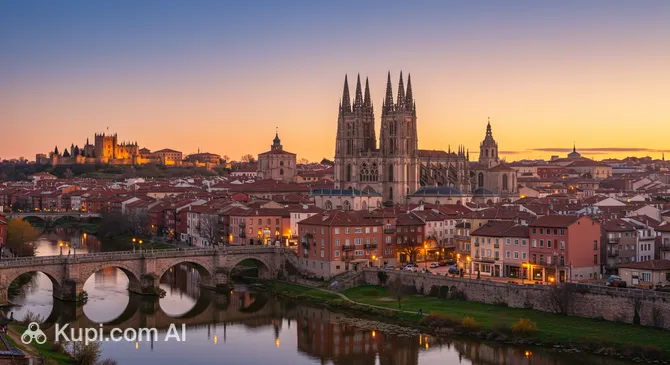
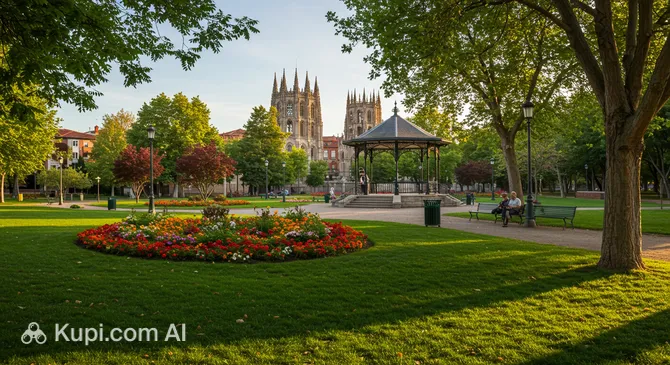
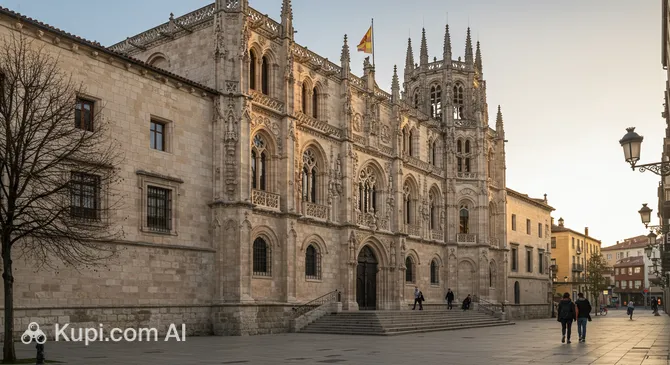
Welcome to Burgos, a captivating city in northern Spain that seamlessly blends medieval grandeur with modern vitality. Known for its architectural masterpieces, lush green spaces, and significant role in the legendary Camino de Santiago, this provincial capital offers an atmospheric journey through time for every traveler.
Burgos. Illustration.
Source: Kupi.com AI
Located in the autonomous community of Castile and León, the city sits picturesquely on the banks of the Arlanzón River. With a population of approximately 174,000 residents, it maintains a friendly and manageable size while serving as a major cultural crossroads. The local climate is continental, characterized by warm summers and crisp, cool winters, giving the city a distinct character in every season.
The history of Burgos is rich and multifaceted, rooted in its status as a former capital of the combined Kingdom of Castile and León. This heritage is most visibly embodied in the breathtaking Burgos Cathedral, a UNESCO World Heritage site and a pinnacle of Gothic architecture that dominates the skyline with its intricate spires. It is also the final resting place of El Cid, the legendary Spanish hero.
Beyond its spiritual landmarks, the city is a hub of science and culture. Visitors should not miss the Museum of Human Evolution, which showcases findings from the nearby Atapuerca archaeological sites. Whether you are exploring the royal tombs at the Monastery of Las Huelgas or enjoying traditional tapas in the historic quarter, Burgos promises an unforgettable experience. It is a destination that truly deserves a spot on your travel itinerary.
Weather Overview
The climate in Burgos is generally continental, marked by distinct seasonal changes that give the city a unique character throughout the year. Summers are typically warm and pleasant, with August seeing average maximum temperatures of 27.6°C, making it an ideal time for sightseeing. Winters, however, are cold and crisp; in January, the average temperature hovers around 3.9°C, with lows frequently dropping near freezing at night.
Rainfall is distributed across the seasons but varies in frequency. While summer is the driest period with only about 5 wet days in July, the transitional months of April and November can be quite damp, experiencing up to 14 wet days. For a more detailed breakdown to help you pack, you can consult the guide on the weather in Burgos. Expect warm summers with occasional rain and cold winters where warm layers are essential.
Average monthly temperature
Average monthly precipitation
Interesting Facts
Beyond the main attractions, Burgos holds many fascinating secrets and legends that surprise even the most seasoned travelers. From whimsical automatons to clever historical ruses, the city's hidden stories add a layer of intrigue to its medieval streets.
Inside the majestic Burgos Cathedral, you will find a quirky character known as the "Papamoscas" (Flycatcher). This mechanical statue, dating back to the 16th century, opens its mouth to chime the hour, a grotesque yet beloved tradition that has fascinated visitors for hundreds of years.
The city is deeply connected to the legendary El Cid, and one curious artifact is the "Cofre del Cid." Legend says the hero filled this chest with sand and pawned it to moneylenders, claiming it was full of gold to fund his campaigns, demonstrating his cunning wit during desperate times.
Burgos is considered the European capital of human evolution thanks to the nearby Atapuerca archaeological site. The Museum of Human Evolution in the city center displays some of the oldest hominid fossils found on the continent, dating back over a million years.
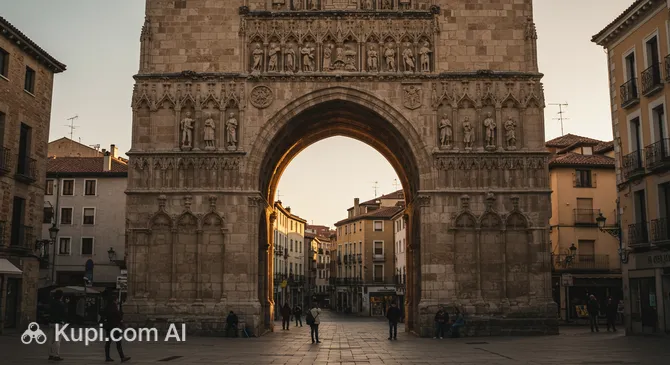
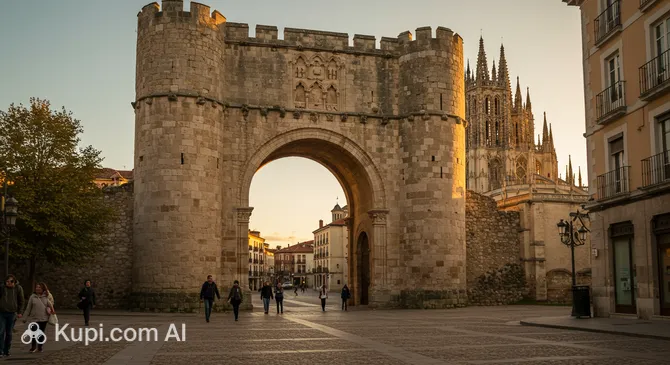
The Santa María Arch is more than just a gateway; it was remodeled in the 16th century to look like a triumphal arch dedicated to Emperor Charles V. The facade features statues of legendary Castilian judges and heroes, designed to impress the emperor rather than purely for defense.
Santa María Arch. Illustration.
Source: Kupi.com AI
Traveler photos:
How to Get There
Reaching this historic Castilian city is quite convenient, thanks to its strategic location in northern Spain. Whether you prefer flying or taking the train, there are several viable options to suit your itinerary. For a comprehensive guide on logistics, you can read all ways to reach the city, but here is an overview of the most common connections.
The city of Burgos does not have its own major commercial airport for scheduled international flights, so most travelers choose to fly into Bilbao Airport (BIO) in the city of Bilbao. It is approximately 123 km from Burgos and serves as the region's primary international gateway. The journey by road from Bilbao generally takes around 1 hour and 30 minutes by taxi or rental car, though bus connections are also available and may take longer. Another option is Santander Airport (SDR) in Santander, located about 120 km away. While slightly smaller, it offers good connections and is roughly a 1.5 to 2-hour drive from Burgos.
For those looking for a closer landing point, Vitoria Airport (VIT) in Vitoria-Gasteiz is situated just 98.8 km from the city. Although it handles fewer passengers, it can be a convenient alternative for regional flights. From here, the transfer to Burgos takes approximately 1 hour and 15 minutes by road.
For clarity, here is a summary of the main airports:
Traveling by train is often the most direct method, as the city is well-integrated into the Spanish railway network. You can arrive directly at the Burgos Railway Station (Rosa Manzano), which is located just 3.0 km from the city center. This modern station handles a significant volume of travelers and offers high-speed connections to major Spanish cities. A taxi or local bus from the station to the historic center takes only about 10 to 15 minutes.
If you are traveling from other parts of the country, you might also pass through Campo Grande Station in Valladolid, a major railway hub located 116.4 km away. It serves as a key transfer point for passengers coming from Madrid or the north-west, with frequent connecting trains to Burgos.
Burgos is a city where history is etched into every stone, offering visitors a remarkable array of monuments that span centuries. From soaring Gothic spires to serene royal retreats, the city's landmarks are as diverse as they are impressive. Here are some of the most essential places to visit during your stay.
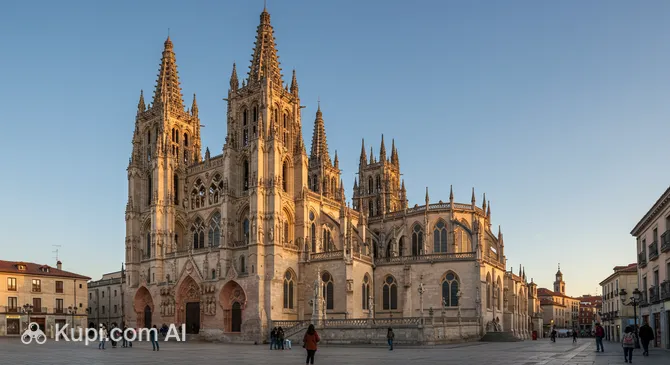
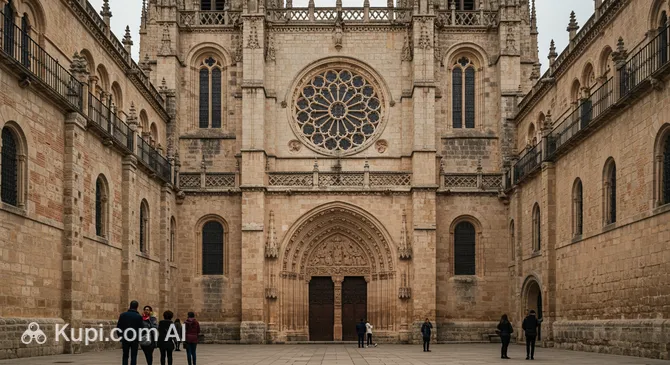
Undoubtedly the crown jewel of the city is the Burgos Cathedral. As the only cathedral in Spain declared a World Heritage Site in its own right, it is a masterpiece of French Gothic architecture. Visitors are often struck by the filigree work of its spires, which seem to pierce the sky. Inside, the Golden Staircase and the Chapel of the Constable offer breathtaking examples of artistic detail, making it a must-see for art lovers and history buffs alike.
Burgos Cathedral. Illustration.
Source: Kupi.com AI
Traveler photos:
For a glimpse into the lives of Spanish royalty, the Monastery of Las Huelgas is an extraordinary site. Founded in the 12th century, this abbey served as a royal pantheon and a place of retreat for the nobility. It is famous for its Museum of Medieval Fabrics, which houses perfectly preserved royal garments, and its unique blend of Romanesque, Gothic, and Mudejar architectural styles that tell the story of the region's complex past.
Monastery of Las Huelgas. Illustration.
Source: Kupi.com AI
Traveler photos:
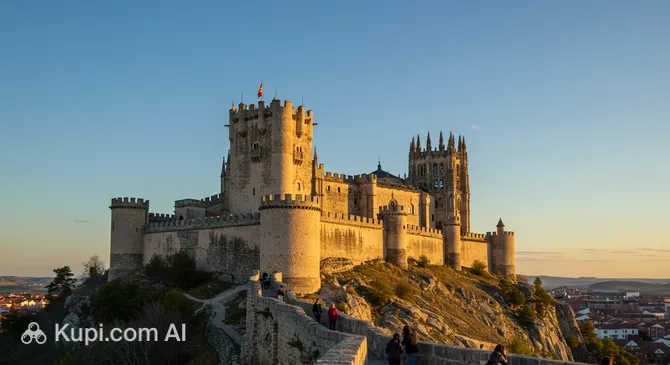
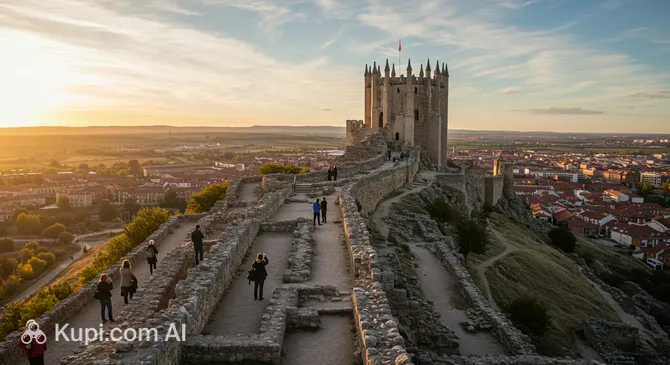
Rising above the city center, Burgos Castle offers the best panoramic views of the urban landscape and the cathedral's spires. Although much of the structure is now in ruins due to the Napoleonic Wars, the site has been transformed into a fascinating park and interpretation center. Walking along its ancient walls and exploring the subterranean galleries and the deep well provides a sense of the city's medieval defensive importance.
Burgos Castle. Illustration.
Source: Kupi.com AI
Traveler photos:
A short distance from the center lies the Charterhouse of Miraflores, a gem of late Gothic art. This active monastery is renowned for its silence and spiritual atmosphere, but its artistic treasures are what draw many tourists. The main altarpiece is plated with the first gold brought from the Americas, and the intricate alabaster tombs of King John II of Castile and Isabella of Portugal are considered some of the finest sculptures in Europe.
Finally, to understand the origins of humanity, a visit to the Museum of Human Evolution is essential. Located in a striking modern building, this museum contextualizes the massive discoveries made at the nearby Atapuerca archaeological sites. It offers an interactive and educational journey through our species' history, making it incredibly interesting for families and science enthusiasts who want to connect with the deep past.
Local Cuisine
The local cuisine of Burgos is widely regarded as one of the finest in Spain, earning the city the title of a UNESCO Creative City of Gastronomy. The food here is hearty and flavorful, perfectly suited to the region's cool climate. No visit is complete without trying the famous Morcilla de Burgos, a black pudding made with rice, onions, and spices that is distinct from other varieties found in the country. It is typically served fried or roasted and offers a rich, savory taste that locals adore.
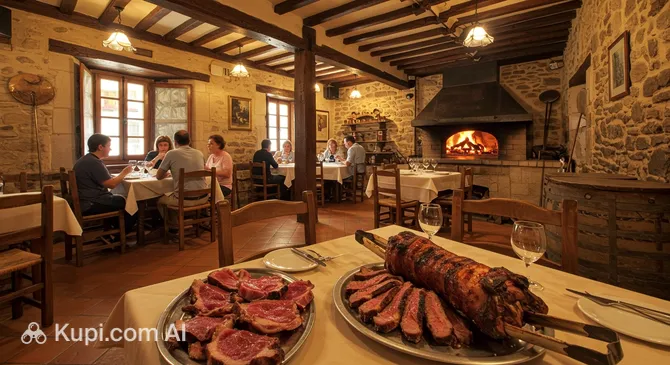
Another culinary pillar is the Lechazo, or roast suckling lamb. This dish is prepared in traditional wood-fired ovens until the meat is incredibly tender and the skin is crispy. For an authentic experience of this Castilian classic, you might visit Asador San Lorenzo, a restaurant renowned for its mastery of traditional roasting techniques. Additionally, the region produces the mild and fresh Queso de Burgos, a soft white cheese often served as a dessert with honey and walnuts, known locally as "El Postre del Abuelo."
Asador San Lorenzo. Illustration.
Source: Kupi.com AI
Traveler photos:
The dining culture in Burgos revolves heavily around tapeo—the art of hopping from bar to bar to enjoy small bites and drinks. The areas around Calle San Lorenzo and Calle Sombrerería are the epicenter of this social activity, bustling with locals and visitors alike. If you are looking to immerse yourself in the local appetizer scene, Vermutería Victoria is a popular spot to enjoy a classic vermouth accompanied by delicious spicy potatoes or pickled skewers.
When it comes to drinks, the province of Burgos is home to the prestigious Ribera del Duero wine region. The red wines produced here are world-class, characterized by their deep color and complex flavors, making them the perfect pairing for the local lamb dishes. For those who prefer non-alcoholic options, the high quality of the local water is often praised, but you will also find a variety of alcohol-free beers and traditional juices in most establishments.
Travel Tips
To ensure your visit to Burgos is as seamless as it is memorable, a little preparation goes a long way in this historic Castilian city. These practical tips are designed to help you navigate local customs, handle logistics effortlessly, and enjoy the city's unique rhythm just like a local.
Clothing and Gear: Burgos is famous for its cool climate, often described by locals as having "nine months of winter." Even in summer, the evenings can get surprisingly chilly, so bringing a light jacket or sweater is essential. In winter, heavy coats, scarves, and gloves are mandatory. Since the historic center is paved with cobblestones, pack comfortable walking shoes. Additionally, remember that the Burgos Cathedral and other religious sites require modest dress; ensure your shoulders and knees are covered before entering.
Transportation: The best way to explore Burgos is on foot. The city center is compact, pedestrian-friendly, and houses most major attractions within a short walking distance. For longer distances, the local bus network is efficient and affordable, and taxis are readily available at designated stands or via phone. While ride-hailing apps operate in Spain, traditional taxis are often more convenient here. You generally do not need a rental car unless you plan to explore the wider province.
Finances: The currency is the Euro (€). Credit and debit cards (Visa and Mastercard) are widely accepted in hotels, restaurants, and shops. However, it is wise to carry some cash, particularly small bills and coins, for paying in smaller traditional bars or buying souvenirs. ATMs are plentiful throughout the city. Tipping is not mandatory but is appreciated; rounding up the bill or leaving a few coins is standard practice for good service.
Health and Safety: Burgos is a very safe city for tourists, with low crime rates, though it is always prudent to keep an eye on your belongings in crowded areas. Pharmacies are marked with a green cross and are well-stocked; look for "Farmacia de Guardia" for 24-hour service. In case of any emergency, the universal number to dial is 112, which provides assistance in multiple languages.
Communication: The official language is Spanish (Castilian). While staff in major hotels, museums, and tourist offices usually speak English, it is less common among older locals and in smaller shops. Learning a few basic phrases like "Hola" (Hello), "Por favor" (Please), and "Gracias" (Thank you) will be warmly received. Free Wi-Fi is often available in public squares and cafes, but buying a local prepaid SIM card is recommended for reliable navigation.
Local Etiquette: Spaniards generally eat later than many other Europeans. Lunch is typically the main meal, served between 2:00 PM and 3:30 PM, while dinner is a lighter affair often starting after 9:00 PM. When entering a shop or elevator, it is polite to greet others with a "Buenos días" or "Buenas tardes." In social settings, the standard greeting is a handshake, or two kisses on the cheeks once you are acquainted, though a handshake is safer for first meetings.
What to Avoid: Do not expect to find full dinner menus available at 6:00 PM or 7:00 PM; most kitchens will be closed, and you might only find cold tapas. Also, avoid being overly loud inside churches and the cathedral, as these are active places of worship. Respect the siesta hours (roughly 2:00 PM to 5:00 PM) when many smaller shops close for the afternoon break.
Additional Tip: Embrace the "Paseo." In the early evening, before dinner, locals take a leisurely stroll along the Paseo del Espolón or the riverbanks. It is a prime time for people-watching and soaking in the social atmosphere of the city. Join in to experience the true pace of life in Burgos.
By keeping these practicalities in mind, you will be well-equipped to focus on the beauty and history that define Burgos. Whether you are marveling at Gothic spires or enjoying a crisp evening walk, you can now explore with the confidence and ease of a seasoned traveler.
Entertainment & Nightlife
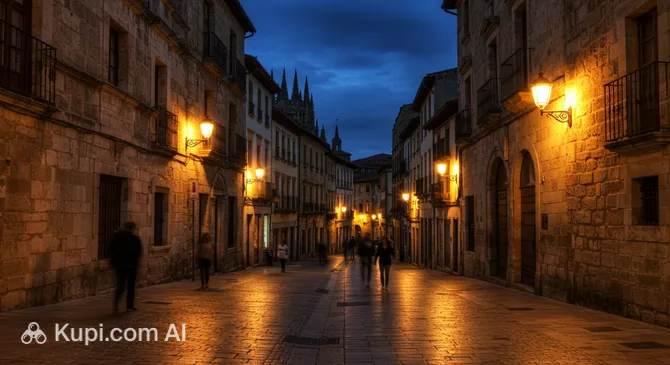
While Burgos is steeped in medieval history, its nightlife is surprisingly youthful and vibrant, fueled in part by a large university population and a local culture that loves to socialize. As the sun sets and the streetlights illuminate the ancient stone facades, the city transitions from a solemn historic site into a lively hub of entertainment. The nightlife here is concentrated and accessible, allowing visitors to easily hop from a relaxed tapas bar to a high-energy club within minutes.
The epicenter of the city's nocturnal activity is an area known locally as Las Llanas. Located in the immediate vicinity of the cathedral, specifically around the Plaza del Rey San Fernando and Calle de Fernán González, this district is packed with bars and pubs. It is where the night typically peaks, with crowds spilling out onto the streets in good weather. Another key area is Calle San Juan and Calle San Lorenzo. While these streets are famous for evening tapas, they naturally evolve into spots for the first drinks of the night, offering a seamless transition from dining to partying.
For those seeking a classic nightlife experience, La Rúa is a standout venue. Situated in a historic building, it combines a visually striking setting with a lively atmosphere, often hosting live music and DJ sets that keep the energy high until the early hours. It attracts a diverse crowd, from students to professionals, all looking to dance and unwind.
La Rúa. Illustration.
Source: Kupi.com AI
Traveler photos:
If you prefer a place to enjoy a well-crafted drink in a modern setting, La Caja is another popular bar worth visiting. The vibe in Burgos venues is generally casual but stylish; there is no strict dress code for most bars, though "smart casual" is the norm for clubs. Opening hours are typical for Spain, meaning the real party often does not start until after midnight, and venues stay open until 3:00 AM or later.
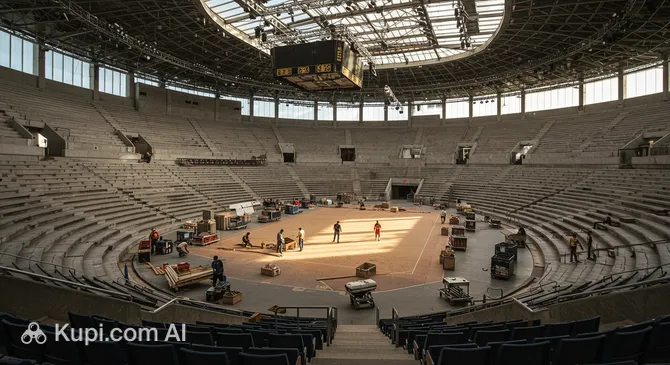
Beyond the bars, the city also hosts larger scale entertainment. The Coliseum Burgos is the premier multi-purpose arena in the city. Originally a bullring, it has been transformed into a modern covered venue that hosts major concerts, sporting events, and cultural shows throughout the year. Checking its schedule is highly recommended if you are interested in catching a big performance during your stay.
Coliseum Burgos. Illustration.
Source: Kupi.com AI
Traveler photos:
When it comes to safety, Burgos is very secure at night. The historic center is well-lit and populated, making it safe for walking. However, if your accommodation is on the outskirts or the weather is particularly cold, taxis are readily available and affordable. You can find taxi ranks near major plazas or call for one easily.
For daytime entertainment, the city offers a more relaxed pace. Culture enthusiasts can explore the CAB Art Center, which focuses on contemporary art and offers a sharp contrast to the city's medieval heritage. For families or those seeking leisure, a stroll through Isla Park provides a botanical escape with beautiful promenades. Whether it is theater productions at the Teatro Principal or exploring local museums, there is plenty to fill your day before the nightlife begins.
Parks & Museums
Beyond its famous cathedral and culinary delights, Burgos offers a wealth of green spaces and cultural institutions that provide a deeper understanding of the city's heritage. The urban layout integrates lush promenades and historical gardens, while its museums range from archaeological treasure troves to cutting-edge contemporary art centers.
One of the most beloved green spaces is Isla Park (Paseo de la Isla). Located along the right bank of the Arlanzón River, this romantic garden is a masterpiece of landscape design. It features a wide variety of botanical species, winding paths, and an elaborate stone fountain originally from the monastery of San Pedro de Arlanza. It is the perfect place for a relaxing stroll, allowing visitors to admire the collection of busts and monuments dedicated to significant figures in the city's history.
Isla Park. Illustration.
Source: Kupi.com AI
Traveler photos:
For those seeking panoramic views combined with nature, the area around the castle ruins, known as the Castle Viewpoint, is part of a larger parkland. This extensive semi-natural space covers the hillsides overlooking the city and has been reforested to create a "green lung" for residents. It offers a network of walking trails where you can enjoy fresh air and spectacular vantage points of the Gothic spires rising from the valley below.
In terms of culture, the Museum of Burgos is a must-visit for history enthusiasts. Housed in the magnificent Renaissance palace of Casa de Miranda, the museum displays a comprehensive collection that spans from the Paleolithic era to modern times. Highlights include Roman artifacts from the ancient city of Clunia and fine arts from the medieval period, providing a complete narrative of the province's rich past.
Museum of Burgos. Illustration.
Source: Kupi.com AI
Traveler photos:
Providing a striking contrast to the city's medieval architecture is the CAB Art Center (Centro de Arte Caja de Burgos). Located near the Church of San Esteban, this modern facility is dedicated to contemporary artistic practices. It hosts temporary exhibitions featuring national and international artists, offering a fresh and thought-provoking perspective within the historic quarter. The building itself is an architectural gem, offering unique views of the cathedral from its terrace.
Another cultural jewel is the Monastery of San Juan. This 16th-century building, primarily known for its beautiful cloister, serves as a venue for cultural events and houses the museum dedicated to the local painter Marceliano Santa María. The blend of open-air architecture and expressive impressionist paintings makes it a serene and inspiring stop for art lovers.
For an authentic local experience, take a walk through the Paseo del Espolón. While more of a tree-lined promenade than a traditional park, it is the social heart of the city, connecting the Santa María Arch to the Teatro Principal. Walking here under the shade of the interlaced plane trees is a quintessential Burgos tradition.
Getting Around
Navigating Burgos is remarkably straightforward, as the city is compact and pedestrian-friendly. While walking is often the best way to explore the historic center, the city boasts an efficient and reliable public transport network managed by the Municipal Mobility and Transport Service (SMYT). The primary mode of public transportation is the bus system, which covers the entire urban area and connects the city center with outlying neighborhoods, the train station, and industrial zones. There is no metro or tram system, but the extensive bus network is more than sufficient for the city's needs.
For visitors, the payment system is simple and user-friendly. You can purchase a single ticket directly from the driver when boarding the bus, usually costing around 1.20€. It is advisable to carry small change, as drivers may not be able to accept large bills. If you plan to use public transport frequently, consider purchasing a rechargeable transport card known as the "Bonobús." This card significantly reduces the fare per trip and can be bought and topped up at various kiosks and tobacco shops (estancos) throughout the city.
Buses generally operate from approximately 7:00 AM to 11:00 PM, with frequencies ranging between 10 to 30 minutes depending on the line. On weekends and holidays, the schedule may be slightly reduced, but night buses, known locally as "Búhos," run on Friday and Saturday nights to ensure safe travel after hours. When using a travel card, remember to validate it at the machine located near the driver immediately upon boarding. For real-time information on routes and schedules, the official city transport app is a handy tool for tourists.
If you prefer more direct transportation, taxis are readily available and affordable. They are easily recognizable by their white color and can be hailed on the street, found at designated ranks near major plazas, or booked via telephone. For those who enjoy cycling, the city offers a public bike-rental service called "Bicibur." With miles of bike lanes and a relatively flat terrain, cycling is an excellent eco-friendly alternative for getting around and seeing the sights at your own pace.
A special feature that tourists particularly appreciate is the Tourist Train. This charming, wheel-based train offers a circular route that connects the Cathedral area with the Castle viewpoint. It is an effortless way to tackle the steep climb to the castle ruins without the physical exertion, providing audio commentary along the way. It is especially popular with families and offers a fun, scenic introduction to the city's layout and history.
Accommodation
Finding the perfect place to stay in Burgos is relatively easy, as the city offers a diverse range of accommodation options suited to every budget and travel style. From charming boutique hotels housed in restored medieval palaces to modern establishments and budget-friendly hostels, visitors can choose the experience that best fits their needs. The city's status as a major stop on the Camino de Santiago means there is also a well-developed network of "albergues" (pilgrim hostels) and guesthouses designed specifically for walkers passing through.
The most popular area for tourists is undoubtedly the Historic Center. Staying within the medieval walls places you just steps away from the city's main attractions, restaurants, and tapas bars. For a scenic and convenient location, look for hotels along the banks of the Arlanzón River. This area offers beautiful views and easy access to the old town via landmarks like the Santa María Bridge, which serves as a picturesque gateway to the monumental district.
Santa María Bridge. Illustration.
Source: Kupi.com AI
Traveler photos:
For travelers seeking a quieter stay, the neighborhoods surrounding the historic core offer excellent value. The area near the Museum of Human Evolution is modern, well-connected, and only a short walk from the center. Conversely, pilgrims often prefer accommodations on the eastern side of the city near the San Juan neighborhood or close to the university, where many specialized hostels are located.
Prices in Burgos are generally reasonable compared to larger Spanish cities. Budget travelers can find beds in hostels or simple guesthouses for a modest fee, while mid-range hotels offer comfortable amenities at competitive rates. For those seeking luxury, there are several four- and five-star options that provide exceptional service and historic ambiance. Regardless of your choice, it is highly recommended to book in advance, especially during the summer months and religious holidays like Easter, when the influx of pilgrims and tourists is at its peak.
Most accommodations can be easily booked via major online platforms, though contacting smaller guesthouses directly can sometimes yield better rates or more personalized service. Whether you are looking for a romantic getaway with views of the cathedral spires or a functional stopover on your pilgrimage, Burgos has a welcoming bed waiting for you.
Nearby Cities
For those looking to explore the surroundings, Burgos serves as an excellent base for day trips to several interesting nearby locations:
One of the most prominent nearby destinations is Valladolid, the former capital of the Spanish court. This city is renowned for its rich Renaissance architecture and the National Sculpture Museum, which houses one of the most important collections in Europe. Visitors can explore its grand plazas and historic buildings, which reflect its noble past and cultural significance.
Heading towards the Basque Country, Vitoria-Gasteiz offers a unique blend of medieval history and modern sustainability. Known as a European Green Capital, it features a beautifully preserved old quarter known as the "Almond" and the majestic Cathedral of Santa María. It is an ideal spot for those who enjoy walking through lush urban parks and discovering Gothic heritage.
For lovers of wine and gastronomy, Logroño is a must-visit. Situated in the heart of the La Rioja region, the city is famous for its culinary culture, particularly along the lively Calle Laurel. Here, travelers can sample exquisite local wines paired with traditional tapas, making it a perfect destination for a flavorful day trip.
These nearby destinations offer a glimpse into the diverse culture and landscapes of the region.
Shopping & Souvenirs
Shopping in Burgos is a delightful experience that combines the charm of strolling through medieval streets with the convenience of modern facilities. The city is not just a historical landmark but also a commercial hub where visitors can find everything from high-end fashion to artisanal crafts. It is particularly renowned for its gastronomic products, making it a paradise for food lovers looking to take a distinct taste of Castile home with them.
The heart of the shopping action lies in the pedestrianized historic center. Streets like Calle Laín Calvo and Calle de la Paloma are lined with diverse boutiques, shoe shops, and traditional establishments. Calle de Santander is another major artery where you will find popular Spanish fashion chains and well-known international brands. Walking these streets offers the added bonus of admiring the city's stunning architecture while you browse.
For those who prefer a concentrated shopping experience with a wide range of brands under one roof, the city has excellent shopping centers. The Camino de la Plata Shopping Center is a popular choice, offering a variety of fashion stores, a supermarket, and leisure options. It serves as a convenient spot for families and travelers alike.
Camino de la Plata Shopping Center. Illustration.
Source: Kupi.com AI
Traveler photos:
Another significant spot is El Mirador de Burgos, located slightly further from the center but easily accessible. It features a vast selection of shops, restaurants, and a hypermarket, making it a convenient stop for stocking up on supplies or enjoying a rainy afternoon of retail therapy.
El Mirador de Burgos. Illustration.
Source: Kupi.com AI
Traveler photos:
To truly immerse yourself in local life, a visit to the municipal markets is essential. The Mercado Norte and Mercado Sur are the bustling hubs where locals buy their daily fresh produce. These markets are the best places to find high-quality regional delicacies, such as fresh cheese and cured meats. They offer an authentic atmosphere far removed from the typical tourist shops.
When it comes to souvenirs, Burgos is best remembered through its flavors. The most iconic item to buy is Morcilla de Burgos (black pudding), often sold vacuum-packed for travel. Queso de Burgos, a fresh white cheese, is another favorite, though it requires refrigeration. Wine enthusiasts should look for bottles from the nearby Ribera del Duero or Arlanza denominations. For non-food items, crafts related to the Camino de Santiago, such as walking sticks or scallop shells, and traditional ceramics are meaningful keepsakes.
Store hours generally follow the traditional Spanish schedule. Small boutiques typically open from 10:00 AM to 2:00 PM and reopen from 5:00 PM to 8:00 PM. However, major shopping centers and large chain stores usually remain open continuously from 10:00 AM to 9:00 PM or 10:00 PM. Most shops are closed on Sundays and public holidays. Payment by credit or debit card is widely accepted, even for small amounts, though carrying some cash is useful for small market stalls.
Non-EU residents are eligible for a Value Added Tax (VAT) refund on purchases. Spain does not have a minimum purchase amount for tax-free shopping, so look for the "Tax-Free" sign in store windows and ask for the refund form (DIVA) at the checkout to process it at the airport or customs before leaving the European Union.