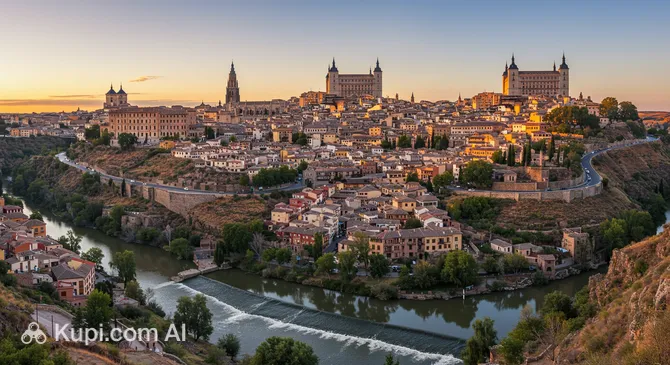
Toledo is one of the most magnificent cities in Spain, often referred to as the "City of Three Cultures" for the historical co-existence of Christian, Muslim, and Jewish communities. Perched atop a gorge overlooking the Tagus River, this UNESCO World Heritage Site offers a captivating journey back in time with its labyrinthine streets and stunning architecture.
Located in the center of the Iberian Peninsula, just 70 kilometers south of Madrid, Toledo serves as the capital of the province of the same name. With a population of approximately 85,000 residents, it maintains a vibrant yet intimate atmosphere. The fascinating history of Toledo is etched into every stone, from its ancient walls to its monumental gates, showcasing a legacy that spans millennia.
Toledo. Illustration.
Source: Kupi.com AI
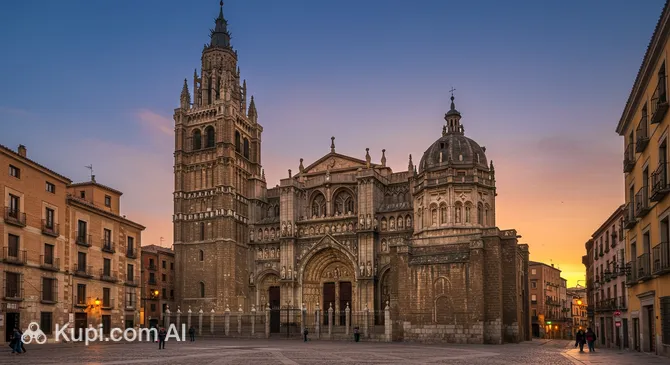
Visitors are drawn to the city's remarkable landmarks, such as the imposing Alcázar of Toledo, a stone fortification located in the highest part of the city. The Primatial Cathedral of Saint Mary is another masterpiece, renowned as one of the finest Gothic structures in Europe. Wandering through the old Jewish Quarter allows travelers to explore the Synagogue of Santa María la Blanca and the Sephardic Museum, highlighting the city's diverse heritage.
Whether you are an architecture enthusiast or simply looking for a romantic getaway, Toledo promises an unforgettable experience. Its unique blend of cultural influences and breathtaking panoramic views make it an essential stop on any Spanish itinerary.
Weather Overview
Toledo experiences a continental climate marked by distinct seasonal contrasts, offering hot summers and cool winters. Visitors can generally expect dry, sunny conditions during the peak tourist season, while the colder months bring moderate rainfall and brisker temperatures.
During the height of summer in July and August, the city becomes quite hot, with average temperatures around 27°C and daily highs often reaching 34°C. Rainfall is virtually non-existent during this period. In contrast, winters are much cooler; January is typically the coldest month, with average temperatures dropping to 6.3°C and lows near 1.6°C.
Spring and autumn offer milder weather, though these seasons can be slightly wetter. March and April, for instance, are among the rainiest months, seeing about 10 wet days each. For a comprehensive overview to help you pack, you can check the detailed weather in Toledo.
Average monthly temperature
Average monthly precipitation
Interesting Facts
Beyond the impressive monuments and panoramic views, Toledo holds many fascinating secrets that are often overlooked by casual visitors. Uncovering these hidden gems offers a deeper glimpse into the city's rich and mysterious past.
Toledo Cathedral. Illustration.
Source: Kupi.com AI
Traveler photos:
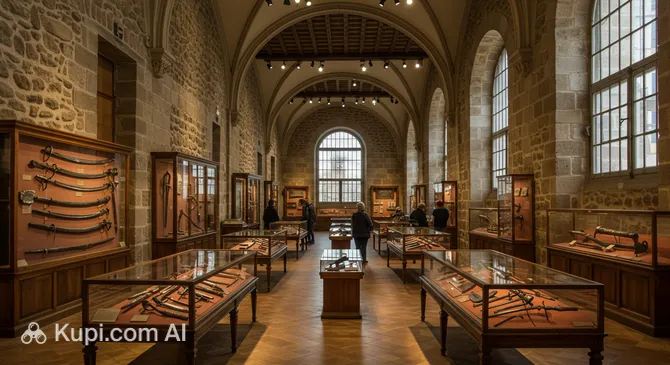
Toledo is world-renowned for its steel production, a tradition dating back over two millennia. The "Toledo Steel" was historically prized for its superior strength and flexibility, becoming the standard weaponry for Roman legions and royal armies across Europe.
The Toledo Cathedral is home to a massive bell known as the "Campana Gorda" (Fat Bell), which weighs over 17 tons. Despite its size, it is rarely rung because it developed a large crack shortly after being installed in the 18th century, resulting in a dull thud rather than a clear toll.
The city is famous for its marzipan, a sweet almond confection with a Protected Geographical Indication status. Legend has it that the recipe was invented by the nuns of the Convent of San Clemente during a famine, as they used the only abundant ingredients—almonds and sugar—to feed the starving population.
A curious local legend tells of the "Hombre de Palo" (Wooden Man), a mechanical automaton built in the 16th century by the engineer Juanelo Turriano. It was said that this clockwork figure could walk through the streets to collect alms and bread for its creator, making it one of the earliest tales of robotics in history.
The city's intricate street layout was intentionally designed as a labyrinth during the Islamic period. This winding network of narrow alleys served a dual purpose: to confuse potential invaders and to maximize shade, keeping the streets cool during the scorching summer heat.
How to Get There
Reaching this historic city is quite convenient thanks to its central location on the Iberian Peninsula. While the city itself does not host a commercial airport, it is excellently connected to the capital's transport hubs. For a comprehensive guide on all transport options, you can read more about how to get to Toledo.
The primary gateway for international travelers is the Adolfo Suárez Madrid-Barajas Airport (IATA: MAD), located in Madrid. The city of Toledo does not have its own airport, but you can fly into this major hub, which is approximately 80 km away. It is one of Europe's busiest airports, handling a vast volume of international and domestic flights. A taxi or car ride from Madrid-Barajas to Toledo typically takes between 60 and 80 minutes, whereas traveling by public transport, which usually requires a transfer in Madrid, takes approximately 140 minutes. Another option for travelers is Valladolid Airport (IATA: VLL) in the city of Valladolid, though it is significantly further, situated about 216 km from Toledo.
For clarity, here is a summary of the main airports:
Traveling by train is often the most popular and efficient method for visitors. The city is served by the Toledo Railway Station, which is conveniently located just 1.4 km from the city center. This station is a stunning piece of Neo-Mudéjar architecture in itself. Most travelers arrive here via high-speed train from the Atocha Railway Station in Madrid, which is about 67 km away. The high-speed connection makes the trip incredibly fast and comfortable.
Below is an overview of the nearest railway stations:
Toledo is a treasure trove of architectural wonders, where every corner reveals a new layer of history. Dominating the skyline is the majestic Alcázar of Toledo. Located on the city's highest hill, this immense stone fortification has served as a Roman palace, a medieval fortress, and a royal residence. Today, it houses the Army Museum, offering visitors a chance to explore Spain's military history while enjoying spectacular views of the city from its grounds.
Alcázar of Toledo. Illustration.
Source: Kupi.com AI
Traveler photos:
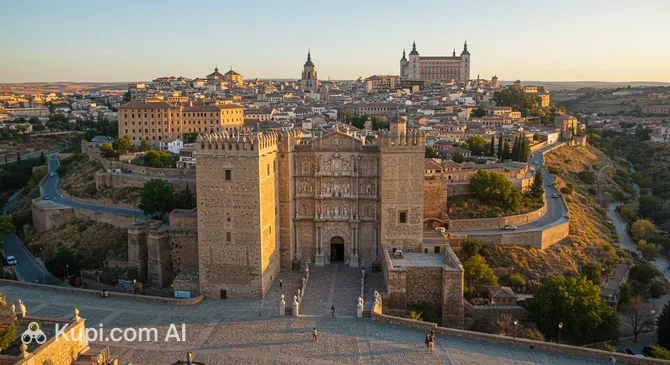
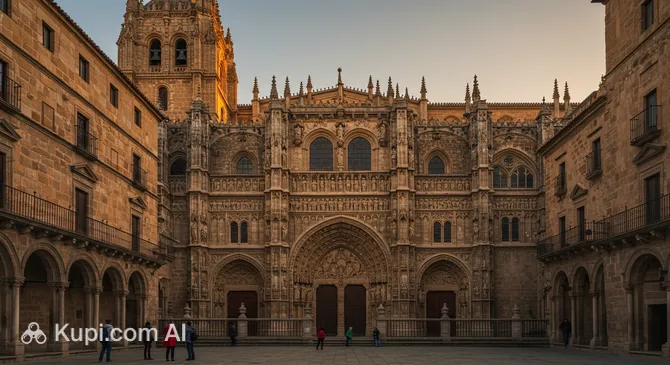
Another highlight of the city is the Monastery of San Juan de los Reyes, a breathtaking example of the Isabelline Gothic style. Commissioned by the Catholic Monarchs to commemorate a military victory and intended as their mausoleum, the building features incredible detailing. The two-story cloister is particularly famous for its intricate stone carvings, gargoyles, and a peaceful central garden that invites quiet reflection.
Monastery of San Juan de los Reyes. Illustration.
Source: Kupi.com AI
Traveler photos:
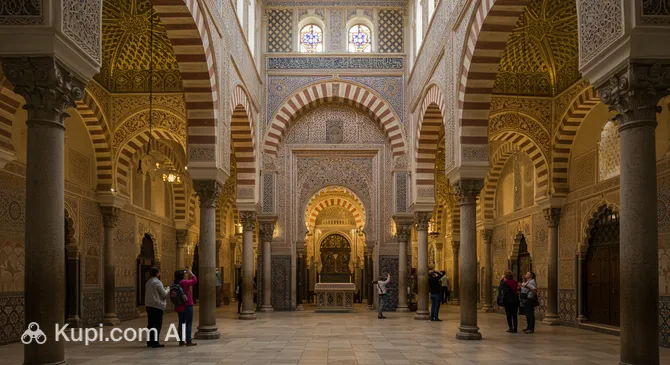
To witness the unique cultural blend of the city, a visit to the Synagogue of Santa María la Blanca is essential. Constructed in the 12th century under the Christian Kingdom of Castile by Islamic architects for the Jewish community, it is a stunning symbol of cooperation. The interior is characterized by a forest of white horseshoe arches and delicate plasterwork, creating a bright and serene atmosphere that surprises many visitors.
Synagogue of Santa María la Blanca. Illustration.
Source: Kupi.com AI
Traveler photos:
For the most iconic panoramic view of the city, travelers should head to the Mirador del Valle. Situated across the Tagus River, this lookout point offers the classic postcard perspective of Toledo, encompassing the river, the ancient walls, and the soaring spires of the cathedral. It is an ideal spot for photography, especially during sunset when the city is bathed in golden light.
Art lovers should not miss the El Greco Museum, located in the Jewish Quarter. Dedicated to the master painter Doménikos Theotokópoulos, known as El Greco, the museum recreates a period house from the 16th century. It displays a significant collection of his paintings, providing deep insight into the work of the artist who immortalized the spirit of Toledo in his canvases.
Local Cuisine
The gastronomy of Toledo is a hearty reflection of its hunting traditions and the rustic flavors of the Castile-La Mancha region. Visitors can expect rich, savory dishes often centered around game meat, prepared with simple yet high-quality ingredients that have defined the local diet for centuries. The cuisine here is designed to be comforting, making it especially satisfying after a day of exploring the city's steep streets.
One of the most iconic dishes is Perdiz a la Toledana (braised partridge). In this classic recipe, the bird is slowly cooked with garlic, onion, bay leaves, and wine until the meat is incredibly tender and aromatic. Another local favorite, often enjoyed as a flavorful appetizer or tapa, is Carcamusas. This spicy stew consists of lean pork and seasonal vegetables, typically simmered with tomatoes and peas and served piping hot in a small clay pot.
Cheese lovers cannot leave the region without tasting authentic Manchego cheese, made exclusively from the milk of sheep bred in this area. It varies in flavor from mild and creamy to sharp and crystallized, depending on its age. For a deeper dive into this culinary staple, you can visit the Manchego Cheese Museum Toledo, located in the historic center, where you can learn about the production process and enjoy curated tastings.
Manchego Cheese Museum Toledo. Illustration.
Source: Kupi.com AI
Traveler photos:
To accompany these robust meals, locals often choose wines from the nearby D.O. Méntrida or La Mancha vineyards. These red wines are known for their intensity and pair beautifully with the gamey flavors of the local cuisine. If you prefer a lighter option, a cold beer or a refreshing glass of sangria is widely available on terraces throughout the city.
The dining culture in Toledo is vibrant and varied, ranging from historic taverns tucked away in narrow alleys to elegant establishments. Many visitors enjoy "tapas hopping" in the evening, moving from bar to bar to try different small plates. Whether you are looking for a quick bite at a cozy spot like Taberna Skala or a traditional sit-down feast, the city offers a gastronomic experience that perfectly complements its rich history.
Travel Tips
To ensure your visit to the "City of Three Cultures" is as enjoyable as it is memorable, a little preparation goes a long way. These practical tips will help you navigate Toledo's unique medieval layout and make the most of your time in this historic Spanish gem.
Clothing and Gear: The most critical item to pack is a pair of sturdy, comfortable walking shoes. Toledo is famous for its steep hills and cobblestone streets, which can be unforgiving in heels or flip-flops. In summer, lightweight, breathable fabrics and a hat are essential to combat the intense heat, while winters require warm layers. Remember that when visiting religious sites like the Primatial Cathedral, you should dress modestly; ensure your shoulders and knees are covered to show respect.
Transportation: The historic center is best explored on foot, as many streets are pedestrian-only or too narrow for vehicles. If you are arriving from Madrid, the high-speed AVANT train is the fastest and most convenient option. Once in the city, an extensive bus network and taxis are available, but avoid renting a car for use within the old town. The labyrinthine streets are difficult to navigate for non-locals, and parking is extremely limited and expensive.
Finances: The local currency is the Euro (€). Credit and debit cards (Visa and Mastercard) are widely accepted in most restaurants, museums, and shops. However, it is wise to carry some cash for small purchases, such as buying marzipan from convent windows or paying for small souvenirs. Tipping is not mandatory in Spain, but leaving small change or rounding up the bill is a polite gesture for good service.
Health and Safety: Toledo is a very safe city for tourists, but standard precautions against pickpocketing should be taken in crowded areas. Pharmacies are marked with a green cross and are well-stocked; look for a "Farmacia de Guardia" if you need assistance outside regular hours. The emergency number for police, fire, or ambulance is 112. In summer, stay hydrated and carry water, as the climb up to the city center can be physically demanding.
Communication: The official language is Spanish. While staff at major hotels and tourist attractions usually speak English, it is less common in smaller local taverns or shops. Learning a few basic phrases like "Hola" (Hello), "Por favor" (Please), and "Gracias" (Thank you) is greatly appreciated by locals. Free Wi-Fi is often available in cafes and public squares, and SIM cards can be purchased at phone stores or tobacco shops (estancos).
Local Etiquette: Spaniards typically eat later than many other Europeans; lunch is usually served between 1:30 PM and 3:30 PM, and dinner often starts after 8:30 PM. When entering a shop or elevator, it is polite to greet others with a simple "Buenos días" or "Buenas tardes." In religious spaces, maintain silence and avoid using flash photography if prohibited.
What to Avoid: Do not try to see everything in just a few hours during the midday heat; many shops and smaller sites close for "siesta" in the afternoon, roughly between 2:00 PM and 5:00 PM. Also, avoid sitting down for dinner at 6:00 PM or 7:00 PM, as kitchens may not be open yet, or you might end up in a "tourist trap" rather than an authentic local restaurant.
Additional Tip: Toledo is famous for its marzipan, a sweet almond delight. For the most authentic experience, buy it directly from the nuns at the local convents or from historic confectioneries like Santo Tomé. It makes for a delicious snack while exploring or a perfect gift to take home.
Armed with this practical advice, you are ready to conquer the hills of Toledo and immerse yourself in its rich heritage without any hassles. Enjoy getting lost in the winding streets and discovering the magic that this timeless city has to offer!
Entertainment & Nightlife
As the sun sets over the Tagus River, Toledo transforms from a bustling historical monument into an atmospheric city of illuminated spires and lively winding streets. While it may not have the frenetic energy of Madrid, the nightlife here offers a unique blend of relaxed sophistication and spirited fun, perfect for those who enjoy savoring a gin and tonic amidst centuries-old architecture.
The nightlife scene is primarily divided into two main areas. The Casco Histórico (Old Town) is ideal for an evening of "tapas hopping" and drinks in converted historic buildings. Here, the vibe is enchanting and somewhat romantic. For a more modern and energetic experience, locals head to the Santa Teresa district, located just outside the city walls. This area is known for its concentration of pubs, terraces, and a younger crowd looking to party until the early hours.
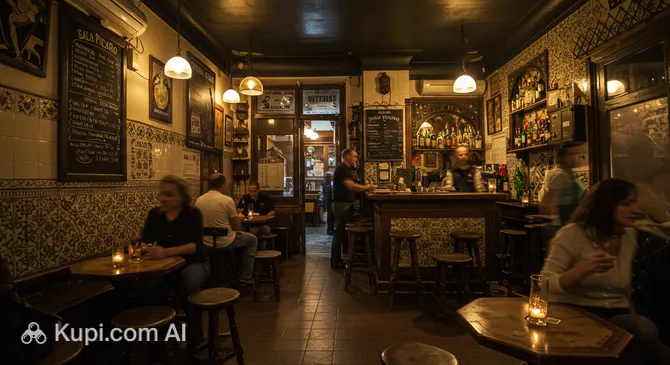
For live music enthusiasts and those seeking a cultural touch to their evening, Sala Pícaro is a must-visit institution in the old town. Known for its eclectic industrial-vintage decor, it hosts concerts, comedy shows, and DJ sets, making it a central hub for the city's artistic community. It is a perfect spot to enjoy a beer and soak in the local indie atmosphere.
Sala Pícaro. Illustration.
Source: Kupi.com AI
Traveler photos:
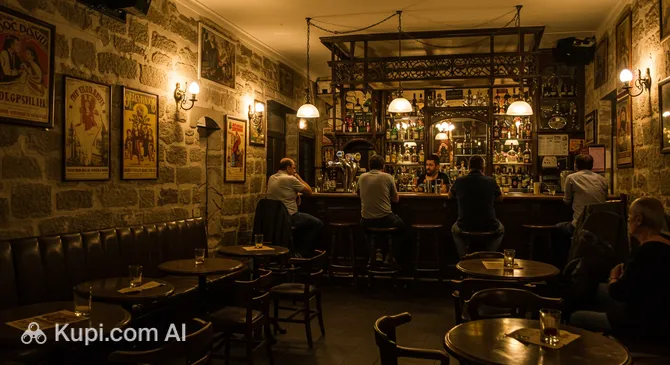
If you prefer a more polished setting for a conversation over expertly crafted drinks, Barrio Cocktail Restaurant offers a chic environment. It is well-regarded for its extensive cocktail menu and relaxed ambiance, suitable for starting the night or winding down after dinner. For those who want to continue the night with music and dancing, Maruxiña Lounge provides a vibrant setting with a modern feel, often staying open late for the night owls.
Barrio Cocktail Restaurant. Illustration.
Source: Kupi.com AI
Traveler photos:
The atmosphere in Toledo is generally casual but stylish. There is no strict dress code for most bars, though "smart casual" is the norm for evening dining and cocktail venues. Nightlife kicks off later here than in many other countries; bars start filling up around 11:00 PM, and clubs often don't get busy until 1:00 AM or 2:00 AM. Prices are reasonable, with a beer or wine costing significantly less than in the capital.
Safety is rarely a concern in Toledo, even at night. The historic center is well-lit and safe for walking, though the cobblestones can be tricky in the dark, so watch your step. If you are staying outside the walls or visiting the Santa Teresa district, catching a taxi is the best option. You can easily find them at designated ranks (like Plaza de Zocodover) or call a local Radio Taxi service.
Before the sun goes down, the city offers plenty of entertainment beyond its churches and museums. For a shot of adrenaline, the Fly Toledo Zip Line allows you to soar over the Tagus River, offering a breathtaking perspective of the San Martin Bridge. It is a thrilling way to break up a day of sightseeing. Those looking for a more relaxed afternoon of retail therapy can visit the Abadía Shopping Park, a large commercial center on the outskirts offering a wide range of international brands and leisure facilities.
Fly Toledo Zip Line. Illustration.
Source: Kupi.com AI
Traveler photos:
Parks & Museums
While Toledo is famous for its dense urban fabric of stone and history, the city also offers serene green spaces and an impressive array of museums that delve deeper into its rich cultural tapestry. Beyond the famous cathedral and fortress, visitors can find peaceful retreats along the river and collections that preserve the artistic and historical legacy of the "City of Three Cultures."
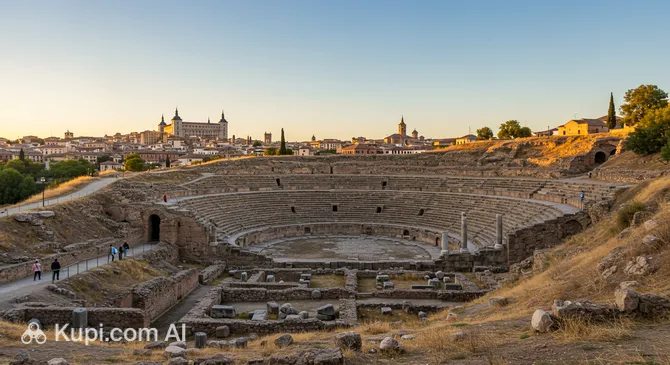
For those seeking a breath of fresh air, the Ecological Path of the Tagus (Senda Ecológica) is a magnificent choice. This paved walkway hugs the riverbank, skirting the foot of the city's cliffs. It offers a unique perspective of Toledo's fortifications from below and is a haven for local birdlife. Another significant outdoor space is the Roman Circus of Toledo. Located just outside the medieval walls, this vast area was once used for chariot races. Today, it stands as a park where visitors can walk among the ruins of the 1st-century structure, blending a relaxing stroll with archaeological discovery.
Roman Circus of Toledo. Illustration.
Source: Kupi.com AI
Traveler photos:
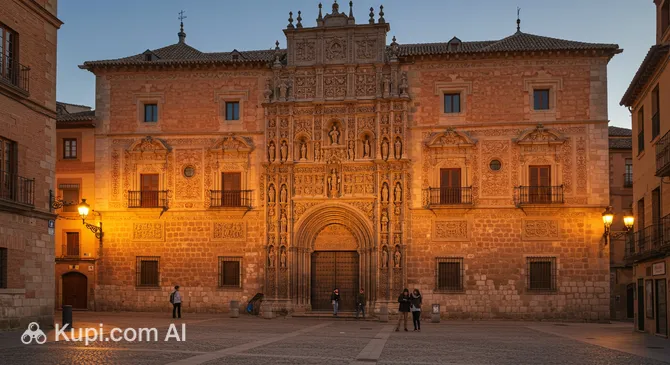
Toledo's museums are as diverse as its history. A standout institution is the Museum of Santa Cruz, housed in a stunning 16th-century building that was originally a hospital. The structure itself is a masterpiece of Plateresque architecture, featuring a magnificent façade and an elegant cloister. Inside, the museum hosts a rich collection of fine arts, including works by El Greco, intricate tapestries, and archaeological artifacts that trace the region's evolution.
Museum of Santa Cruz. Illustration.
Source: Kupi.com AI
Traveler photos:
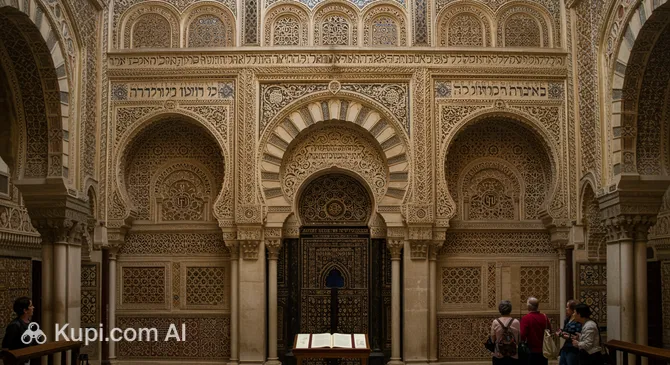
Another essential cultural stop is the Synagogue of El Tránsito, located in the heart of the Jewish Quarter. This 14th-century building is famous for its exquisite stucco work and Mudejar coffered ceiling. It houses the Sephardic Museum, which preserves the legacy of the Jewish community in Spain. The exhibits provide a moving insight into their history, customs, and religious life before the expulsion in 1492.
Synagogue of El Tránsito. Illustration.
Source: Kupi.com AI
Traveler photos:
For a unique and visually striking experience, music lovers should visit the Museo Cromática. This museum is dedicated to painted musical instruments, displaying a vibrant collection where art and music merge. It is located in the Monastery of the Immaculate Conception, adding a historic backdrop to a very colorful and modern exhibition.
An insider tip for a quiet break is to visit the gardens of the Paseo del Tránsito. Located near the synagogue, this small park offers benches with spectacular views over the Tagus River and the cigarrales (country houses) on the opposite bank. It is a perfect spot to rest your feet and watch the sunset away from the busier main plazas.
Getting Around
Toledo’s public transport system is designed primarily to help visitors bridge the gap between the modern transport hubs in the lower valley and the historic city center perched atop the hill. While the ancient walled city is best explored on foot due to its narrow and labyrinthine streets, the local infrastructure ensures that reaching the heart of the action is convenient and accessible for everyone.
One of the most unique and practical features of the city's transport network is its system of mechanical escalators and funiculars, known locally as "remontes." These free facilities are a lifesaver for tourists, effortlessly transporting pedestrians from the lower parking areas and bus stations up to the historic center. The most popular entry point is the Safont escalator, which connects the area near the bus station to the Plaza de Zocodover, allowing you to ascend the steep slopes comfortably while enjoying the view.
For moving between the railway station, the bus station, and various neighborhoods, the city operates a reliable network of urban buses managed by Unauto. The buses are typically blue and run frequently throughout the day. For most tourists, the most relevant routes are Lines 5, 61, and 62, which connect the high-speed train station and the main bus terminal with the Plaza de Zocodover in the city center. Service generally runs from early morning until around 11:00 PM, though frequencies may decrease on weekends and holidays.
Paying for transport is straightforward and traditional. For urban buses, you can purchase a single ticket directly from the driver upon boarding. The cost is very affordable, typically around 1.40 EUR per trip. It is highly recommended to carry coins or small bills, as drivers often cannot provide change for large banknotes. While reloadable transport cards exist for residents, they are rarely necessary for short-term visitors who mostly walk once inside the city walls.
Taxis offer a comfortable alternative, particularly if you are carrying heavy luggage or traveling to a hotel located on the outskirts (the "Cigarrales" area). Official taxis are white, often featuring a diagonal purple stripe, and can be easily found at designated ranks at the train station and the main plaza. They operate on a meter system with reasonable rates. While you can sometimes hail them on the street, it is often easier to find them at a rank or ask your hotel reception to call a Radio Taxi for you.
For those interested in sightseeing rather than just commuting, the "Zocotren" tourist train is a popular option. Departing from the main square, it takes passengers on a circular route around the city walls and across the river to the famous panoramic viewpoints. This is an excellent alternative for those who want to see the classic skyline views without hiking the considerable distance to the other side of the valley.
A final piece of practical advice concerns rental cars: do not attempt to drive inside the historic walled center. The streets are incredibly narrow, often one-way, and access is frequently restricted to residents only. The best approach is to leave your vehicle in one of the free parking lots at the base of the city, such as the Safont parking, and use the escalators or a bus to reach the old town. This saves you from the stress of navigating medieval alleys and the risk of fines.
Accommodation
Where to Stay:
Accommodation in Toledo is as atmospheric as the city itself, offering travelers the chance to sleep within centuries-old walls or enjoy modern luxuries with panoramic views. The options range from charming boutique hotels housed in restored palaces and former convents to budget-friendly hostels and contemporary resorts located just outside the historic center. Whether you prefer the romance of the medieval quarter or the convenience of a modern hotel with parking, the city caters to every preference.
For those who want to be in the heart of the action, staying in the Casco Histórico (Old Town) is the best choice. This area places you within walking distance of the cathedral and major museums, allowing you to experience the magic of the illuminated streets after the day-trippers have left. However, keep in mind that this area is hilly and difficult to navigate with a car. Alternatively, the areas across the Tagus River, particularly around the "Cigarrales" (historic country estates), offer tranquil settings and often feature spectacular views of the city skyline, making them popular for a more relaxed, upscale stay.
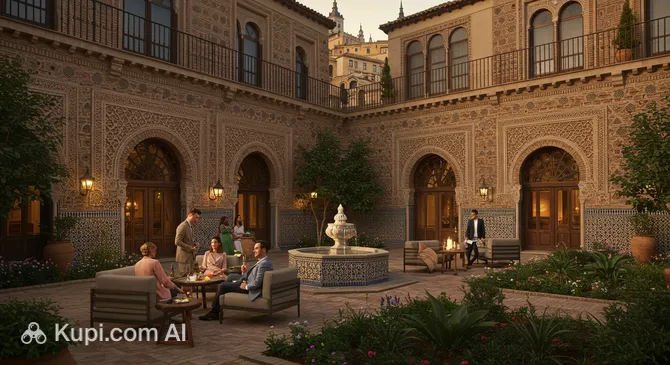
Travelers looking for a unique immersion into the city's heritage might consider the Medina Mudéjar Toledo. This establishment offers a distinctive experience, blending accommodation with the relaxation of traditional Arab baths, reflecting the city's rich Islamic past. It is an excellent option for those seeking a peaceful retreat within the bustling old town.
Medina Mudéjar Toledo. Illustration.
Source: Kupi.com AI
Traveler photos:
If you prefer more extensive facilities and easy access by car, looking slightly further afield can be rewarding. The Toledo Auditorium & Spa Hotel is a prime example of a modern resort hotel. Located just across the river, it provides spacious rooms, spa services, and often includes amenities like swimming pools, which are a welcome relief during the hot Spanish summers.
Prices in Toledo are generally reasonable compared to Madrid. Budget travelers can find hostels and guesthouses for around €40 to €60 per night, while mid-range boutique hotels typically range from €80 to €130. Luxury options and "Paradors" can cost upwards of €150 per night. Booking is predominantly done through major online platforms, though contacting smaller, family-run establishments directly can sometimes yield better rates or specific room requests.
Booking Tip: Toledo is an extremely popular destination, especially during weekends and major festivals like Corpus Christi or Easter (Semana Santa). During these peak times, accommodation can sell out months in advance, and prices rise significantly. It is highly recommended to book your stay at least two to three months ahead if you plan to visit during these busy periods to secure the best location and value.
Nearby Cities
For those looking to explore the surroundings, Toledo serves as an excellent base for day trips to several interesting nearby locations. The region of Castile-La Mancha and the neighboring community of Madrid offer a wealth of historical and cultural sites within a short driving distance.
One of the most recommended stops is Aranjuez, located approximately 41 kilometers from Toledo. This Royal Site is a UNESCO World Heritage landscape, famous for its magnificent Royal Palace and extensive ornamental gardens, such as the Prince's Garden and the Island Garden. It offers a lush, green contrast to the arid plains surrounding Toledo and is perfect for a relaxing afternoon stroll.
Another iconic destination nearby is the town of Consuegra. Although slightly further south, it is essential for anyone wishing to see the classic imagery of Spain. Here, visitors can admire the famous white windmills of La Mancha lining the ridge of Cerro Calderico alongside a medieval castle, bringing the literary world of Don Quixote to life.
City
Population
Distance
Bargas
10 807
9 km
Sonseca
11 084
21 km
Torrijos
13 678
25 km
Fuensalida
12 004
26 km
Yuncos
10 813
28 km
These nearby destinations offer a glimpse into the diverse culture and landscapes of the region, allowing travelers to experience everything from royal grandeur to traditional rural charm.
Shopping & Souvenirs
Shopping in Toledo offers a delightful mix of traditional craftsmanship and modern convenience. While the city is not primarily known as a high-fashion capital, it is world-renowned for its unique artisanal products that reflect its rich history. Visitors will find that the shopping experience here is less about international chains and more about discovering timeless treasures, from intricate metalwork to sweet culinary delights, tucked away in centuries-old buildings.
The heart of the city's commercial activity lies in the historic center, particularly along the Calle del Comercio. This bustling pedestrian street connects the main Plaza de Zocodover with the cathedral area and is lined with a variety of shops selling souvenirs, clothing, and local handicrafts. Wandering through this district and the adjacent Calle Ancha, tourists can explore family-run businesses that have been operating for generations, offering everything from high-quality leather goods to hand-painted ceramics.
For those seeking a more contemporary shopping experience with international brands, the city has excellent options just outside the medieval walls. The Luz del Tajo Shopping Center is the largest and most popular mall in the area. Located in the Santa María de Benquerencia district, it features three floors of fashion stores, electronics, and a cinema, making it a perfect one-stop destination for modern needs. Another significant retail hub is the Abadía Shopping Park, a sprawling commercial complex on the outskirts that houses large supermarkets, sports outlets, and home goods stores.
Luz del Tajo Shopping Center. Illustration.
Source: Kupi.com AI
Traveler photos:
While Toledo does not have a massive central market in the traditional sense, the Mercado de San Agustín offers a modern gastronomic twist on the concept. Located near Plaza de Zocodover, this renovated space spans multiple levels and combines food stalls with gourmet tasting areas, allowing visitors to purchase local produce like cheese and wine while enjoying a tapa on site. It is a vibrant spot to soak up the local atmosphere and pick up edible gifts.
When it comes to souvenirs, Toledo is famous for Damasquinado (Damascene ware), an ancient craft involving the inlay of gold or silver thread into black steel. You will find plates, jewelry, and decorative items featuring these geometric and floral designs throughout the city. Another iconic purchase is a replica Toledo sword or knife, celebrating the city's legendary steel-making heritage. For those with a sweet tooth, buying authentic marzipan is a must; this almond confection is a local specialty, often sold in charming boxes that make for excellent gifts.
Store opening hours in the historic center typically follow the traditional Spanish schedule. Small shops usually open around 10:00 AM, close for "siesta" between 2:00 PM and 5:00 PM, and reopen until 8:30 PM or 9:00 PM. However, larger shopping malls like Luz del Tajo and many souvenir shops on main tourist streets often stay open all day without a break. Most establishments accept credit and debit cards, though carrying some cash is useful for smaller purchases.
Non-EU residents visiting Toledo are eligible for a VAT refund on purchases of goods intended for personal use. Look for stores displaying the "Tax-Free" sign, and be sure to ask for a tax-free form at the checkout. The refund process is generally digital (DIVA system), allowing travelers to easily validate their forms at the airport or designated customs points before leaving the European Union.