Support

Badajoz

About

Badajoz is a captivating city located in the autonomous community of Extremadura, situated just a stone's throw from the border with Portugal. As the capital of the largest province in Spain, it serves as a significant cultural and commercial hub. The city sits on the banks of the Guadiana River, offering a unique blend of Spanish and Portuguese influences that permeates its architecture, cuisine, and daily life. With a population of approximately 150,000 residents, it maintains a lively yet welcoming atmosphere that appeals to travelers seeking an authentic experience.
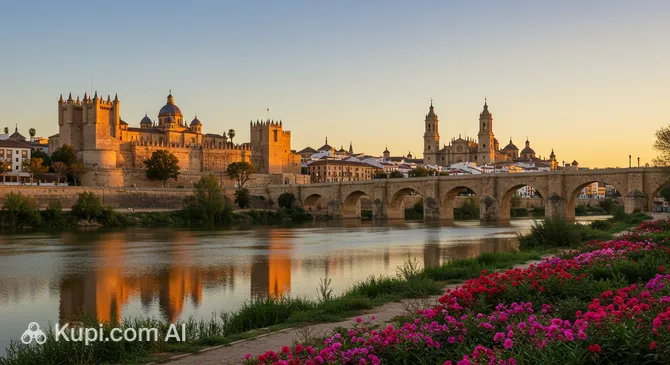
Badajoz. Source: Kupi.Binoculars

The city is renowned for its impressive heritage, having been founded in the 9th century during the Moorish period. Visitors can delve deep into the history of Badajoz by exploring its ancient fortifications and well-preserved monuments. The climate here is typically Mediterranean, characterized by hot summers and mild winters, making it a pleasant destination for exploration, particularly in the spring and autumn. The sun-drenched streets and squares are perfect for leisurely strolls, allowing travelers to fully soak in the local vibe.

Among the top attractions, the Alcazaba of Badajoz stands out as one of the most significant Moorish citadels in the country, offering panoramic views of the city and the river below. The picturesque Plaza Alta, with its striking red and white geometric patterns, is another must-see landmark that captures the essence of the city's artistic spirit. Nature lovers will also appreciate the beautiful parks and walking paths along the Guadiana River, which provide a green oasis for relaxation and birdwatching.

Whether you are a history enthusiast, a lover of fine gastronomy looking to taste the region's famous Iberian ham, or simply seeking a charming getaway, Badajoz has something to offer. Its strategic location and warm hospitality make it an excellent starting point for exploring the wider Extremadura region and enjoying a memorable Spanish holiday.
Weather Overview

Travelers visiting this region can expect a climate characterized by significant seasonal contrasts, typical of the Mediterranean interior. The weather in Badajoz generally features hot, dry summers and mild, moderately rainy winters. During the peak summer months of July and August, temperatures soar, with average highs reaching up to 35.0°C, and rainfall is virtually non-existent.

In contrast, the winter season brings cooler air, with January seeing average lows of around 4.9°C. While the city does not experience extreme cold, visitors should pack layers for the crisp mornings and evenings. Rainfall is most frequent during the transition periods and winter, particularly in April and November, which can see up to 10 wet days per month. Overall, the most pleasant times to explore the outdoors are often in May and October, when average temperatures hover comfortably between 19°C and 20°C.

Interesting Facts

Beyond its well-known monuments, Badajoz holds fascinating stories that reveal its strategic importance and unique cultural blend. The city's history is woven with tales of rebellion, architectural grandeur, and a vibrant spirit that surprises many visitors.
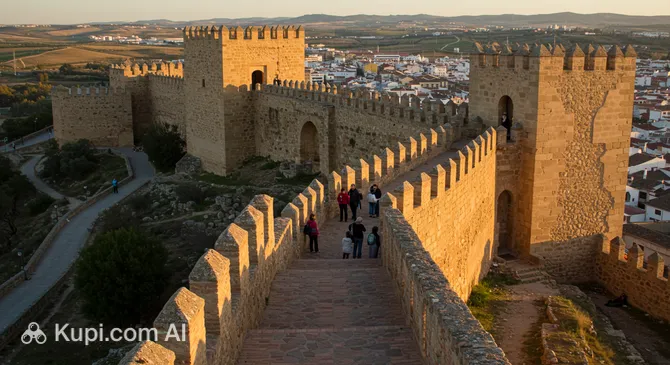
Alcazaba of Badajoz. Source: Kupi.Binoculars
  • The Alcazaba of Badajoz is not just another fortress; it is widely cited as the largest Moorish citadel in Spain by perimeter. Its massive defensive walls enclose a vast area that once housed the entire population of the medieval city, serving as a formidable stronghold near the border.

  • Unlike many other ancient cities, Badajoz was founded in 875 AD by a rebel leader, Ibn Marwan, rather than a monarch. He established the settlement on the Cerro de la Muela to assert his independence from the Emirate of Cordoba, giving the city a distinct origin story rooted in defiance and autonomy.

  • The Plaza Alta, with its striking red and white geometric decorations, sits on the site of the former Islamic souk. For centuries, this square has been the heart of public life, evolving from a medieval market into a Renaissance masterpiece that creates a stunning visual contrast against the stone fortifications.

  • Badajoz is home to one of the most famous Carnival celebrations in Spain, declared an event of International Tourist Interest. During this time, the city transforms completely, with locals devoting months to creating elaborate costumes, proving that the city's festive spirit rivals that of larger coastal capitals.

How to Get There

Reaching this historic city near the Portuguese border is straightforward, with several options available depending on your starting point. Whether you prefer flying or taking the train, you can find more about how to get to Badajoz and choose the route that best suits your travel plans.

For those arriving by air, the most direct option is Badajoz Airport (BJZ), a regional facility located approximately 13 km from the city center. While it is a smaller airport with lower passenger traffic, it offers the convenience of a short 20-minute taxi or bus ride into town. Travelers looking for more extensive international connections often choose to fly into Lisbon Portela Airport (LIS) in Lisbon, Portugal. Located about 188 km from Badajoz, this major international hub offers a wide range of flights. The journey from Lisbon to Badajoz typically takes around 2 hours by car or bus.

Another significant alternative is Seville Airport (SVQ) in Seville, situated roughly 187 km away. As a busy transport node in southern Spain, it serves numerous European destinations. From Seville, you can reach Badajoz in approximately 2 hours by road.

For clarity, here is a summary of the main airports:

Airport Name City Passenger Traffic Km from City
Lisbon Portela AirportLisbonVery High188.3
Faro AirportFaroHigh224.6
Seville AirportSevilleHigh187.6
Jerez AirportJerez de la FronteraMedium250.0
Badajoz AirportBadajozLow13.0

If you prefer rail travel, the city is well-connected to the national network. The Badajoz Railway Station is conveniently situated within the city limits, just 1.7 km from the center. It serves as a key terminal for trains arriving from Madrid and other parts of Extremadura. A taxi from the station to the historic center takes only about 5 to 10 minutes.

Alternatively, some travelers may connect through Mérida Railway Station in the nearby city of Merida, located about 54 km from Badajoz. Merida is a significant regional hub, and from there, you can easily catch a connecting train or bus to complete the final leg of your journey in under an hour.

Below is a list of the nearest and most relevant railway stations:

Station City Passenger Traffic Km to Center
Santa Justa Railway StationSevilleVery High186.6
Mérida Railway StationMeridaMedium54.6
Cáceres Railway StationCaceresMedium82.1
Huelva StationHuelvaMedium180.4
Badajoz Railway StationBadajozMedium1.7

Main Attractions

While the city's fortress and historic walls are often the first things to catch a visitor's eye, Badajoz offers a variety of landmarks that showcase its rich cultural tapestry. From vibrant squares to ancient artifacts, the city's main attractions provide a fascinating journey through time.

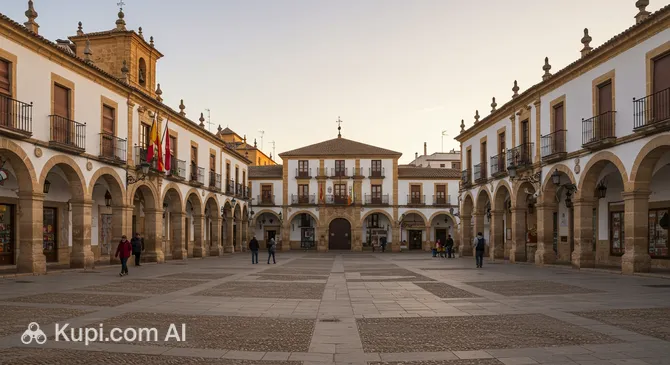
One of the most photogenic and emblematic spots in the city is the Plaza Alta. Located at the foot of the citadel, this square is famous for the distinctive red, white, and black geometric patterns adorning its facades. It has been beautifully restored to serve as a vibrant meeting place, interesting to tourists for the striking visual contrast between its 17th-century colorful decorations and the somber medieval stone arches that surround it. It is the perfect place to capture the artistic spirit of the city.

Plaza Alta. Source: Kupi.Binoculars

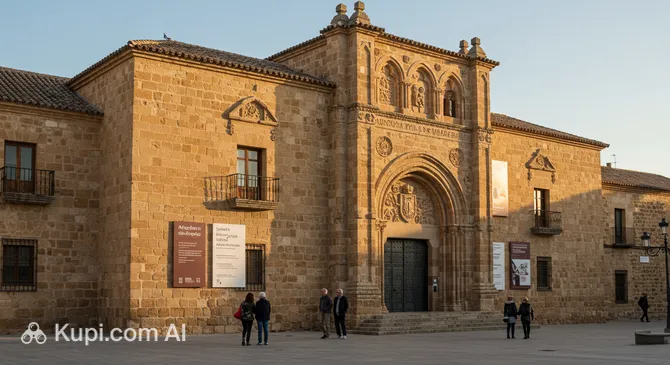
For a deep dive into the region's past, the Archaeological Museum of Badajoz is an essential stop. Housed within the impressive Duke of Feria's Palace inside the Alcazaba, the museum boasts an extensive collection of artifacts ranging from the prehistoric era to the Christian conquest. Visitors are particularly drawn to the exquisite Roman mosaics, Visigothic pillars, and Islamic steles, which offer a comprehensive and tangible timeline of the diverse cultures that have shaped this border territory.

Archaeological Museum of Badajoz. Source: Kupi.Binoculars

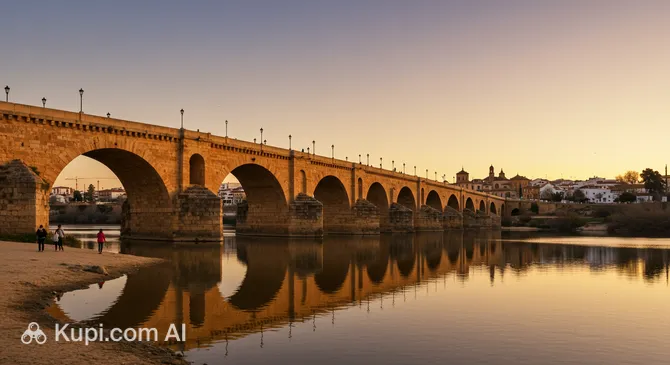
Connecting the historic center with the modern side of the city across the Guadiana River is the majestic Palmas Bridge. Built in the 16th century, this Herrerian-style granite structure spans nearly 600 meters and features 32 arches. It is a favorite landmark for a scenic stroll, especially at sunset, and leads directly to the monumental Puerta de Palmas, serving as a grand entrance to the old town.

Palmas Bridge. Source: Kupi.Binoculars

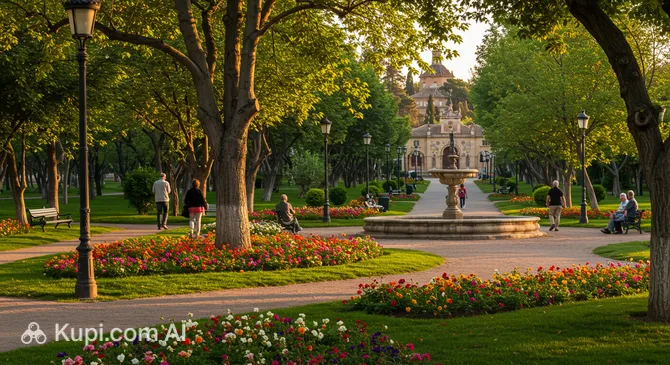
Travelers seeking a tranquil break amidst their sightseeing should visit Castelar Park. This central green oasis occupies the site of a former olive grove and is now filled with tall palm trees, romantic statues, and a central pond. It is a charming spot for families and nature lovers, well-known for the free-roaming peacocks that wander the pathways, adding a splash of color and life to the serene environment.

Local Cuisine

The culinary scene in Badajoz is a delightful reflection of its geography, serving as a melting pot where traditional Extremaduran flavors meet the culinary traditions of neighboring Portugal. The local gastronomy is defined by the high quality of its raw ingredients, particularly those sourced from the dehesa (oak meadows). Visitors will find a cuisine that is rustic, hearty, and unpretentious, yet incredibly flavorful, with a strong emphasis on pork products, game meat, and fresh vegetables.

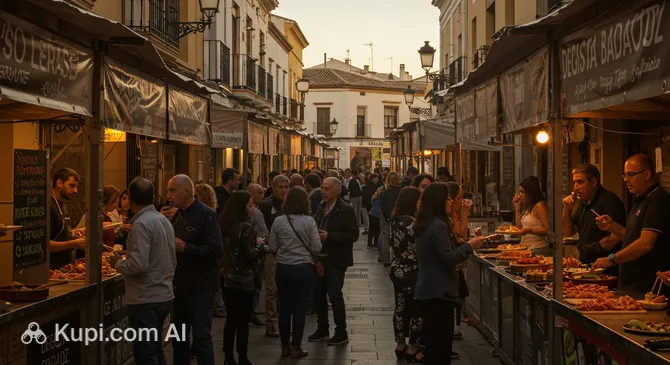
No visit to this region is complete without tasting the world-renowned Jamón Ibérico de Bellota (acorn-fed Iberian ham), which is widely considered the jewel of local gastronomy. Another signature dish to try is Migas Extremeñas, a humble shepherd’s recipe made from fried breadcrumbs, garlic, olive oil, and peppers, often topped with a fried egg or chorizo. Due to the city's proximity to the border, you will also find a significant Portuguese influence on the menus; Bacalao Dorado (golden cod with potatoes and eggs) is a beloved staple in many local households and restaurants.

Degusta Badajoz. Source: Kupi.Binoculars

When it comes to drinks, the region is proud of its wines, particularly those under the Ribera del Guadiana Designation of Origin. These wines, ranging from robust reds to crisp whites, pair perfectly with the local cheeses, such as the creamy Torta de la Serena. For a non-alcoholic option, fresh fruit juices and gazpacho are popular choices during the hot summer months to stay refreshed.

The dining culture here revolves heavily around socializing and "tapeo" (going for tapas). Locals often gather in the historic center to enjoy small plates with friends. For an authentic taste of the region's produce, you might visit Degusta Badajoz, a spot known for showcasing local flavors. If you are looking for a relaxed atmosphere to enjoy a drink, the Rincón Nazarí Bar offers a unique setting inspired by Moorish aesthetics. For those who prefer a variety of modern dining options in one place, the Conquistadores Shopping Center provides a range of eateries suitable for a quick and casual meal.

Travel Tips

Welcome to Badajoz! To ensure your visit to this historic border city is as smooth and enjoyable as possible, we have compiled a list of essential practical advice. These tips will help you navigate local customs, prepare for the climate, and experience the city like a true insider.

  1. Clothing and Gear: The climate in Badajoz can be extreme, particularly in summer. If you visit between June and September, lightweight, breathable clothing, a wide-brimmed hat, and high-SPF sunscreen are non-negotiable essentials, as temperatures often exceed 35°C. Winters are mild but can be damp, so a waterproof jacket and layers are recommended. Since exploring the historic Alcazaba involves walking on uneven cobblestones and dirt paths, bring sturdy, comfortable walking shoes.

  2. Transportation: The historic center of Badajoz is compact and best explored on foot, allowing you to easily wander between monuments. For longer distances, the local bus network, operated by TUBASA, is reliable and covers the entire city. Taxis are affordable and easy to flag down or book via phone. Unless you plan to explore the surrounding Extremadura countryside, a rental car is generally unnecessary for the city itself and can be difficult to park in the old town.

  3. Finances: The local currency is the Euro (€). While credit and debit cards are widely accepted in hotels, shops, and larger restaurants, it is wise to carry some cash for small purchases in traditional tapas bars or kiosks. ATMs are plentiful throughout the city. Tipping is not mandatory in Spain, but it is polite to round up the bill or leave a few coins (5-10%) for good service at cafes and restaurants.

  4. Health and Safety: Badajoz is generally a very safe city for tourists. In case of any medical emergency, dial 112 for assistance. Pharmacies are easily engaging by the flashing green cross sign; they are well-stocked, and there is always one on duty (farmacia de guardia) 24/7 for urgent needs. Tap water is safe to drink, but staying hydrated with bottled water is crucial during the hot summer months.

  5. Communication: The primary language is Spanish. While staff in major hotels and tourist offices usually speak English, it is less common in local bars, small shops, and among the older population. Learning a few basic phrases like "Hola" (Hello), "Gracias" (Thank you), and "La cuenta, por favor" (The bill, please) will be greatly appreciated. Prepaid SIM cards are easily available at phone shops in the city center for staying connected.

  6. Local Etiquette: Spaniards are warm and social. When introduced to someone, a handshake is standard, though two kisses on the cheeks are common among friends or in informal settings. Dining times are significantly later than in many other countries; locals typically have lunch between 2:00 PM and 4:00 PM, and dinner rarely starts before 9:00 PM. Trying to dine earlier may result in finding empty restaurants or closed kitchens.

  7. What to Avoid: Avoid planning shopping trips or administrative tasks between 2:00 PM and 5:00 PM. This is the time for the siesta, and due to the intense afternoon heat, especially in summer, most local businesses close their doors to rest and reopen in the evening.

  8. Border Bonus: Take advantage of the city's unique location. Badajoz is right on the border with Portugal, so it is common and easy to hop across to the neighboring town of Elvas for a quick visit. Just remember that Portugal is in a different time zone (one hour behind Spain), so check your watch if you have reservations!

By keeping these practical tips in mind, you will be well-prepared to embrace the relaxed rhythm and rich culture of Badajoz. We hope you have a fantastic journey filled with delicious food, sunny days, and unforgettable memories in this charming corner of Extremadura.

Entertainment & Nightlife

As the sun sets over the Guadiana River, Badajoz transforms into a lively hub of social activity. The city is known for its vibrant nightlife, which is fueled by a large student population and a local culture that loves to socialize late into the night. The atmosphere is generally relaxed and welcoming, with a mix of traditional Spanish taverns and modern clubs. Nightlife here typically spans two main areas: the historic Casco Antiguo (Old Town) and the modern district of Valdepasillas.

The evening usually begins in the Old Town, particularly around the Plaza de España and Plaza de la Soledad, where locals gather for tapas and drinks in a casual setting. As the night progresses, the energy shifts towards the Valdepasillas neighborhood and the area around Sinforiano Madroñero Avenue. This modern part of the city is packed with pubs, music bars, and discos that stay open until the early hours of the morning. It is the place to be if you are looking for a more energetic crowd and contemporary music.

For those seeking a specific venue to experience the local party scene, Flidais is a popular nightclub choice where you can dance to current hits and enjoy a spirited atmosphere. If you prefer a more laid-back evening with friends, Mellow Badajoz Shisha offers a comfortable environment to relax, enjoy a drink, and experience the city's lounge culture. Another option for starting the night with good drinks and company is Gladys Restaurant, which transitions well from dining to evening socializing.

Flidais. Source: Kupi.Binoculars

Practical Advice: Like much of Spain, the nightlife in Badajoz starts late. Bars usually do not get busy until after 11:00 PM, and clubs often remain empty until 2:00 AM or 3:00 AM. The dress code is generally smart casual; while some high-end clubs might prefer shoes over sneakers, most places are quite flexible. Prices are relatively affordable compared to larger Spanish cities like Madrid or Barcelona. A beer or soft drink typically costs around €2-€3, and mixed drinks are reasonably priced.

Safety and Transport: Badajoz is a safe city for night walks, even in the early hours. However, it is always wise to stay in well-lit areas and stick to the main avenues when moving between districts. Taxis are the most convenient way to get around at night. They are inexpensive and can be easily hailed on the street or found at designated ranks (paradas de taxi). Ride-hailing apps may also be available, but local taxis are abundant and reliable.

During the daytime, entertainment shifts towards leisure and culture. Beyond the historical sites, visitors can enjoy shopping at the Valverde Shopping Center, which offers a variety of stores and entertainment options. For a peaceful afternoon, a walk through Legion Park provides a refreshing break with its greenery and monuments. The city also boasts the López de Ayala Theatre, which hosts a regular program of plays, concerts, and dance performances for culture enthusiasts.

Parks & Museums

Badajoz is not only a city of stone fortresses and historic battles; it is also a place where green spaces and cultural institutions thrive. The city has successfully integrated its riverfront and ancient walls into a network of parks, while its museums offer a deep dive into both ancient history and contemporary artistic expression. Visitors will find plenty of opportunities to relax in nature or immerse themselves in the local heritage.

One of the most significant green areas is the extensive park system along the Guadiana River. The rehabilitation of the riverbanks has created a vast natural space perfect for walking, cycling, and birdwatching. This area is particularly special because the river here is a designated Special Protection Area for Birds (ZEPA), allowing nature lovers to spot various species just steps from the city center. It serves as the city's lungs, offering a refreshing contrast to the urban environment.

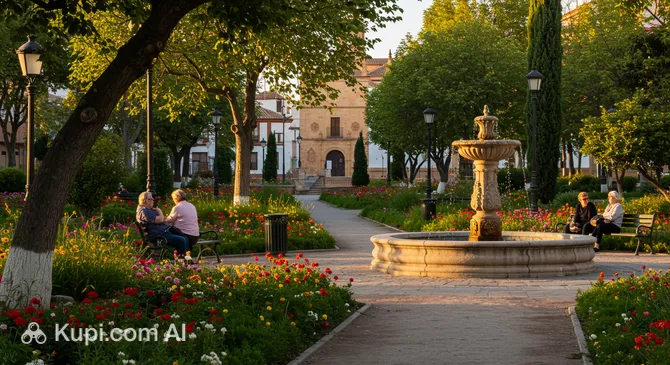
For a more traditional garden experience, Castelar Park remains the city's most beloved romantic garden. Located in the heart of the city, it is famous for its tall palm trees, manicured hedges, and the peacocks that roam freely among the visitors. It is an ideal spot for a quiet afternoon reading on a bench or enjoying the shade during the warmer months.

Castelar Park. Source: Kupi.Binoculars

Another notable green space is Legion Park, which combines history with leisure. Situated near the city's defensive walls, this park features commemorative monuments and well-kept walkways. It offers a unique perspective of the fortifications and is a peaceful place to reflect on the city's past while enjoying the landscaped surroundings.

Legion Park. Source: Kupi.Binoculars

When it comes to culture, Badajoz boasts several impressive venues. While the Archaeological Museum of Badajoz is the go-to place for understanding the region's ancient timeline, art enthusiasts should not miss the MEIAC (Museum of Ibero-American Contemporary Art). Housed in a former prison building, this museum is a bold architectural statement and holds a significant collection of art from Spain, Portugal, and Latin America, highlighting the city's role as a bridge between cultures.

Given the city's passion for its annual festivities, the Carnival Museum of Badajoz is another cultural highlight. This museum is dedicated to one of the most important festivals in Spain, showcasing the elaborate costumes, masks, and musical instruments that make the local Carnival so unique. It provides a colorful and entertaining insight into the spirit and creativity of the local people.

Insider Tip: For a walk that combines nature and history, stroll along the top of the Vauban-style defensive walls. Many sections of the bastions have been converted into gardens or walking paths, offering elevated views of the city and the river that you won't find from street level.

Getting Around

Navigating Badajoz is a pleasant and straightforward experience, as the city's most significant landmarks are concentrated within a compact area. The historic center, or Casco Antiguo, is largely pedestrian-friendly, making walking the most practical and enjoyable way to explore. Strolling through the narrow, winding streets allows visitors to admire the architecture and soak up the local atmosphere without the stress of navigating traffic.

For reaching destinations further afield, such as the university campus, the hospital, or the modern commercial districts like Valdepasillas, the city relies on an efficient public bus network operated by TUBASA. The buses are modern and air-conditioned—a crucial feature during the hot Extremaduran summers. The network covers all major neighborhoods, and tickets are affordable. Single tickets can be purchased directly from the driver, making it convenient for short-term visitors.

Taxis offer a comfortable and flexible mode of transport, particularly useful at night or when carrying luggage. Local taxis are easily engaging, typically white with a diagonal red stripe on the front doors. You can find them at designated ranks (paradas de taxi) located at strategic points such as the Plaza de España, the bus station, and near major shopping areas. They can also be hailed on the street or booked via telephone through local radio taxi services.

If you are driving, be aware that the historic center consists of a labyrinth of narrow, often one-way streets, some of which are restricted to residents or authorized vehicles. Finding on-street parking in the center can be difficult and is often regulated by blue zones (paid parking). It is highly recommended to use one of the public underground car parks, such as those near the Menacho shopping street or the Alcazaba. Alternatively, there are large free parking areas on the outskirts near the river, from where you can easily walk or take a bus into the town center.

Cycling is becoming an increasingly popular way to get around, thanks to the city's relatively flat terrain and the expanding network of bike lanes (carril bici). The paths along the banks of the Guadiana River are particularly scenic, offering a safe and relaxing route for cyclists away from motor traffic. Whether for leisure or commuting, riding a bike provides a unique and leisurely perspective of the city's green spaces and riverfront.

Accommodation

Finding the perfect place to stay in Badajoz is relatively easy, as the city offers a welcoming variety of accommodation options that cater to different preferences and budgets. Whether you are looking for the charm of a historic building, the reliability of a modern hotel chain, or the convenience of a private apartment rental, the city has something to suit your needs. The hospitality sector here is generally characterized by friendly service and excellent value for money compared to larger Spanish tourist hubs.

For those who want to be in the heart of the action, the Casco Antiguo (Old Town) is the most atmospheric choice. Staying here puts you within walking distance of major landmarks like the Alcazaba and the cathedral, surrounded by traditional tapas bars and lively squares. Alternatively, travelers visiting for business or those who prefer easier parking and modern amenities might opt for the newer districts. The area surrounding the Conquistadores Shopping Center is a popular modern hub, offering contemporary hotels with easy access to shops, restaurants, and the main avenues leading out of the city.

When planning your trip, it is important to consider the local calendar. While accommodation is usually easy to find year-round, the city fills up quickly during the famous Carnival of Badajoz in February and during Holy Week (Semana Santa). If you plan to visit during these festive periods, it is highly recommended to book your room several months in advance to secure a spot. In terms of pricing, Badajoz is quite affordable; you can typically find comfortable mid-range hotels and well-appointed apartments at very reasonable rates, with most bookings easily managed through major online travel platforms.

Nearby Cities

For those looking to explore the surroundings, Badajoz serves as an excellent base for day trips to several interesting nearby locations:

City Population Distance (km)
Caceres 95456 84
Merida 59424 55
Plasencia 39558 150
Don Benito 37310 97
Almendralejo 33741 53

Among the most highly recommended visits is Merida, the capital of Extremadura. Located less than an hour away, it offers an unparalleled journey into the past with its Roman theatre, amphitheatre, and bridge, all part of a UNESCO World Heritage site. It is a must-see for history enthusiasts wanting to witness one of the best-preserved Roman archaeological ensembles in Spain.

Another spectacular destination is Caceres, famous for its monumental Old Town. Enclosed by defensive walls and filled with medieval palaces and Renaissance mansions, its historic center is so well-preserved that it has served as a filming location for numerous period dramas. Wandering its cobblestone streets feels like stepping into a different era.

For those interested in local gastronomy and wine, Almendralejo is known as the "City of Cava" and the heart of the Ribera del Guadiana wine region. It is an ideal spot to explore the area's viticulture, visit traditional wineries, and taste the distinctive sparkling wines produced in this unique microclimate.

These nearby destinations offer a glimpse into the diverse culture and landscapes of the region.

Shopping & Souvenirs

Shopping in Badajoz is a vibrant experience that draws visitors not only from the surrounding Extremadura region but also from neighboring Portugal. As a major commercial hub, the city offers a diverse mix of retail options, ranging from bustling high streets lined with international fashion brands to charming traditional shops tucked away in the historic center. Whether you are looking for the latest trends, unique local crafts, or gourmet regional products, the city provides a welcoming environment for a satisfying shopping spree.

The heart of the city's retail scene is undoubtedly Calle Menacho. Known as the largest "Open Shopping Center" in Extremadura, this pedestrian-friendly area is packed with well-known fashion chains, shoe stores, and boutiques. It is the go-to destination for clothing and accessories, buzzing with activity throughout the day. For a more traditional atmosphere, the Casco Antiguo (Old Town) offers a different vibe, where smaller, family-run businesses sell everything from books and antiques to artisanal goods, allowing for a more relaxed browsing experience amidst historic architecture.

For those who prefer the convenience of having everything under one roof, the city boasts several modern commercial complexes. The Conquistadores Shopping Center is a key location, situated on the expansive Sinforiano Madroñero Avenue. It features a variety of fashion outlets, entertainment options, and dining facilities, making it a popular spot for families and groups of friends. Another notable destination is the Valverde Shopping Center, which adds to the city's extensive retail offer with its own selection of stores and services.

Conquistadores Shopping Center. Source: Kupi.Binoculars

Travelers interested in local culture and bargains should not miss the traditional markets. The Sunday Flea Market (El Rastro) is a local institution held weekly, usually located in the fairgrounds or near the river. It is a lively and colorful event where you can find anything from clothes and shoes to curiosities and household items. It is a great place to mingle with locals and practice your bargaining skills in a spirited atmosphere.

When it comes to souvenirs, the best treasures to take home are edible ones. Extremadura is famous for its gastronomy, and Badajoz is the perfect place to purchase high-quality Iberian ham (Jamón Ibérico), local cheeses like Torta de la Serena, and wines from the Ribera del Guadiana region. For a curated selection of these gourmet products, Degusta Badajoz is an excellent stop to find authentic gifts that capture the flavor of the land. Beyond food, traditional pottery and cork craftsmanship are also popular keepsakes.

Store opening hours in Badajoz typically follow the traditional Spanish schedule. Small shops usually open from 10:00 AM to 2:00 PM, close for the afternoon siesta, and reopen from 5:00 PM to 8:30 PM. However, major shopping malls and large franchise stores on Calle Menacho often remain open continuously from 10:00 AM to 10:00 PM. Payment by credit and debit card is widely accepted, though carrying some cash is advisable for small purchases at markets or kiosks.

Tourists residing outside the European Union are eligible for a Value Added Tax (VAT) refund on purchases made in participating stores. Look for the "Tax Free" sign in shop windows and ask for a tax-refund form (DIVA) when making a purchase. This can be processed at the airport or designated refund points before leaving the EU, providing a nice saving on your shopping expenses.

Reached the end of the page?

That means the route is fully explored