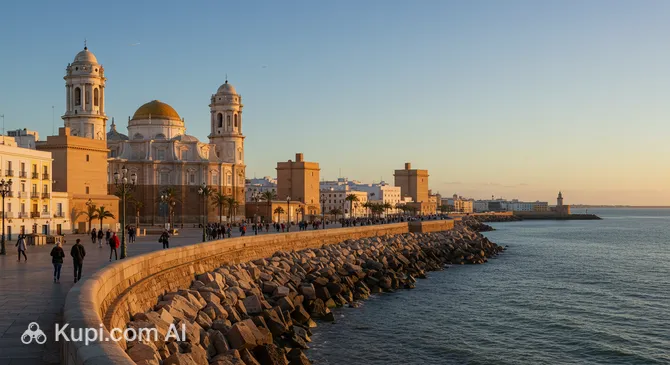
Welcome to Cadiz, a captivating city that seems to float on the waters of the Atlantic Ocean. Often cited as the oldest continuously inhabited city in Western Europe, it offers a unique blend of ancient heritage and vibrant coastal life. Located in the Andalusia region of southwestern Spain, Cadiz sits on a narrow slice of land surrounded by the sea, connected to the mainland only by a slender strip of sand and a modern bridge. With a population of approximately 114,000 people, the city maintains a lively yet intimate atmosphere, characterized by its bright light, sea breeze, and friendly locals.
Cadiz. Illustration.
Source: Kupi.com AI
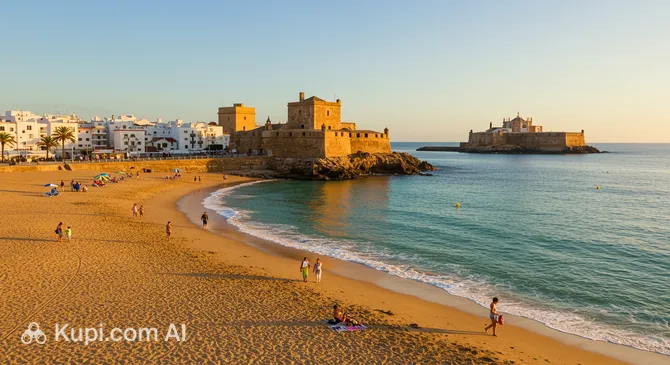
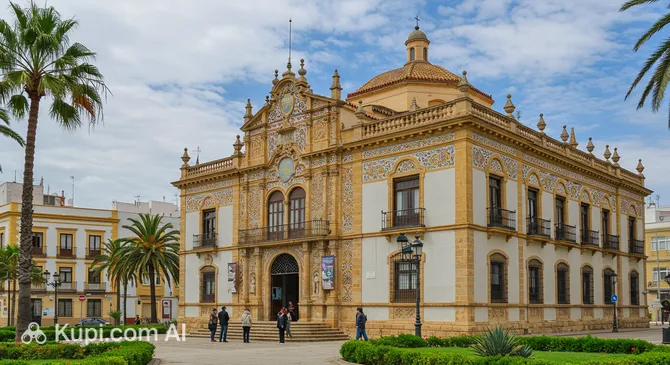
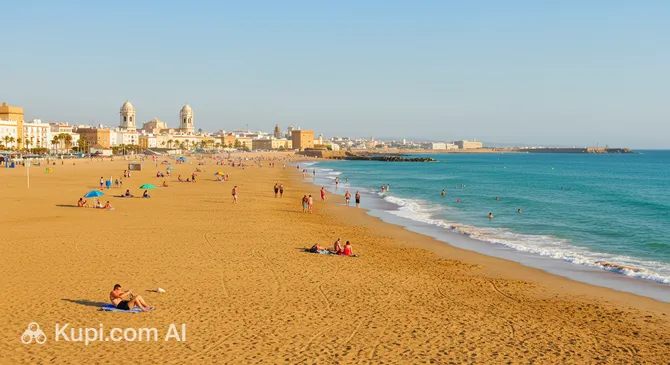
The history of Cadiz is truly legendary, stretching back over 3,000 years to its founding by the Phoenicians. This rich past is evident in the city's architecture and layout, where narrow, winding streets open up into charming plazas. Visitors are immediately drawn to the iconic Cadiz Cathedral, whose golden-tiled dome dominates the skyline and glistens in the sun. Another highlight is the Tavira Tower, the highest point in the old town, which offers breathtaking panoramic views and a unique Camera Obscura experience. For those seeking relaxation, the city's urban beaches, such as the famous La Caleta, provide a perfect setting to unwind between two ancient castles.
Whether you are exploring the historic Barrio del Pópulo, enjoying fresh seafood in a local tavern, or simply watching the sunset over the ocean, Cadiz promises an unforgettable experience. Its distinct character, shaped by centuries of maritime tradition and diverse cultural influences, makes it a must-visit destination for any traveler exploring the southern coast of the Iberian Peninsula.
Weather Overview
Cadiz is blessed with a Mediterranean climate that makes it a delightful destination year-round, characterized by mild winters and warm, sunny summers. The city enjoys significant sunshine, particularly during the peak travel months, creating an inviting atmosphere for exploring its ancient streets and beaches.
During the summer, especially in July and August, temperatures climb, with average highs reaching roughly 30°C to 31°C. This period is remarkably dry, typically seeing zero wet days, which makes it perfect for beachgoers. Conversely, winters are gentle rather than harsh; in January and February, temperatures rarely drop below 9°C, hovering comfortably around 13°C to 14°C on average. For more detailed information on seasonal variations, you can check the weather in Cadiz to help plan your trip.
Spring and autumn offer a balanced transition with pleasant average temperatures ranging from 15°C to 21°C. While the summer months are arid, rainfall is slightly more common in the cooler seasons, with March typically experiencing the highest frequency of wet days. Overall, visitors can expect hot, dry summers and mild winters with occasional rain, ensuring that outdoor activities are possible throughout most of the year.
Average monthly temperature
Average monthly precipitation
Interesting Facts
Beyond its sun-drenched promenades and historic landmarks, Cadiz holds many fascinating secrets that often escape the casual observer. Delve deeper into the local lore with these surprising facts about the "Silver Cup" of Spain.
La Caleta Beach. Illustration.
Source: Kupi.com AI
Traveler photos:
Cadiz is widely regarded as the oldest continuously inhabited city in Western Europe. Founded by Phoenician sailors around 1100 BC, the settlement was originally named "Gadir," and you can still explore these ancient roots underground at the Gadir Archaeological Site.
The city bears a remarkable architectural resemblance to Havana, Cuba, a result of their shared colonial maritime history. This similarity is so striking that La Caleta Beach famously stood in for the Cuban capital during the filming of the James Bond movie Die Another Day.
In the 18th century, the city skyline was dotted with over 160 watchtowers, built by wealthy merchants to monitor the arrival of their trading ships from the New World. Today, the Tavira Tower remains the highest and most well-preserved of these structures, offering a glimpse into the city's commercial golden age.
Christopher Columbus chose this strategic port as the starting point for two of his famous voyages to the Americas. He set sail from the Bay of Cadiz for his second expedition in 1493 and his fourth in 1502, cementing the city's status as a gateway to the New World.
How to Get There
Reaching the historic port city of Cadiz is relatively straightforward, thanks to its proximity to several major transport hubs in southern Spain. While the city itself sits on a peninsula jutting into the Atlantic, it is well-connected to the wider Andalusia region. For travelers planning their journey, you can find more about how to get to Cadiz and detailed route options on our dedicated page.
The city of Cadiz does not have its own airport, but the closest convenient option is Jerez Airport (XRY), located in the neighboring city of Jerez de la Frontera, approximately 31.7 km from Cadiz. It is a regional hub that handles a moderate flow of visitors. The journey from the airport to Cadiz by taxi or train is quick, typically taking around 30 to 45 minutes. For those arriving from further afield, Seville Airport (SVQ) in Seville is a major international gateway situated about 105.4 km away. A transfer from Seville to Cadiz generally takes about 1 hour and 15 minutes to 1 hour and 30 minutes by road.
For clarity, here is a summary of the main airports:
Traveling by train is often the most scenic and relaxing way to arrive. The city is served directly by Cádiz Station, which is conveniently located just 1.2 km from the historic city center, making it easy to start exploring immediately upon arrival. This station connects the city to the rest of Spain with regular services. Many visitors also transit through Santa Justa Railway Station in Seville, a major hub located about 100.4 km away. High-speed trains connect Seville to Madrid and other major cities, allowing for a smooth transfer to the regional train that runs down to the coast.
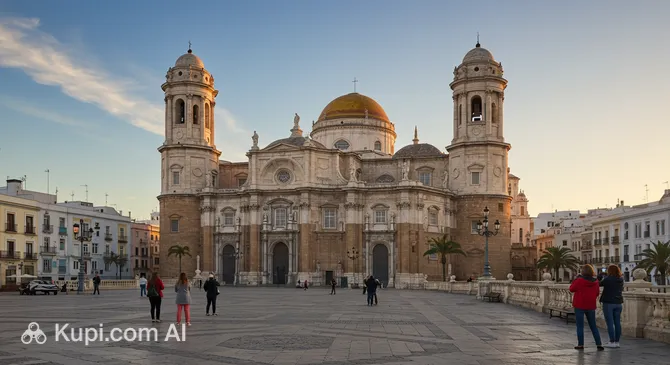
Cadiz is a city best explored on foot, where every corner reveals a layer of its millennia-old history. A perfect starting point is the magnificent Cadiz Cathedral, often referred to as the "New Cathedral." Built between 1722 and 1838, this architectural marvel blends Baroque and Neoclassical styles, reflecting the city's wealth during the height of trade with the Americas. Its iconic golden-tiled dome shimmers in the sunlight, acting as a beacon for sailors and visitors alike. You can climb the Levante Tower for spectacular panoramic views of the city and the ocean.
Cadiz Cathedral. Illustration.
Source: Kupi.com AI
Traveler photos:
Just a short walk away lies one of the city's most surprising treasures, the Roman Theatre of Cádiz. Discovered by chance in 1980 after a warehouse fire, it is considered the oldest Roman theatre in Spain and one of the largest in the entire Roman Empire. Dating back to the 1st century BC, it once held over 10,000 spectators. Today, visitors can walk through the ancient gallery and sit on the preserved tiers, imagining the spectacles that took place here over two thousand years ago.
Roman Theatre of Cádiz. Illustration.
Source: Kupi.com AI
Traveler photos:
For a refreshing escape from the stone streets, head to Genovés Park, a lush botanical garden located by the sea. This verdant oasis is filled with exotic tree species brought back from the New World, meticulously trimmed into artistic shapes. The park features a charming lake with a waterfall and a cave, making it a favorite spot for families and those seeking tranquility. Walking along its paths offers a delightful contrast to the bustling city center, with the sound of waves crashing nearby.
Genovés Park. Illustration.
Source: Kupi.com AI
Traveler photos:
Separating the historic old town from the modern city is the imposing Puerta de Tierra. These 18th-century defensive walls and the central "Earth Gate" were built to protect the city from land-based attacks. The structure remains remarkably well-preserved, and visitors can walk along the ramparts to appreciate the scale of the fortifications. It serves as a symbolic entrance to the historic heart of Cadiz, reminding travelers of the city's strategic military importance throughout the centuries.
Local Cuisine
The cuisine of Cadiz is a celebration of the sea, deeply influenced by its location on a peninsula surrounded by the Atlantic Ocean. Seafood is the undisputed protagonist here, fresh from the daily catch. A defining gastronomic experience in the city is trying the famous pescaíto frito (fried fish). This consists of a variety of white fish, anchovies, and squid, lightly battered in flour and fried in olive oil until crisp and golden. It is often served in paper cones, known as cartuchos, making it a popular street food to enjoy while strolling along the promenade.
Among the local specialties, the tortillita de camarones stands out as a true icon of Cadiz. These are thin, crispy shrimp fritters made with a batter of chickpea and wheat flour, onions, parsley, and tiny whole shrimp. They are fried to a lace-like texture and are incredibly addictive. Another must-try dish is cazón en adobo, chunks of dogfish marinated in vinegar, cumin, oregano, and garlic before being fried. The marinade gives the fish a distinctive tangy flavor that perfectly complements the tender meat.
Cadiz is also renowned for its Bluefin Tuna, often referred to as the "red gold" of the coast. Caught using the ancient almadraba trap method, this tuna is celebrated for its rich flavor and texture. You will find it prepared in countless ways, from raw tartare and sashimi to traditional stews like atún encebollado (tuna cooked with onions). The local markets are vibrant hubs where you can see these fresh ingredients before they hit your plate, offering a sensory immersion into the city's culinary soul.
Casa Manteca Tavern. Illustration.
Source: Kupi.com AI
Traveler photos:
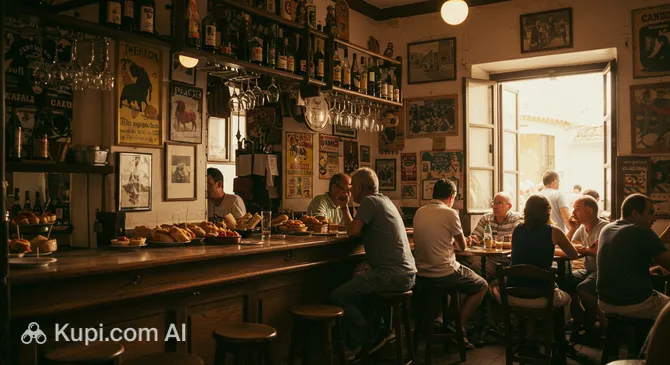
No culinary journey in Cadiz is complete without exploring its legendary tapas culture. Locals often prefer standing at the bar to share small plates and conversation. A historic institution for this experience is the Casa Manteca Tavern. Decorated with bullfighting memorabilia, this spot is famous for serving simple yet high-quality cured meats and cheeses on pieces of wax paper. It is the perfect place to soak up the authentic atmosphere of the city.
To accompany these delicious bites, the local drink of choice is often Sherry wine, produced in the nearby "Sherry Triangle." A chilled glass of Fino or Manzanilla is the traditional pairing for tapas, offering a dry and salty profile that cuts through the richness of fried foods. For a more casual setting, you might visit Casa Pepe Café Bar or stop by La Tabernita Bar, where you can enjoy a refreshing beer or a tinto de verano (red wine with lemon soda) while mingling with the friendly residents of this sun-drenched city.
Travel Tips
Planning a trip to Cadiz is the start of a wonderful adventure, but a little local knowledge goes a long way in this ancient coastal city. To help you navigate the "Silver Cup" like a pro and enjoy a stress-free vacation, here are some essential practical tips.
Clothing and Gear: Cadiz enjoys a bright, sunny climate, so sunglasses and sunscreen are essential year-round. In summer, wear light, breathable fabrics like linen or cotton to handle the heat. Winters are mild but can be humid and breezy, so a waterproof windbreaker and layers are recommended. Since the old town is paved with cobblestones, bring comfortable walking shoes; high heels can be difficult to manage here. If you plan to visit the Cathedral or other religious sites, remember to dress modestly, covering your shoulders and knees.
Transportation: The historic center (Casco Antiguo) is compact and best explored on foot. Most major attractions are within walking distance of each other. For longer distances or to reach the modern part of the city, the local bus network is efficient and affordable. Taxis are readily available and use a meter. It is highly advisable not to rent a car for city exploration; the streets are incredibly narrow, and parking in the old town is scarce and expensive. If you do drive, park in one of the underground garages outside the historic walls.
Finances: The local currency is the Euro (€). While credit and debit cards are widely accepted in most restaurants and shops, it is wise to carry some cash for small purchases in traditional tapas bars, kiosks, or the central market. ATMs are plentiful throughout the city. Tipping is not as aggressive as in other countries; locals typically round up the bill or leave a few coins for good service, but a 10% tip is considered generous for a sit-down meal.
Health and Safety: Cadiz is generally a very safe city for tourists, but standard precautions against pickpocketing should be taken in crowded areas or during festivals. Pharmacies are marked with a flashing green cross; if you need one outside regular hours, look for a list of "Farmacias de Guardia" (duty pharmacies) displayed in the window of any pharmacy. The emergency number for police, fire, or ambulance is 112.
Communication: The official language is Spanish. While staff in hotels and major tourist spots usually speak English, it is less common in smaller local taverns and shops. Locals appreciate it when you try to speak their language, so learning a few basic phrases like "Hola" (Hello), "Por favor" (Please), and "Gracias" (Thank you) will go a long way. Free Wi-Fi is often available in cafes and public squares, but purchasing a local SIM card is easy at phone shops if you need constant data.
Local Etiquette: The rhythm of life here is relaxed. Lunch is the main meal of the day, typically served between 2:00 PM and 4:00 PM, while dinner is a late affair, rarely starting before 9:00 PM. When entering a shop or an elevator, it is polite to greet others with a "Buenos días" or "Buenas tardes." In tapas bars, don't be shy about standing at the counter; it's the most authentic way to enjoy the food and atmosphere.
What to Avoid: Do not expect to eat dinner at 6:00 PM or 7:00 PM; most kitchens will be closed, or you will find yourself in an empty tourist trap. Also, avoid wearing swimwear or going shirtless outside of the beach areas. While Cadiz is a beach city, walking through the historic center in a bikini is considered disrespectful to local norms.
Local Insight: Be aware of the Levante, a strong easterly wind that can blow for days. When the Levante is strong, the open beaches can be sandy and uncomfortable. On these days, locals head to La Caleta beach, which is more sheltered, or take the opportunity to explore indoor museums and cafes.
By keeping these simple tips in mind, you will be well-prepared to embrace the laid-back Andalusian lifestyle. Cadiz is a city that rewards those who take their time, so slow down, adjust to the local clock, and enjoy every moment in this sun-drenched corner of Spain.
Entertainment & Nightlife
As the sun sets over the Atlantic, Cadiz transforms from a sun-drenched historic port into a vibrant hub of evening activity. The nightlife here is distinctly Andalusian: laid-back, social, and starting late. Unlike the high-intensity club scenes of Ibiza or Madrid, an evening in Cadiz is often about socializing outdoors, hopping between bars, and enjoying the warm sea breeze. The atmosphere is welcoming and diverse, ranging from bohemian cafes in the old town to energetic discos along the modern seafront.
The heart of the action in the early evening is undoubtedly the historic center, particularly the neighborhoods of El Pópulo and La Viña. El Pópulo, the oldest quarter, is packed with atmospheric bars and taverns tucked into medieval arches. Here, the crowd is a mix of locals and visitors enjoying drinks and conversation spilling out onto the cobblestones. For a taste of the local arts scene, you can visit Bar El Teniente Seblon. Known for its eclectic decor and cultural events, it is a perfect spot to enjoy a cocktail in a unique setting that often hosts exhibitions or poetry readings.
Bar El Teniente Seblon. Illustration.
Source: Kupi.com AI
Traveler photos:
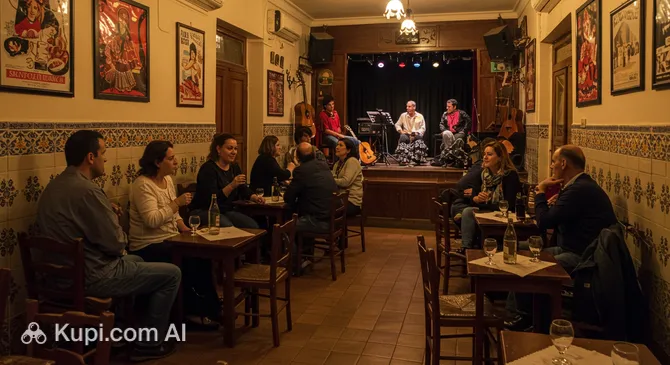
For those seeking a more traditional Andalusian experience, the city offers exceptional flamenco performances. While Seville might be more famous, Cadiz has its own soulful style known as "Alegrías." A fantastic place to witness this passion is the Peña Flamenca la Perla de Cádiz. This venue is dedicated to preserving the art form and offers authentic shows where the singing and dancing take center stage, often accompanied by good food and wine. It is a cultural immersion that goes far beyond typical tourist entertainment.
As the night progresses into the early hours, the energy shifts towards the Paseo Marítimo (Seafront Promenade) in the modern part of the city, known as "Puerta Tierra." This area is especially bustling during the summer months when open-air terraces and beach clubs come alive. Another key nightlife zone is the Punta de San Felipe, a strip located at the end of the port area, which is home to several discos and larger clubs where you can dance until dawn. The dress code in Cadiz is generally casual and smart-casual; you rarely need to dress up formally, even for clubs.
Peña Flamenca la Perla de Cádiz. Illustration.
Source: Kupi.com AI
Traveler photos:
If you are planning a night out, keep in mind that the rhythm is slow. Locals might start with dinner around 10:00 PM, head to bars around midnight, and clubs often don't fill up until 2:00 AM or 3:00 AM. Prices are generally reasonable compared to other major Spanish cities, with beers and mixed drinks being quite affordable. To get around, walking is safe and pleasant in the old town, but for the Paseo Marítimo or Punta de San Felipe, a taxi is recommended. Taxis are white with a blue diagonal stripe on the front door and can be easily hailed or found at designated ranks. The city is very safe for night walks, though standard awareness of your surroundings is always advised.
While the nights are lively, daytime entertainment in Cadiz offers a different kind of charm. Culture enthusiasts should not miss the Cadiz Museum on Plaza de Mina, which houses an impressive collection of Phoenician and Roman artifacts, as well as fine arts. Families traveling with children might enjoy the Puppet Museum, located near the Puerta de Tierra, featuring a whimsical collection of puppets from around the world. For a bit of family fun, Chiquipark Cádiz offers an indoor amusement option for younger travelers.
Parks & Museums
While Cadiz is famous for its sea-encircled location, the city also offers refreshing green spaces and cultural institutions that delve into its artistic and historical depth. Beyond the well-trodden paths, visitors can discover lush natural landmarks and galleries that celebrate the city's connection to the Americas and its religious heritage.
One of the most striking natural features in the city is the collection of massive trees known as the Strangler Figs of Cádiz. Located near the Alameda Apodaca, these colossal Ficus macrophylla trees were imported from Australia over a century ago. Their enormous, twisting roots and expansive canopies create a surreal, fairytale-like atmosphere that provides welcome shade and a unique photo opportunity. For those seeking a more expansive natural escape, La Cortadura Beach offers a pristine environment away from the urban center. As the only "virgin" beach in the city, it features a long stretch of golden sand backed by natural dunes and native vegetation, perfect for nature lovers and those wanting to avoid the crowds.
Strangler Figs of Cádiz. Illustration.
Source: Kupi.com AI
Traveler photos:
Cadiz's cultural scene is equally compelling, with venues that repurpose historic fortifications for modern art. The Ibero-American House of Cádiz, housed in the former Royal Prison, is a vibrant cultural center. It hosts exhibitions and events that highlight the deep historical and artistic ties between Cadiz and Latin America, serving as a bridge between the two continents. Another military structure turned cultural venue is the Baluarte de la Candelaria. Situated on a seawall pointing out into the bay, this fortress now serves as a dramatic setting for art exhibitions, concerts, and fairs, allowing visitors to enjoy culture with the sound of waves in the background.
Ibero-American House of Cádiz. Illustration.
Source: Kupi.com AI
Traveler photos:
Art and history enthusiasts should also seek out the Oratory of the Holy Cave. This neoclassical gem is often overlooked but contains a stunning interior with three paintings by Francisco de Goya, making it a significant stop for art lovers. In terms of religious history, the Church of Santa Cruz (Old Cathedral of Cádiz) stands as a testament to the city's medieval past. Built on the site of an old mosque, it served as the cathedral before the construction of the new one and features a fascinating mix of architectural styles.
Modern engineering also claims its place in the city's landscape with the Constitution of 1812 Bridge. Known locally as "La Pepa," this cable-stayed bridge is one of the tallest in Europe and offers a spectacular contemporary contrast to the ancient skyline. For a quiet moment, taking a walk along the sea walls near Santa María del Mar Beach provides a lovely perspective of the city's relationship with the ocean, especially during the golden hour.
Getting Around
Navigating Cadiz is remarkably easy, primarily because the historic center is compact and best explored on foot. However, for reaching the modern part of the city, the beaches beyond the walls, or nearby towns, the public transport system is efficient and user-friendly. The backbone of urban mobility is the bus network, operated by "Urbanos de Cádiz." There are five main lines, with Line 1 being particularly useful for visitors as it runs the length of the main avenue, connecting the historic old town with the newer districts and the entrance to the city.
A unique feature of the local transport infrastructure is the Trambahía (Tram-Train of the Bay of Cadiz). This innovative system functions as a train within the city, sharing tracks with regional rail services, and transitions into a tram as it travels to neighboring municipalities like San Fernando and Chiclana. It is a modern, comfortable way to travel along the coast and offers a scenic route for those looking to explore the wider bay area without renting a car. The main stop in the city is at the central railway station, located just outside the old town walls.
For a truly memorable travel experience, tourists should take advantage of the Catamaran service. These ferries are fully integrated into the public transport consortium and provide regular connections across the bay to the towns of Rota and El Puerto de Santa María. The terminal is conveniently located in the port, close to the train station. The journey takes about 30 minutes and offers spectacular views of the city skyline from the water, making it a favorite alternative to road travel for both locals and visitors.
Regarding payment, you have several options depending on the frequency of your travel. For a single bus ride, you can purchase a ticket directly from the driver using cash; it is advisable to carry small change or bills no larger than 5 euros. If you plan to use public transport frequently, including the bus, tram, and catamaran, the most economical option is the Consortium Transport Card (Tarjeta de Transportes). This reloadable wallet card offers significant discounts on fares compared to single tickets and allows for easy transfers between different modes of transport within a specific time frame.
You can purchase the Consortium card and recharge it at tobacco shops (estancos) and dedicated kiosks throughout the city and at the train station. When using the card on buses or the tram, you must validate it against the card readers upon entering. Transport services generally operate from around 6:00 AM until 11:00 PM or midnight, though schedules can vary on weekends and holidays. For late-night travel, especially on weekends, night buses (Búhos) are available but run less frequently.
Beyond public transit, Cadiz is an incredibly bike-friendly city. The terrain is completely flat, and an extensive network of bicycle lanes (carril bici) connects the entire seafront promenade and the historic center. Several rental shops offer bikes by the hour or day. Taxis are also plentiful and can be hailed on the street if the green light is on, or found at designated ranks. They are white with a blue line and operate on a meter, offering a reliable alternative for late nights or when carrying luggage.
Accommodation
Finding the perfect place to stay in Cadiz is an integral part of the travel experience, with options ranging from historic charm to modern coastal luxury. The city offers a diverse selection of accommodation, including budget-friendly youth hostels, family-run guesthouses (pensiones), stylish boutique hotels, and larger chain hotels. Additionally, the rental apartment market is flourishing, providing travelers with the chance to stay in renovated traditional homes with rooftop terraces.
The choice of location largely depends on the type of holiday you prefer. The city is divided into two distinct zones by the historic walls. The Old Town (Casco Antiguo) is ideal for those who want to be in the heart of the action, surrounded by ancient streets, tapas bars, and monuments like the Tavira Tower. Neighborhoods such as El Pópulo and La Viña are atmospheric and convenient for sightseeing, though hotels here tend to be smaller and situated in repurposed historic buildings.
On the other hand, the modern part of the city, extending beyond the Puerta de Tierra, is where you will find larger, resort-style hotels and spacious apartments. This area is favored by families and beach lovers, as many properties are located along the main avenues offering direct access to the expansive Atlantic coastline, such as Santa María del Mar Beach. Staying here often means easier access to parking and modern amenities, while still being a short bus or taxi ride from the historic center.
Santa María del Mar Beach. Illustration.
Source: Kupi.com AI
Traveler photos:
Booking Tip: Cadiz is an extremely popular destination for domestic tourism, particularly during the summer months (July and August) and the famous Carnival in February. During these peak periods, occupancy rates soar, and prices increase significantly. It is highly advisable to book your accommodation several months in advance to secure the best options and rates.
In terms of pricing, the city caters to various budgets. You can find economical beds in hostels and modest rooms in the old quarter. Mid-range options are plentiful, offering comfortable amenities and often including breakfast. For a more luxurious stay, the modern seafront promenade features higher-end establishments with sea views and pools. Most accommodations can be easily booked via major online platforms, which is the most convenient method, although contacting smaller, family-owned establishments directly can sometimes result in a more personalized service.
Nearby Cities
For those looking to explore the surroundings, Cadiz serves as an excellent base for day trips to several interesting nearby locations:
City
Population
Distance
Puerto Real
41 963
9 km
San Fernando
94 867
9 km
El Puerto de Santa María
89 435
9 km
Rota
29 491
13 km
Chiclana de la Frontera
87 493
17 km
These nearby destinations offer a glimpse into the diverse culture and landscapes of the region. Jerez de la Frontera is renowned worldwide for its production of Sherry wine, the prestigious Royal Andalusian School of Equestrian Art, and its deep roots in flamenco tradition. Another favorite stop is El Puerto de Santa María, which is easily accessible by a scenic ferry ride across the bay and is celebrated for its exceptional seafood and sandy beaches. For nature lovers, Sanlúcar de Barrameda sits at the mouth of the Guadalquivir River, serving as a gateway to the Doñana National Park and the home of Manzanilla wine.
Shopping & Souvenirs
Shopping in Cadiz is a delightful experience that mirrors the city's laid-back yet vibrant character. While it may not have the massive commercial sprawl of larger Spanish capitals, it offers a charming "open-air shopping center" feel, particularly in the historic old town. Visitors can wander through pedestrianized streets lined with a mix of traditional family-run businesses, artisan workshops, and well-known international fashion brands. The city is especially known for its high-quality leather goods, sourced from the nearby town of Ubrique, as well as its local wines and gourmet food products.
The heart of the shopping district lies within the ancient walls. The most famous thoroughfare is Calle Columela, which serves as the city's high street. Here, you will find major Spanish fashion chains and popular franchises. Branching off from this central spine are other key streets like Calle San Francisco and Calle Ancha, which offer a more varied selection of boutiques, jewelry stores, and classic menswear shops. Walking these streets is not just about purchasing goods; it is a social activity where locals promenade and window shop in the late afternoon.
For those who prefer everything under one roof, the modern part of the city hosts larger commercial spaces. A key destination is the Bahía de Cádiz Shopping Center, which houses the renowned El Corte Inglés department store. Located on the main avenue leading into the city, it offers a vast array of products ranging from designer clothing and electronics to gourmet foods and souvenirs, making it a convenient stop for travelers needing specific items or international brands.
Bahía de Cádiz Shopping Center. Illustration.
Source: Kupi.com AI
Traveler photos:
No shopping trip to Cadiz is complete without visiting its vibrant markets. The Mercado Central de Abastos (Central Market) is a historic neoclassical gem that pulses with life. While primarily a food market selling fresh fish, cheeses, and produce, it is also the perfect place to buy edible souvenirs like vacuum-packed mojama (cured tuna), local honey, or a bottle of Sherry wine. The surrounding area often features stalls selling crafts and flowers, adding to the colorful atmosphere.
When looking for unique souvenirs to take home, consider items that reflect the local culture. Apart from the famous wines and leather goods, Cadiz is known for its ceramics and fans (abanicos). Since the city hosts one of the world's most famous Carnivals, you can also find shops dedicated to carnival costumes and masks year-round, which make for whimsical and colorful keepsakes.
Regarding practicalities, store hours in Cadiz typically follow the traditional Spanish schedule. Shops generally open around 10:00 AM and close for the afternoon "siesta" break between 1:30 PM and 5:00 PM or 5:30 PM, reopening until roughly 8:30 PM or 9:00 PM. Larger department stores and malls, however, usually stay open throughout the day without a break. Credit and debit cards are widely accepted, even for small amounts, though carrying some cash is useful for small market stalls. Travelers residing outside the European Union are eligible for VAT refunds on purchases over a certain amount, so remember to ask for a "Tax-Free" form at participating stores.